Expert Advisor (EA): Complete Guide to Automated Forex Trading

Automated trading has transformed the way individuals and institutions participate in the Forex market. One of the most powerful tools driving this transformation is the Expert Advisor (EA). Whether you’re a beginner exploring algorithmic trading or an experienced trader looking to optimize your strategy, understanding EAs is essential.
This comprehensive guide will walk you through everything you need to know about Expert Advisors, how they work, their advantages and risks, and how to use them effectively in your Forex trading journey.
What is an Expert Advisor (EA)?
An Expert Advisor (EA) is a software program designed to automate trading decisions in the Forex market. It operates based on predefined rules and algorithms, allowing trades to be executed automatically without human intervention.
EAs are typically used on trading platforms like MetaTrader 4 (MT4) or MetaTrader 5 (MT5). Once installed, they can monitor the market, analyze price movements and place trades according to specific conditions.
In simple terms, an EA is like a robot trader that follows instructions precisely and never gets tired or emotional.
How Do Expert Advisors Work?
Expert Advisors work by analyzing market data using technical indicators, price action or custom algorithms. They follow a set of programmed rules such as:
- Entry conditions (when to open a trade)
- Exit conditions (when to close a trade)
- Risk management (lot size, stop loss, take profit)
Once the conditions are met, the EA automatically executes the trade.
For example, an EA might:
- Buy when the moving average crosses upward.
- Sell when RSI indicates overbought conditions.
- Close trades at a predefined profit target.
The entire process is automated, which removes the need for manual execution.
Types of Expert Advisors
Not all EAs are the same. They can be categorized based on their trading strategies and logic.
Trend-Following EAs
These EAs aim to capture profits by following market trends. They work best in trending markets and use indicators like Moving Averages (MA) or MACD.
Scalping EAs
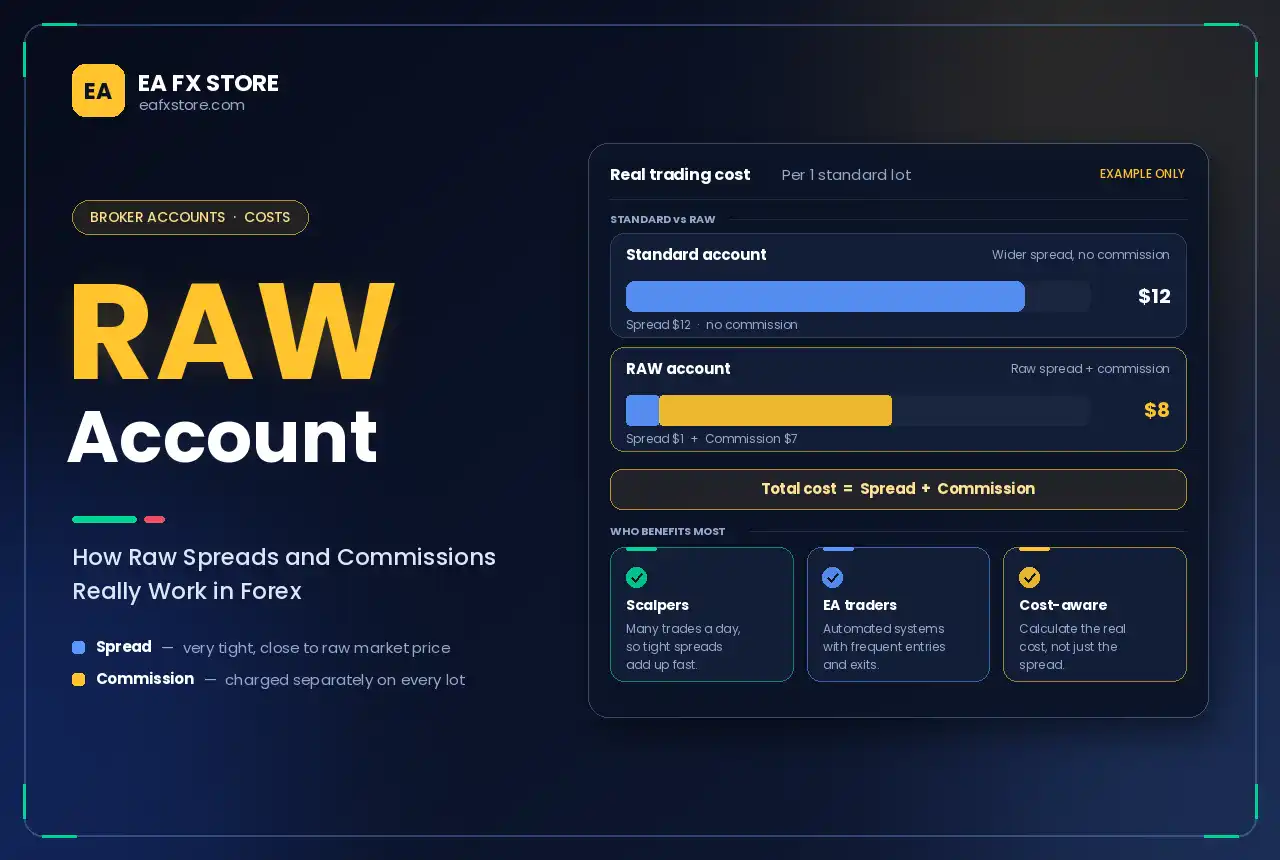
Scalping EAs execute multiple trades within short timeframes to capture small price movements. They require fast execution and low spreads.
Grid Trading EAs
Grid EAs place buy and sell orders at predefined intervals. They do not rely on market direction but instead profit from price fluctuations.
News Trading EAs
These EAs trade based on economic news releases and volatility spikes. They are high-risk but can yield significant returns.
Arbitrage EAs
Arbitrage EAs exploit price differences between brokers or markets. They require ultra-fast execution and are less common for retail traders.
Benefits of Using Expert Advisors
Expert Advisors offer several advantages that make them attractive to traders.
Emotion-Free Trading
One of the biggest benefits is eliminating emotional decision-making. Fear and greed often lead to poor trading decisions, but EAs follow logic strictly.
24/7 Market Monitoring
Forex markets operate 24 hours a day. EAs can monitor and trade continuously without needing rest.
Speed and Efficiency
EAs can execute trades in milliseconds, much faster than manual trading.
Backtesting Capabilities
You can test an EA using historical data to evaluate its performance before using real money.
Consistency
EAs follow predefined rules consistently, ensuring disciplined trading.
Risks and Limitations of Expert Advisors
Despite their advantages, EAs are not foolproof and come with risks.
Market Conditions Change
An EA that performs well in one market condition may fail in another. For example, a trend-following EA may struggle in a ranging market.
Over-Optimization (Curve Fitting)
Some EAs are optimized too heavily for past data, making them ineffective in real trading conditions.
Technical Failures
Issues such as internet disconnections, platform crashes, or VPS failures can disrupt trading.
Lack of Adaptability
EAs cannot think or adapt like humans unless programmed with advanced AI capabilities.
Scam EAs
Many commercial EAs promise unrealistic profits. Traders must be cautious and verify credibility.
How to Choose the Right Expert Advisor
Selecting the right EA is crucial for success in automated Forex trading.
Check Performance History
Look for verified results, preferably from third-party platforms like Myfxbook.
Understand the Strategy
Avoid using EAs you don’t understand. Knowing the logic behind the system helps you manage risks better.
Risk Management Features
Ensure the EA includes stop loss, take profit, and proper lot sizing.
Compatibility with Broker
Some EAs perform better with specific brokers due to spreads and execution speed.
User Reviews and Reputation
Research feedback from other traders to identify reliable EAs.
How to Install and Use an EA
Using an Expert Advisor is relatively straightforward, especially on MetaTrader platforms.
Step 1: Download the EA
Get the EA file (usually .ex4 or .ex5 format).
Step 2: Install in MetaTrader
- Open MetaTrader
- Go to “File” → “Open Data Folder”
- Place the EA file in the “Experts” folder
Step 3: Attach to Chart
- Restart the platform
- Drag the EA onto a chart
- Enable “Auto Trading”
Step 4: Configure Settings
Adjust parameters such as lot size, stop loss, and strategy inputs.
Step 5: Monitor Performance
Even though trading is automated, regular monitoring is essential.
Backtesting and Optimization
Before using an EA in live trading, backtesting is critical.
What is Backtesting?
Backtesting involves running the EA on historical data to evaluate its performance.
Key Metrics to Analyze
- Profit factor
- Drawdown
- Win rate
- Risk-reward ratio
Optimization
Optimization allows you to fine-tune parameters for better performance. However, avoid over-optimization as it may reduce real-world effectiveness.
VPS and Why It Matters
A Virtual Private Server (VPS) is often used with EAs to ensure continuous operation.
Benefits of Using a VPS
- 24/7 uptime
- Faster execution speed
- Reduced latency
- Protection against power or internet outages
For serious traders, a VPS is almost essential when running automated systems.
Manual Trading vs Automated Trading
Both manual and automated trading have their pros and cons.
Manual Trading
- Flexible and adaptive
- Requires time and emotional discipline
Automated Trading (EAs)
- Fast and consistent
- Lacks human intuition
Many traders combine both approaches—using EAs for execution while manually supervising strategy.
Tips for Successful EA Trading
To maximize success with Expert Advisors, follow these best practices:
Start with a Demo Account
Always test an EA in a demo environment before going live.
Use Proper Risk Management
Never risk more than a small percentage of your account per trade.
Monitor Regularly
Automation does not mean “set and forget.” Stay involved and review performance.
Diversify Strategies
Avoid relying on a single EA. Use multiple strategies to spread risk.
Stay Updated
Market conditions change. Update or adjust your EA accordingly.
The Future of Expert Advisors
The future of EAs is evolving rapidly with advancements in artificial intelligence and machine learning.
Modern EAs are becoming more adaptive, capable of learning from market behavior and improving over time. Integration with big data and advanced analytics is expected to enhance decision-making accuracy.
As technology continues to advance, automated trading will likely become even more dominant in the Forex market.
Conclusion
Expert Advisors (EAs) have revolutionized Forex trading by enabling automation, efficiency, and emotion-free execution. They offer powerful tools for both beginners and experienced traders, but they are not without risks.
Success with EAs depends on understanding how they work, choosing the right system, and applying proper risk management. Rather than relying blindly on automation, traders should treat EAs as tools that support a well-thought-out trading strategy.
By combining knowledge, discipline, and technology, you can leverage Expert Advisors to enhance your trading performance and navigate the Forex market more effectively.