
In the fast-paced world of Forex trading, identifying trends early and accurately can make the difference between consistent profits and frustrating losses. Among the many technical analysis tools available, the Ichimoku Indicator stands out as one of the most comprehensive and powerful systems for analyzing price action.
In this guide, you’ll learn everything you need to know about the Ichimoku Indicator—how it works, how to read it, and how to use it effectively to master Forex trends like a professional trader.
What is the Ichimoku Indicator?
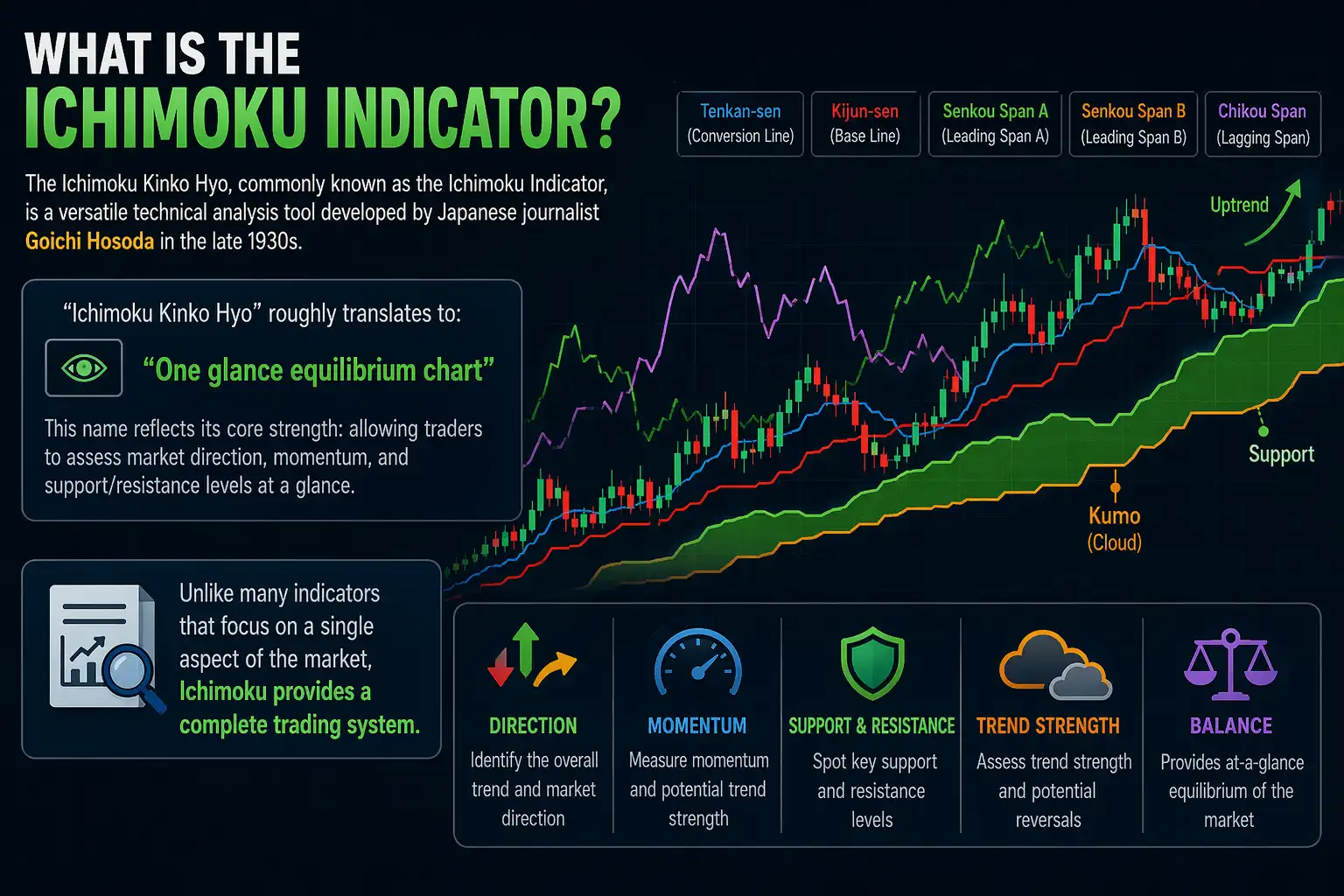
The Ichimoku Kinko Hyo, commonly known as the Ichimoku Indicator, is a versatile technical analysis tool developed by Japanese journalist Goichi Hosoda in the late 1930s.
“Ichimoku Kinko Hyo” roughly translates to:
“One glance equilibrium chart”
This name reflects its core strength: allowing traders to assess market direction, momentum and support/resistance levels at a glance.
Unlike many indicators that focus on a single aspect of the market, Ichimoku provides a complete trading system.
Components of the Ichimoku Indicator
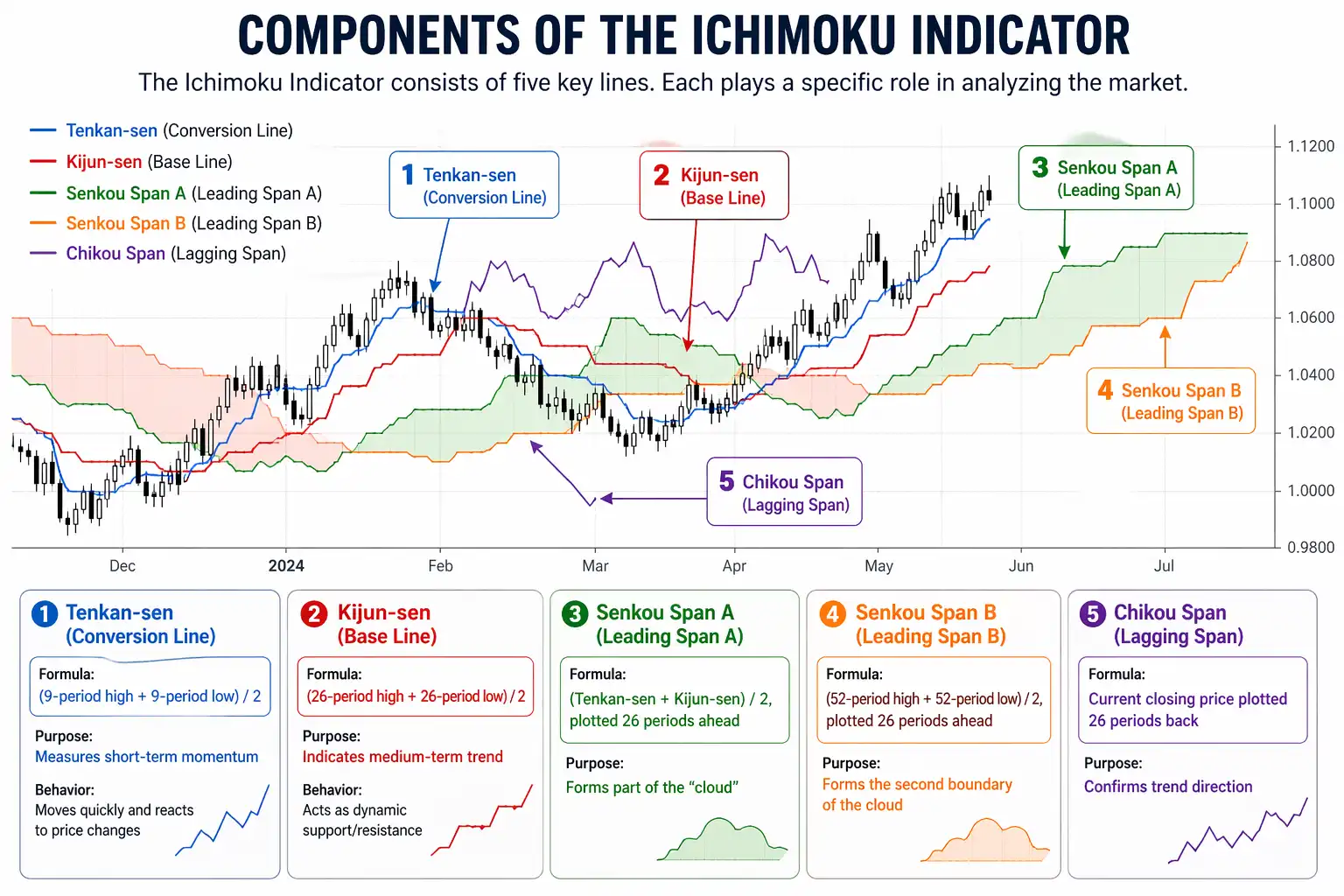
The Ichimoku Indicator consists of five key lines. Each plays a specific role in analyzing the market:
1. Tenkan-sen (Conversion Line)
- Formula: (9-period high + 9-period low) / 2
- Purpose: Measures short-term momentum
- Behavior: Moves quickly and reacts to price changes
2. Kijun-sen (Base Line)
- Formula: (26-period high + 26-period low) / 2
- Purpose: Indicates medium-term trend
- Behavior: Acts as dynamic support/resistance
3. Senkou Span A (Leading Span A)
- Formula: (Tenkan-sen + Kijun-sen) / 2, plotted 26 periods ahead
- Purpose: Forms part of the “cloud”
4. Senkou Span B (Leading Span B)
- Formula: (52-period high + 52-period low) / 2, plotted 26 periods ahead
- Purpose: Forms the second boundary of the cloud
5. Chikou Span (Lagging Span)
- Formula: Current closing price plotted 26 periods back
- Purpose: Confirms trend direction
Understanding the Ichimoku Cloud (Kumo)
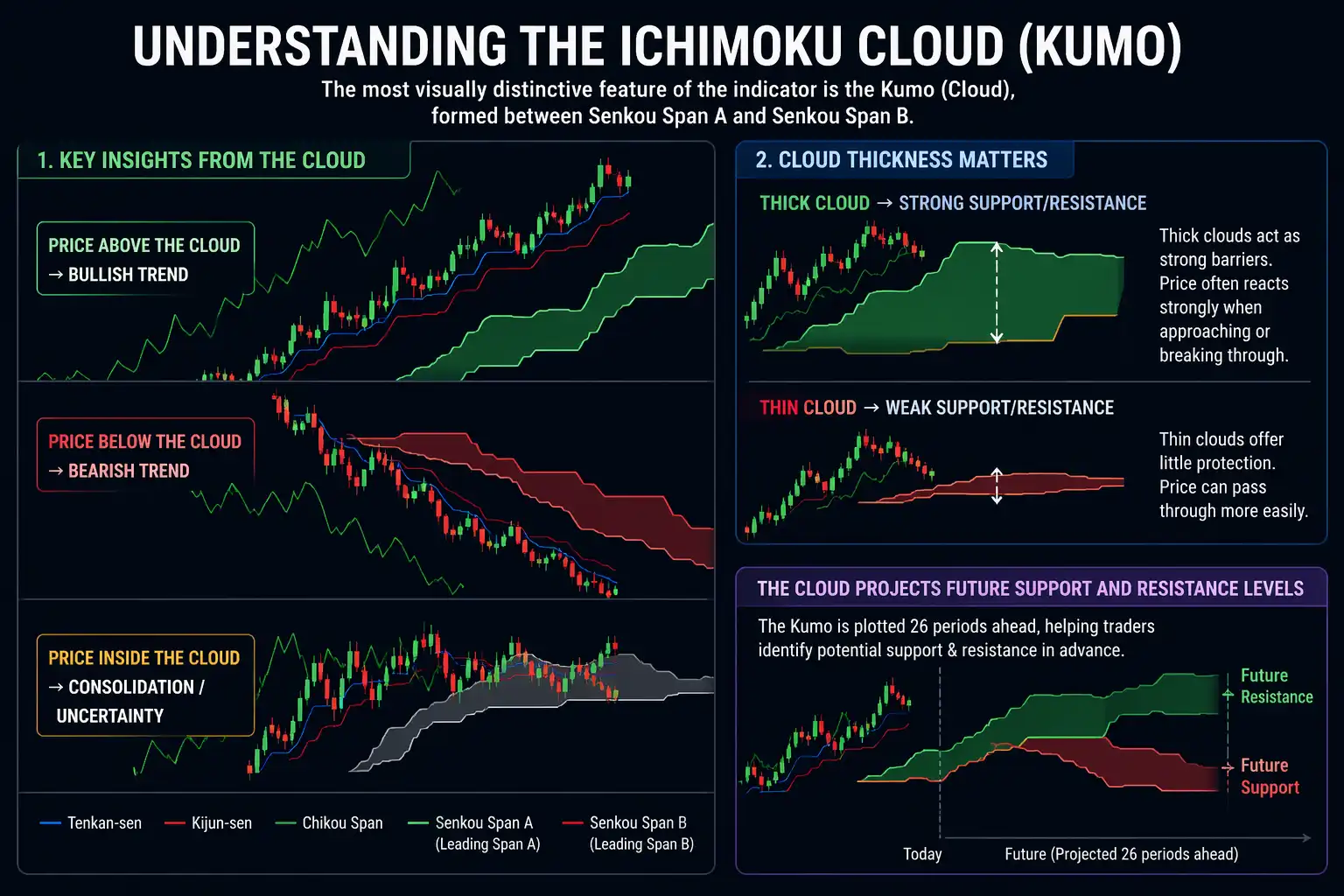
The most visually distinctive feature of the indicator is the Kumo (Cloud), formed between Senkou Span A and Senkou Span B.
1. Key Insights from the Cloud:
- Price above the cloud → Bullish trend.
- Price below the cloud → Bearish trend.
- Price inside the cloud → Consolidation / uncertainty.
2. Cloud Thickness Matters:
- Thick cloud → Strong support/resistance.
- Thin cloud → Weak support/resistance.
The cloud also projects future support and resistance levels, making it highly valuable for forward-looking analysis.
How to Use Ichimoku in Forex Trading
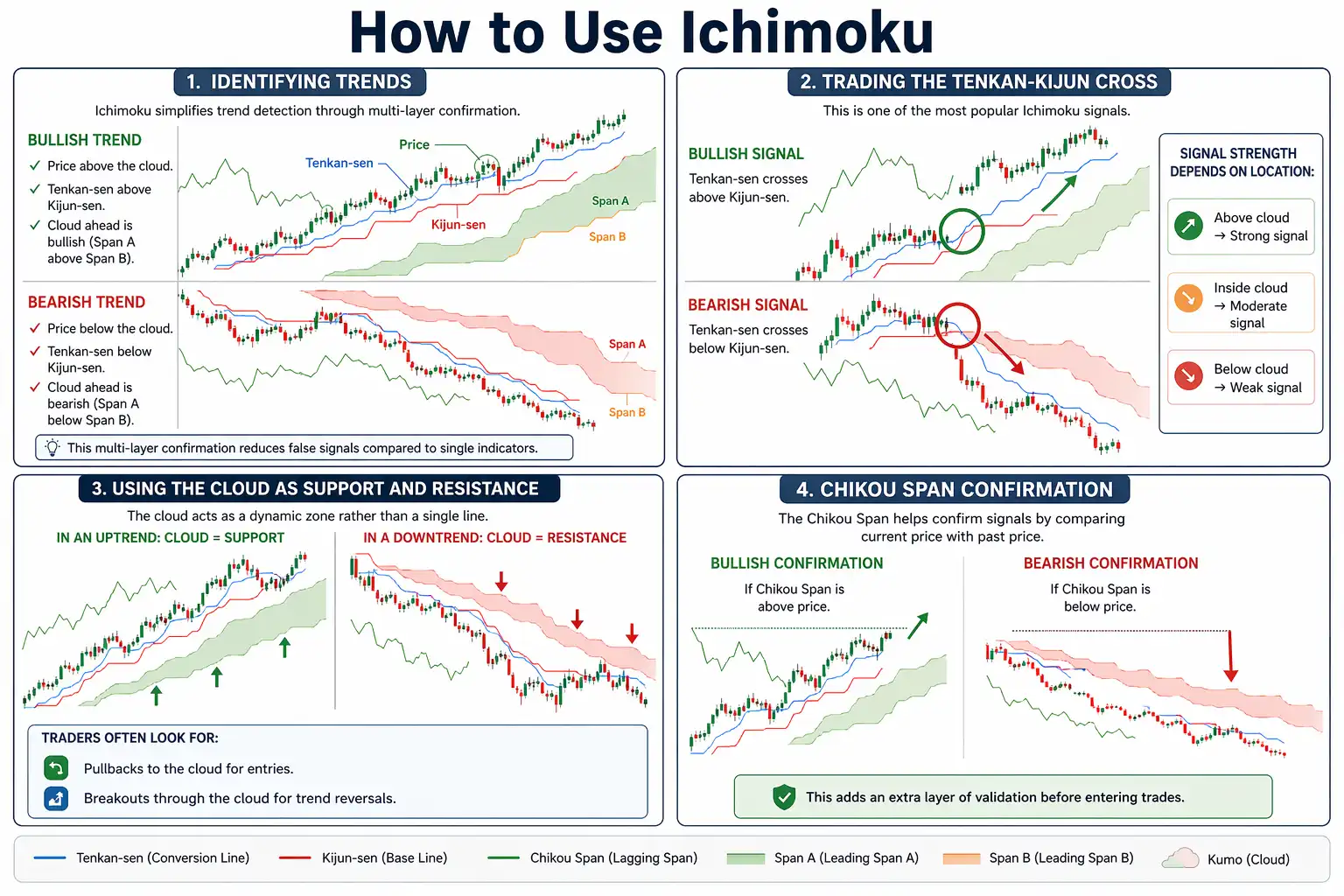
1. Identifying Trends
Ichimoku simplifies trend detection:
- Bullish Trend
- Price above the cloud.
- Tenkan-sen above Kijun-sen.
- Cloud ahead is bullish (Span A above Span B).
- Bearish Trend
- Price below the cloud.
- Tenkan-sen below Kijun-sen.
- Cloud ahead is bearish.
This multi-layer confirmation reduces false signals compared to single indicators.
2. Trading the Tenkan-Kijun Cross
This is one of the most popular Ichimoku signals.
- Bullish Signal
- Tenkan-sen crosses above Kijun-sen.
- Bearish Signal
- Tenkan-sen crosses below Kijun-sen.
Signal Strength Depends on Location:
- Above cloud → Strong signal.
- Inside cloud → Moderate.
- Below cloud → Weak.
3. Using the Cloud as Support and Resistance
The cloud acts as a dynamic zone rather than a single line.
- In an uptrend: Cloud = support.
- In a downtrend: Cloud = resistance.
Traders often look for:
- Pullbacks to the cloud for entries.
- Breakouts through the cloud for trend reversals.
4. Chikou Span Confirmation
The Chikou Span helps confirm signals:
- If Chikou Span is above price → Bullish confirmation.
- If below price → Bearish confirmation.
This adds an extra layer of validation before entering trades.
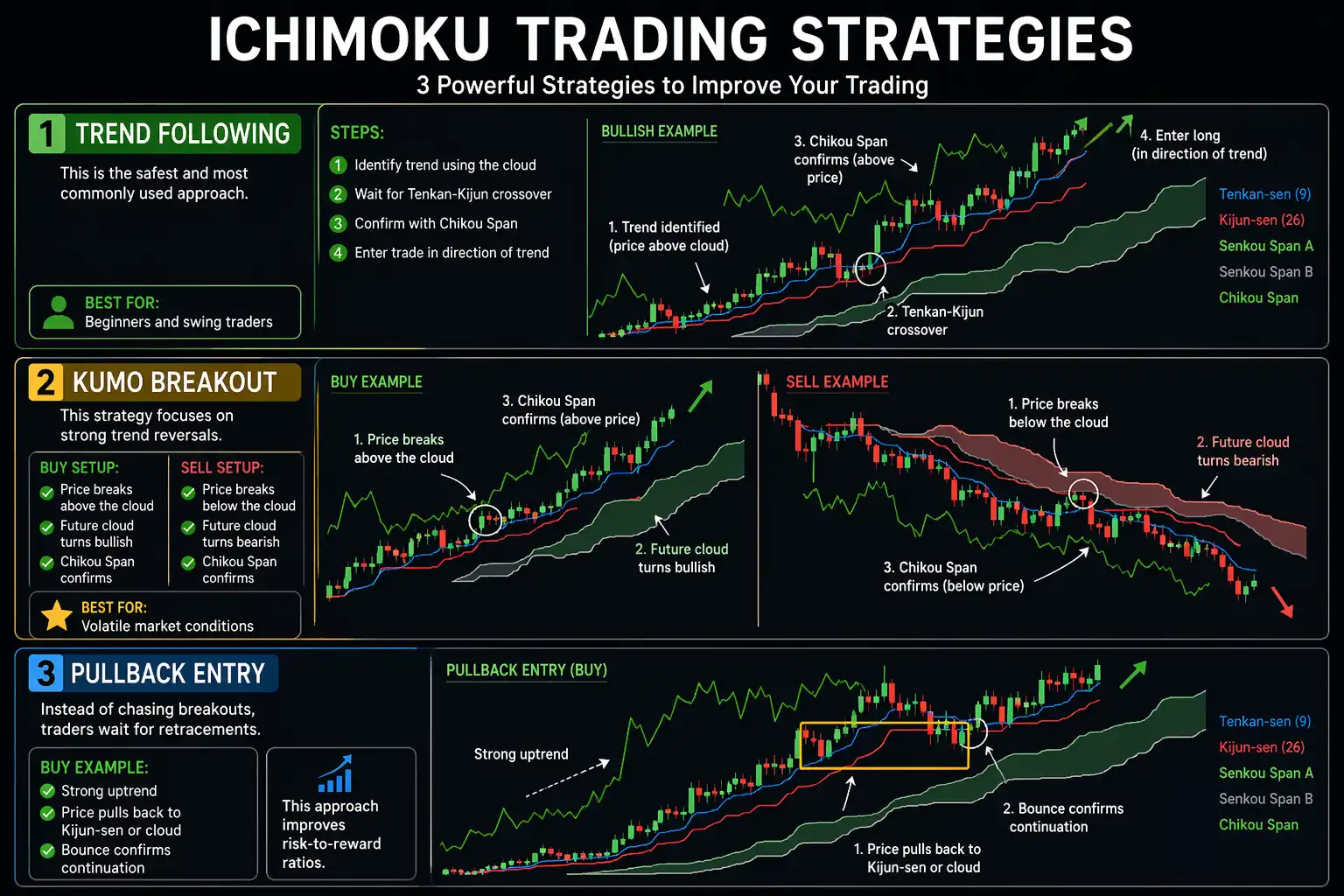
Ichimoku Trading Strategies
Strategy 1: Trend Following
This is the safest and most commonly used approach.
Steps:
- Identify trend using the cloud.
- Wait for Tenkan-Kijun crossover.
- Confirm with Chikou Span.
- Enter trade in direction of trend.
Best for: Beginners and swing traders
Strategy 2: Kumo Breakout
This strategy focuses on strong trend reversals.
Buy Setup:
- Price breaks above the cloud.
- Future cloud turns bullish.
- Chikou Span confirms.
Sell Setup:
- Price breaks below the cloud.
- Future cloud turns bearish.
Best for: Volatile market conditions
Strategy 3: Pullback Entry
Instead of chasing breakouts, traders wait for retracements.
Buy Example:
- Strong uptrend.
- Price pulls back to Kijun-sen or cloud.
- Bounce confirms continuation.
This approach improves risk-to-reward ratios.
Advantages of the Ichimoku Indicator
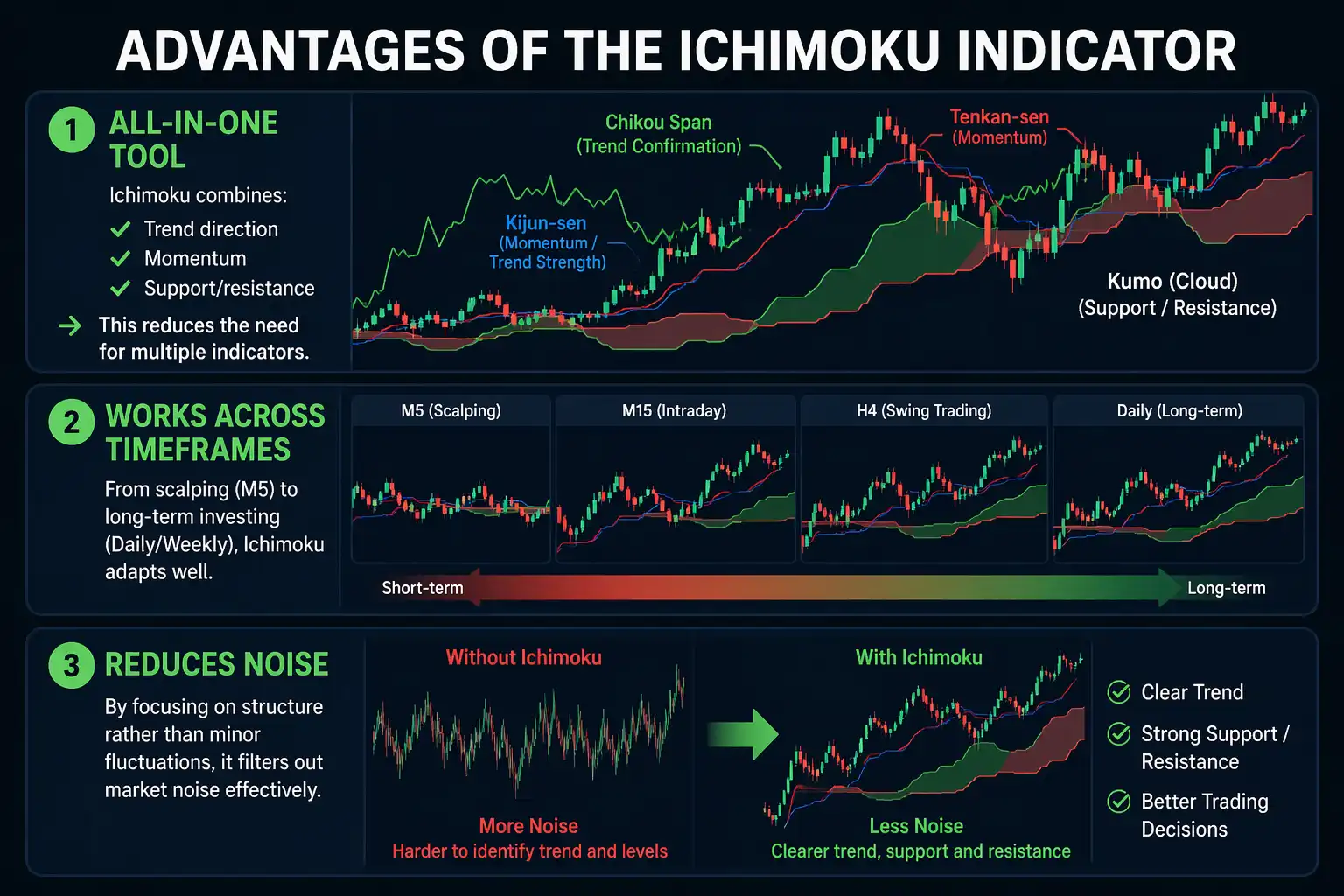
1. All-in-One Tool
Ichimoku combines:
- Trend direction
- Momentum
- Support/resistance
This reduces the need for multiple indicators.
2. Works Across Timeframes
From scalping (M5) to long-term investing (Daily/Weekly), Ichimoku adapts well.
3. Reduces Noise
By focusing on structure rather than minor fluctuations, it filters out market noise effectively.
Disadvantages of the Ichimoku Indicator
1. Complexity for Beginners
At first glance, the chart can look overwhelming due to multiple lines.
2. Lagging Nature
Some components (like Kijun-sen and Chikou Span) are based on past data.
3. Not Ideal for Sideways Markets
Ichimoku performs best in trending markets and may give false signals during consolidation.
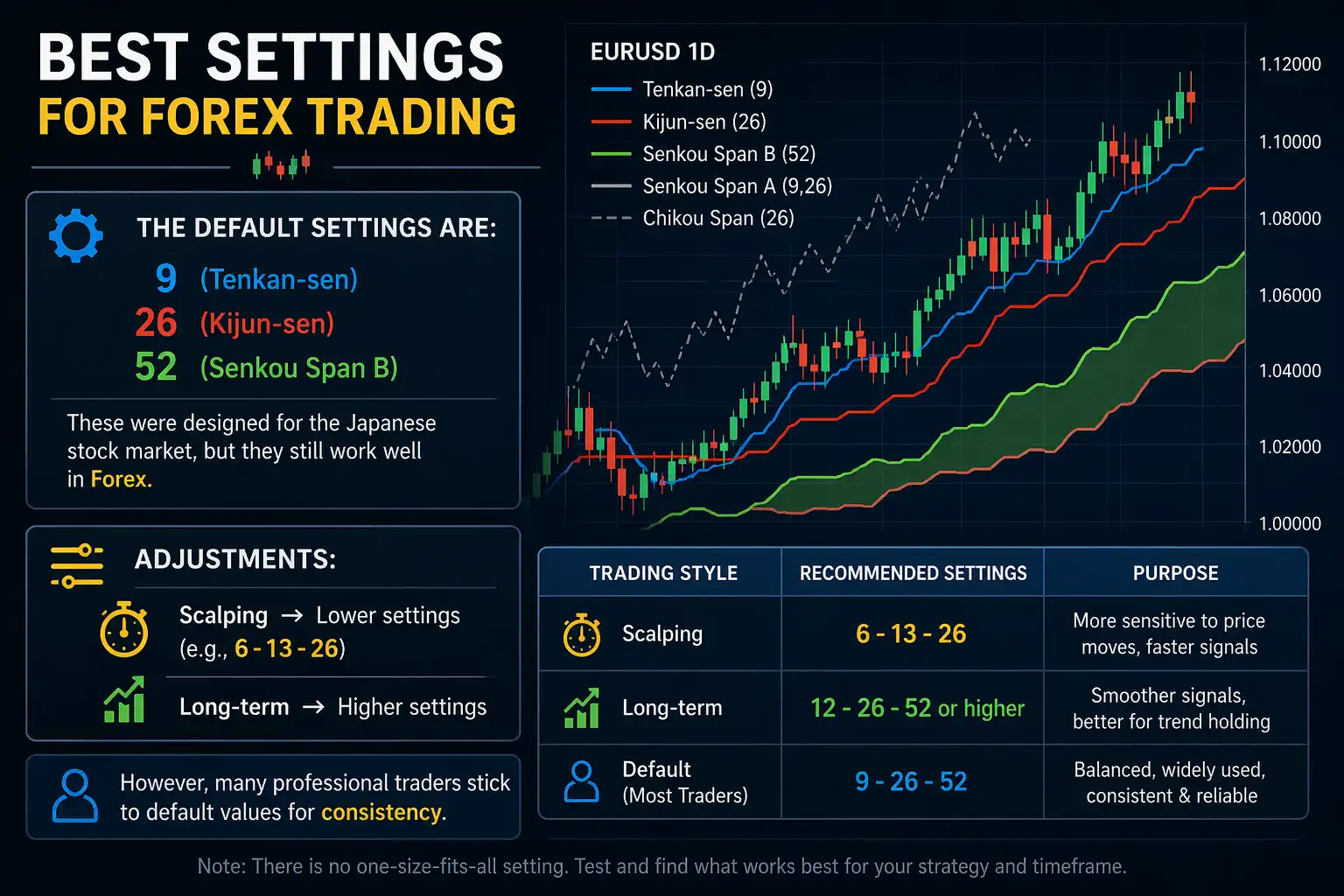
Best Settings for Forex Trading
The default settings are:
- 9 (Tenkan-sen)
- 26 (Kijun-sen)
- 52 (Senkou Span B)
These were designed for the Japanese stock market, but they still work well in Forex.
Adjustments:
- Scalping → Lower settings (e.g., 6-13-26)
- Long-term → Higher settings
However, many professional traders stick to default values for consistency.
Pro Tips to Master Ichimoku
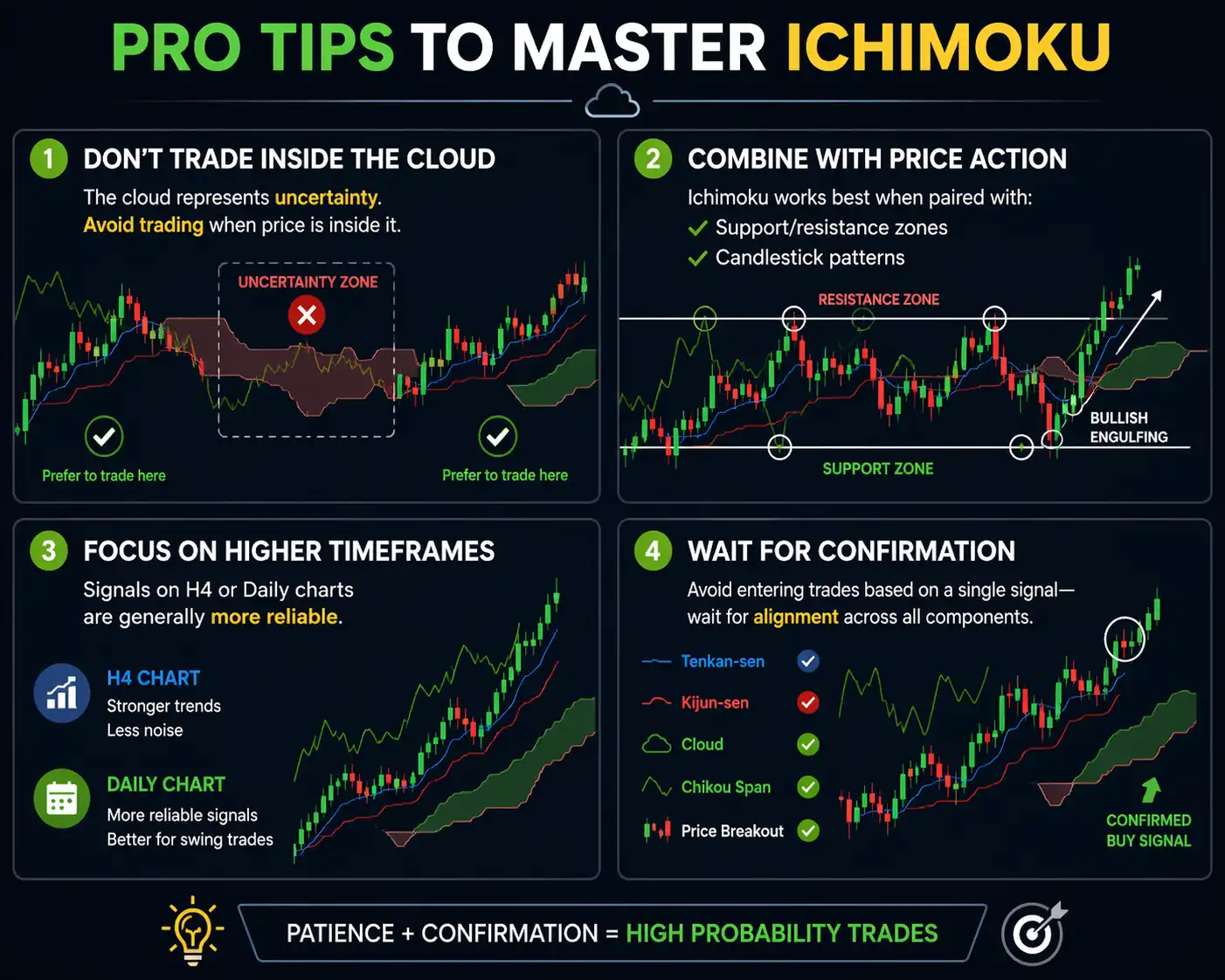
1. Don’t Trade Inside the Cloud
The cloud represents uncertainty. Avoid trading when price is inside it.
2. Combine with Price Action
Ichimoku works best when paired with:
- Support/resistance zones
- Candlestick patterns
3. Focus on Higher Timeframes
Signals on H4 or Daily charts are generally more reliable.
4. Wait for Confirmation
Avoid entering trades based on a single signal—wait for alignment across all components.
Common Mistakes to Avoid
- Trading every crossover without context.
- Ignoring the cloud direction.
- Using Ichimoku in ranging markets.
- Overcomplicating with too many additional indicators.
Conclusion
The Ichimoku Indicator is more than just a tool—it’s a complete trading system that provides deep insight into market structure. While it may seem complex at first, mastering it can significantly improve your ability to identify trends, time entries and manage risk.
By understanding its components, practicing key strategies, and applying proper confirmation techniques, you can use Ichimoku to trade Forex with confidence and precision.