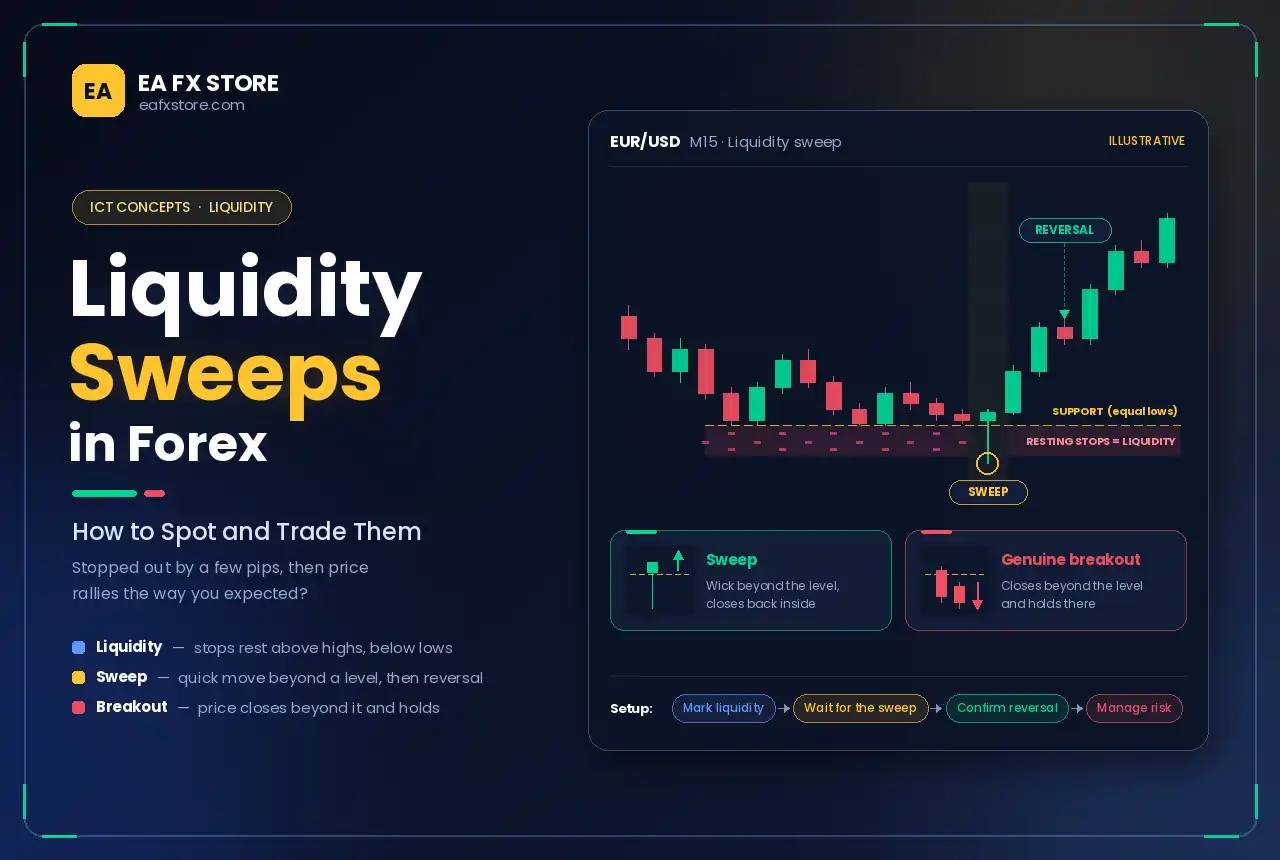


Trading order blocks has become one of the most effective strategies for identifying institutional activity in the Forex market. Unlike traditional retail indicators, order blocks help traders understand where smart money enters and exits the market. If you want to elevate your trading skills and think like a professional, mastering order blocks is a powerful step forward.
In this guide, you’ll learn what order blocks are, how they work, and how to trade them with precision.
What Are Order Blocks?
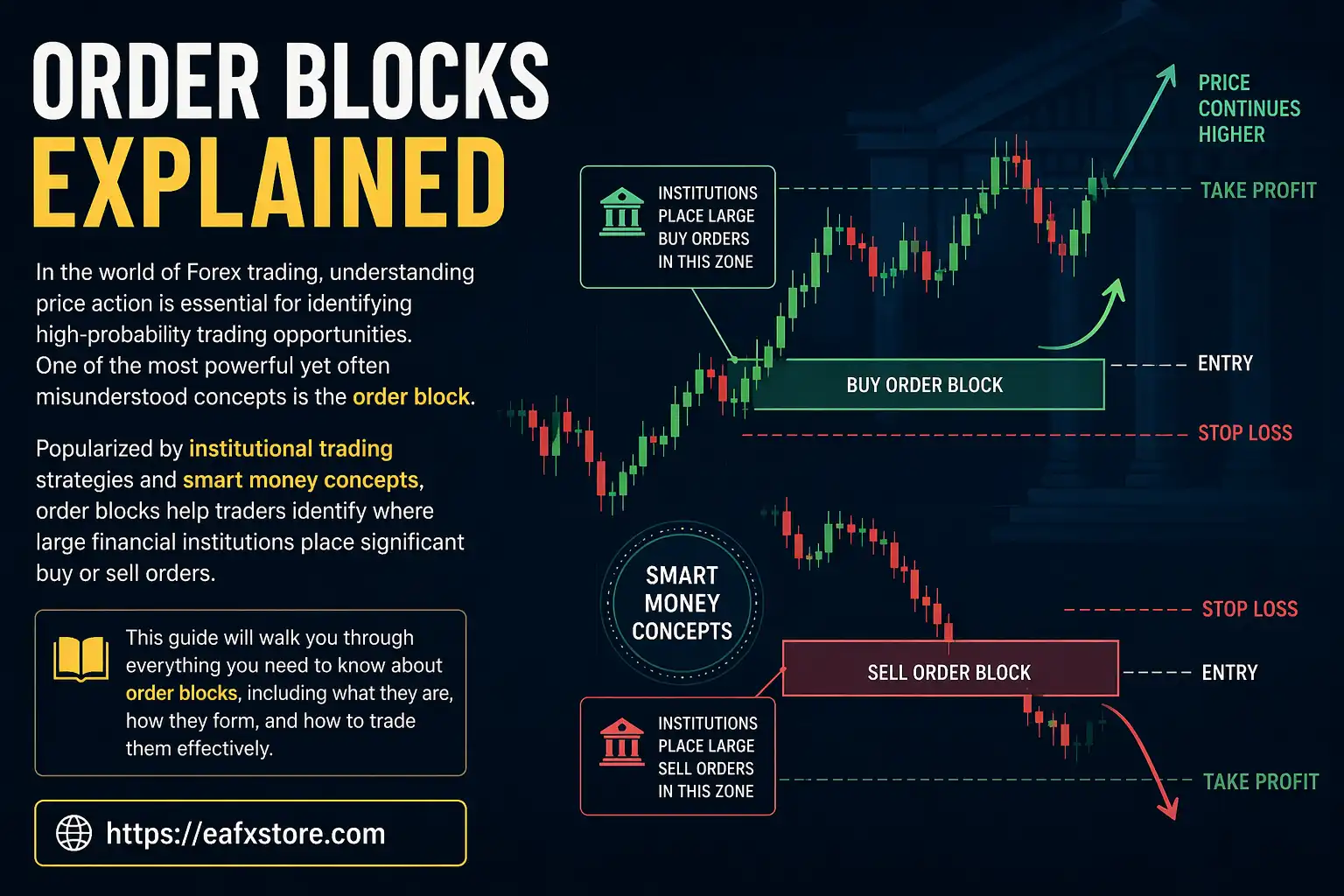
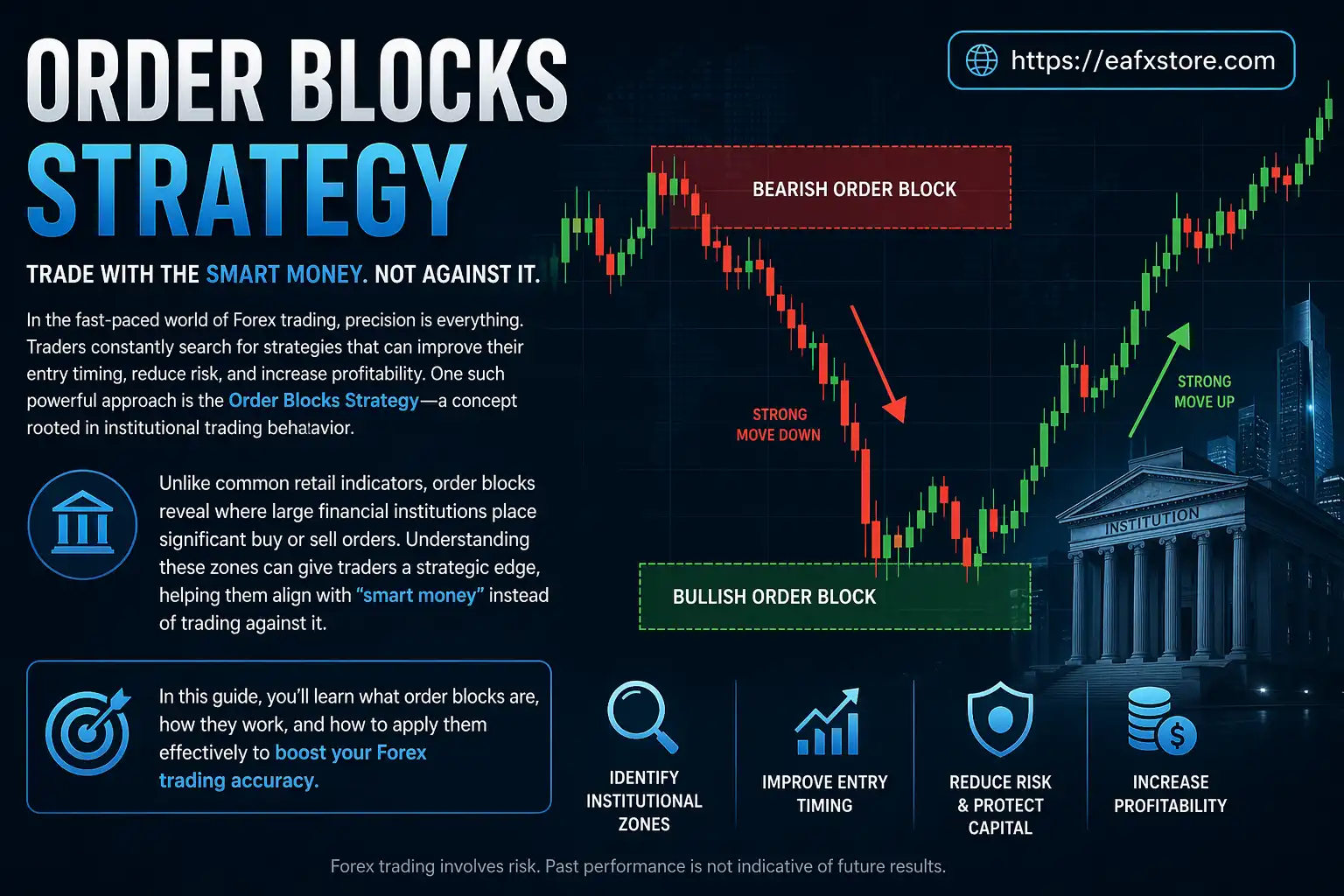
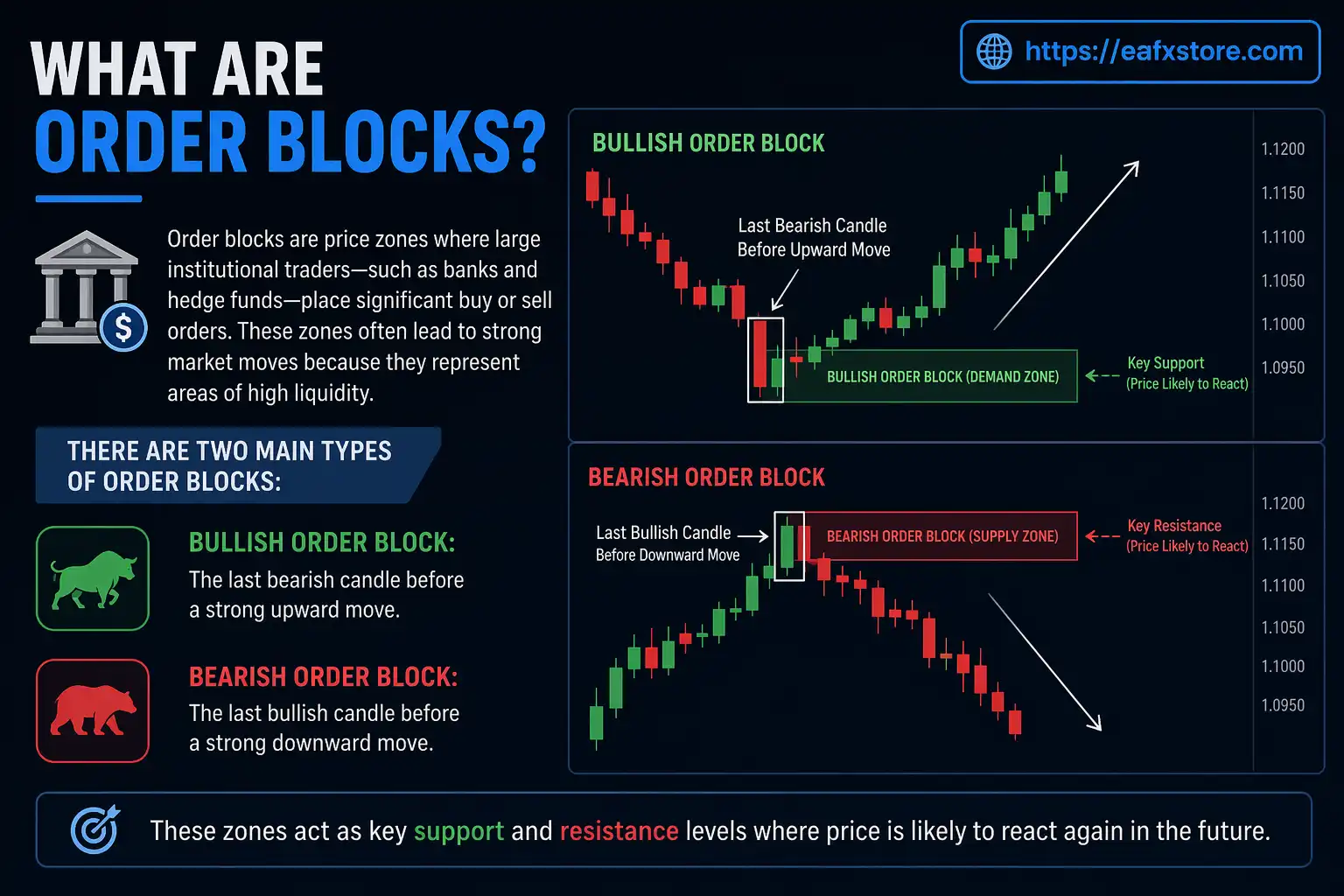
Order blocks are price zones where large institutional traders—such as banks and hedge funds—place significant buy or sell orders. These zones often lead to strong market moves because they represent areas of high liquidity.
There are two main types of order blocks:
- Bullish Order Block: The last bearish candle before a strong upward move.
- Bearish Order Block: The last bullish candle before a strong downward move.
These zones act as key support and resistance levels where price is likely to react again in the future.
Why Order Blocks Matter in Forex Trading
Retail traders often rely on lagging indicators, while institutional traders focus on liquidity and order flow. Order blocks give you insight into where “smart money” is operating.
Here’s why they are important:
- They reveal high-probability entry zones
- They align with market structure and liquidity
- They help avoid false breakouts
- They improve risk-to-reward ratios
Instead of chasing price, you wait for price to return to these zones—just like professional traders do.
How to Identify Order Blocks
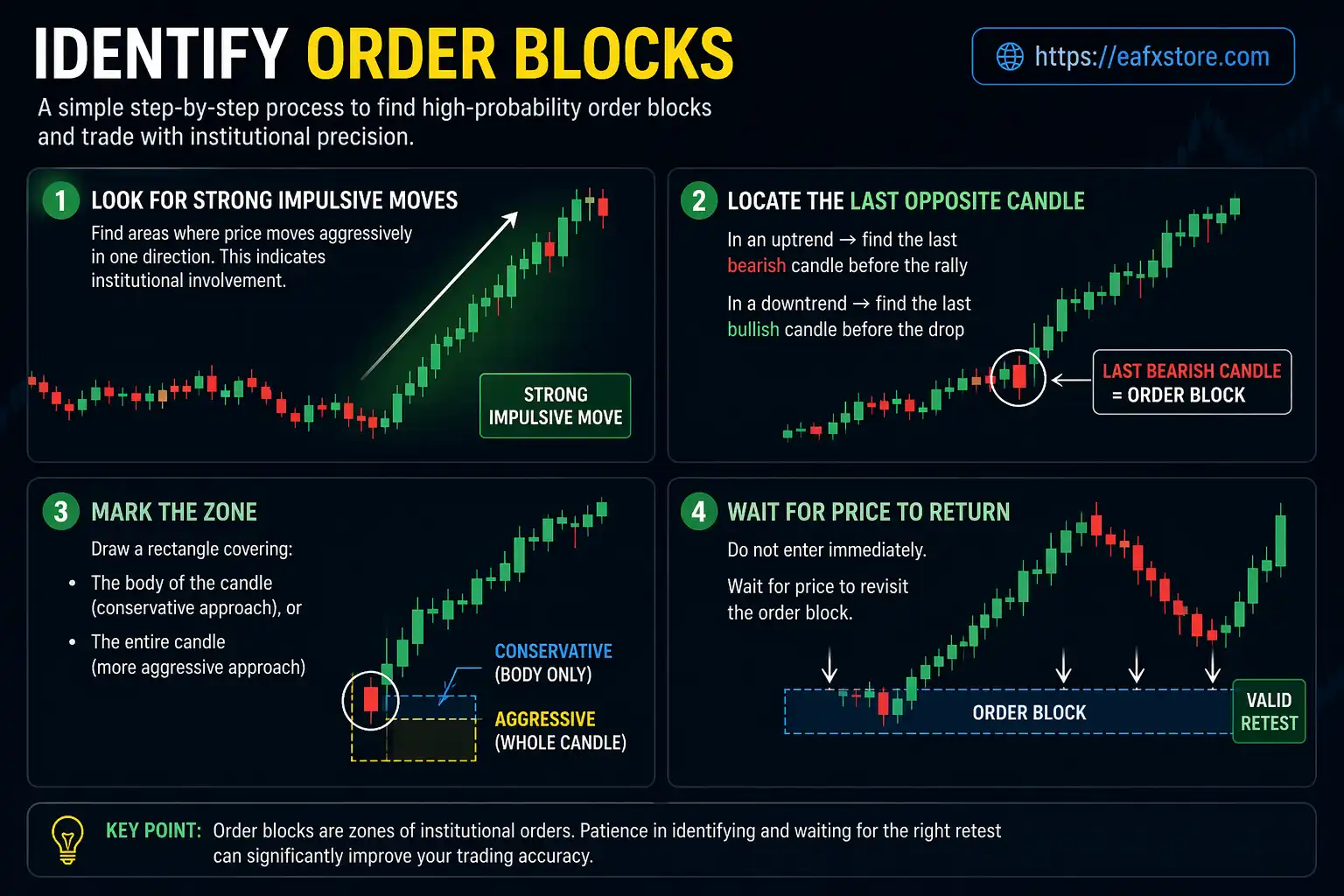
Identifying order blocks requires careful observation of price action. Here’s a simple step-by-step process:
1. Look for Strong Impulsive Moves
Find areas where price moves aggressively in one direction. This indicates institutional involvement.
2. Locate the Last Opposite Candle
- In an uptrend → find the last bearish candle before the rally
- In a downtrend → find the last bullish candle before the drop
This candle forms the order block.
3. Mark the Zone
Draw a rectangle covering:
- The body of the candle (conservative approach), or
- The entire candle (more aggressive approach)
4. Wait for Price to Return
Do not enter immediately. Wait for price to revisit the order block.
Types of Order Blocks
Understanding variations of order blocks can refine your strategy:
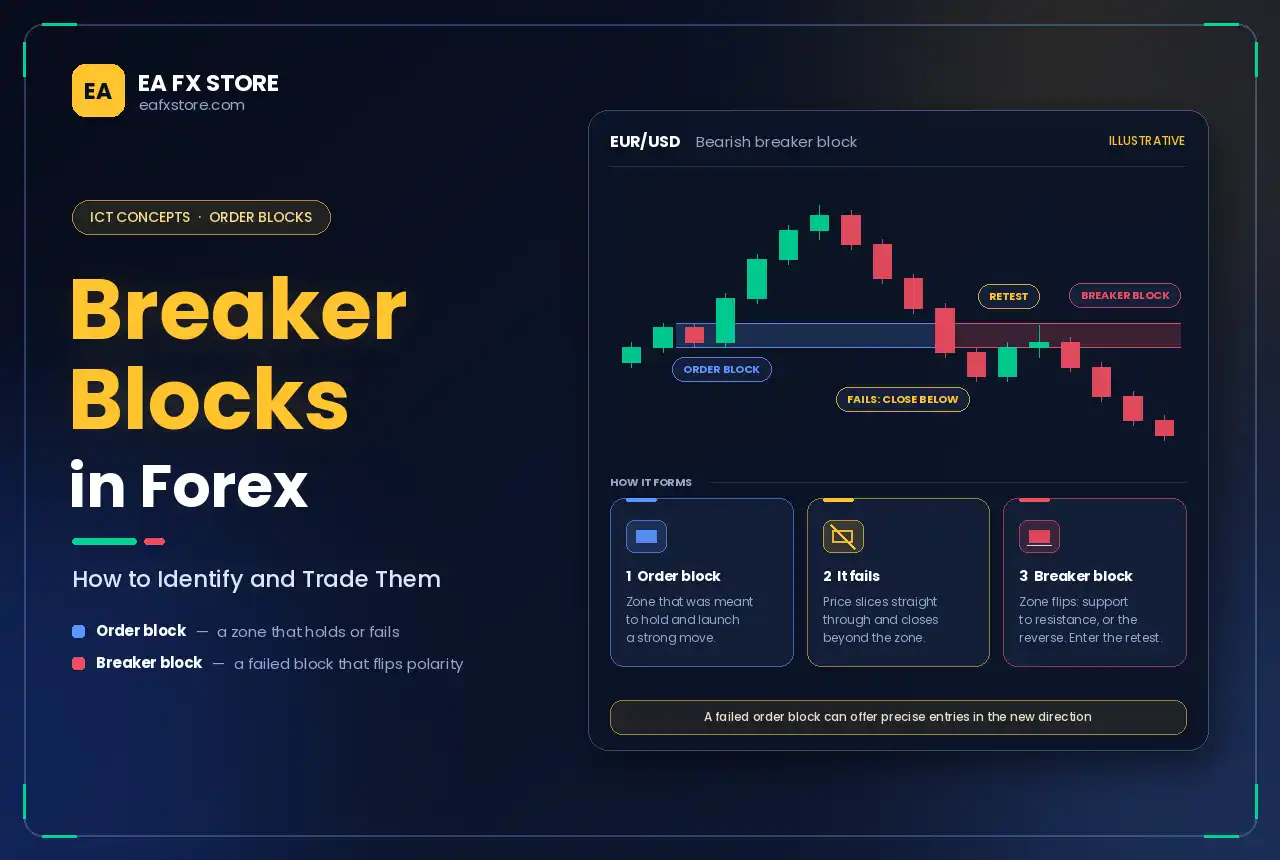
Breaker Blocks
These occur when a valid order block fails and price breaks through it. The zone often flips its role (support becomes resistance and vice versa).
Mitigation Blocks
These are zones where institutions return to “mitigate” or rebalance their positions before continuing the trend.
Rejection Blocks
Quick rejection zones where price sharply reacts, indicating strong institutional defense.
Entry Techniques for Trading Order Blocks
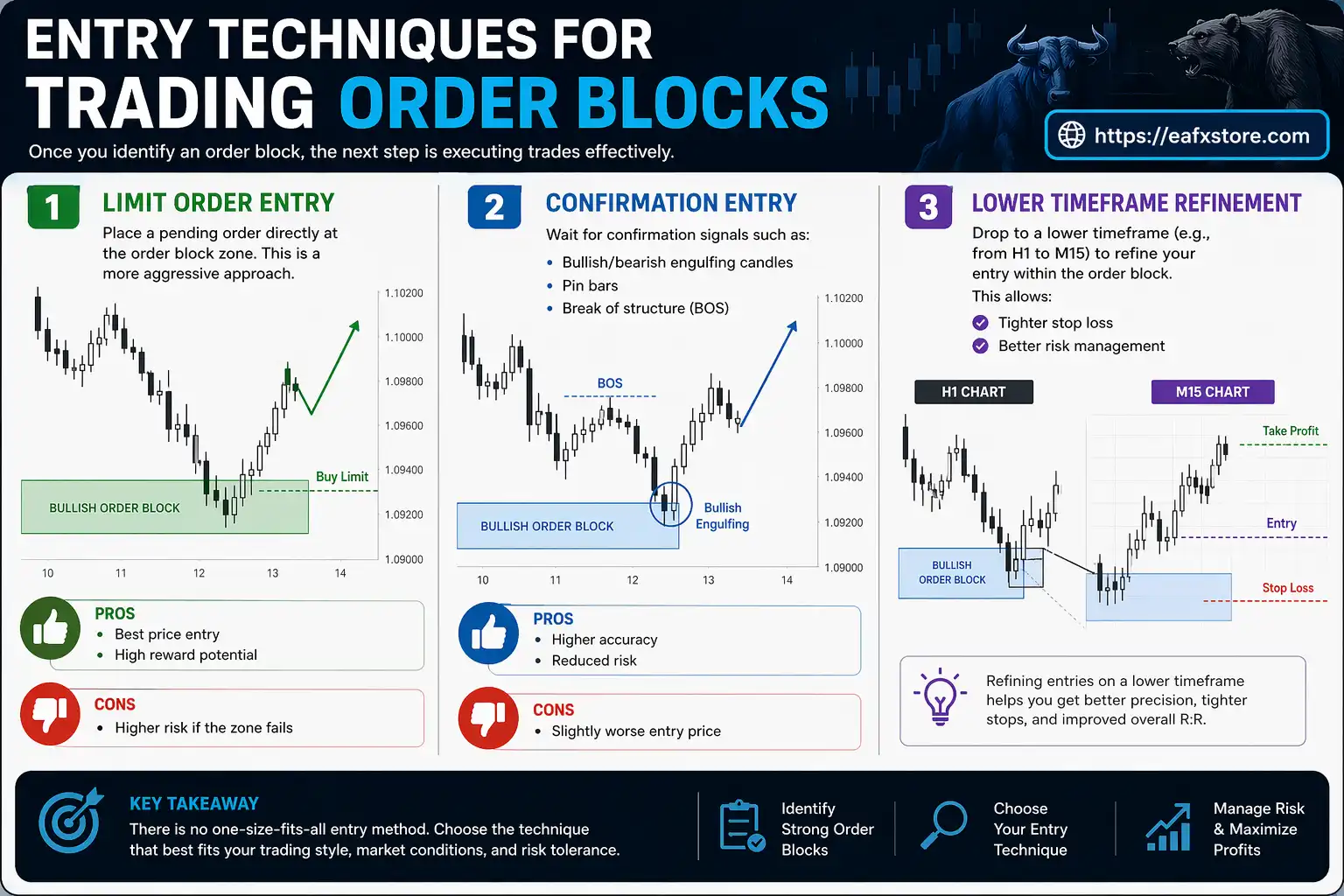
Once you identify an order block, the next step is executing trades effectively.
1. Limit Order Entry
Place a pending order directly at the order block zone. This is a more aggressive approach.
Pros:
- Best price entry.
- High reward potential.
Cons:
- Higher risk if the zone fails.
2. Confirmation Entry
Wait for confirmation signals such as:
- Bullish/bearish engulfing candles.
- Pin bars.
- Break of structure (BOS).
Pros:
- Higher accuracy.
- Reduced risk.
Cons:
- Slightly worse entry price.
3. Lower Timeframe Refinement
Drop to a lower timeframe (e.g., from H1 to M15) to refine your entry within the order block.
This allows:
- Tighter stop loss.
- Better risk management.
Stop Loss and Take Profit Strategy
Risk management is what separates amateurs from professionals.
Stop Loss Placement
- Place your stop loss just beyond the order block zone.
- Avoid placing it too tight to prevent being stopped out by market noise.
Take Profit Targets
Use these methods:
- Previous highs/lows.
- Liquidity zones.
- Risk-to-reward ratio (minimum 1:2 or higher).
Common Mistakes to Avoid
Even though order blocks are powerful, many traders misuse them. Here are key mistakes to avoid:
- Ignoring Market Structure: Order blocks work best when aligned with the overall trend. Avoid trading against strong trends without confirmation.
- Overtrading Zones: Not every order block is valid. Focus only on strong, clean setups with clear impulsive moves.
- Entering Too Early: Patience is critical. Wait for price to return to the zone instead of chasing the move.
- Poor Risk Management: Even high-probability setups can fail. Always use proper position sizing and stop losses.
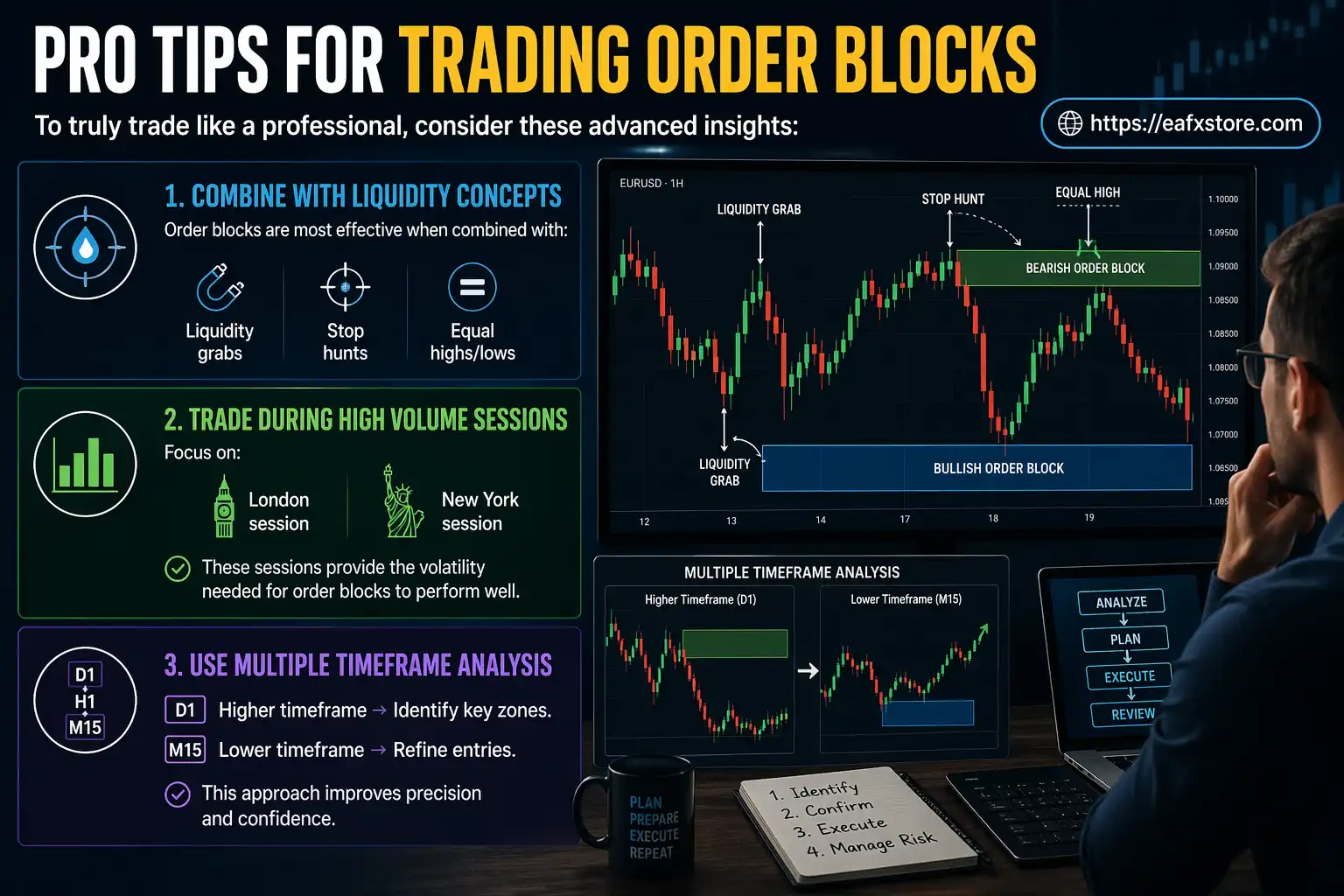
Pro Tips for Trading Order Blocks
To truly trade like a professional, consider these advanced insights:
Combine with Liquidity Concepts
Order blocks are most effective when combined with:
- Liquidity grabs.
- Stop hunts.
- Equal highs/lows.
Trade During High Volume Sessions
Focus on:
- London session.
- New York session.
These sessions provide the volatility needed for order blocks to perform well.
Use Multiple Timeframe Analysis
- Higher timeframe → Identify key zones.
- Lower timeframe → Refine entries.
This approach improves precision and confidence.
Example of an Order Block Trade
Let’s walk through a simple scenario:
- Price is in an uptrend.
- A strong bullish move occurs.
- You identify the last bearish candle before the rally → bullish order block.
- Price retraces back to this zone.
- A bullish engulfing candle forms.
- You enter a buy trade.
- Stop loss below the order block.
- Take profit at previous high.
This is a textbook example of how institutions accumulate positions before pushing price higher.
Final Thoughts
Trading order blocks in Forex is not about predicting the market—it’s about understanding where smart money operates. By focusing on price action, liquidity, and institutional behavior, you can significantly improve your trading performance.
Remember, consistency comes from discipline. Stick to high-quality setups, manage your risk and avoid emotional decisions.
Mastering order blocks takes time, but once you do, you’ll start seeing the market through a completely different lens—one that aligns with how professional traders actually operate.