
The Forex market is one of the most dynamic and liquid financial markets in the world. For beginners, navigating price movements and identifying reliable trading signals can feel overwhelming. That’s where the Ichimoku trading strategy comes in—a powerful, all-in-one indicator system designed to simplify market analysis and improve decision-making.
Originally developed in Japan, the Ichimoku system provides traders with a comprehensive view of price action, trend direction, momentum, and support/resistance levels—all in a single chart. This guide will walk you through everything you need to know about Ichimoku trading, from basic concepts to actionable strategies tailored for Forex beginners.
What is the Ichimoku Indicator?
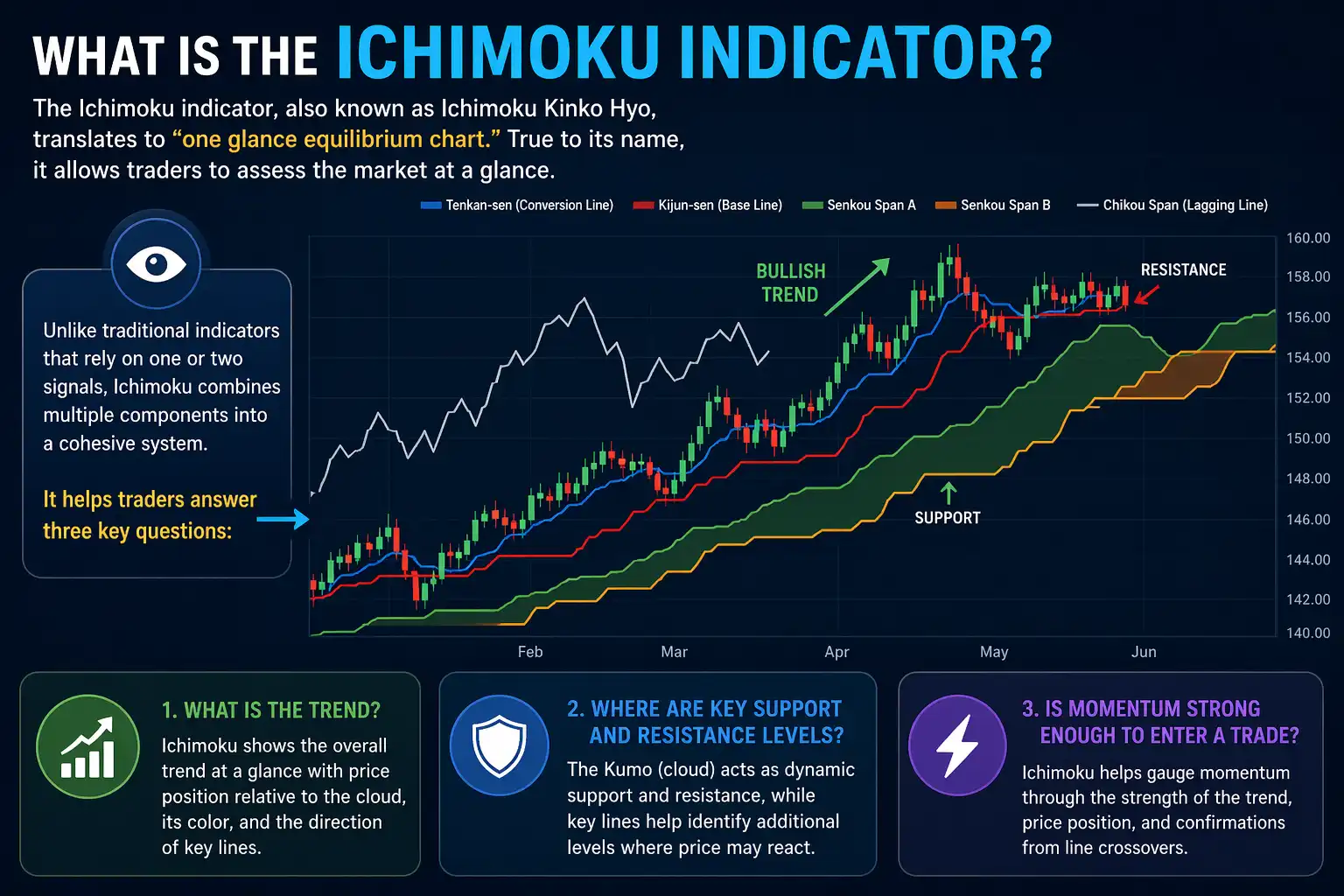
The Ichimoku indicator, also known as Ichimoku Kinko Hyo, translates to “one glance equilibrium chart.” True to its name, it allows traders to assess the market at a glance.
Unlike traditional indicators that rely on one or two signals, Ichimoku combines multiple components into a cohesive system. It helps traders answer three key questions:
- What is the trend?
- Where are key support and resistance levels?
- Is momentum strong enough to enter a trade?
Components of the Ichimoku System
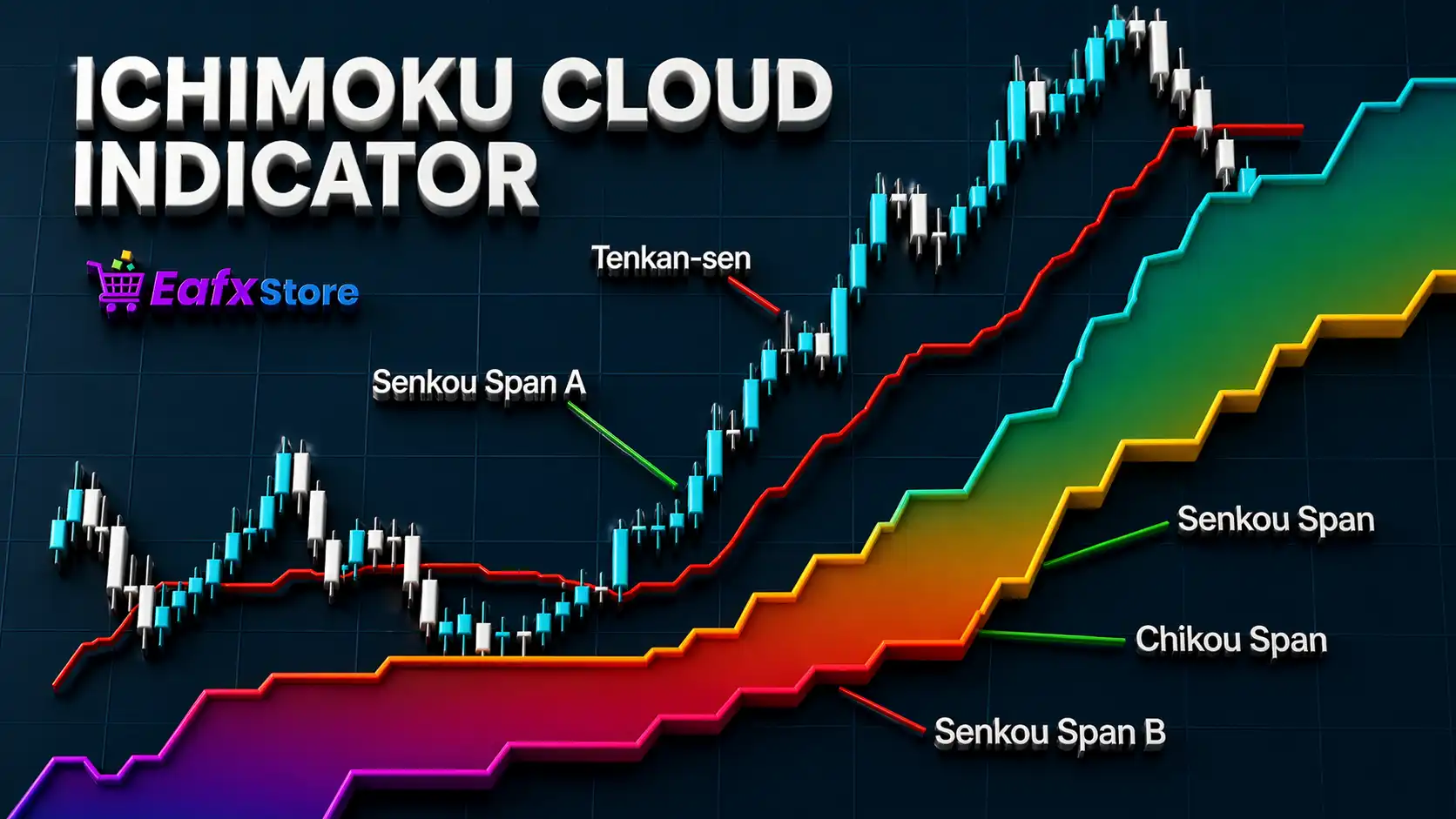
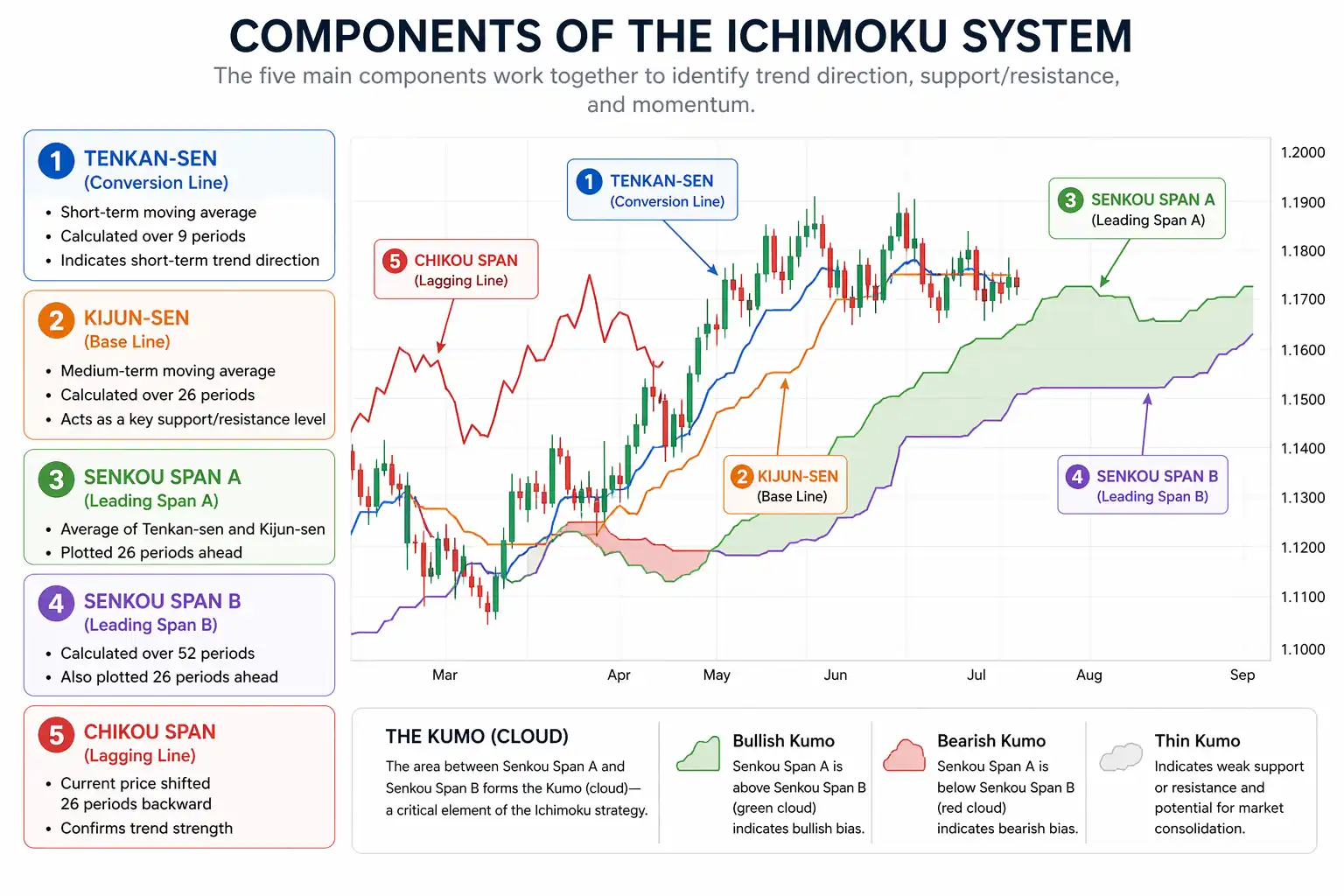
Understanding the five main components is essential before applying the strategy.
1. Tenkan-sen (Conversion Line)
- Short-term moving average
- Calculated over 9 periods
- Indicates short-term trend direction
2. Kijun-sen (Base Line)
- Medium-term moving average
- Calculated over 26 periods
- Acts as a key support/resistance level
3. Senkou Span A (Leading Span A)
- Average of Tenkan-sen and Kijun-sen
- Plotted 26 periods ahead
4. Senkou Span B (Leading Span B)
- Calculated over 52 periods
- Also plotted 26 periods ahead
5. Chikou Span (Lagging Line)
- Current price shifted 26 periods backward
- Confirms trend strength
The area between Senkou Span A and B forms the Kumo (cloud)—a critical element of the Ichimoku strategy.
How to Read the Ichimoku Cloud
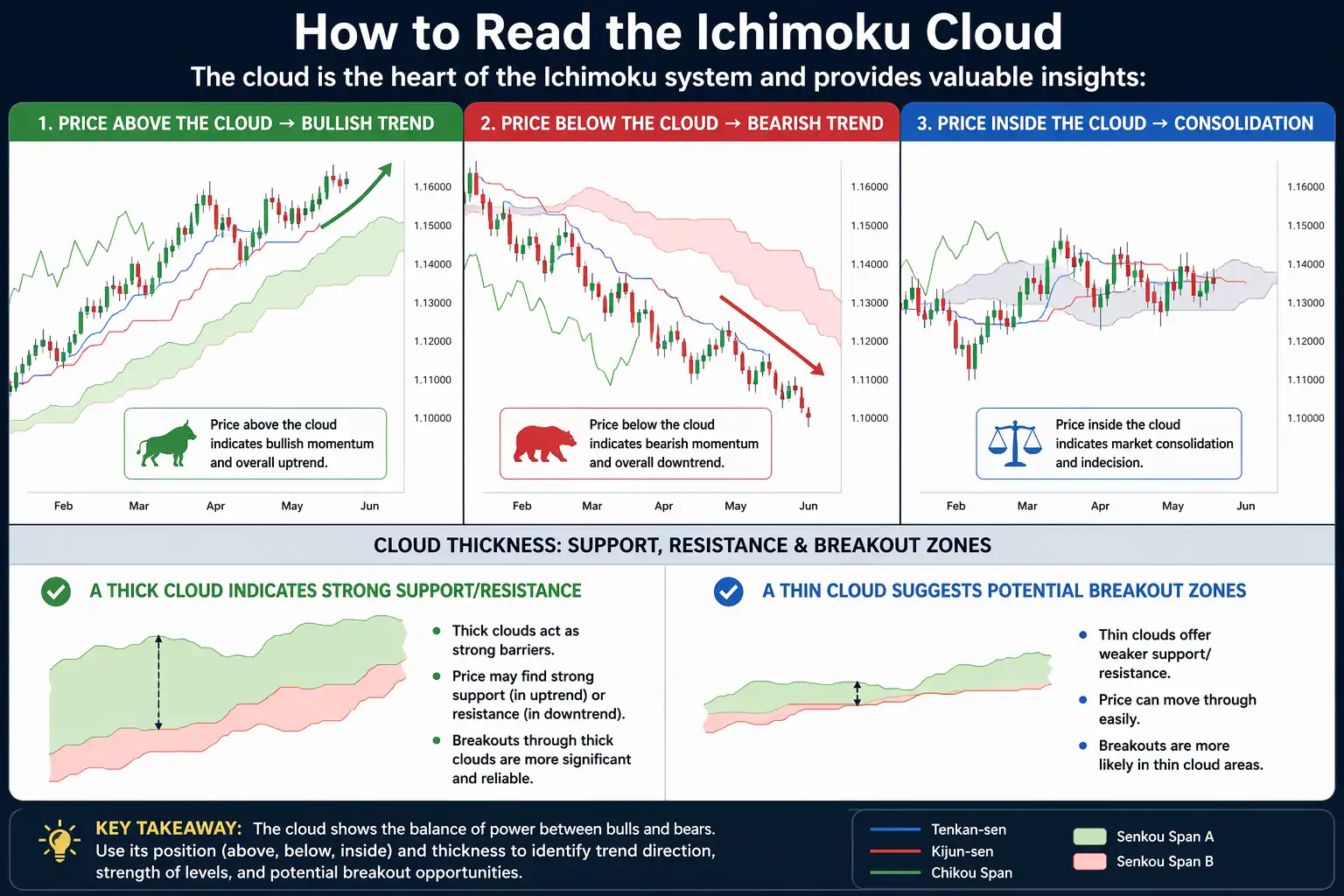
The cloud is the heart of the Ichimoku system and provides valuable insights:
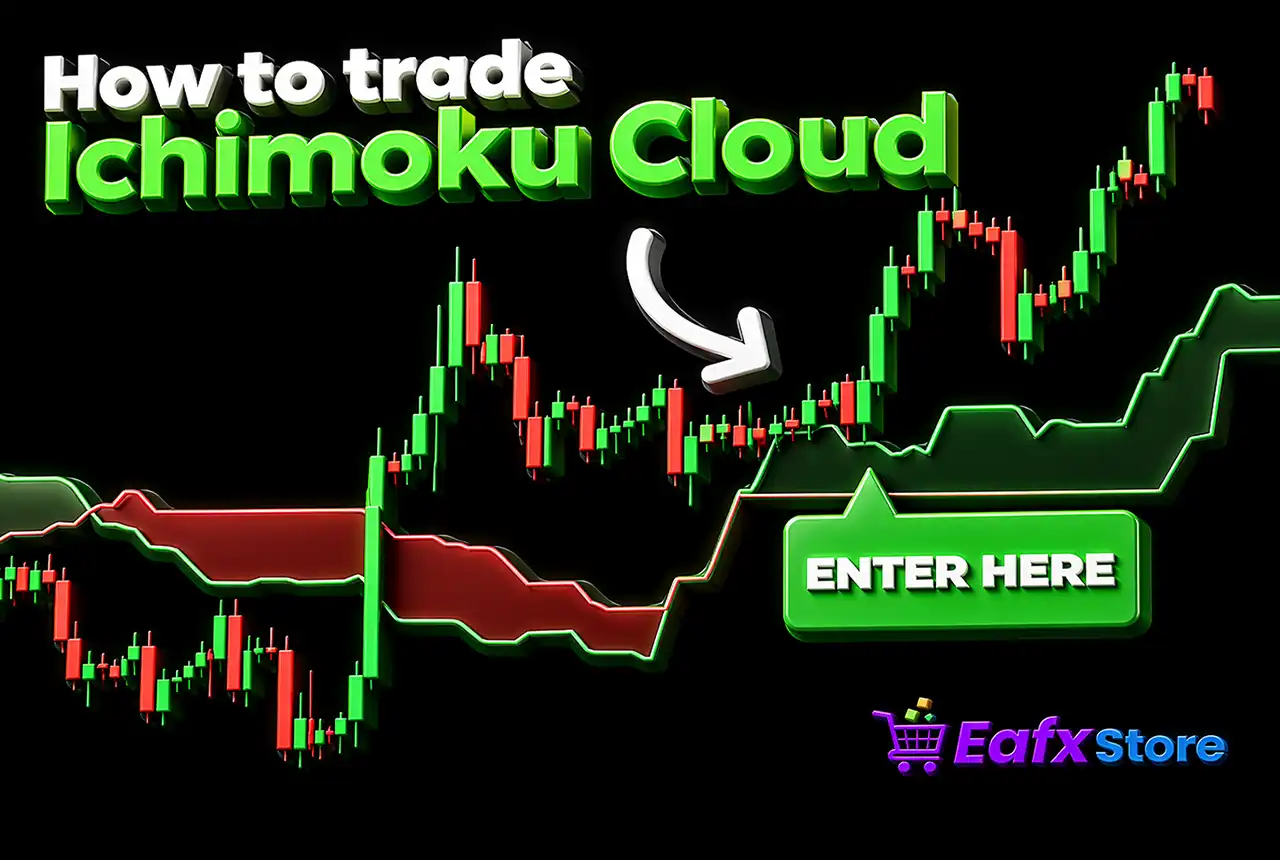
- Price above the cloud → Bullish trend
- Price below the cloud → Bearish trend
- Price inside the cloud → Market consolidation
Additionally:
- A thick cloud indicates strong support/resistance
- A thin cloud suggests potential breakout zones
Basic Ichimoku Trading Strategy for Beginners
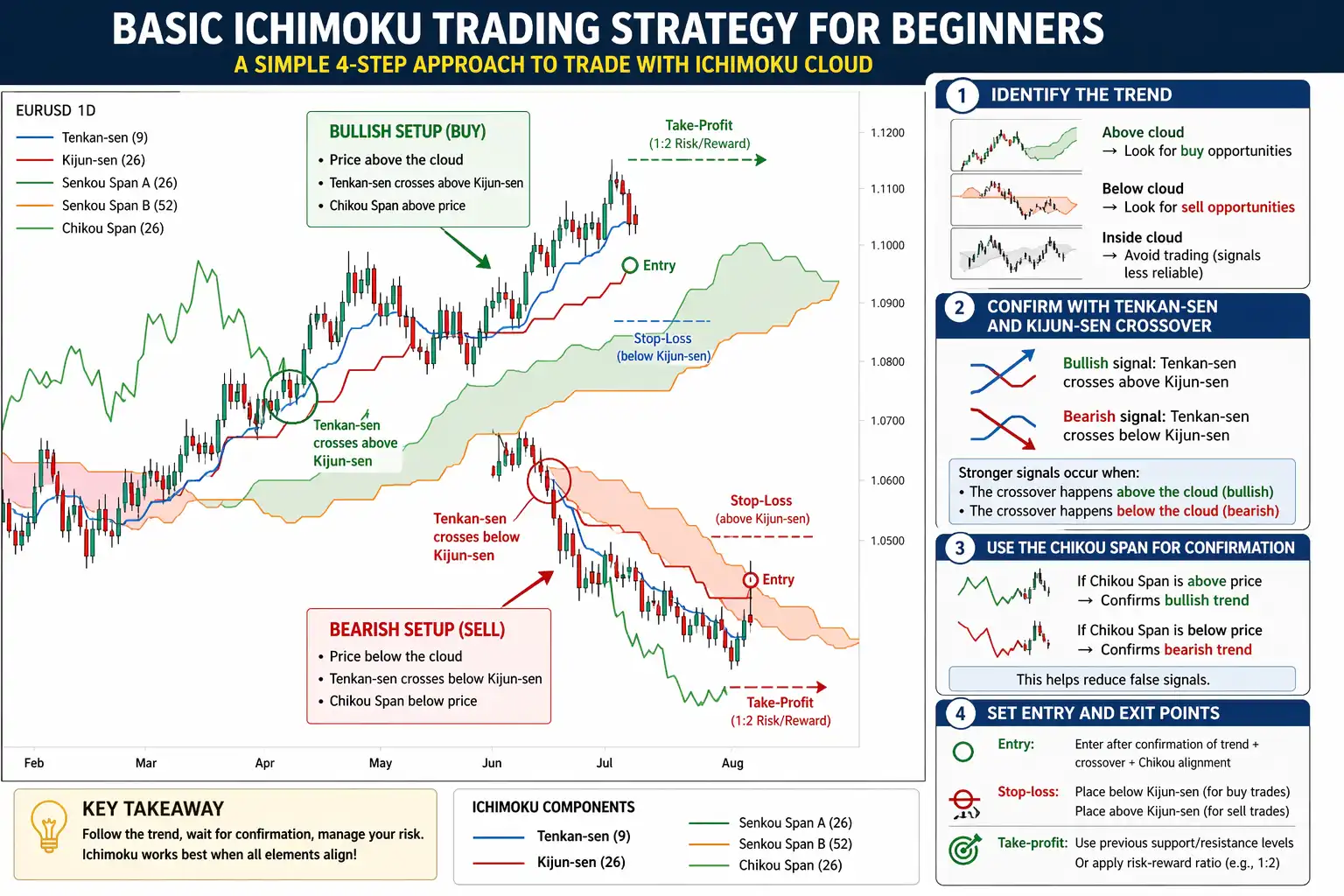
Let’s break down a simple and effective approach for beginners.
1. Identify the Trend
Start by looking at the position of price relative to the cloud:
- Above cloud → Look for buy opportunities
- Below cloud → Look for sell opportunities
Avoid trading when price is inside the cloud, as signals are less reliable.
2. Confirm with Tenkan-sen and Kijun-sen Crossover
A key signal in Ichimoku trading is the crossover:
- Bullish signal: Tenkan-sen crosses above Kijun-sen
- Bearish signal: Tenkan-sen crosses below Kijun-sen
Stronger signals occur when:
- The crossover happens above the cloud (bullish)
- The crossover happens below the cloud (bearish)
3. Use the Chikou Span for Confirmation
The Chikou Span acts as a filter:
- If it is above price → Confirms bullish trend
- If it is below price → Confirms bearish trend
This helps reduce false signals.
4. Set Entry and Exit Points
Entry:
- Enter after confirmation of trend + crossover + Chikou alignment
Stop Loss (SL):
- Place below Kijun-sen (for buy trades)
- Place above Kijun-sen (for sell trades)
Take Profit (TP):
- Use previous support/resistance levels
- Or apply risk-reward ratio (e.g., 1:2)
Advanced Ichimoku Strategies
Once you understand the basics, you can explore more advanced techniques.
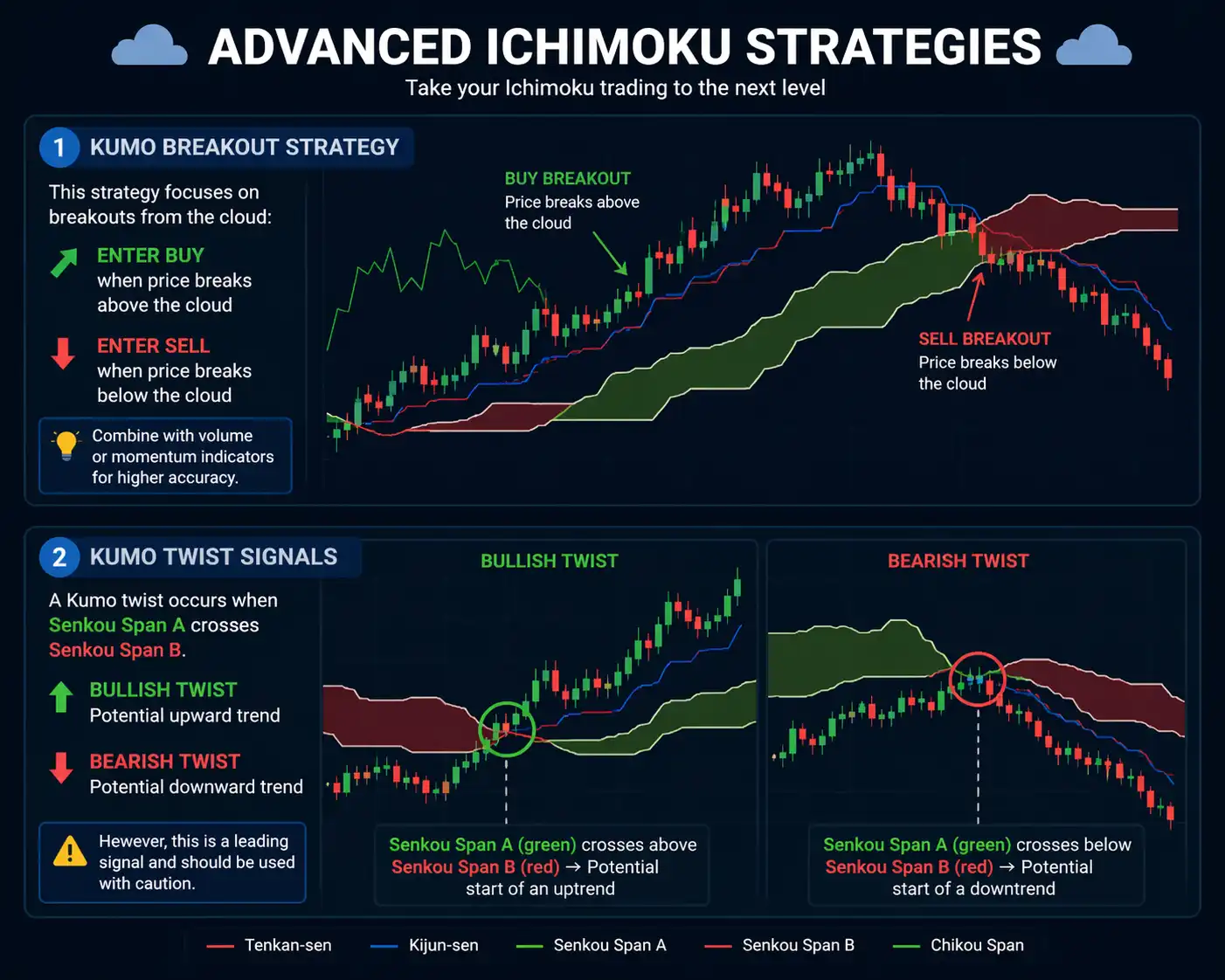
1. Kumo Breakout Strategy
This strategy focuses on breakouts from the cloud:
- Enter buy when price breaks above the cloud
- Enter sell when price breaks below the cloud
Combine with volume or momentum indicators for higher accuracy.
2. Kumo Twist Signals
A Kumo twist occurs when Senkou Span A crosses Senkou Span B.
- Bullish twist → Potential upward trend
- Bearish twist → Potential downward trend
However, this is a leading signal and should be used with caution.
Best Timeframes for Ichimoku Trading
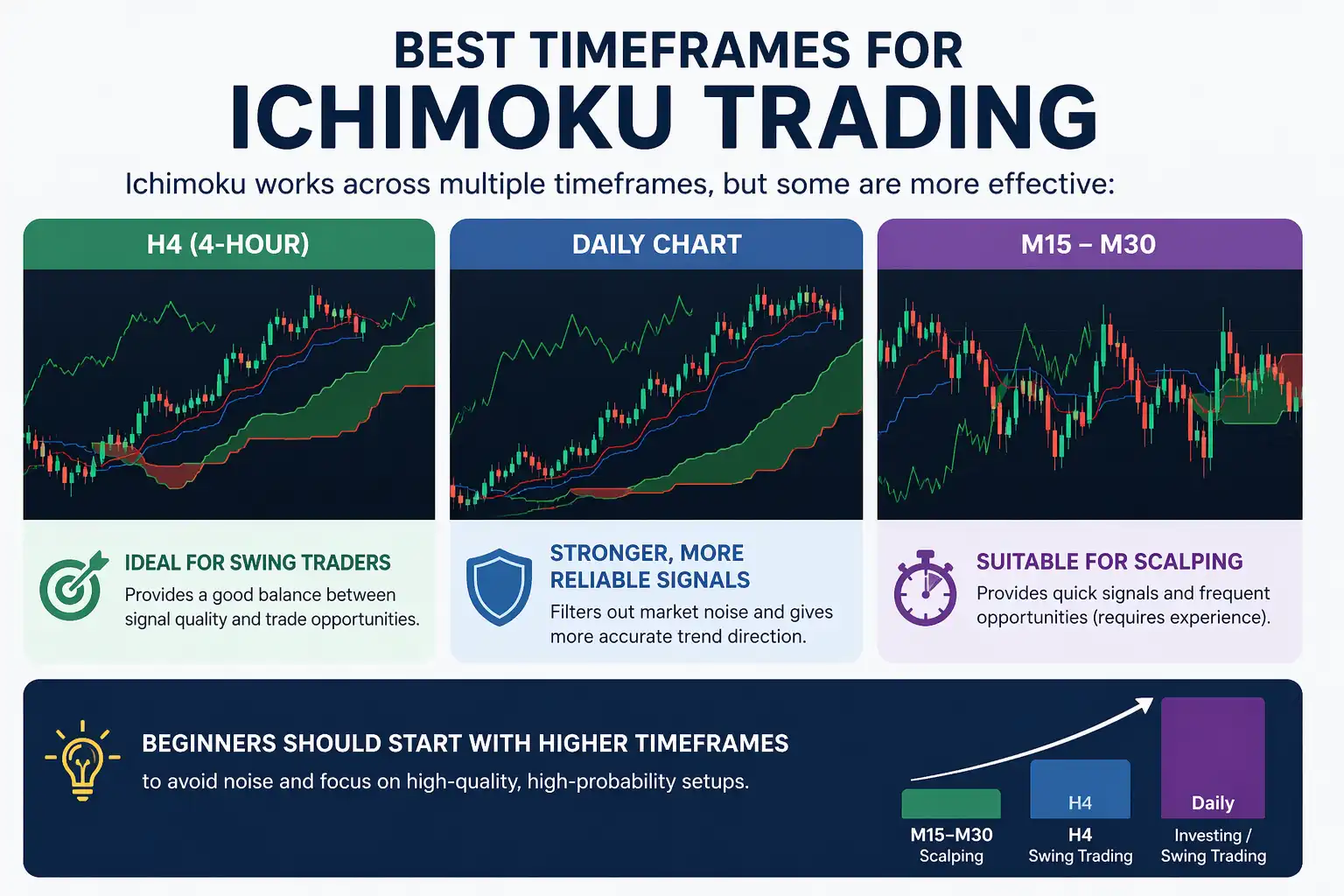
Ichimoku works across multiple timeframes, but some are more effective:
- H4 (4-hour) → Ideal for swing traders
- Daily chart → Stronger, more reliable signals
- M15–M30 → Suitable for scalping (requires experience)
Beginners should start with higher timeframes to avoid noise.
Advantages of the Ichimoku Strategy
- All-in-one indicator system.
- Clear trend identification.
- Built-in support and resistance.
- Works well in trending markets.
- Reduces need for multiple indicators.
Disadvantages to Consider
- Can look complex at first.
- Less effective in sideways markets.
- Requires practice to master.
- Signals may lag in fast-moving markets.
Common Mistakes Beginners Should Avoid
- Trading inside the cloud This is a zone of uncertainty—avoid entering trades here.
- Ignoring the overall trend Always align trades with the bigger picture.
- Overcomplicating the system Ichimoku is already comprehensive—don’t add too many indicators.
- Skipping confirmation signals Use all components together for better accuracy.
Tips to Improve Your Ichimoku Trading
- Practice on a demo account before trading real money.
- Combine Ichimoku with price action analysis.
- Focus on high-probability setups only.
- Keep a trading journal to track performance.
- Be patient—quality over quantity.
Conclusion
The Ichimoku Trading Strategy is a powerful tool for Forex beginners who want a structured and visual approach to market analysis. By combining trend detection, momentum, and support/resistance into one system, it simplifies trading decisions and improves consistency.
While it may seem complex at first, mastering Ichimoku can give you a significant edge in the Forex market. Start with the basics, practice regularly and gradually incorporate advanced strategies as your confidence grows.
FAQs
1. Is Ichimoku suitable for beginners?
Yes, although it looks complex, it becomes intuitive with practice and offers a complete trading framework.
2. Can Ichimoku be used alone?
Yes, it is designed as a standalone system, but combining it with price action can enhance results.
3. Which currency pairs work best?
Major pairs like EUR/USD, GBP/USD, and USD/JPY tend to work well due to strong trends.
4. Is Ichimoku good for scalping?
It can be used for scalping, but beginners should stick to higher timeframes first.