
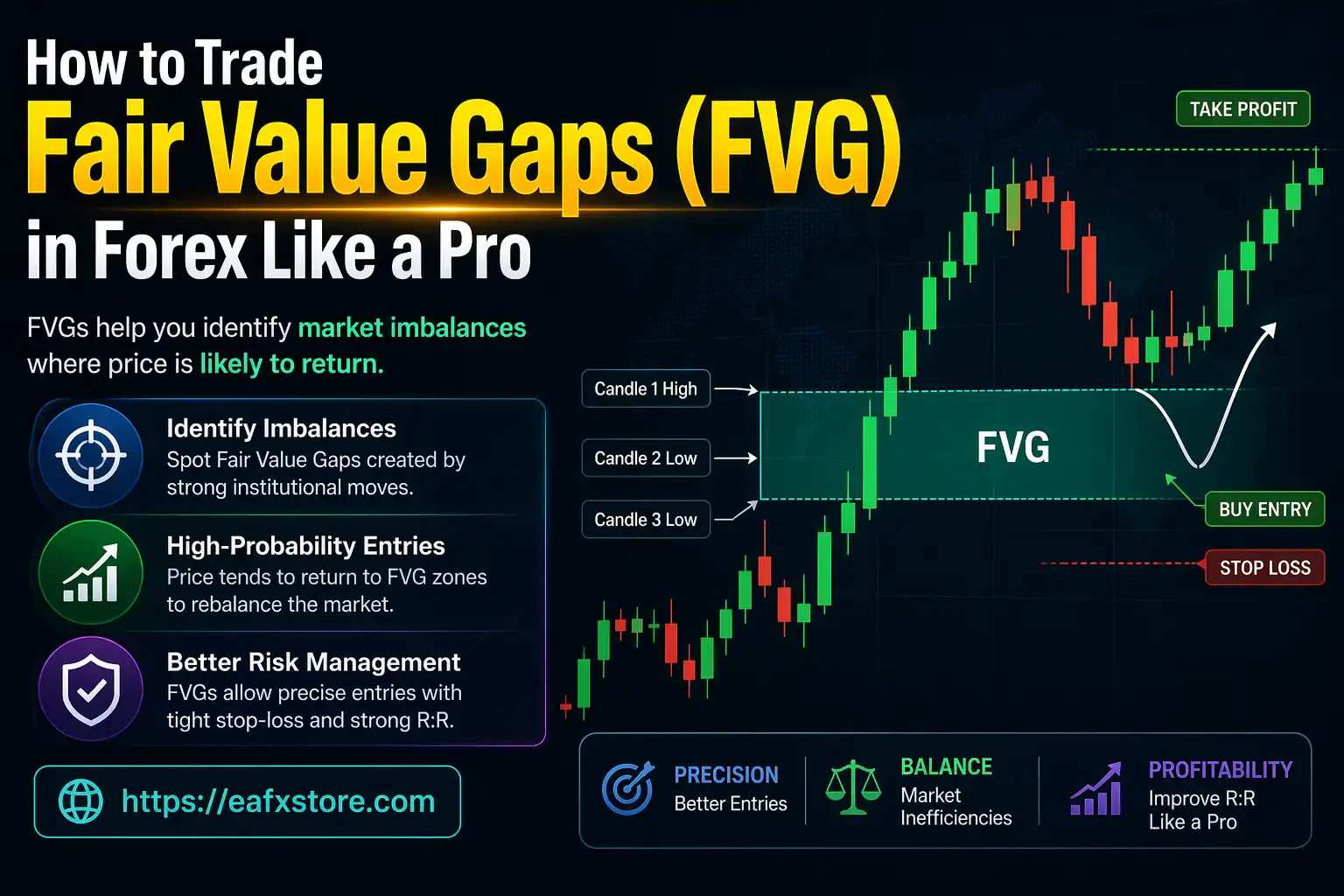
Fair Value Gaps (FVG) have become one of the most powerful concepts in modern price action trading. Popularized by institutional trading strategies, FVGs help traders identify imbalances in the market where price is likely to return. If used correctly, they can significantly improve your entry precision and risk-to-reward ratio.
In this guide, you’ll learn what Fair Value Gaps are, why they matter and how to trade them like a professional forex trader.
What is a Fair Value Gap (FVG)?
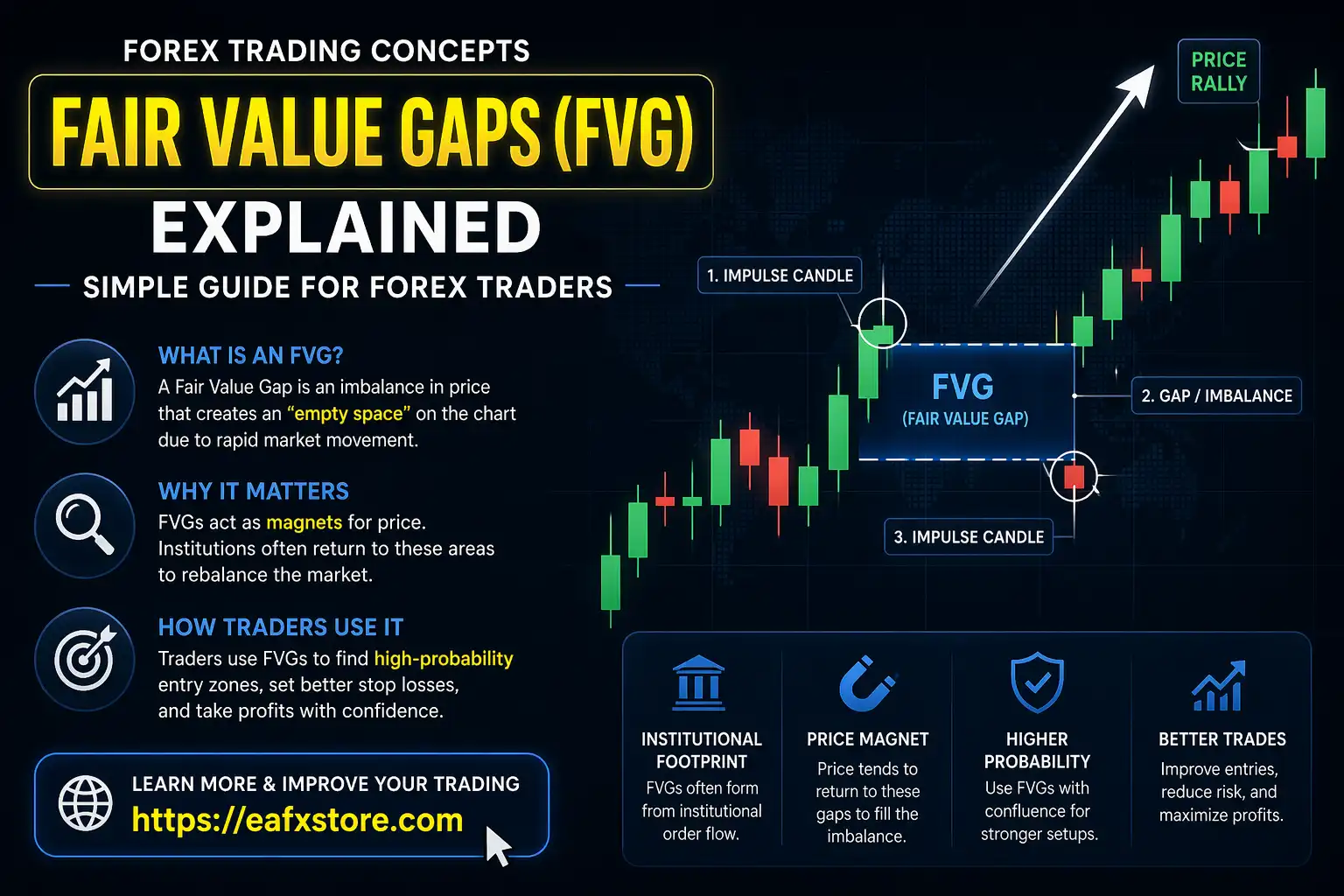
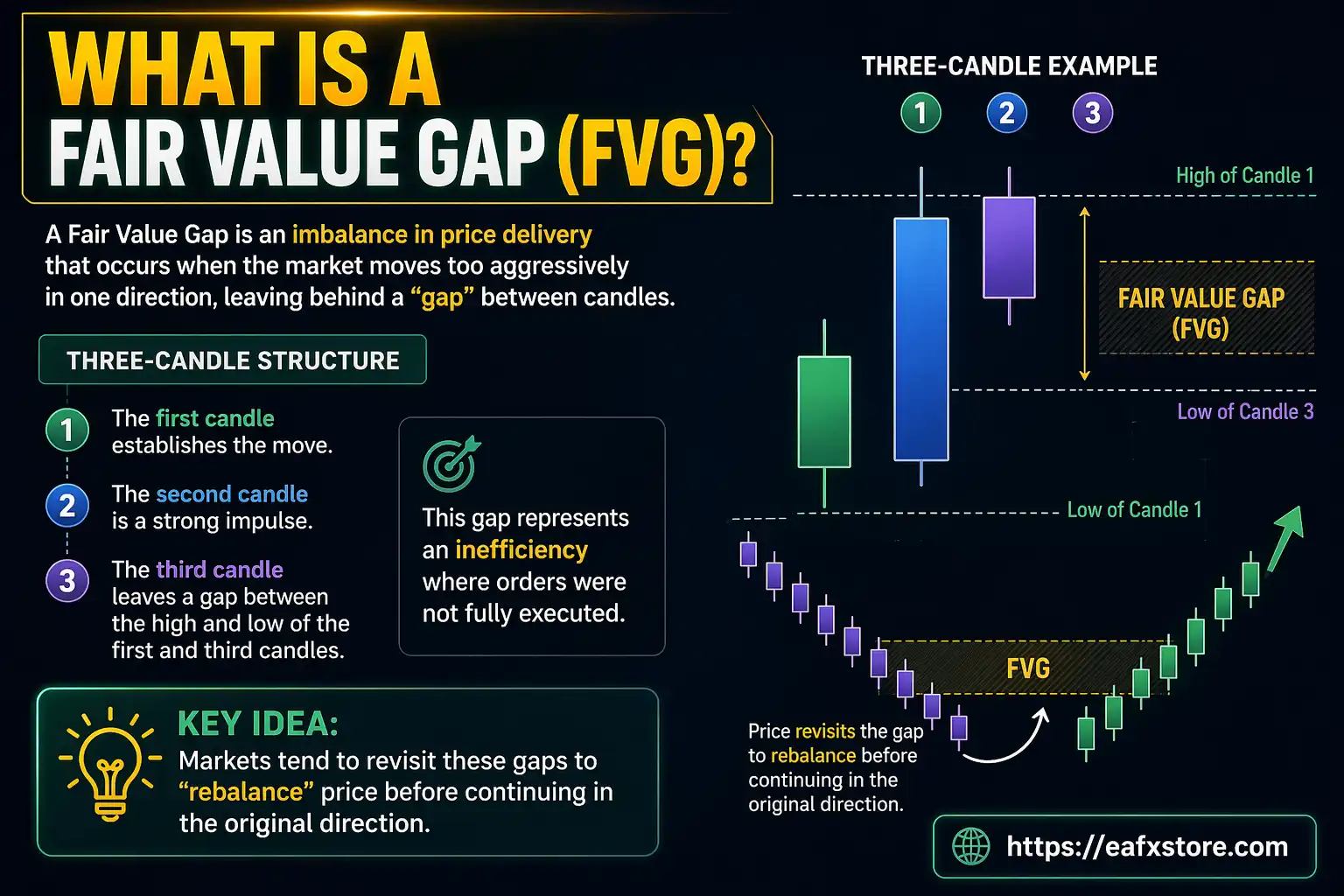
A Fair Value Gap is an imbalance in price delivery that occurs when the market moves too aggressively in one direction, leaving behind a “gap” between candles.
Typically, an FVG forms in a three-candle structure:
- The first candle establishes the move.
- The second candle is a strong impulse.
- The third candle leaves a gap between the high and low of the first and third candles.
This gap represents an inefficiency where orders were not fully executed.
Key Idea:
Markets tend to revisit these gaps to “rebalance” price before continuing in the original direction.
Why Fair Value Gaps Matter in Forex Trading
Understanding FVGs gives you insight into institutional behavior. Large players (banks, hedge funds) often create these imbalances when entering positions.
Here’s why FVGs are important:
- Precision Entries: Instead of chasing price, you wait for it to return to the gap.
- Better Risk Management: Tighter stop-loss placement.
- High Probability Setups: Aligns with institutional order flow.
In short, FVGs help you trade smarter, not harder.
Types of Fair Value Gaps
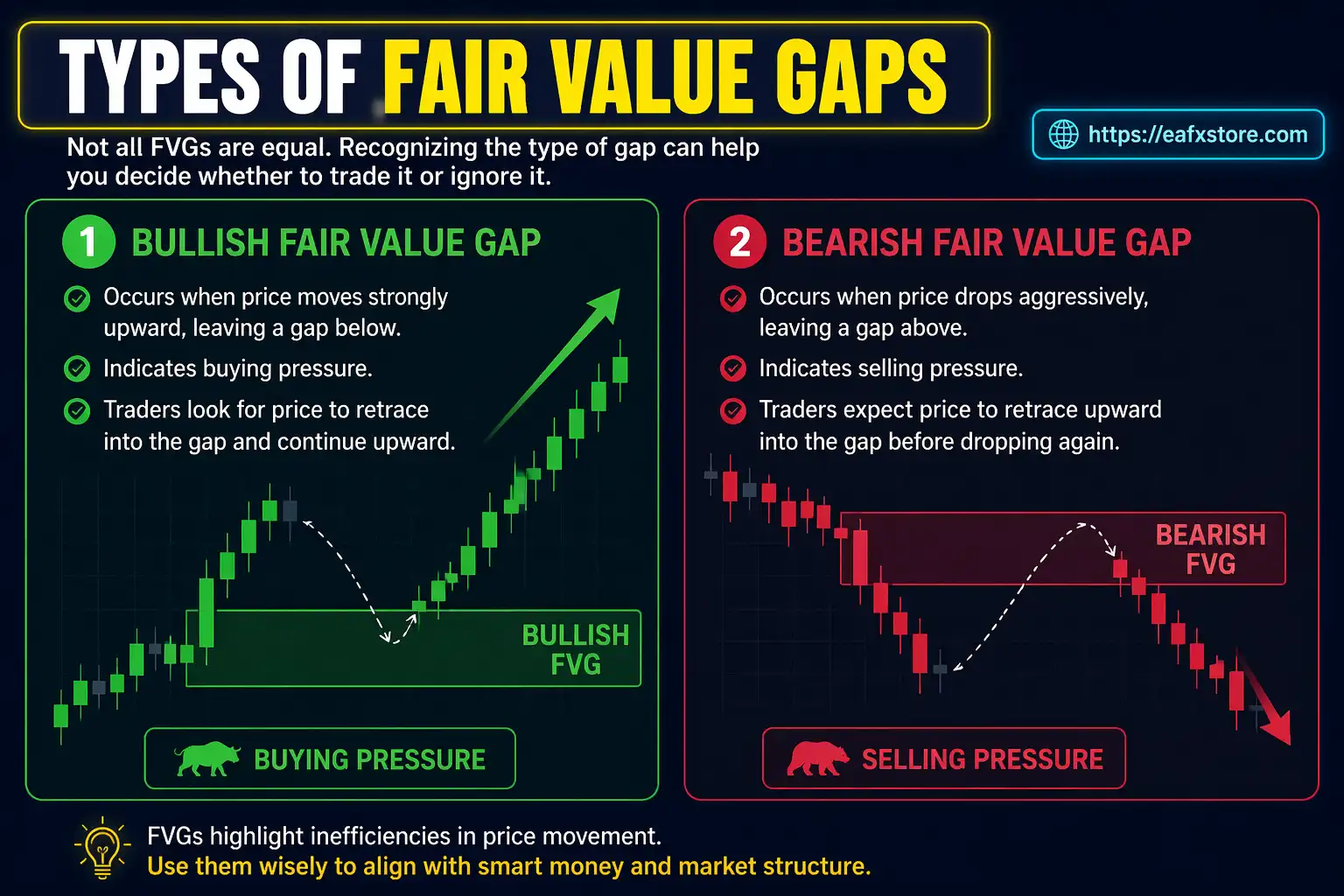
Not all FVGs are equal. Recognizing the type of gap can help you decide whether to trade it or ignore it.
Bullish Fair Value Gap
Occurs when price moves strongly upward, leaving a gap below.
- Indicates buying pressure.
- Traders look for price to retrace into the gap and continue upward.
Bearish Fair Value Gap
Occurs when price drops aggressively, leaving a gap above.
- Indicates selling pressure.
- Traders expect price to retrace upward into the gap before dropping again.
How to Identify a Valid FVG
To trade FVGs effectively, you need to filter out low-quality setups.
Here’s what to look for:
- Strong Impulse Move: The middle candle should be large and decisive.
- Clear Gap: There must be a visible imbalance between candles.
- Market Structure Alignment: FVG should align with trend direction.
- Location Matters: Higher timeframe FVGs are more reliable.
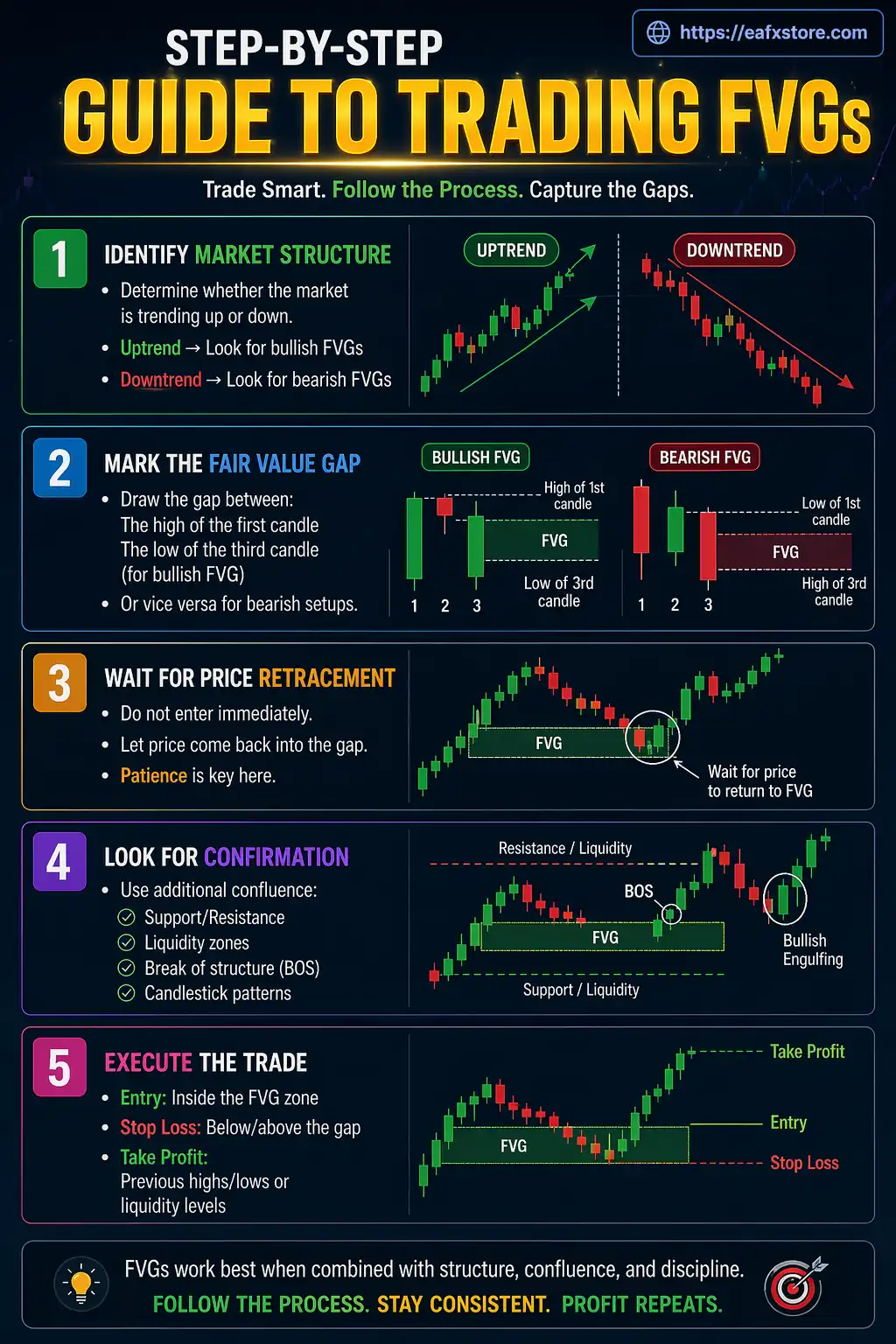
Step-by-Step Guide to Trading FVGs
Step 1: Identify Market Structure
Determine whether the market is trending up or down.
- Uptrend → Look for bullish FVGs
- Downtrend → Look for bearish FVGs
Step 2: Mark the Fair Value Gap
Draw the gap between:
- The high of the first candle
- The low of the third candle (for bullish FVG)
Or vice versa for bearish setups.
Step 3: Wait for Price Retracement
Do not enter immediately. Let price come back into the gap.
Patience is key here.
Step 4: Look for Confirmation
Use additional confluence:
- Support/Resistance
- Liquidity zones
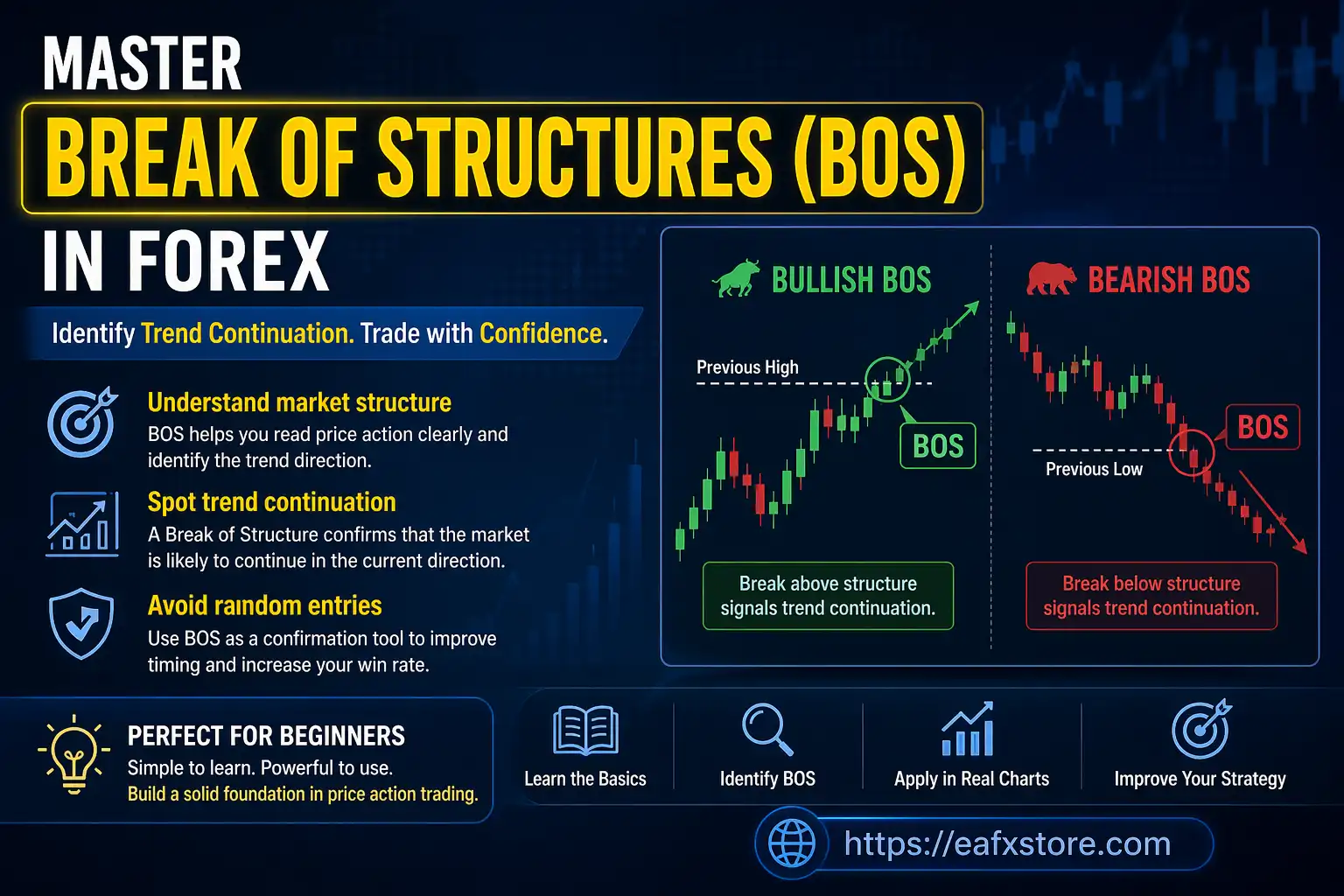
- Break of structure (BOS)
- Candlestick patterns
Step 5: Execute the Trade
- Entry: Inside the FVG zone
- Stop Loss: Below/above the gap
- Take Profit: Previous highs/lows or liquidity levels
Example Trade Setup
| Element | Bullish Setup Example | Bearish Setup Example |
|---|---|---|
| Market Trend | Uptrend | Downtrend |
| FVG Location | Below current price | Above current price |
| Entry | Inside the gap | Inside the gap |
| Stop Loss | Below FVG | Above FVG |
| Take Profit | Previous high | Previous low |
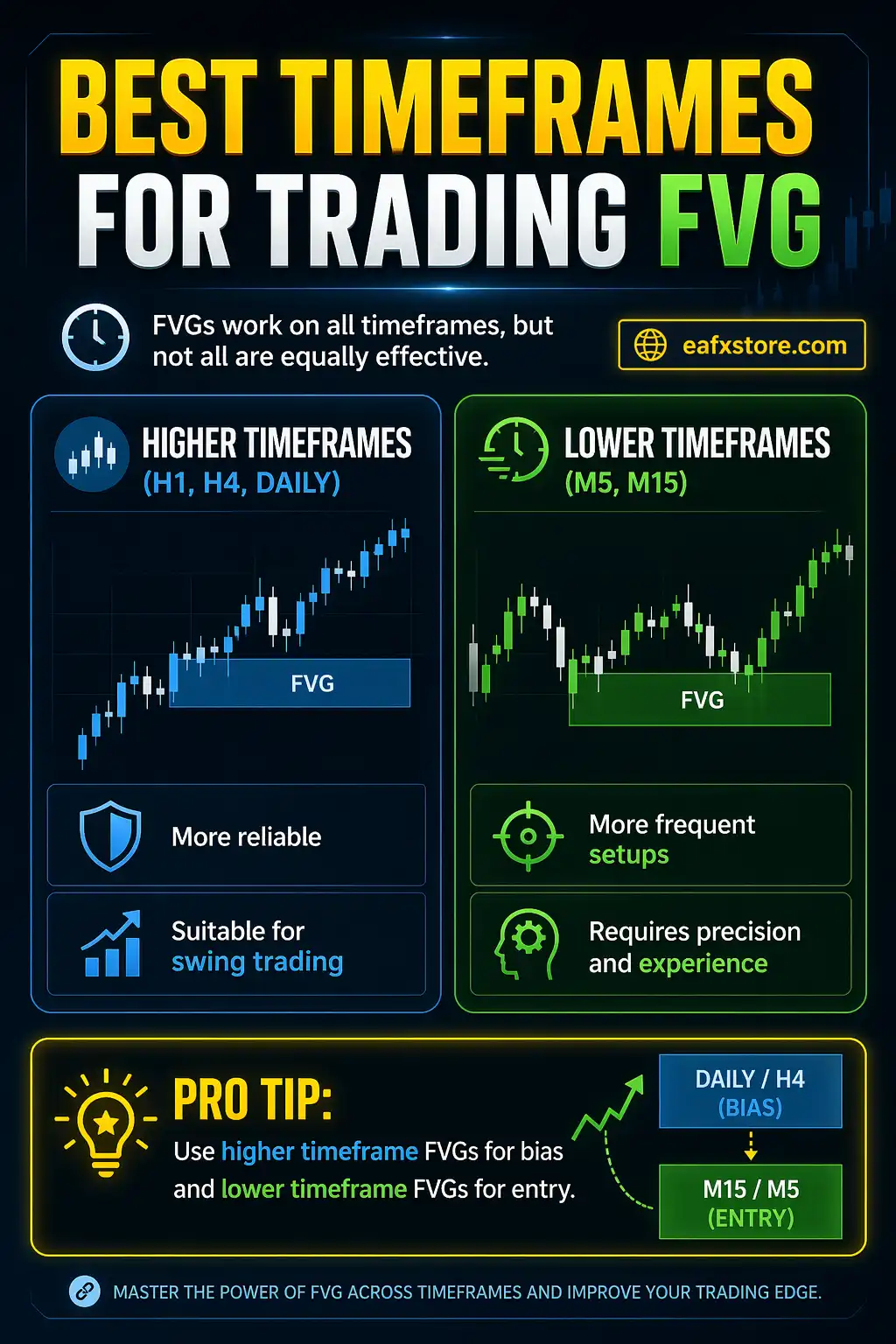
Best Timeframes for Trading FVG
FVGs work on all timeframes, but not all are equally effective.
- Higher Timeframes (H1, H4, Daily)
- More reliable
- Suitable for swing trading
- Lower Timeframes (M5, M15)
- More frequent setups
- Requires precision and experience
Pro Tip:
Use higher timeframe FVGs for bias and lower timeframe FVGs for entry.
Common Mistakes to Avoid
Even though FVG is a powerful concept, many traders misuse it.
- Trading Every Gap: Not all gaps are meaningful. Focus on high-quality setups.
- Ignoring Market Structure: FVGs should align with trend direction. Counter-trend trades are riskier.
- No Confirmation: Always combine FVG with other confluences.
- Entering Too Early: Wait for price to return to the gap. Don’t chase the move.
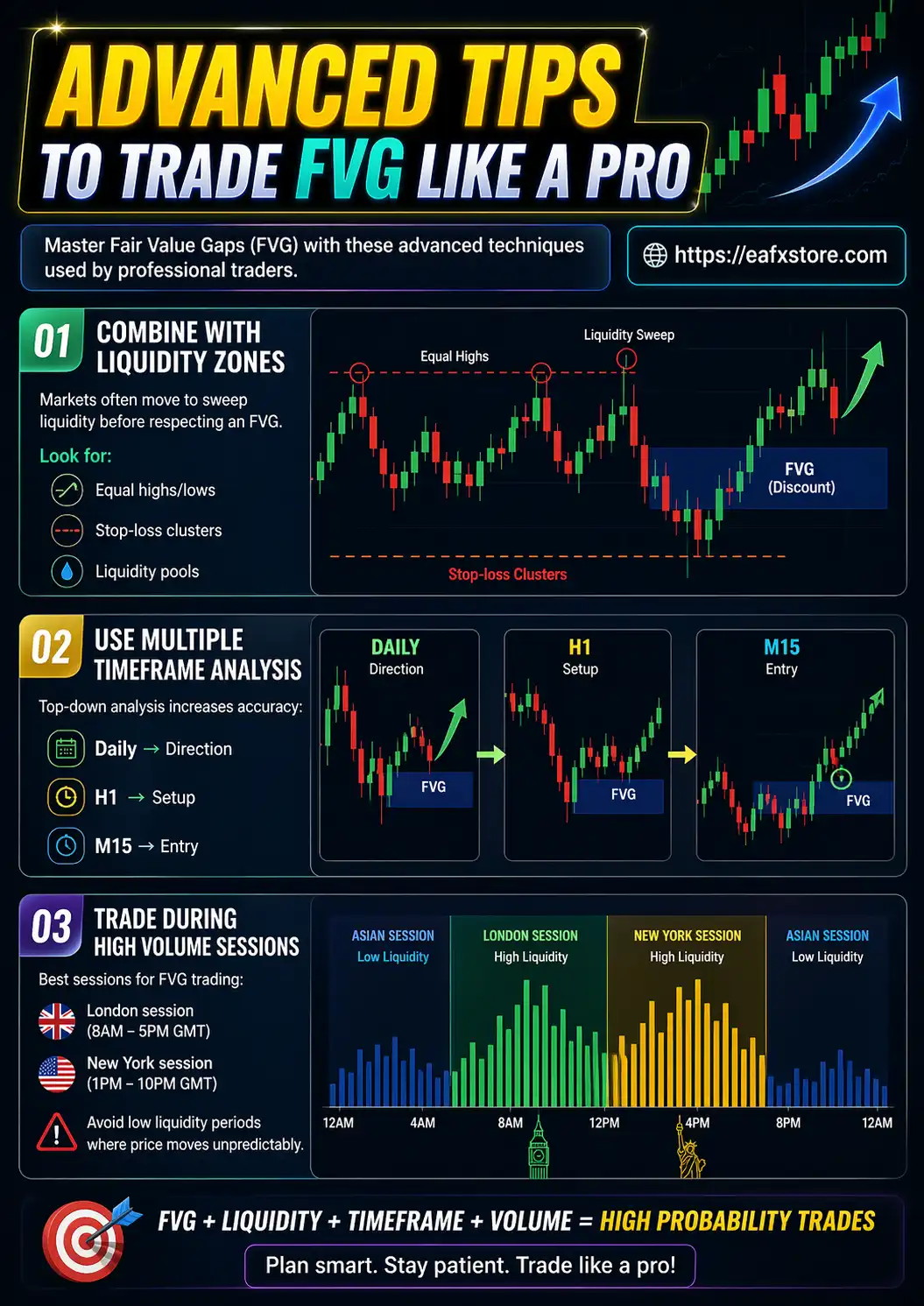
Advanced Tips to Trade FVG Like a Pro
If you want to take your trading to the next level, apply these advanced strategies:
Combine with Liquidity Zones
Markets often move to sweep liquidity before respecting an FVG.
Look for:
- Equal highs/lows
- Stop-loss clusters
Use Multiple Timeframe Analysis
Top-down analysis increases accuracy:
- Daily → Direction
- H1 → Setup
- M15 → Entry
Trade During High Volume Sessions
Best sessions for FVG trading:
- London session
- New York session
Avoid low liquidity periods where price moves unpredictably.
FVG vs Support & Resistance
Many traders wonder how FVG compares to traditional support and resistance.
| Feature | FVG | Support/Resistance |
|---|---|---|
| Based on | Price imbalance | Historical price levels |
| Precision | High | Medium |
| Institutional Logic | Strong | Moderate |
| Entry Timing | More accurate | Often delayed |
FVG provides a more dynamic and modern approach to understanding price action.
Final Thoughts
Fair Value Gaps offer a unique edge in forex trading by revealing where the market is inefficient. Instead of relying solely on traditional indicators, FVG allows you to think like institutional traders.
To summarize:
- FVGs highlight price imbalances
- They provide high-probability entry zones
- Best used with market structure and confluence
Mastering FVG trading takes practice, patience and discipline. Start by identifying clean setups on higher timeframes and gradually refine your strategy.