

The global foreign exchange (Forex) market is the largest financial market in the world, with trillions of dollars traded daily. As the market becomes increasingly competitive and data-driven, traders are turning to advanced technologies to stay ahead. Among these innovations, artificial intelligence (AI) has emerged as a game-changer.
What is Artificial Intelligence in Forex Trading?
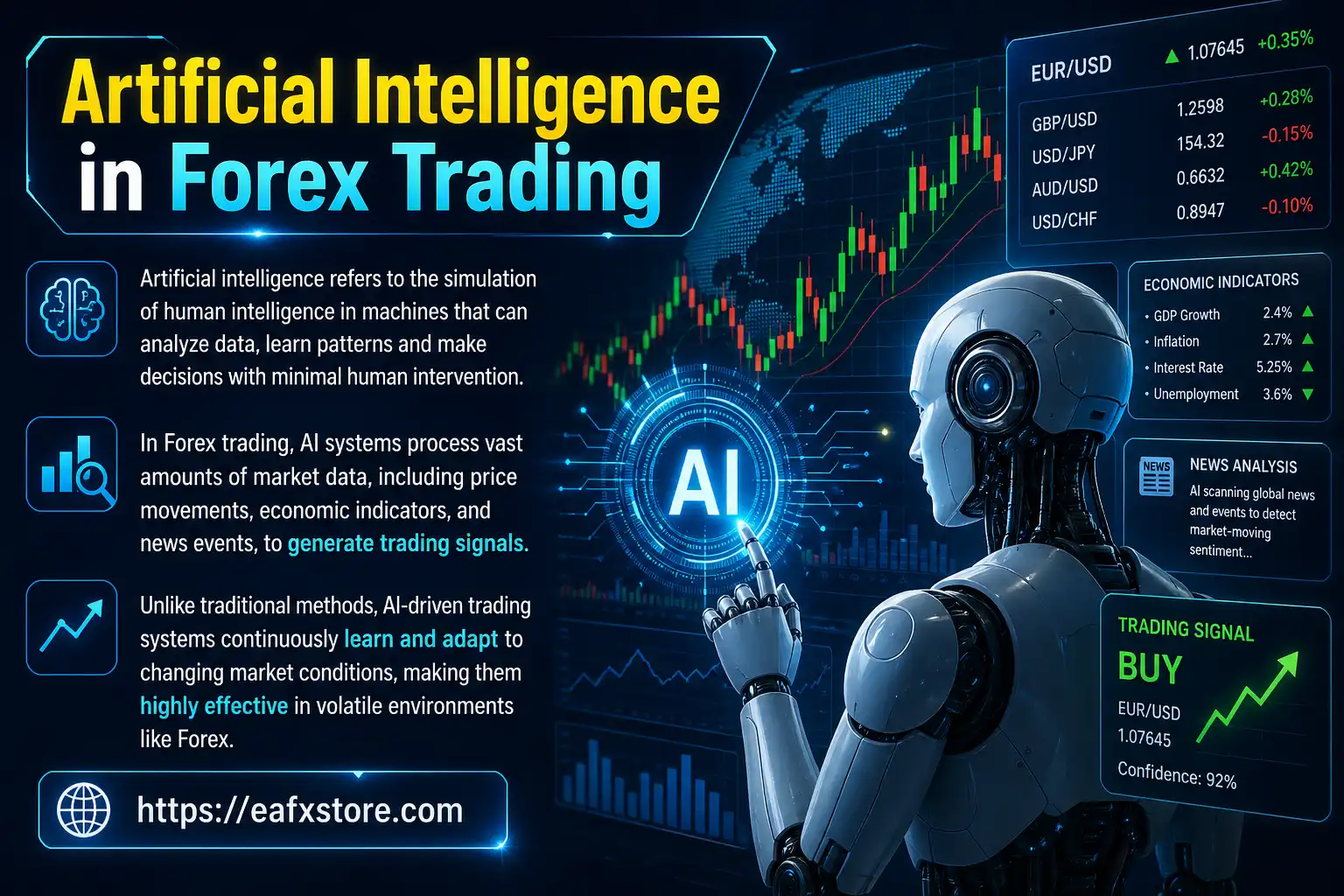
Artificial intelligence refers to the simulation of human intelligence in machines that can analyze data, learn patterns and make decisions with minimal human intervention. In Forex trading, AI systems process vast amounts of market data, including price movements, economic indicators, and news events, to generate trading signals.
Unlike traditional methods, AI-driven trading systems continuously learn and adapt to changing market conditions, making them highly effective in volatile environments like Forex.
Key Applications of AI in Forex Trading
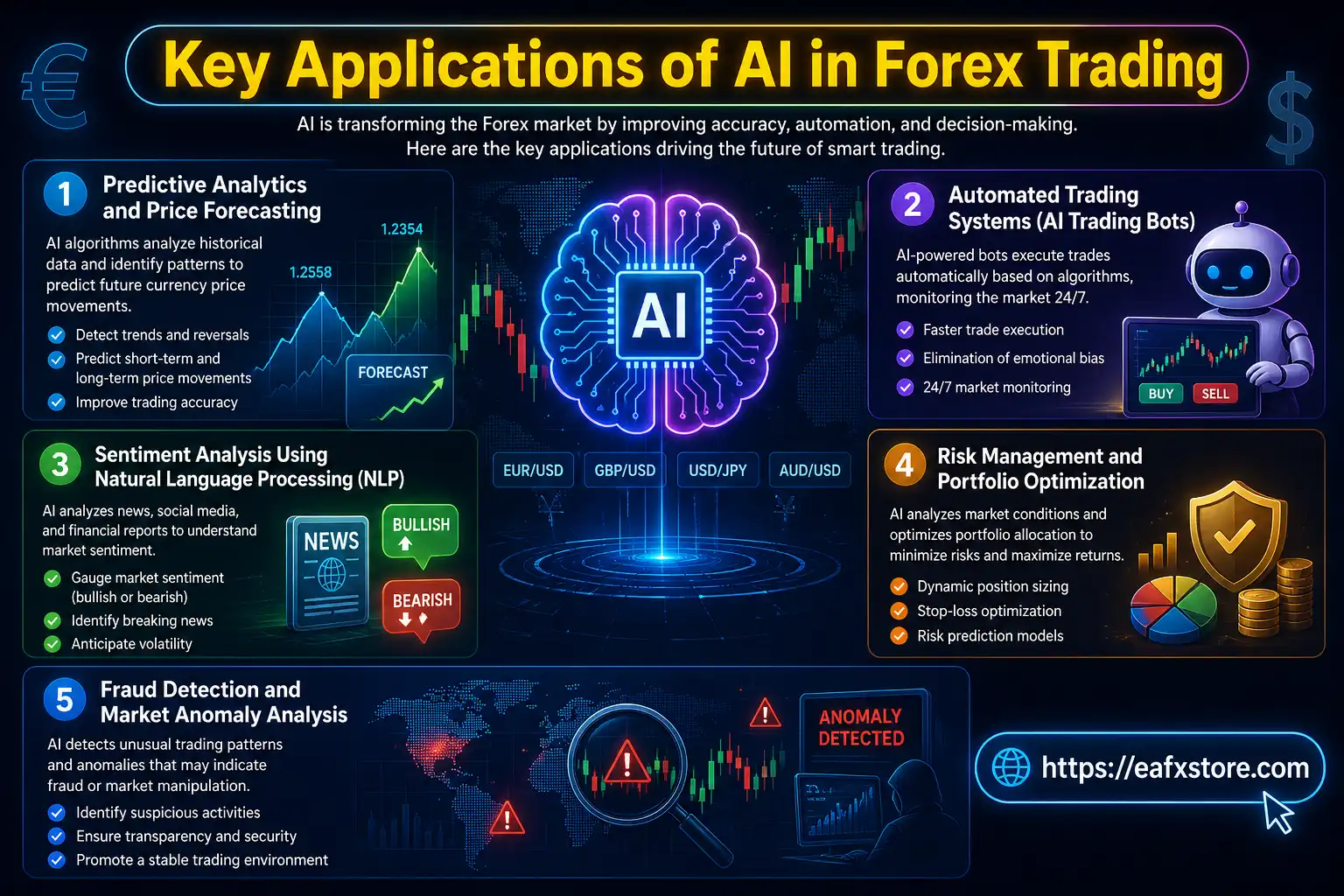
🎯 Predictive Analytics and Price Forecasting
AI algorithms can analyze historical data and identify patterns that help predict future currency price movements. Technologies such as neural networks and deep learning models are widely used for forecasting.
These systems can:
- Detect trends and reversals.
- Predict short-term and long-term price movements.
- Improve trading accuracy.
Predictive analytics is one of the most powerful applications of AI in Forex trading, helping traders make informed decisions based on data rather than intuition.
🎯 Automated Trading Systems (AI Trading Bots)
AI-powered trading bots execute trades automatically based on predefined algorithms. These bots can monitor multiple currency pairs simultaneously and react to market changes in real time.
Benefits include:
- Faster trade execution
- Elimination of emotional bias
- 24/7 market monitoring
Popular AI trading bots are widely used by both retail and institutional traders to optimize trading efficiency.
🎯 Sentiment Analysis Using Natural Language Processing (NLP)
Market sentiment plays a critical role in Forex price movements. AI uses Natural Language Processing (NLP) to analyze news articles, social media, and financial reports.
This allows traders to:
- Gauge market sentiment (bullish or bearish)
- Identify breaking news that may impact currency prices
- Anticipate volatility
By combining sentiment analysis with technical indicators, traders gain a more comprehensive view of the market.
🎯 Risk Management and Portfolio Optimization
AI enhances risk management by analyzing market conditions and identifying potential risks before they occur. It can also optimize portfolio allocation by evaluating correlations between currency pairs.
Applications include:
- Dynamic position sizing
- Stop-loss optimization
- Risk prediction models
This helps traders minimize losses and maximize returns.
🎯 Fraud Detection and Market Anomaly Analysis
AI systems can detect unusual trading patterns and anomalies that may indicate fraud or market manipulation. This is especially important for financial institutions and brokers.
By ensuring transparency and security, AI contributes to a more stable trading environment.
Popular AI Applications in Forex Trading
Several well-known AI-powered platforms and tools are widely used in Forex trading today:
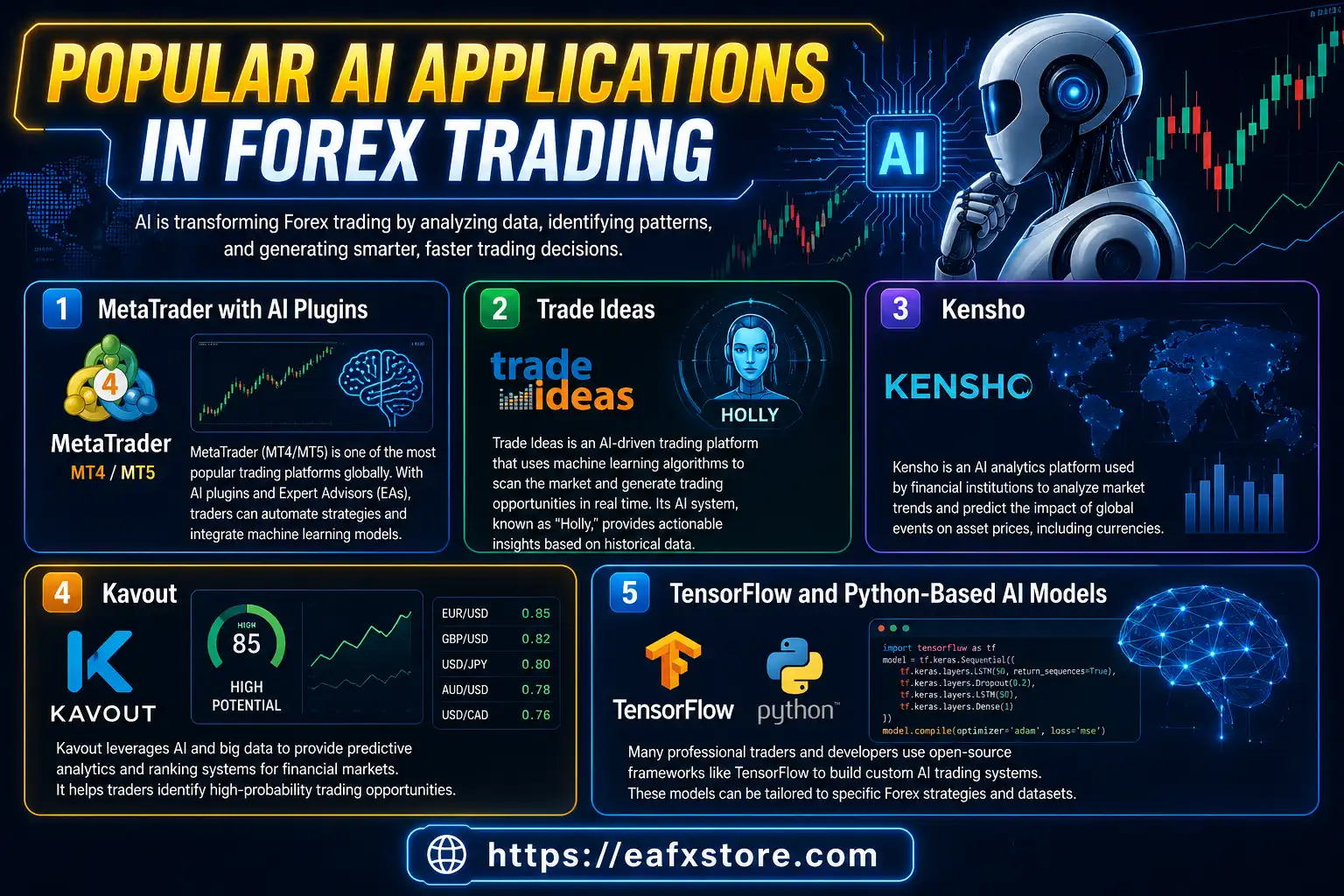
🎯 MetaTrader with AI Plugins
MetaTrader (MT4/MT5) is one of the most popular trading platforms globally. With AI plugins and Expert Advisors (EAs), traders can automate strategies and integrate machine learning models.
🎯 Trade Ideas
Trade Ideas is an AI-driven trading platform that uses machine learning algorithms to scan the market and generate trading opportunities in real time. Its AI system, known as “Holly,” provides actionable insights based on historical data.
🎯 Kensho
Kensho is an AI analytics platform used by financial institutions to analyze market trends and predict the impact of global events on asset prices, including currencies.
🎯 Kavout
Kavout leverages AI and big data to provide predictive analytics and ranking systems for financial markets. It helps traders identify high-probability trading opportunities.
🎯 TensorFlow and Python-Based AI Models
Many professional traders and developers use open-source frameworks like TensorFlow to build custom AI trading systems. These models can be tailored to specific Forex strategies and datasets.
Advantages of AI in Forex Trading
- Increased Accuracy: AI systems can process massive datasets and uncover hidden patterns, leading to more precise predictions.
- Speed and Efficiency: AI can analyze data and execute trades in milliseconds, far faster than human traders.
- Emotion-Free Trading: AI eliminates psychological factors such as fear and greed, which often lead to poor trading decisions.
- Continuous Learning: AI systems improve over time by learning from new data, making them more effective in dynamic markets.
Challenges of Using AI in Forex Trading
Despite its benefits, AI in Forex trading also presents challenges:
- Data Dependency: AI models require high-quality data to function effectively. Poor data can lead to inaccurate predictions.
- Overfitting Risks: Models may perform well on historical data but fail in real-world conditions.
- High Development Costs: Building and maintaining AI systems requires technical expertise and resources.
- Market Uncertainty: Unexpected geopolitical events and economic shocks can impact Forex markets in ways AI cannot always predict.
Best Practices for Implementing AI in Forex Trading
To maximize the benefits of AI, traders should follow these best practices:
- Combine AI with traditional trading strategies.
- Continuously update and retrain models.
- Use diverse datasets (technical, fundamental, sentiment).
- Perform thorough backtesting.
- Monitor system performance regularly.
The Future of AI in Forex Trading
The future of artificial intelligence in Forex trading looks promising. With advancements in deep learning, cloud computing, and big data, AI systems will become more accessible and powerful.
Emerging trends include:
- Fully autonomous trading systems.
- Integration with blockchain and decentralized finance (DeFi).
- Explainable AI for better transparency.
- Real-time adaptive trading strategies.
As AI technology evolves, it will continue to reshape the Forex landscape and redefine how traders interact with global markets.
Conclusion
Artificial intelligence is revolutionizing Forex trading by enhancing accuracy, automating processes and improving risk management. From predictive analytics to AI trading bots, the applications of AI are vast and continually expanding.
By leveraging popular AI tools like MetaTrader, Trade Ideas, and TensorFlow, traders can gain a significant competitive advantage. However, success requires a balanced approach that combines AI capabilities with human insight and sound trading principles.