
In the fast-paced world of Forex trading, understanding market volatility is just as important as identifying trends. Many traders focus heavily on direction—whether price is going up or down—but overlook a critical component: how much price is moving. This is where the Average True Range (ATR) becomes an essential tool.
Originally developed by J. Welles Wilder, ATR is a powerful technical indicator that measures market volatility without indicating price direction. Whether you’re a beginner or an experienced trader, mastering ATR can significantly improve your risk management, stop-loss placement and overall trading strategy.
In this ultimate guide, we’ll break down everything you need to know about ATR—from its calculation and interpretation to practical strategies you can apply immediately in Forex trading.
What is Average True Range (ATR)?
The Average True Range (ATR) is a technical analysis indicator that measures the average range of price movement over a specified period. Unlike indicators that focus on trend direction (like moving averages), ATR focuses solely on volatility.
Key Characteristics:
- ATR does not indicate trend direction
- It measures how much the price moves, not where it moves
- Higher ATR = higher volatility
- Lower ATR = lower volatility
ATR is typically calculated over 14 periods, but traders can adjust this based on their trading style.
How ATR is Calculated
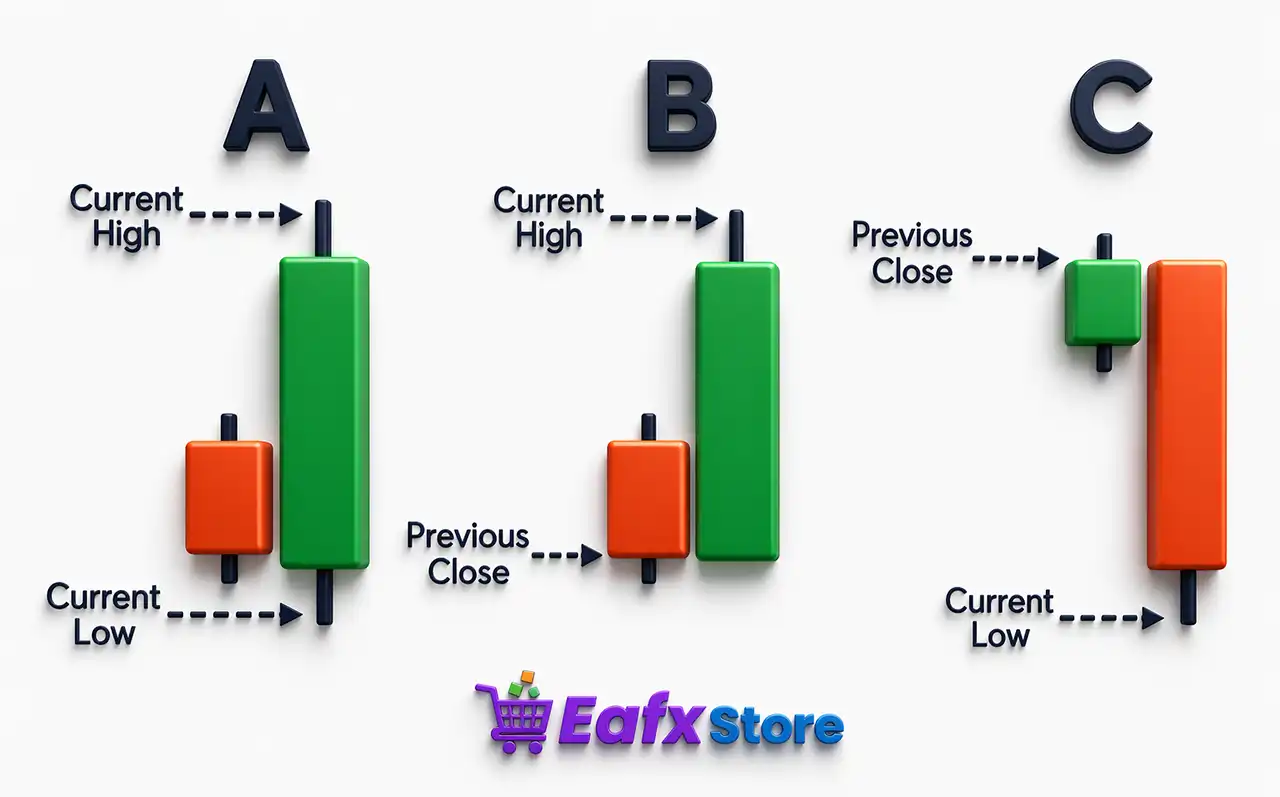
To fully understand ATR, you need to know about the concept of True Range (TR).
Step 1: Calculate True Range (TR)
True Range is the greatest of the following:
- Current High – Current Low
- Absolute value of Current High – Previous Close
- Absolute value of Current Low – Previous Close
Step 2: Calculate ATR
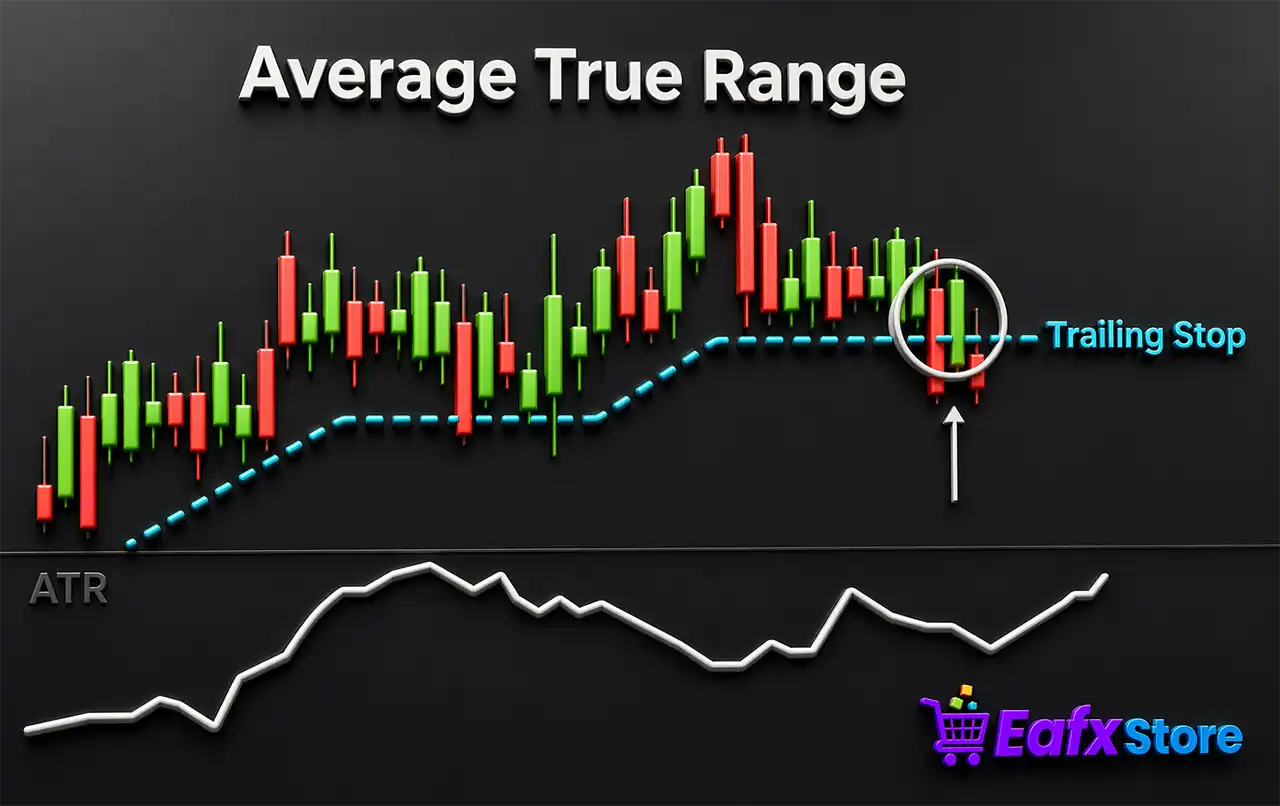
ATR is simply the moving average of True Range over a selected number of periods (commonly 14).
While most trading platforms calculate ATR automatically, understanding its foundation helps you interpret it more effectively.
Why ATR is Important in Forex Trading
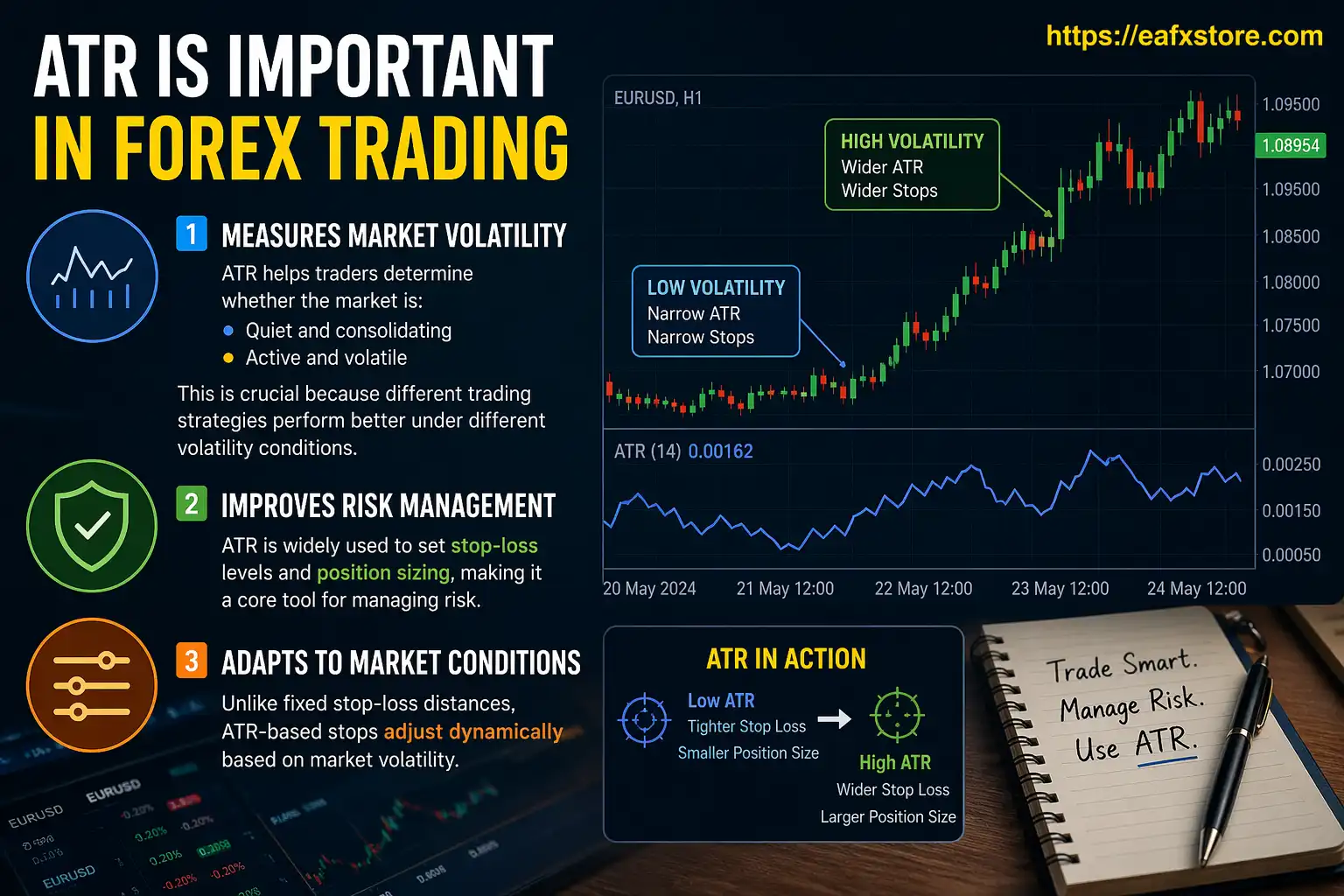
1. Measures Market Volatility
ATR helps traders determine whether the market is:
- Quiet and consolidating
- Active and volatile
This is crucial because different trading strategies perform better under different volatility conditions.
2. Improves Risk Management
ATR is widely used to set stop-loss levels and position sizing, making it a core tool for managing risk.
3. Adapts to Market Conditions
Unlike fixed stop-loss distances, ATR-based stops adjust dynamically based on market volatility.
How to Interpret ATR
Understanding ATR is straightforward once you grasp its behavior:
High ATR Values
- Indicate strong price movement
- Often occur during breakouts or news events
- Suggest increased risk and opportunity
Low ATR Values
- Indicate consolidation or ranging markets
- Often precede significant price movements
- Suggest lower volatility
How to Use ATR in Forex Trading
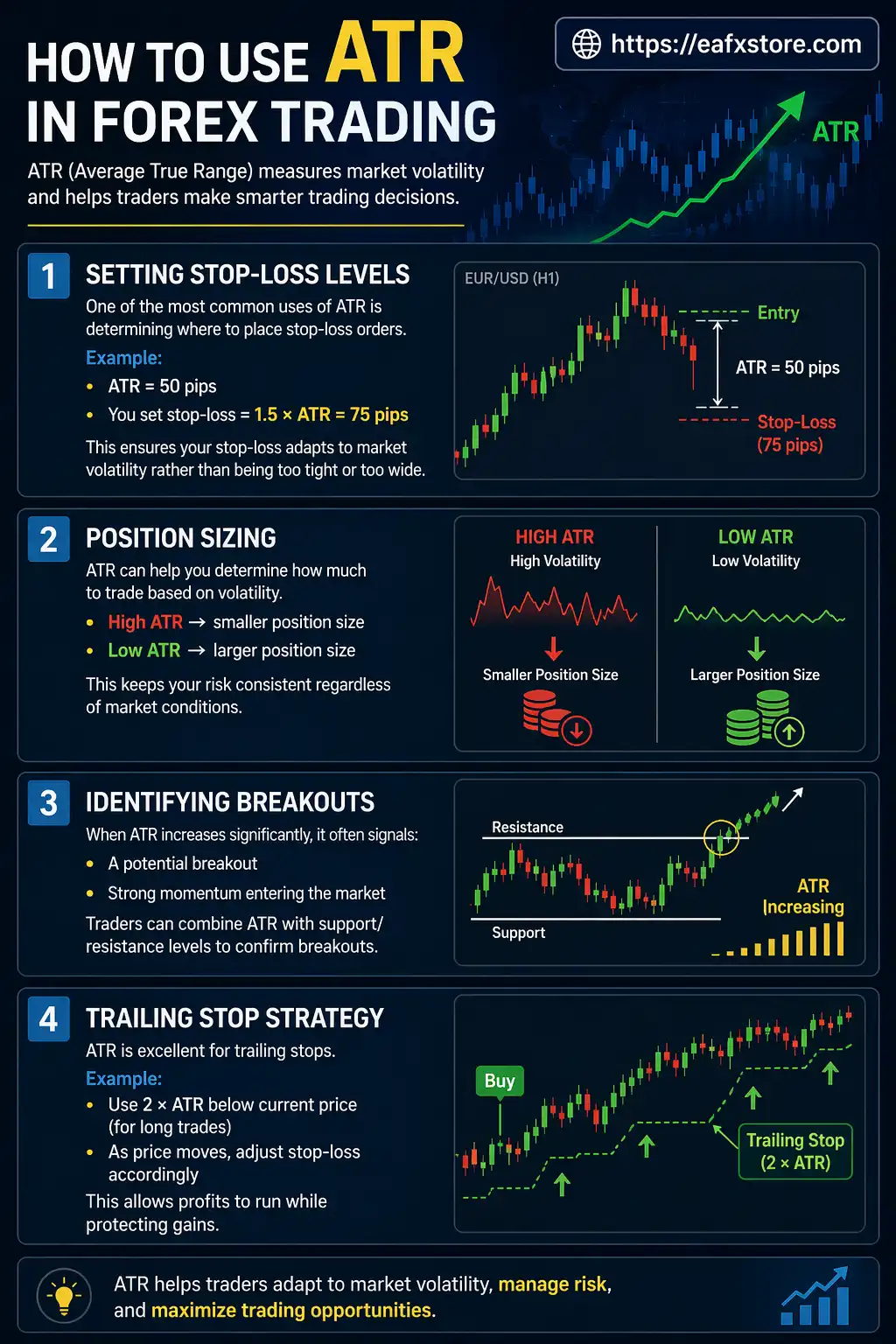
1. Setting Stop-Loss Levels
One of the most common uses of ATR is determining where to place stop-loss orders.
Example:
- ATR = 50 pips
- You set stop-loss = 1.5 × ATR = 75 pips
This ensures your stop-loss adapts to market volatility rather than being too tight or too wide.
2. Position Sizing
ATR can help you determine how much to trade based on volatility.
- High ATR → smaller position size
- Low ATR → larger position size
This keeps your risk consistent regardless of market conditions.
3. Identifying Breakouts
When ATR increases significantly, it often signals:
- A potential breakout
- Strong momentum entering the market
Traders can combine ATR with support/resistance levels to confirm breakouts.
4. Trailing Stop Strategy
ATR is excellent for trailing stops.
Example:
- Use 2 × ATR below current price (for long trades)
- As price moves, adjust stop-loss accordingly
This allows profits to run while protecting gains.
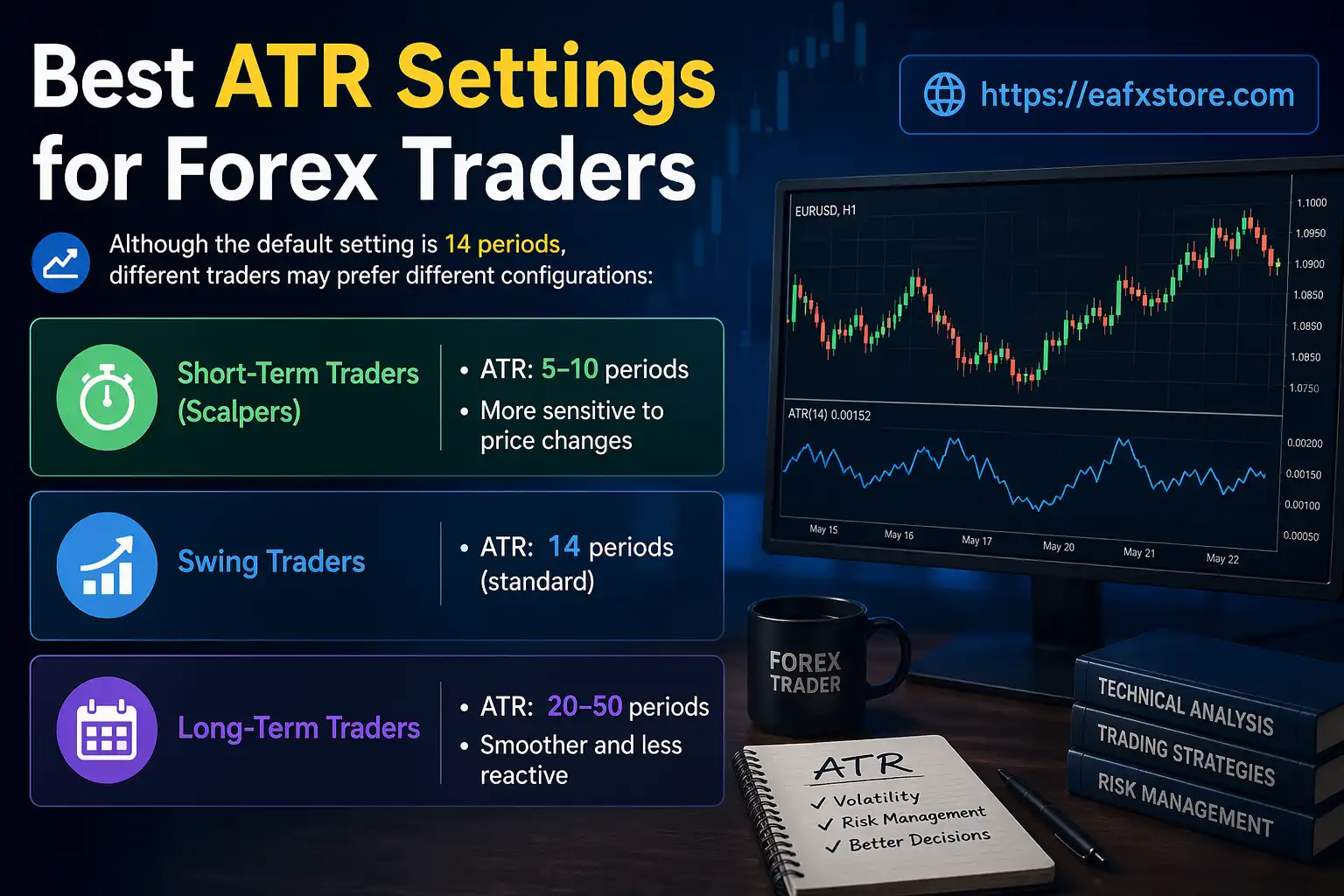
Best ATR Settings for Forex Traders
Although the default setting is 14 periods, different traders may prefer different configurations:
Short-Term Traders (Scalpers)
- ATR: 5–10 periods
- More sensitive to price changes
Swing Traders
- ATR: 14 periods (standard)
Long-Term Traders
- ATR: 20–50 periods
- Smoother and less reactive
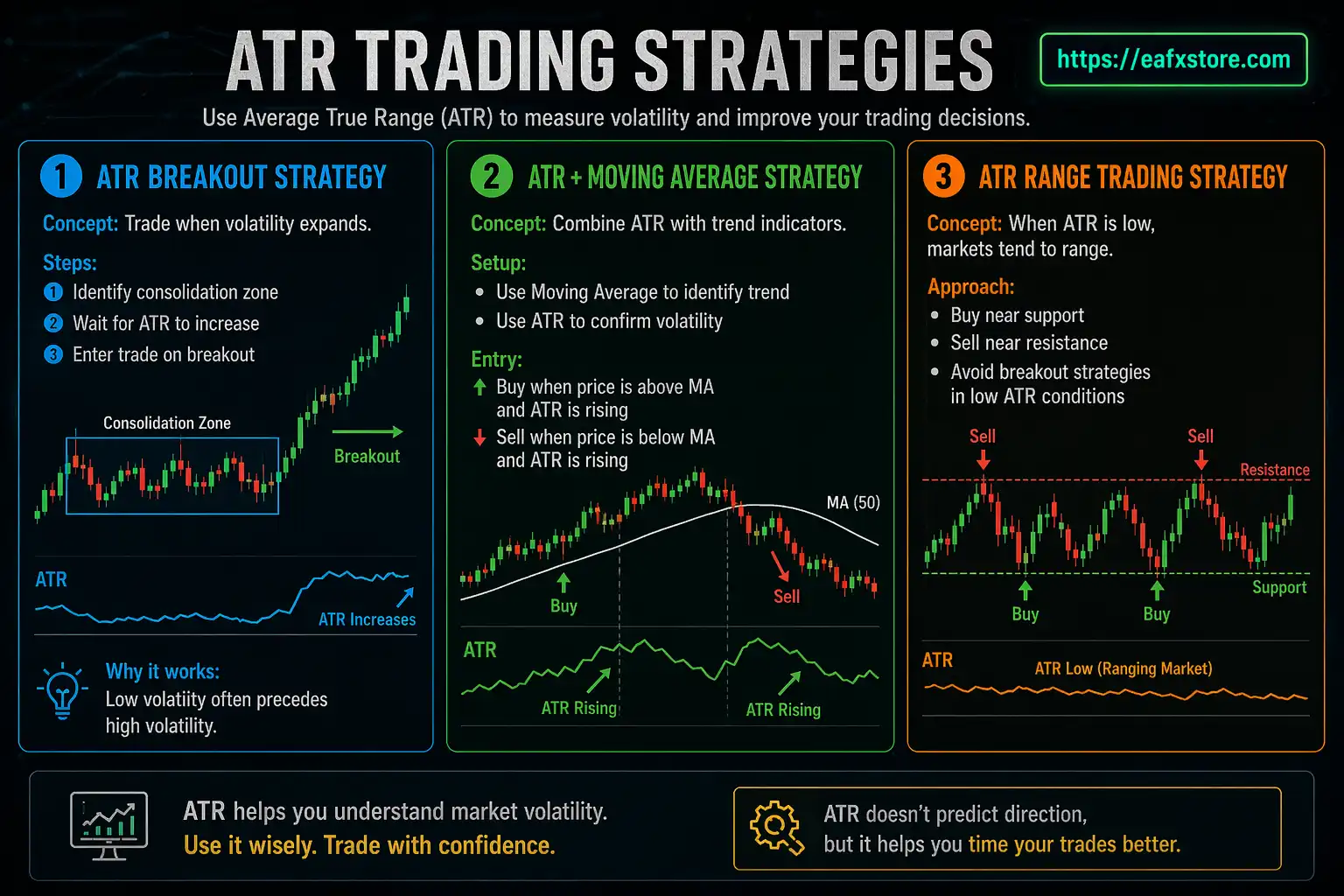
ATR Trading Strategies
1. ATR Breakout Strategy
Concept: Trade when volatility expands.
Steps:
- Identify consolidation zone
- Wait for ATR to increase
- Enter trade on breakout
Why it works:
Low volatility often precedes high volatility.
2. ATR + Moving Average Strategy
Combine ATR with trend indicators.
Setup:
- Use Moving Average to identify trend
- Use ATR to confirm volatility
Entry:
- Buy when price is above MA and ATR is rising
- Sell when price is below MA and ATR is rising
3. ATR Range Trading Strategy
When ATR is low, markets tend to range.
Approach:
- Buy near support
- Sell near resistance
Avoid breakout strategies in low ATR conditions.
Common Mistakes When Using ATR
1. Using ATR as a Direction Indicator
ATR does not tell you whether to buy or sell. It only measures volatility.
2. Ignoring Market Context
ATR should always be used alongside:
- Price action
- Support and resistance
- Trend indicators
3. Setting Fixed Stop-Loss Without ATR
Ignoring ATR can lead to:
- Stops being hit too early
- Or stops being too wide
ATR vs Other Volatility Indicators
ATR vs Bollinger Bands
- ATR measures volatility numerically
- Bollinger Bands visualize volatility
ATR vs Standard Deviation
- ATR focuses on price range
- Standard deviation measures dispersion from mean
Advantages of ATR
- Simple and easy to understand
- Works across all timeframes
- Helps with risk management
- Adapts to market conditions
Limitations of ATR
- Does not indicate direction
- Can lag during sudden volatility spikes
- Requires combination with other indicators
Practical Example
Let’s say you are trading EUR/USD:
- ATR (14) = 60 pips
- You enter a buy trade
Stop-Loss:
- 1.5 × ATR = 90 pips
Take Profit:
- 2 × ATR = 120 pips
This creates a structured and volatility-based trade plan.
Pro Tips for Using ATR Effectively
- Combine ATR with trend indicators.
- Use multiple timeframes.
- Adjust ATR settings based on your strategy.
- Avoid trading during extremely low ATR periods.
- Always backtest your strategy.
Conclusion
The Average True Range (ATR) is one of the most valuable tools in Forex trading—not because it predicts direction, but because it helps you understand the market’s behavior.
By incorporating ATR into your trading strategy, you can:
- Improve your risk management.
- Set smarter Stop Loss (SL) levels.
- Adapt to changing market conditions.
- Enhance overall trading consistency.
If you’re serious about becoming a successful Forex trader, mastering ATR is not optional—it’s essential.