
Introduction
The Moving Average Convergence Divergence (MACD) is one of the most widely used technical indicators in Forex trading. Known for its simplicity and effectiveness, MACD helps traders identify trends, momentum and potential reversal points in the market. Whether you are a beginner or an experienced trader, mastering MACD can significantly improve your trading strategy and decision-making process.
In this complete guide, we will explore what MACD is, how it works, how to interpret its signals, and how to apply it effectively in Forex trading.
What is MACD?
MACD is a trend-following momentum indicator that shows the relationship between two moving averages of a currency pair’s price. It was developed by Gerald Appel in the late 1970s and has since become a staple tool for traders across all financial markets.
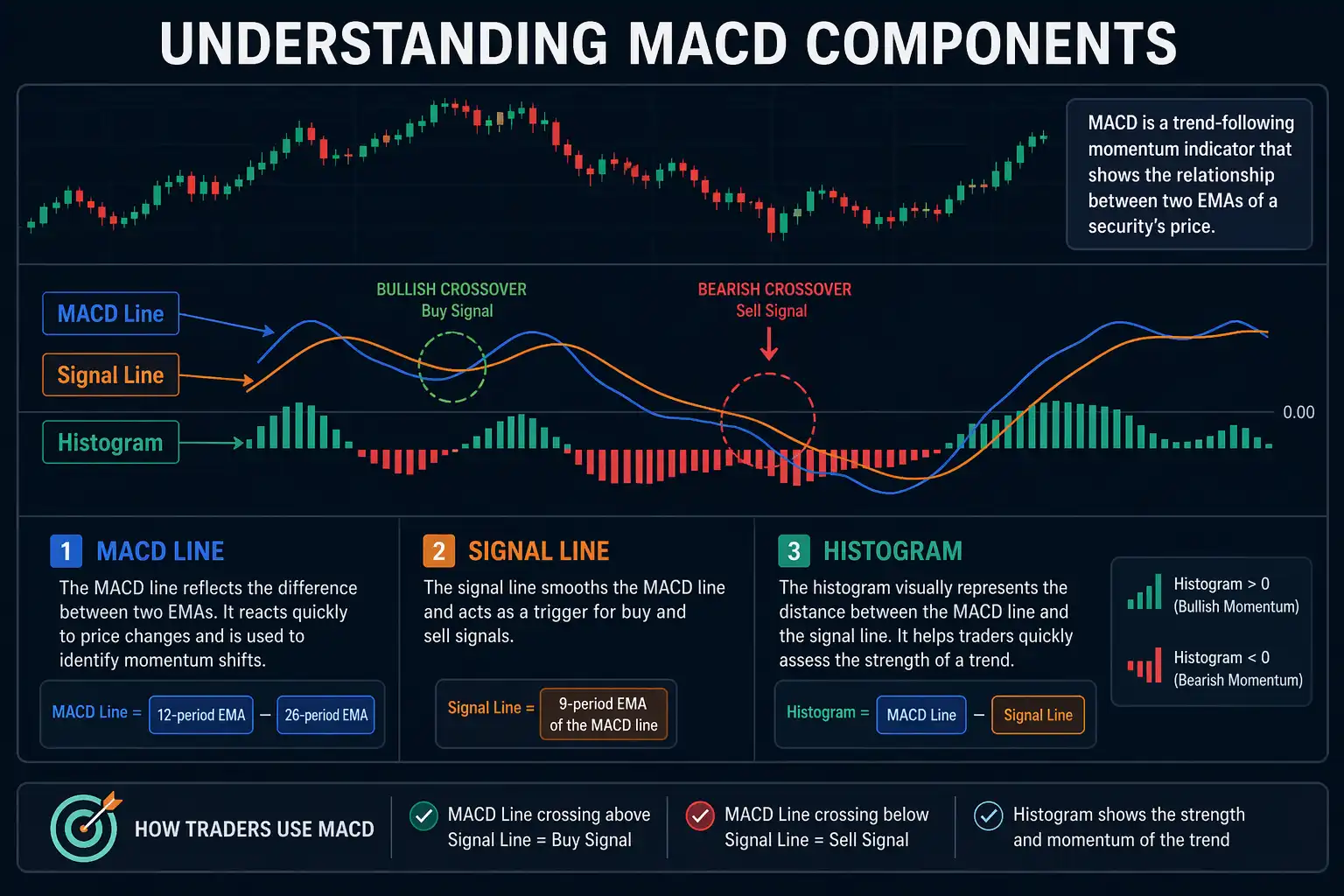
The MACD consists of three main components:
- MACD Line
- Signal Line
- Histogram
These components work together to provide insights into market momentum and trend direction.
How MACD Works
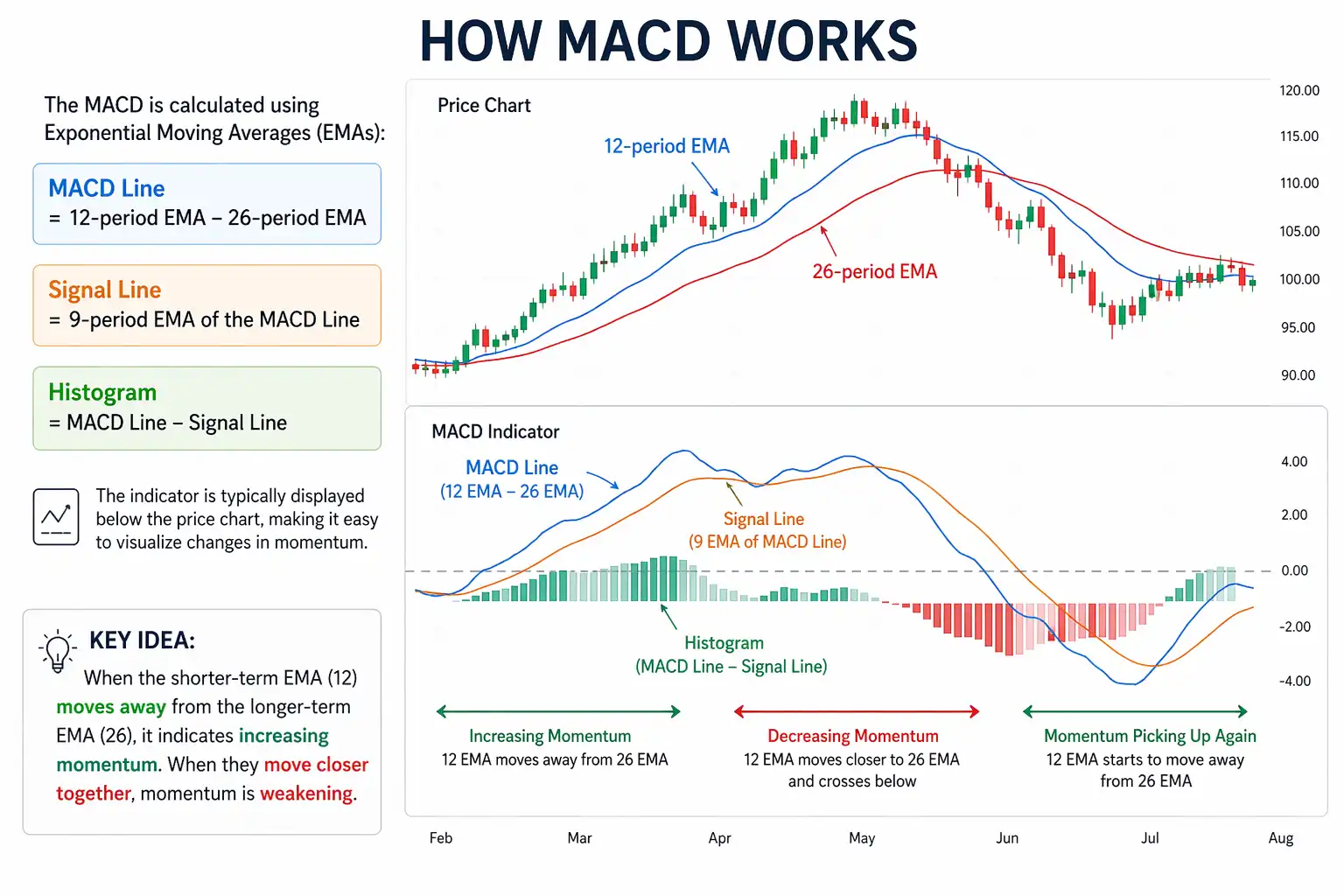
The MACD is calculated using Exponential Moving Averages (EMAs):
- MACD Line = 12-period EMA – 26-period EMA
- Signal Line = 9-period EMA of the MACD Line
- Histogram = MACD Line – Signal Line
The indicator is typically displayed below the price chart, making it easy to visualize changes in momentum.
Key Idea:
When the shorter-term EMA (12) moves away from the longer-term EMA (26), it indicates increasing momentum. When they move closer together, momentum is weakening.
Understanding MACD Components
1. MACD Line
The MACD line reflects the difference between two EMAs. It reacts quickly to price changes and is used to identify momentum shifts.
2. Signal Line
The signal line smooths the MACD line and acts as a trigger for buy and sell signals.
3. Histogram
The histogram visually represents the distance between the MACD line and the signal line. It helps traders quickly assess the strength of a trend.
MACD Trading Signals
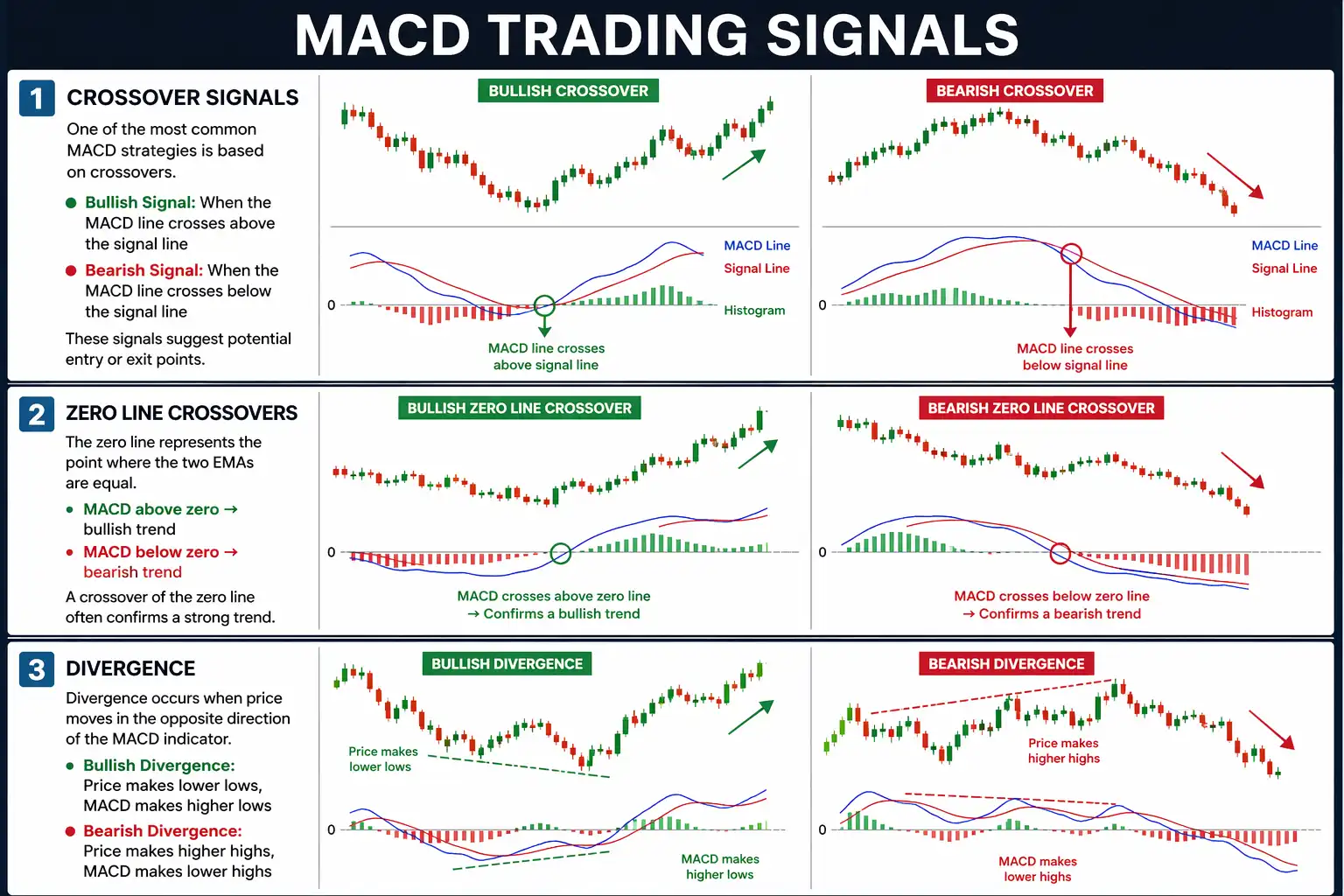
1. Crossover Signals
One of the most common MACD strategies is based on crossovers.
- Bullish Signal: When the MACD line crosses above the signal line
- Bearish Signal: When the MACD line crosses below the signal line
These signals suggest potential entry or exit points.
2. Zero Line Crossovers
The zero line represents the point where the two EMAs are equal.
- MACD above zero → bullish trend
- MACD below zero → bearish trend
A crossover of the zero line often confirms a strong trend.
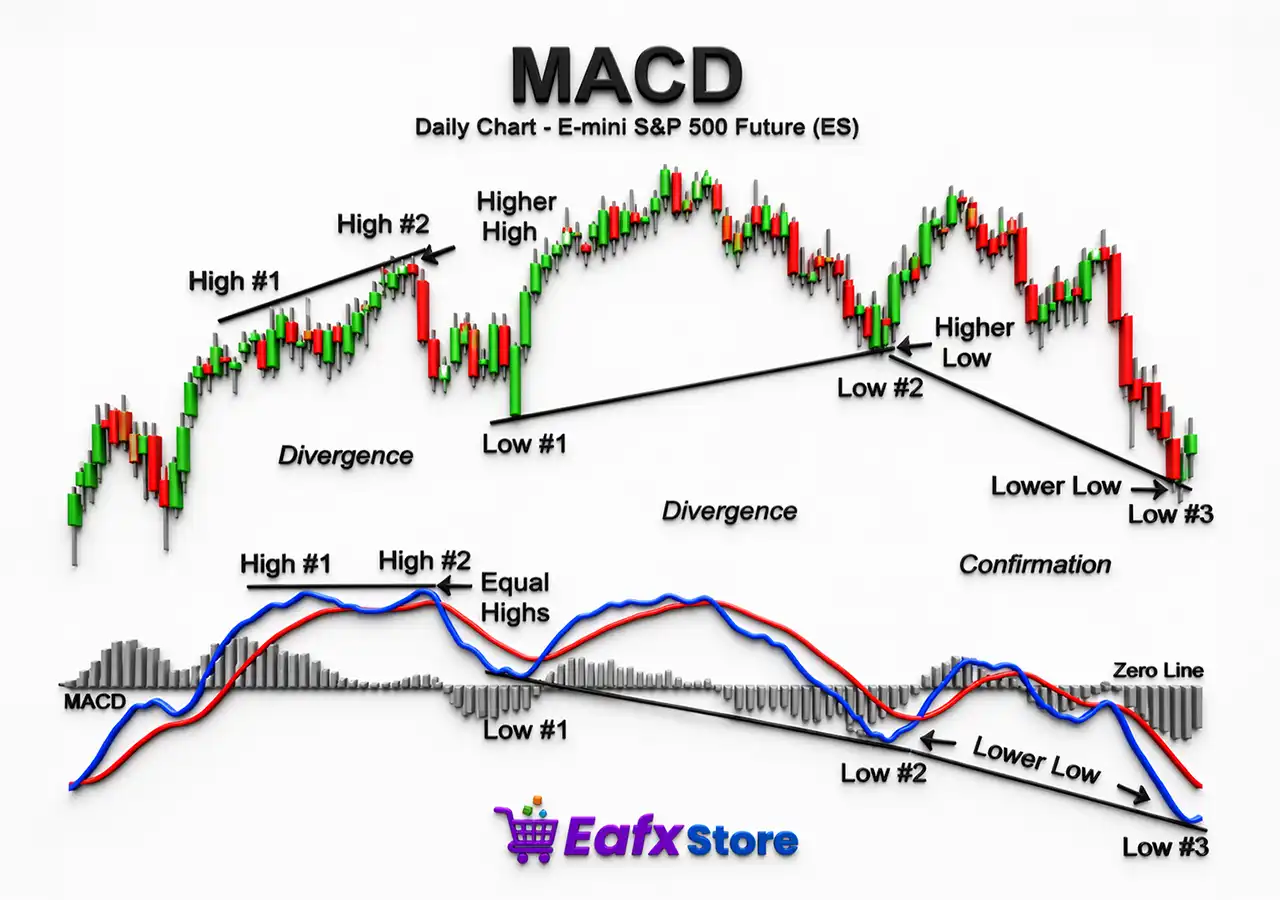
3. Divergence
Divergence occurs when price moves in the opposite direction of the MACD indicator.
- Bullish Divergence: Price makes lower lows, MACD makes higher lows
- Bearish Divergence: Price makes higher highs, MACD makes lower highs
Divergence is a powerful signal that a trend reversal may be coming.
How to Use MACD in Forex Trading
1. Identify Trends
MACD is highly effective in identifying trends. When the MACD is above zero, focus on buying opportunities. When it is below zero, look for selling opportunities.
2. Confirm Entry Points
Use MACD crossovers to confirm entries:
- Enter buy trades when MACD crosses above the signal line in an uptrend
- Enter sell trades when MACD crosses below the signal line in a downtrend
3. Combine with Other Indicators
MACD works best when combined with other tools such as:
- Support and Resistance levels
- RSI (Relative Strength Index)
- Moving Averages (MA)
This helps reduce false signals and increases accuracy.
Best MACD Settings for Forex
The default MACD settings (12, 26, 9) work well for most traders. However, depending on your trading style, you can adjust them:
- Scalping: Use faster settings like (5, 13, 6)
- Swing Trading: Stick with default settings
- Long-term Trading: Use slower settings like (24, 52, 18)
Always backtest your settings before applying them in live trading.
Advantages of MACD
- Easy to understand and use
- Works well in trending markets
- Provides multiple types of signals
- Helps identify momentum and trend strength
Limitations of MACD
- Can give false signals in sideways markets
- Lagging indicator (based on past prices)
- Less effective during low volatility
To overcome these limitations, always combine MACD with other analysis methods.
Common MACD Trading Strategies
1. MACD + Trend Strategy
Trade in the direction of the trend:
- Use higher timeframes to identify trend
- Use MACD on lower timeframe for entry
2. MACD + Support & Resistance
Wait for price to reach key levels and confirm with MACD crossover before entering a trade.
3. MACD Histogram Strategy
Focus on the histogram:
- Increasing bars → strengthening trend
- Decreasing bars → weakening trend
This can help you exit trades early before reversals happen.
Practical Tips for Using MACD
- Avoid trading MACD signals in choppy markets
- Use higher timeframes for more reliable signals
- Always manage risk with Stop Loss (SL) orders
- Combine MACD with Price Action analysis
Conclusion
The Moving Average Convergence Divergence (MACD) is a powerful and versatile tool for Forex traders. By understanding how it works and how to interpret its signals, you can improve your ability to identify trends, confirm entries and anticipate reversals.
However, no indicator is perfect. The key to success is combining MACD with other technical analysis tools and maintaining strong risk management practices.