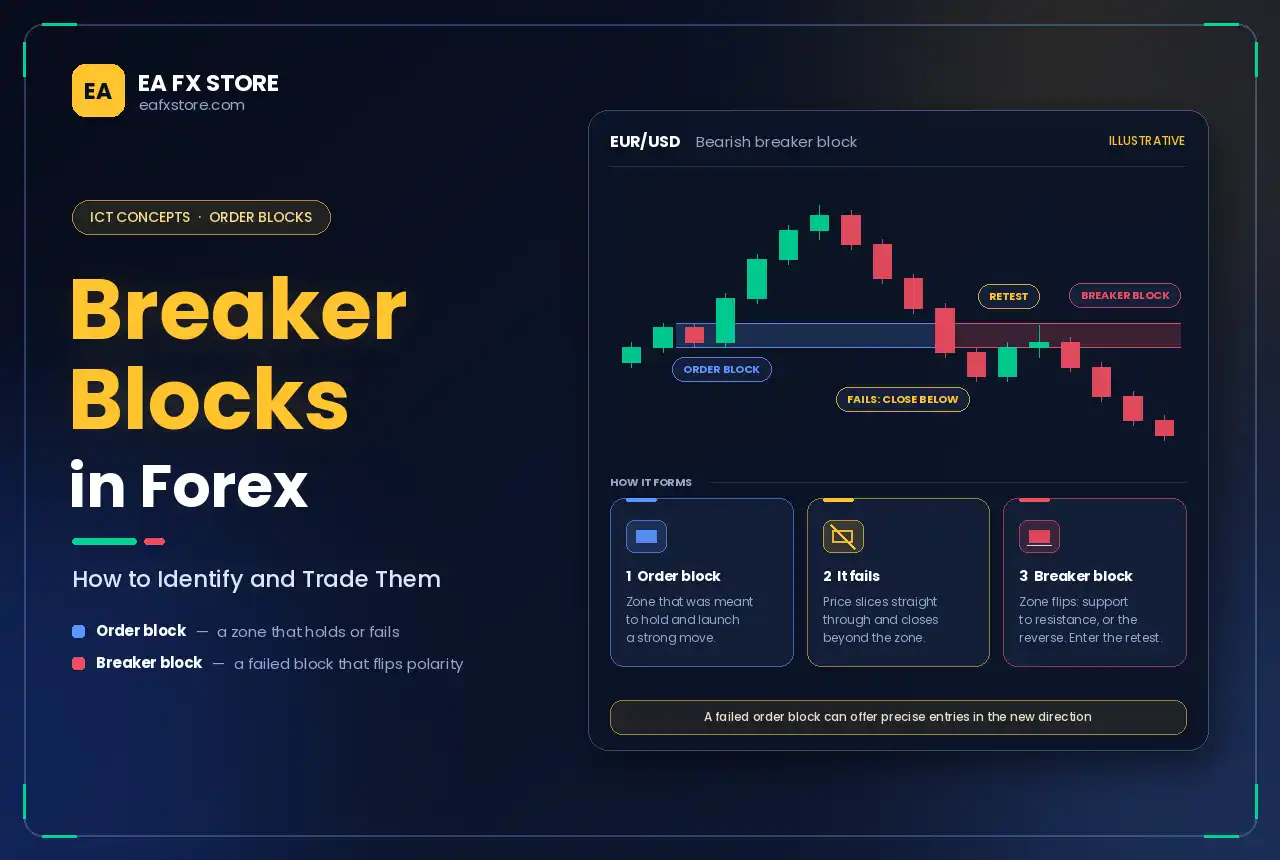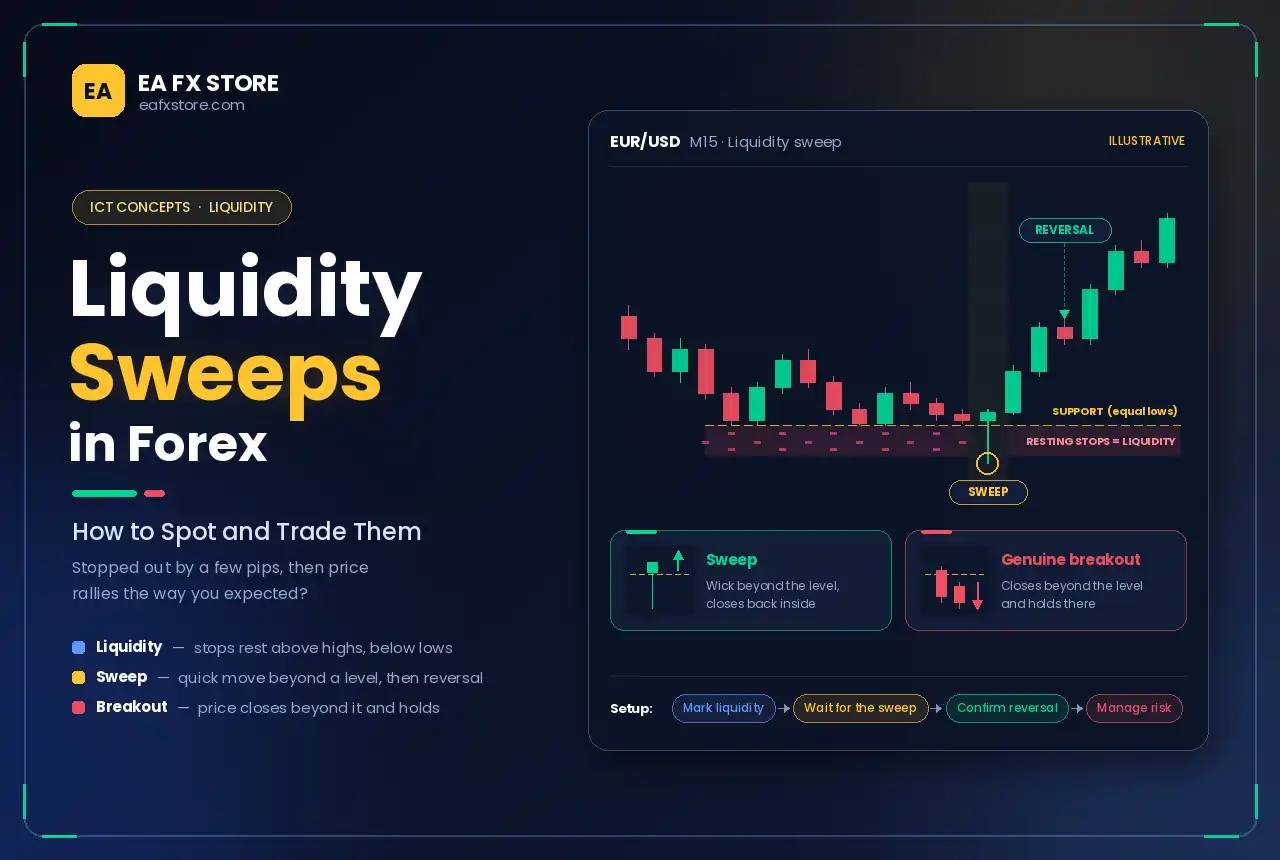

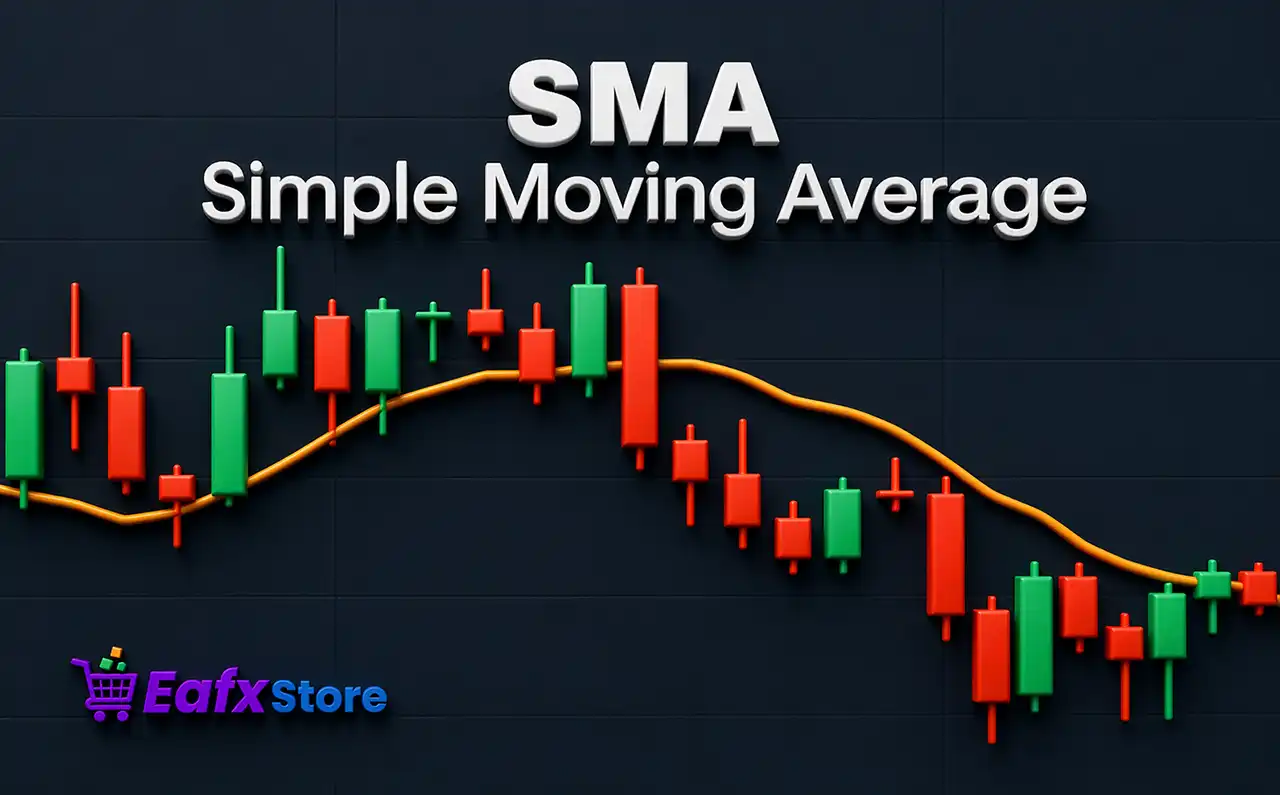
What is Simple Moving Average (SMA)?
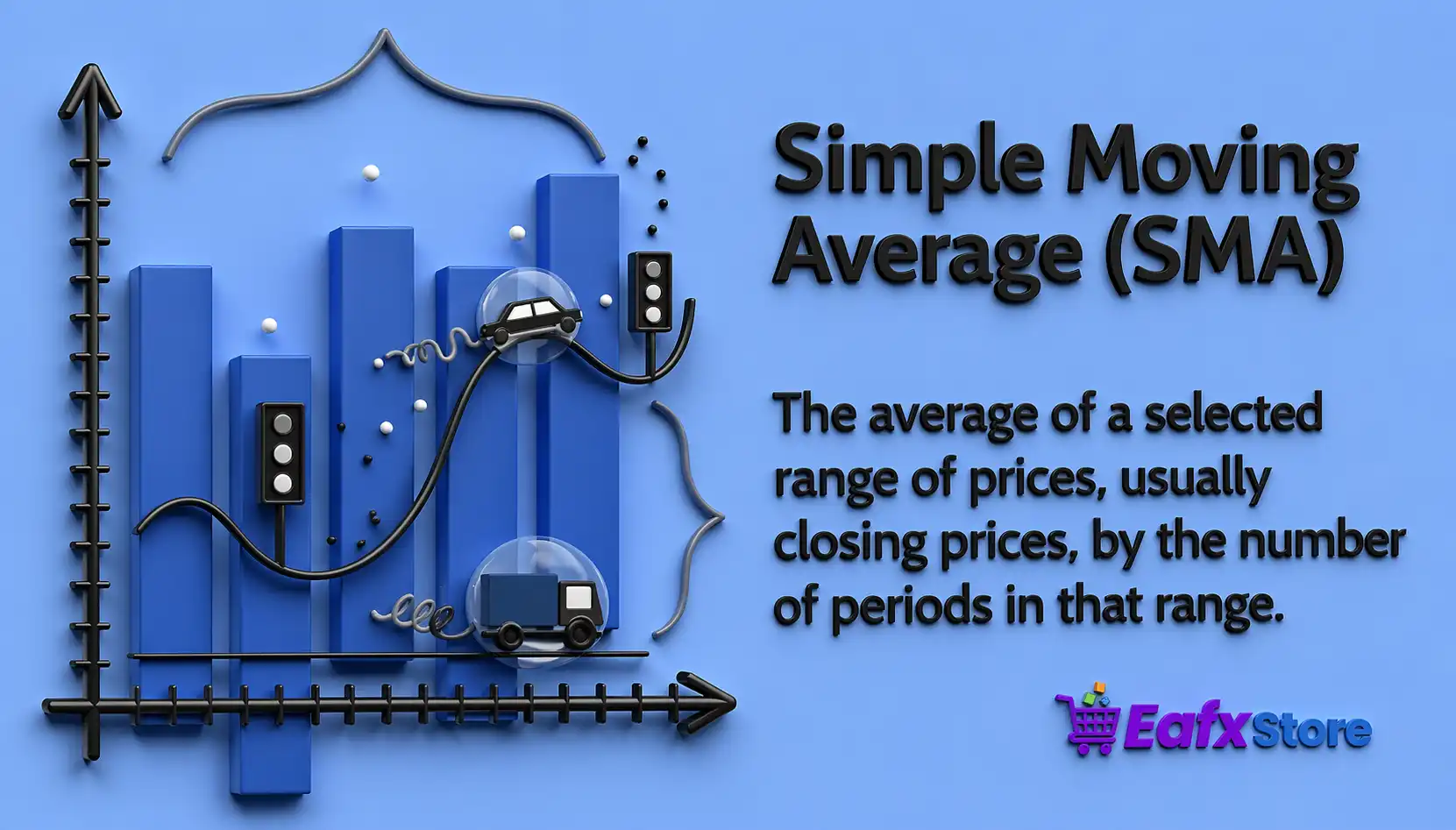
The Simple Moving Average (SMA) is one of the most fundamental and widely used technical indicators in Forex trading. It helps traders smooth out price data by creating a constantly updated average price over a specific period. This makes it easier to identify trends and eliminate market “noise.”
In simple terms, SMA calculates the average closing price of a currency pair over a defined number of periods. For example, a 10-day SMA adds the closing prices of the last 10 days and divides the total by 10.
Because of its simplicity and effectiveness, SMA is often the first indicator beginners learn—and for good reason. It lays the foundation for understanding more advanced trading strategies.
Why SMA is Important in Forex Trading
Forex markets are highly volatile, with prices constantly fluctuating due to economic news, geopolitical events and market sentiment. SMA helps traders make sense of this chaos by providing a clearer picture of the overall trend.
Here’s why SMA matters:
- It identifies trend direction (uptrend, downtrend, sideways)
- It helps determine entry and exit points
- It reduces emotional decision-making
- It works well with other indicators
Without tools like SMA, traders may struggle to distinguish between short-term fluctuations and meaningful price movements.
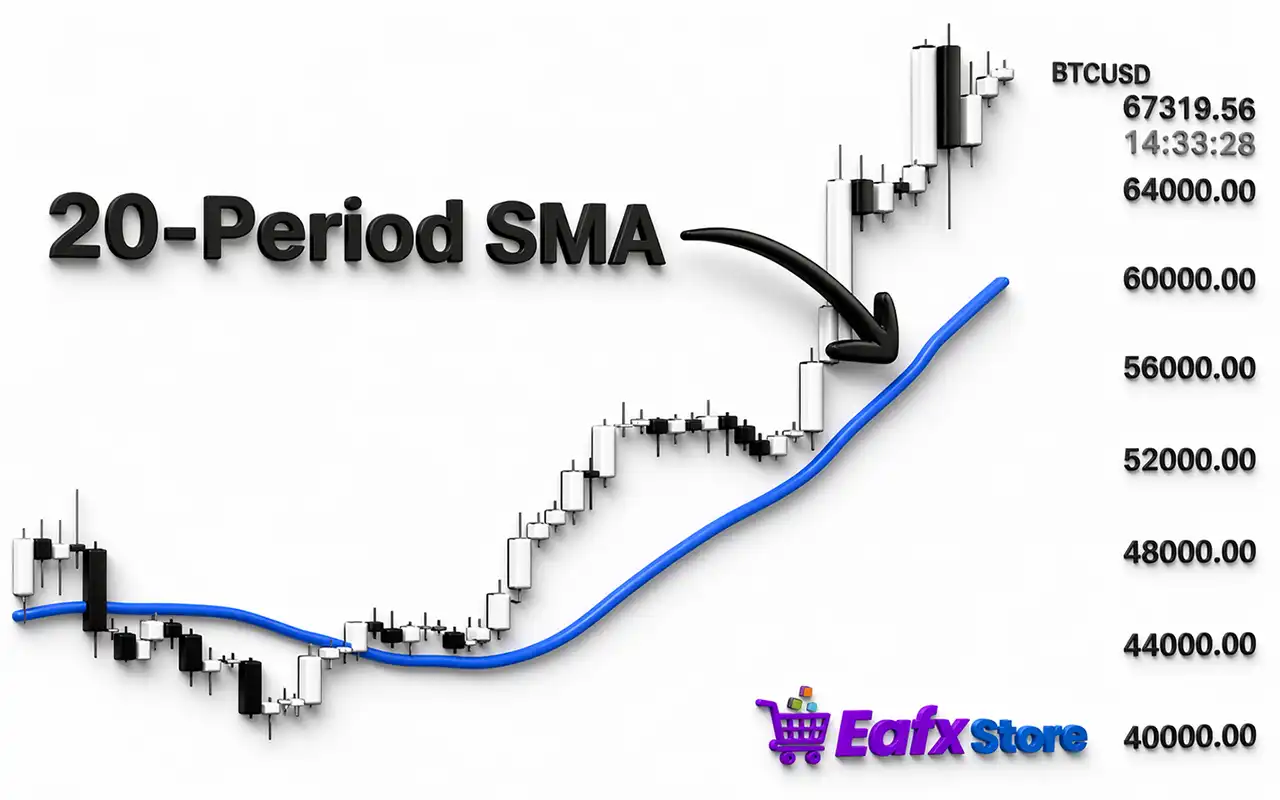
How to Calculate Simple Moving Average
The formula for SMA is straightforward:
SMA = (P1 + P2 + P3 + … + Pn) / n
Where:
- P = Price (usually closing price)
- n = Number of periods
For example, if the last 5 closing prices of EUR/USD are:
1.1000, 1.1020, 1.1010, 1.1030, 1.1040
Then:
SMA = (1.1000 + 1.1020 + 1.1010 + 1.1030 + 1.1040) / 5 = 1.1020
Most trading platforms like MetaTrader automatically calculate SMA, so you don’t need to do it manually—but understanding the formula is still essential.
Types of SMA in Forex Trading
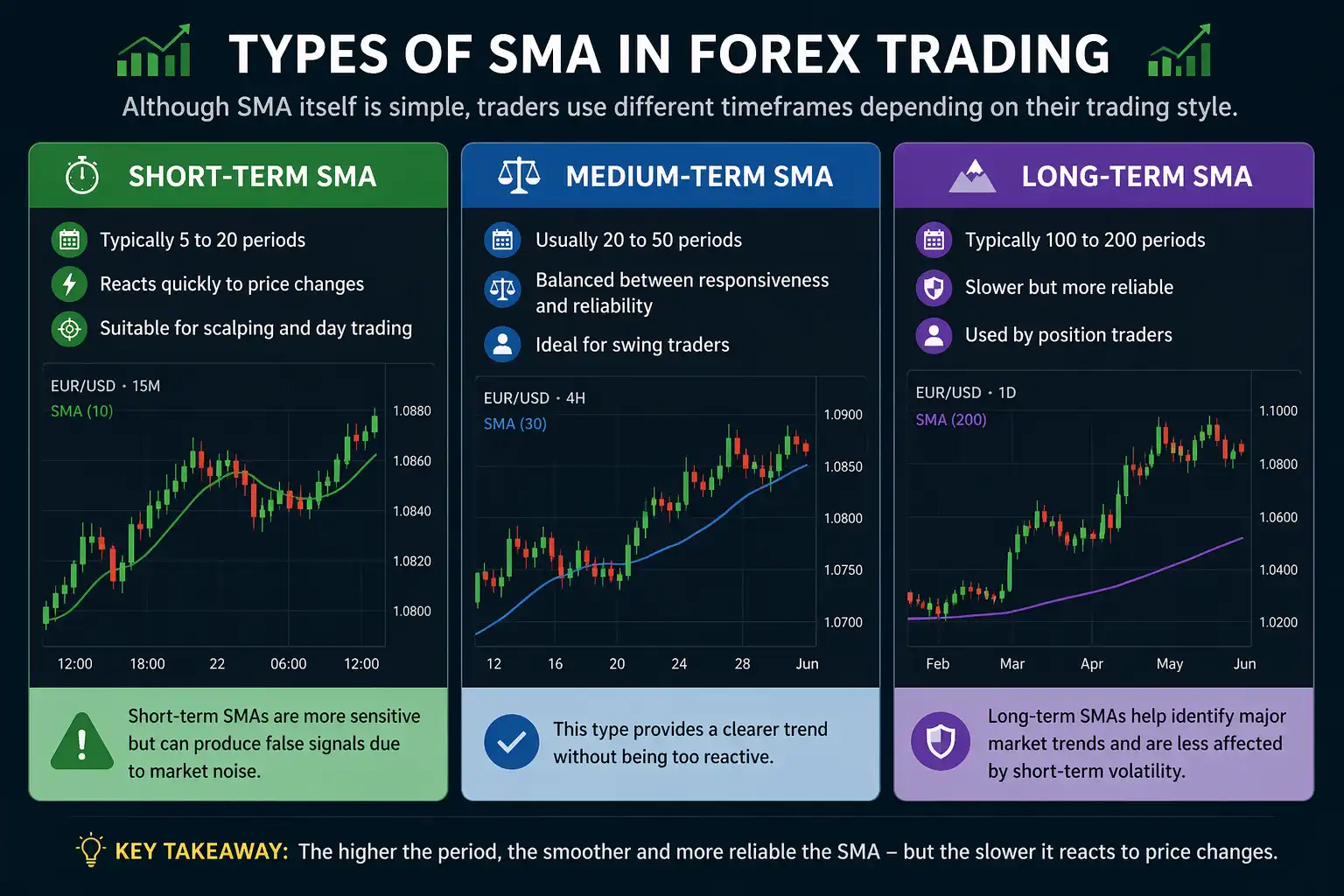
Although SMA itself is simple, traders use different timeframes depending on their trading style.
Short-Term SMA
- Typically 5 to 20 periods
- Reacts quickly to price changes
- Suitable for scalping and day trading
Short-term SMAs are more sensitive but can produce false signals due to market noise.
Medium-Term SMA
- Usually 20 to 50 periods
- Balanced between responsiveness and reliability
- Ideal for swing traders
This type provides a clearer trend without being too reactive.
Long-Term SMA
- Typically 100 to 200 periods
- Slower but more reliable
- Used by position traders
Long-term SMAs help identify major market trends and are less affected by short-term volatility.
How to Use SMA in Forex Trading
SMA can be applied in several practical ways. Here are the most common strategies beginners should understand.
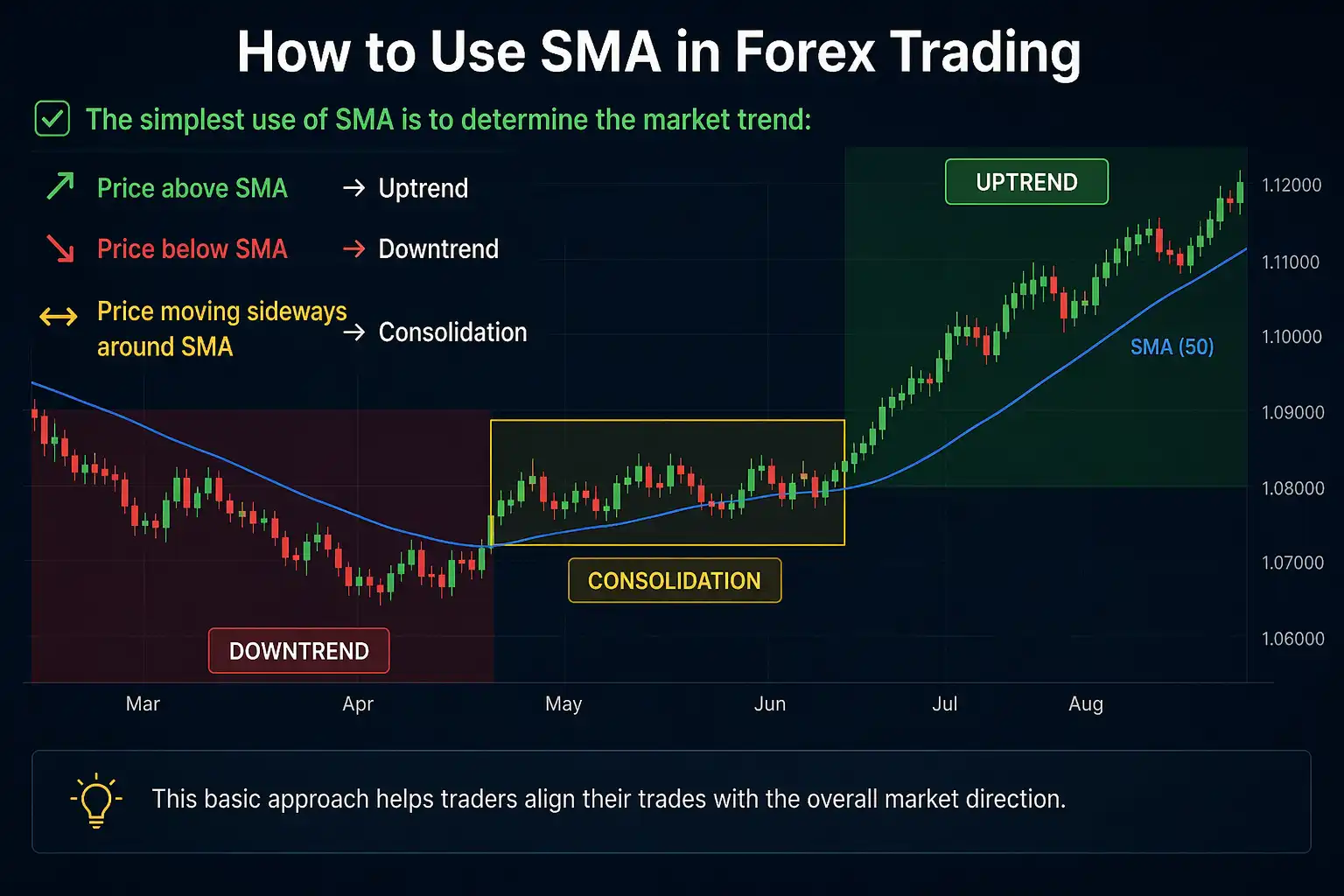
The simplest use of SMA is to determine the market trend:
- Price above SMA → Uptrend
- Price below SMA → Downtrend
- Price moving sideways around SMA → Consolidation
This basic approach helps traders align their trades with the overall market direction.
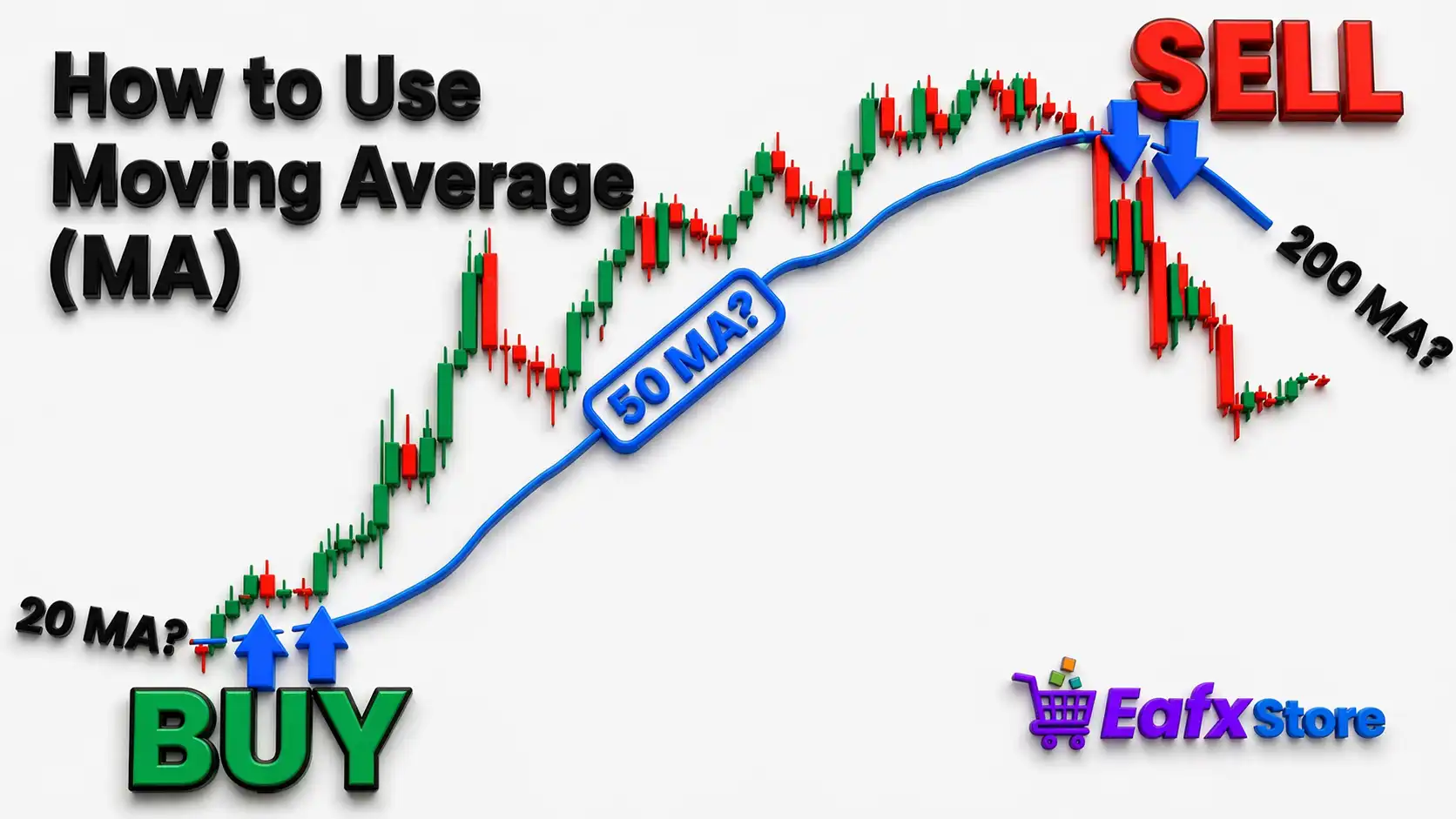
SMA Crossover Strategy
One of the most popular strategies involves using two SMAs:
- A short-term SMA (e.g., 20-period)
- A long-term SMA (e.g., 50-period)
Buy Signal: When the short-term SMA crosses above the long-term SMA
Sell Signal: When the short-term SMA crosses below the long-term SMA
This strategy is widely used because it’s simple and effective for trend-following.
Dynamic Support and Resistance
SMA can act as a dynamic support or resistance level:
- In an uptrend, price often bounces off the SMA (support)
- In a downtrend, SMA acts as resistance
This allows traders to find better entry points rather than chasing the market.
Best SMA Settings for Beginners
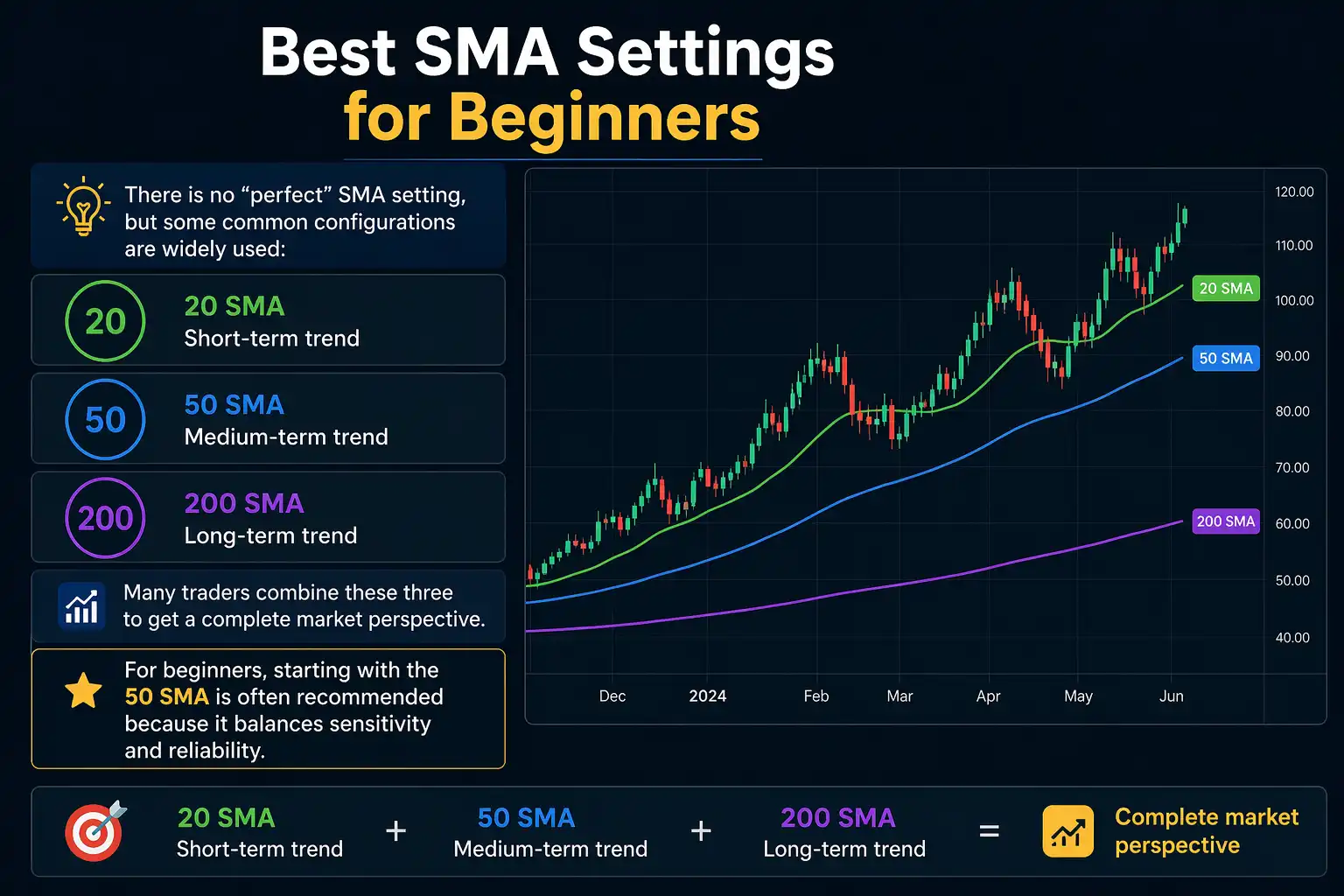
There is no “perfect” SMA setting, but some common configurations are widely used:
- 20 SMA → Short-term trend
- 50 SMA → Medium-term trend
- 200 SMA → Long-term trend
Many traders combine these three to get a complete market perspective.
For beginners, starting with the 50 SMA is often recommended because it balances sensitivity and reliability.
Advantages of Using SMA
SMA remains popular because of its simplicity and effectiveness.
1. Easy to Understand
Even beginners can quickly grasp how it works.
2. Clear Trend Identification
Helps traders avoid trading against the trend.
3. Widely Used
Because many traders use SMA, it can become a self-fulfilling indicator.
4. Works Across Timeframes
Applicable for scalping, day trading, and long-term investing.
Limitations of SMA
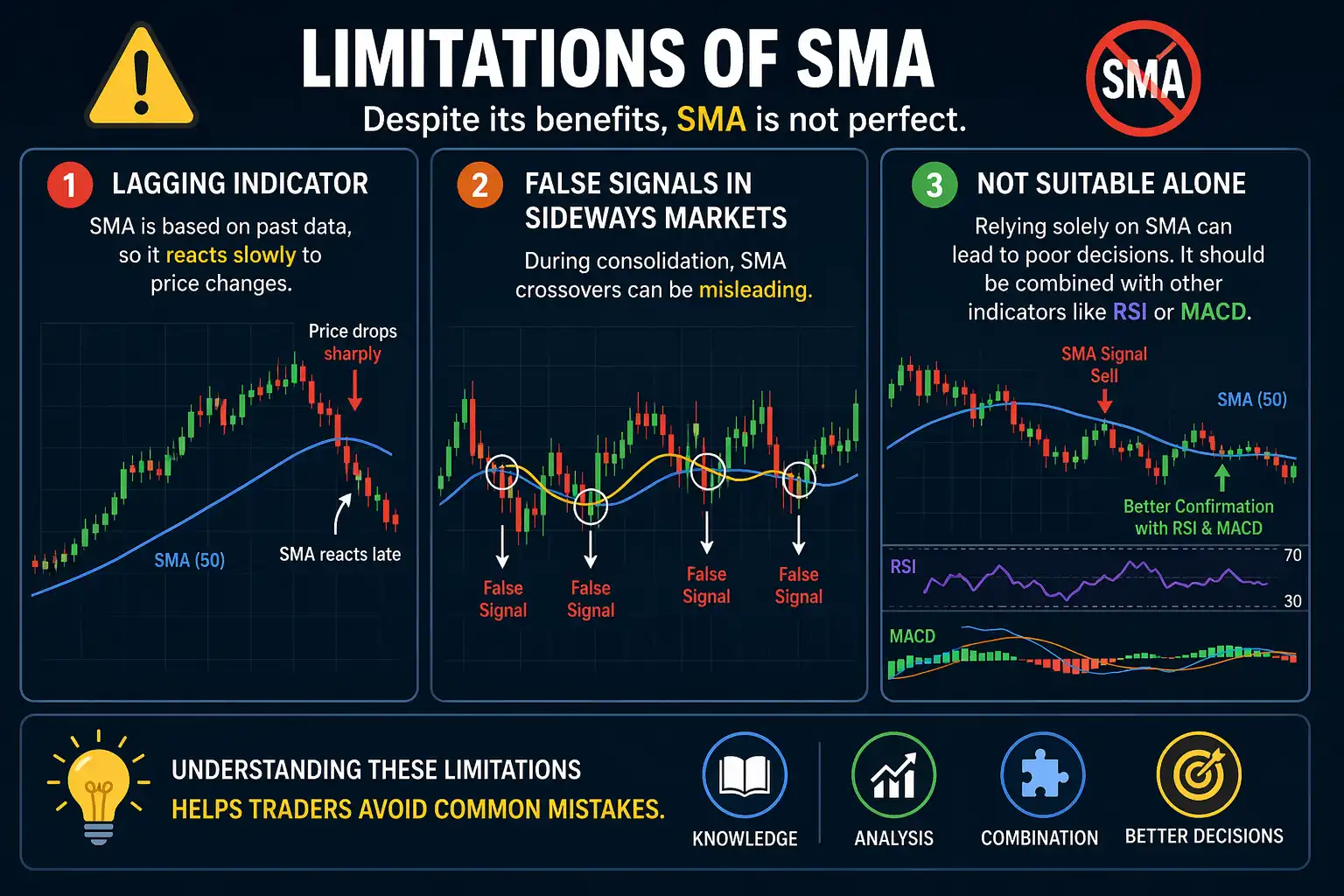
Despite its benefits, SMA is not perfect.
1. Lagging Indicator
SMA is based on past data, so it reacts slowly to price changes.
2. False Signals in Sideways Markets
During consolidation, SMA crossovers can be misleading.
3. Not Suitable Alone
Relying solely on SMA can lead to poor decisions. It should be combined with other indicators like RSI or MACD.
Understanding these limitations helps traders avoid common mistakes.
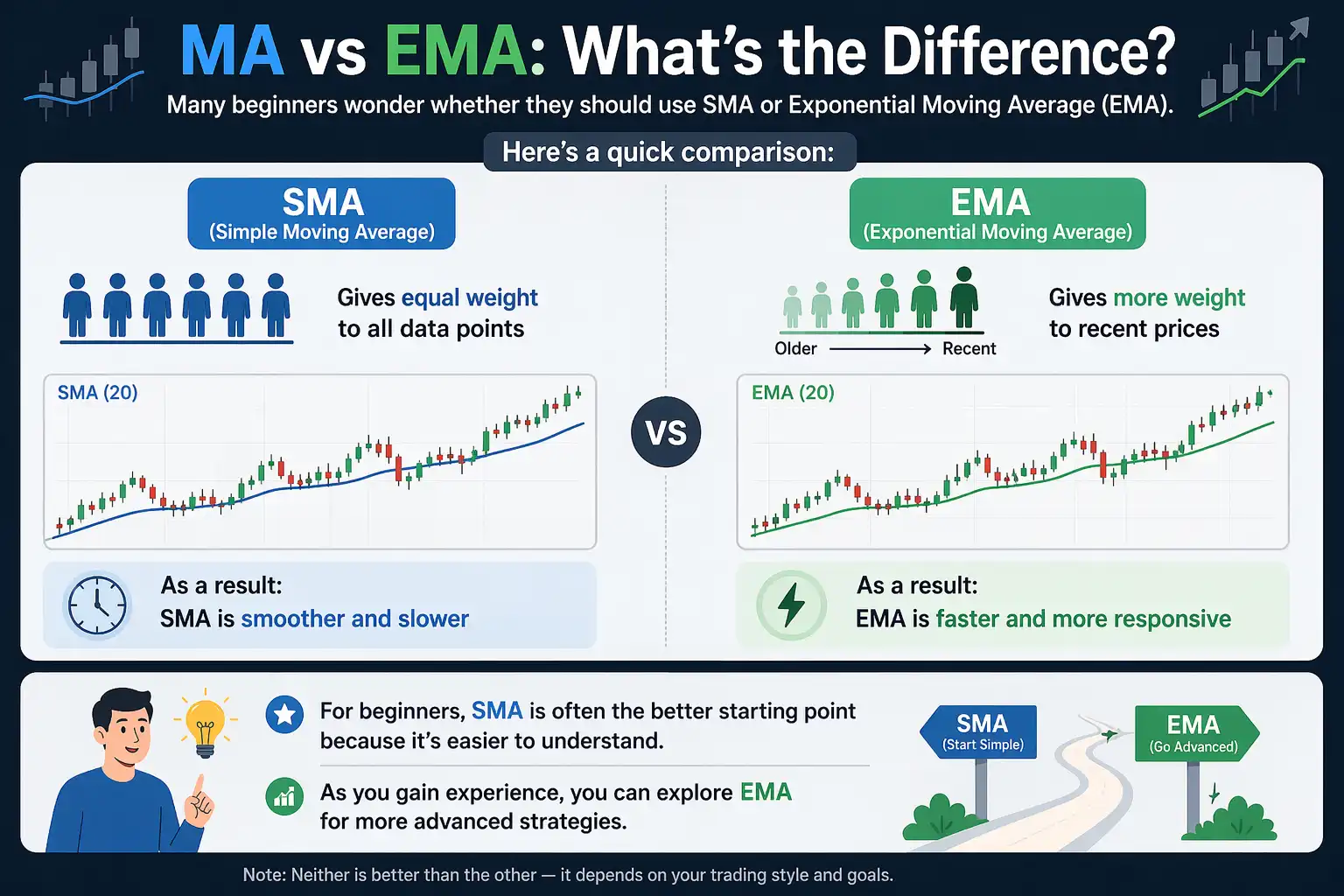
SMA vs EMA: What’s the Difference?
Many beginners wonder whether they should use SMA or Exponential Moving Average (EMA).
Here’s a quick comparison:
- SMA: Gives equal weight to all data points
- EMA: Gives more weight to recent prices
As a result:
- SMA is smoother and slower
- EMA is faster and more responsive
For beginners, SMA is often the better starting point because it’s easier to understand. As you gain experience, you can explore EMA for more advanced strategies.
Common Mistakes When Using SMA
Avoiding these mistakes can significantly improve your trading results:
1. Using SMA Alone
Always combine SMA with other indicators or price action analysis.
2. Ignoring Market Context
SMA works best in trending markets, not sideways conditions.
3. Choosing Wrong Timeframes
Using too short or too long SMAs without strategy can lead to confusion.
4. Overtrading
Not every crossover is a valid signal—wait for confirmation.
Practical Example of SMA in Forex
Imagine you are trading EUR/USD:
- You apply a 50 SMA on a 1-hour chart
- Price consistently stays above the SMA
- The SMA is sloping upward
This indicates a strong uptrend.
Instead of selling, you look for buying opportunities when price pulls back near the SMA. This approach increases your probability of success because you are trading with the trend.
Tips for Trading Success with SMA
To maximize your results when using SMA, consider the following tips:
- Combine SMA with support/resistance levels
- Use multiple SMAs for confirmation
- Always apply risk management (stop loss, position sizing)
- Backtest your strategy before trading live
- Stay patient and avoid emotional decisions
Consistency is more important than chasing quick profits.
Conclusion
The Simple Moving Average (SMA) is a powerful yet beginner-friendly tool that plays a crucial role in Forex trading. It helps traders identify trends, find entry points and make more informed decisions.
While SMA is not a perfect indicator, its simplicity makes it an excellent starting point for anyone entering the Forex market. By combining SMA with other tools and practicing proper risk management, traders can significantly improve their chances of success.