
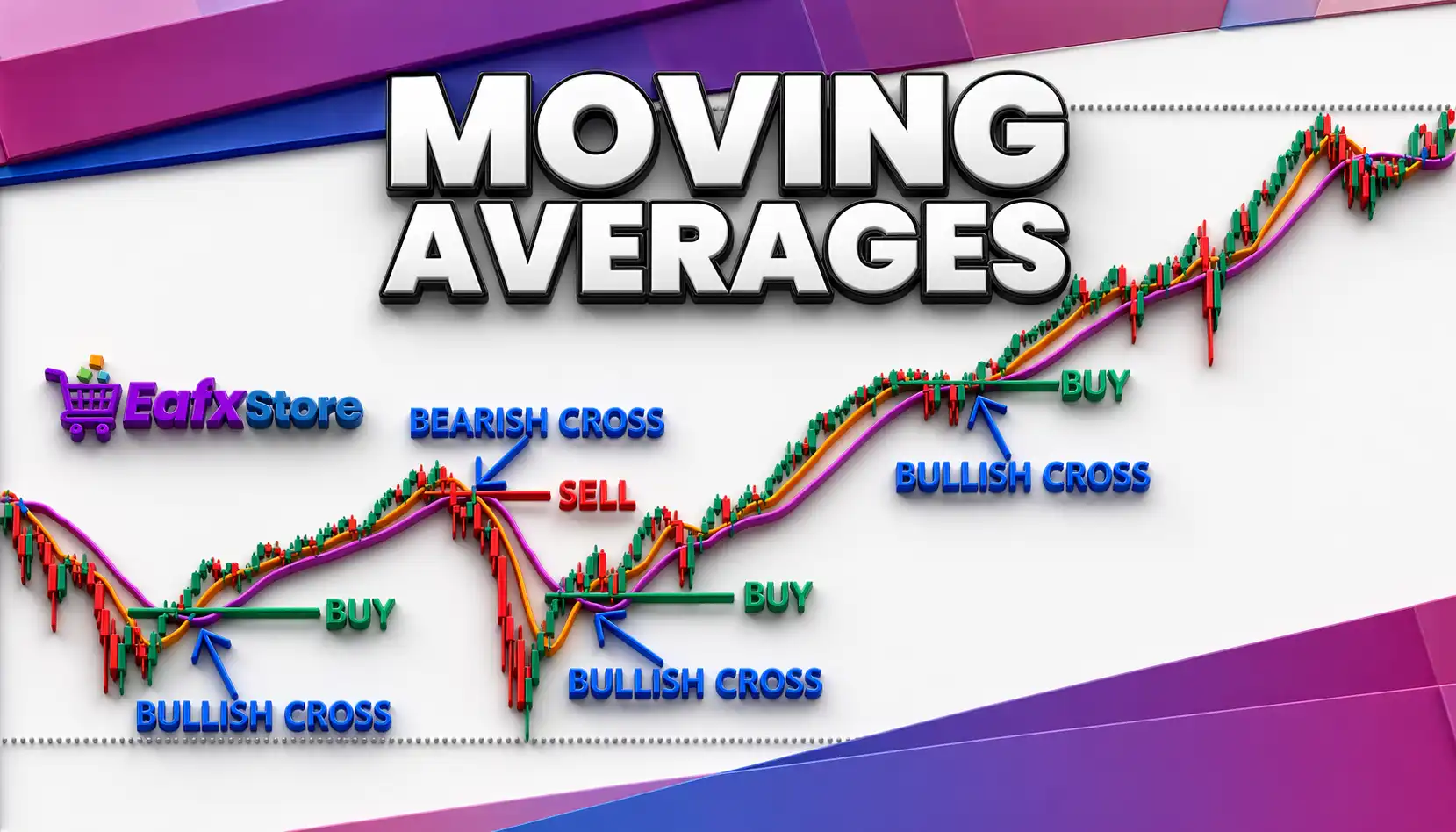
In the world of Forex trading, identifying trends is one of the most critical skills a trader can develop. Markets rarely move in straight lines; instead, they fluctuate in waves, making it challenging to determine the overall direction. This is where Moving Averages (MA) come into play.
Moving Averages are among the most popular and widely used technical indicators in Forex trading. They help traders smooth out price data, filter noise, and identify trends more clearly. Whether you are a beginner or an experienced trader, understanding how to use Moving Averages effectively can significantly improve your trading strategy.
In this guide, we’ll explore what Moving Averages are, how they work, the different types available, and how you can use them for successful trend trading.
What is a Moving Average (MA)?
A Moving Average (MA) is a technical indicator that calculates the average price of a currency pair over a specific period of time. It “moves” because it continuously updates as new price data becomes available.
Instead of focusing on short-term price fluctuations, Moving Averages provide a smoother view of the market, helping traders identify the underlying trend.
Key Benefits of Moving Averages:
- Simplifies complex price data
- Helps identify trend direction
- Acts as dynamic support and resistance
- Provides trading signals for entry and exit
Types of Moving Averages
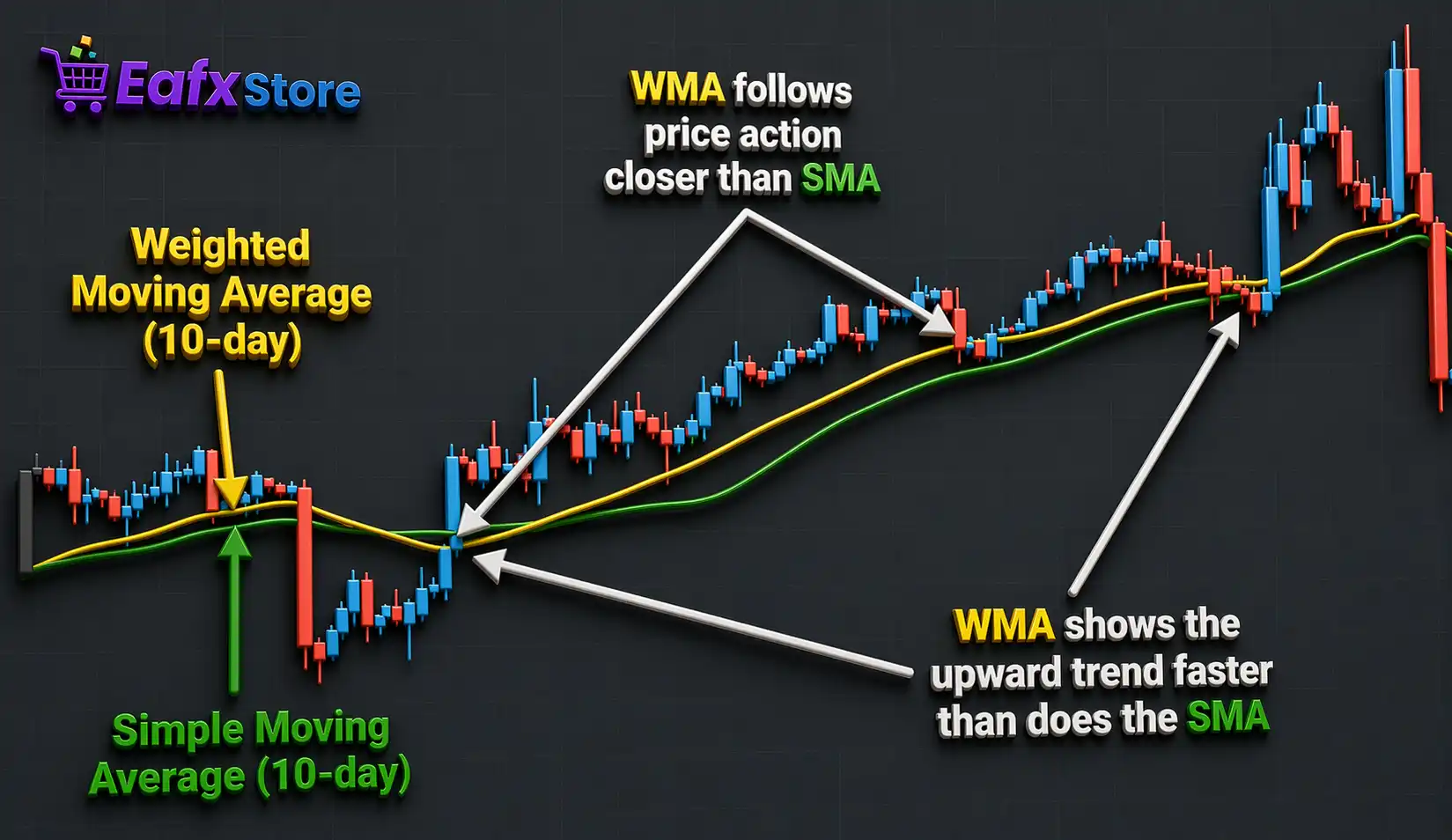
There are several types of Moving Averages, but the two most commonly used in Forex trading are:
1. Simple Moving Average (SMA)
The Simple Moving Average calculates the average price over a set number of periods.
Example:
A 50-day SMA adds up the closing prices of the last 50 days and divides by 50.
Characteristics:
- Smooth and stable.
- Slower to react to price changes.
- Good for identifying long-term trends.
2. Exponential Moving Average (EMA)
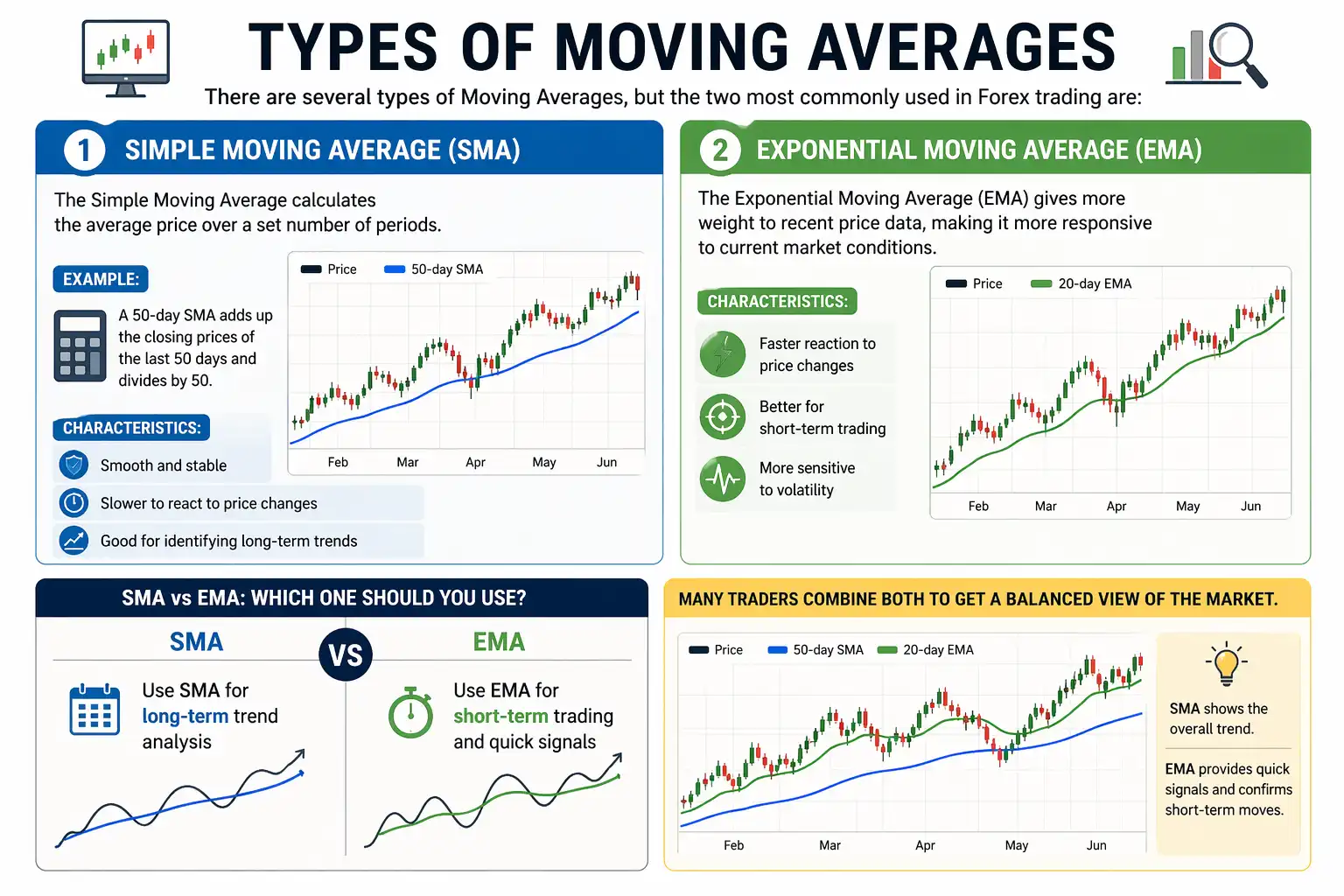
The Exponential Moving Average (EMA) gives more weight to recent price data, making it more responsive to current market conditions.
Characteristics:
- Faster reaction to price changes
- Better for short-term trading
- More sensitive to volatility
SMA vs EMA: Which One Should You Use?
- Use SMA for long-term trend analysis
- Use EMA for short-term trading and quick signals
Many traders combine both to get a balanced view of the market.
How Moving Averages Work in Forex Trading
Moving Averages are plotted directly on the price chart. They create a smooth line that follows price movements, making trends easier to spot.
Trend Identification:
- Uptrend: Price is above the MA
- Downtrend: Price is below the MA
- Sideways Market: Price crosses MA frequently
Popular Moving Average Periods
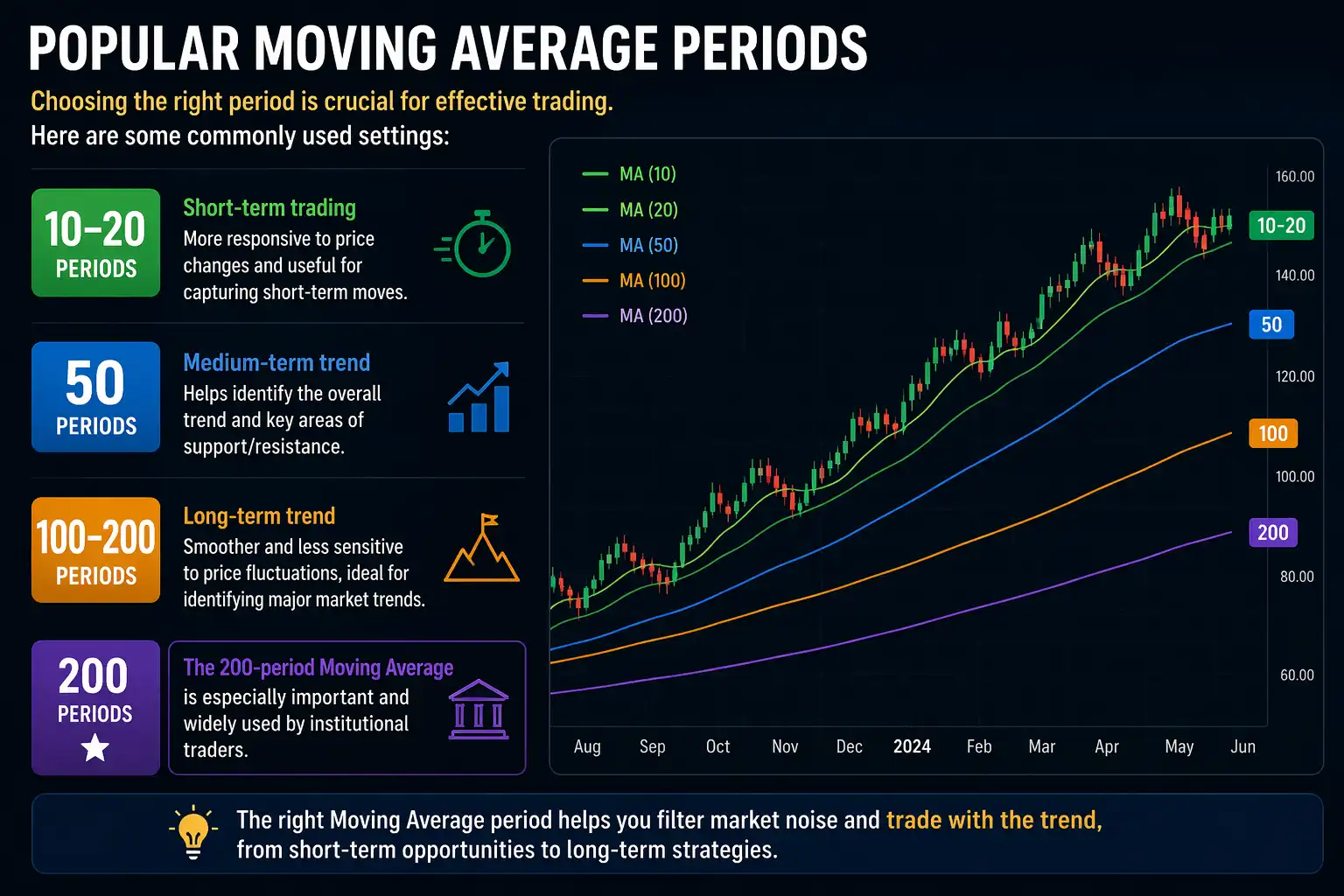
Choosing the right period is crucial for effective trading. Here are some commonly used settings:
- 10–20 periods: Short-term trading.
- 50 periods: Medium-term trend.
- 100–200 periods: Long-term trend.
The 200-period Moving Average is especially important and widely used by institutional traders.
Moving Average Trading Strategies
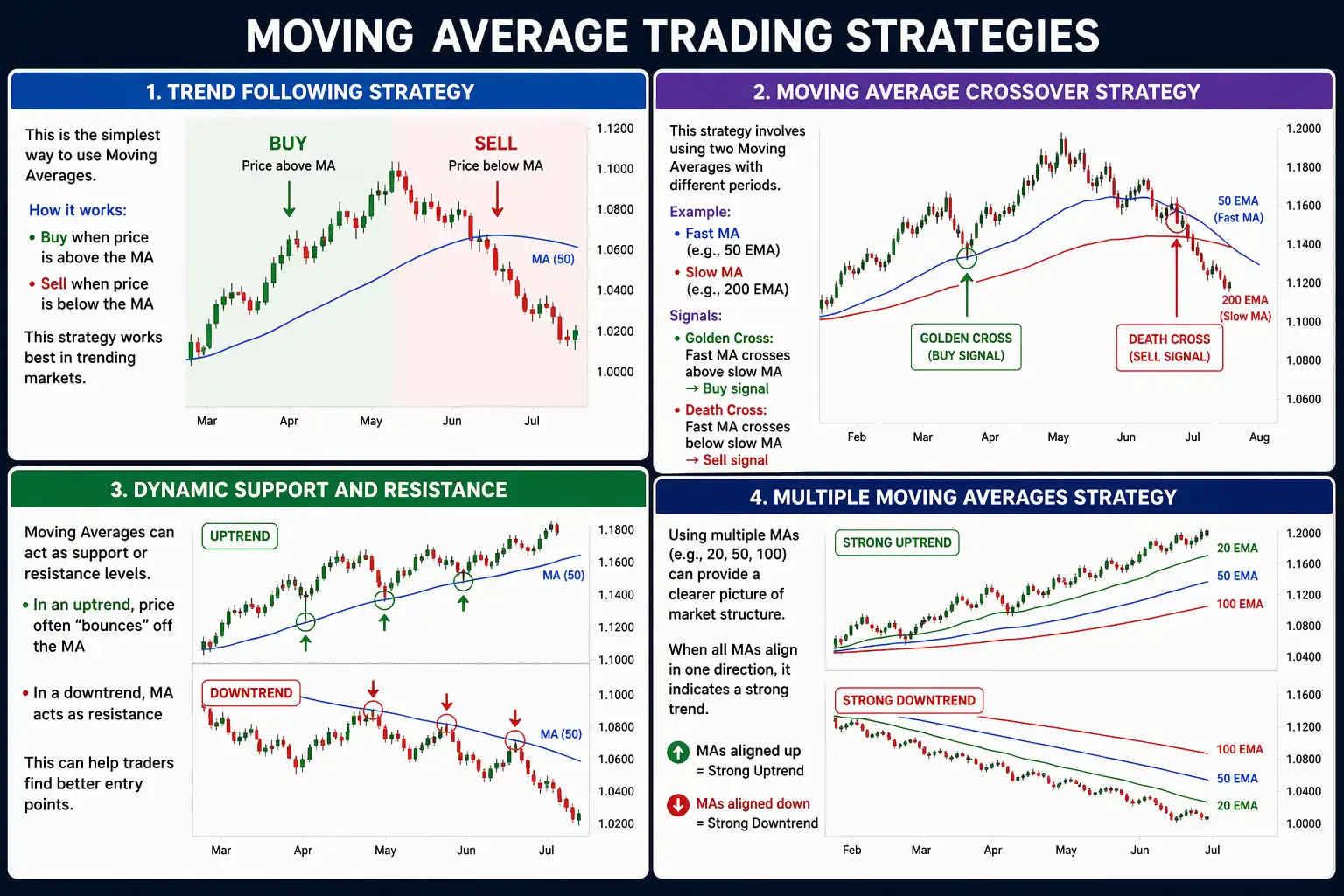
1. Trend Following Strategy
This is the simplest way to use Moving Averages.
How it works:
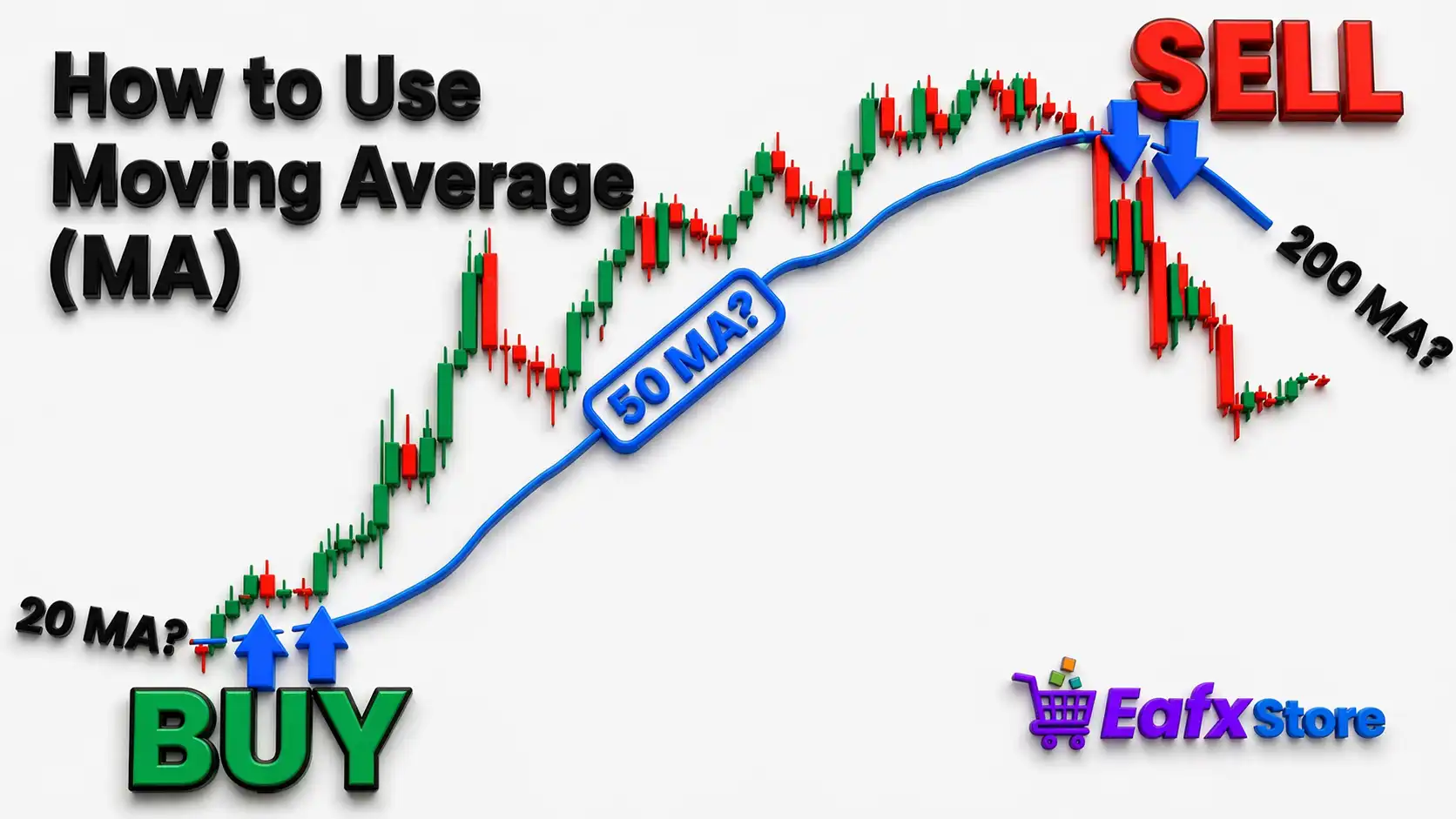
- Buy when price is above the MA
- Sell when price is below the MA
This strategy works best in trending markets.
2. Moving Average Crossover Strategy
This strategy involves using two Moving Averages with different periods.
Example:
- Fast MA (e.g., 50 EMA)
- Slow MA (e.g., 200 EMA)
Signals:
- Golden Cross: Fast MA crosses above slow MA → Buy signal
- Death Cross: Fast MA crosses below slow MA → Sell signal
3. Dynamic Support and Resistance
Moving Averages can act as support or resistance levels.
- In an uptrend, price often “bounces” off the MA
- In a downtrend, MA acts as resistance
This can help traders find better entry points.
4. Multiple Moving Averages Strategy
Using multiple MAs (e.g., 20, 50, 100) can provide a clearer picture of market structure.
When all MAs align in one direction, it indicates a strong trend.
Advantages of Using Moving Averages
- Easy to understand and apply.
- Works well in trending markets.
- Helps reduce emotional trading.
- Can be combined with other indicators.
Limitations of Moving Averages
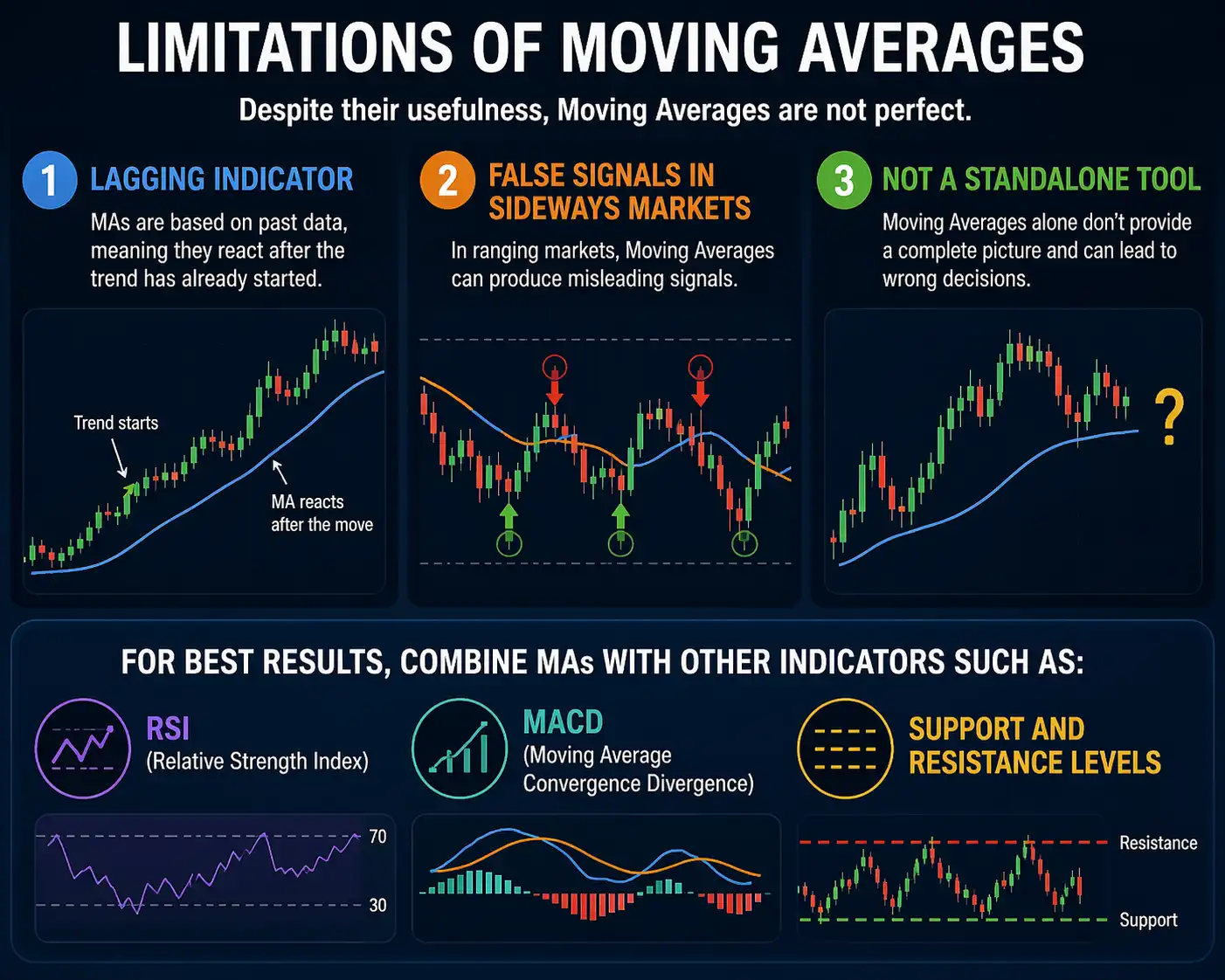
Despite their usefulness, Moving Averages are not perfect.
1. Lagging Indicator
MAs are based on past data, meaning they react after the trend has already started.
2. False Signals in Sideways Markets
In ranging markets, Moving Averages can produce misleading signals.
3. Not a Standalone Tool
For best results, combine MAs with other indicators such as:
- RSI (Relative Strength Index)
- MACD (Moving Average Convergence Divergence)
- Support and Resistance levels
Tips for Beginners
If you’re just starting out, here are some practical tips:
1. Keep It Simple
Avoid using too many Moving Averages at once. Start with one or two.
2. Use Higher Timeframes
Longer timeframes (H1, H4, Daily) provide more reliable signals.
3. Combine with Price Action
Always confirm MA signals with price patterns.
4. Practice on Demo Account
Test your strategies before trading with real money.
Common Mistakes to Avoid
- Relying solely on Moving Averages
- Using too many indicators at once
- Ignoring market context
- Overtrading based on small signals
Example of a Moving Average Trade
Let’s say you are trading EUR/USD:
- You apply a 50 EMA and 200 EMA.
- The 50 EMA crosses above the 200 EMA (Golden Cross).
- Price stays above both MAs.
- You enter a Buy position.
- You exit when price drops below the 50 EMA.
This simple strategy can help capture major trends while minimizing risk.
Moving Averages and Risk Management
No strategy is complete without proper risk management.
- Always use Stop Loss (SL).
- Risk only 1–2% per trade.
- Avoid trading during high-impact news without preparation.
Moving Averages can guide your entries, but risk management protects your capital.
Conclusion
Moving Averages are one of the most powerful and beginner-friendly tools in Forex trading. They help traders identify trends, generate signals and make more informed decisions.
However, like any indicator, they should not be used in isolation. Combining Moving Averages with other technical tools and proper risk management will significantly improve your chances of success.
If you are new to Forex trading, start simple. Learn how Moving Averages behave in different market conditions, practice consistently, and refine your strategy over time.
Mastering Moving Averages is not about predicting the market perfectly—it’s about understanding trends and trading with discipline.
FAQs
1. What is the best Moving Average for Forex?
There is no single “best” MA. The 50 EMA and 200 EMA are widely used.
2. Are Moving Averages suitable for beginners?
Yes, they are one of the easiest indicators to learn and use.
3. Can Moving Averages predict the market?
No, they are lagging indicators that help confirm trends rather than predict them.
4. Should I use SMA or EMA?
Use SMA for long-term trends and EMA for short-term signals.