
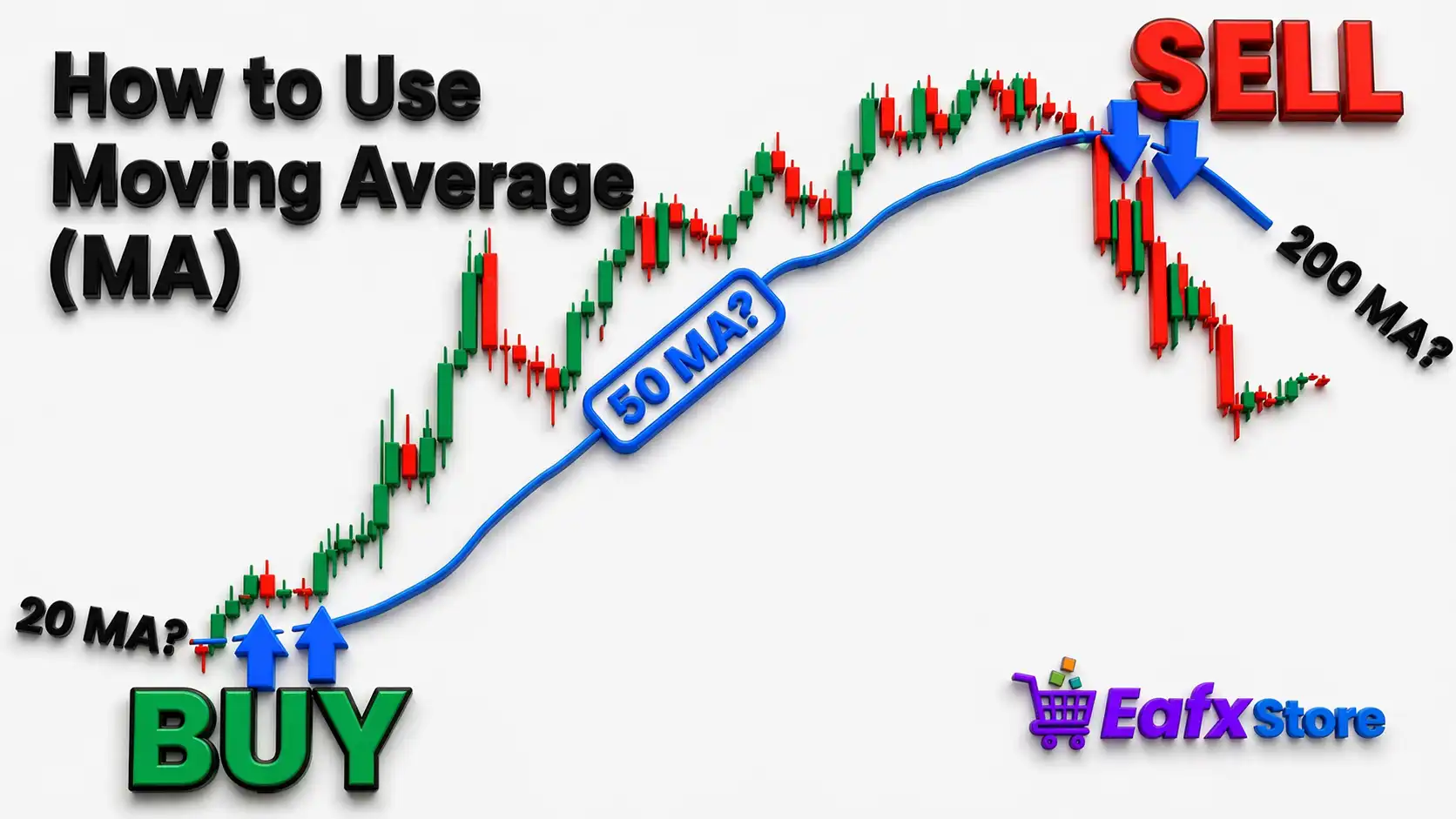
In the fast-paced world of Forex trading, timing is everything. Enter too early, and you risk unnecessary drawdowns. Enter too late, and you miss profit opportunities. That’s where the Moving Average (MA) becomes one of the most powerful and widely used tools for identifying accurate entry signals.
In this comprehensive guide, you’ll learn how to use Moving Averages effectively, different types of MAs, proven entry strategies, and practical tips to improve your Forex trading performance.
What is a Moving Average (MA)?
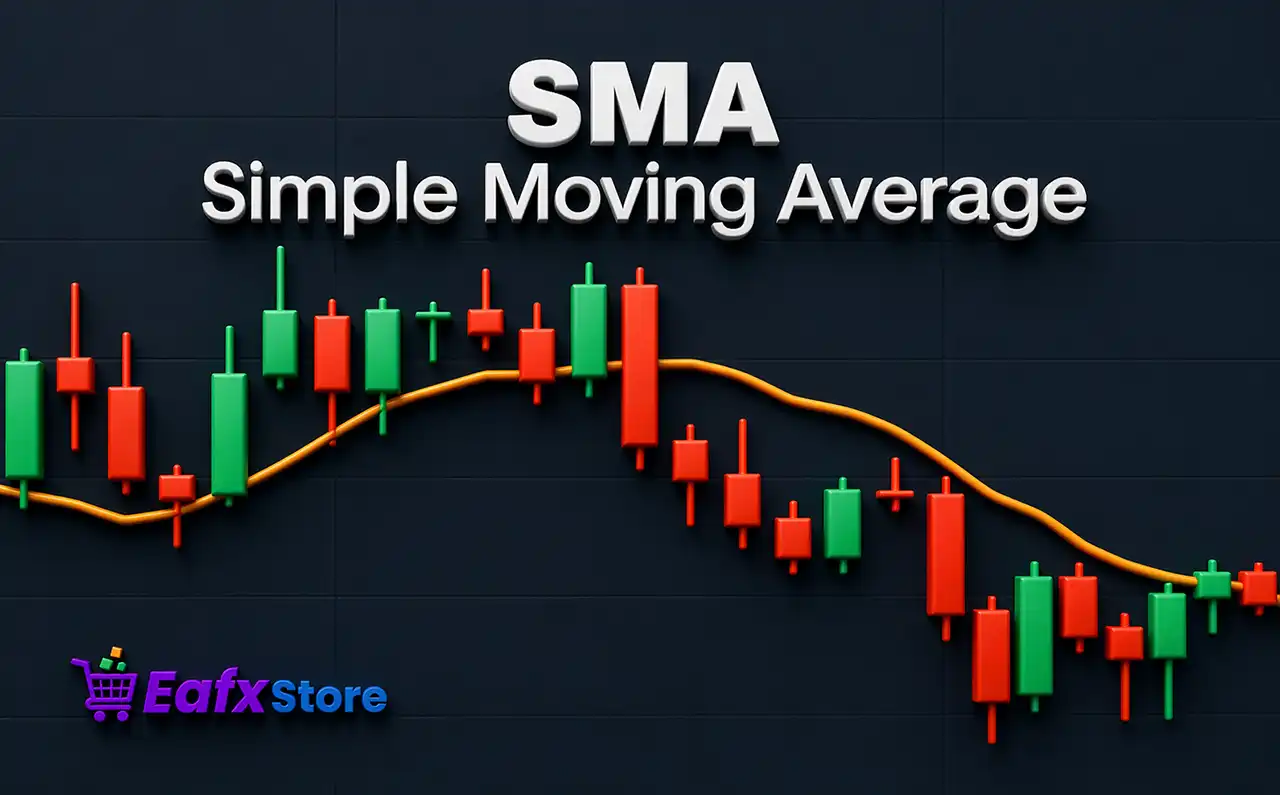
A Moving Average (MA) is a technical indicator that smooths out price data by calculating the average price over a specific period. It helps traders identify trends and filter out market noise.
Instead of reacting to every small price movement, MAs provide a clearer picture of the market direction.
Key Idea:
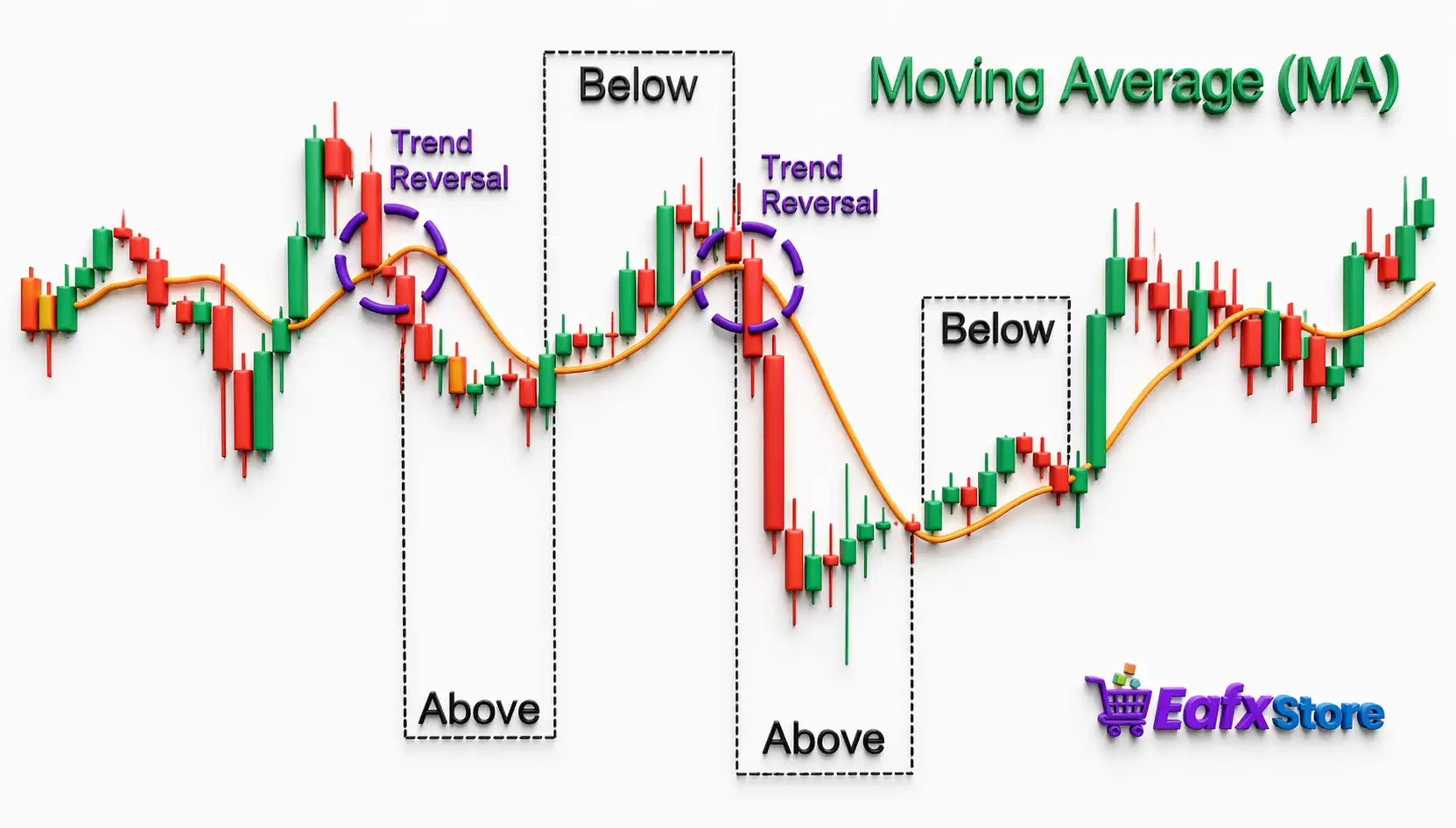
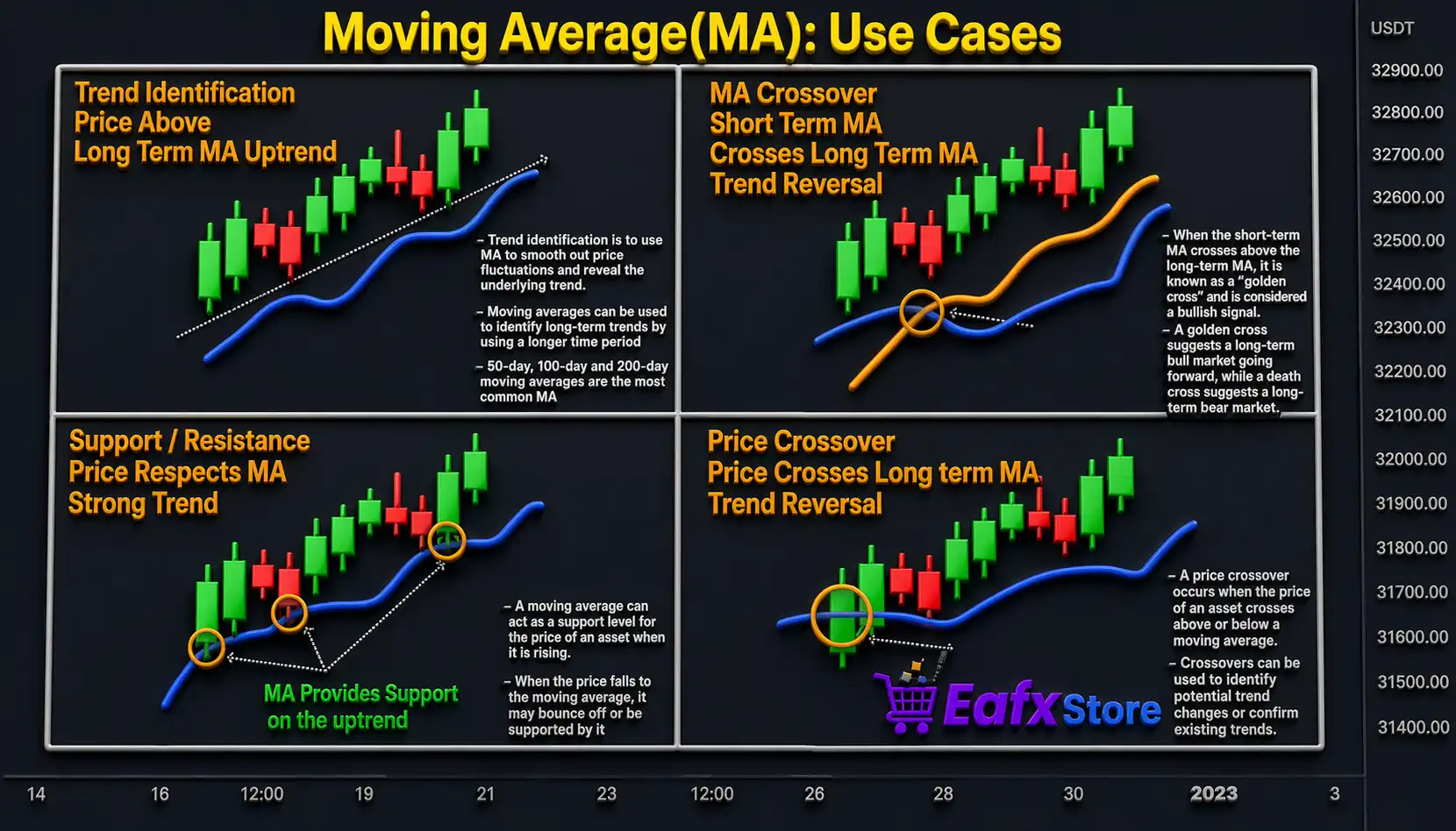
- Uptrend → Price above MA
- Downtrend → Price below MA
- Sideways → Price crosses MA frequently
Types of Moving Averages
Understanding the types of MAs is essential before applying them in trading.
1. Simple Moving Average (SMA)
- Calculates the average price over a set number of periods
- Smooth but slower to react
👉 Best for: Identifying long-term trends
2. Exponential Moving Average (EMA)
- Gives more weight to recent prices
- Reacts faster to market changes
👉 Best for: Entry signals and short-term trading
3. Weighted Moving Average (WMA)
- Similar to EMA but uses a different weighting method
👉 Best for: Advanced traders seeking precision
Why Moving Averages Work in Forex
Forex markets are heavily driven by trends. Moving Averages help traders:
- Identify trend direction
- Spot dynamic support and resistance
- Confirm entry and exit points
- Reduce emotional trading decisions
Because many traders use MAs, they often become self-fulfilling signals in the market.
Best Moving Average Settings for Forex
There’s no one-size-fits-all setting, but these are widely used:
- 20 EMA → Short-term trend
- 50 EMA → Medium-term trend
- 100 EMA → Strong trend confirmation
- 200 EMA → Long-term trend
👉 Pro Tip: Combine multiple MAs to get a clearer market structure.
How to Use Moving Averages for Entry Signals
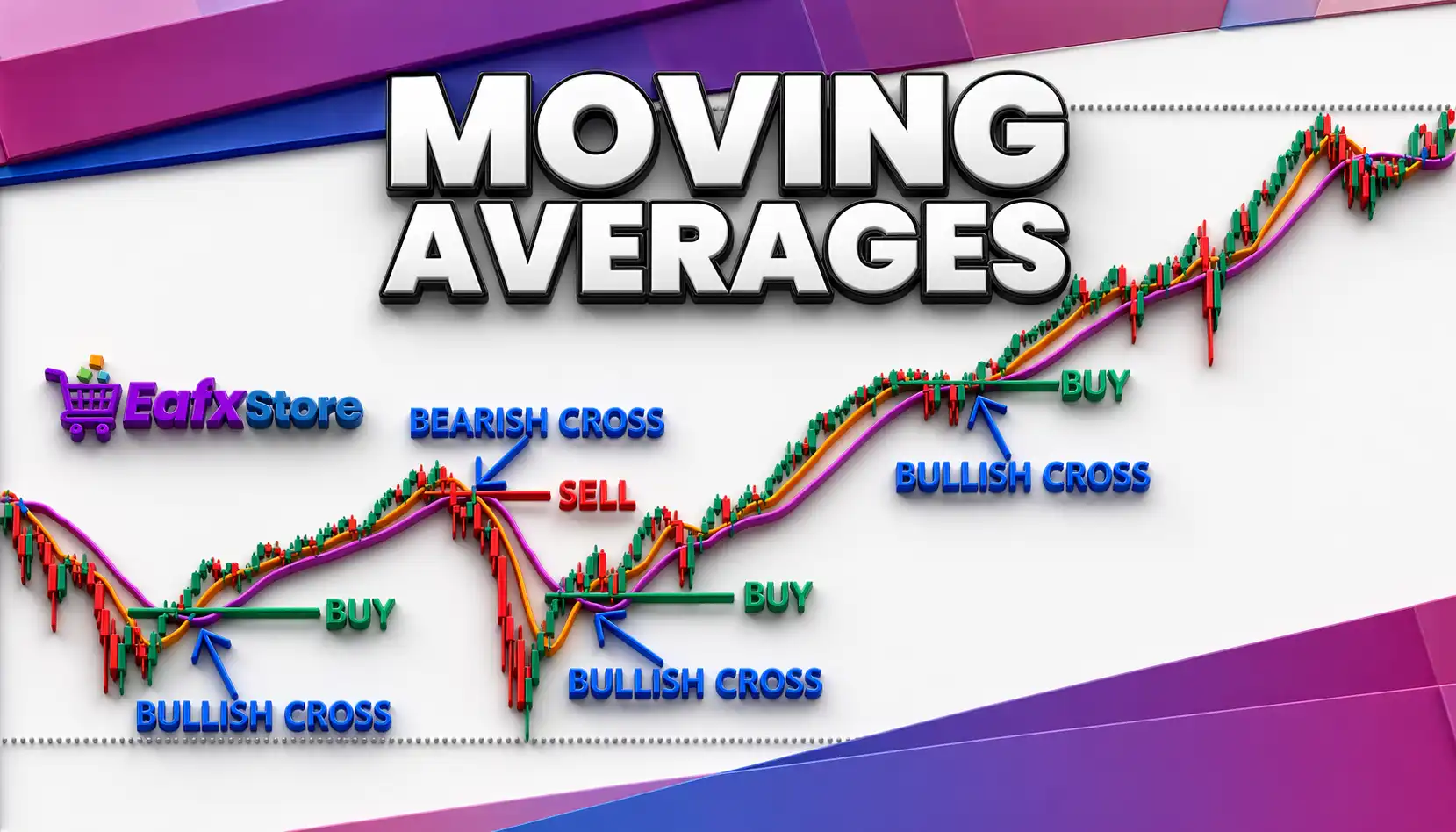
1. Moving Average Crossover Strategy
One of the most popular MA strategies.
How it works:
- Buy when short-term MA crosses above long-term MA
- Sell when short-term MA crosses below long-term MA
Example:
- 20 EMA crosses above 50 EMA → Buy signal
- 20 EMA crosses below 50 EMA → Sell signal
Why it works:
It signals a shift in momentum.
2. Pullback Entry Strategy (High Accuracy)
This is a favorite among professional traders.
Steps:
- Identify the trend using a higher MA (e.g., 50 EMA)
- Wait for price to pull back to the MA
- Enter when price shows rejection (candlestick confirmation)
Example:
- Uptrend → Price pulls back to 50 EMA → Bullish candle → Buy
Why it works:
You enter at a discount price within a trend, improving risk-reward.
3. MA as Dynamic Support and Resistance
Moving Averages often act like invisible support/resistance lines.
How to trade:
- Buy when price bounces off MA in an uptrend
- Sell when price rejects MA in a downtrend
4. Multiple MA Strategy (Trend Filtering)
Use 2–3 MAs together:
- 20 EMA → Entry timing
- 50 EMA → Trend direction
- 200 EMA → Market bias
Rules:
- Only buy when all MAs align upward
- Only sell when all MAs align downward
This reduces false signals significantly.
Combining MA with Other Indicators
Using MA alone is powerful—but combining it makes it even stronger.
Best combinations:
- MA + RSI → Confirm overbought/oversold
- MA + MACD → Momentum confirmation
- MA + Price Action → Strong entry signals
👉 Example:
- Price touches 50 EMA
- RSI shows oversold
- Bullish engulfing candle forms
→ High-probability buy setup
Common Mistakes When Using Moving Averages
Avoid these pitfalls to improve your accuracy:
1. Using MA in a Ranging Market
MAs perform poorly in sideways conditions.
👉 Solution: Confirm trend before trading
2. Relying on One MA Only
Single MA signals are weaker.
👉 Solution: Use multiple MAs for confirmation
3. Entering Late After Crossovers
Crossovers can lag behind price.
👉 Solution: Combine with price action
4. Ignoring Higher Timeframes
Trading against the higher trend increases risk.
👉 Solution: Always check H1, H4, or Daily trend
Advanced Tips for Better Entry Signals
1. Use Multi-Timeframe Analysis
- Daily → Trend direction
- H4 → Setup
- H1 → Entry
2. Focus on Clean Trends
The cleaner the trend, the more reliable the MA signals.
3. Wait for Confirmation
Don’t enter just because price touches MA—wait for:
- Pin bar
- Engulfing candle
- Break of structure
4. Combine with Risk Management
Even the best MA strategy fails without proper risk control.
- Risk only 1–2% per trade
- Use stop-loss below/above MA
- Aim for at least 1:2 risk-reward ratio
Example Trading Setup Using MA
Strategy: 50 EMA Pullback
- Timeframe: H1
- Indicator: 50 EMA
Steps:
- Identify uptrend (price above 50 EMA)
- Wait for pullback to EMA
- Look for bullish confirmation
- Enter buy
- Stop-loss below recent low
- Take profit at next resistance
Pros and Cons of Moving Averages
Advantages:
- Easy to use
- Works well in trending markets
- Great for beginners and pros
Disadvantages:
- Lagging indicator
- Poor performance in sideways markets
- Can give false signals
Final Thoughts
Moving Averages remain one of the most reliable tools for identifying Forex entry signals—when used correctly. The key is not just applying them, but understanding context, trend, and confirmation.
If you combine:
- The right MA settings
- Strong trend analysis
- Price action confirmation
- Proper risk management
…you’ll significantly improve your trading accuracy.
FAQ: Moving Average in Forex
What is the best MA for Forex trading?
The 50 EMA and 200 EMA are among the most reliable for trend identification.
Is EMA better than SMA?
For entry signals, EMA is generally better because it reacts faster to price changes.
Can beginners use Moving Averages?
Yes. MAs are one of the simplest and most beginner-friendly indicators.
Do Moving Averages work in all markets?
They work best in trending markets, but poorly in sideways conditions.
Conclusion
Mastering Moving Averages can dramatically improve your Forex trading performance. Instead of chasing the market, you’ll learn to enter with precision and confidence.
Start simple, test strategies, and refine your approach. Over time, the MA will become one of your most trusted tools in Forex trading.