Top CFD Trading Strategies for Forex Beginners in 2026

The world of online trading has evolved rapidly over the past decade, and in 2026, Contracts for Difference (CFDs) remain one of the most accessible ways for beginners to enter the Forex market. CFDs allow traders to speculate on price movements without owning the underlying asset, making them especially appealing for those who want flexibility, leverage and global market access.
However, while CFDs offer exciting opportunities, they also come with significant risks—especially for beginners. That’s why having a solid strategy is essential. In this guide, we will explore the top CFD trading strategies for Forex beginners in 2026, along with practical tips to help you trade smarter and more confidently.
Understanding CFD Trading in Forex
Before diving into strategies, it’s important to understand how CFD trading works in the Forex market.
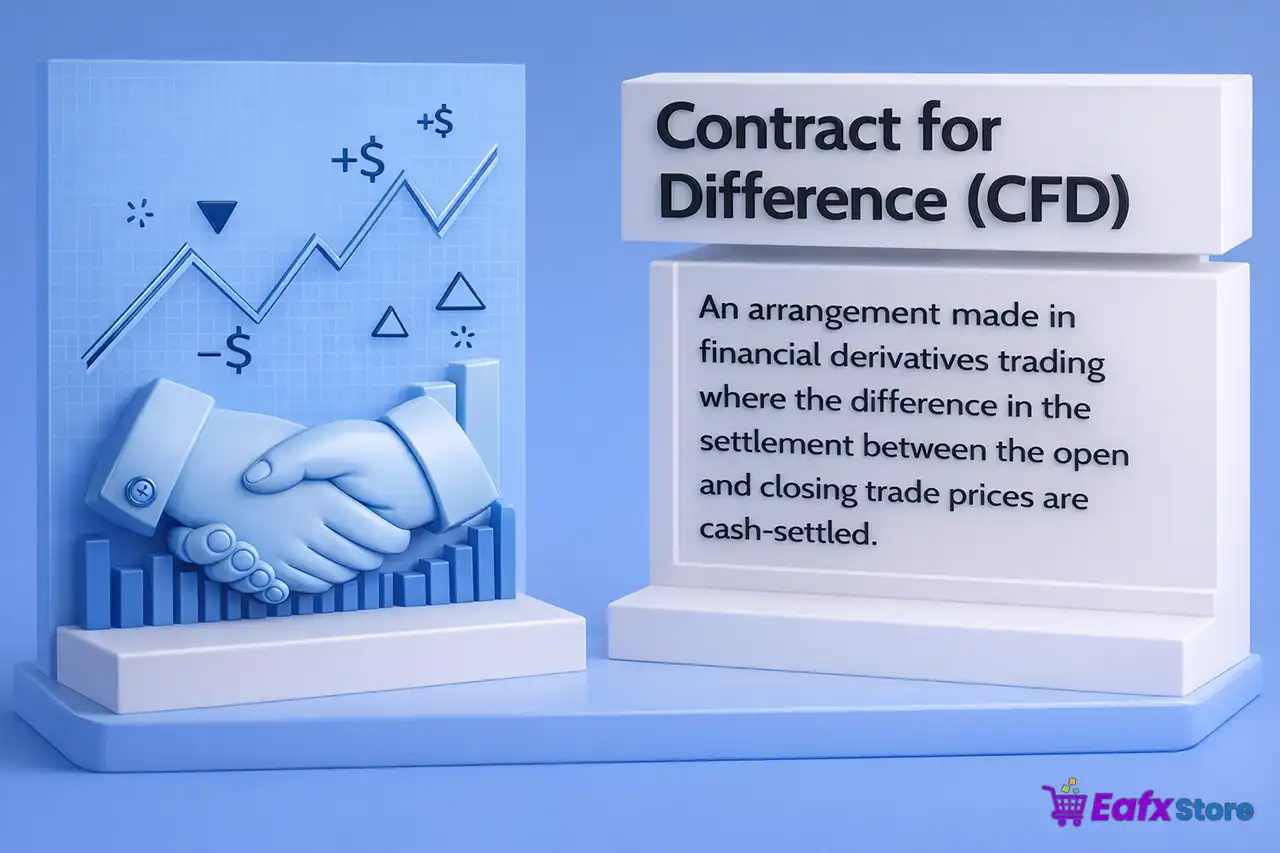
A CFD is a financial derivative that allows you to speculate on the price movement of currency pairs like EUR/USD, GBP/JPY or USD/JPY. Instead of buying the currency itself, you enter into a contract with a broker to exchange the difference in price from when the trade is opened to when it is closed.
Key features of CFD trading include:
- Leverage: Trade larger positions with smaller capital
- Ability to go long (buy) or short (sell)
- Access to global markets 24/5
- No ownership of underlying assets
While these features make CFDs attractive, they also amplify both profits and losses. This makes strategy and risk management critical for beginners.
Why Beginners Need a Strategy
Many new traders jump into the market without a clear plan, often relying on emotions or random decisions. This approach usually leads to losses.
A trading strategy helps you:
- Define entry and exit points
- Manage risk effectively
- Stay disciplined
- Reduce emotional decision-making
- Improve consistency over time
In 2026, with increased market volatility and AI-driven trading tools, having a structured approach is more important than ever.
Trend Following Strategy
One of the simplest and most effective strategies for beginners is trend following.
The idea is straightforward: identify the direction of the market and trade in that direction. In Forex CFD trading, trends can be upward (bullish), downward (bearish), or sideways.
To apply this strategy:
- Use moving averages (such as 50-day and 200-day)
- Identify higher highs and higher lows (uptrend)
- Identify lower highs and lower lows (downtrend)
- Enter trades in the direction of the trend
For example, if EUR/USD is consistently making higher highs, you would look for buying opportunities rather than selling.
Trend following works well because markets often move in sustained directions due to economic factors, interest rates, and geopolitical events.
Breakout Trading Strategy
Breakout trading is another popular strategy among Forex CFD beginners.
A breakout occurs when the price moves beyond a defined support or resistance level with increased volume. This often signals the start of a new trend.
Steps to use breakout trading:
- Identify key support and resistance levels
- Wait for price to break above resistance or below support
- Confirm the breakout with volume or momentum indicators
- Enter the trade after confirmation
In 2026, many traders use AI-powered tools to detect breakout patterns faster, but the core principle remains the same.
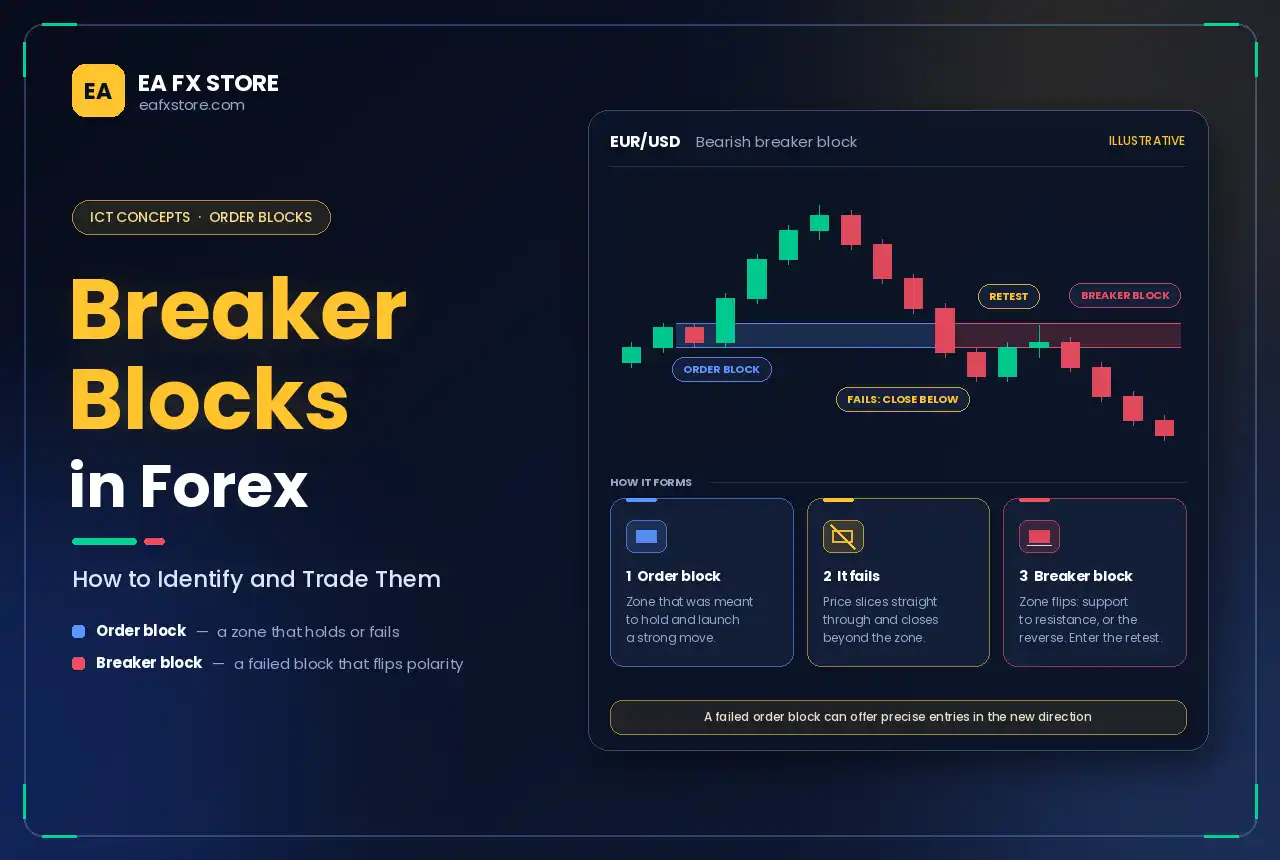
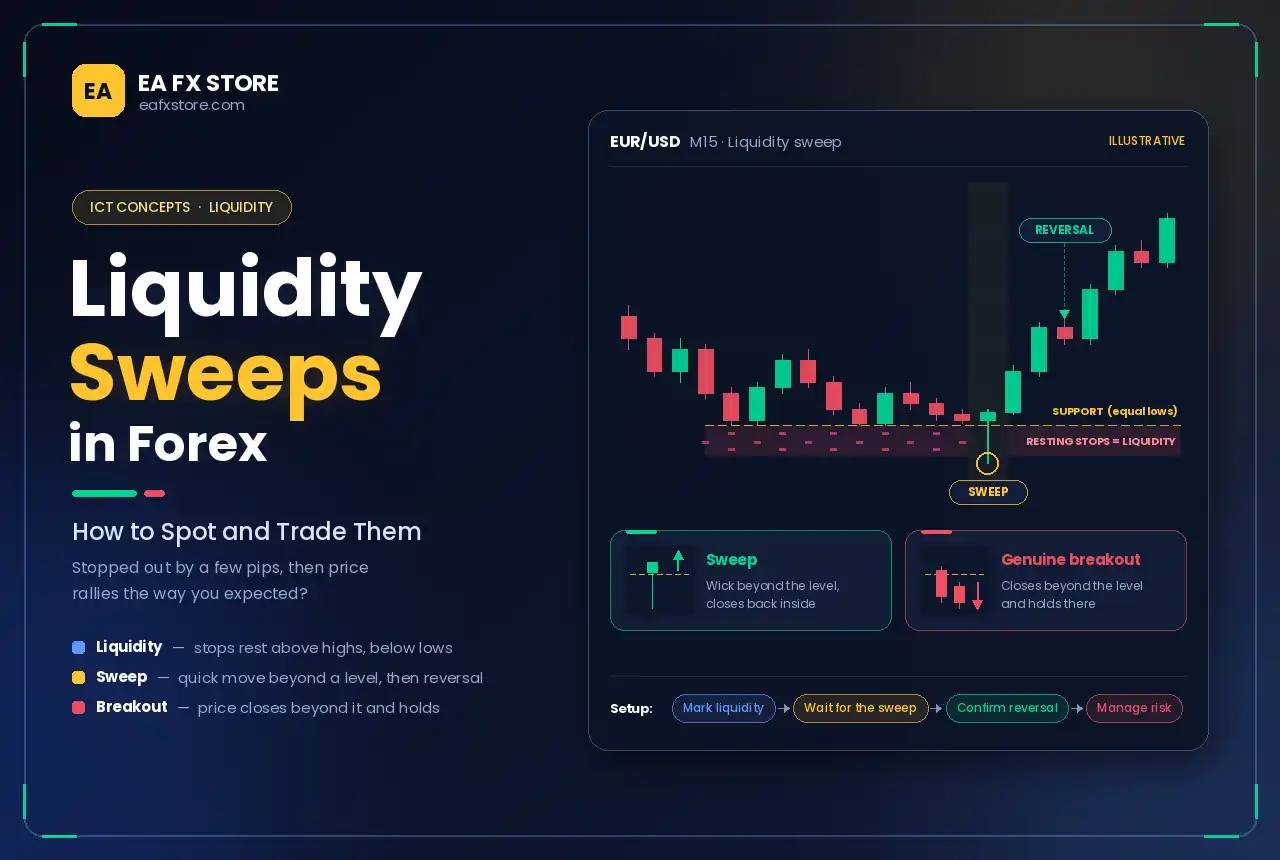
Breakout trading can be highly profitable, but false breakouts are common. That’s why using Stop Loss (SL) orders is essential.
Range Trading Strategy
When the market is not trending, it often moves within a range. This is where range trading becomes useful.
In this strategy, traders buy at support and sell at resistance.
How to apply range trading:
- Identify horizontal support and resistance levels
- Buy near support
- Sell near resistance
- Use oscillators like RSI or Stochastic to confirm overbought/oversold conditions
Range trading is particularly effective in low-volatility environments, which still occur frequently despite the dynamic nature of Forex markets in 2026.
Scalping Strategy
Scalping is a short-term trading strategy that involves making multiple small trades throughout the day.
The goal is to capture small price movements repeatedly.
Key characteristics of scalping:
- Trades last from seconds to minutes
- Requires high concentration and quick decision-making
- Works best with high liquidity pairs like EUR/USD
- Relies on tight spreads and fast execution
While scalping can be profitable, it is not always suitable for beginners due to its intensity and time commitment. However, with modern trading platforms and automation tools in 2026, it has become more accessible.
Swing Trading Strategy
Swing trading is ideal for beginners who cannot monitor the market all day.
This strategy focuses on capturing medium-term price movements over several days or weeks.
How swing trading works:
- Identify market swings using technical analysis
- Enter trades at the beginning of a swing
- Hold positions until the trend reverses
Swing trading combines both technical and fundamental analysis, making it a balanced approach for new traders.
It also reduces stress compared to scalping, as you don’t need to constantly watch the market.
News Trading Strategy
Forex markets are heavily influenced by economic news and events.
In 2026, with real-time data and AI-driven analytics, news trading has become even more powerful.
Examples of impactful events include:
- Interest rate decisions
- Inflation reports
- Employment data
- Central bank announcements
News trading involves:
- Monitoring economic calendars
- Anticipating market reactions
- Entering trades based on expected volatility
However, this strategy can be risky due to sudden price spikes and unpredictable reactions. Beginners should practice caution and use proper risk management.
Risk Management Strategies
No trading strategy is complete without risk management.
In fact, successful traders focus more on managing risk than maximizing profits.
Essential risk management techniques include:
- Never risk more than 1–2% of your capital per trade
- Always use stop-loss orders
- Use proper position sizing
- Avoid over-leveraging
- Diversify your trades
In CFD trading, leverage can magnify losses quickly, so controlling risk is crucial for long-term success.
Using Technical Indicators
Technical indicators help traders analyze price movements and identify opportunities.
Popular indicators for beginners include:
- Moving Averages: Identify trends
- Relative Strength Index (RSI): Detect overbought/oversold conditions
- MACD: Measure momentum
- Bollinger Bands: Analyze volatility
In 2026, many trading platforms integrate AI-enhanced indicators, but understanding the basics is still essential.
Avoid using too many indicators at once, as this can lead to confusion and conflicting signals.
Building a Trading Plan
A trading plan is your roadmap in the Forex CFD market.
It should include:
- Your trading goals
- Preferred strategies
- Risk tolerance
- Entry and exit rules
- Daily or weekly trading limits
Having a plan helps you stay disciplined and avoid impulsive decisions.
Common Mistakes to Avoid
Beginners often make similar mistakes when starting CFD trading.
Here are some to watch out for:
- Overtrading
- Ignoring risk management
- Chasing losses
- Relying on emotions instead of strategy
- Using excessive leverage
Learning from these mistakes early can save you significant losses.
The Role of Technology in 2026
Technology continues to reshape CFD trading.
Key trends include:
- AI-powered trading assistants
- Automated trading systems
- Advanced charting tools
- Real-time market analytics
While these tools can enhance your trading, they should not replace your understanding of the market.
Conclusion
CFD trading in the Forex market offers exciting opportunities for beginners in 2026, but success requires more than just enthusiasm. By understanding and applying the right strategies—such as trend following, breakout trading, range trading, and swing trading—you can build a strong foundation.
Equally important is risk management, discipline, and continuous learning. The market will always present new challenges, but with the right approach, you can navigate them effectively.
Start simple, stay consistent, and focus on long-term growth rather than quick profits. With time and experience, your skills and confidence as a CFD trader will steadily improve.