
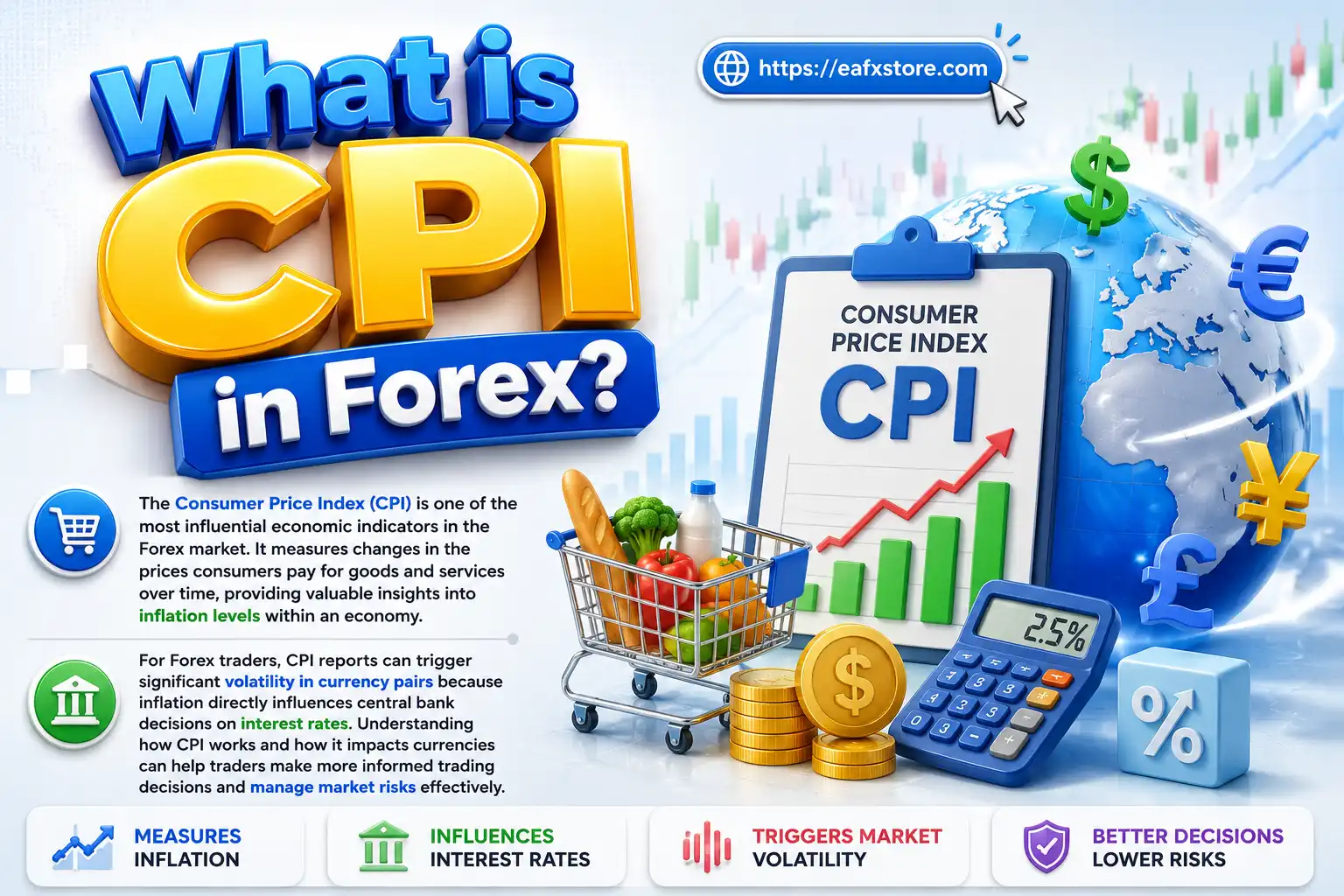
The Consumer Price Index (CPI) is one of the most influential economic indicators in the Forex market. It measures changes in the prices consumers pay for goods and services over time, providing valuable insights into inflation levels within an economy.
For Forex traders, CPI reports can trigger significant volatility in currency pairs because inflation directly influences central bank decisions on interest rates. Understanding how CPI works and how it impacts currencies can help traders make more informed trading decisions and manage market risks effectively.
What is CPI in Forex?
CPI, or Consumer Price Index, is an economic indicator that measures the average change in prices paid by consumers for a basket of goods and services, including food, housing, transportation, healthcare and education.
In Forex trading, CPI is closely monitored because it serves as a key indicator of inflation. When inflation rises or falls unexpectedly, it can influence a country’s monetary policy, which in turn affects the value of its currency.
Governments and central banks use CPI data to assess economic conditions and determine whether policy adjustments are necessary to maintain price stability.
Why is CPI Important for Forex Traders?
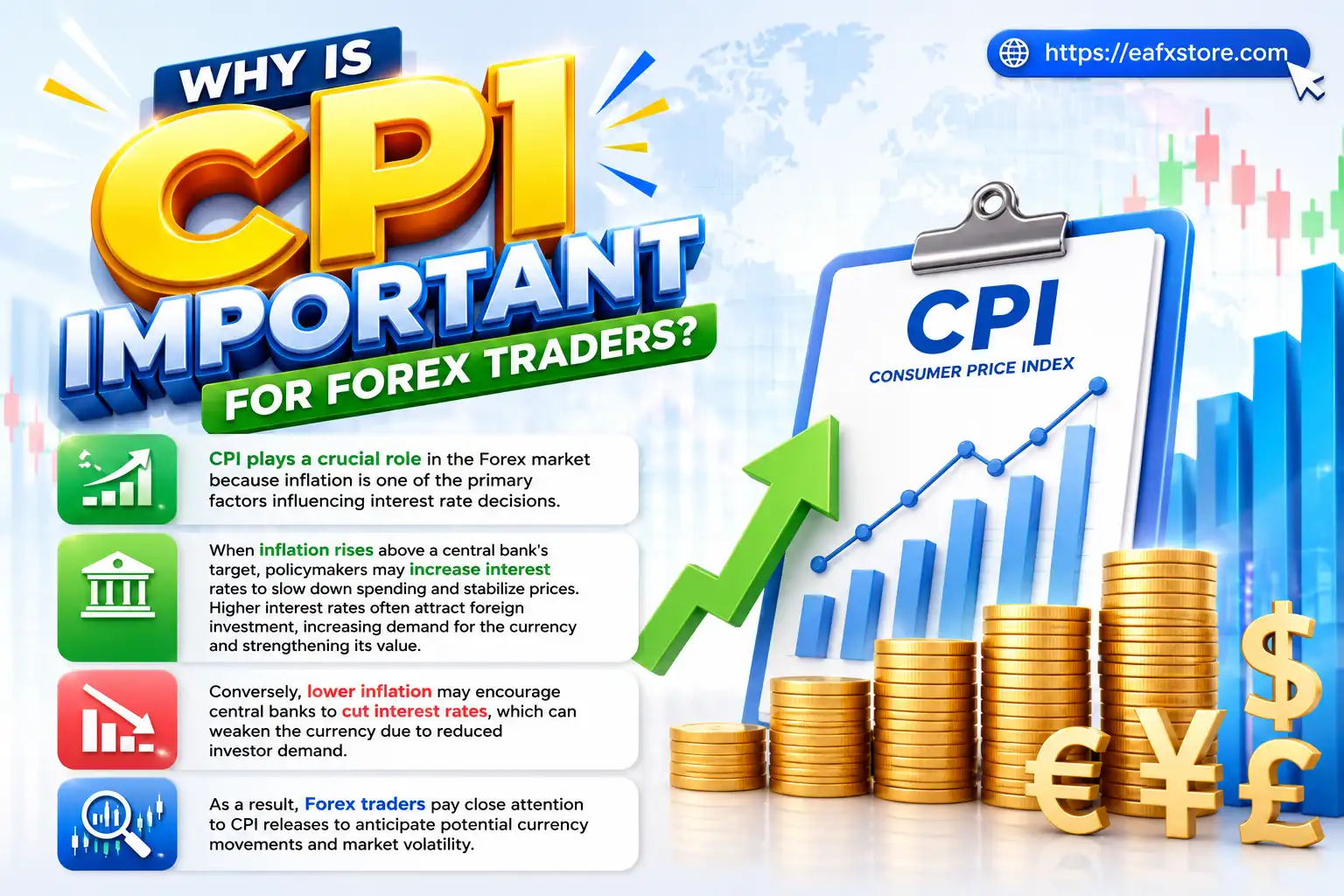
CPI plays a crucial role in the Forex market because inflation is one of the primary factors influencing interest rate decisions.
When inflation rises above a central bank’s target, policymakers may increase interest rates to slow down spending and stabilize prices. Higher interest rates often attract foreign investment, increasing demand for the currency and strengthening its value.
Conversely, lower inflation may encourage central banks to cut interest rates, which can weaken the currency due to reduced investor demand.
As a result, Forex traders pay close attention to CPI releases to anticipate potential currency movements and market volatility.
How CPI Affects Currency Pairs
The relationship between CPI and currency values is primarily driven by expectations surrounding monetary policy.
| CPI Result | Market Expectation | Potential Currency Impact |
|---|---|---|
| Higher than expected | Possible interest rate hikes | Currency may strengthen |
| Lower than expected | Possible interest rate cuts | Currency may weaken |
| In line with expectations | No major policy change expected | Limited market reaction |
| Significantly above target | Aggressive tightening possible | Strong bullish impact |
| Significantly below target | Dovish policy likely | Bearish impact |
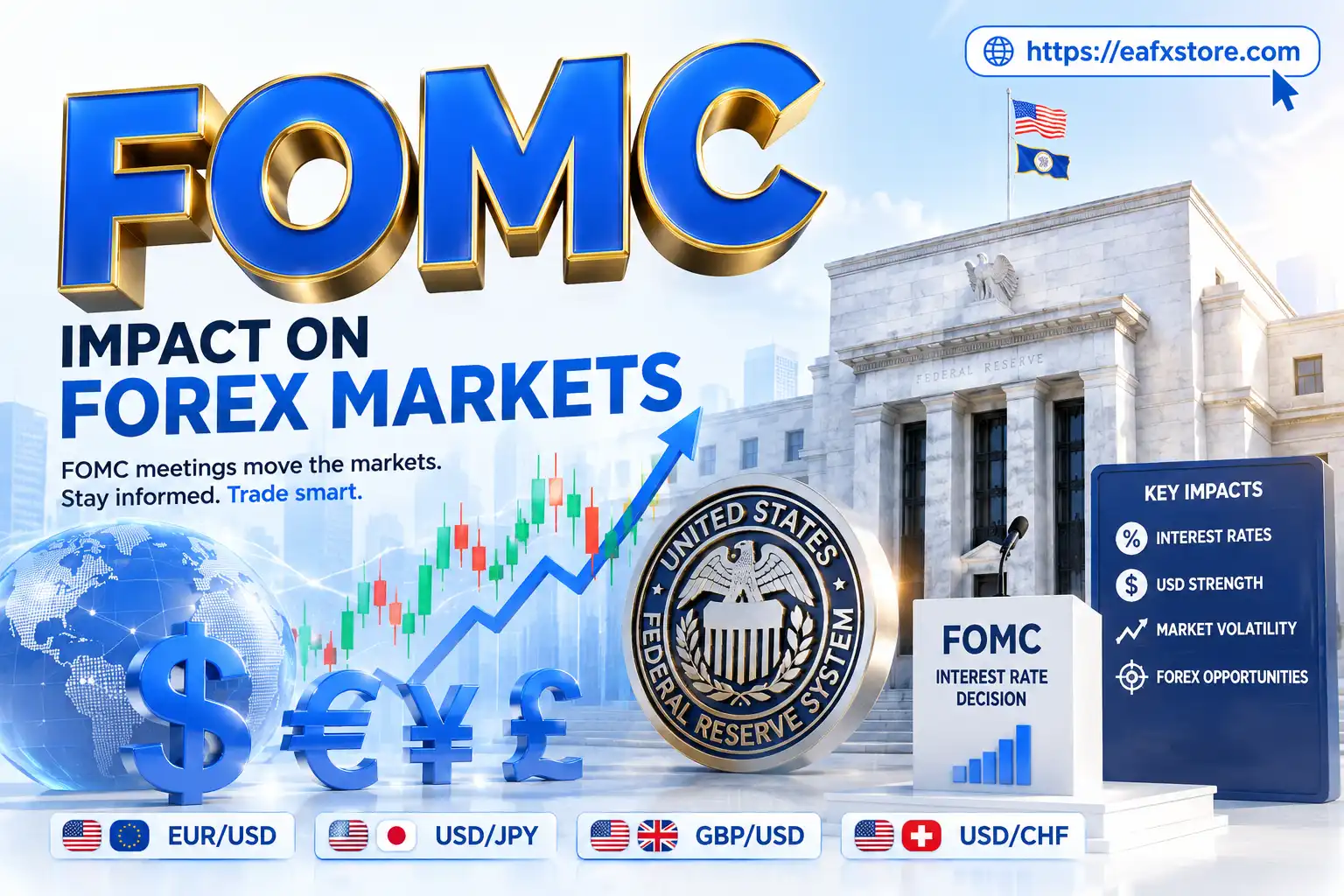
For example, if U.S. CPI data comes in stronger than forecast, traders may expect the Federal Reserve to maintain higher interest rates. This expectation can boost demand for the U.S. dollar, causing pairs such as EUR/USD and GBP/USD to move lower.
The Connection Between CPI and Interest Rates
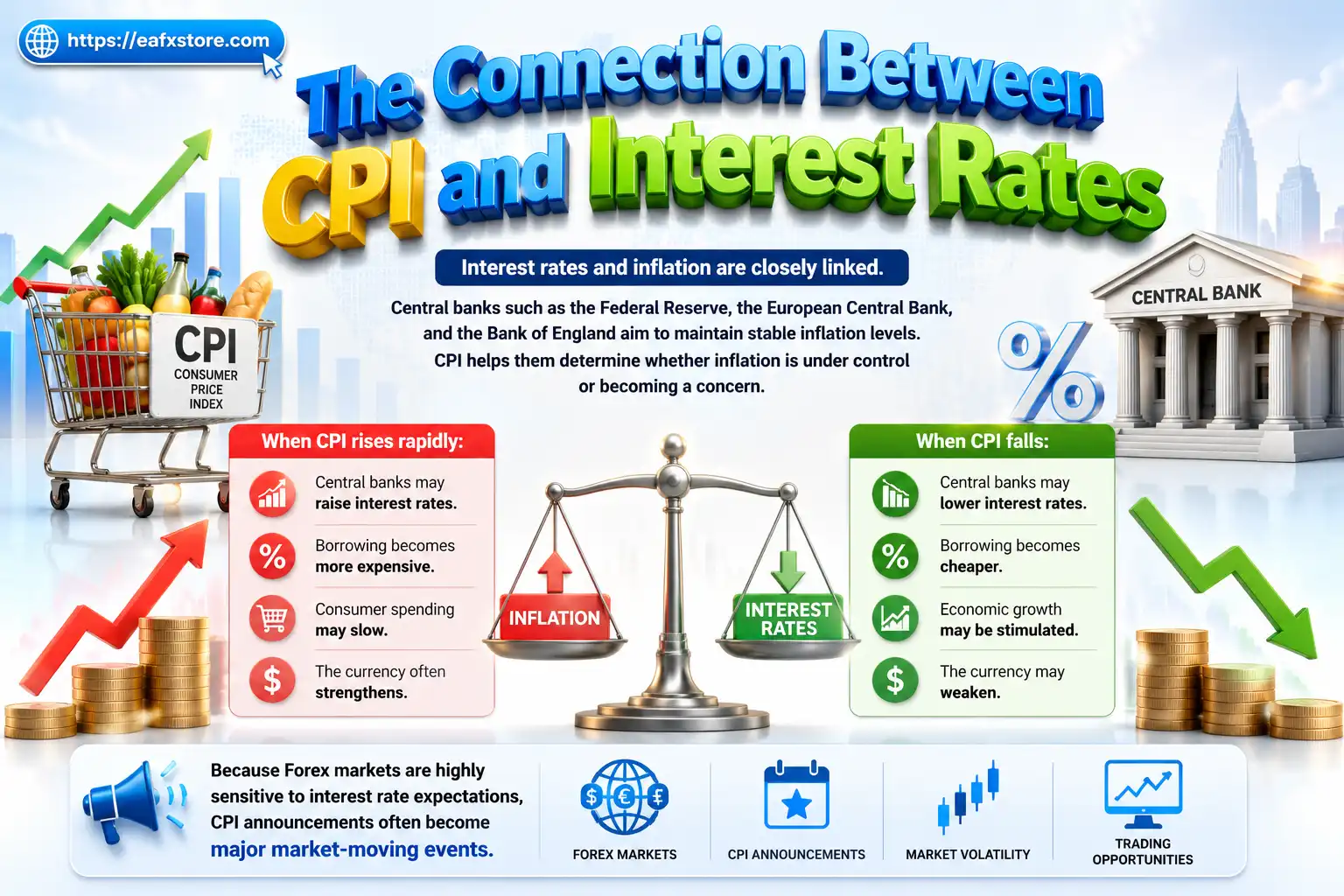
Interest rates and inflation are closely linked.
Central banks such as the Federal Reserve, the European Central Bank, and the Bank of England aim to maintain stable inflation levels. CPI helps them determine whether inflation is under control or becoming a concern.
When CPI rises rapidly:
- Central banks may raise interest rates.
- Borrowing becomes more expensive.
- Consumer spending may slow.
- The currency often strengthens.
When CPI falls:
- Central banks may lower interest rates.
- Borrowing becomes cheaper.
- Economic growth may be stimulated.
- The currency may weaken.
Because Forex markets are highly sensitive to interest rate expectations, CPI announcements often become major market-moving events.
How Traders Use CPI Data in Forex Trading
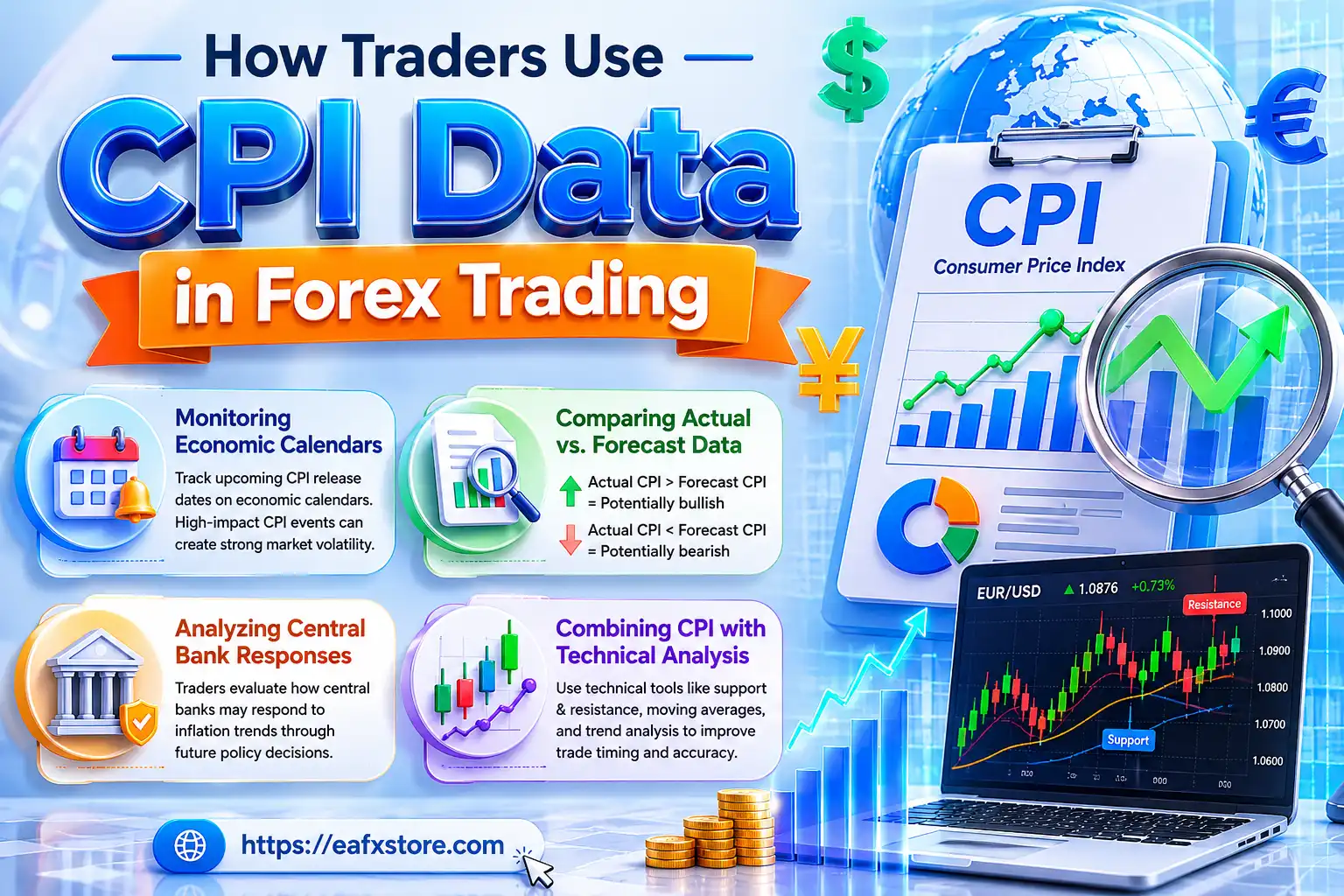
Forex traders incorporate CPI data into their fundamental analysis strategies to assess the likely direction of a currency.
Some common approaches include:
Monitoring Economic Calendars
Traders track upcoming CPI release dates through economic calendars. High-impact CPI announcements are often marked as major events due to their potential to create strong market volatility.
Comparing Actual vs. Forecast Data
Market reactions are typically driven by the difference between actual CPI figures and analysts’ expectations.
- Actual CPI > Forecast CPI = Potentially bullish currency reaction.
- Actual CPI < Forecast CPI = Potentially bearish currency reaction.
Analyzing Central Bank Responses
CPI data alone does not determine market direction. Traders also evaluate how central banks may respond to inflation trends through future policy decisions.
Combining CPI with Technical Analysis
Many traders combine CPI-based fundamental analysis with technical indicators such as support and resistance levels, moving averages, and trend analysis to improve trade timing.
Major Currency Pairs Most Affected by CPI Reports
While CPI data impacts many currencies, certain pairs experience particularly strong reactions during major inflation releases.
| Currency Pair | Key CPI Report |
|---|---|
| EUR/USD | U.S. CPI and Eurozone CPI |
| GBP/USD | U.S. CPI and UK CPI |
| USD/JPY | U.S. CPI |
| USD/CAD | U.S. CPI and Canadian CPI |
| AUD/USD | U.S. CPI and Australian CPI |
| NZD/USD | U.S. CPI and New Zealand CPI |
Among these, U.S. CPI is often considered the most influential because of the U.S. dollar’s dominant role in global financial markets.
Risks of Trading During CPI Releases
Although CPI announcements can create profitable trading opportunities, they also carry increased risks.
Market volatility often rises sharply within seconds of the release, leading to:
- Wider spreads.
- Increased slippage.
- Rapid price fluctuations.
- False breakouts.
- Unexpected market reversals.
Traders should use proper risk management techniques, including stop-loss orders and appropriate position sizing, when trading around major CPI events.
Conclusion
CPI is one of the most important economic indicators in Forex trading because it provides critical information about inflation and future monetary policy decisions. Since central banks rely heavily on inflation data when setting interest rates, CPI reports can significantly influence currency values and market sentiment.
By understanding how CPI affects interest rates, trader expectations, and currency pairs, Forex traders can better prepare for market-moving events and improve their overall trading strategies. Monitoring CPI releases alongside other economic indicators and technical analysis can provide a more complete view of potential market opportunities.
FAQs
❓ What does CPI stand for in Forex?
CPI stands for Consumer Price Index, an economic indicator that measures changes in consumer prices and serves as a key gauge of inflation.
❓ Why does CPI affect currency prices?
CPI affects inflation expectations, which influence central bank interest rate decisions. Interest rate changes can strengthen or weaken a currency.
❓ Is higher CPI always good for a currency?
Not necessarily. Higher CPI can strengthen a currency if markets expect interest rate hikes, but extremely high inflation may create economic uncertainty.
❓ Which currency is most affected by CPI reports?
The U.S. dollar is often the most affected because U.S. CPI data heavily influences Federal Reserve policy and global market sentiment.
❓ Should beginners trade during CPI announcements?
Beginners should be cautious because CPI releases can cause sharp volatility. Many traders prefer to wait until market conditions stabilize before entering trades.