
In the fast-paced world of Forex trading, having the right tools can make a significant difference in your decision-making and profitability. One of the most popular and powerful technical indicators used by traders worldwide is Bollinger Bands. Developed by John Bollinger in the 1980s, this indicator helps traders analyze market volatility, identify trends, and spot potential entry and exit points.
In this comprehensive guide, you will learn how to use Bollinger Bands effectively in Forex trading, including how they work, key strategies, common mistakes, and practical tips to maximize your trading performance.
What Are Bollinger Bands?
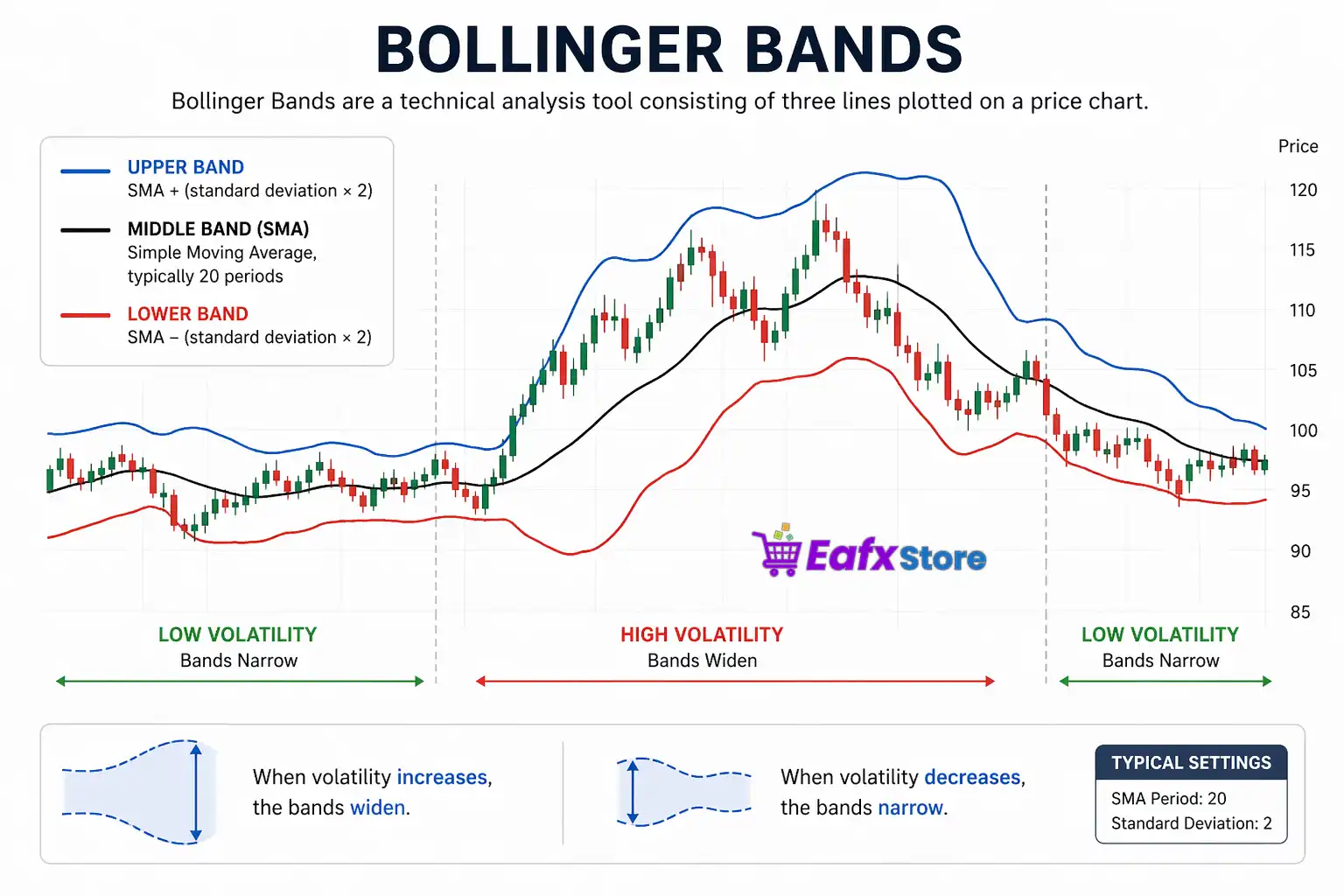
Bollinger Bands are a technical analysis tool consisting of three lines plotted on a price chart:
- Middle Band: A simple moving average (SMA), typically set to 20 periods
- Upper Band: SMA + (standard deviation × 2)
- Lower Band: SMA − (standard deviation × 2)
These bands expand and contract based on market volatility. When volatility increases, the bands widen. When volatility decreases, the bands narrow.
Why Bollinger Bands Matter in Forex Trading
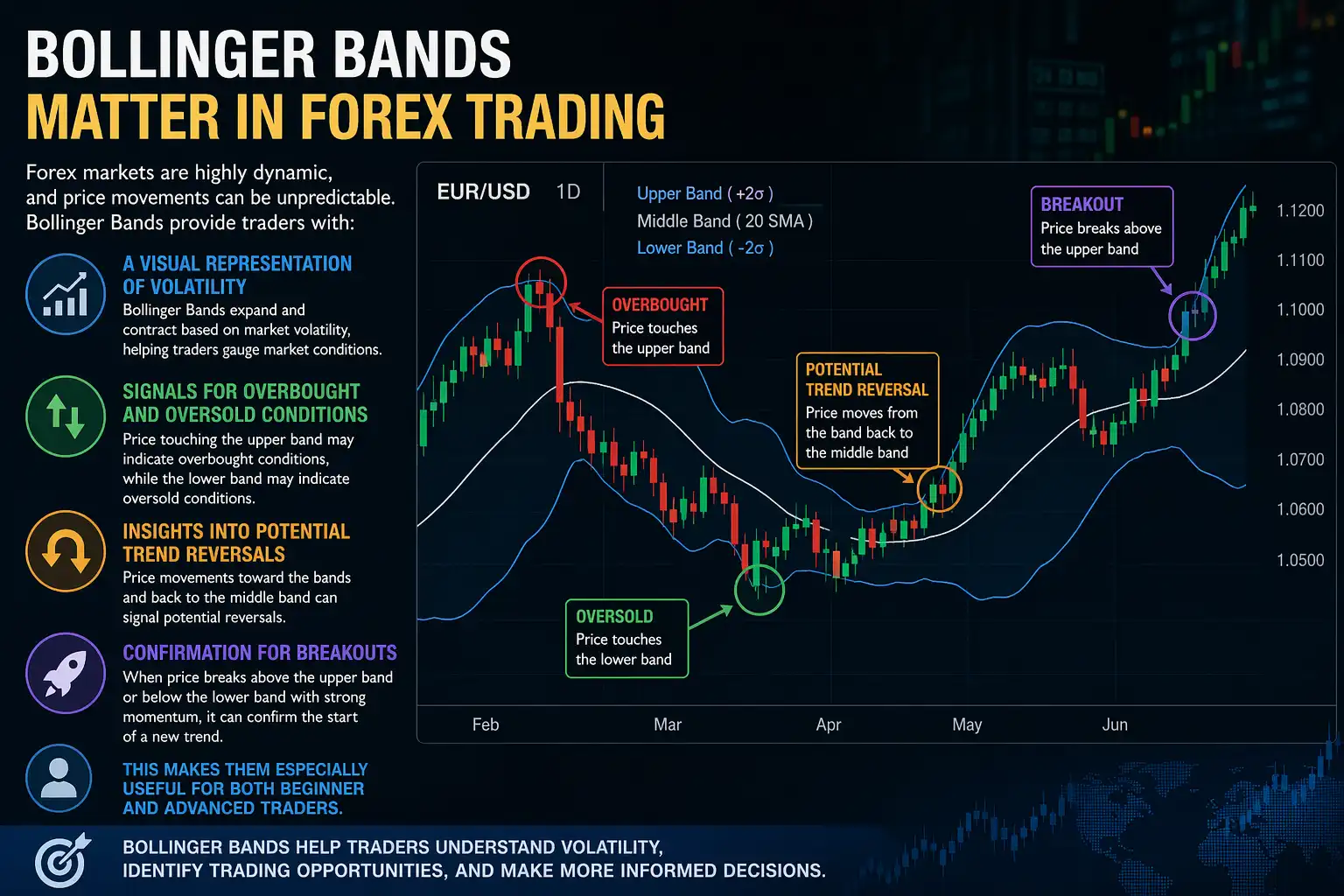
Forex markets are highly dynamic, and price movements can be unpredictable. Bollinger Bands provide traders with:
- A visual representation of volatility
- Signals for overbought and oversold conditions
- Insights into potential trend reversals
- Confirmation for breakouts
This makes them especially useful for both beginner and advanced traders.
How Bollinger Bands Work
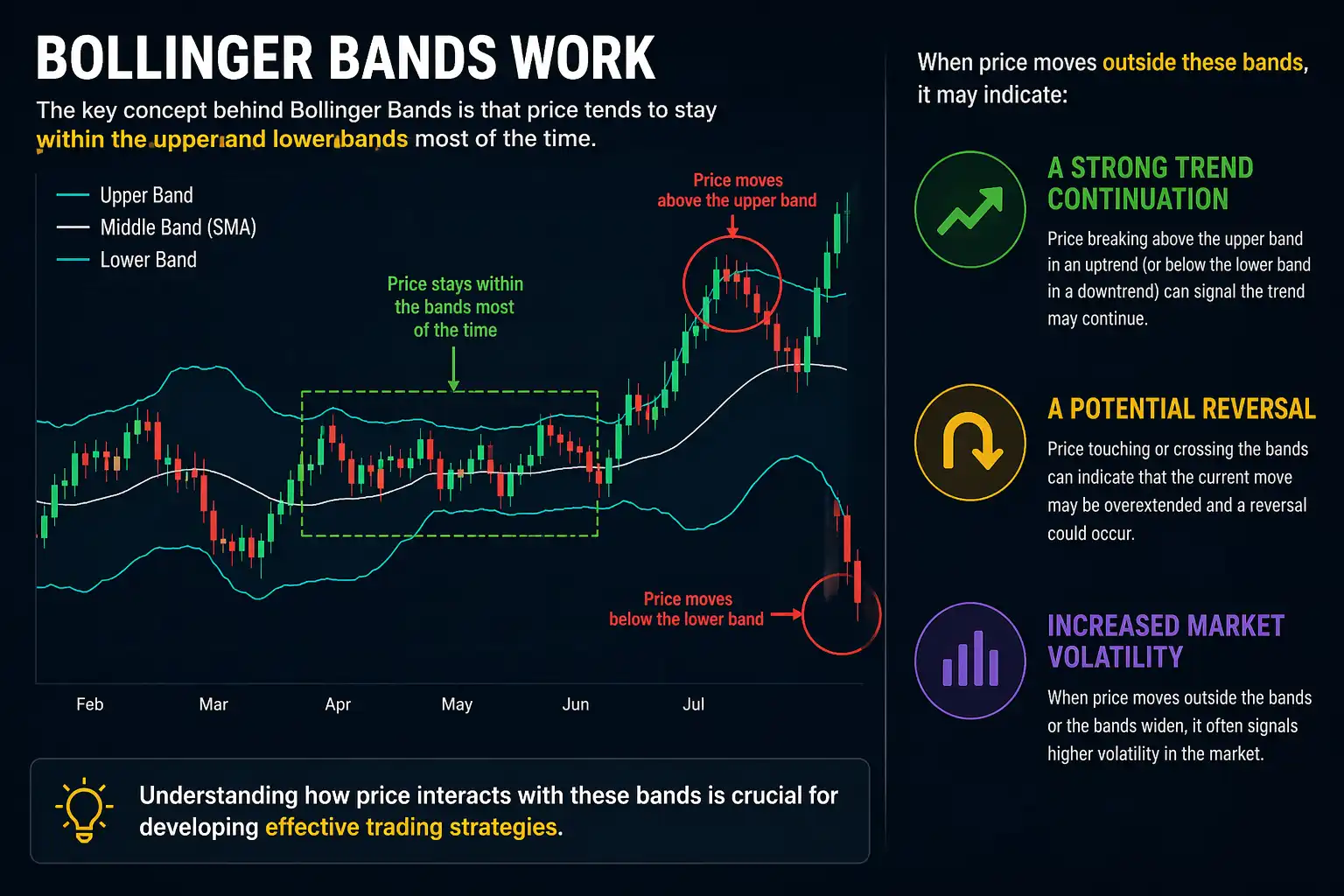
The key concept behind Bollinger Bands is that price tends to stay within the upper and lower bands most of the time. When price moves outside these bands, it may indicate:
- A strong trend continuation
- A potential reversal
- Increased market volatility
Understanding how price interacts with these bands is crucial for developing effective trading strategies.
Key Bollinger Bands Strategies
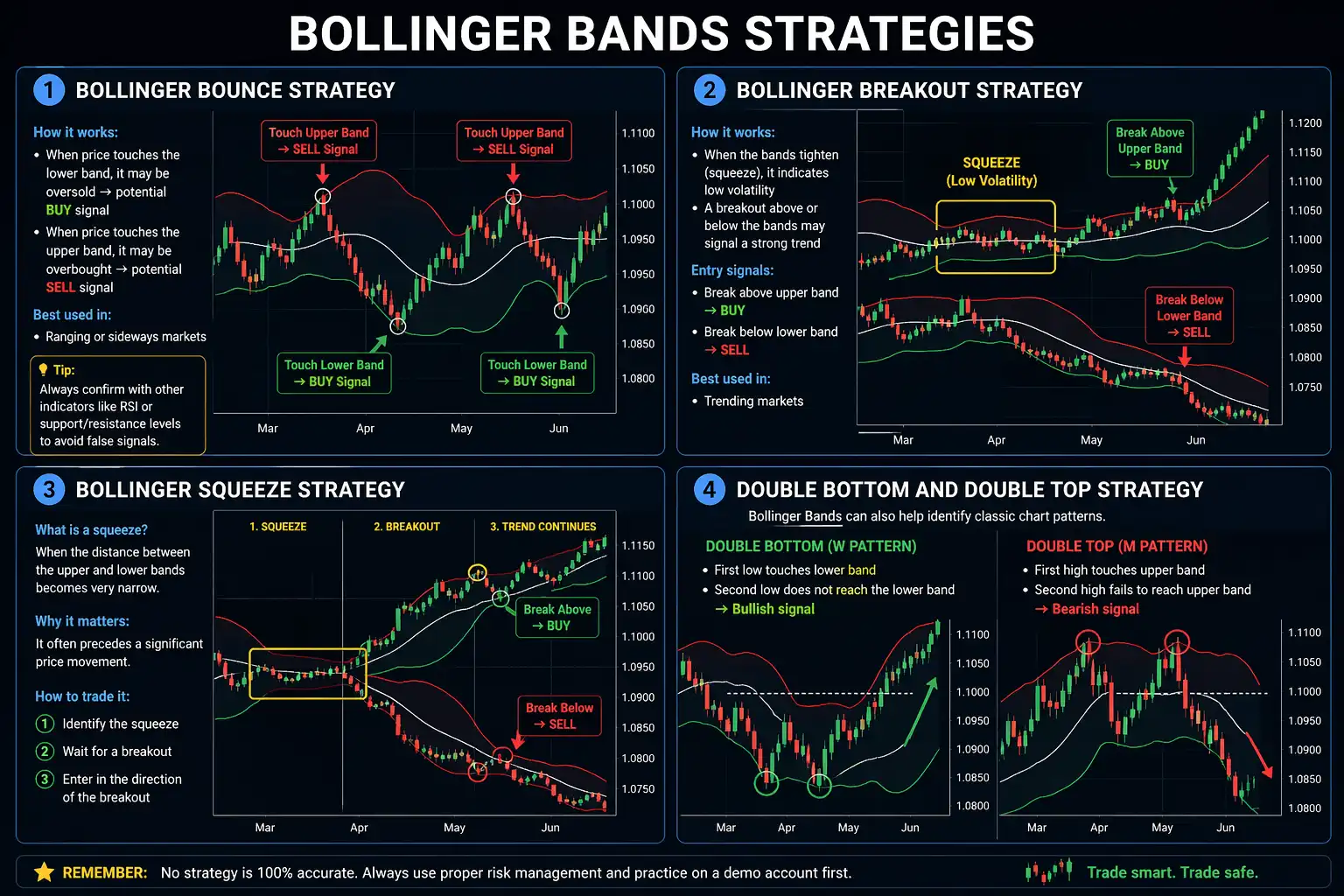
1. Bollinger Bounce Strategy
This is one of the simplest and most commonly used strategies.
How it works:
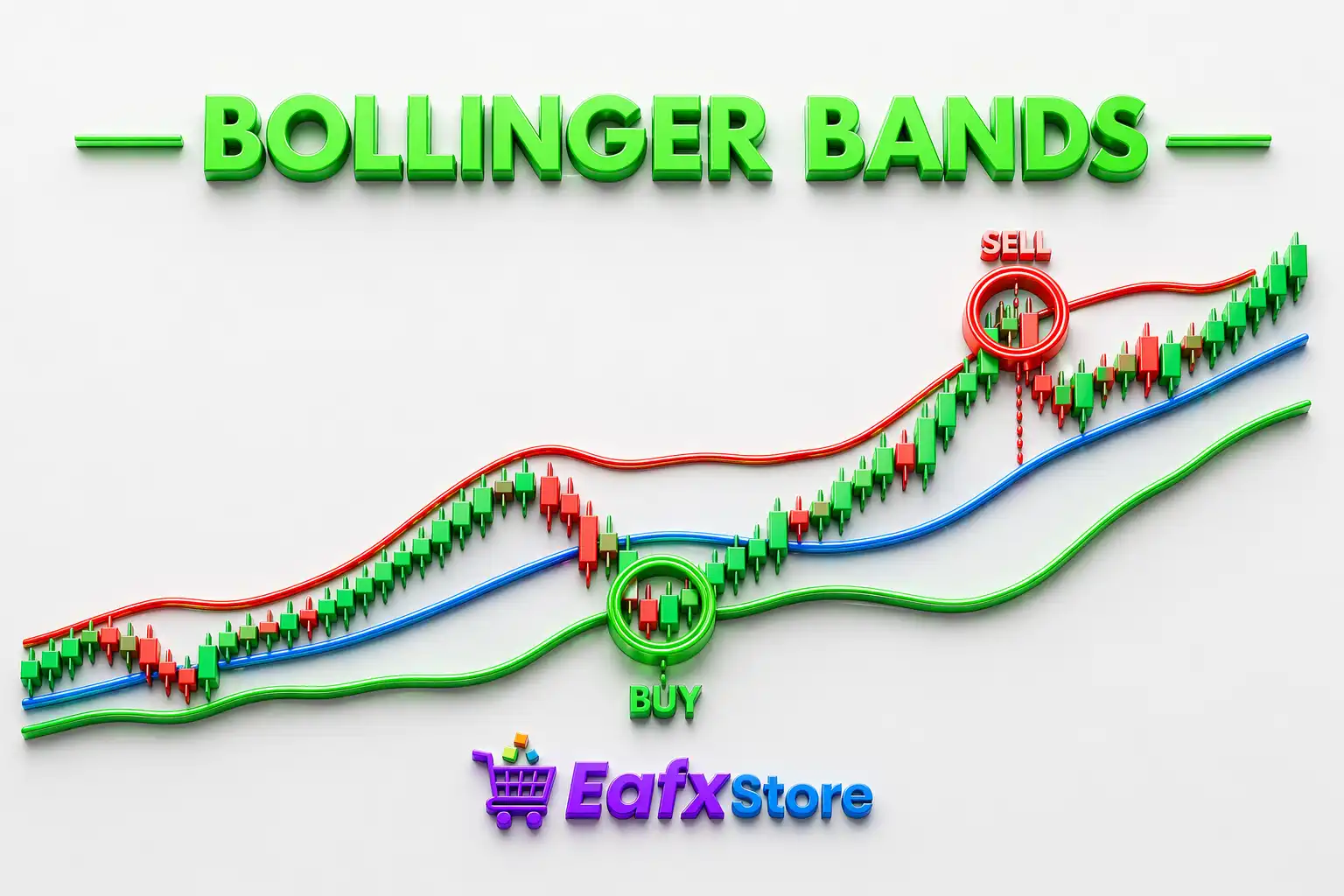
- When price touches the lower band, it may be oversold → potential BUY signal
- When price touches the upper band, it may be overbought → potential SELL signal
Best used in:
- Ranging or sideways markets
Tip: Always confirm with other indicators like RSI or support/resistance levels to avoid false signals.
2. Bollinger Breakout Strategy
This strategy focuses on strong price movements after periods of low volatility.
How it works:
- When the bands tighten (squeeze), it indicates low volatility
- A breakout above or below the bands may signal a strong trend
Entry signals:
- Break above upper band → BUY
- Break below lower band → SELL
Best used in:
- Trending markets
3. Bollinger Squeeze Strategy
The squeeze is one of the most powerful signals in Forex trading.
What is a squeeze?
When the distance between the upper and lower bands becomes very narrow.
Why it matters:
It often precedes a significant price movement.
How to trade it:
- Identify the squeeze
- Wait for a breakout
- Enter in the direction of the breakout
4. Double Bottom and Double Top Strategy
Bollinger Bands can also help identify classic chart patterns.
Double Bottom (W pattern):
- First low touches lower band
- Second low does not reach the lower band
→ Bullish signal
Double Top (M pattern):
- First high touches upper band
- Second high fails to reach upper band
→ Bearish signal
Best Settings for Bollinger Bands in Forex
While the default settings work well, you can adjust them based on your trading style:
- Standard setting: 20-period SMA with 2 standard deviations
- Short-term trading (scalping): 10-period SMA
- Long-term trading: 50-period SMA
However, beginners are advised to stick with default settings until they gain experience.
Combining Bollinger Bands with Other Indicators
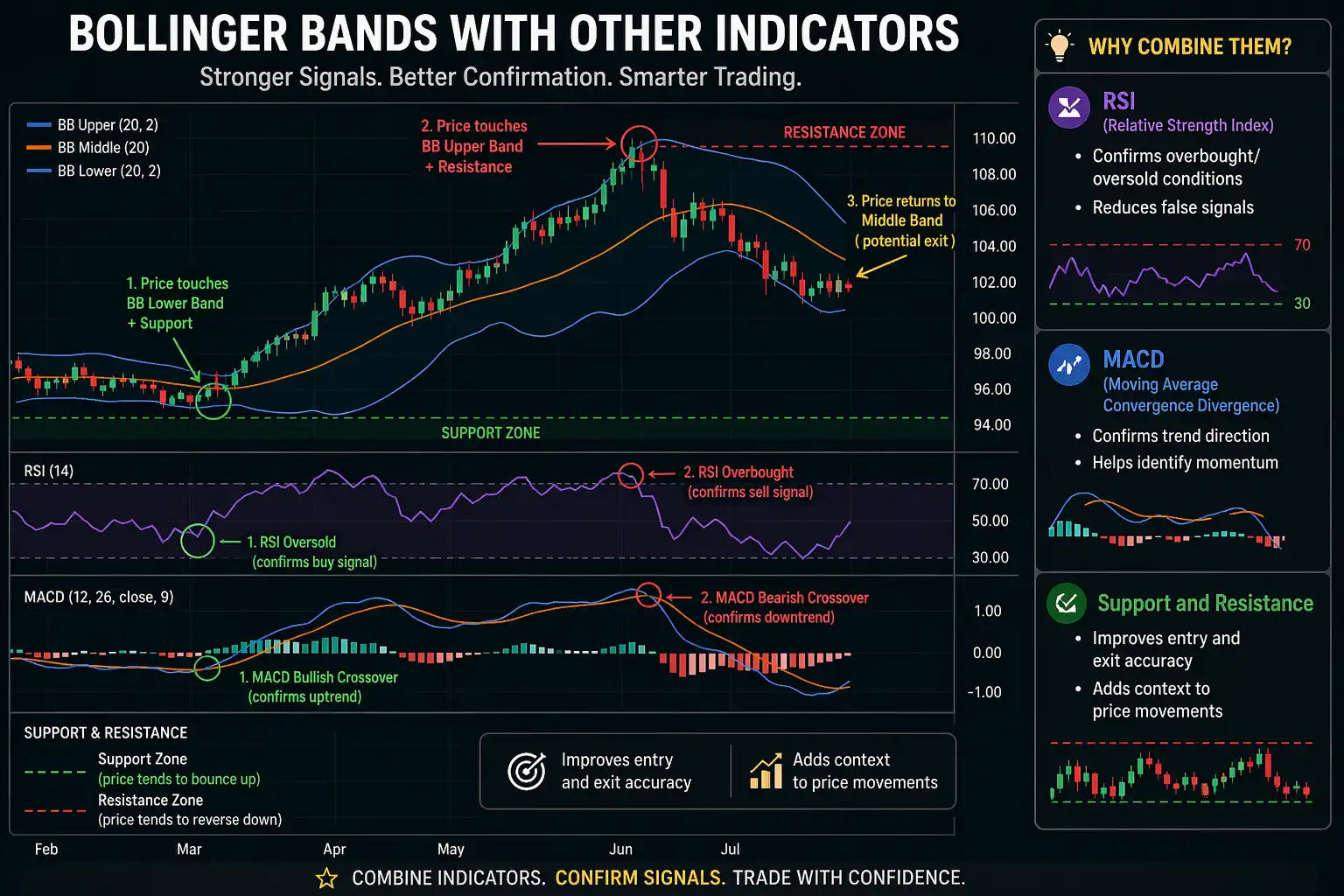
Bollinger Bands are powerful on their own, but they become even more effective when combined with other tools:
1. RSI (Relative Strength Index)
- Confirms overbought/oversold conditions
- Reduces false signals
2. MACD (Moving Average Convergence Divergence)
- Confirms trend direction
- Helps identify momentum
3. Support and Resistance
- Improves entry and exit accuracy
- Adds context to price movements
Common Mistakes to Avoid
Even though Bollinger Bands are simple to use, many traders misuse them. Here are some common mistakes:
1. Assuming Price Will Always Reverse at the Bands
Price can stay near the upper or lower band for extended periods during strong trends.
2. Ignoring Market Context
Using Bollinger Bands without considering whether the market is trending or ranging can lead to poor decisions.
3. Overtrading
Not every touch of the bands is a valid trade signal.
4. Not Using Risk Management
Always use stop-loss orders and proper position sizing to protect your capital.
Practical Tips for Using Bollinger Bands Effectively
- Always identify market conditions first (trend vs range)
- Use multiple timeframes for better analysis
- Combine with other indicators for confirmation
- Practice on a demo account before trading real money
- Keep a trading journal to track performance
Example of Bollinger Bands in Action
Imagine a currency pair moving sideways. The price repeatedly touches the upper and lower bands:
- At the lower band → traders look for buying opportunities
- At the upper band → traders look for selling opportunities
Now, if the bands suddenly tighten and price breaks out strongly, it signals a potential new trend.
Advantages of Bollinger Bands
- Easy to understand and apply
- Works in multiple market conditions
- Helps identify volatility and trend strength
- Suitable for all trading styles
Limitations of Bollinger Bands
- Can produce false signals in volatile markets
- Not a standalone system
- Requires confirmation from other indicators
Conclusion
Bollinger Bands are an essential tool for Forex traders who want to improve their market analysis and trading accuracy. By understanding how they work and applying the right strategies, you can identify high-probability trading opportunities and manage risk more effectively.
However, no indicator guarantees success. The key to long-term profitability lies in combining Bollinger Bands with proper risk management, discipline and continuous learning.
If used correctly, Bollinger Bands can become a powerful component of your forex trading strategy.
FAQs
1. Are Bollinger Bands good for beginners?
Yes, they are simple to understand and widely used, making them ideal for beginners.
2. Can Bollinger Bands predict price movements?
No, they do not predict price but help identify potential trading opportunities.
3. What timeframe works best with Bollinger Bands?
They work on all timeframes, but the effectiveness depends on your trading strategy.
4. Do professional traders use Bollinger Bands?
Yes, many professional traders incorporate them into their trading systems.