
Introduction
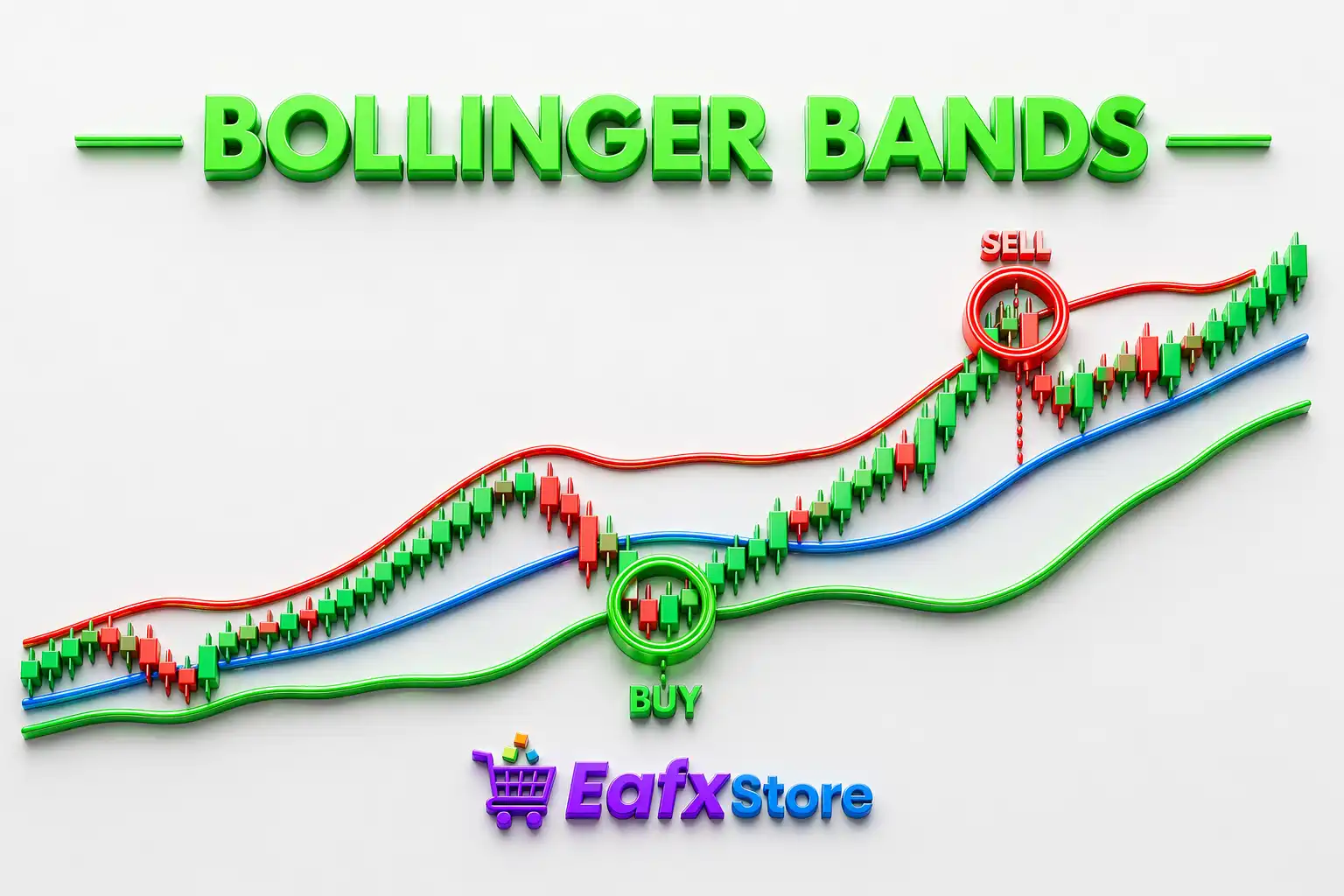
Forex trading can feel overwhelming for beginners, especially with the wide range of indicators and strategies available. One of the most popular and beginner-friendly tools is the Bollinger Bands strategy. Developed by John Bollinger, this indicator helps traders understand market volatility and identify potential entry and exit points.
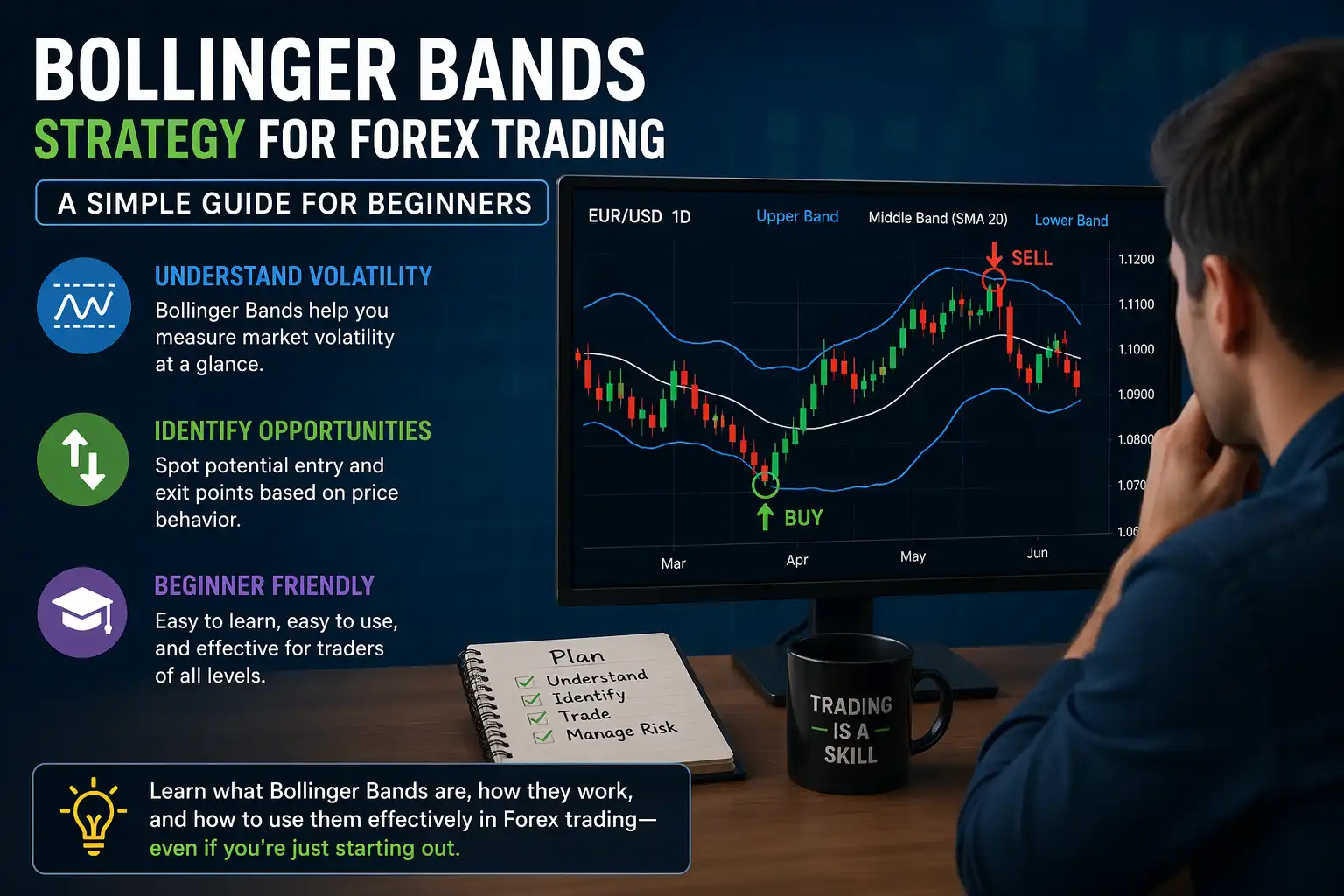
In this guide, you’ll learn what Bollinger Bands are, how they work, and how to use them effectively in Forex trading—even if you’re just starting out.
What Are Bollinger Bands?
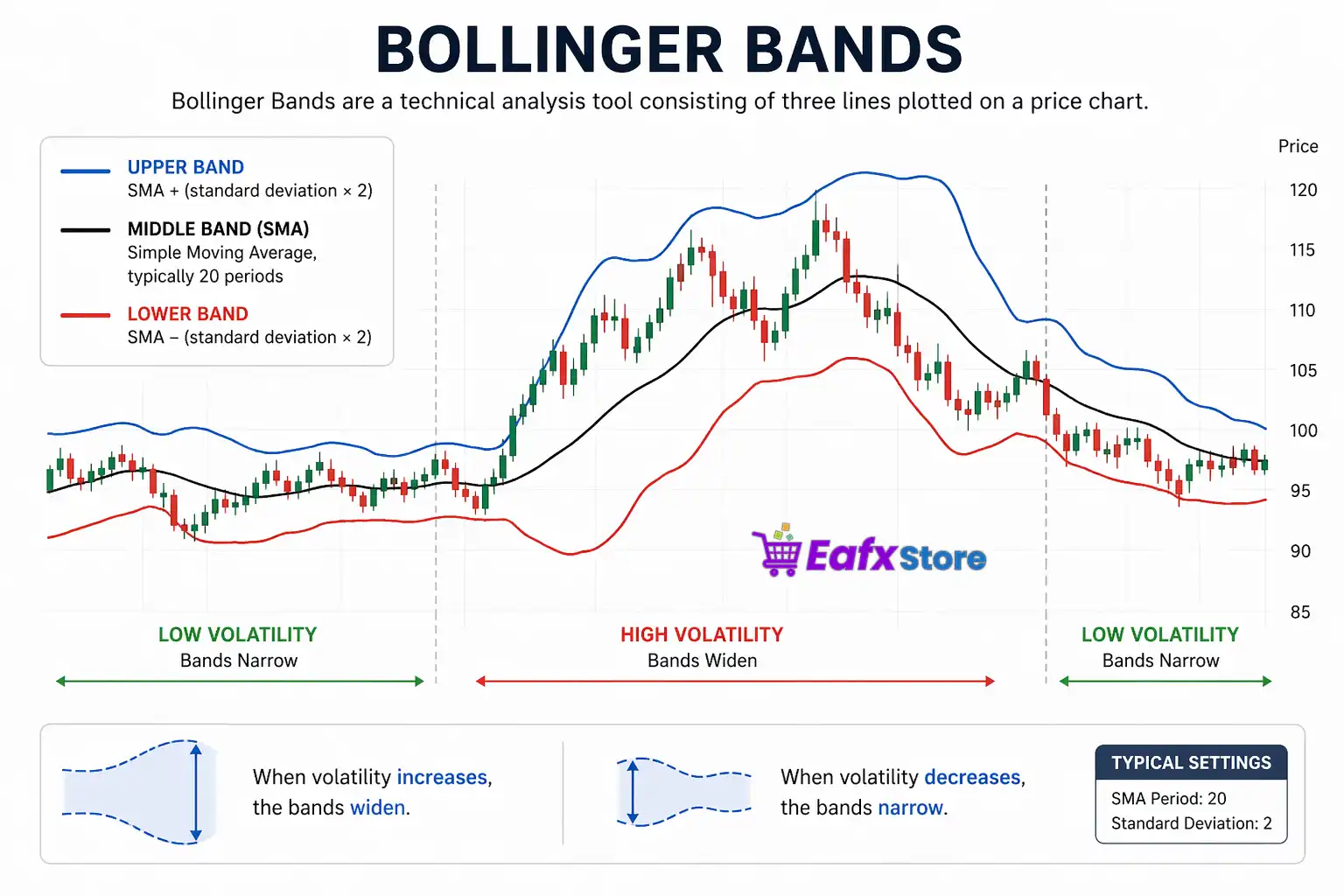
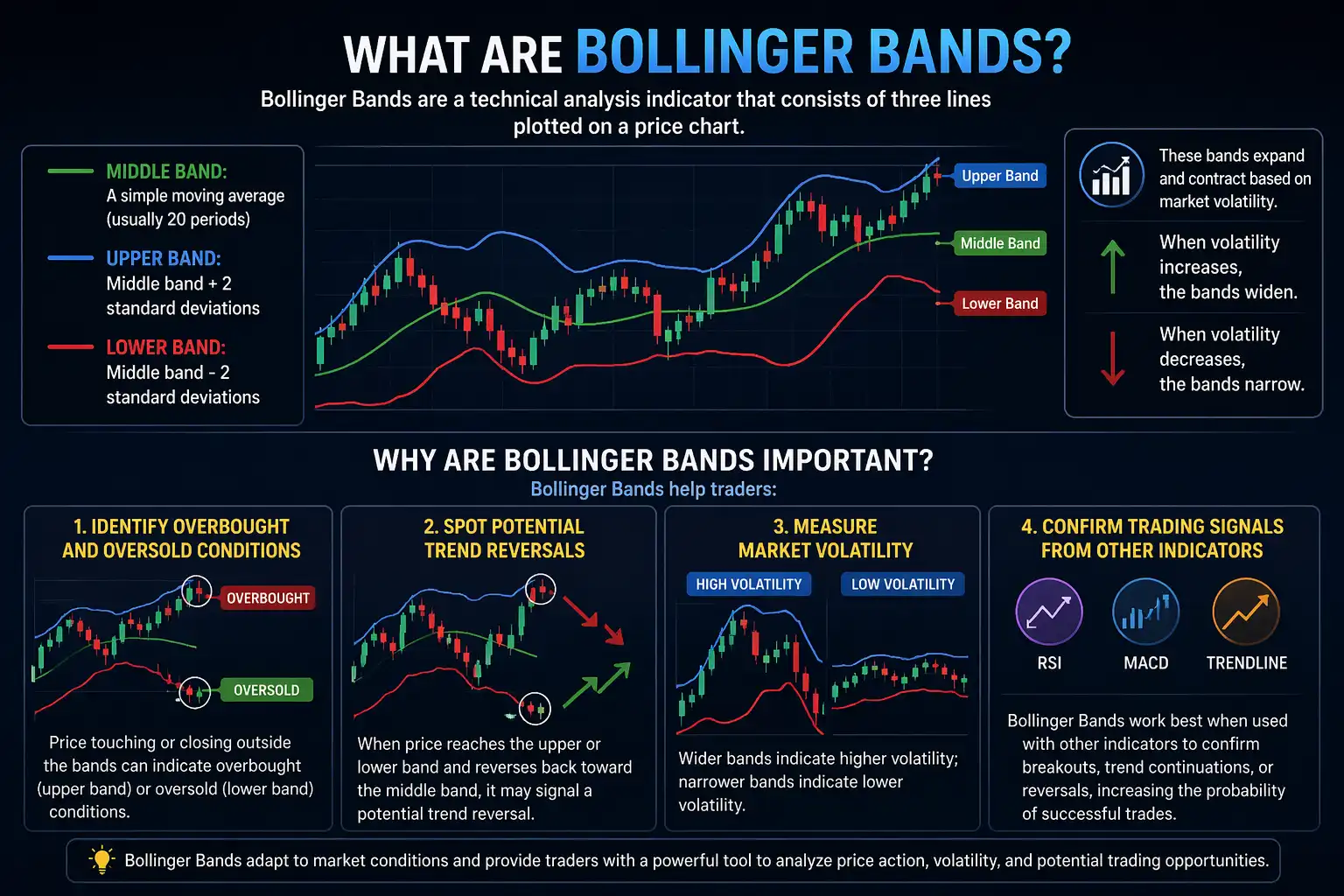
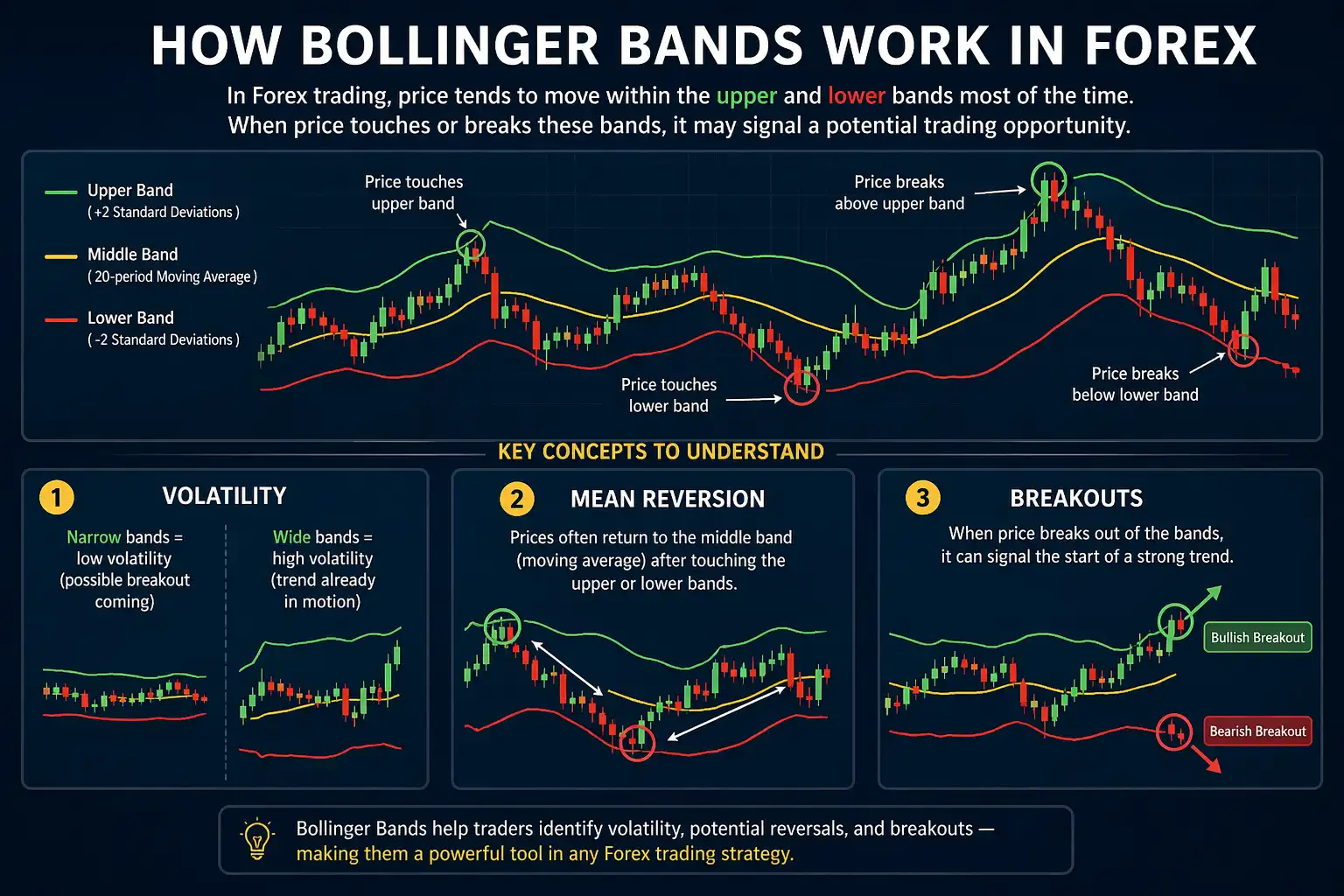
Bollinger Bands are a technical analysis indicator that consists of three lines plotted on a price chart:
- Middle Band: A simple moving average (usually 20 periods)
- Upper Band: Middle band + 2 standard deviations
- Lower Band: Middle band – 2 standard deviations
These bands expand and contract based on market volatility. When volatility increases, the bands widen; when volatility decreases, they narrow.
Why Are Bollinger Bands Important?
Bollinger Bands help traders:
- Identify overbought and oversold conditions
- Spot potential trend reversals
- Measure market volatility
- Confirm trading signals from other indicators
How Bollinger Bands Work in Forex
In Forex trading, price tends to move within the upper and lower bands most of the time. When price touches or breaks these bands, it may signal a potential trading opportunity.
Key Concepts to Understand
1. Volatility
- Narrow bands = low volatility (possible breakout coming)
- Wide bands = high volatility (trend already in motion)
2. Mean Reversion
Prices often return to the middle band (moving average) after touching the upper or lower bands.
3. Breakouts
When price breaks out of the bands, it can signal the start of a strong trend.
Top Bollinger Bands Strategies for Beginners
Let’s explore some simple and effective strategies you can start using right away.
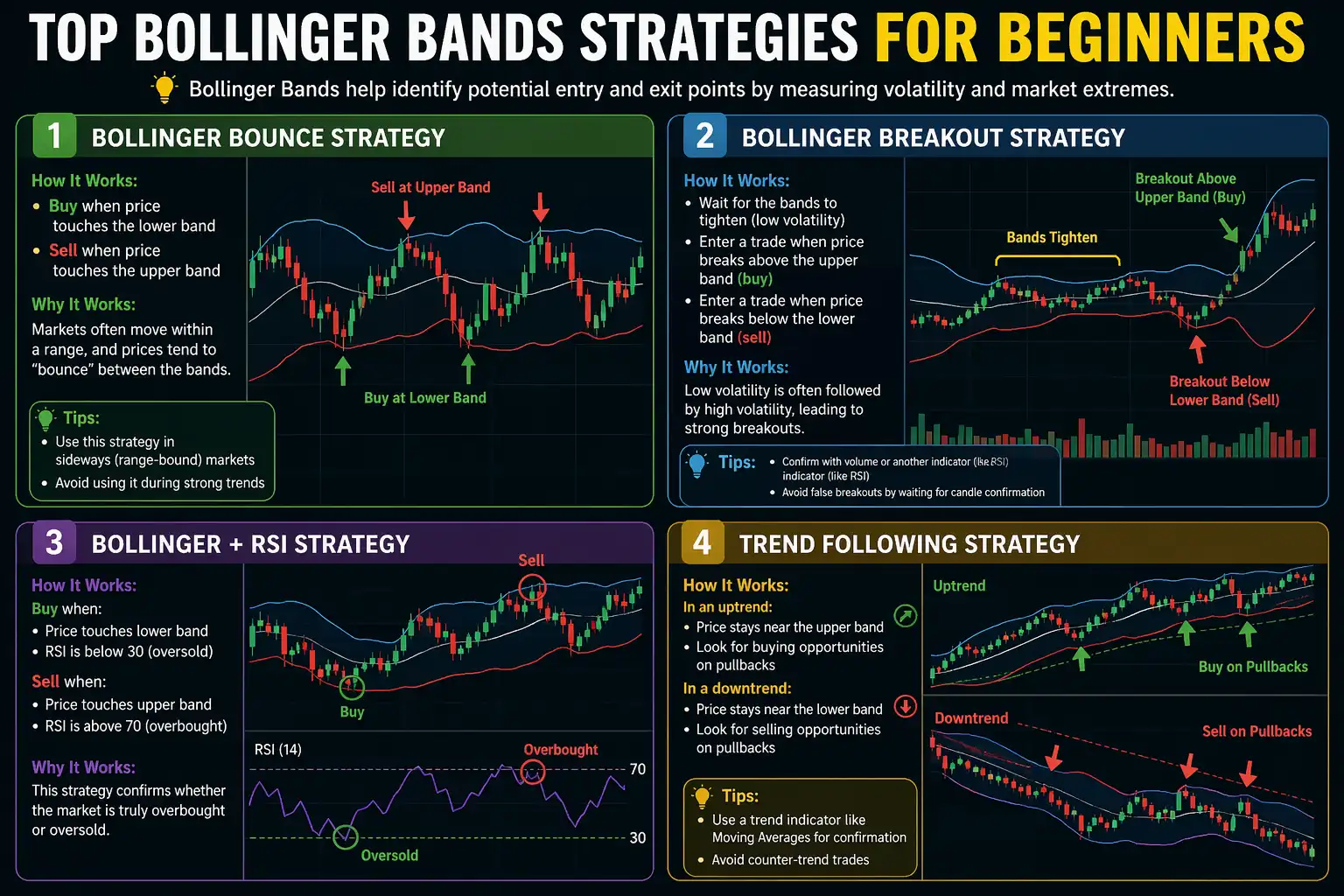
1. Bollinger Bounce Strategy
This is one of the easiest strategies for beginners.
How It Works:
- Buy when price touches the lower band
- Sell when price touches the upper band
Why It Works:
Markets often move within a range, and prices tend to “bounce” between the bands.
Tips:
- Use this strategy in sideways (range-bound) markets
- Avoid using it during strong trends
2. Bollinger Breakout Strategy
This strategy focuses on capturing strong price movements.
How It Works:
- Wait for the bands to tighten (low volatility)
- Enter a trade when price breaks above the upper band (buy)
- Enter a trade when price breaks below the lower band (sell)
Why It Works:
Low volatility is often followed by high volatility, leading to strong breakouts.
Tips:
- Confirm with volume or another indicator (like RSI)
- Avoid false breakouts by waiting for candle confirmation
3. Bollinger + RSI Strategy
Combining Bollinger Bands with the Relative Strength Index (RSI) improves accuracy.
How It Works:
- Buy when:
- Price touches lower band
- RSI is below 30 (oversold)
- Sell when:
- Price touches upper band
- RSI is above 70 (overbought)
Why It Works:
This strategy confirms whether the market is truly overbought or oversold.
4. Trend Following Strategy
Instead of trading reversals, you can use Bollinger Bands to follow trends.
How It Works:
- In an uptrend:
- Price stays near the upper band
- Look for buying opportunities on pullbacks
- In a downtrend:
- Price stays near the lower band
- Look for selling opportunities on pullbacks
Tips:
- Use a trend indicator like Moving Averages for confirmation
- Avoid counter-trend trades
Best Settings for Bollinger Bands
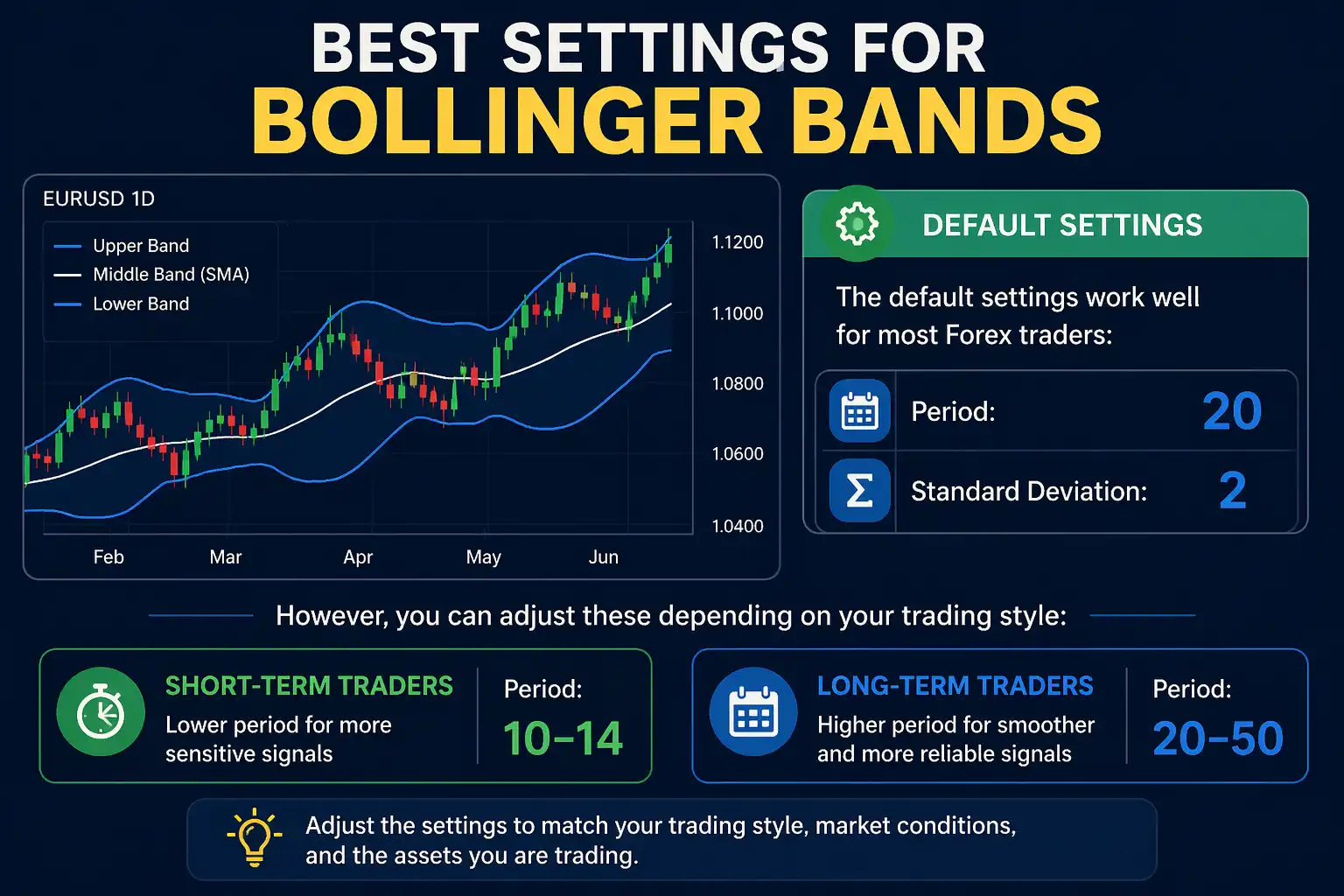
The default settings work well for most Forex traders:
- Period: 20
- Standard Deviation: 2
However, you can adjust these depending on your trading style:
- Short-term traders: lower period (10–14)
- Long-term traders: higher period (20–50)
Common Mistakes to Avoid
Even though Bollinger Bands are simple, beginners often make avoidable mistakes.
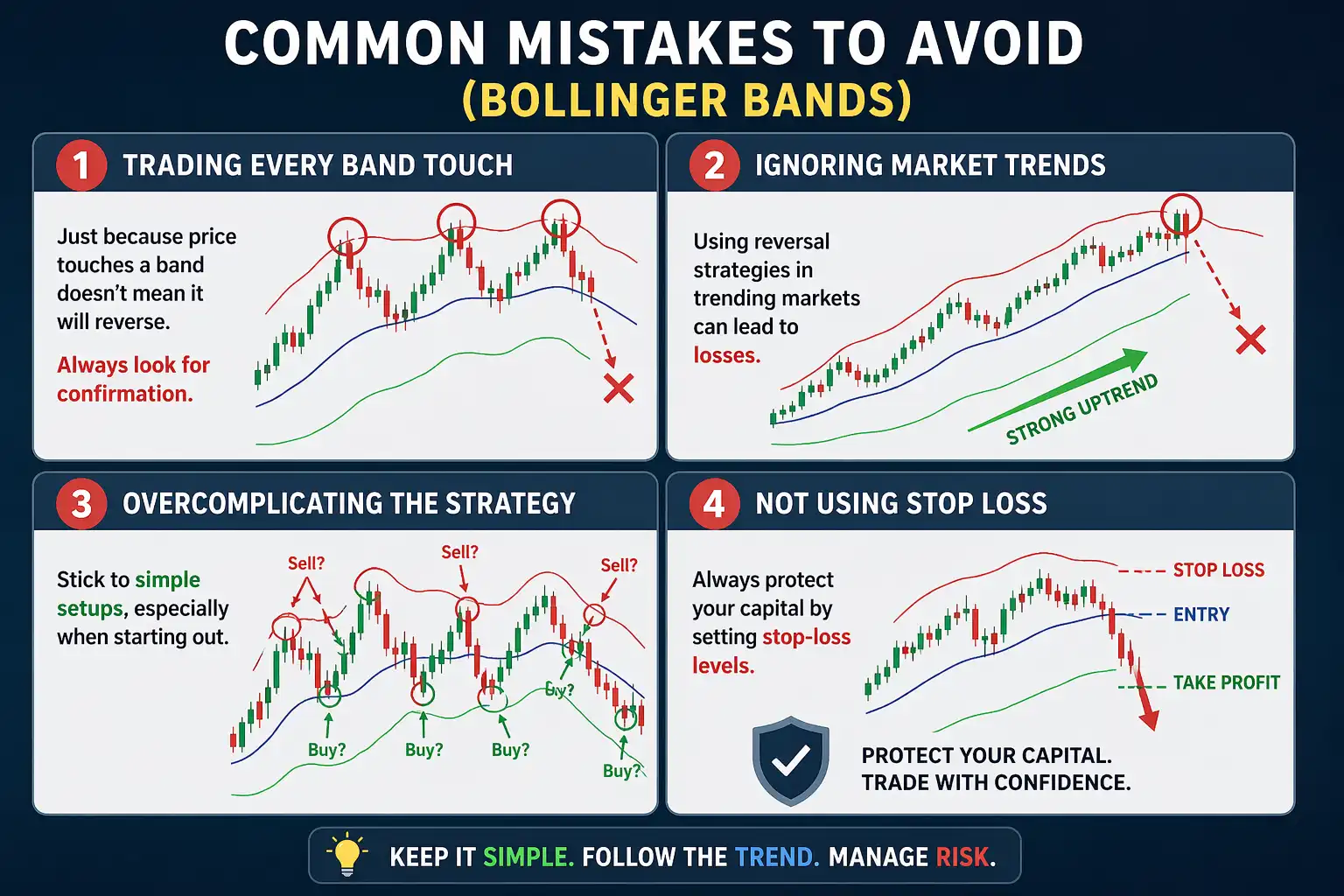
1. Trading Every Band Touch
Just because price touches a band doesn’t mean it will reverse. Always look for confirmation.
2. Ignoring Market Trends
Using reversal strategies in trending markets can lead to losses.
3. Overcomplicating the Strategy
Stick to simple setups, especially when starting out.
4. Not Using Stop Loss
Always protect your capital by setting stop-loss levels.
Risk Management Tips
No strategy is complete without proper risk management.
- Never risk more than 1–2% per trade
- Use stop-loss and take-profit levels
- Avoid overtrading
- Keep a trading journal to track performance
Advantages of Bollinger Bands Strategy
- Easy to understand and use
- Works well in different market conditions
- Helps identify volatility and trends
- Can be combined with other indicators
Disadvantages of Bollinger Bands Strategy
- Can produce false signals
- Less effective in strong trending markets (for reversal strategies)
- Requires confirmation from other tools
Final Thoughts
The Bollinger Bands strategy is an excellent starting point for beginner Forex traders. It provides valuable insights into market behavior, helping you make more informed trading decisions.
However, no strategy is perfect. The key to success is practice, patience, and continuous learning. Start with a demo account, test different strategies and refine your approach over time.
FAQs
1. Are Bollinger Bands good for beginners?
Yes, they are one of the simplest and most effective indicators for beginners.
2. Can Bollinger Bands be used alone?
They can be used alone, but combining them with other indicators improves accuracy.
3. What timeframe works best?
Bollinger Bands work on all timeframes, but beginners often start with 1-hour or 4-hour charts.
Conclusion
If you’re looking for a simple yet powerful Forex trading strategy, Bollinger Bands are a great choice. By understanding how they work and applying the strategies outlined above, you can significantly improve your trading performance.
Start simple, stay disciplined, and always manage your risk—those are the real keys to long-term success in Forex trading.