
In the world of Forex trading, understanding price movement is essential for long-term success. Among the many tools and concepts traders use, support and resistance zones stand out as some of the most powerful and reliable. Whether you’re a beginner or an experienced trader, mastering these zones can significantly improve your decision-making and consistency.
This guide will walk you through what support and resistance zones are, how they work and practical strategies you can use to boost your Forex profits.
What Are Support and Resistance Zones?
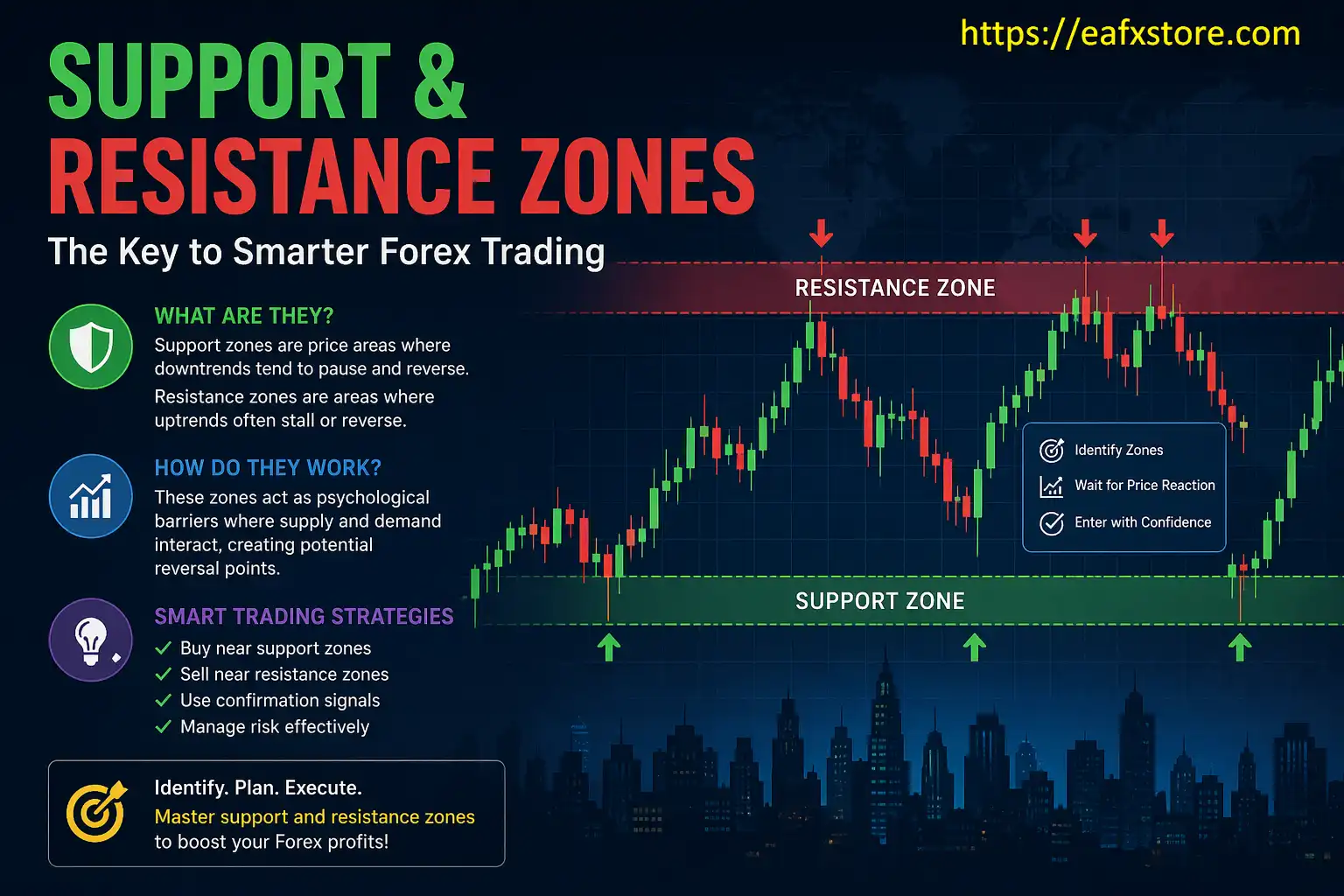
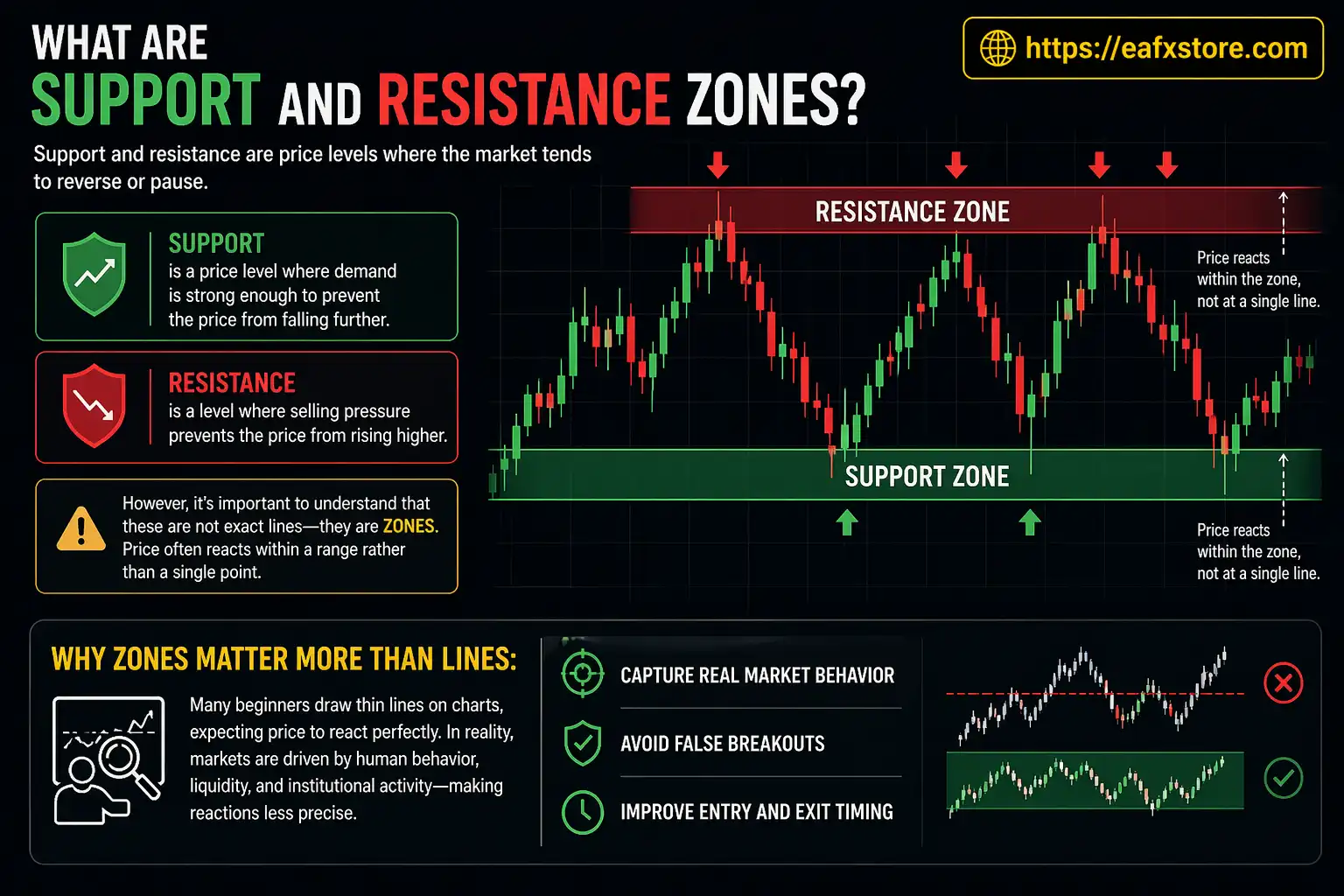
Support and resistance are price levels where the market tends to reverse or pause.
- Support is a price level where demand is strong enough to prevent the price from falling further.
- Resistance is a level where selling pressure prevents the price from rising higher.
However, it’s important to understand that these are not exact lines—they are zones. Price often reacts within a range rather than a single point.
Why Zones Matter More Than Lines:
Many beginners draw thin lines on charts, expecting price to react perfectly. In reality, markets are driven by human behavior, liquidity and institutional activity—making reactions less precise.
By focusing on zones, you:
- Capture real market behavior.
- Avoid false breakouts.
- Improve entry and exit timing.
Why Support and Resistance Work
Support and resistance zones work because they reflect market psychology.
Here’s what happens at these levels:
- Traders remember previous price reactions
- Institutions place large orders around key levels
- Retail traders cluster stop-losses and entries
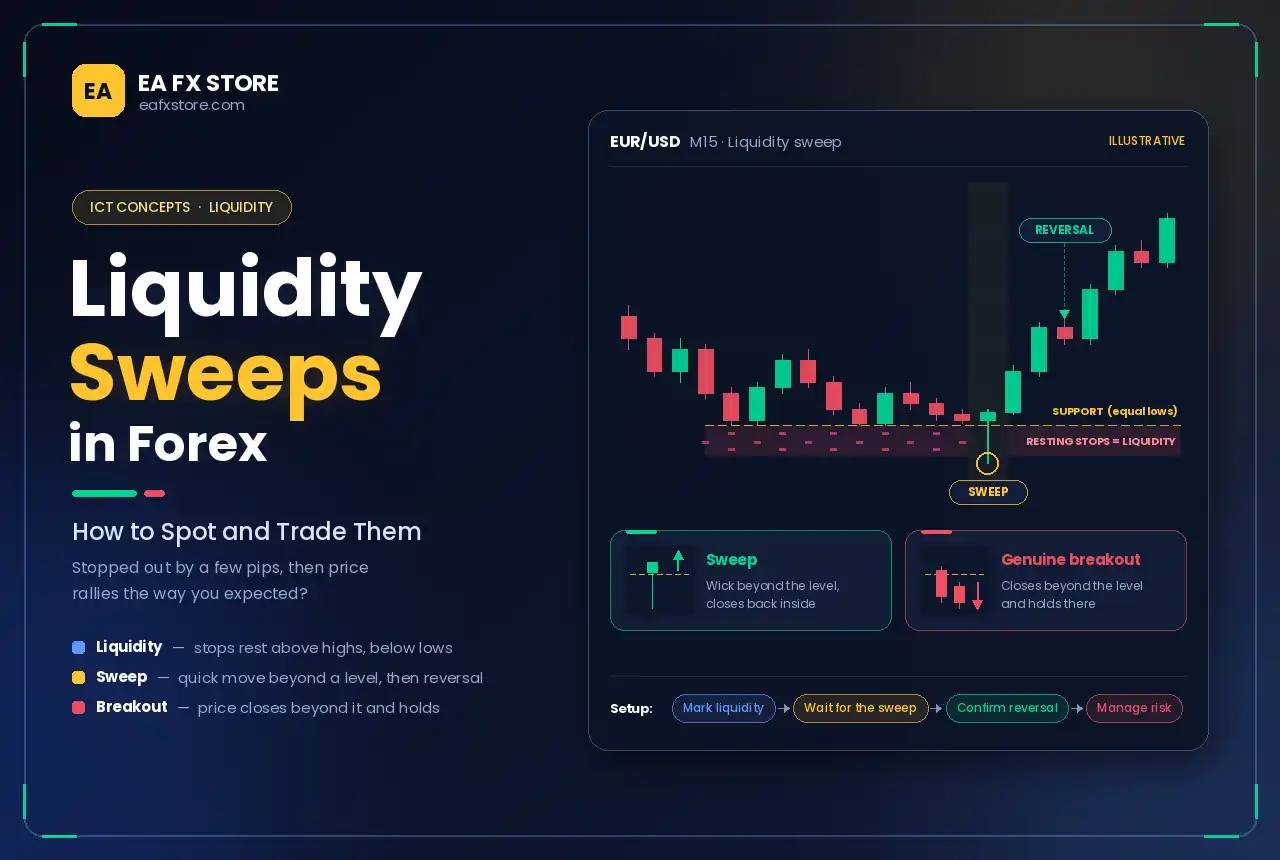
This creates high liquidity areas, where price is more likely to react.
How to Identify Strong Support and Resistance Zones
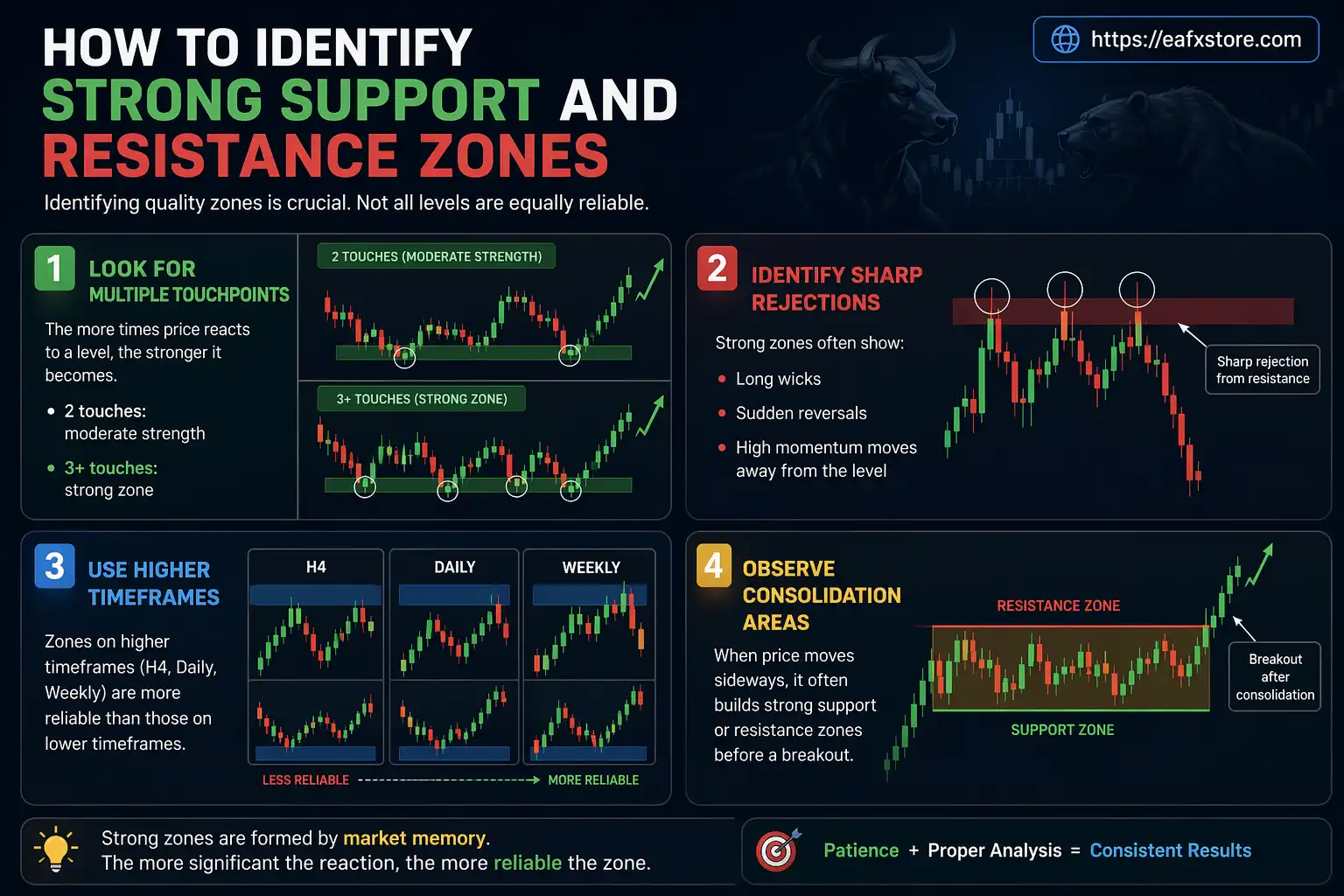
Identifying quality zones is crucial. Not all levels are equally reliable.
1. Look for Multiple Touchpoints
The more times price reacts to a level, the stronger it becomes.
- 2 touches: moderate strength
- 3+ touches: strong zone
2. Identify Sharp Rejections
Strong zones often show:
- Long wicks
- Sudden reversals
- High momentum moves away from the level
3. Use Higher Timeframes
Zones on higher timeframes (H4, Daily, Weekly) are more reliable than those on lower timeframes.
4. Observe Consolidation Areas
When price moves sideways, it often builds strong support or resistance zones before a breakout.
Key Trading Strategies Using Support and Resistance
Now let’s move into actionable strategies you can apply.
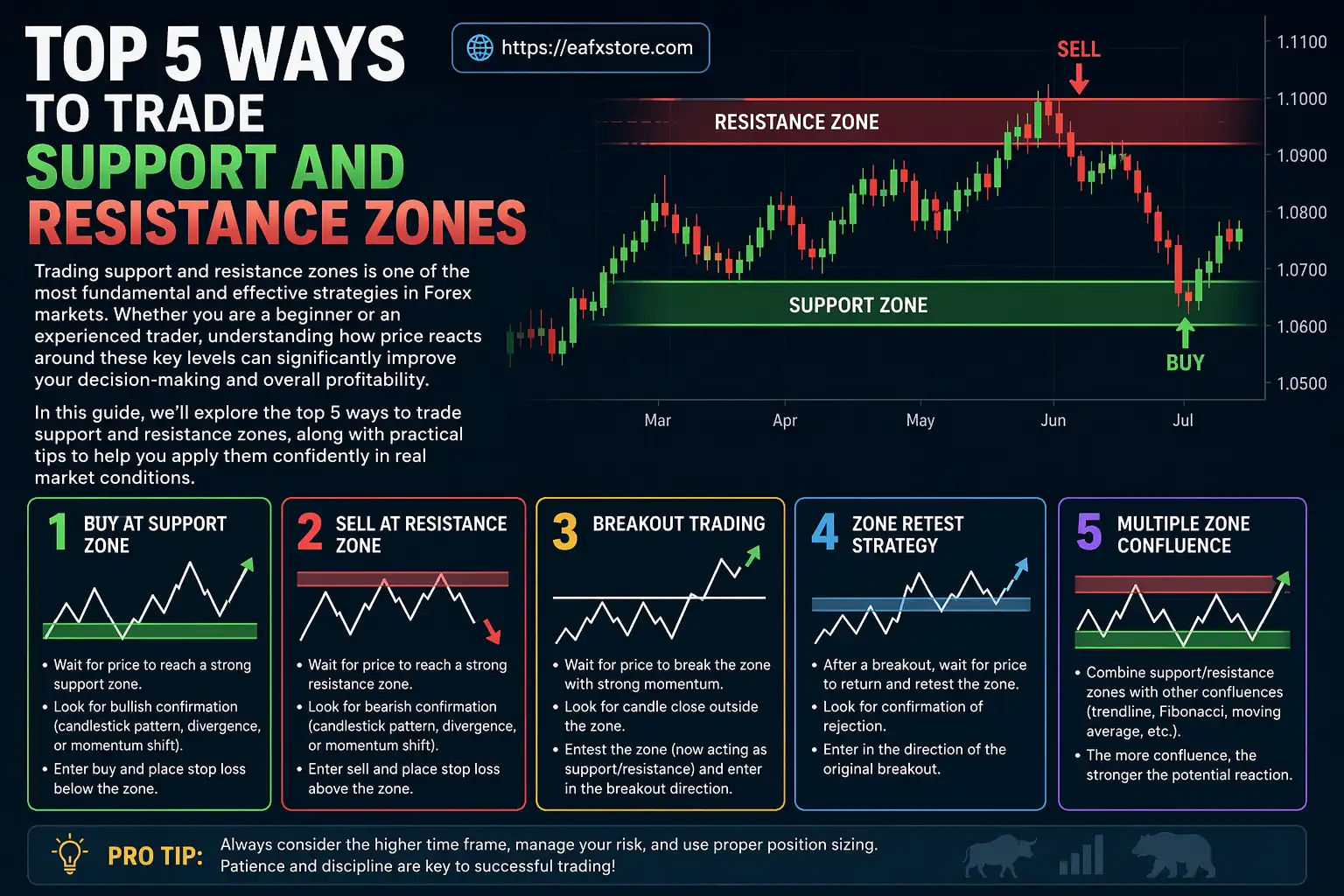
1. Bounce Trading Strategy
This is the most common approach.
Concept:
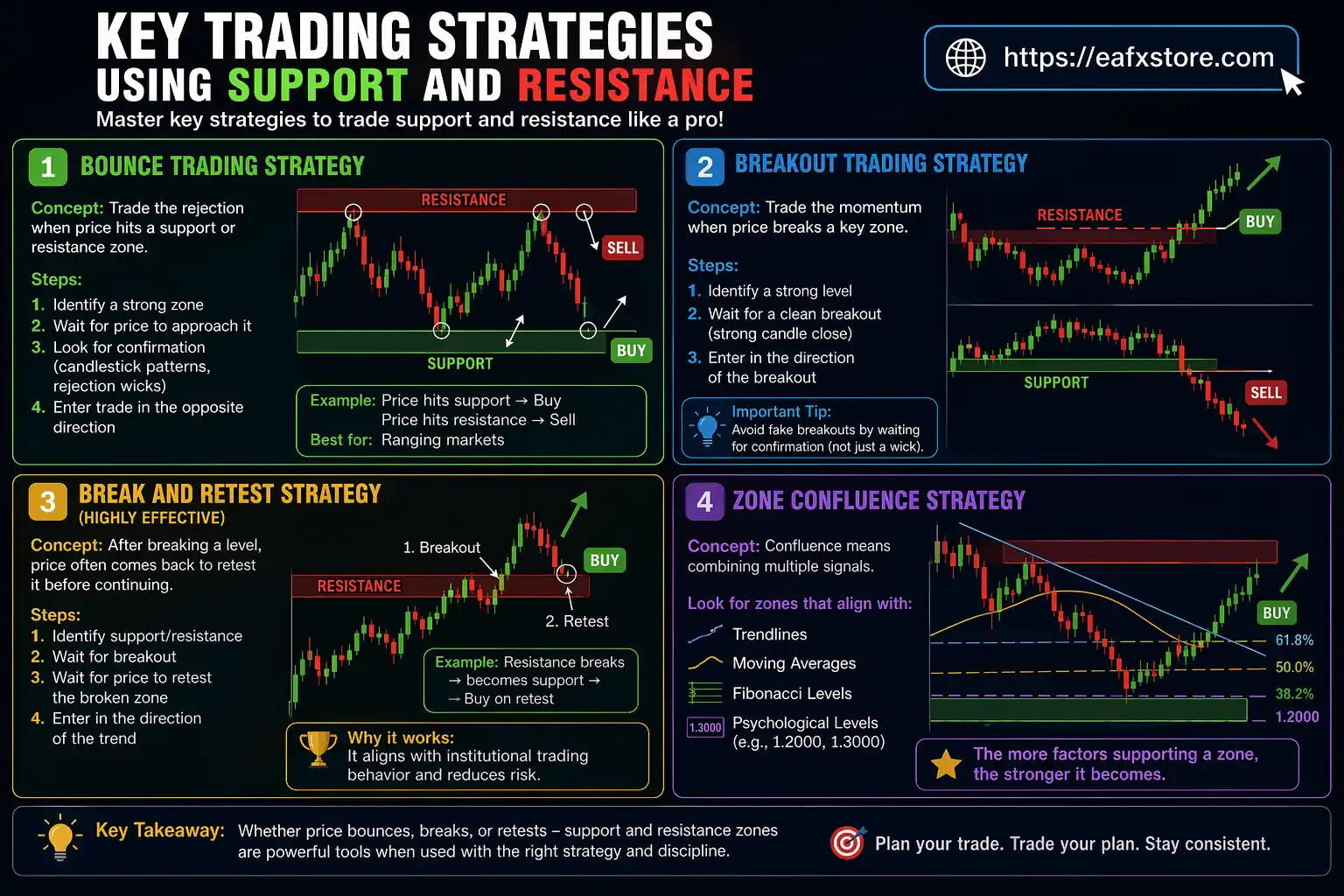
Trade the rejection when price hits a support or resistance zone.
Steps:
- Identify a strong zone
- Wait for price to approach it
- Look for confirmation (candlestick patterns, rejection wicks)
- Enter trade in the opposite direction
Example:
- Price hits support → Buy
- Price hits resistance → Sell
Best for: Ranging markets
2. Breakout Trading Strategy
Sometimes price doesn’t bounce—it breaks through.
Concept:
Trade the momentum when price breaks a key zone.
Steps:
- Identify a strong level
- Wait for a clean breakout (strong candle close)
- Enter in the direction of the breakout
Important Tip:
Avoid fake breakouts by waiting for confirmation (not just a wick).
3. Break and Retest Strategy (Highly Effective)
This is one of the most reliable strategies used by professional traders.
Concept:
After breaking a level, price often comes back to retest it before continuing.
Steps:
- Identify support/resistance
- Wait for breakout
- Wait for price to retest the broken zone
- Enter in the direction of the trend
Example:
- Resistance breaks → becomes support → Buy on retest
Why it works:
It aligns with institutional trading behavior and reduces risk.
4. Zone Confluence Strategy
Confluence means combining multiple signals.
Look for zones that align with:
- Trendlines
- Moving averages
- Fibonacci levels
- Psychological levels (e.g., 1.2000, 1.3000)
The more factors supporting a zone, the stronger it becomes.
Common Mistakes to Avoid
Even though support and resistance are simple concepts, many traders misuse them.
1. Treating Zones as Exact Lines
Price rarely respects a single price point. Always think in ranges.
2. Ignoring Market Context
A strong trend can easily break support or resistance.
- In uptrends → resistance breaks more often
- In downtrends → support breaks more often
3. Entering Without Confirmation
Never trade blindly at a level. Always wait for price action signals.
4. Overloading Charts
Too many lines create confusion. Focus only on key levels.
Risk Management: The Missing Piece
Even the best support and resistance strategy will fail without proper risk management.
Key rules:
- Risk only 1–2% per trade
- Always use Stop Loss (SL)
- Maintain a risk-reward ratio of at least 1:2
Place stop-loss:
- Below support (for buys)
- Above resistance (for sells)
Pro Tips for Consistent Profits
- Focus on quality over quantity (fewer, better trades).
- Combine zones with price action for confirmation.
- Keep a trading journal to track performance.
- Practice patience—wait for the market to come to your levels.
Conclusion
Support and resistance zones are foundational tools in Forex trading. When used correctly, they can help you:
- Identify high-probability trade setups
- Improve timing
- Reduce risk
- Increase consistency
The key is not just knowing what they are, but how to apply them strategically. Focus on zones, wait for confirmation, and combine them with solid risk management.