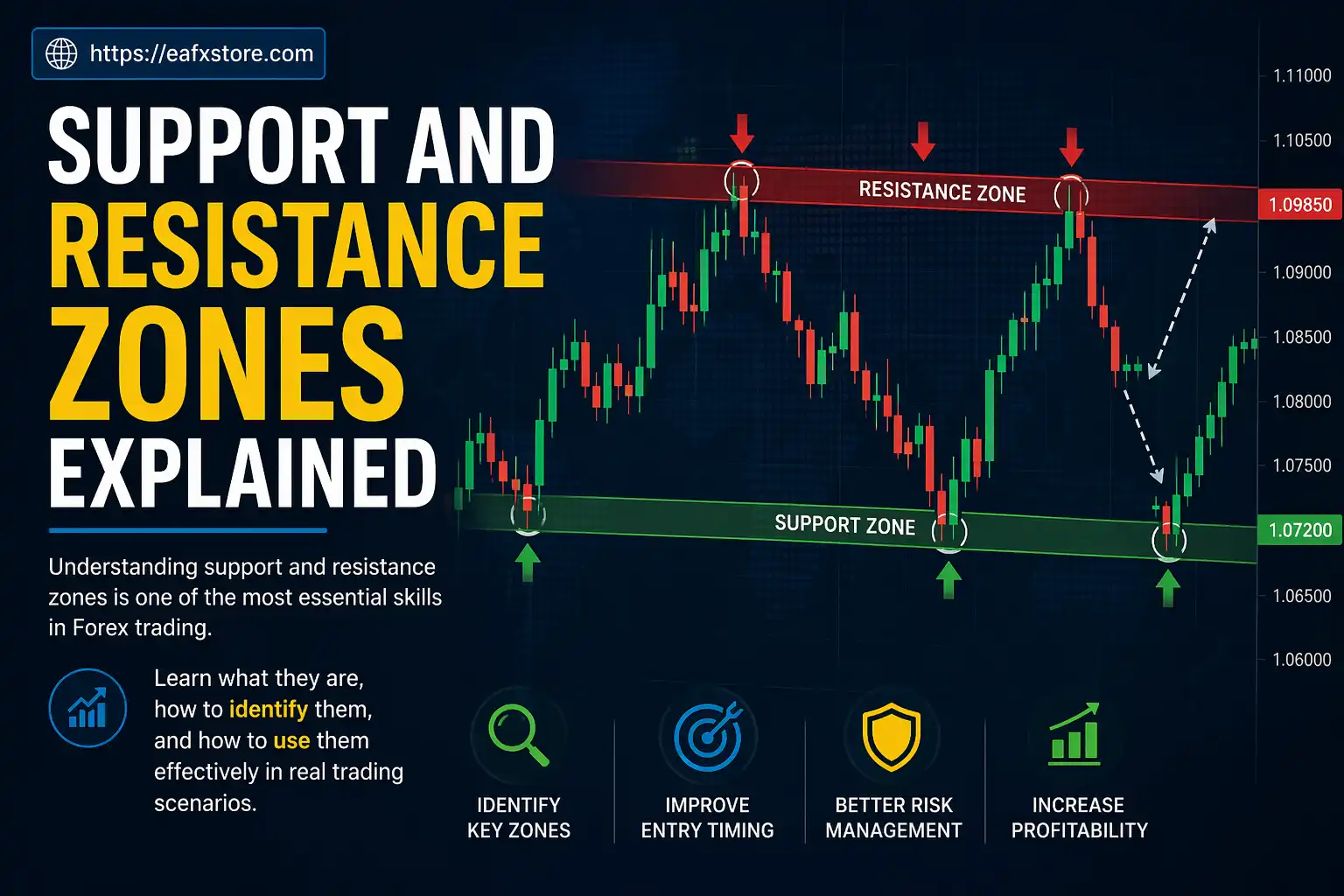

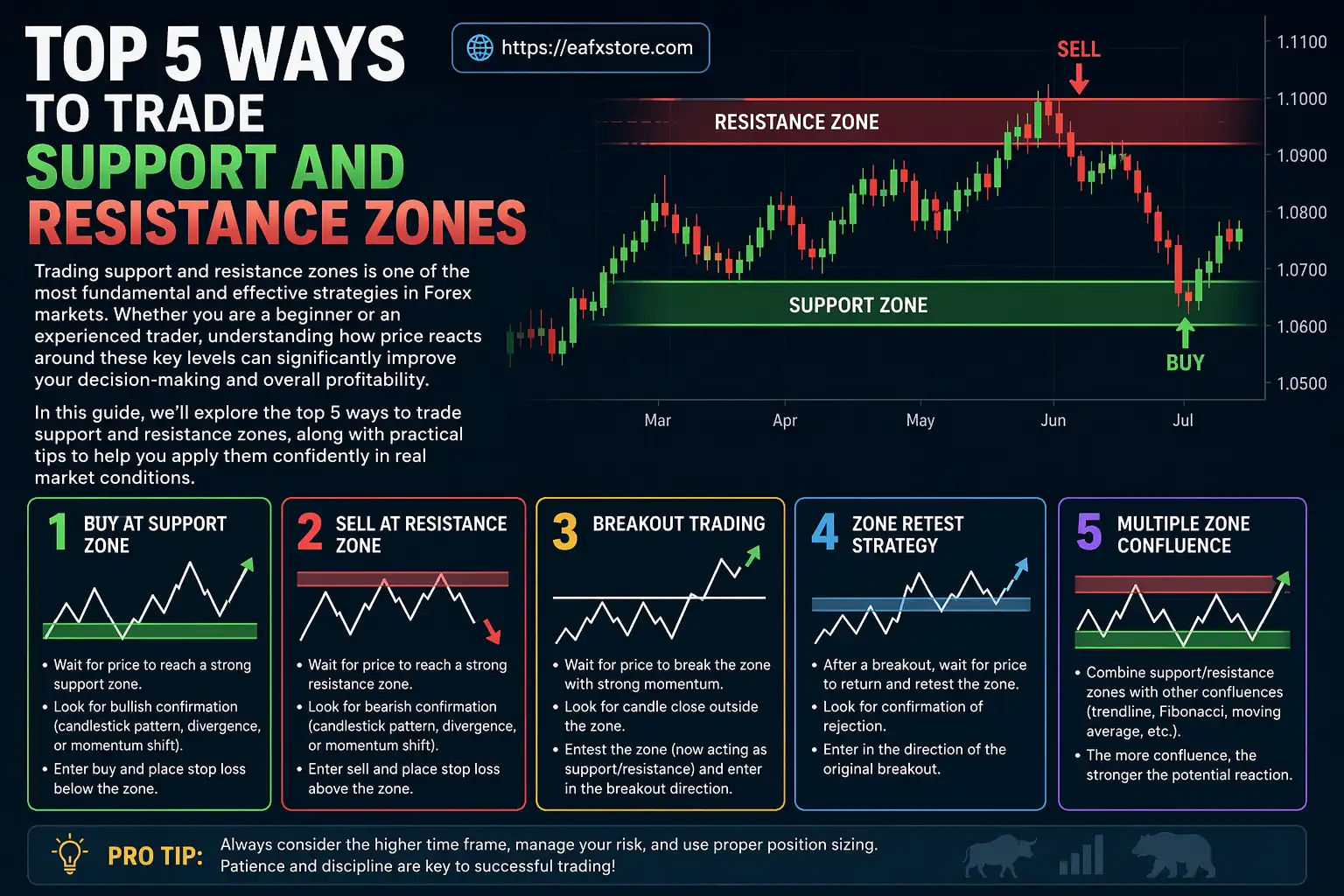
Trading Support and Resistance zones is one of the most fundamental and effective strategies in Forex markets. Whether you are a beginner or an experienced trader, understanding how price reacts around these key levels can significantly improve your decision-making and overall profitability.
In this guide, we’ll explore the top 5 ways to trade support and resistance zones, along with practical tips to help you apply them confidently in real market conditions.
What Are Support and Resistance Zones?
Before diving into strategies, it’s important to understand the basics.
- Support is a price level where demand is strong enough to prevent the price from falling further.
- Resistance is a level where selling pressure prevents the price from rising higher.
Unlike exact price points, these are often zones, not precise lines. Price may react within a range rather than a single level.
1. Trading the Bounce (Reversal Strategy)
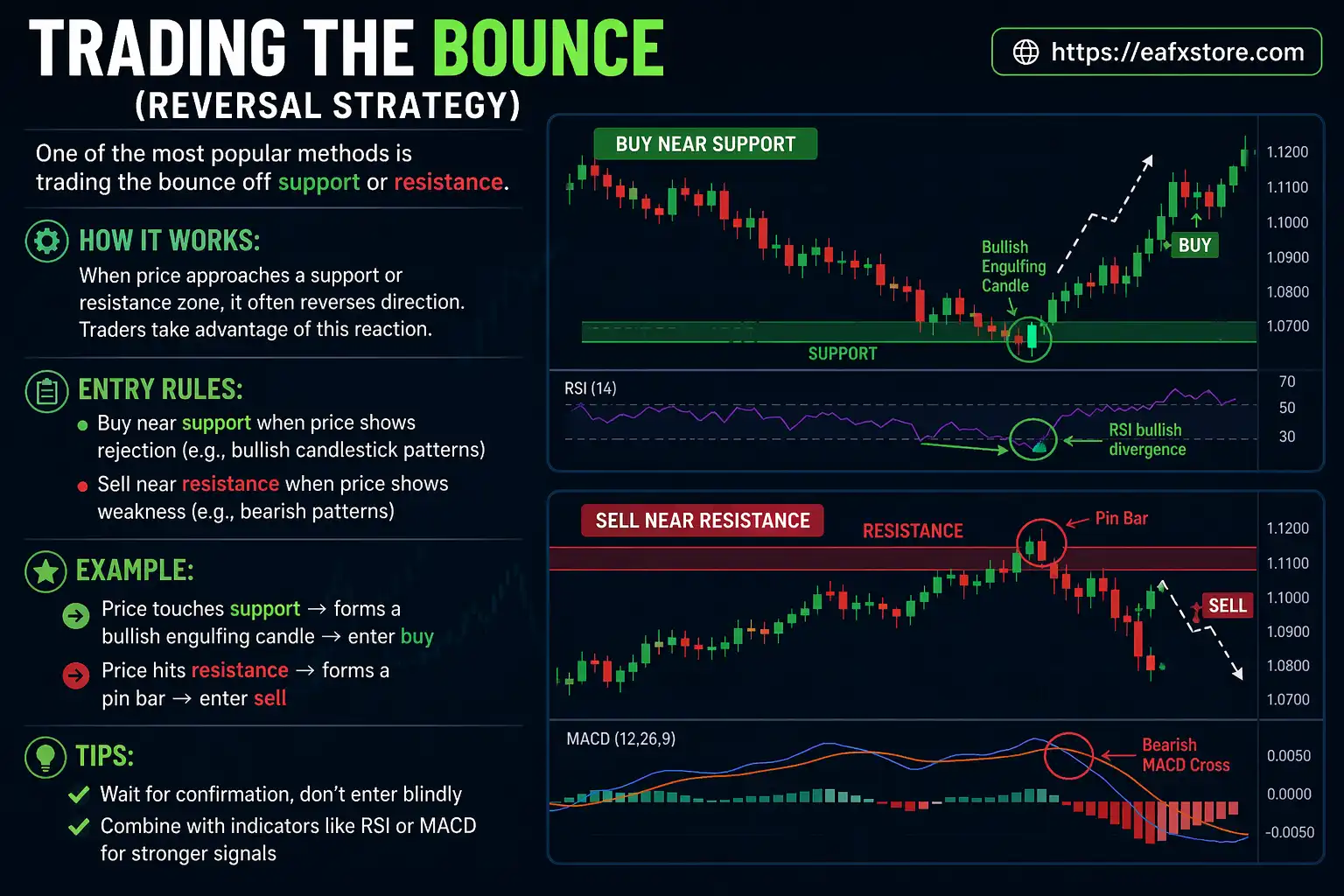
One of the most popular methods is trading the bounce off support or resistance.
How It Works:
When price approaches a support or resistance zone, it often reverses direction. Traders take advantage of this reaction.
Entry Rules:
- Buy near support when price shows rejection (e.g., bullish candlestick patterns)
- Sell near resistance when price shows weakness (e.g., bearish patterns)
Example:
- Price touches support → forms a bullish engulfing candle → enter buy
- Price hits resistance → forms a pin bar → enter sell
Tips:
- Wait for confirmation, don’t enter blindly
- Combine with indicators like RSI or MACD for stronger signals
2. Breakout Trading
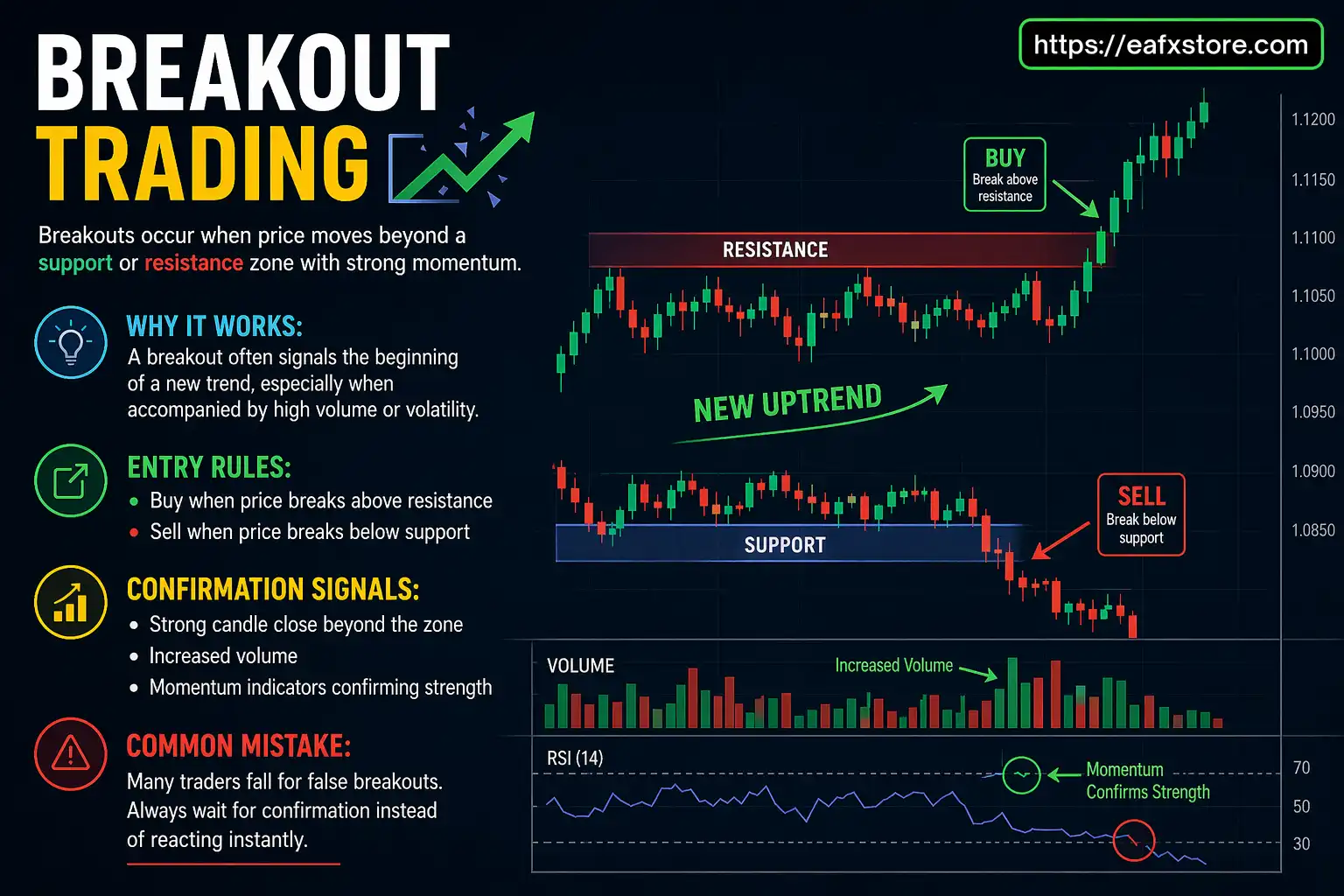
Breakouts occur when price moves beyond a support or resistance zone with strong momentum.
Why It Works:
A breakout often signals the beginning of a new trend, especially when accompanied by high volume or volatility.
Entry Rules:
- Buy when price breaks above resistance
- Sell when price breaks below support
Confirmation Signals:
- Strong candle close beyond the zone
- Increased volume
- Momentum indicators confirming strength
Common Mistake:
Many traders fall for false breakouts. Always wait for confirmation instead of reacting instantly.
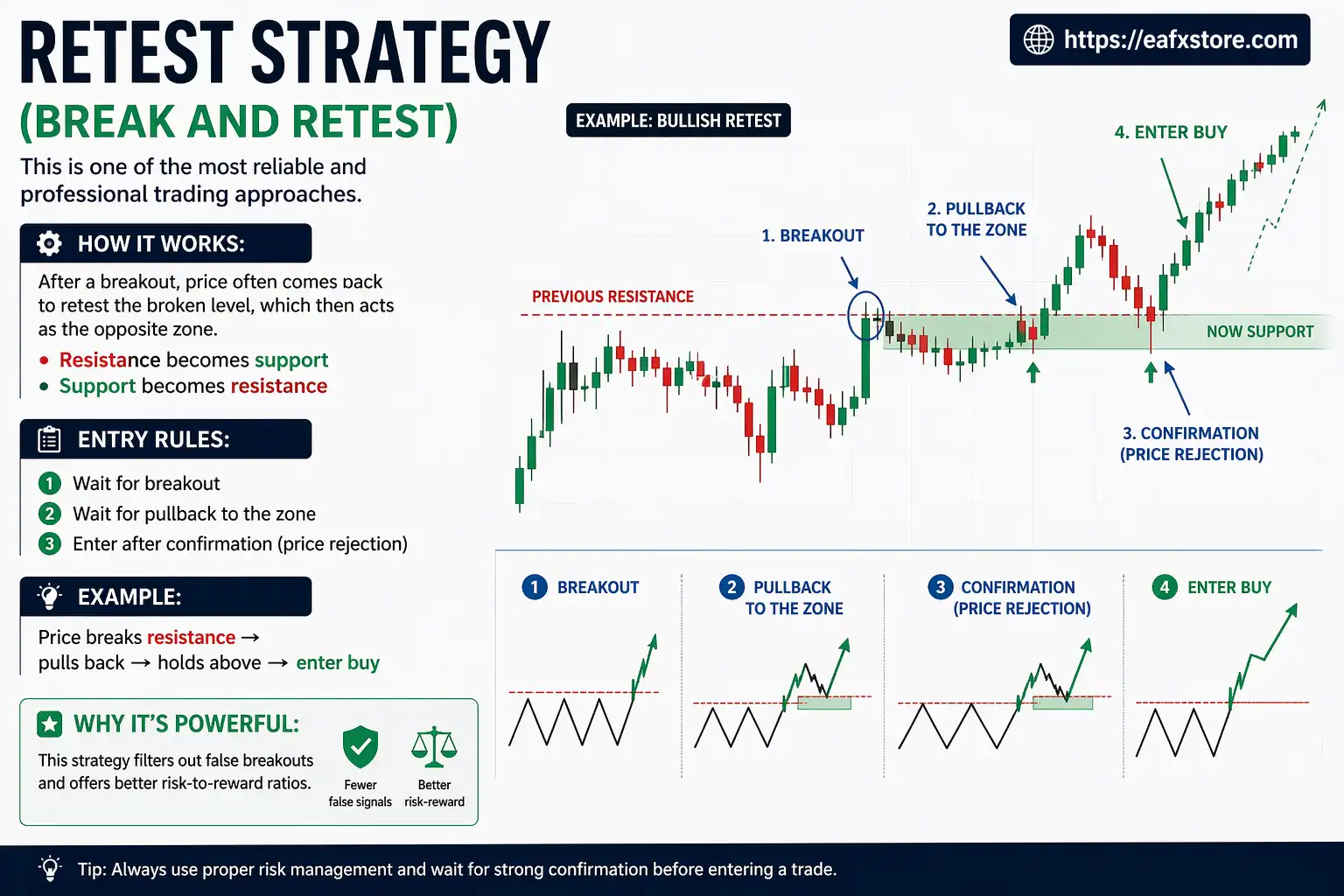
3. Retest Strategy (Break and Retest)
This is one of the most reliable and professional trading approaches.
How It Works:
After a breakout, price often comes back to retest the broken level, which then acts as the opposite zone.
- Resistance becomes support
- Support becomes resistance
Entry Rules:
- Wait for breakout
- Wait for pullback to the zone
- Enter after confirmation (price rejection)
Example:
- Price breaks resistance → pulls back → holds above → enter buy
Why It’s Powerful:
This strategy filters out false breakouts and offers better risk-to-reward ratios.
4. Range Trading
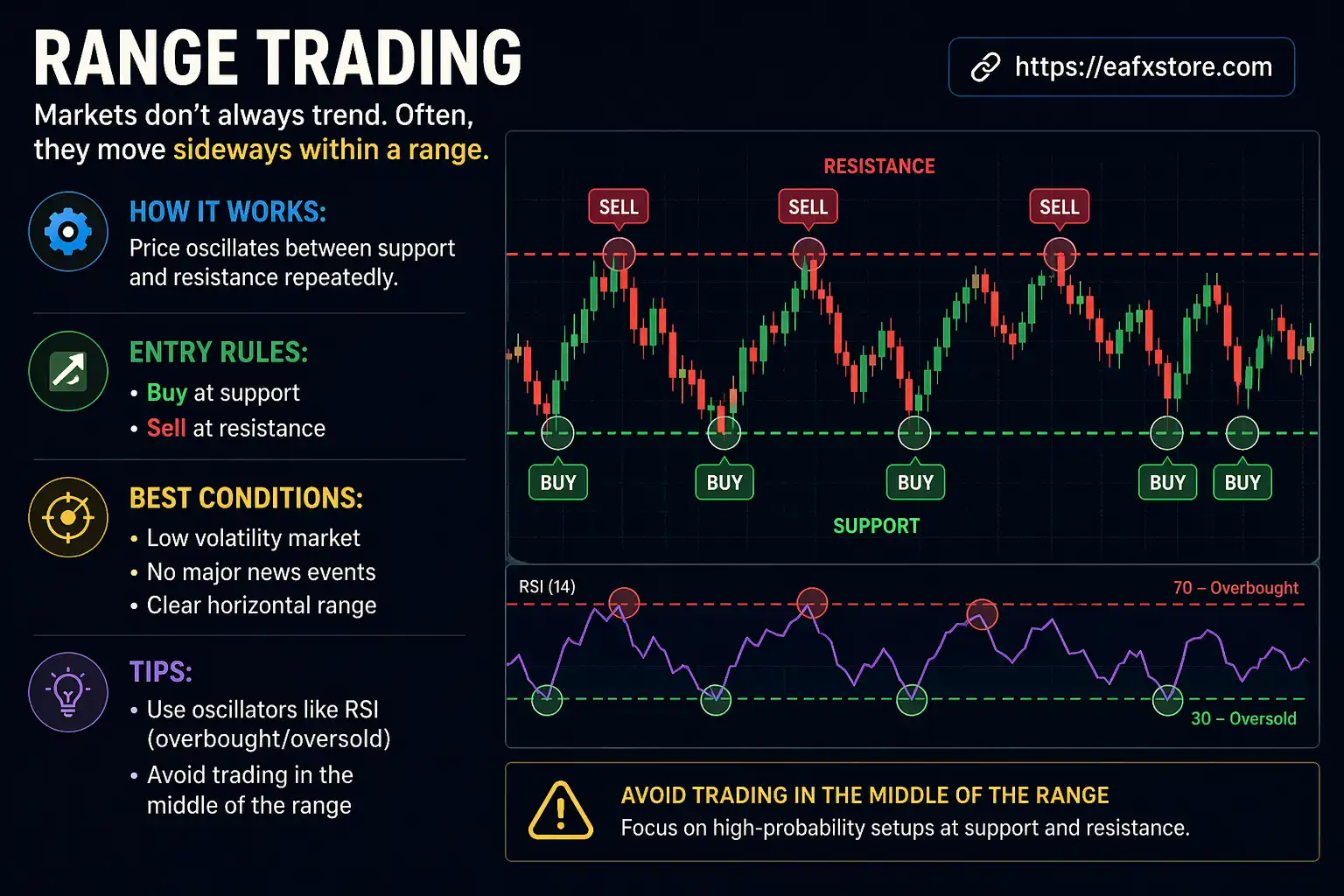
Markets don’t always trend. Often, they move sideways within a range.
How It Works:
Price oscillates between support and resistance repeatedly.
Entry Rules:
- Buy at support
- Sell at resistance
Best Conditions:
- Low volatility market
- No major news events
- Clear horizontal range
Tips:
- Use oscillators like RSI (overbought/oversold)
- Avoid trading in the middle of the range
5. Fake Breakout (False Break Strategy)
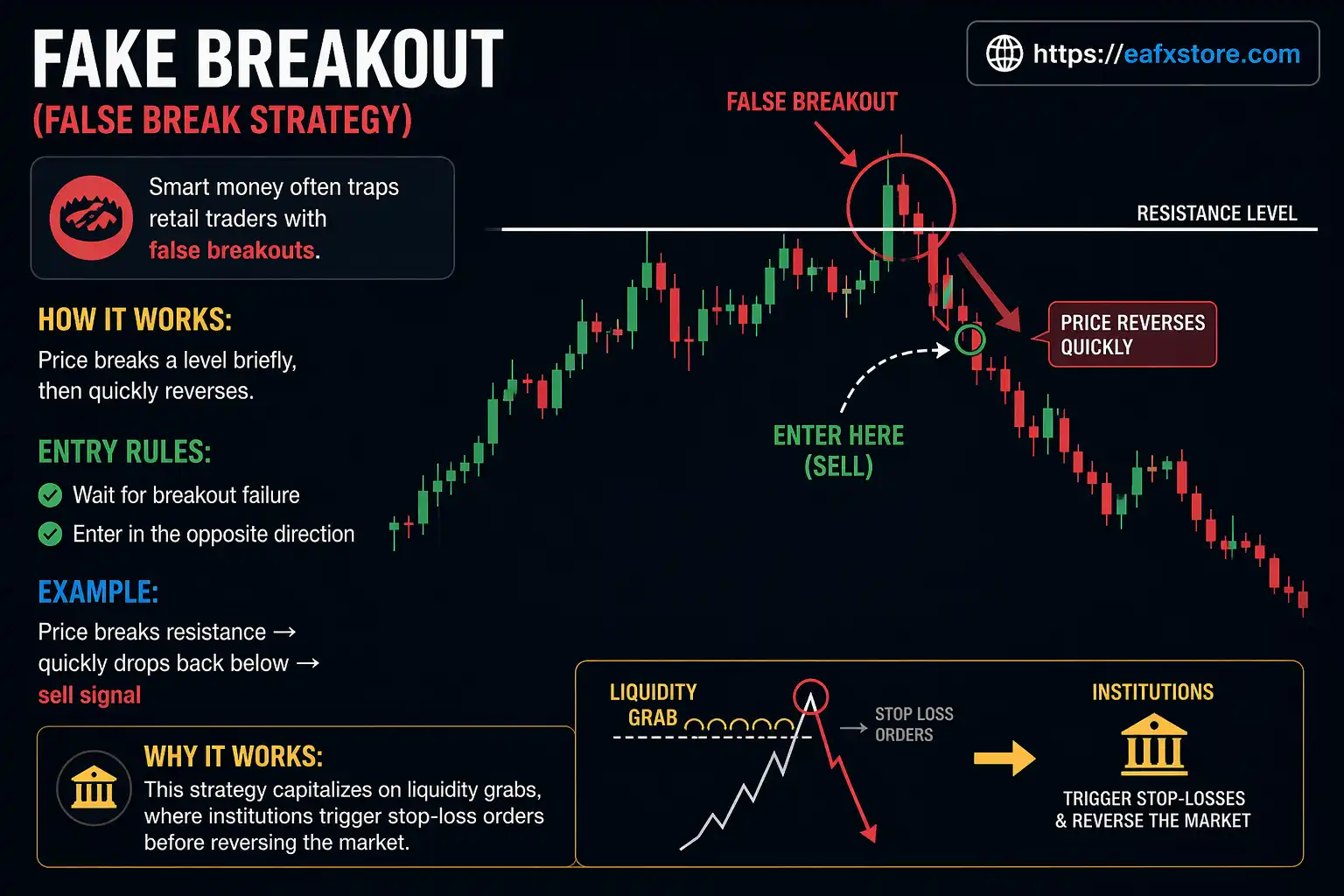
Smart money often traps retail traders with false breakouts.
How It Works:
Price breaks a level briefly, then quickly reverses.
Entry Rules:
- Wait for breakout failure
- Enter in the opposite direction
Example:
- Price breaks resistance → quickly drops back below → sell signal
Why It Works:
This strategy capitalizes on liquidity grabs, where institutions trigger stop-loss orders before reversing the market.
Key Tips for Trading Support and Resistance
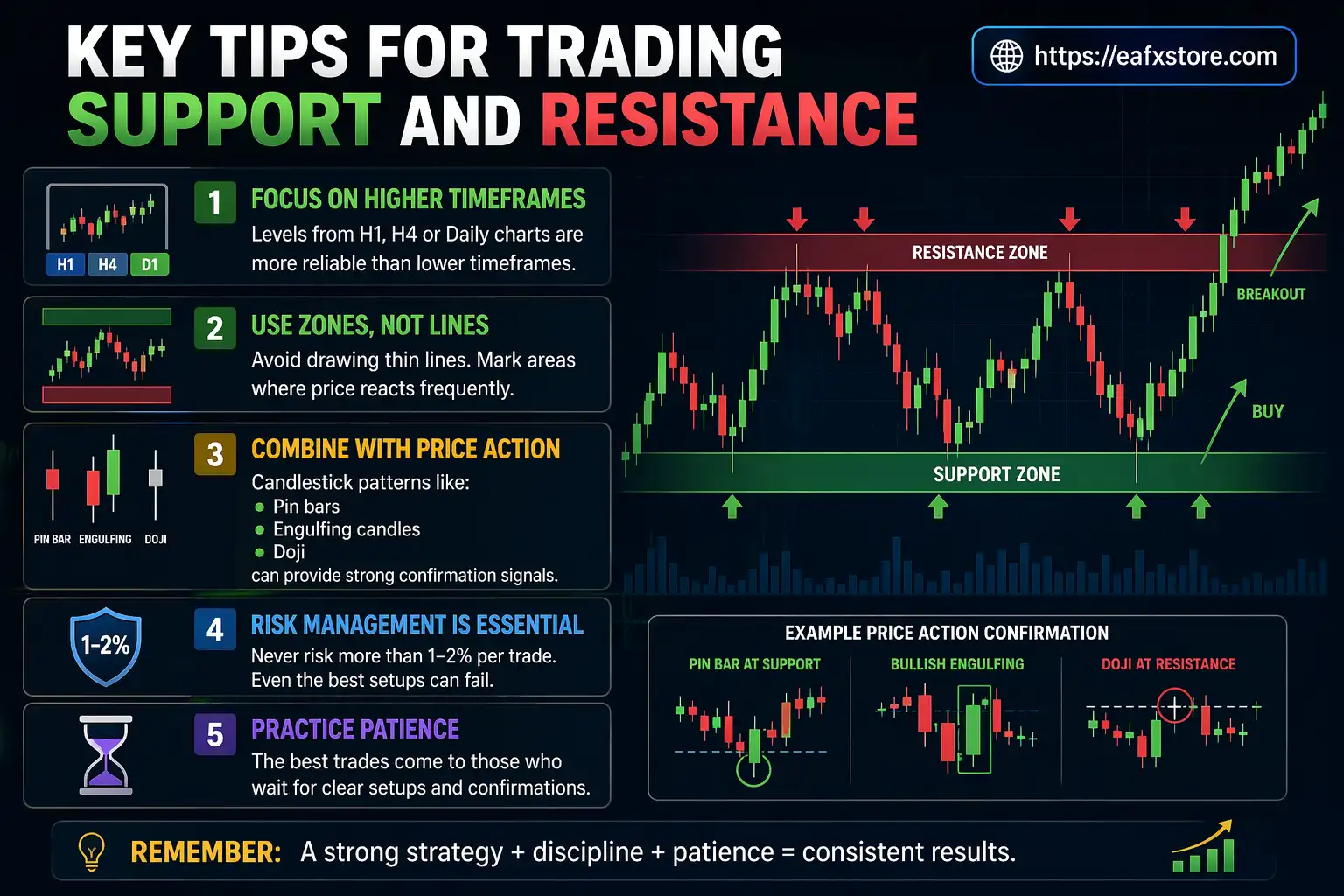
1. Focus on Higher Timeframes
Levels from H1, H4 or Daily charts are more reliable than lower timeframes.
2. Use Zones, Not Lines
Avoid drawing thin lines. Mark areas where price reacts frequently.
3. Combine with Price Action
Candlestick patterns like:
- Pin bars
- Engulfing candles
- Doji
can provide strong confirmation signals.
4. Risk Management Is Essential
Never risk more than 1–2% per trade. Even the best setups can fail.
5. Practice Patience
The best trades come to those who wait for clear setups and confirmations.
Common Mistakes to Avoid
- Entering trades without confirmation
- Ignoring market context (trend vs range)
- Overtrading every touch of a level
- Not using Stop Loss (SL) orders
- Trading during major news without caution
Final Thoughts
Support and resistance trading remains one of the most powerful tools in Forex. By mastering the five strategies outlined above—bounce, breakout, retest, range trading, and fake breakout—you can develop a structured and disciplined approach to the market.
Remember, success in Forex trading doesn’t come from predicting the market perfectly. It comes from managing risk, following a strategy and staying consistent over time.