
Introduction
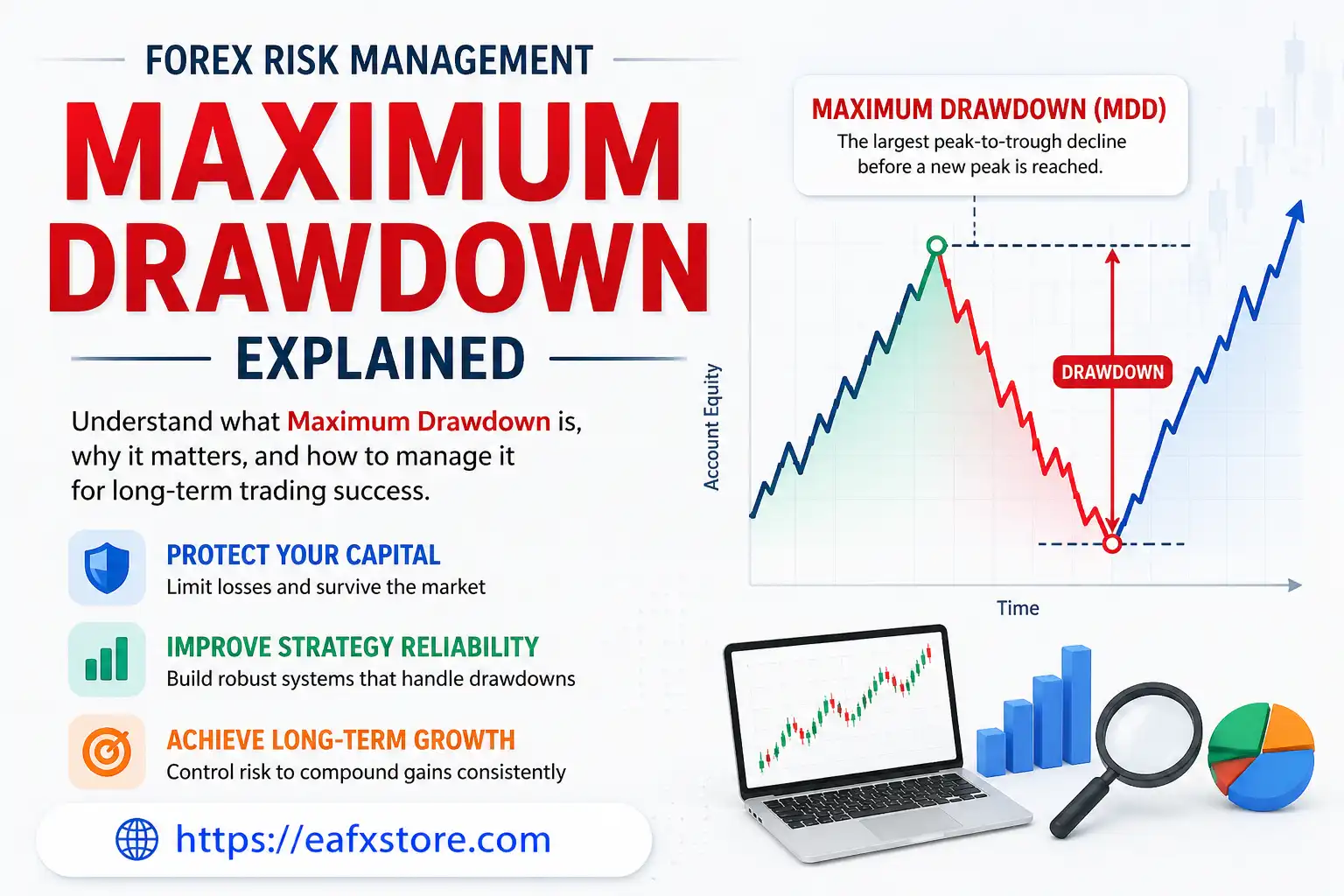
In Forex trading, profit is only one side of the equation—risk management is what keeps traders in the game long enough to succeed. One of the most critical metrics used to measure risk is Maximum Drawdown (MDD). Whether you are a discretionary trader or running automated systems, understanding and controlling drawdown is essential for long-term profitability and survival.
This article explains what maximum drawdown is, why it matters, and how traders—especially those using automated strategies—can manage it effectively.
What is Maximum Drawdown?
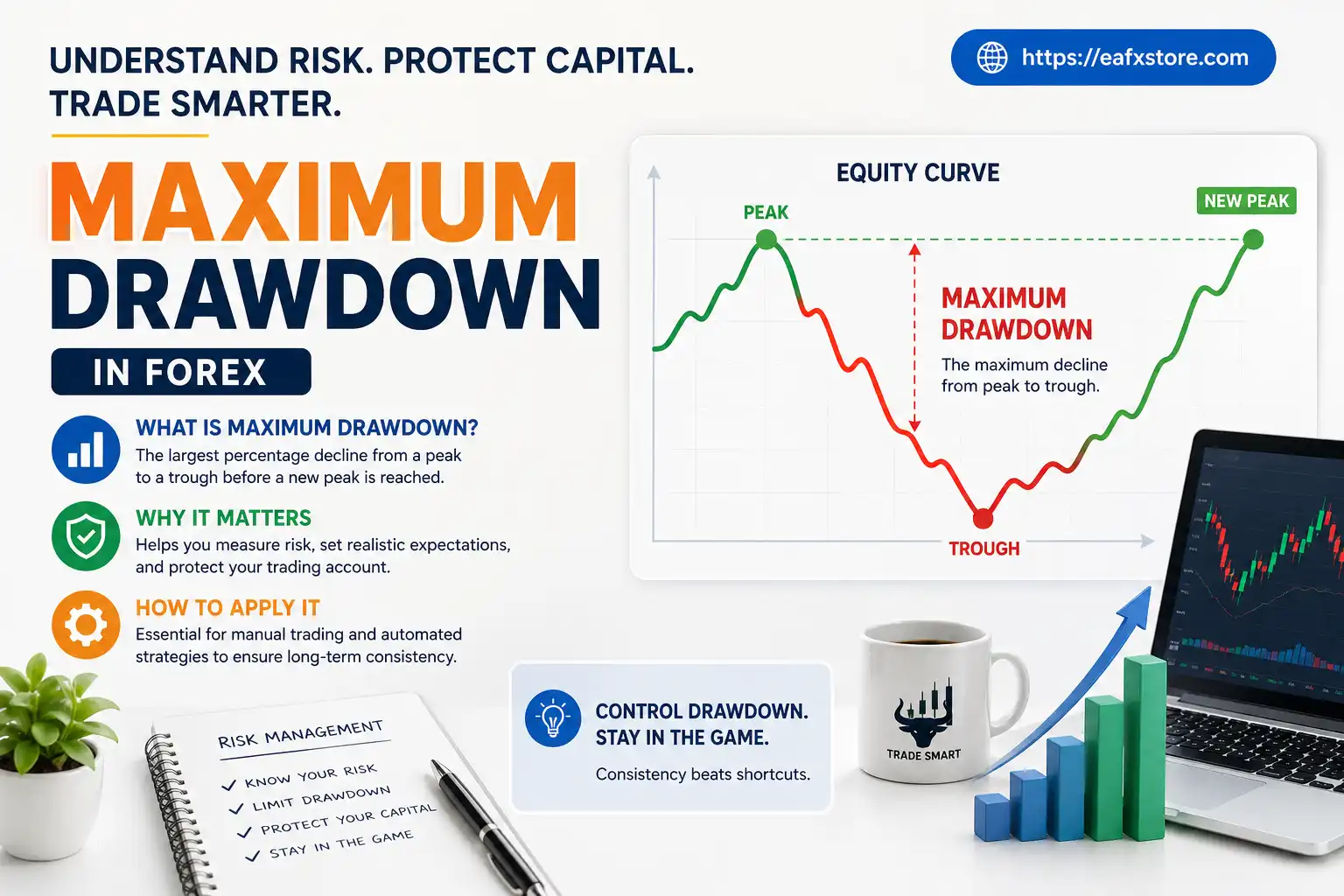
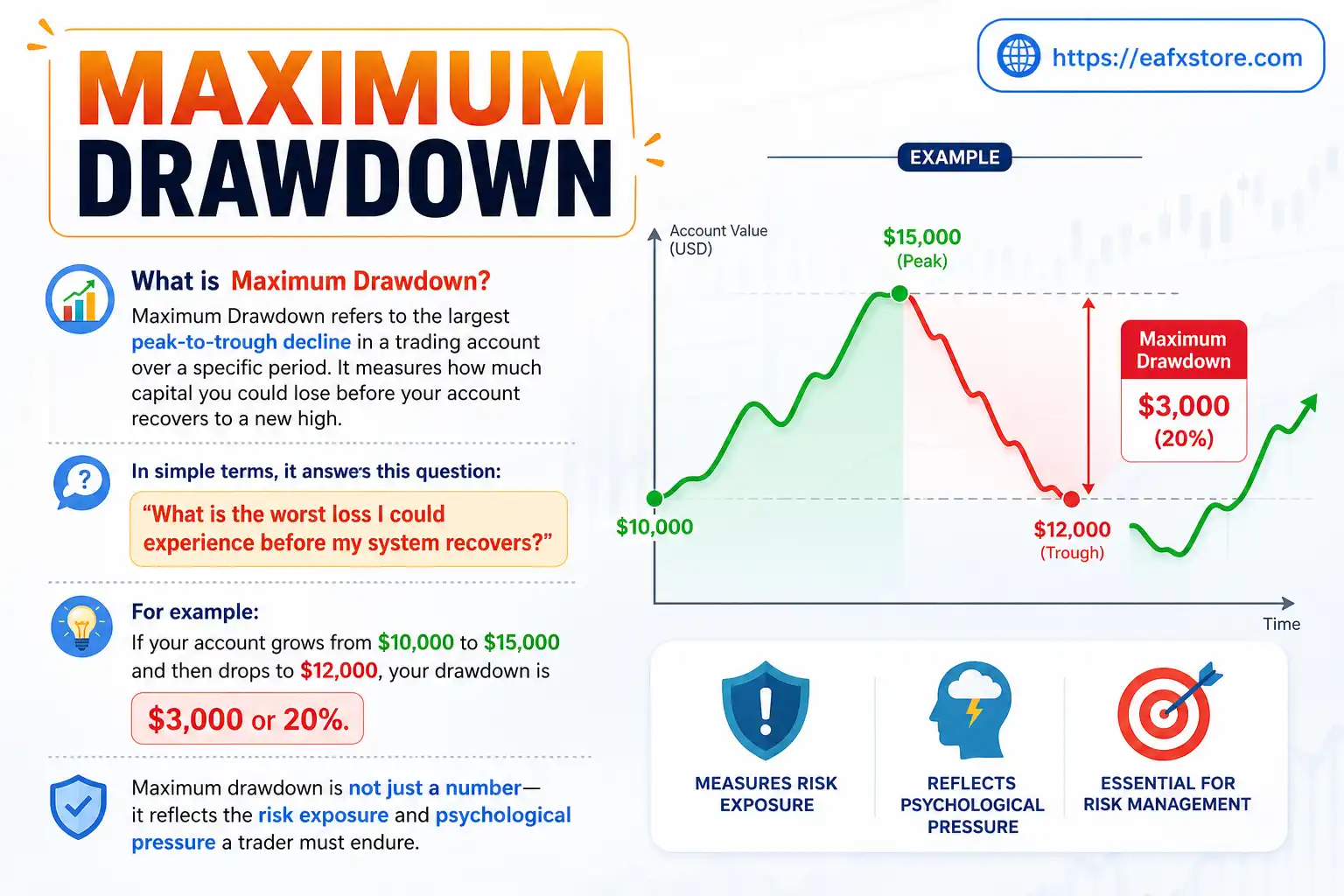
Maximum Drawdown refers to the largest peak-to-trough decline in a trading account over a specific period. It measures how much capital you could lose before your account recovers to a new high.
In simple terms, it answers this question:
“What is the worst loss I could experience before my system recovers?”
For example, if your account grows from $10,000 to $15,000 and then drops to $12,000, your drawdown is $3,000 or 20%.
Maximum drawdown is not just a number—it reflects the risk exposure and psychological pressure a trader must endure.
Why Maximum Drawdown Matters in Forex Trading
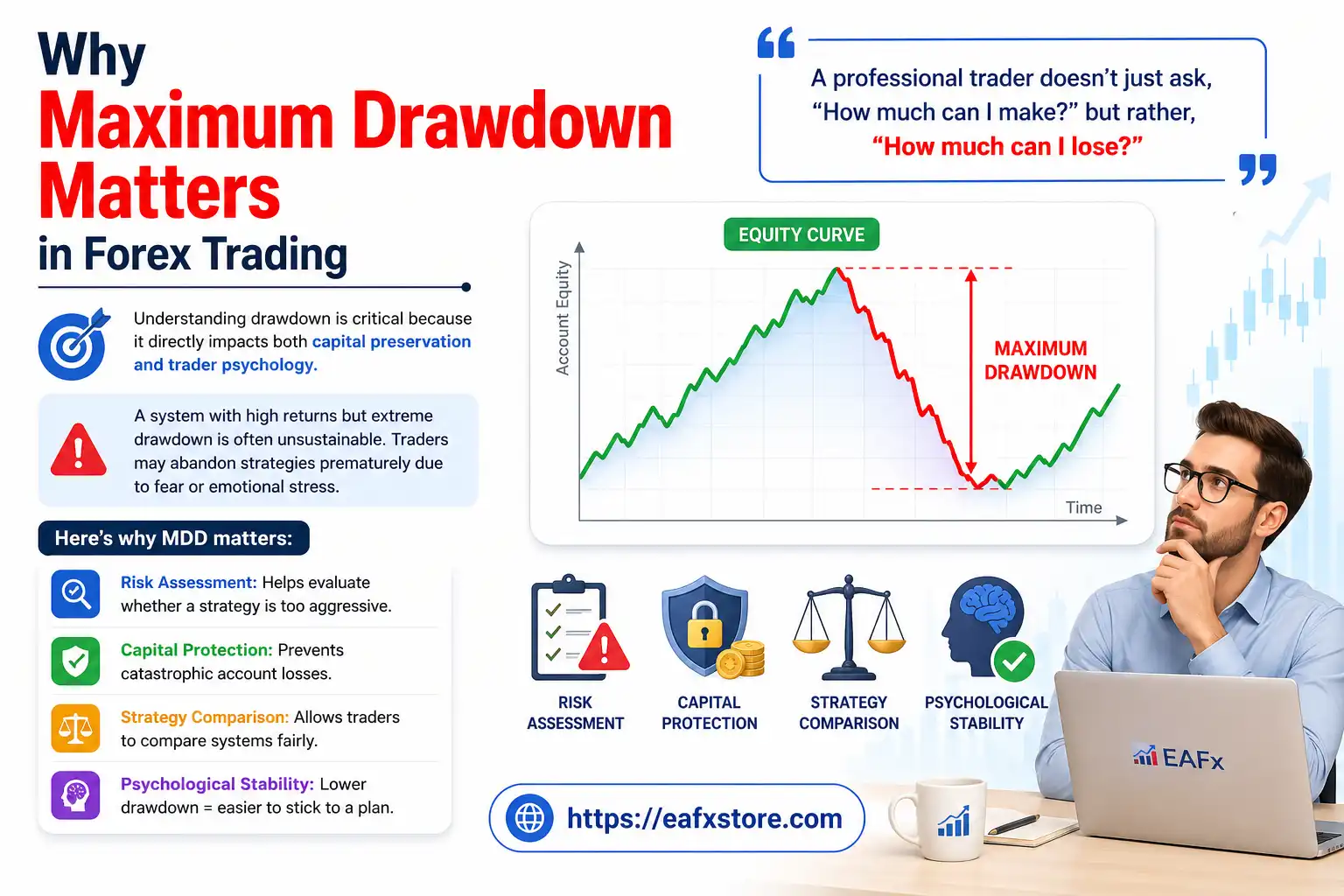
Understanding drawdown is critical because it directly impacts both capital preservation and trader psychology.
A system with high returns but extreme drawdown is often unsustainable. Traders may abandon strategies prematurely due to fear or emotional stress.
Here’s why MDD matters:
- Risk Assessment: Helps evaluate whether a strategy is too aggressive.
- Capital Protection: Prevents catastrophic account losses.
- Strategy Comparison: Allows traders to compare systems fairly.
- Psychological Stability: Lower drawdown = easier to stick to a plan.
A professional trader doesn’t just ask, “How much can I make?” but rather, “How much can I lose?”
Maximum Drawdown vs Other Risk Metrics
| Metric | Definition | Purpose |
|---|---|---|
| Maximum Drawdown | Largest drop from peak to trough | Measures worst-case loss |
| Equity Drawdown | Current decline from peak | Tracks ongoing risk |
| Relative Drawdown | Percentage-based drawdown | Standardizes comparison |
| Absolute Drawdown | Loss from initial deposit | Measures initial risk exposure |
Each metric provides a different perspective, but Maximum Drawdown remains the most widely used benchmark for evaluating trading systems.
What is a “Good” Maximum Drawdown?
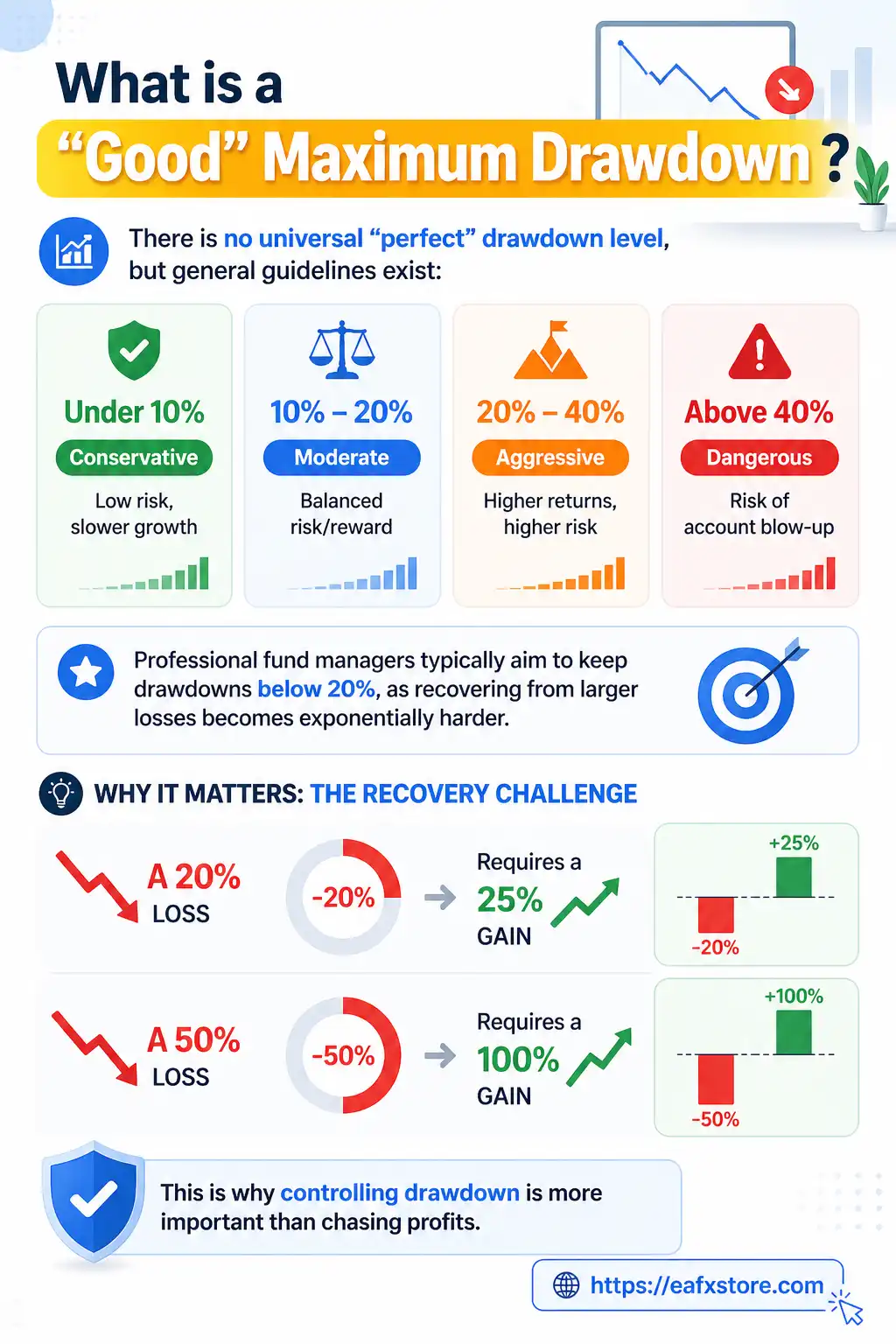
There is no universal “perfect” drawdown level, but general guidelines exist:
- Under 10% → Conservative (low risk, slower growth)
- 10% – 20% → Moderate (balanced risk/reward)
- 20% – 40% → Aggressive (higher returns, higher risk)
- Above 40% → Dangerous (risk of account blow-up)
Professional fund managers typically aim to keep drawdowns below 20%, as recovering from larger losses becomes exponentially harder.
For instance:
- A 20% loss requires a 25% gain to recover
- A 50% loss requires a 100% gain
This is why controlling drawdown is more important than chasing profits.
How Forex Traders Manage Maximum Drawdown
- Position Sizing: Traders limit risk per trade, typically risking 1–2% of capital. Smaller position sizes reduce the impact of losing streaks.
- Stop Loss Discipline: Every trade should have a predefined exit point. Stop losses prevent small losses from turning into large ones.
- Diversification: Trading multiple currency pairs or strategies reduces dependency on a single market condition.
- Risk-Reward Ratio: A favorable ratio (e.g., 1:2 or higher) ensures that profits outweigh losses over time.
- Strategy Optimization: Backtesting and forward testing help identify worst-case scenarios before risking real capital.
Maximum Drawdown in Automated Trading
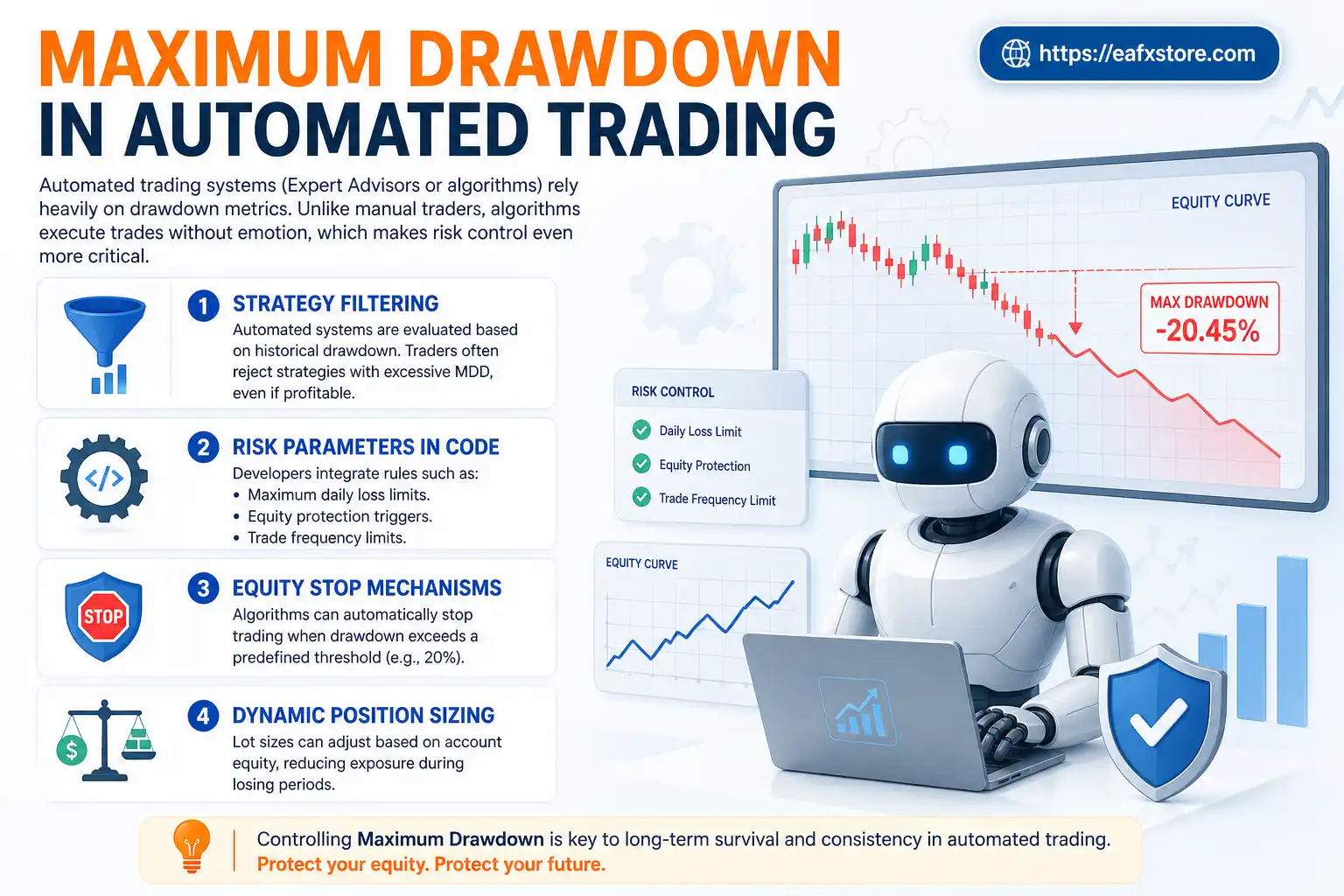
Automated trading systems (Expert Advisors or algorithms) rely heavily on drawdown metrics. Unlike manual traders, algorithms execute trades without emotion, which makes risk control even more critical.
Key Applications in Automation:
🎯 Strategy Filtering
Automated systems are evaluated based on historical drawdown. Traders often reject strategies with excessive MDD, even if profitable.
🎯 Risk Parameters in Code
Developers integrate rules such as:
- Maximum daily loss limits.
- Equity protection triggers.
- Trade frequency limits.
🎯 Equity Stop Mechanisms
Algorithms can automatically stop trading when drawdown exceeds a predefined threshold (e.g., 20%).
🎯 Dynamic Position Sizing
Lot sizes can adjust based on account equity, reducing exposure during losing periods.
Example: Drawdown Control in an Automated System
| Scenario | Without Control | With Control |
|---|---|---|
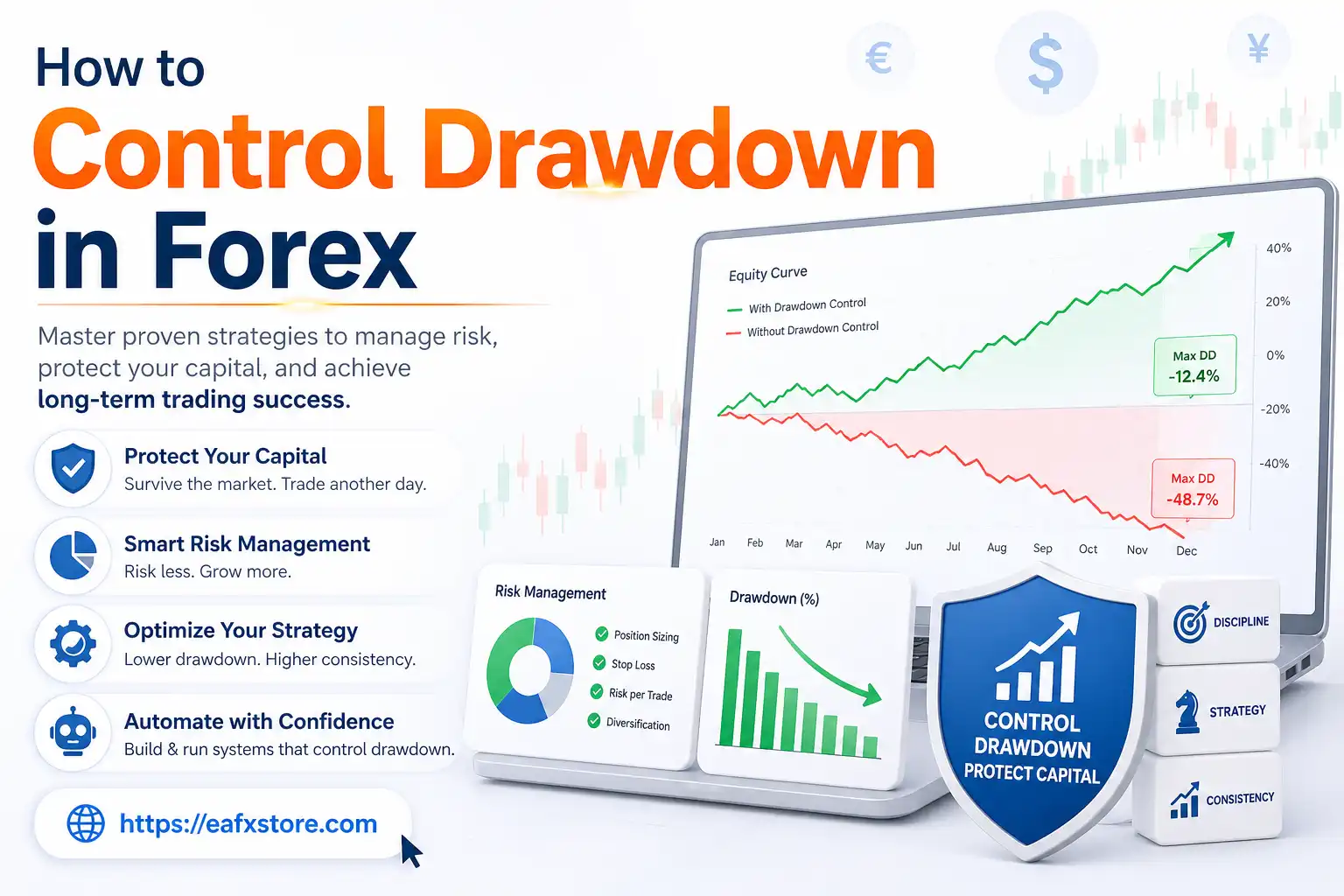
| Losing Streak | Account drops 40% | Limited to 15% |
| Trade Size | Fixed | Adaptive |
| Risk Per Trade | 5% | 1% |
| System Behavior | Continues trading | Pauses trading |
This comparison highlights how automation combined with risk rules significantly improves account stability.
Common Mistakes Traders Make
Even experienced traders often underestimate drawdown risks. Here are common pitfalls:
- Ignoring Drawdown in Backtests
Focusing only on profit metrics leads to unrealistic expectations. - Overleveraging
High leverage amplifies drawdown dramatically. - No Risk Limits in Automation
Many bots fail because they lack proper risk constraints. - Chasing Recovery
Increasing lot size after losses often worsens drawdown.
Best Practices to Reduce Maximum Drawdown
To manage drawdown effectively, traders should adopt a structured approach:
- Use strict risk management rules.
- Monitor equity curves regularly.
- Combine multiple strategies.
- Apply drawdown limits in automation systems.
- Continuously optimize and test strategies.
Consistency matters more than aggressive growth. A stable system with controlled drawdown will outperform risky strategies over time.
The Psychological Side of Drawdown
Drawdown is not just a technical metric—it has a strong emotional impact.
Large losses can lead to:
- Fear and hesitation.
- Overtrading.
- Strategy abandonment.
By maintaining a controlled drawdown level, traders can stay disciplined and stick to their trading plan.
Conclusion
Maximum Drawdown is one of the most important metrics in Forex trading. It provides a clear picture of risk exposure and helps traders make informed decisions.
Successful traders—especially those using automated systems—focus on minimizing drawdown rather than maximizing profits. By applying proper risk management techniques, integrating safeguards into algorithms, and maintaining discipline, traders can build sustainable and resilient trading strategies.