
If you’re serious about Forex trading, understanding risk is just as important as chasing profits. One of the most essential risk metrics every trader should know is Maximum Drawdown (MDD). Whether you’re trading manually or using automated systems, this concept helps you measure how much your account can decline before recovering.
In this beginner-friendly guide, you’ll learn what Maximum Drawdown is, how it works, why it matters, and how to apply it—especially in automated trading strategies.
What is Maximum Drawdown?
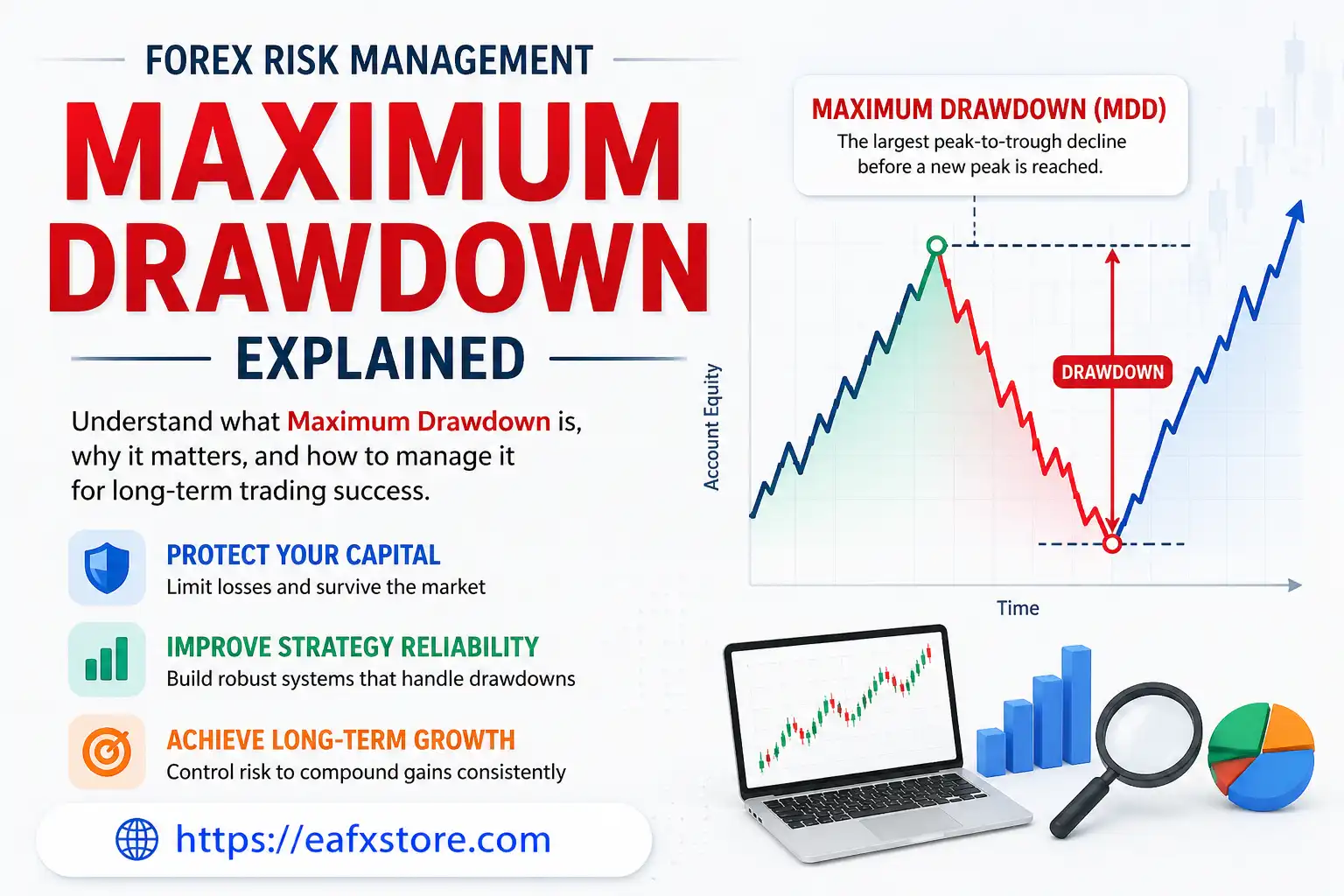
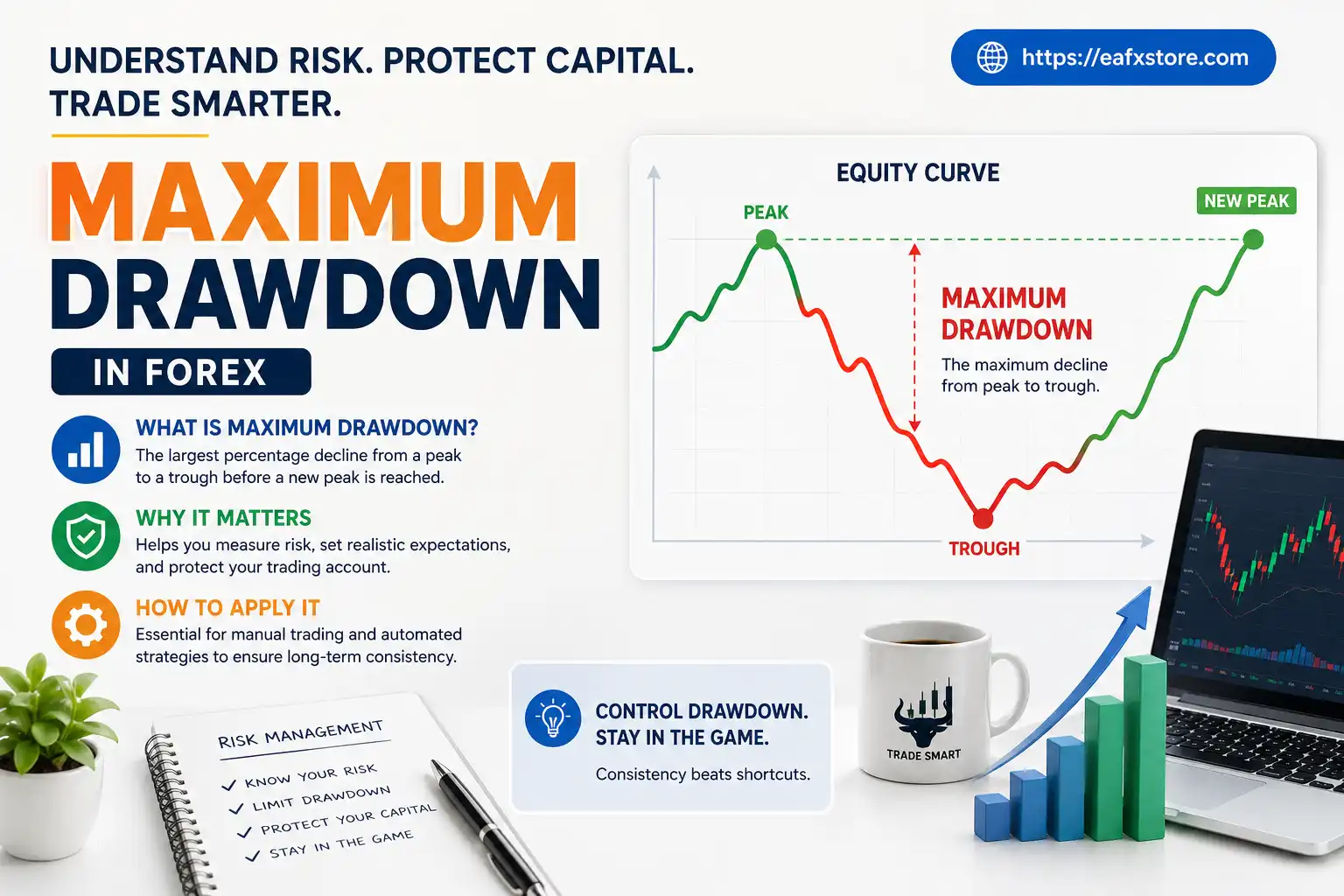
Maximum Drawdown (MDD) is the largest percentage drop in your trading account from a peak to a trough before a new peak is reached. In simple terms, it shows the worst-case loss your account has experienced over a period of time.
For example, if your account grows from $1,000 to $1,500 and then drops to $1,200 before rising again, the drawdown is calculated from $1,500 to $1,200.
👉 This metric focuses on loss severity, not just frequency.
Why Maximum Drawdown Matters in Forex Trading
Maximum Drawdown is not just a number—it reflects your risk exposure and psychological pressure.
Here’s why it matters:
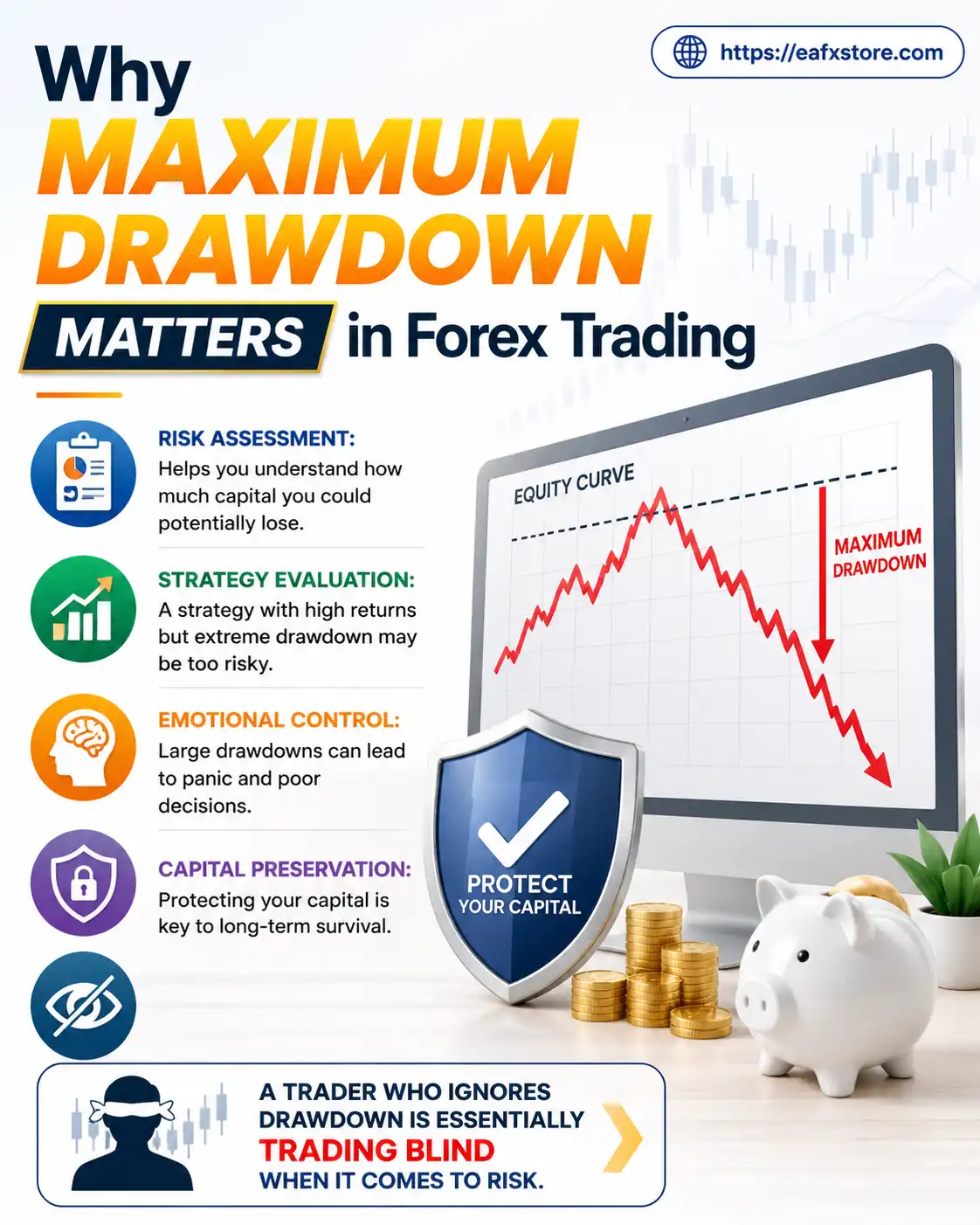
- Risk Assessment: Helps you understand how much capital you could potentially lose.
- Strategy Evaluation: A strategy with high returns but extreme drawdown may be too risky.
- Emotional Control: Large drawdowns can lead to panic and poor decisions.
- Capital Preservation: Protecting your capital is key to long-term survival.
A trader who ignores drawdown is essentially trading blind when it comes to risk.
How to Calculate Maximum Drawdown
The formula for Maximum Drawdown is:
MDD = (Peak Value – Lowest Value) / Peak Value × 100%
Example Calculation:
| Stage | Account Value ($) |
|---|---|
| Initial Balance | 1,000 |
| Peak | 1,500 |
| Lowest Point | 1,200 |
MDD = (1500 – 1200) / 1500 × 100 = 20%
So, the maximum drawdown is 20%.
👉 This means your account lost 20% from its highest value before recovering.
Maximum Drawdown vs Other Risk Metrics
Understanding how MDD compares with other metrics helps you build a more complete trading strategy.
| Metric | What It Measures |
|---|---|
| Maximum Drawdown | Largest loss from peak to trough |
| Win Rate | Percentage of winning trades |
| Risk-Reward Ratio | Profit vs loss per trade |
| Sharpe Ratio | Risk-adjusted returns |
👉 Maximum Drawdown focuses on worst-case scenarios, making it crucial for risk control.
What is a Good Maximum Drawdown?
There is no universal “perfect” drawdown level, but here are general guidelines:
- Below 10% → Very conservative (low risk)
- 10% – 20% → Moderate (acceptable for many traders)
- 20% – 40% → Aggressive (higher risk strategies)
- Above 40% → Dangerous (high probability of account blow-up)
👉 Professional traders and funds often aim to keep drawdown under 20%.
How Maximum Drawdown Affects Trading Psychology
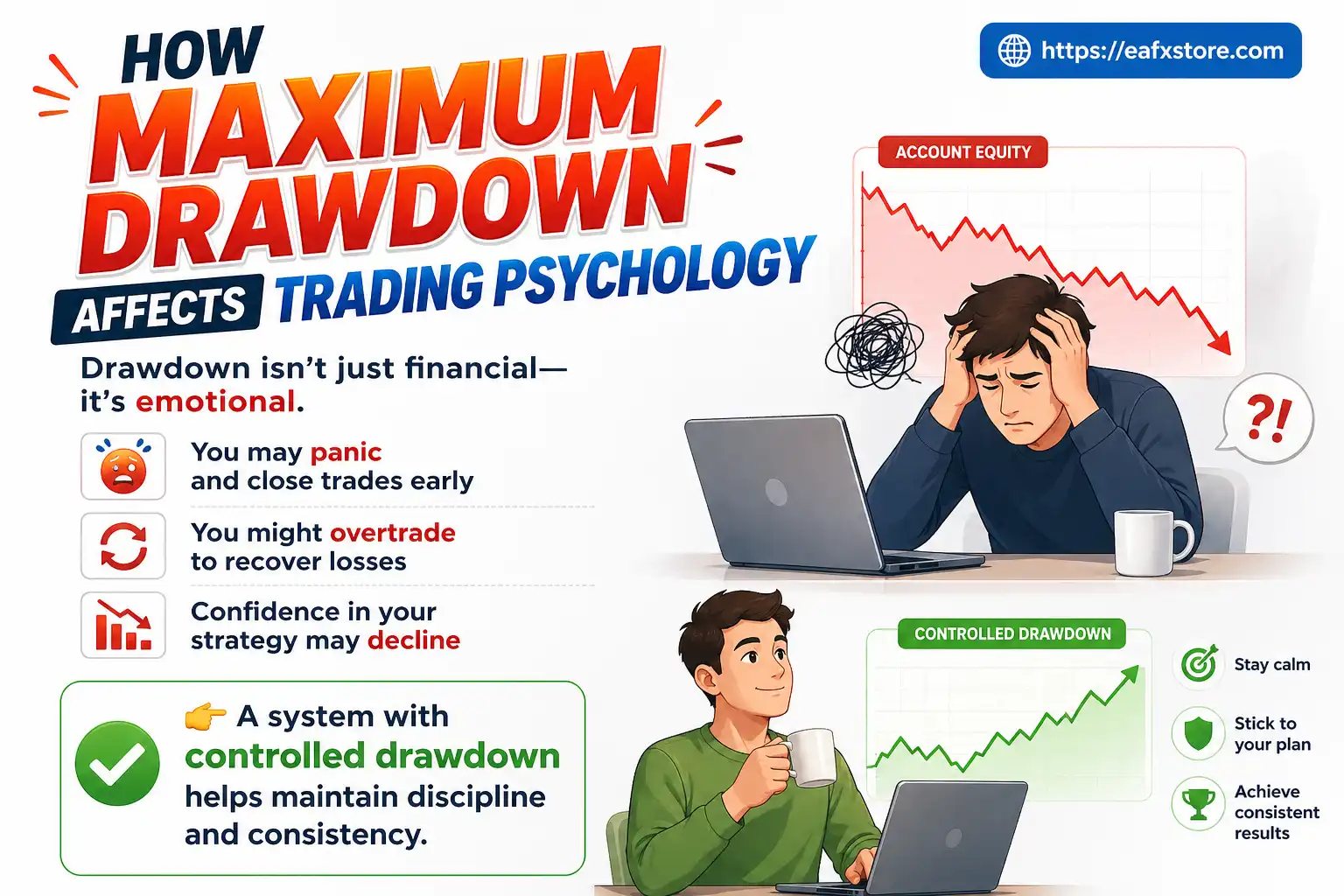
Drawdown isn’t just financial—it’s emotional.
When your account drops significantly:
- You may panic and close trades early.
- You might overtrade to recover losses.
- Confidence in your strategy may decline.
👉 A system with controlled drawdown helps maintain discipline and consistency.
How to Reduce Maximum Drawdown
Reducing drawdown is a key goal for every trader. Here are practical methods:
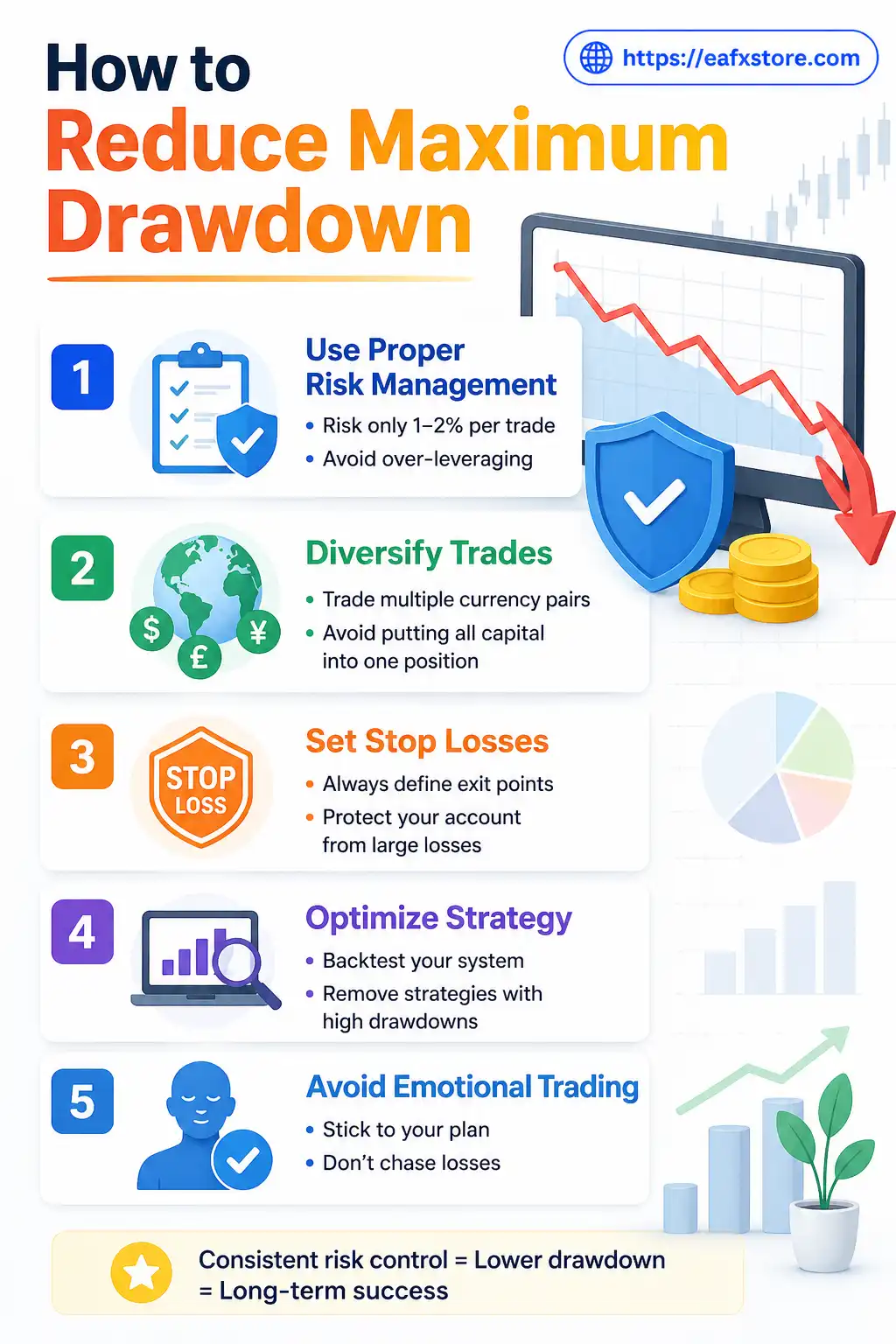
🎯 Use Proper Risk Management
- Risk only 1–2% per trade
- Avoid over-leveraging
🎯 Diversify Trades
- Trade multiple currency pairs
- Avoid putting all capital into one position
🎯 Set Stop Losses
- Always define exit points
- Protect your account from large losses
🎯 Optimize Strategy
- Backtest your system
- Remove strategies with high drawdowns
🎯 Avoid Emotional Trading
- Stick to your plan
- Don’t chase losses
Maximum Drawdown in Automated Trading
Maximum Drawdown becomes even more important when using automated trading systems (Expert Advisors – EAs).
Why It Matters in Automation:
Automated systems can execute trades 24/7 without emotions—but they can also accumulate losses quickly if not properly controlled.
👉 MDD acts as a safety metric to evaluate whether an EA is reliable.
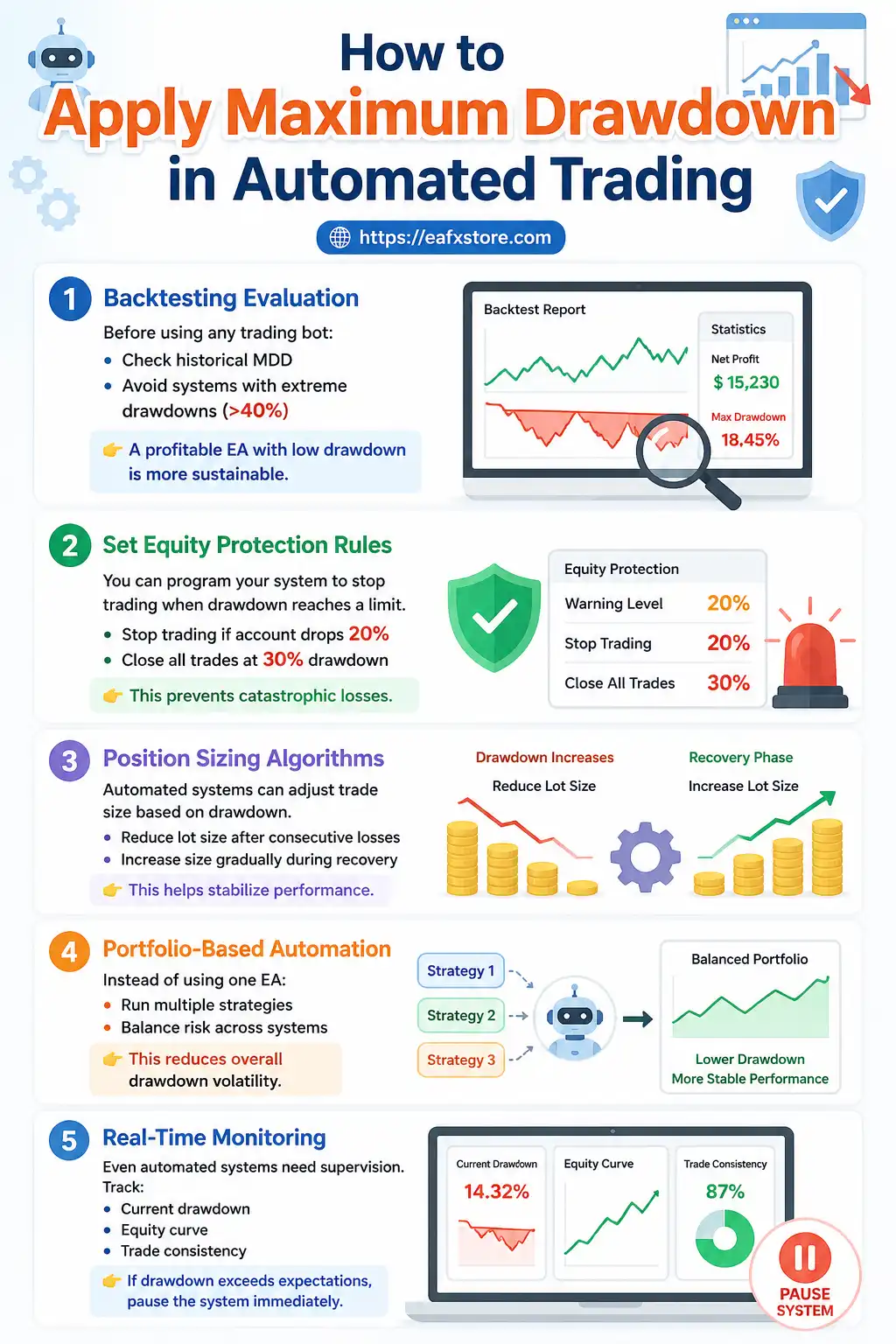
How to Apply Maximum Drawdown in Automated Trading
🎯 Backtesting Evaluation
Before using any trading bot:
- Check historical MDD
- Avoid systems with extreme drawdowns (>40%)
👉 A profitable EA with low drawdown is more sustainable.
🎯 Set Equity Protection Rules
You can program your system to stop trading when drawdown reaches a limit.
Example:
- Stop trading if account drops 20%
- Close all trades at 30% drawdown
👉 This prevents catastrophic losses.
🎯 Position Sizing Algorithms
Automated systems can adjust trade size based on drawdown.
Example:
- Reduce lot size after consecutive losses
- Increase size gradually during recovery
👉 This helps stabilize performance.
🎯 Portfolio-Based Automation
Instead of using one EA:
- Run multiple strategies
- Balance risk across systems
👉 This reduces overall drawdown volatility.
🎯 Real-Time Monitoring
Even automated systems need supervision.
Track:
- Current drawdown
- Equity curve
- Trade consistency
👉 If drawdown exceeds expectations, pause the system immediately.
Example: Comparing Two Trading Systems
| Metric | System A | System B |
|---|---|---|
| Total Profit | 50% | 35% |
| Maximum Drawdown | 45% | 15% |
| Risk Level | High | Moderate |
👉 Even though System A has higher profit, System B is safer and more sustainable due to lower drawdown.
Common Mistakes Beginners Make
- Ignoring drawdown and focusing only on profit.
- Using high leverage to recover losses.
- Trusting EAs without checking MDD.
- Not setting Stop-loss (SL) or equity limits.
👉 These mistakes often lead to account blow-ups.
Conclusion
Maximum Drawdown is one of the most important metrics in Forex trading. It tells you how much risk your strategy carries and whether it’s sustainable in the long run.
For beginners, the goal isn’t just to make profits—it’s to protect your capital and survive market fluctuations.
When applied correctly—especially in automated trading—Maximum Drawdown helps you:
- Control risk.
- Evaluate strategies.
- Build consistent performance.
👉 Remember: A strategy with lower drawdown and steady growth will outperform high-risk systems over time.