What Are Trailing Stops? Beginner’s Guide to Smarter Trading


In the fast-paced world of trading, managing risk is just as important as finding profitable opportunities. Many beginner traders focus heavily on when to enter a trade but often overlook one crucial aspect: when to exit. This is where trailing stops come into play.
A trailing stop is a powerful risk management tool that helps traders protect profits while allowing their trades to continue growing. Whether you’re trading stocks, forex, or cryptocurrencies, understanding trailing stops can significantly improve your trading strategy.
In this beginner-friendly guide, we’ll explore what trailing stops are, how they work, their advantages and disadvantages, and how to use them effectively in real trading scenarios.
What is a Trailing Stops?
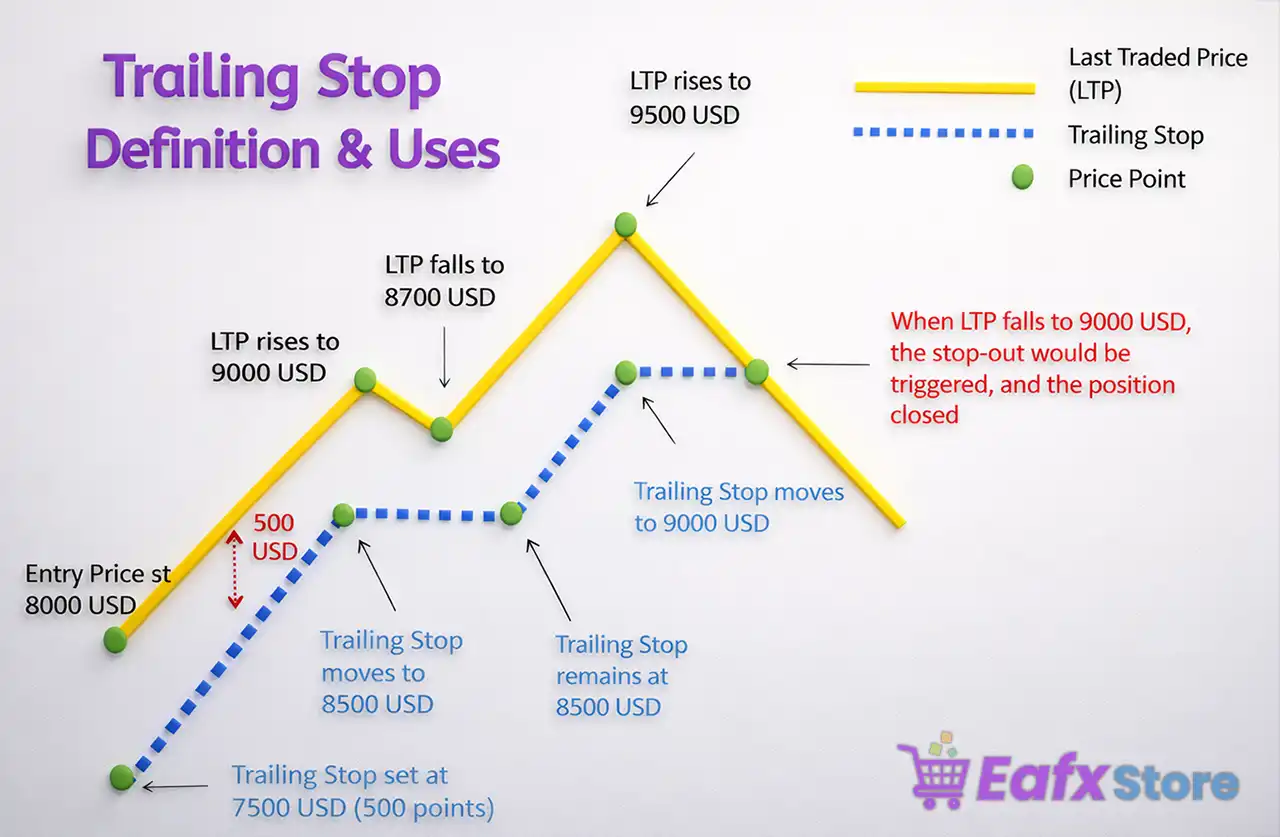
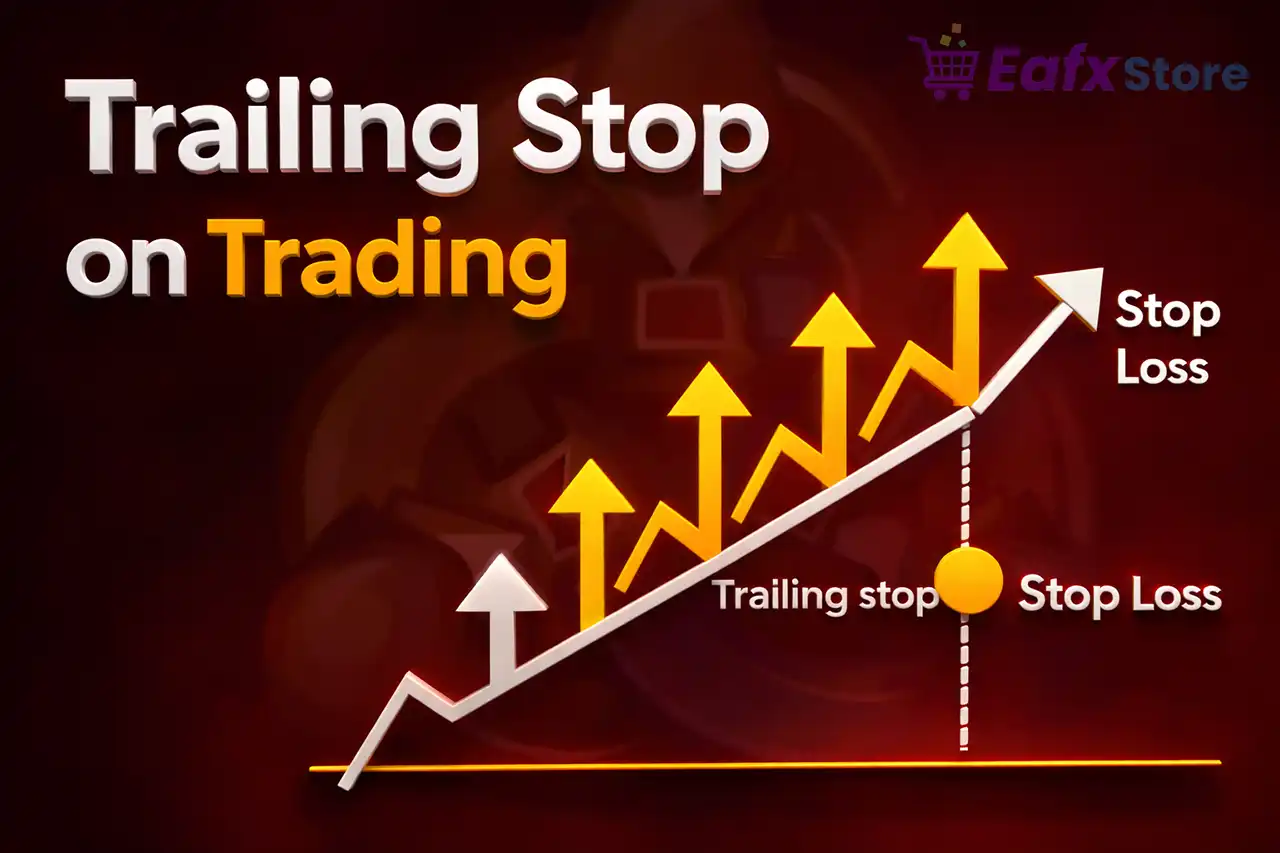
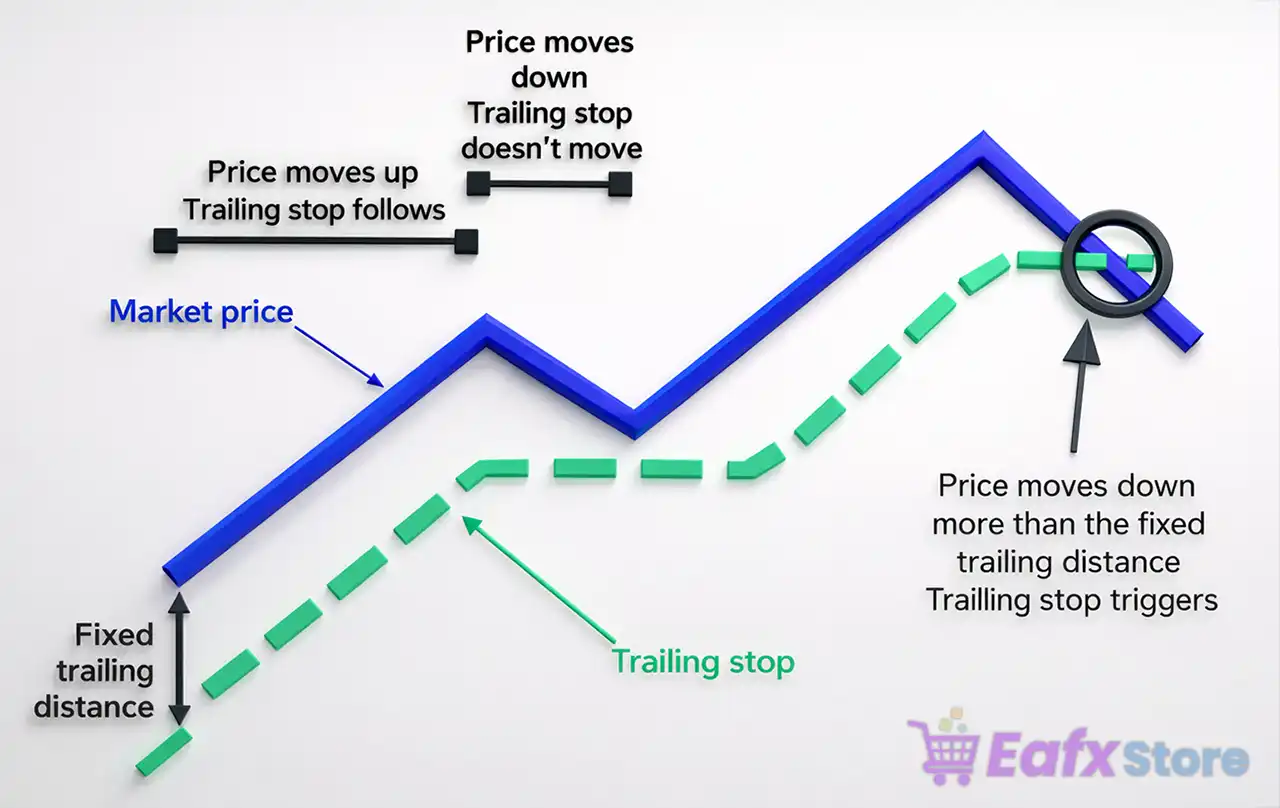
A trailing stop is a type of Stop Loss (SL) order that automatically adjusts as the price of an asset moves in your favor. Unlike a fixed stop-loss, which stays at a specific price level, a trailing stop “trails” the market price by a set distance.
Key Concept:
- If the price moves in your favor, the stop moves with it.
- If the price moves against you, the stop stays in place.
This allows traders to lock in profits without manually adjusting their stop-loss levels.
How Trailing Stops Work
Let’s break it down with a simple example:
Example (Buy Trade):
- You buy a stock at $100
- You set a trailing stop at $10 below the current price
Scenario 1: Price Goes Up
- Price rises to $120
- Your trailing stop moves to $110
Scenario 2: Price Drops
- Price falls from $120 to $110
- Your trade automatically closes at $110
👉 Result: You secure a $10 profit per share
Example (Sell Trade):
- You short a stock at $100
- Set a trailing stop at $10 above price
- Price drops to $80 → trailing stop moves to $90
- Price rises back to $90 → trade closes
👉 Result: You gain $10 per share
Types of Trailing Stops
There are different ways to set trailing stops depending on your trading style:
1. Fixed Dollar Trailing Stop
- Set a fixed amount (e.g., $5 or $10)
- Simple and easy for beginners
2. Percentage-Based Trailing Stop
- Moves based on a percentage (e.g., 5% or 10%)
- Adapts better to volatile markets
3. Indicator-Based Trailing Stop
- Uses technical indicators such as:
- Moving Averages (MA)
- Average True Range (ATR)
- Parabolic SAR
👉 More advanced but often more effective in dynamic markets
Advantages of Using Trailing Stops
1. Locks in Profits Automatically
You don’t need to constantly monitor your trades. The trailing stop ensures that profits are protected as the market moves in your favor.
2. Removes Emotional Trading
Emotions like fear and greed often lead to poor decisions. Trailing stops help enforce discipline.
3. Maximizes Winning Trades
Instead of exiting too early, trailing stops allow trades to run as long as the trend continues.
4. Flexible Risk Management
You can customize trailing stops based on:
- Volatility
- Timeframe
- Trading strategy
Disadvantages of Trailing Stops
While powerful, trailing stops are not perfect:
1. Can Be Triggered by Market Noise
Short-term price fluctuations may hit your stop even if the trend is still intact.
2. Not Ideal for Highly Volatile Assets
In markets like crypto, large swings can prematurely close trades.
3. Requires Proper Calibration
Setting the stop too tight or too loose can reduce effectiveness.
How to Set the Right Trailing Stop
Choosing the correct trailing stop distance is crucial.
Factors to Consider:
1. Market Volatility
- High volatility → wider trailing stop
- Low volatility → tighter trailing stop
2. Trading Timeframe
- Day trading → smaller trailing stops
- Swing trading → larger trailing stops
3. Asset Type
- Stocks: moderate trailing stops
- Crypto: wider stops due to volatility
- Forex: depends on currency pair behavior
Trailing Stops vs Stop-Loss Orders
| Feature | Stop-Loss Order | Trailing Stop |
|---|---|---|
| Movement | Fixed | Moves with price |
| Profit Protection | Limited | Dynamic |
| Flexibility | Low | High |
| Automation | Basic | Advanced |
👉 Conclusion: Trailing stops are more dynamic and better suited for capturing trends.
Best Strategies for Using Trailing Stops
1. Trend Following Strategy
Use trailing stops to ride strong trends:
- Enter during trend confirmation
- Let trailing stop secure profits
2. Breakout Trading
- Enter after breakout
- Use trailing stop to capture momentum
3. Swing Trading
- Set wider trailing stops
- Avoid being stopped out too early
Common Mistakes Beginners Make
1. Setting Stops Too Tight
This leads to premature exits and missed opportunities.
2. Ignoring Market Conditions
Using the same trailing stop in all conditions is ineffective.
3. Not Backtesting
Always test your trailing stop strategy before using real money.
4. Over-Reliance on Automation
Trailing stops are helpful, but they should be part of a broader strategy.
Practical Tips for Beginners
- Start with percentage-based trailing stops (e.g., 5–10%)
- Adjust based on asset volatility
- Combine with technical analysis
- Use demo accounts to practice
- Always have a clear trading plan
When Should You Use Trailing Stops?
Trailing stops are most effective in:
- Trending markets
- Momentum trading
- Long-term trades
Avoid using them in:
- Sideways markets
- Extremely volatile conditions (without adjustments)
Conclusion
Trailing stops are an essential tool for any trader looking to improve risk management and maximize profits. By automatically adjusting to price movements, they help you stay in winning trades longer while protecting your gains.
However, like any trading tool, they are not a one-size-fits-all solution. Success comes from understanding how to use them correctly, adapting to market conditions and integrating them into a well-rounded trading strategy.