
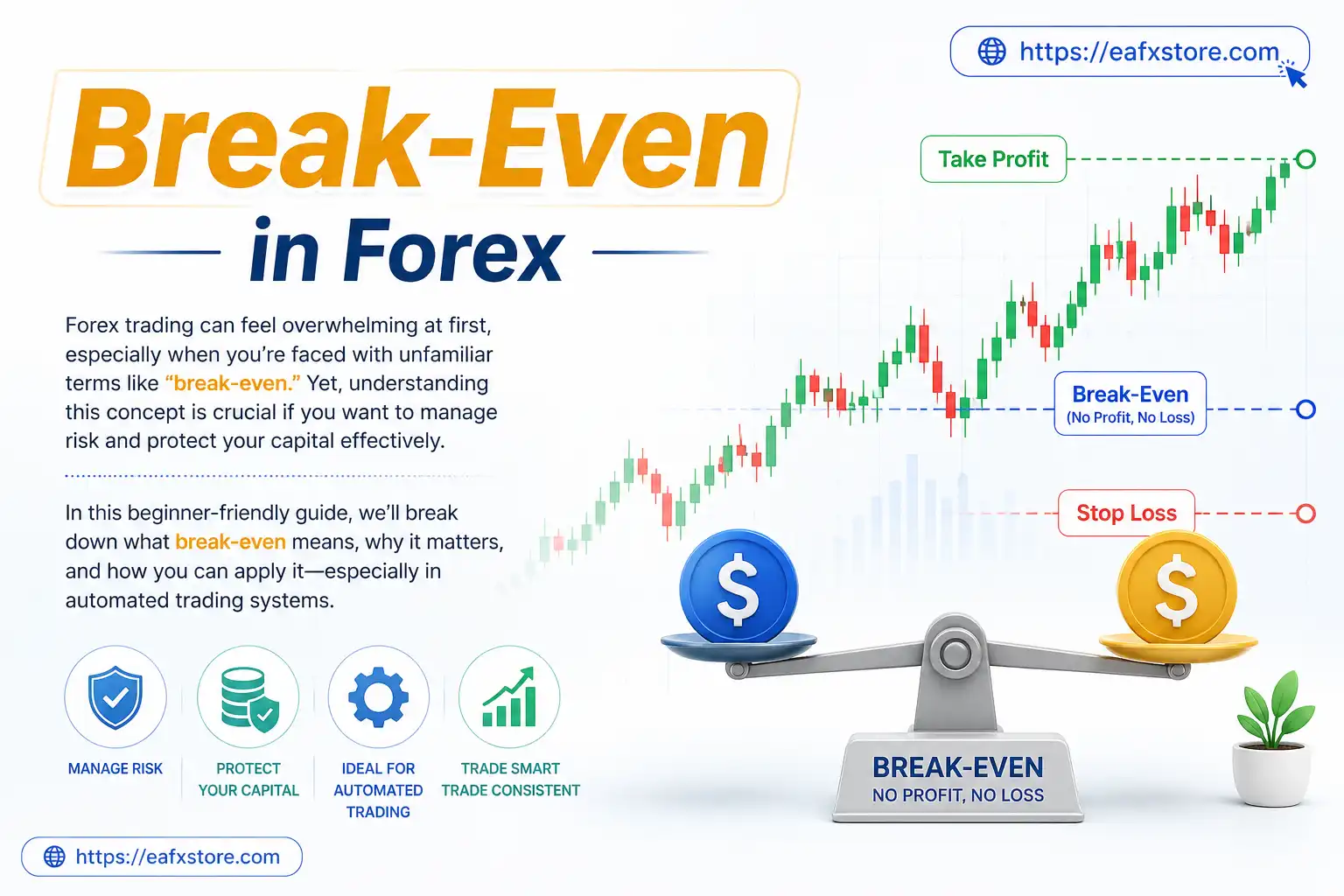
Forex trading can feel overwhelming at first, especially when you’re faced with unfamiliar terms like “break-even.” Yet, understanding this concept is crucial if you want to manage risk and protect your capital effectively. In this beginner-friendly guide, we’ll break down what break-even means, why it matters, and how you can apply it—especially in automated trading systems.
What is Break-Even in Forex Trading?
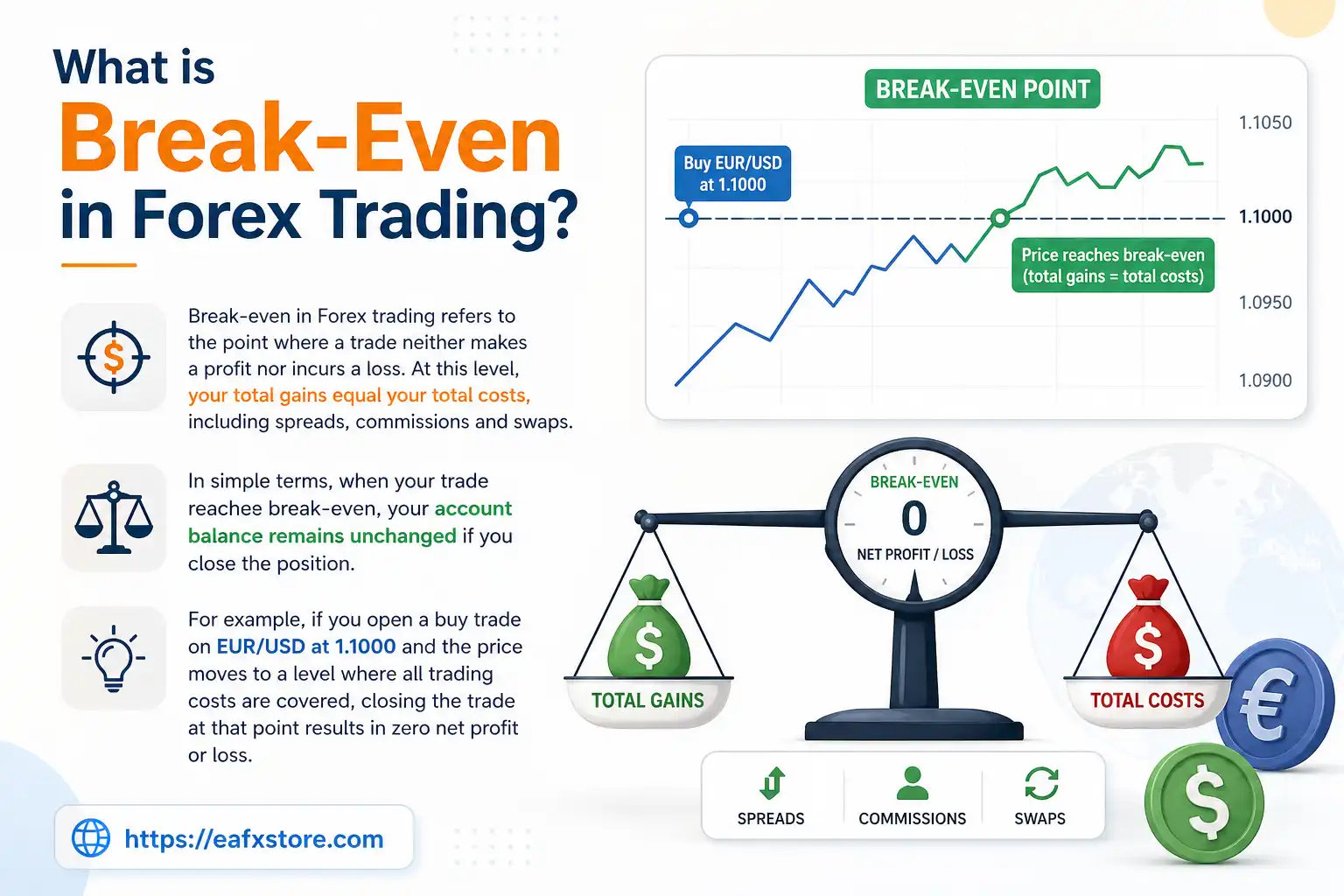
Break-even in Forex trading refers to the point where a trade neither makes a profit nor incurs a loss. At this level, your total gains equal your total costs, including spreads, commissions and swaps.
In simple terms, when your trade reaches break-even, your account balance remains unchanged if you close the position.
For example, if you open a buy trade on EUR/USD at 1.1000 and the price moves to a level where all trading costs are covered, closing the trade at that point results in zero net profit or loss.
Why is Break-Even Important?
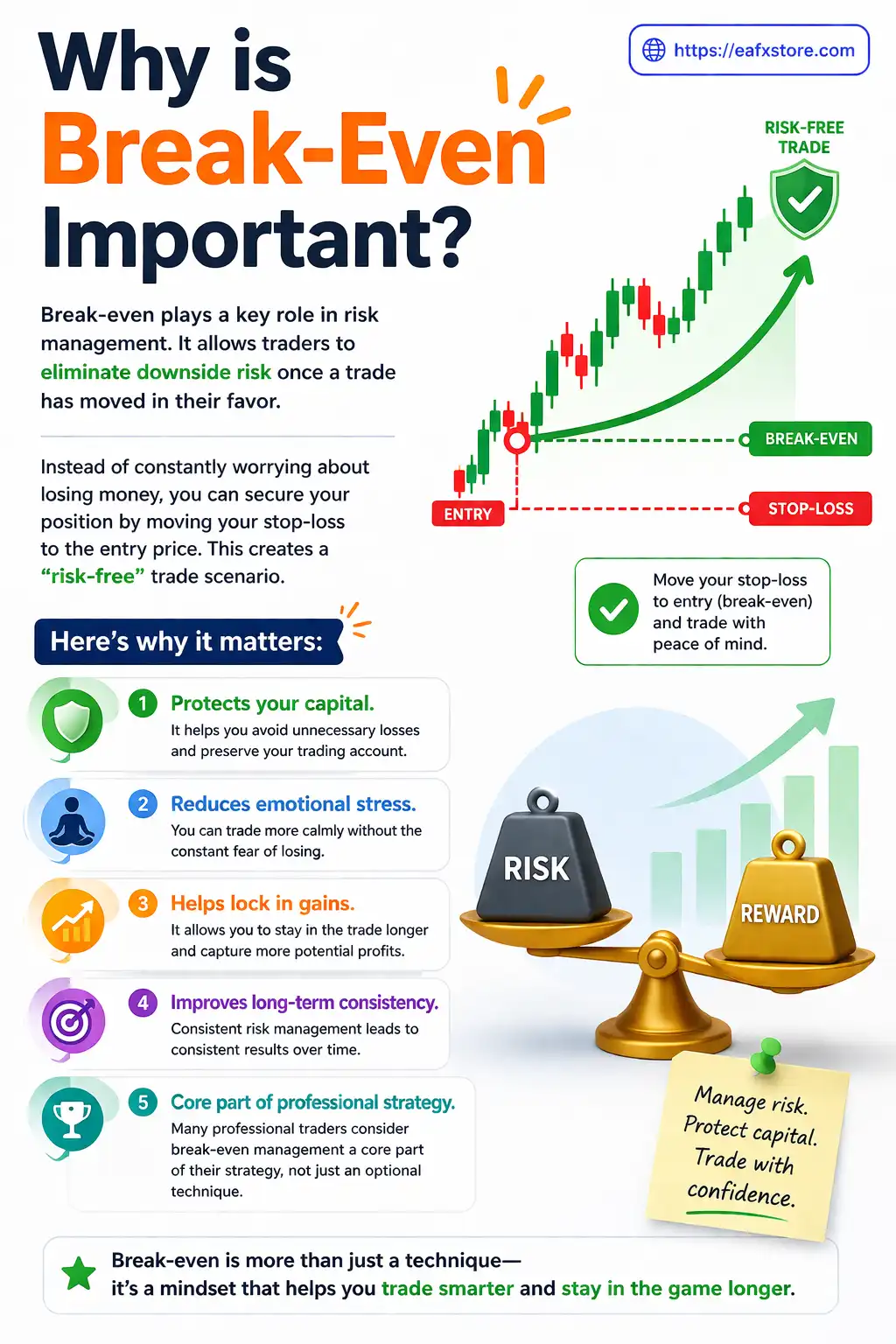
Break-even plays a key role in risk management. It allows traders to eliminate downside risk once a trade has moved in their favor.
Instead of constantly worrying about losing money, you can secure your position by moving your stop-loss to the entry price. This creates a “risk-free” trade scenario.
Here’s why it matters:
- Protects your capital.
- Reduces emotional stress.
- Helps lock in gains.
- Improves long-term consistency.
Many professional traders consider break-even management a core part of their strategy, not just an optional technique.
How Break-Even Works in Practice
Let’s look at a simple example to understand how break-even works in real trading.
| Trade Detail | Value |
|---|---|
| Entry Price | 1.1000 |
| Stop Loss | 1.0950 |
| Take Profit | 1.1100 |
| Break-Even Level | 1.1000 (+ costs) |
Imagine the price moves from 1.1000 to 1.1050. At this point, you can move your stop-loss from 1.0950 up to 1.1000 (your entry price).
Now:
- If price continues upward → you profit
- If price reverses → you exit at break-even
This simple adjustment removes the risk from your trade.
When Should You Move to Break-Even?
Moving to break-even too early can actually hurt your trading performance. It’s important to apply it at the right time.
Common approaches include:
🎯 After a Fixed Number of Pips
For example, move stop-loss to break-even after +20 pips.
🎯 At Key Support/Resistance Levels
Once price breaks a significant level, shifting to break-even becomes safer.
🎯 Risk-to-Reward Ratio Method
Many traders move to break-even after achieving a 1:1 risk-reward ratio.
Each method has its pros and cons, so it’s important to test what works best for your strategy.
Advantages and Disadvantages of Break-Even Strategy
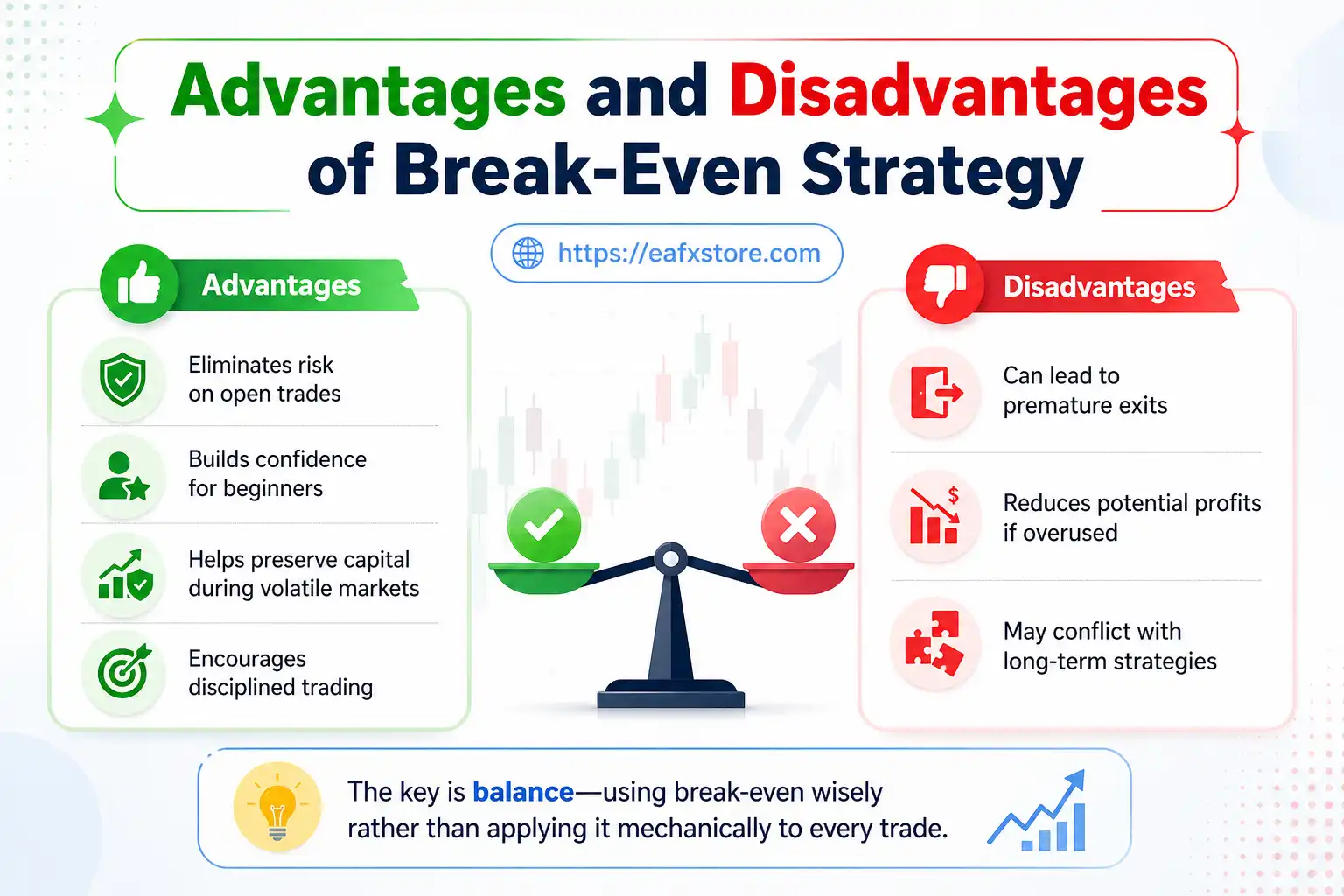
Like any trading technique, break-even has both benefits and drawbacks.
🔄 Advantages
- Eliminates risk on open trades
- Builds confidence for beginners
- Helps preserve capital during volatile markets
- Encourages disciplined trading
🔄 Disadvantages
- Can lead to premature exits
- Reduces potential profits if overused
- May conflict with long-term strategies
The key is balance—using break-even wisely rather than applying it mechanically to every trade.
Break-Even vs Stop-Loss: What’s the Difference?
Although they are closely related, break-even and stop-loss serve different purposes.
| Feature | Stop-Loss | Break-Even |
|---|---|---|
| Purpose | Limit losses | Eliminate risk |
| Placement | Below/above entry | At entry price |
| Timing | Set at trade entry | Adjusted during trade |
| Risk Level | Accepts controlled loss | No loss (after adjustment) |
A stop-loss is your initial protection, while break-even is a defensive upgrade once the trade is profitable.
Common Mistakes Beginners Make
Many new traders misunderstand or misuse break-even, which can negatively impact results.
Here are some common mistakes:
Moving to Break-Even Too Quickly
This often results in trades being closed before they have room to grow.
Ignoring Market Structure
Break-even should align with price action, not just arbitrary pip levels.
Overusing Break-Even
Not every trade needs to be risk-free. Some strategies require holding through pullbacks.
Forgetting Trading Costs
True break-even includes spreads and commissions, not just the entry price.
Avoiding these mistakes can significantly improve your trading consistency.
How to Apply Break-Even in Automated Trading
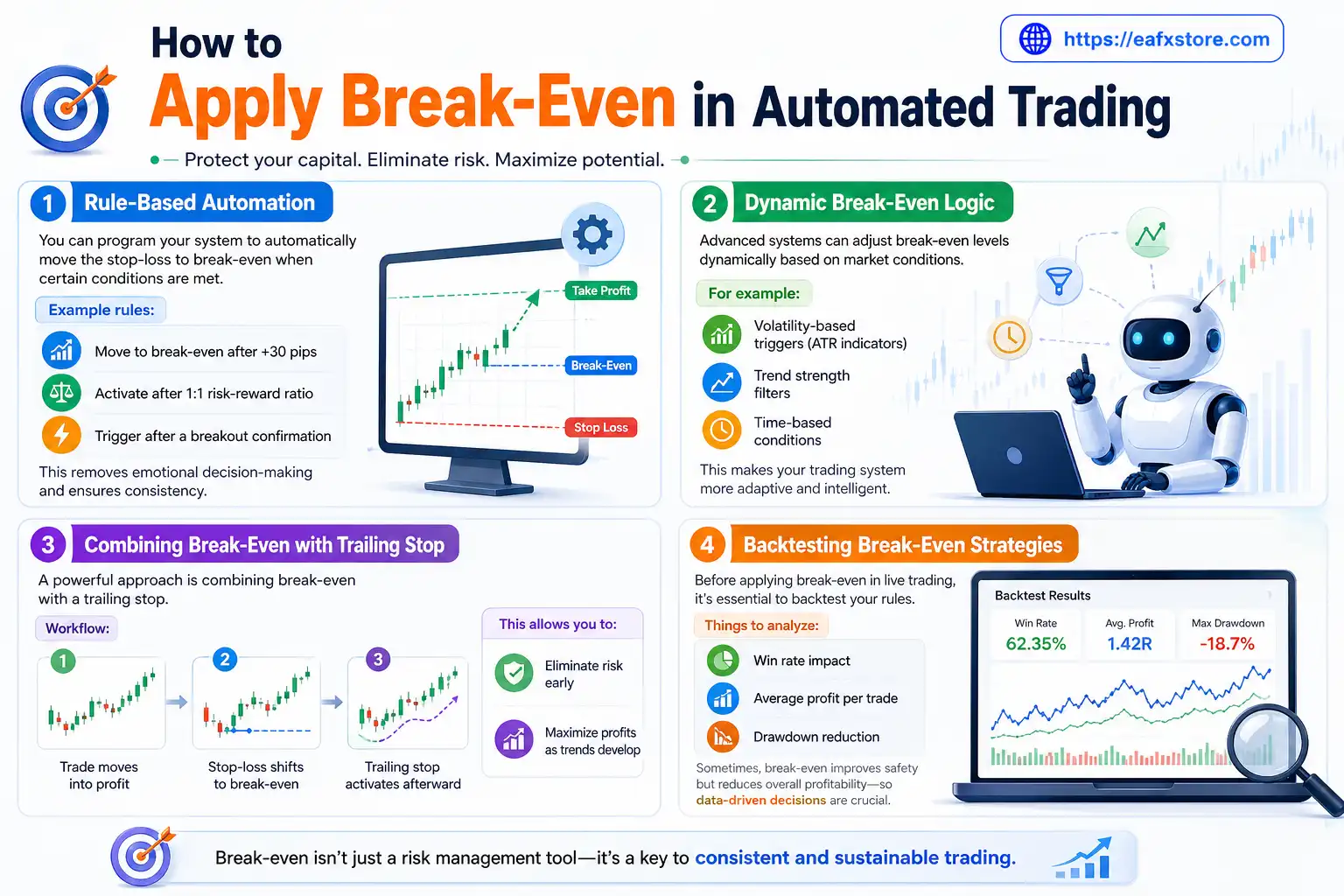
Break-even becomes even more powerful when integrated into automated trading systems such as Expert Advisors (EAs) or trading bots.
🔄 Rule-Based Automation
You can program your system to automatically move the stop-loss to break-even when certain conditions are met.
Example rules:
- Move to break-even after +30 pips
- Activate after 1:1 risk-reward ratio
- Trigger after a breakout confirmation
This removes emotional decision-making and ensures consistency.
🔄 Dynamic Break-Even Logic
Advanced systems can adjust break-even levels dynamically based on market conditions.
For example:
- Volatility-based triggers (ATR indicators)
- Trend strength filters
- Time-based conditions
This makes your trading system more adaptive and intelligent.
🔄 Combining Break-Even with Trailing Stop
A powerful approach is combining break-even with a trailing stop.
Workflow:
- Trade moves into profit
- Stop-loss shifts to break-even
- Trailing stop activates afterward
This allows you to:
- Eliminate risk early
- Maximize profits as trends develop
🔄 Backtesting Break-Even Strategies
Before applying break-even in live trading, it’s essential to backtest your rules.
Things to analyze:
- Win rate impact
- Average profit per trade
- Drawdown reduction
Sometimes, break-even improves safety but reduces overall profitability—so data-driven decisions are crucial.
Best Practices for Using Break-Even
To use break-even effectively, follow these simple guidelines:
- Don’t rush—wait for meaningful price movement.
- Align with your trading strategy.
- Consider market volatility.
- Always include trading costs.
- Test before applying live.
Consistency is more important than perfection in trading.
Conclusion
Break-even is a simple yet powerful concept in Forex trading. It allows you to protect your capital, reduce emotional stress and trade with greater confidence.
However, it’s not a magic solution. Used incorrectly, it can limit your profits and disrupt your strategy. The key is to apply it thoughtfully—especially when integrating it into automated systems.