
In the highly volatile forex market, protecting your capital is just as important as making profits. One of the most widely used risk management techniques among traders is the break-even order. It may sound simple, but when applied correctly, it can significantly help preserve profits and minimize risk. In this article, we’ll explore what break-even is, how it works, its pros and cons, and how to use it effectively in forex trading.
🔄 What is a Break-Even Order?
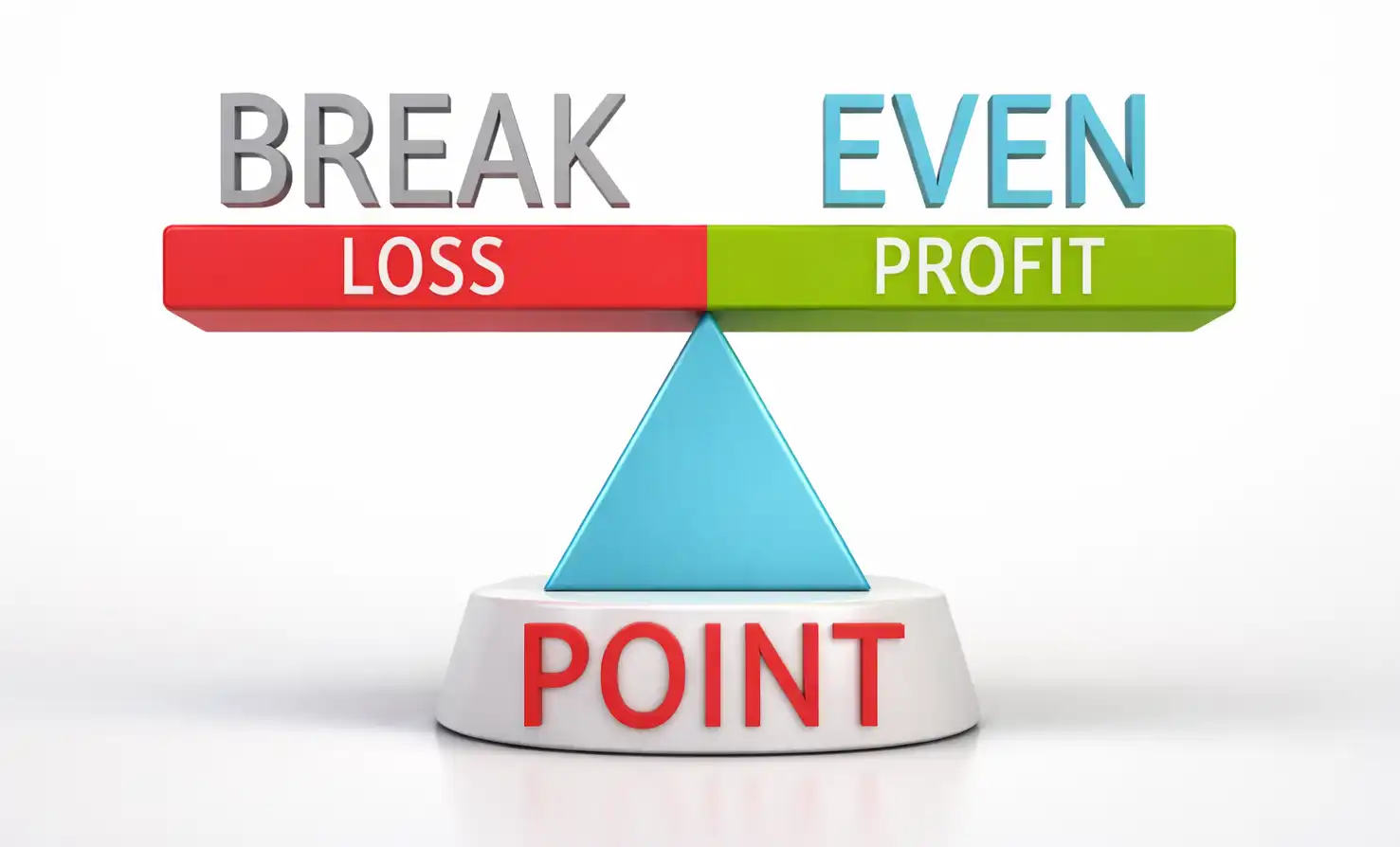
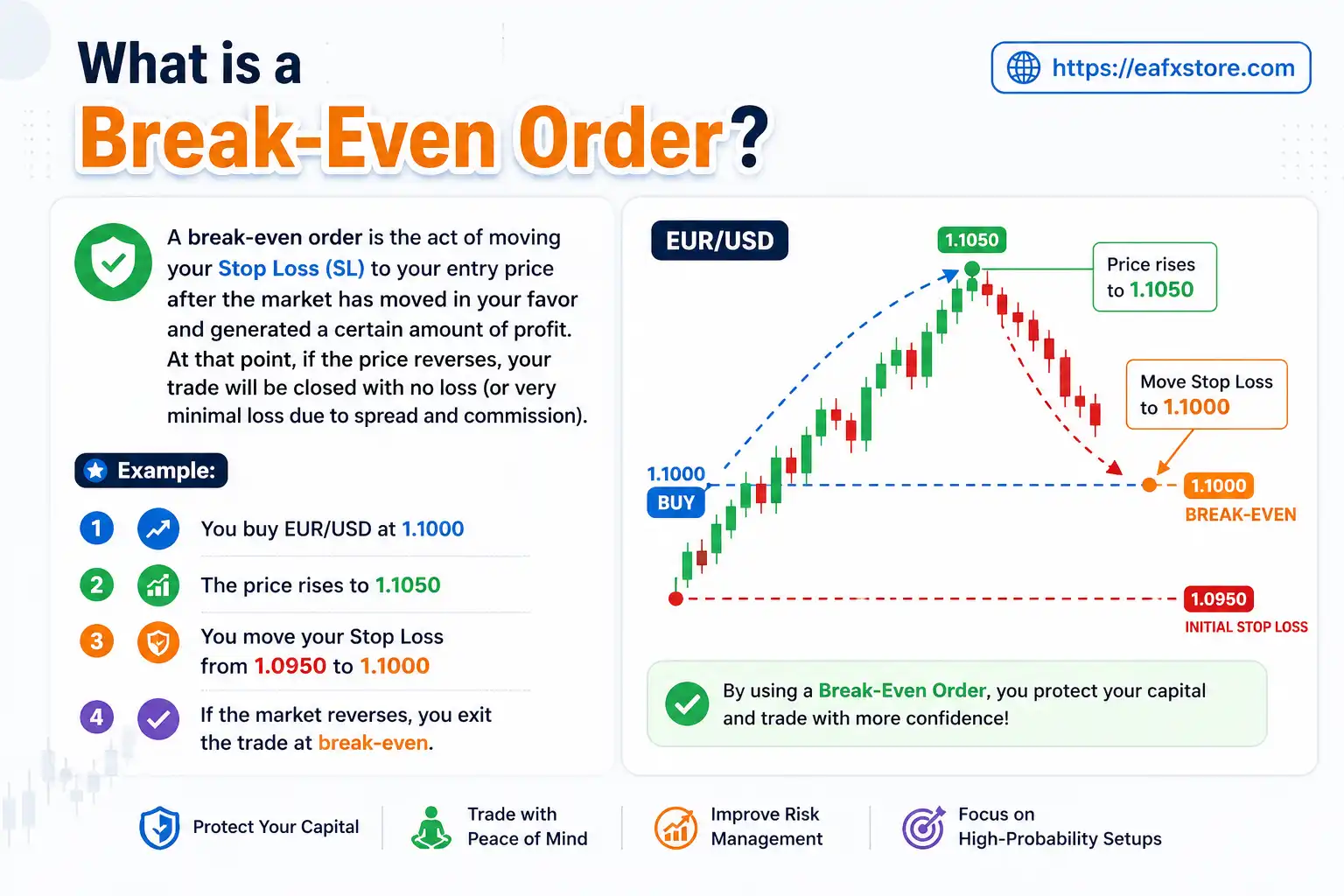
A break-even order is the act of moving your Stop Loss (SL) to your entry price after the market has moved in your favor and generated a certain amount of profit. At that point, if the price reverses, your trade will be closed with no loss (or very minimal loss due to spread and commission).
Example:
- You buy EUR/USD at 1.1000
- The price rises to 1.1050
- You move your Stop Loss from 1.0950 to 1.1000
If the market reverses, you exit the trade at break-even.
🔄 Why is Break-Even Important?
In forex trading, the hardest part is not entering a trade correctly, but keeping your profits. Break-even helps you:
- Protect your capital: Once the market moves in your favor, you eliminate the risk of loss.
- Reduce psychological pressure: Knowing that you cannot lose on the trade helps you stay calm and confident.
- Optimize long-term profitability: Even if some trades are closed at break-even, over time you can preserve winning trades and reduce losses.
🔄 When Should You Move Stop Loss to Break-Even?
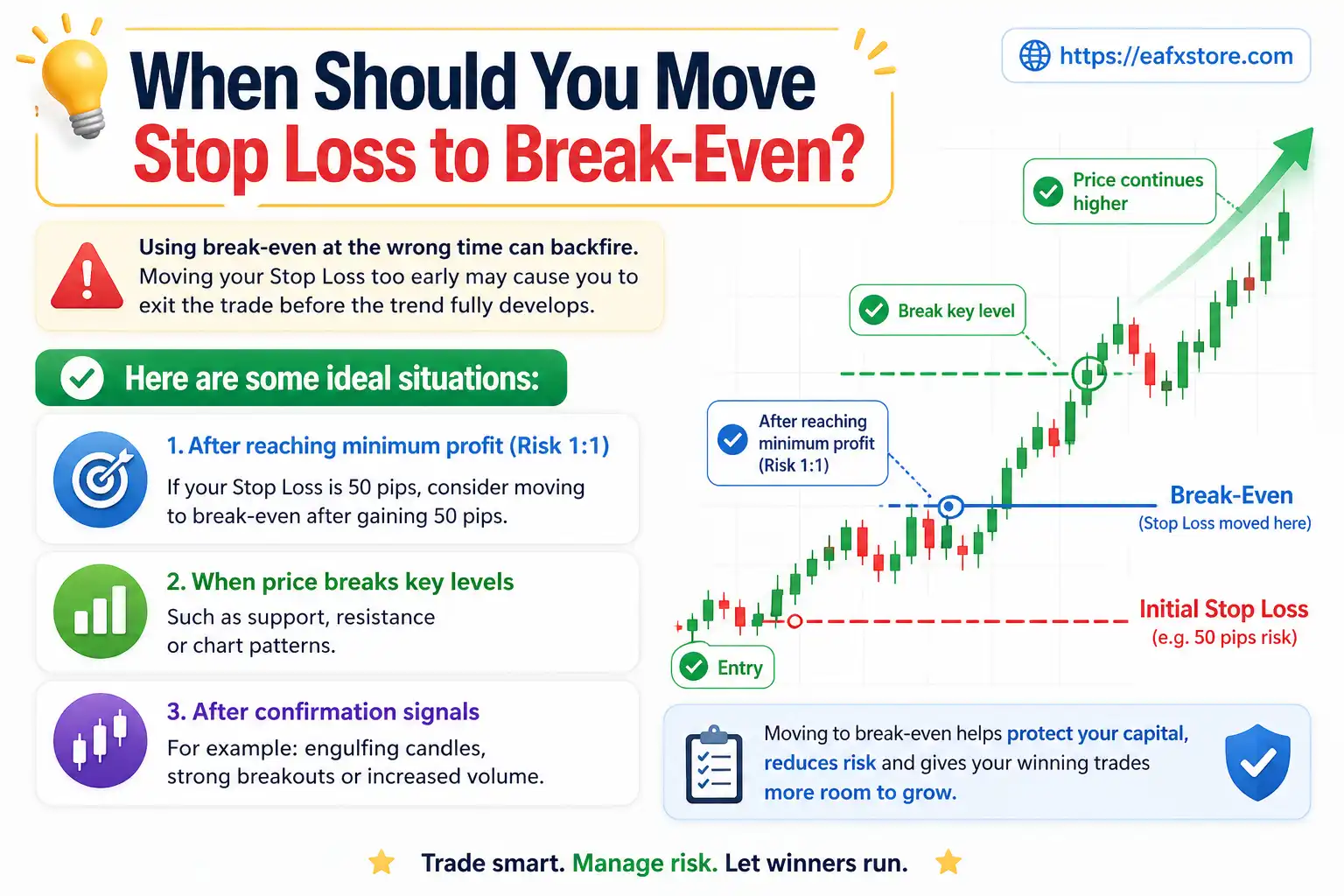
Using break-even at the wrong time can backfire. Moving your Stop Loss too early may cause you to exit the trade before the trend fully develops.
Here are some ideal situations:
- After reaching minimum profit (Risk 1:1): If your Stop Loss is 50 pips, consider moving to break-even after gaining 50 pips.
- When price breaks key levels: Such as support, resistance or chart patterns.
- After confirmation signals: For example: engulfing candles, strong breakouts or increased volume.
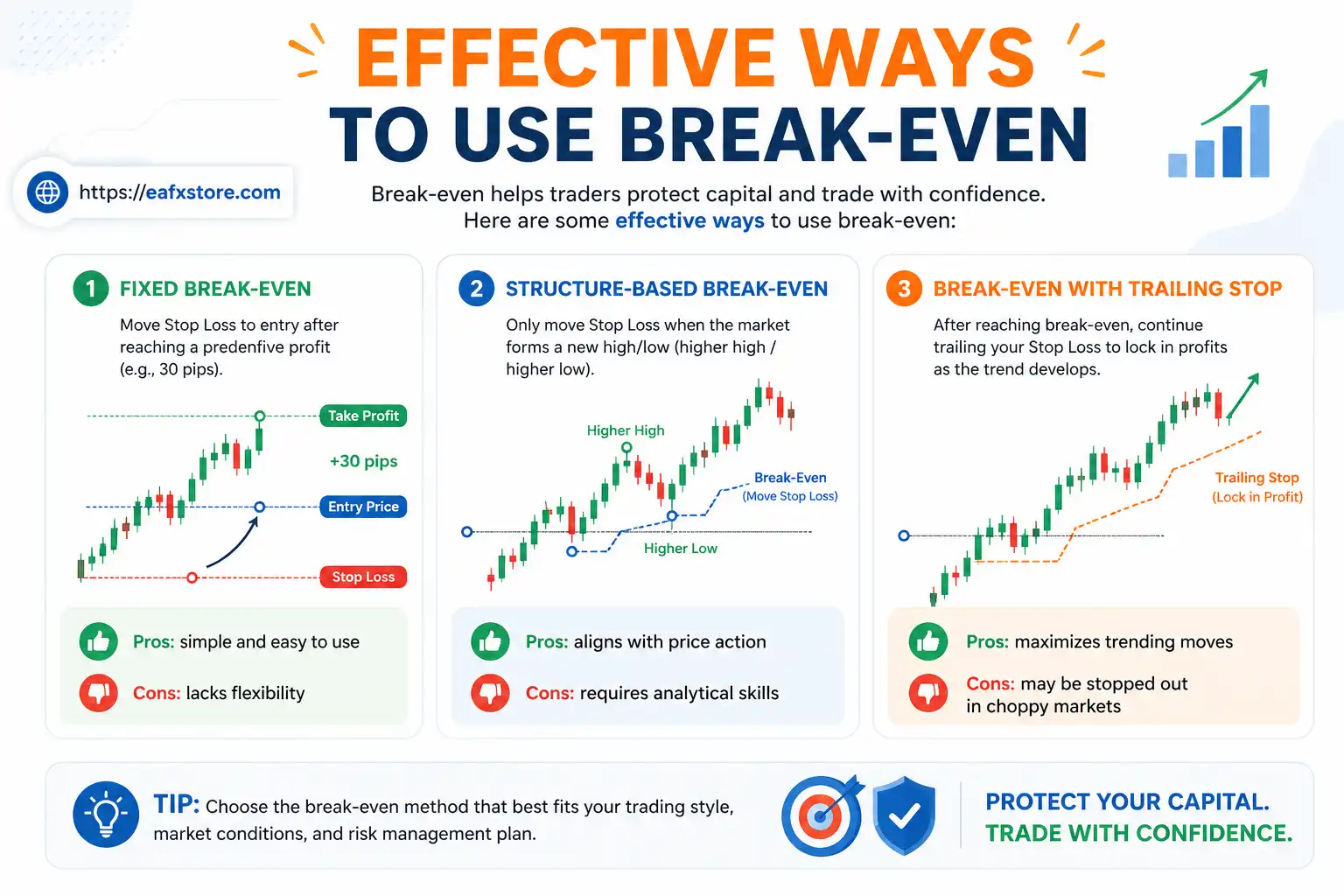
🔄 Effective Ways to Use Break-Even
Not all traders apply break-even the same way. Here are some common methods:
🎯 Fixed Break-Even
Move Stop Loss to entry after reaching a predefined profit (e.g., 30 pips).
👉 Pros: simple and easy to use
👉 Cons: lacks flexibility
🎯 Structure-based Break-Even
Only move Stop Loss when the market forms a new high/low (higher high / higher low).
👉 Pros: aligns with price action
👉 Cons: requires analytical skills
🎯 Break-Even with Trailing Stop
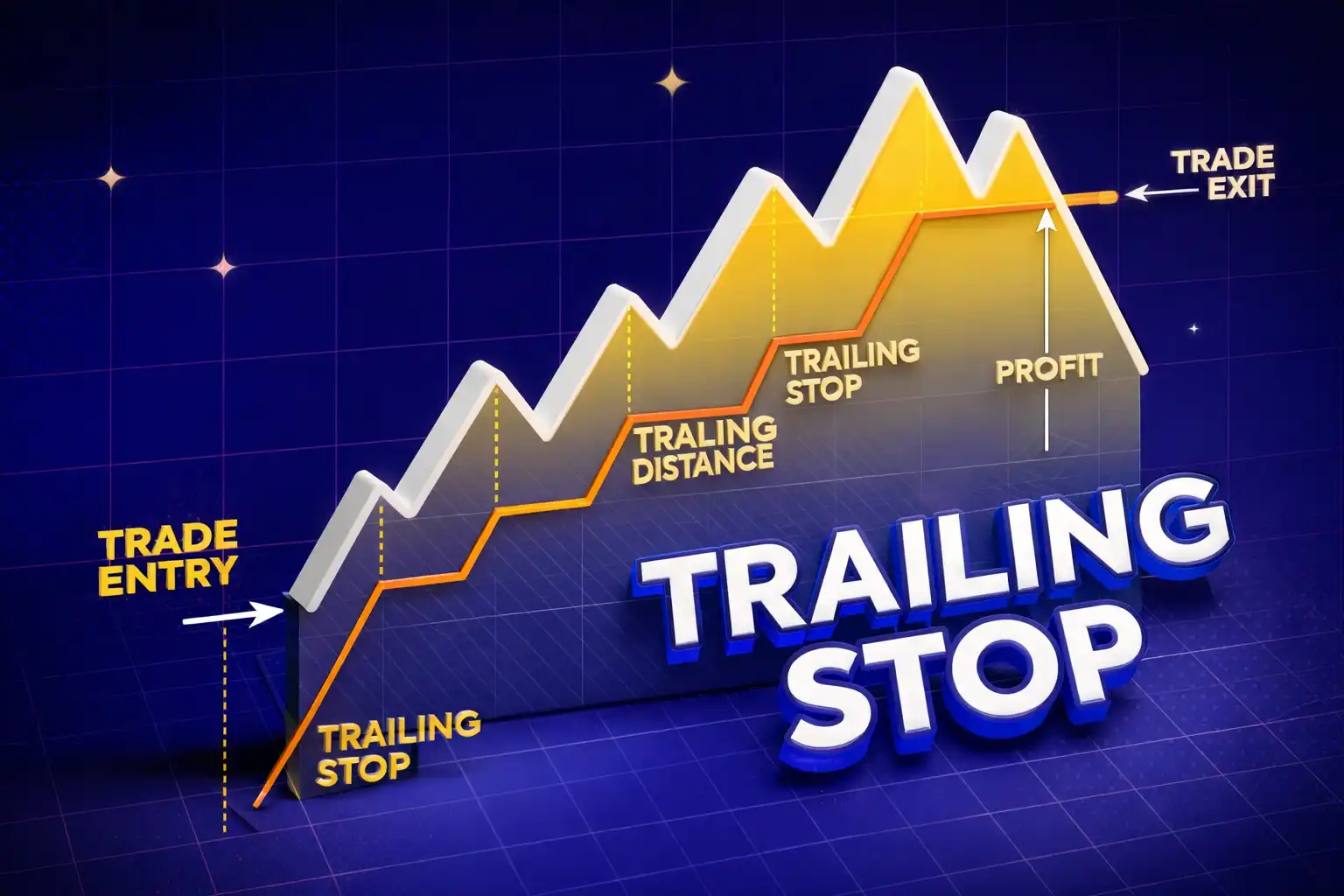
After reaching break-even, continue trailing your Stop Loss to lock in profits as the trend develops.
👉 Pros: maximizes trending moves
👉 Cons: may be stopped out in choppy markets
🔄 Advantages of Break-Even
- Protects your account: Minimizes the risk of losses, especially in volatile markets.
- Improves discipline: Encourages adherence to a trading plan.
- Strengthens trading psychology: Reduces fear and emotional decision-making.
🔄 Disadvantages to Consider
Break-even is useful, but it’s not a “holy grail.”
- Premature exits: Markets often retest levels before continuing.
- Lower win rate: Some potentially winning trades may be closed at break-even.
- Overuse can hurt performance: Moving Stop Loss too early can ruin your strategy.
🔄 Common Mistakes When Using Break-Even
- Moving too early: This is the most common mistake. Traders fear losing profits and act too quickly.
- No clear plan: Break-even should be part of a defined strategy, not an emotional reaction.
- Ignoring market volatility: Different currency pairs have different volatility levels—one pip rule doesn’t fit all.
🔄 Simple Break-Even Strategy
To use break-even effectively, follow this process:
- Step 1: Define your entry and Stop Loss clearly.
- Step 2: Set a minimum profit target.
- Step 3: Move Stop Loss only after market confirmation.
- Step 4: Combine with trailing stop in strong trends.
🔄 Is Break-Even Suitable for Every Trader?
The answer is: not entirely.
- Scalpers: rarely use it due to short trade duration.
- Day traders: use it frequently.
- Swing traders: apply it selectively.
The key is to backtest your strategy and evaluate whether break-even improves your performance.
🔄 Conclusion
Break-even is a simple yet powerful risk management tool in forex trading. It helps protect your capital, reduce emotional stress and build a foundation for long-term success.
However, it must be used strategically and aligned with your trading style. Don’t rely on it just for a sense of “safety”—use it with discipline and logic.