
In the Forex market, timing is everything. Entering a trade at the right price can make a significant difference in your profitability. However, traders cannot always sit in front of their screens waiting for the perfect opportunity. This is where pending orders become an essential tool.
In this comprehensive guide, you will learn what pending orders are, the different types available, their advantages and disadvantages and how to use them effectively in your trading strategy.
1. What Are Pending Orders?
A pending order in Forex is an instruction to open a trade at a specific price level in the future. Instead of executing a trade immediately at the current market price (as with a market order), a pending order is triggered only when the price reaches a predefined level.
This allows traders to:
- Plan trades in advance
- Automate entries without constant monitoring
- Reduce emotional decision-making
- Execute strategies with precision
Pending orders are especially useful for traders who rely on technical analysis and predefined trading setups.
2. Types of Pending Orders in Forex
There are four main types of pending orders every trader should understand:
2.1. Buy Limit Order
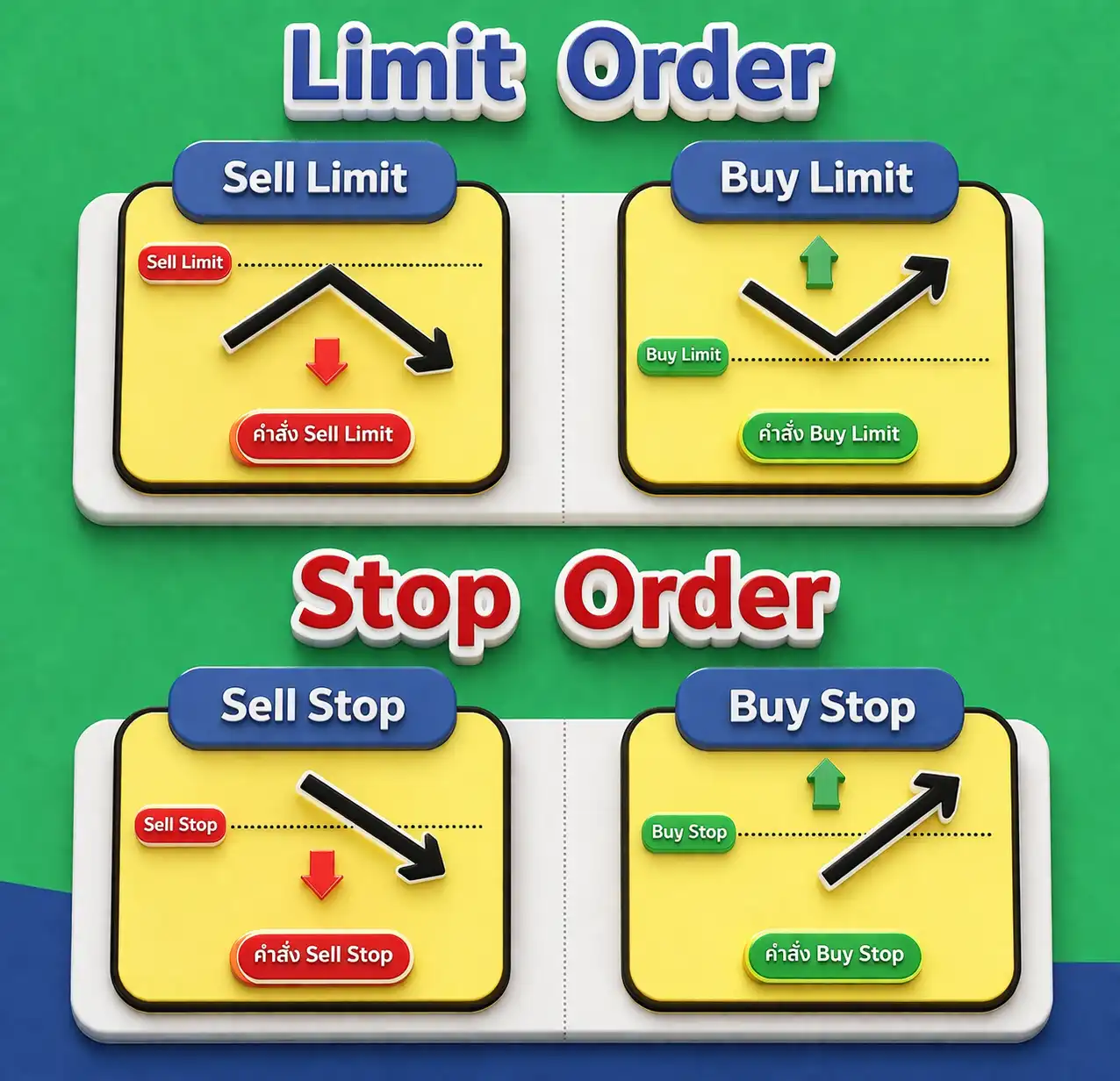
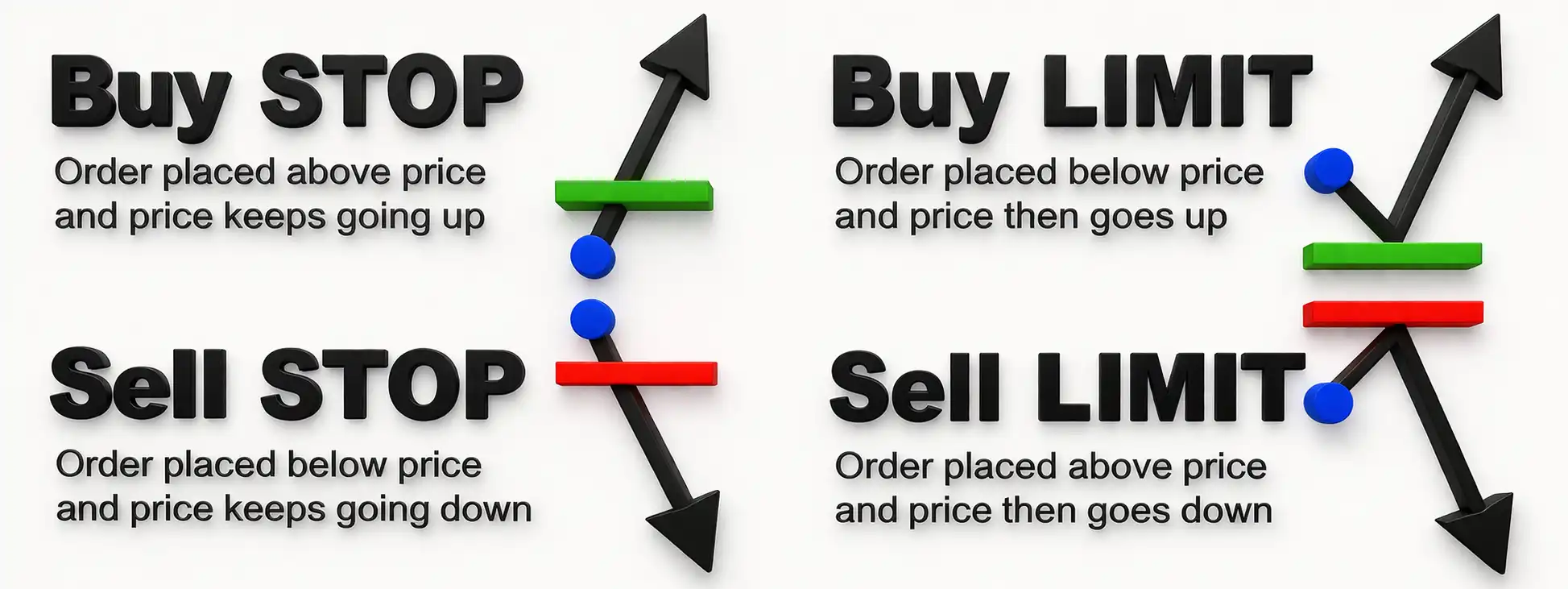
A Buy Limit order is placed below the current market price. It is used when a trader expects the price to drop to a certain level and then reverse upward.
Example:
If EUR/USD is currently trading at 1.1000 and you expect it to drop to 1.0950 before rising, you place a Buy Limit at 1.0950. When the price reaches that level, the trade is automatically executed.
👉 Best used in pullback strategies within an uptrend.
2.2. Sell Limit Order
A Sell Limit order is placed above the current market price. It is used when a trader anticipates that the price will rise to a resistance level and then fall.
Example:
If the current price is 1.1000 and you expect it to rise to 1.1050 before dropping, you place a Sell Limit at 1.1050.
👉 Ideal for trading at resistance levels.
2.3. Buy Stop Order
A Buy Stop order is placed above the current market price. It is used when a trader expects the price to continue rising after breaking a resistance level.
Example:
If EUR/USD is at 1.1000 and you believe it will continue upward after breaking 1.1020, you place a Buy Stop at 1.1020.
👉 Commonly used in breakout trading strategies.
2.4. Sell Stop Order
A Sell Stop order is placed below the current market price. It is used when a trader expects the price to continue falling after breaking a support level.
Example:
If the price is 1.1000 and you expect a drop below 1.0980, you place a Sell Stop at 1.0980.
👉 Suitable for downtrend continuation trades.
3. Advantages of Using Pending Orders
Pending orders offer several important benefits:
✔️ 1. Time Efficiency
You don’t need to constantly monitor the market. Your trades are executed automatically when conditions are met.
✔️ 2. Discipline and Planning
They encourage traders to follow a predefined plan instead of reacting emotionally to market movements.
✔️ 3. Better Entry Prices
You can target optimal price levels rather than entering trades impulsively.
✔️ 4. Flexibility
Pending orders can be used in all trading styles, including scalping, day trading, and swing trading.
✔️ 5. Automation of Strategy
You can set multiple orders based on different scenarios and let the market decide which one triggers.
4. Disadvantages of Pending Orders
Despite their advantages, pending orders also have limitations:
❌ 1. Slippage
In volatile market conditions, your order may be executed at a different price than expected.
❌ 2. News Risk
Major economic news can cause sudden price spikes, triggering orders unintentionally.
❌ 3. False Breakouts
Buy Stop and Sell Stop orders may be triggered by fake breakouts, leading to losses.
❌ 4. Poor Placement
Incorrect placement of pending orders can result in premature execution or missed opportunities.
5. When Should You Use Pending Orders?
5.1. Trading Support and Resistance
- Use Buy Limit at support levels
- Use Sell Limit at resistance levels
This approach works well in ranging or trending markets with clear pullbacks.
5.2. Breakout Trading
- Use Buy Stop above resistance
- Use Sell Stop below support
This is effective when the market is consolidating and likely to make a strong move.
5.3. Limited Screen Time
If you cannot monitor the market continuously, pending orders allow you to participate in trading without missing opportunities.
5.4. High Timeframe Trading
For traders using H4, Daily, or Weekly charts, pending orders help execute trades at key levels without constant chart watching.
6. How to Use Pending Orders Effectively
To maximize the effectiveness of pending orders, follow these best practices:
✔️ 1. Identify Market Trend
Always determine whether the market is trending or ranging before placing orders. Avoid trading against the trend unless you have a strong reversal signal.
✔️ 2. Use Technical Analysis
Combine pending orders with tools such as:
- Support and resistance levels
- Trendlines
- Fibonacci retracement
- Candlestick patterns
This increases the probability of successful trades.
✔️ 3. Set Stop Loss and Take Profit
Never place a pending order without defining risk and reward levels. This helps protect your capital and lock in profits.
✔️ 4. Avoid Placing Orders Too Close
Placing orders too close to the current price may lead to accidental triggers due to market noise.
✔️ 5. Monitor Economic News
Always check the economic calendar before placing pending orders to avoid unexpected volatility.
7. Trading Strategies Using Pending Orders
Strategy 1: Pullback Trading
Steps:
- Identify a strong trend
- Wait for a retracement to a key support/resistance level
- Place a Buy Limit (uptrend) or Sell Limit (downtrend)
- Set Stop Loss below/above the level
- Target the continuation of the trend
👉 This strategy provides better risk-to-reward ratios.
Strategy 2: Breakout Strategy
Steps:
- Identify a consolidation zone
- Place a Buy Stop above resistance
- Place a Sell Stop below support
- Use Stop Loss to limit risk
- Let the market trigger one side
👉 This is known as a straddle strategy and works well in volatile markets.
Strategy 3: News Trading Setup
Before major news releases:
- Place Buy Stop above current price
- Place Sell Stop below current price
👉 One of the orders will be triggered by market volatility.
⚠️ Caution: This strategy carries high risk due to unpredictable price movements.
8. Common Mistakes When Using Pending Orders
Many beginner traders make the following errors:
❌ 1. Emotional Trading
Placing orders without a clear strategy or analysis.
❌ 2. Ignoring Risk Management
Failing to set Stop Loss or risking too much per trade.
❌ 3. Overtrading
Placing too many pending orders at once, leading to confusion and losses.
❌ 4. Not Adapting to Market Conditions
Using the same strategy in all market environments.
❌ 5. Poor Timing
Placing orders during high-impact news without proper planning.
9. Conclusion
Pending orders are a powerful tool in Forex trading that allow traders to plan ahead, automate entries, and improve execution accuracy. Whether you are trading pullbacks, breakouts, or simply managing your time more efficiently, mastering pending orders can significantly enhance your performance.
However, success with pending orders requires:
- Strong technical analysis
- Proper risk management
- Discipline and patience
By combining these elements, you can turn pending orders into a key advantage in your trading strategy.