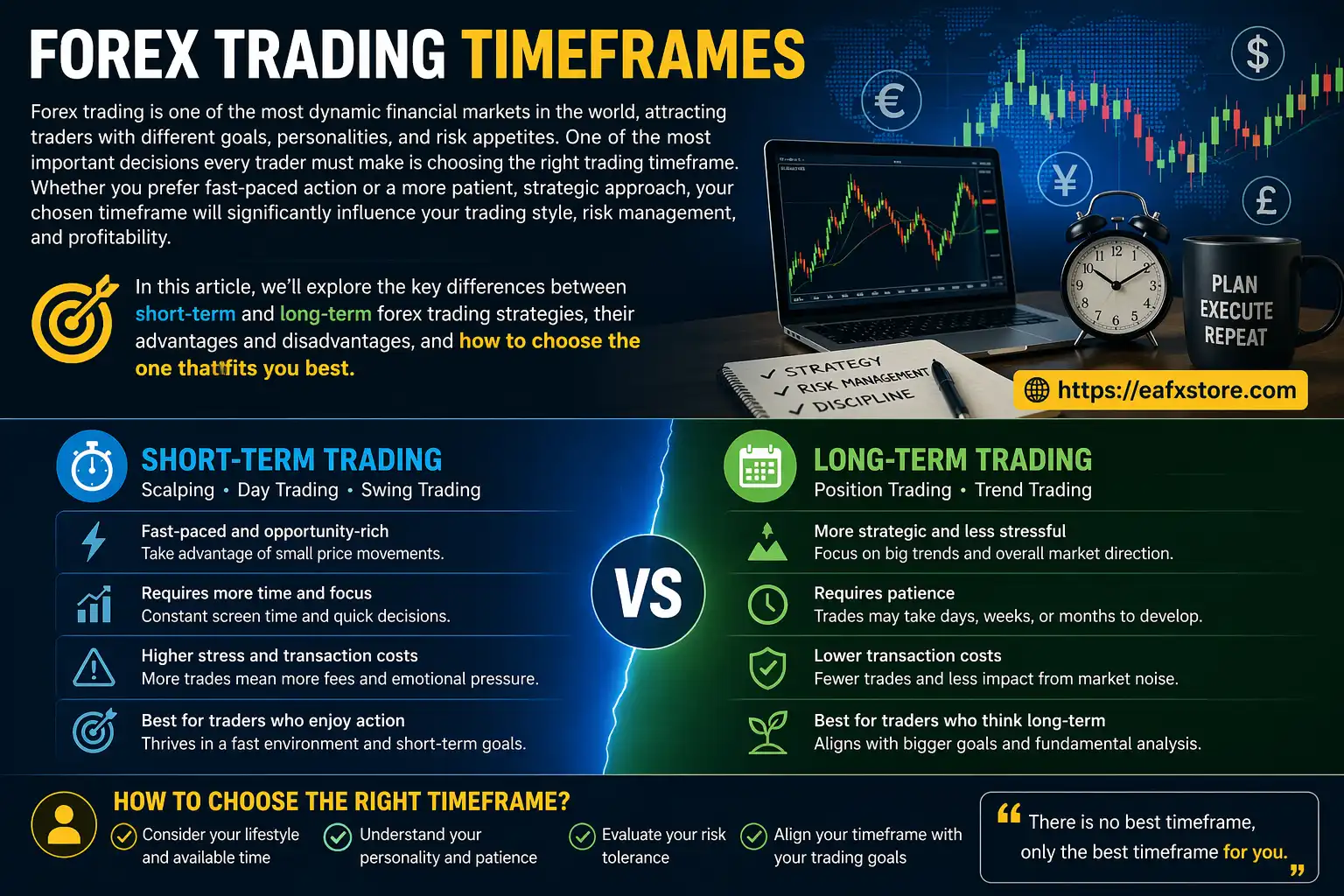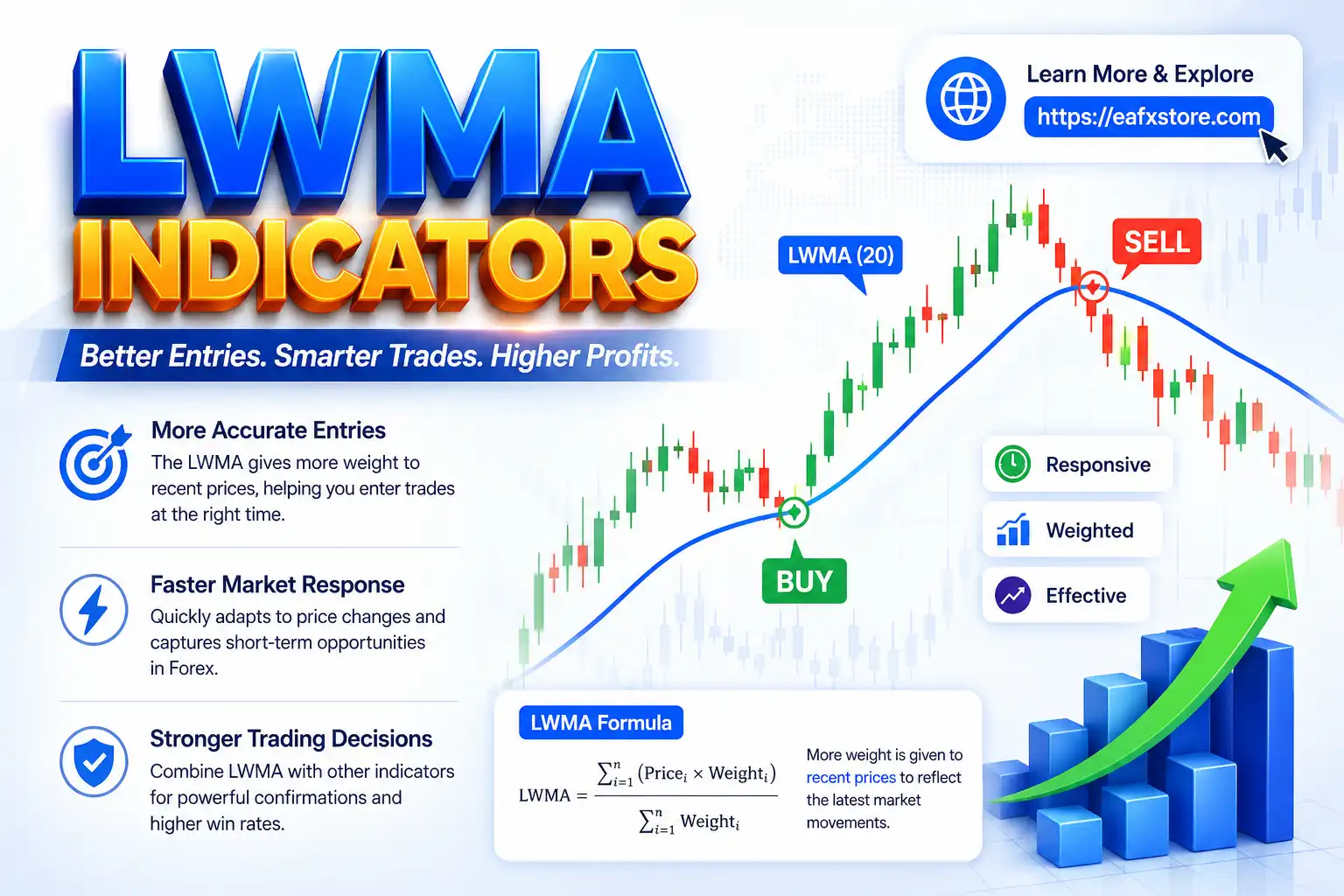

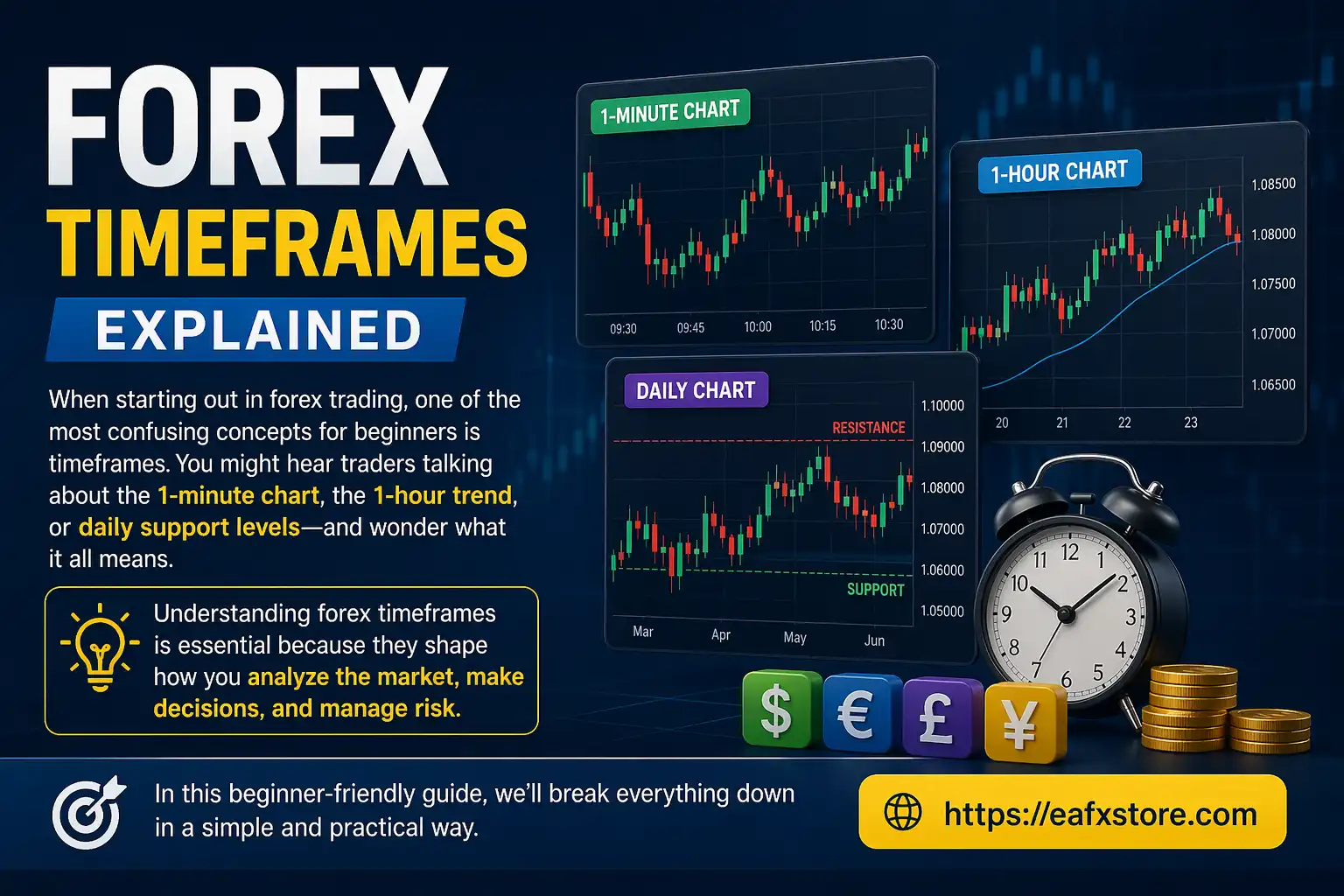
If you’re new to Forex trading, one of the first concepts you’ll encounter is timeframes. At first glance, they may seem simple—just different ways of viewing price charts. But in reality, understanding timeframes is crucial to making better trading decisions.
This beginner-friendly guide will break down Forex timeframes in a simple, clear way so you can start using them effectively in your trading strategy.
What are Forex Timeframes?
A timeframe in Forex refers to the duration each candlestick or bar represents on a chart.
For example:
- On a 1-minute (M1) chart, each candle shows price movement over one minute.
- On a 1-hour (H1) chart, each candle represents one hour.
- On a daily (D1) chart, each candle shows one full trading day.
→ In short, timeframes determine how much market data you see and how detailed that data is.
Why Timeframes Matter in Trading
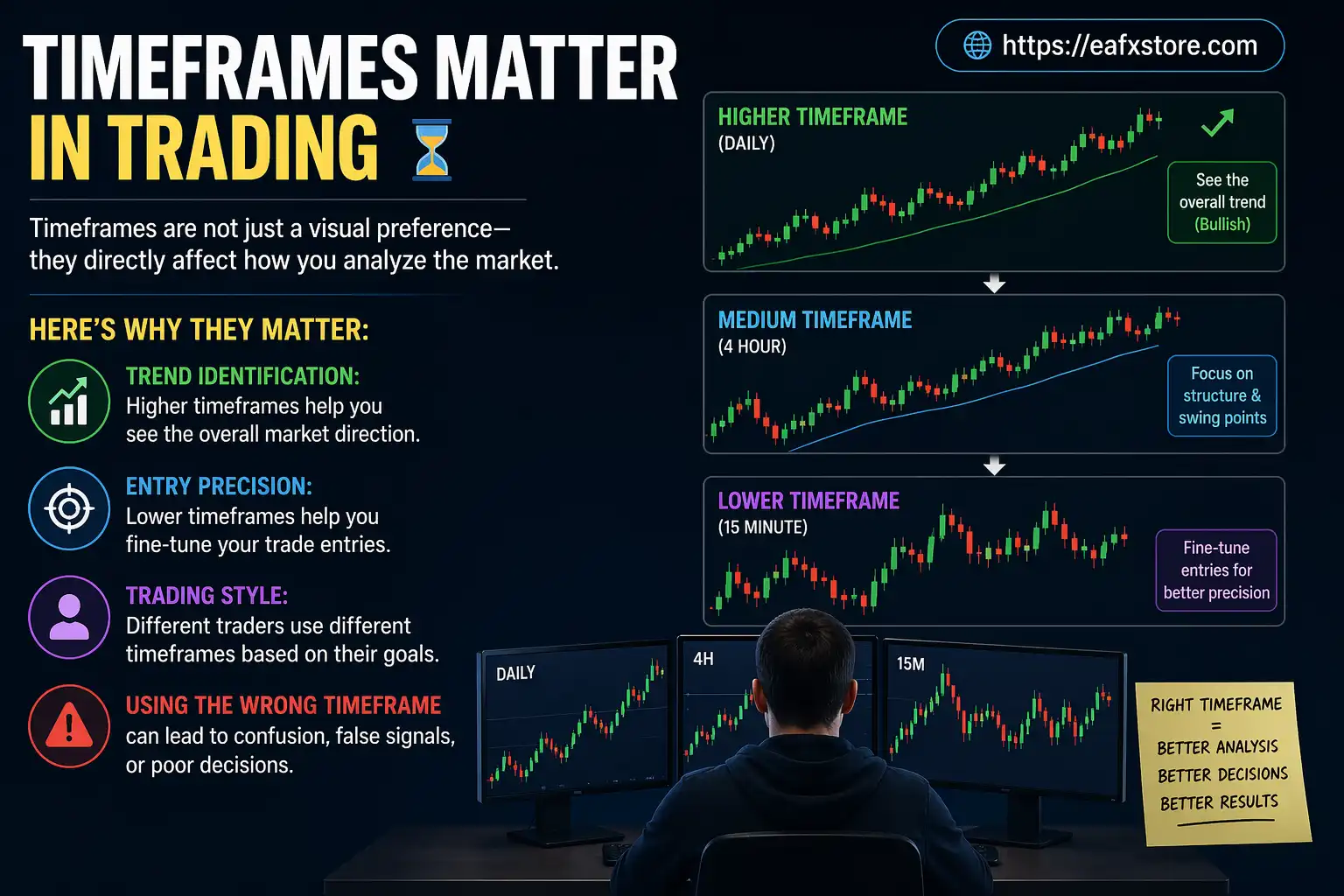
Timeframes are not just a visual preference—they directly affect how you analyze the market.
Here’s why they matter:
- Trend Identification: Higher timeframes help you see the overall market direction.
- Entry Precision: Lower timeframes help you fine-tune your trade entries.
- Trading Style: Different traders use different timeframes based on their goals.
Using the wrong timeframe can lead to confusion, false signals, or poor decisions.
The Main Types of Forex Timeframes
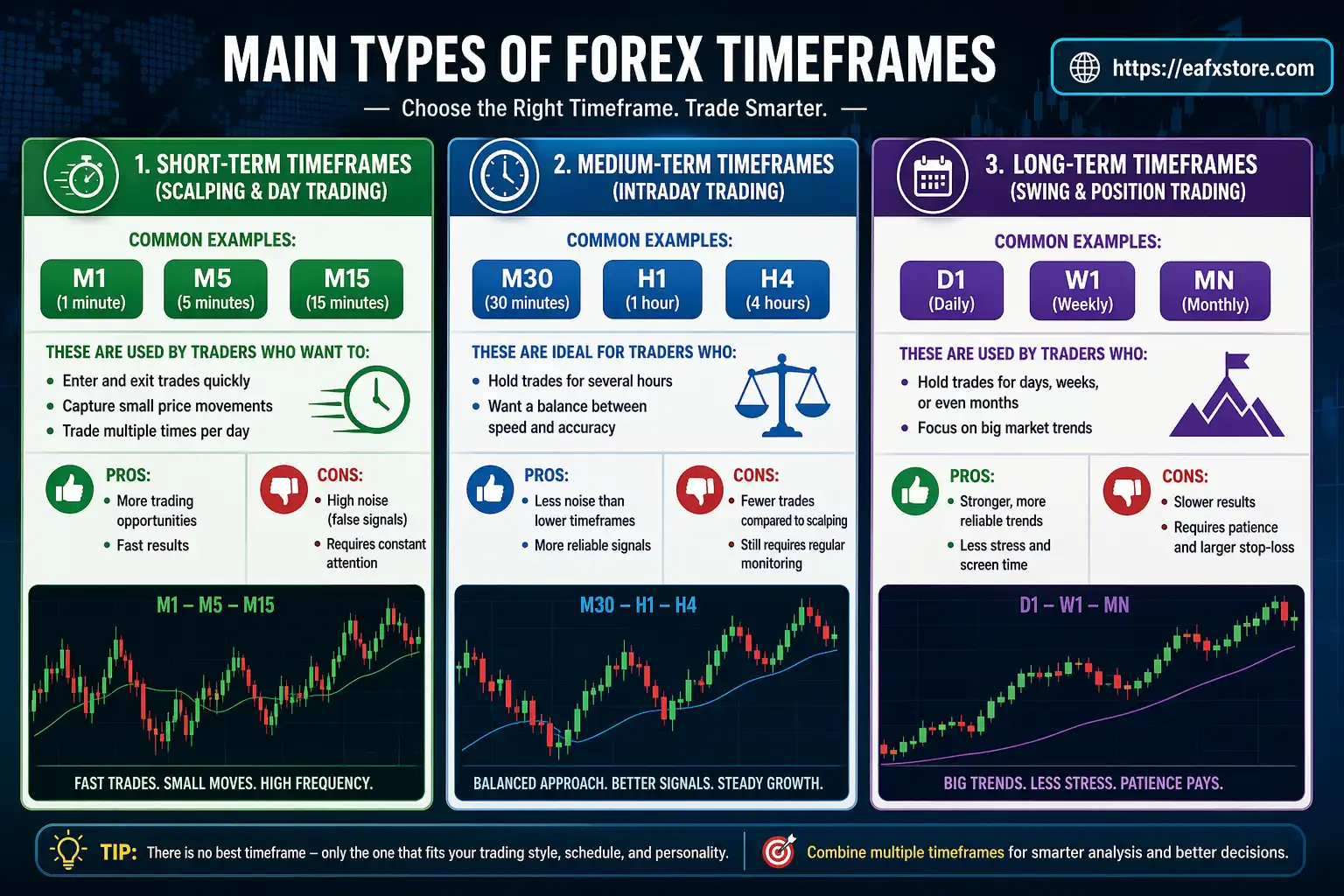
Forex timeframes are typically grouped into three categories:
1. Short-Term Timeframes (Scalping & Day Trading)
Common examples:
- M1 (1 minute)
- M5 (5 minutes)
- M15 (15 minutes)
These are used by traders who want to:
- Enter and exit trades quickly
- Capture small price movements
- Trade multiple times per day
Pros:
- More trading opportunities
- Fast results
Cons:
- High noise (false signals)
- Requires constant attention
2. Medium-Term Timeframes (Intraday Trading)
Common examples:
- M30 (30 minutes)
- H1 (1 hour)
- H4 (4 hours)
These are ideal for traders who:
- Hold trades for several hours
- Want a balance between speed and accuracy
Pros:
- Less noise than lower timeframes
- More reliable signals
Cons:
- Fewer trades compared to scalping
- Still requires regular monitoring
3. Long-Term Timeframes (Swing & Position Trading)
Common examples:
- D1 (Daily)
- W1 (Weekly)
- MN (Monthly)
These are used by traders who:
- Hold trades for days, weeks, or even months
- Focus on big market trends
Pros:
- Stronger, more reliable trends
- Less stress and screen time
Cons:
- Slower results
- Requires patience and larger stop-loss
How to Choose the Right Timeframe
Choosing the right timeframe depends on your personality, schedule, and trading goals.
Ask Yourself:
- How much time do I have?
If you’re busy, avoid short-term charts. - How patient am I?
If you want quick results, lower timeframes may suit you. - What is my risk tolerance?
Longer timeframes often require wider stop-losses.
Simple Guideline:
- Beginners often do well starting with H1 or H4
- These provide a good balance between clarity and opportunity

The Power of Multiple Timeframe Analysis
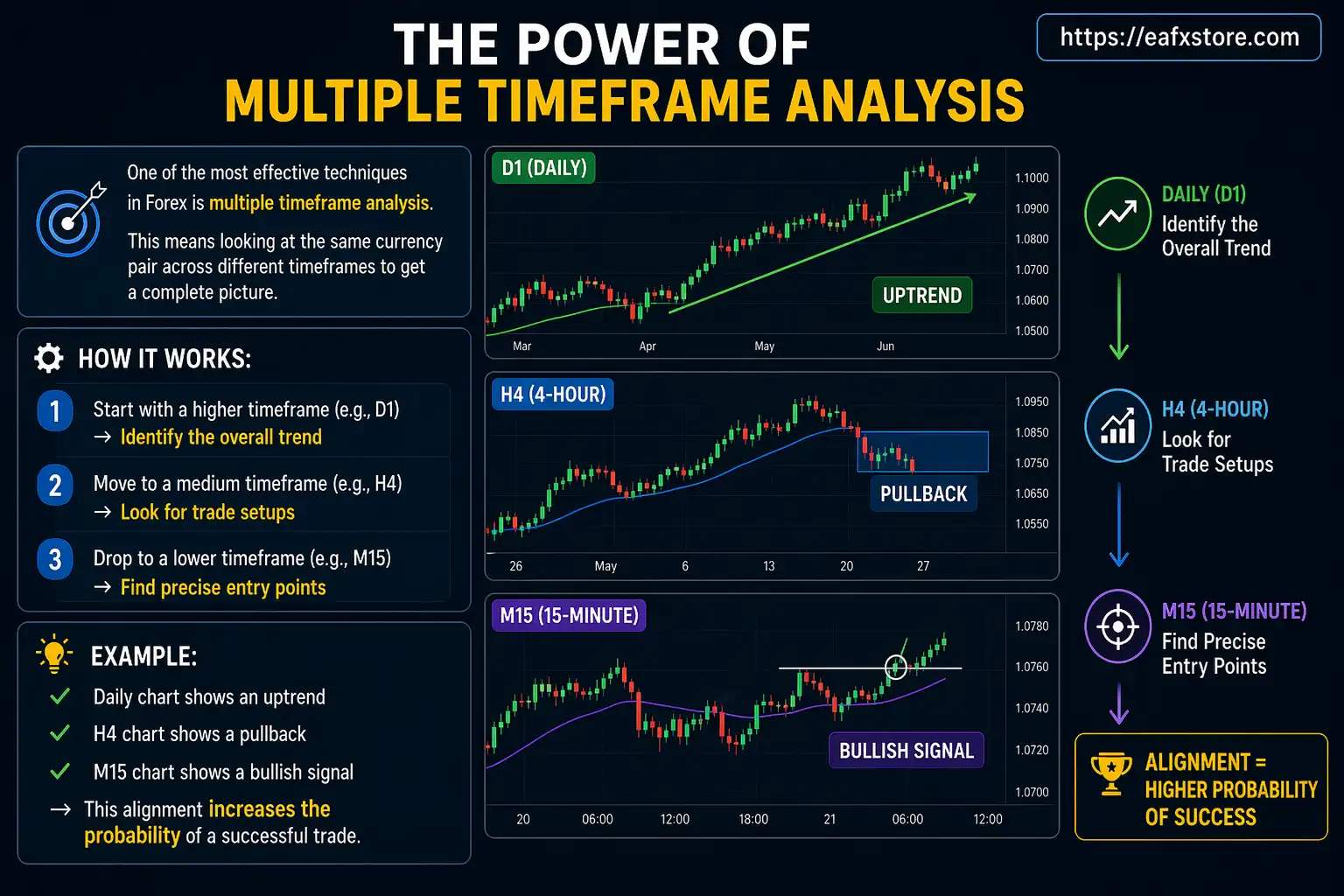
One of the most effective techniques in Forex is multiple timeframe analysis.
This means looking at the same currency pair across different timeframes to get a complete picture.
How It Works:
- Start with a higher timeframe (e.g., D1)
→ Identify the overall trend - Move to a medium timeframe (e.g., H4)
→ Look for trade setups - Drop to a lower timeframe (e.g., M15)
→ Find precise entry points
Example:
- Daily chart shows an uptrend
- H4 chart shows a pullback
- M15 chart shows a bullish signal
→ This alignment increases the probability of a successful trade.
Common Mistakes Beginners Make
Understanding timeframes is simple—but using them correctly takes practice. Here are common mistakes to avoid:
1. Switching Timeframes Too Often
Jumping between charts randomly creates confusion. Stick to a structured approach.
2. Ignoring the Bigger Picture
Trading only on small timeframes can lead to trading against the main trend.
3. Overtrading
Lower timeframes create more signals—but not all are good ones.
4. Using Too Many Timeframes
You don’t need 6 charts open. Typically, 2–3 timeframes are enough.
Best Timeframe Combinations for Beginners
Here are some simple combinations you can try:
- D1 + H4 + M15 → Balanced and popular
- H4 + H1 + M5 → More active trading
- W1 + D1 + H4 → Long-term focus
Keep it simple and consistent.
Final Thoughts
Forex timeframes are a foundational concept that every trader must understand. They influence how you read charts, identify trends and execute trades.
There’s no “perfect” timeframe—only the one that fits your strategy and lifestyle.
If you’re just starting out, focus on:
- Learning how different timeframes behave.
- Practicing multiple timeframe analysis.
- Staying consistent with your approach.
Mastering timeframes won’t happen overnight, but once you understand them, your trading decisions will become much clearer and more confident.