

Introduction
In the fast-paced world of Forex trading, consistency often matters more than chasing quick profits. Many traders struggle with market volatility, emotional decision-making and timing entries perfectly. This is where Dollar-Cost Averaging (DCA) comes in — a strategy designed to reduce risk and improve long-term profitability.
While DCA is commonly associated with stock and crypto investing, it can also be effectively applied in Forex trading. When used correctly, it helps traders manage drawdowns, smooth entry points and build positions strategically over time.
In this article, we’ll break down how DCA works in Forex, its advantages, potential risks and how you can implement it for consistent results.
What is Dollar-Cost Averaging (DCA)?
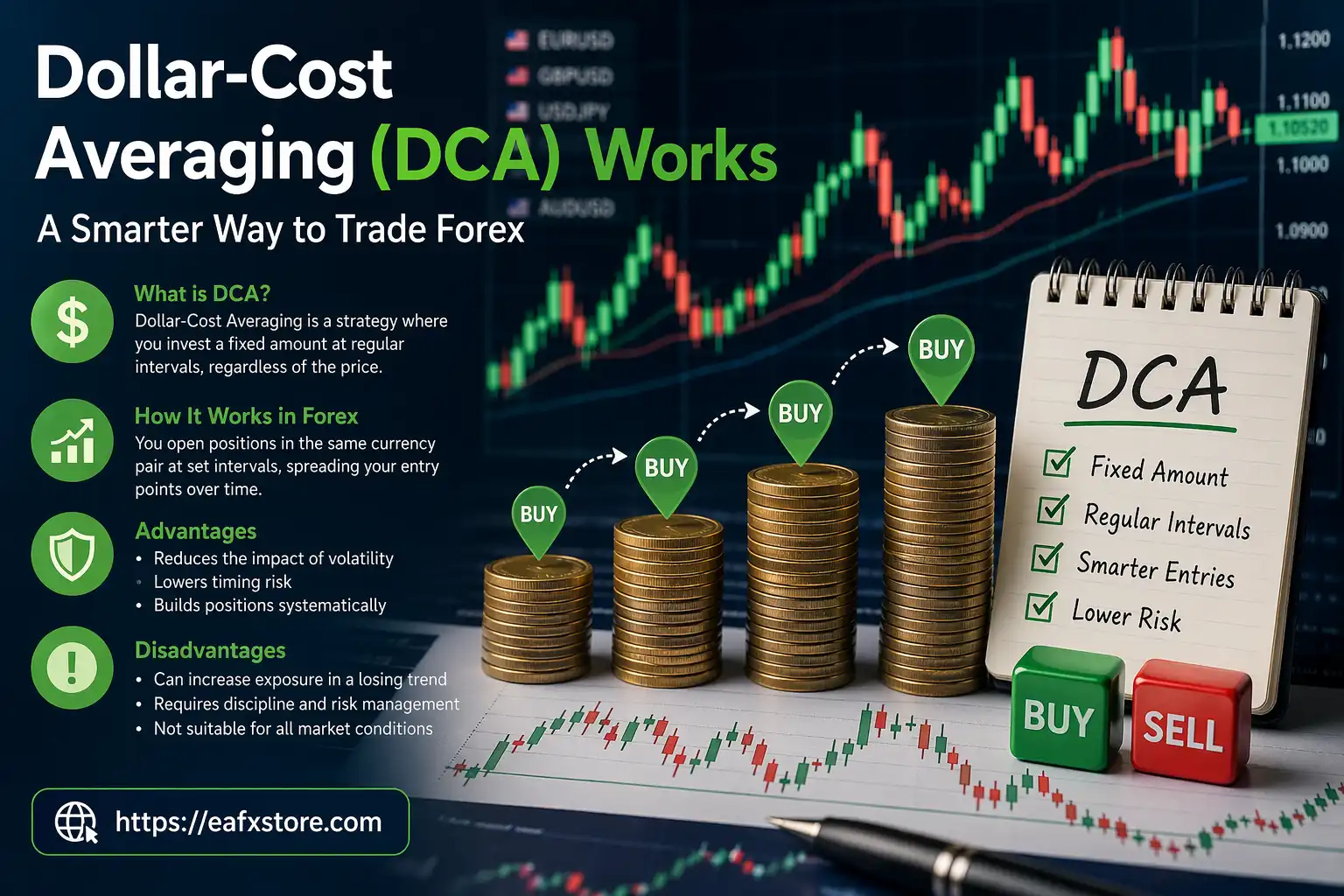
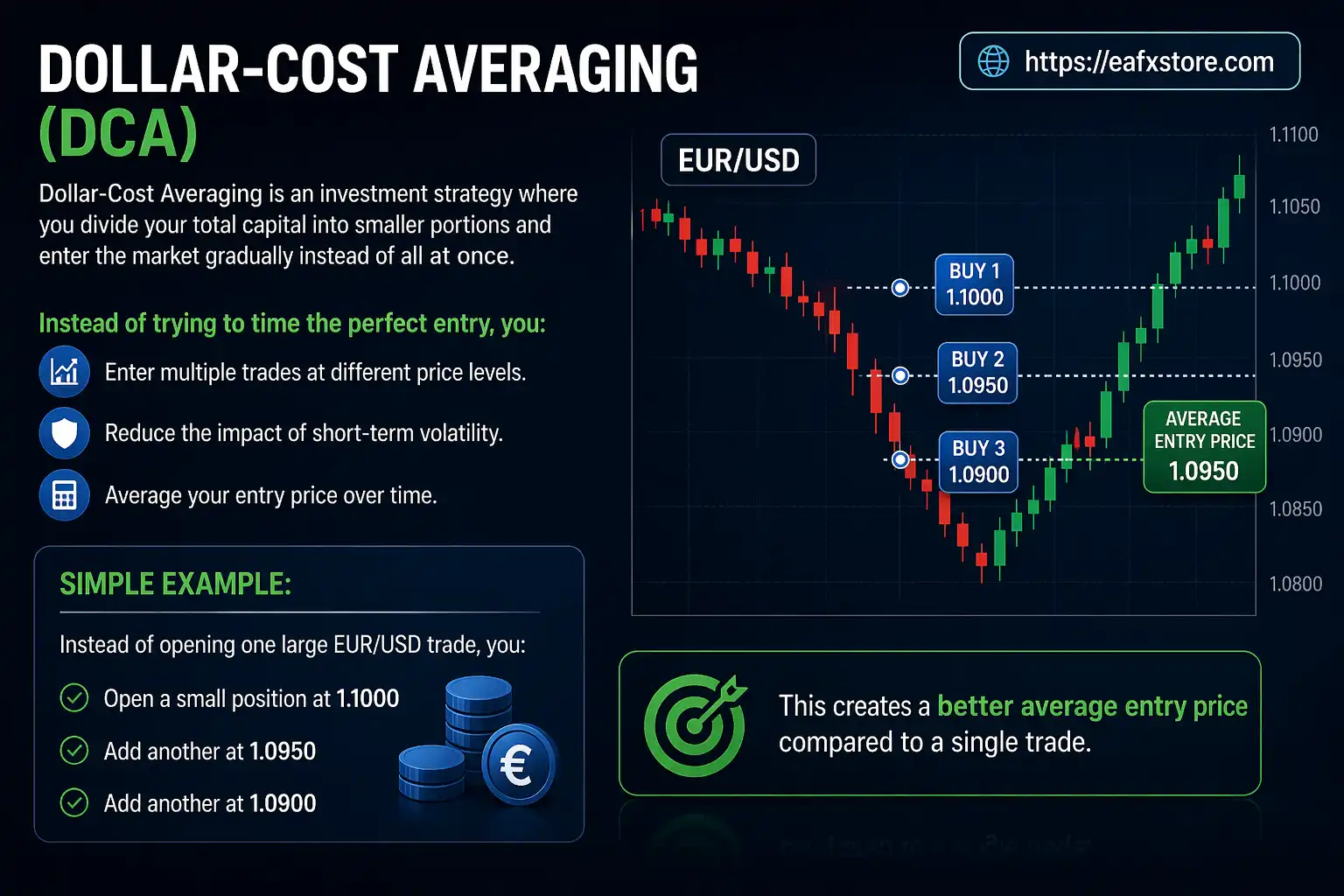
Dollar-Cost Averaging is an investment strategy where you divide your total capital into smaller portions and enter the market gradually instead of all at once.
Instead of trying to time the perfect entry, you:
- Enter multiple trades at different price levels.
- Reduce the impact of short-term volatility.
- Average your entry price over time.
Simple Example:
Instead of opening one large EUR/USD trade, you:
- Open a small position at 1.1000
- Add another at 1.0950
- Add another at 1.0900
This creates a better average entry price compared to a single trade.
How DCA Works in Forex Trading
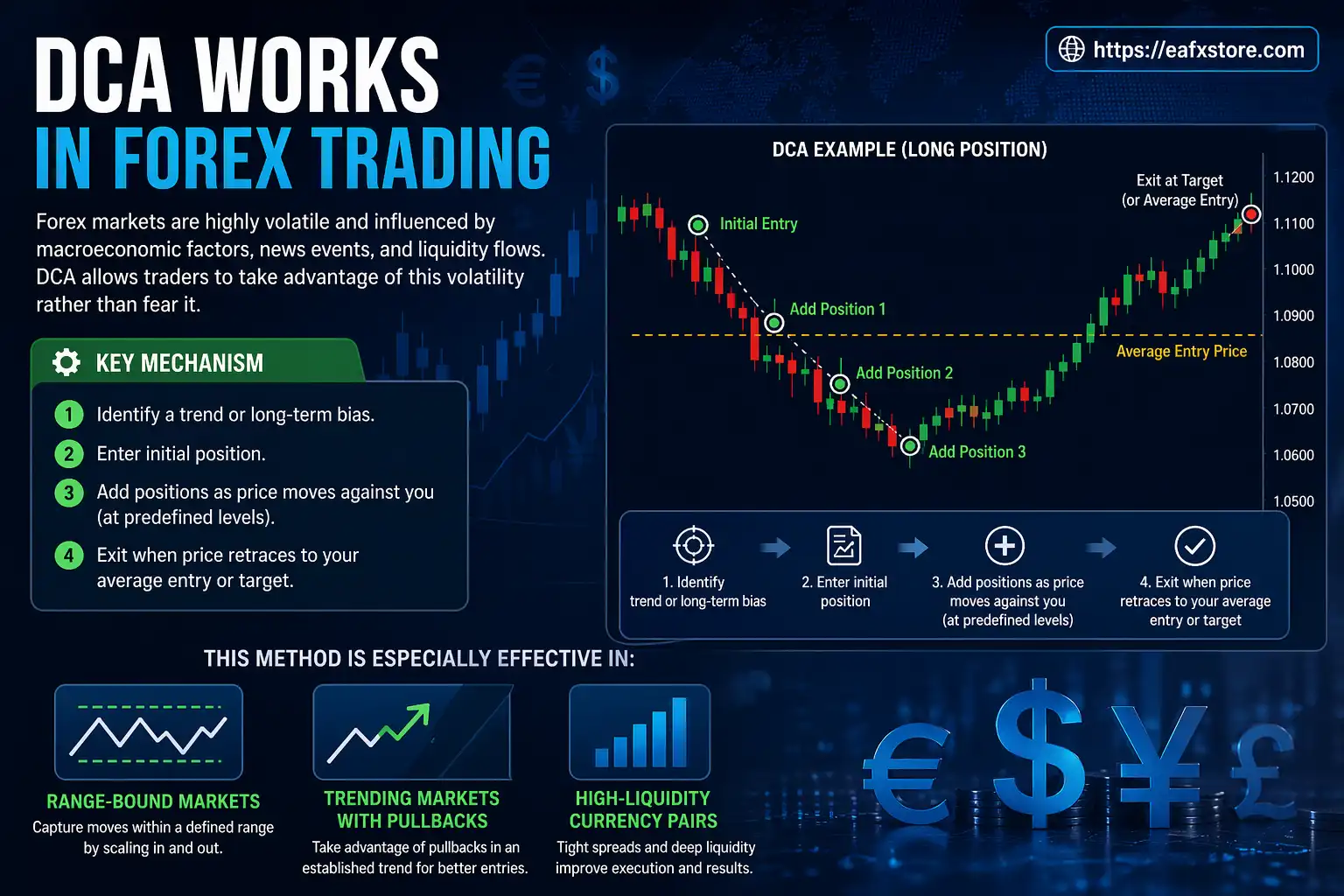
Forex markets are highly volatile and influenced by macroeconomic factors, news events and liquidity flows. DCA allows traders to take advantage of this volatility rather than fear it.
Key Mechanism:
- Identify a trend or long-term bias.
- Enter initial position.
- Add positions as price moves against you (at predefined levels).
- Exit when price retraces to your average entry or target.
This method is especially effective in:
- Range-bound markets.
- Trending markets with pullbacks.
- High-liquidity currency pairs.
Benefits of DCA in Forex
- Reduces Market Timing Pressure: Trying to “buy the bottom” or “sell the top” is nearly impossible. DCA removes the need for perfect timing by spreading entries.
- Improves Average Entry Price: By adding positions at better prices, your overall entry becomes more favorable.
- Helps Manage Emotions: DCA provides a structured approach, reducing impulsive decisions driven by fear or greed.
- Works Well in Volatile Markets: Forex volatility becomes an advantage instead of a risk when using DCA.
- Suitable for Long-Term Traders: Swing traders and position traders benefit the most from this strategy.

Risks of Using DCA in Forex
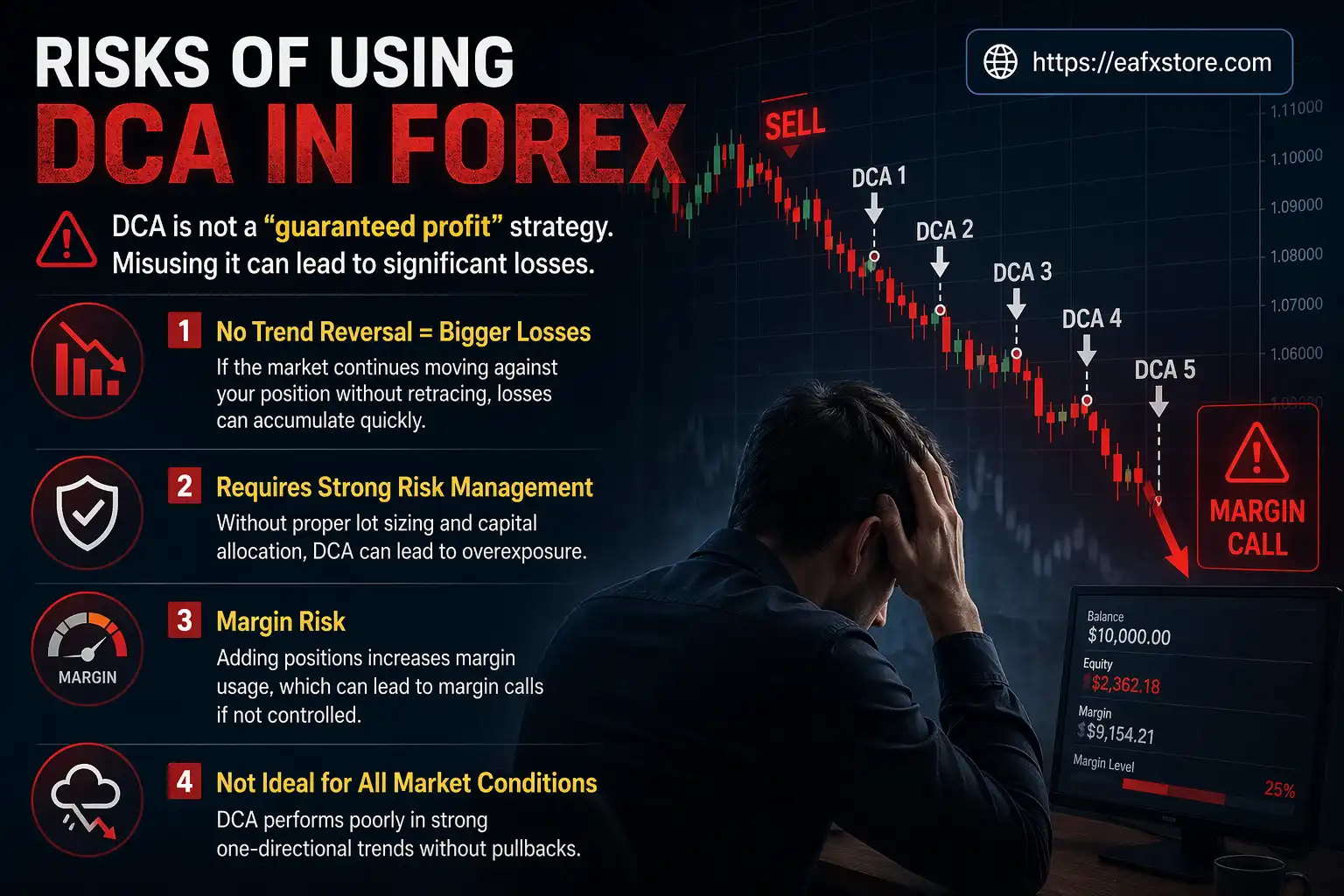
DCA is not a “guaranteed profit” strategy. Misusing it can lead to significant losses.
- No Trend Reversal = Bigger Losses: If the market continues moving against your position without retracing, losses can accumulate quickly.
- Requires Strong Risk Management: Without proper lot sizing and capital allocation, DCA can lead to overexposure.
- Margin Risk: Adding positions increases margin usage, which can lead to margin calls if not controlled.
- Not Ideal for All Market Conditions: DCA performs poorly in strong one-directional trends without pullbacks.
Best Practices for DCA in Forex
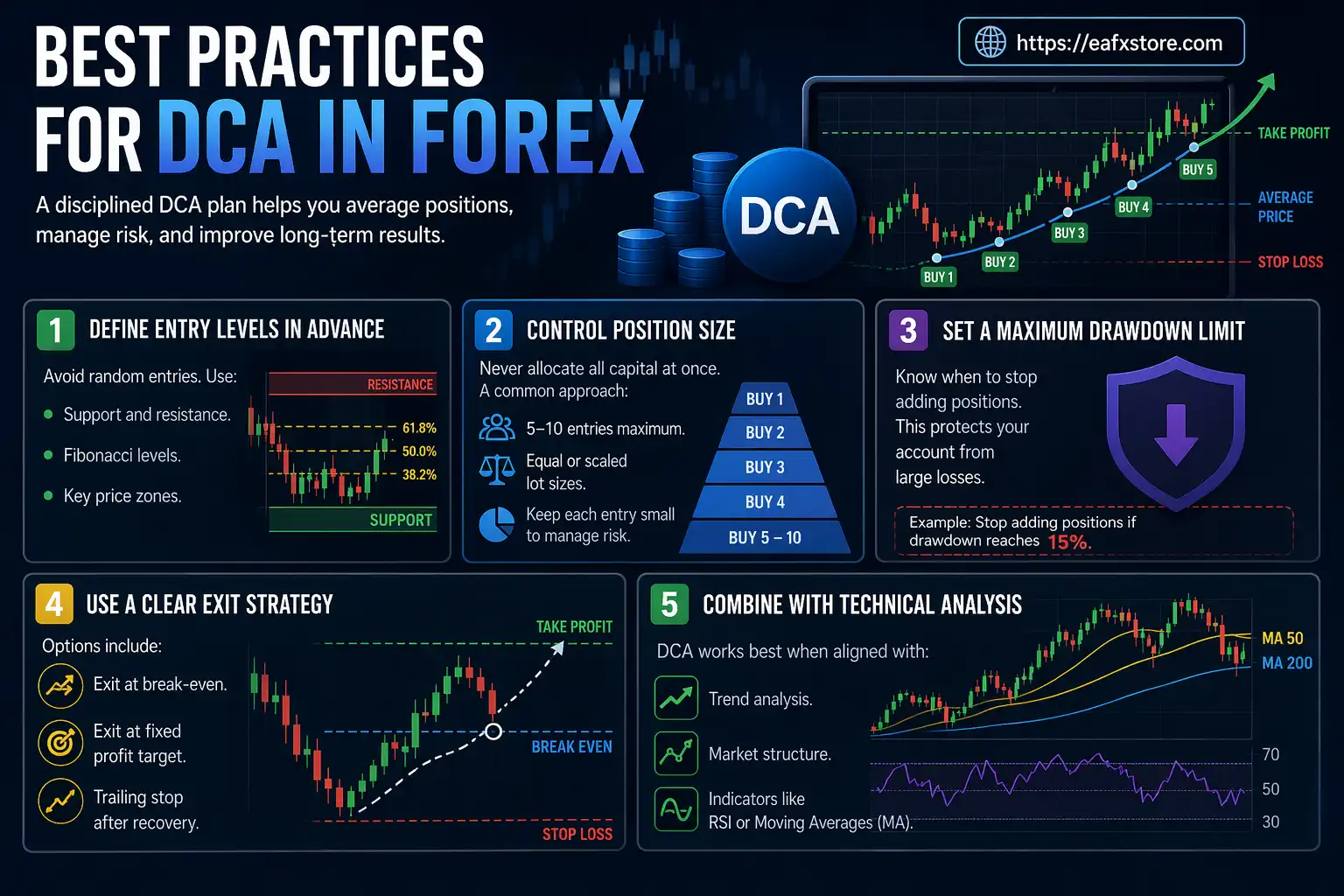
To use DCA effectively, you need a structured plan.
🎯 Define Entry Levels in Advance
Avoid random entries. Use:
- Support and Resistance.
- Fibonacci levels.
- Key price zones.
🎯 Control Position Size
Never allocate all capital at once. A common approach:
- 5–10 entries maximum.
- Equal or scaled lot sizes.
🎯 Set a Maximum Drawdown Limit
Know when to stop adding positions. This protects your account from large losses.
🎯 Use a Clear Exit Strategy
Options include:
- Exit at Break-even.
- Exit at fixed profit target.
- Trailing stop after recovery.
🎯 Combine with Technical Analysis
DCA works best when aligned with:
- Trend analysis.
- Market structure.
- Indicators like RSI or Moving Averages (MA).
DCA vs Traditional Trading
| Feature | DCA Strategy | Traditional Trading |
|---|---|---|
| Entry Style | Multiple entries | Single entry |
| Risk Exposure | Gradual | Immediate |
| Emotional Stress | Lower | Higher |
| Timing Dependency | Low | High |
| Complexity | Moderate | Simple |
DCA offers a more flexible and forgiving approach, especially for traders who struggle with timing.
Who Should Use DCA in Forex?
DCA is not for everyone. It suits traders who:
- Prefer structured strategies over impulsive trading.
- Have patience and discipline.
- Trade higher timeframes (H1, H4, Daily).
- Understand risk management.
It may not be suitable for:
- Scalpers.
- Traders with small accounts and high leverage.
- Those seeking quick profits.
Example Strategy: DCA in EUR/USD
Let’s say you have a bullish bias on EUR/USD.
Plan:
- Initial buy at 1.1000
- Add positions every 50 pips drop
- Maximum 5 entries
- Target: 1.1100
If price drops to 1.0900 and then rebounds:
- Your average entry improves
- Profit is achieved faster when price recovers
Final Thoughts
Dollar-Cost Averaging is a powerful strategy when applied correctly in Forex trading. It shifts the focus from perfect timing to strategic positioning and risk control.
However, success with DCA depends heavily on:
- Discipline.
- Risk management.
- Market understanding.
Used wisely, DCA can help traders navigate volatility, reduce stress and aim for more consistent profits over time.