
The world of Forex and stock trading can often feel like a “black box” where retail traders wonder if they are getting a fair deal. This is where Electronic Communication Network (ECN) trading comes into play. Unlike traditional models where a broker might take the opposite side of your trade, ECN provides a transparent, direct bridge to the global financial markets.
In this comprehensive guide, we will break down the mechanics of ECN trading, explore why professional traders prefer it, and evaluate whether it is the right choice for your investment strategy in 2026.
What is ECN Trading?
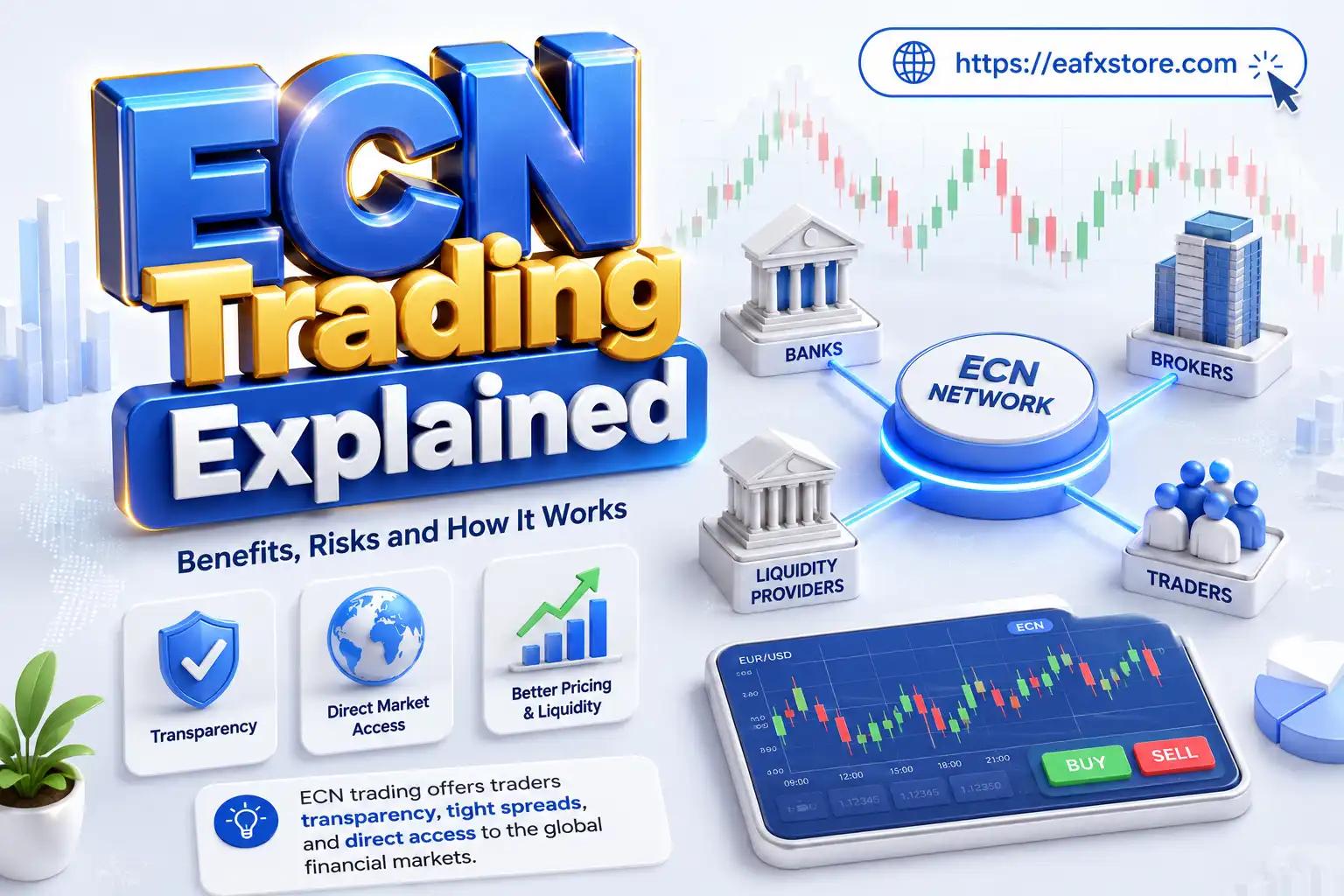
At its core, an Electronic Communication Network (ECN) is a computerized system that automatically matches buy and sell orders for securities in the market. It connects individual traders directly with major liquidity providers, such as banks, hedge funds, and other traders, without the need for a traditional “middleman” or market maker.
By using an ECN broker, your orders are broadcasted to a pool of liquidity. The system then finds the best available bid and ask prices from various sources, ensuring that you get the most competitive rates available at that exact microsecond.
How ECN Trading Works: The Mechanics Behind the Screen
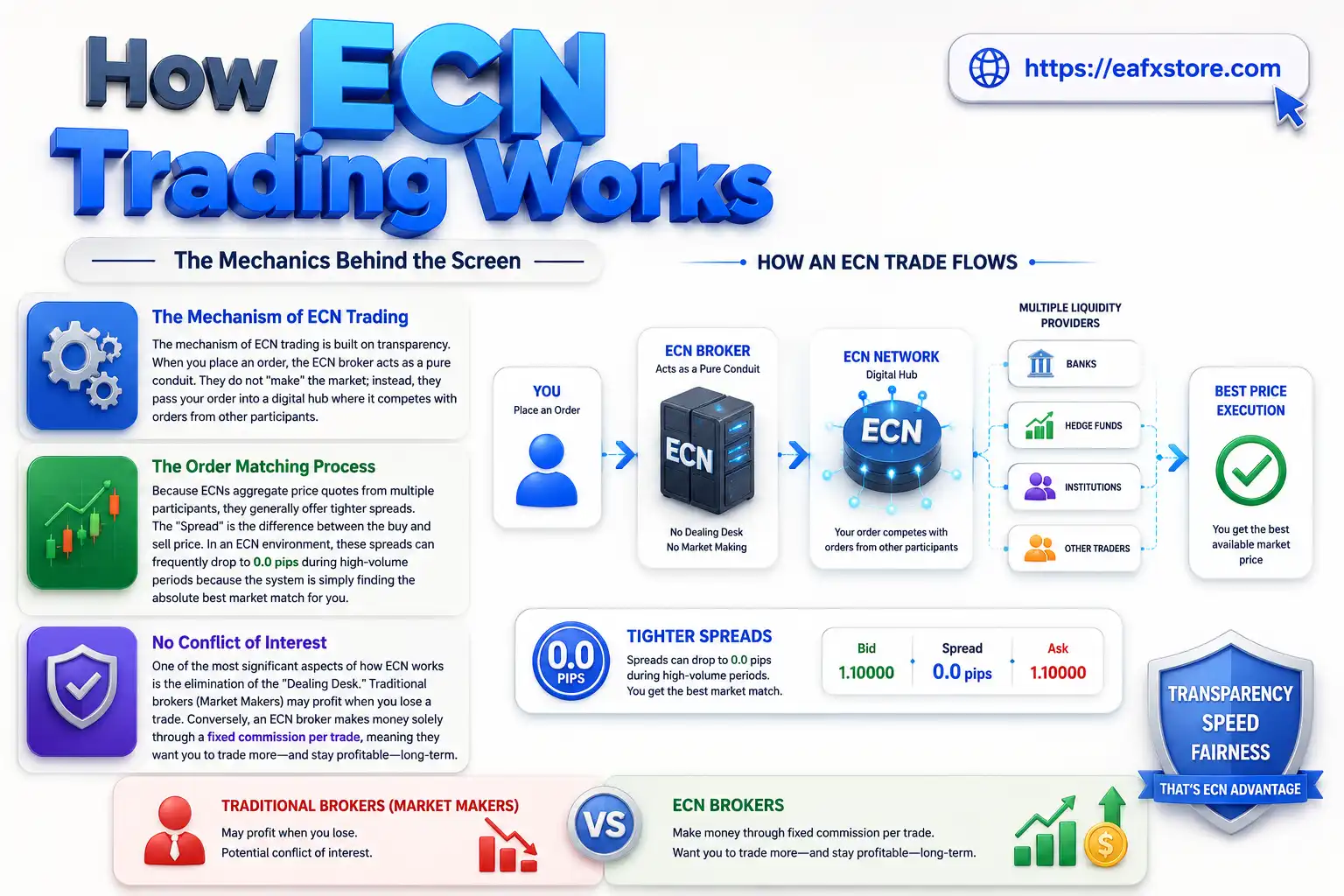
The mechanism of ECN trading is built on transparency. When you place an order, the ECN broker acts as a pure conduit. They do not “make” the market; instead, they pass your order into a digital hub where it competes with orders from other participants.
The Order Matching Process
Because ECNs aggregate price quotes from multiple participants, they generally offer tighter spreads. The “Spread” is the difference between the buy and sell price. In an ECN environment, these spreads can frequently drop to 0.0 pips during high-volume periods because the system is simply finding the absolute best market match for you.
No Conflict of Interest
One of the most significant aspects of how ECN works is the elimination of the “Dealing Desk.” Traditional brokers (Market Makers) may profit when you lose a trade. Conversely, an ECN broker makes money solely through a fixed commission per trade, meaning they want you to trade more—and stay profitable—long-term.
Key Benefits of ECN Trading
Traders often migrate to ECN accounts once they become serious about their performance. The advantages go beyond just “lower costs”—it’s about the quality of the execution and the integrity of the data.
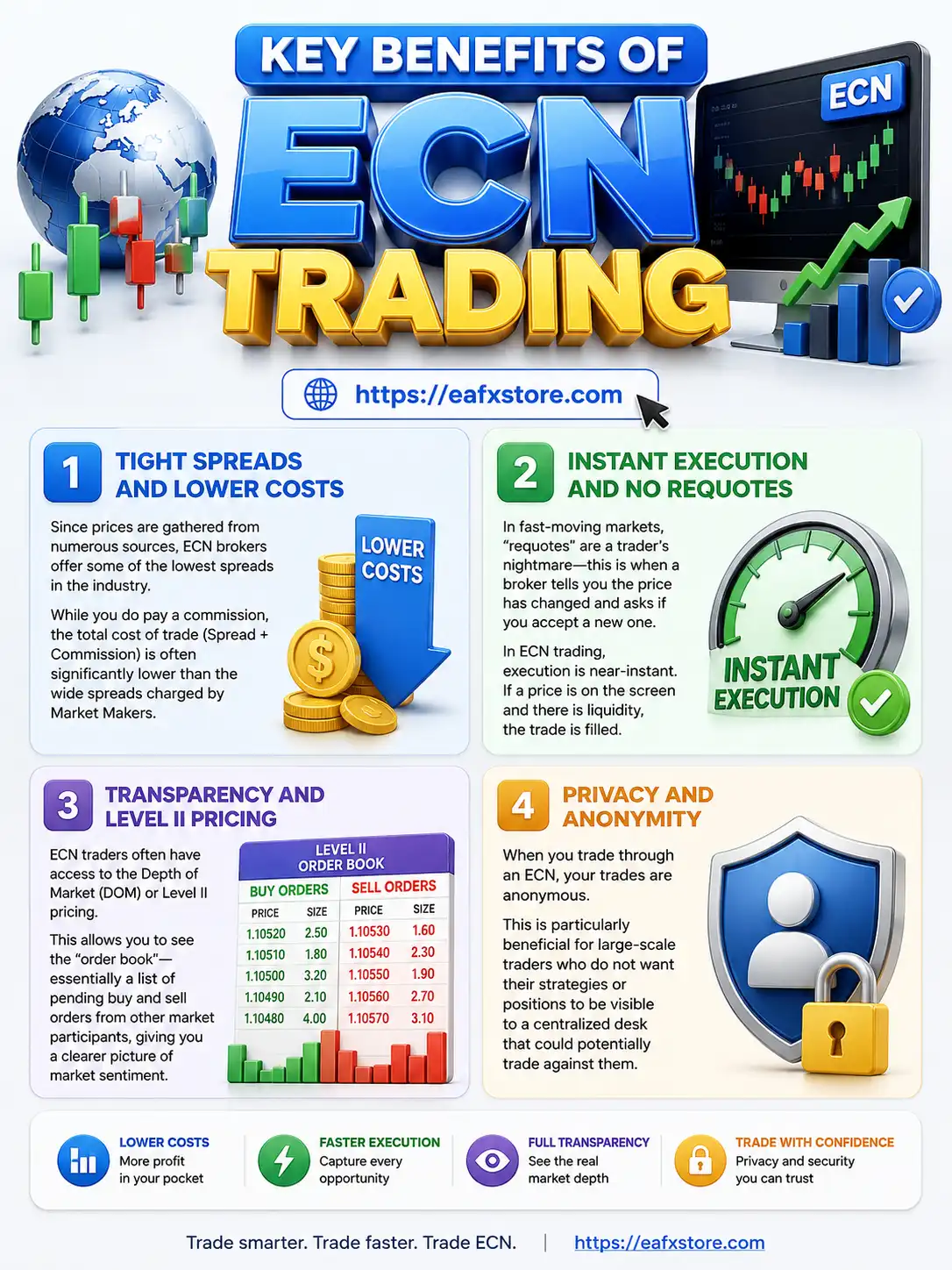
Tight Spreads and Lower Costs
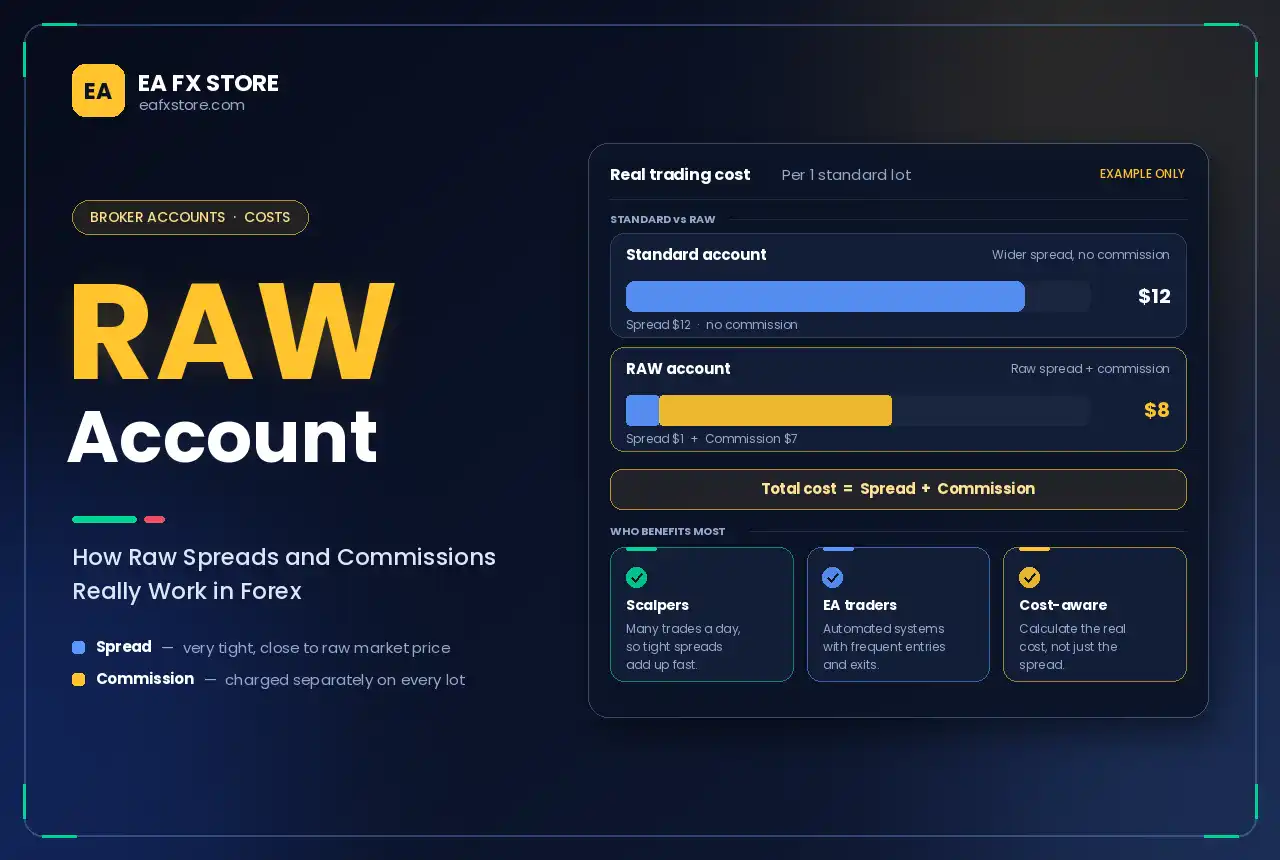
Since prices are gathered from numerous sources, ECN brokers offer some of the lowest spreads in the industry. While you do pay a commission, the total cost of trade (Spread + Commission) is often significantly lower than the wide spreads charged by Market Makers.
Instant Execution and No Requotes
In fast-moving markets, “requotes” are a trader’s nightmare—this is when a broker tells you the price has changed and asks if you accept a new one. In ECN trading, execution is near-instant. If a price is on the screen and there is liquidity, the trade is filled.
Transparency and Level II Pricing
ECN traders often have access to the Depth of Market (DOM) or Level II pricing. This allows you to see the “order book”—essentially a list of pending buy and sell orders from other market participants, giving you a clearer picture of market sentiment.
Privacy and Anonymity
When you trade through an ECN, your trades are anonymous. This is particularly beneficial for large-scale traders who do not want their strategies or positions to be visible to a centralized desk that could potentially trade against them.
The Risks and Drawbacks of ECN Trading
While the benefits are compelling, ECN trading is not a “magic pill.” It requires a specific level of capital and a disciplined approach to risk management, as the environment is much more raw and volatile than a simulated dealing desk environment.
Commission Fees
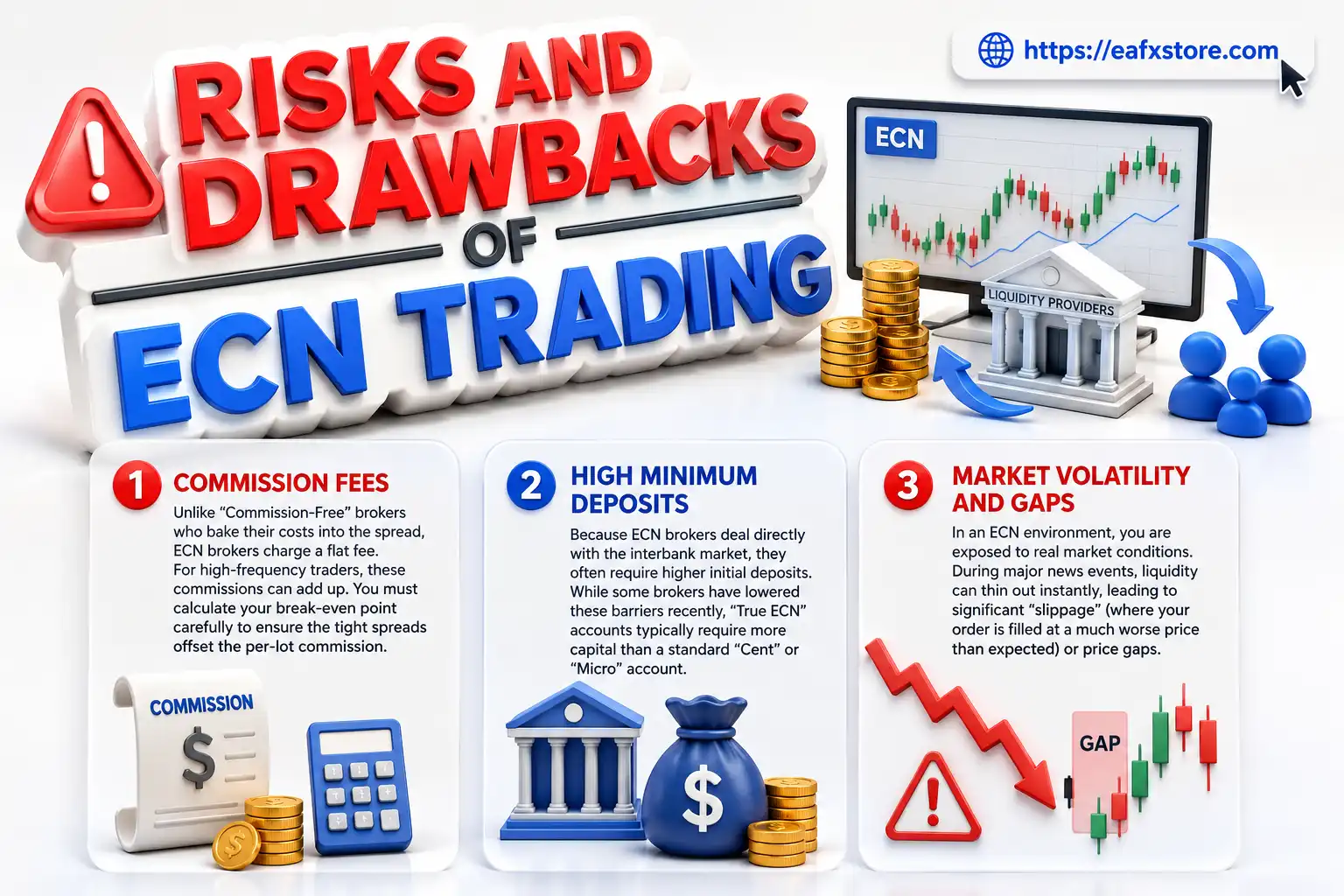
Unlike “Commission-Free” brokers who bake their costs into the spread, ECN brokers charge a flat fee. For high-frequency traders, these commissions can add up. You must calculate your break-even point carefully to ensure the tight spreads offset the per-lot commission.
High Minimum Deposits
Because ECN brokers deal directly with the interbank market, they often require higher initial deposits. While some brokers have lowered these barriers recently, “True ECN” accounts typically require more capital than a standard “Cent” or “Micro” account.
Market Volatility and Gaps
In an ECN environment, you are exposed to real market conditions. During major news events, liquidity can thin out instantly, leading to significant “slippage” (where your order is filled at a much worse price than expected) or price gaps.
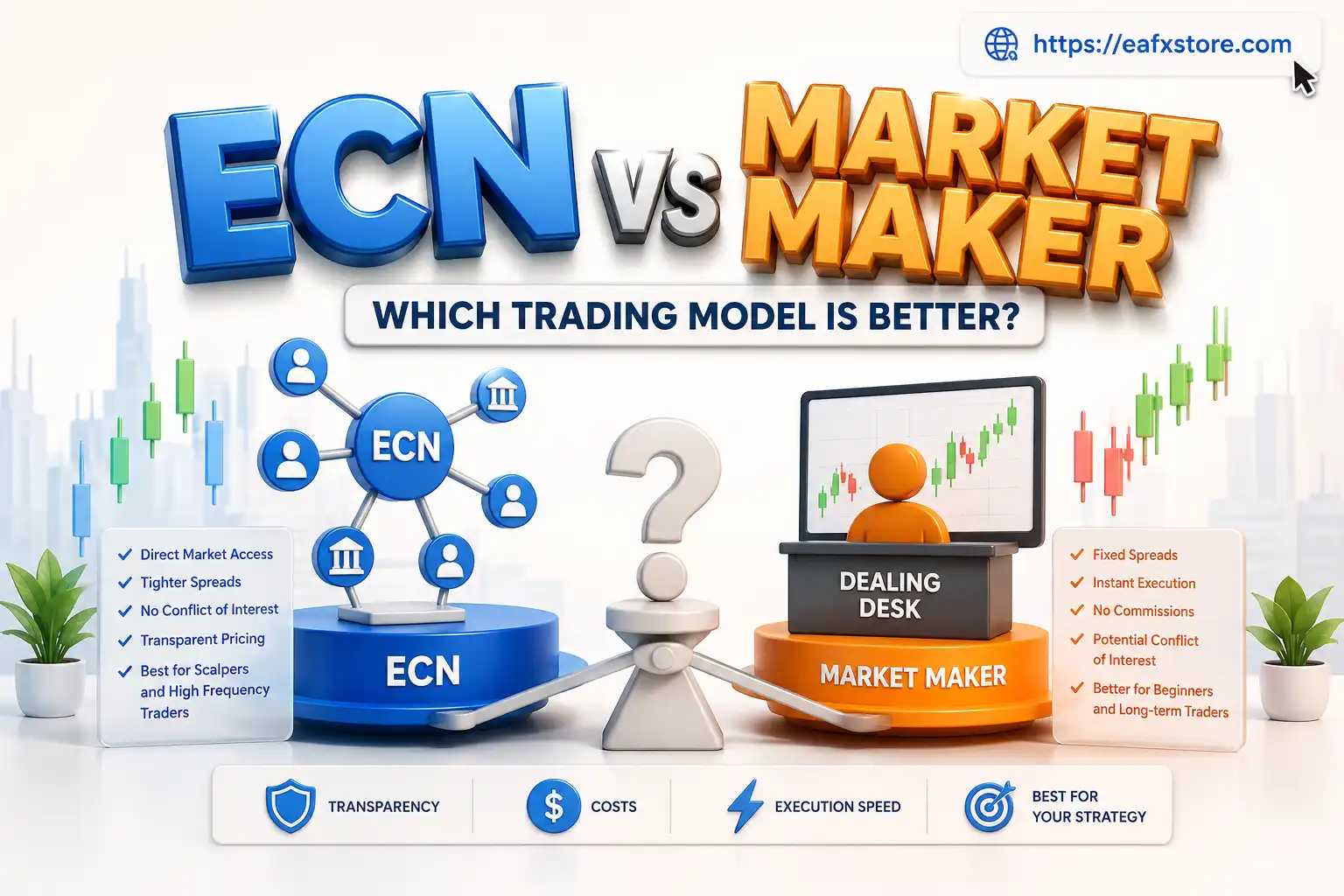
ECN vs. Market Maker: A Comparison
Understanding the difference between these two models is crucial for choosing the right broker. While Market Makers “create” a market for you, ECN brokers “connect” you to the existing market.
| Feature | ECN Broker | Market Maker (Dealing Desk) |
| Spreads | Raw/Variable (as low as 0.0) | Fixed or Wider Variable |
| Execution | Automated/Instant | Manual/Dealing Desk Review |
| Conflict of Interest | None (Broker is a neutral agent) | Potential (Broker may take opposite side) |
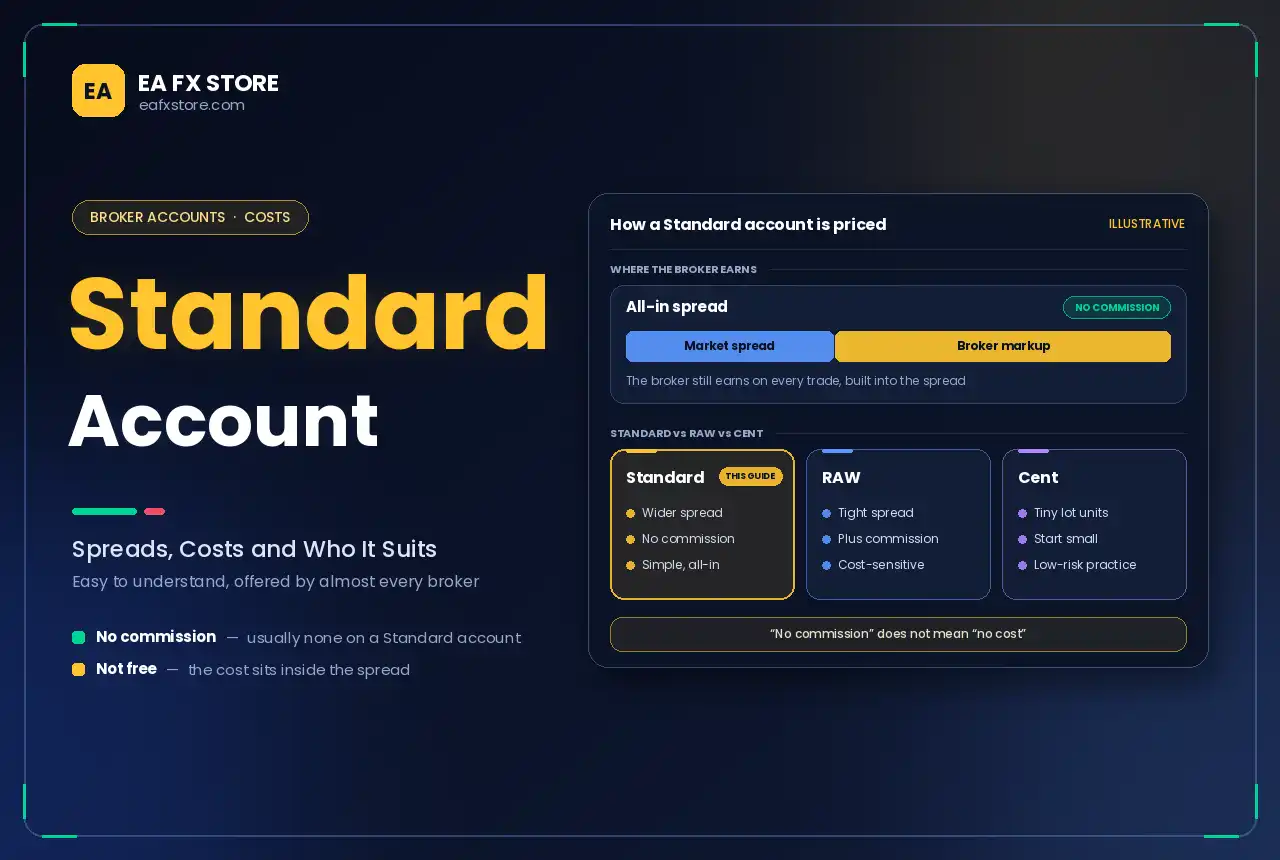
| Commission | Yes (Fixed per lot) | Usually No (Built into spread) |
| Requotes | No | Common in volatile markets |
| Best For | Scalpers, Professional, High-Volume | Beginners, Small accounts |
Who Should Use an ECN Broker?
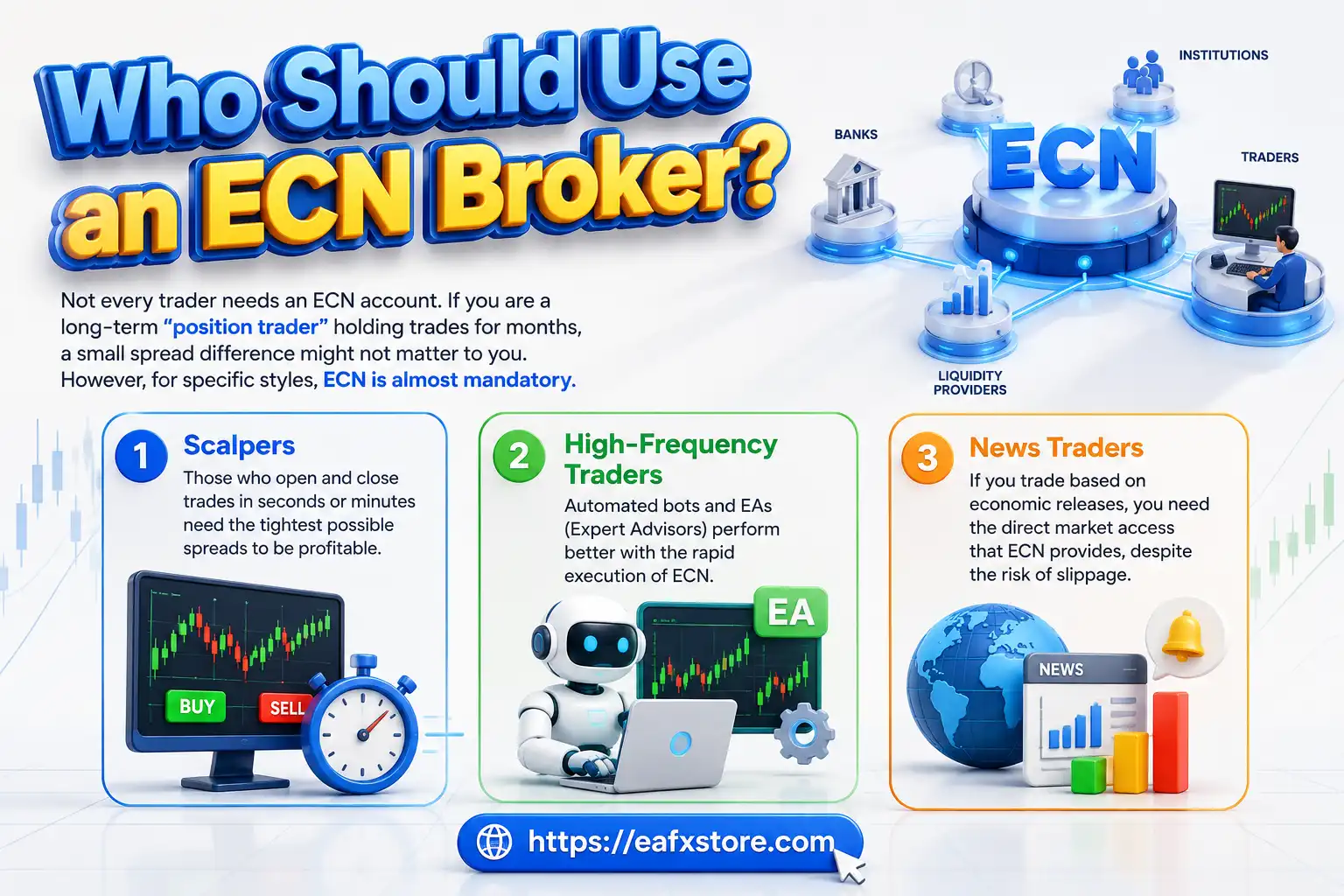
Not every trader needs an ECN account. If you are a long-term “position trader” holding trades for months, a small spread difference might not matter to you. However, for specific styles, ECN is almost mandatory.
- Scalpers: Those who open and close trades in seconds or minutes need the tightest possible spreads to be profitable.
- High-Frequency Traders: Automated bots and EAs (Expert Advisors) perform better with the rapid execution of ECN.
- News Traders: If you trade based on economic releases, you need the direct market access that ECN provides, despite the risk of slippage.
How to Choose the Right ECN Broker
Selecting a partner for your ECN trading journey requires due diligence. Not all brokers that claim to be “ECN” actually are; some use a “hybrid” model.
- Regulation: Ensure the broker is regulated by top-tier authorities (like the FCA, ASIC, or CySEC).
- Server Location: For the fastest execution, look for brokers with servers in major financial hubs like London (LD4) or New York (NY4).
- Transparency: A true ECN broker should be willing to provide trade execution reports showing which liquidity provider filled your order.
- Trading Platforms: Most ECN trading happens on MetaTrader 4/5, cTrader, or proprietary institutional-grade platforms.
Conclusion
ECN trading represents the “gold standard” for transparency and efficiency in the financial markets. By removing the middleman and allowing traders to interact directly with global liquidity, it levels the playing field. While it comes with the cost of commissions and the requirement of higher capital, the benefits of tight spreads and honest execution often outweigh the drawbacks for those serious about their trading career.
As the markets become increasingly digitized in 2026, understanding these underlying structures is no longer optional—it is a necessity for any trader looking to achieve consistent success.
Frequently Asked Questions (FAQs)
❓ Is ECN trading better than STP?
STP (Straight Through Processing) is similar to ECN as both avoid the dealing desk. However, while STP sends orders directly to providers, ECN acts as a hub where all participants can trade against each other, often resulting in even better liquidity and transparency than standard STP.
❓ Can I trade ECN with a small account?
Many modern brokers now offer “Mini ECN” accounts with deposits as low as $100–$500. However, to truly benefit from the cost structure, accounts over $2,000 are generally recommended to handle the margin requirements and commissions.
❓ Do ECN brokers allow scalping?
Yes, absolutely. In fact, ECN brokers welcome scalpers because they profit from the volume of trades via commissions. Unlike Market Makers, who might ban scalpers for “gaming” their systems, ECNs are the natural home for high-frequency strategies.
❓ What is “Slippage” in ECN trading?
Slippage occurs when your order is filled at a price different from the one you requested. This happens in ECN trading during high volatility because the system fills your order at the next best available price in the liquidity pool.
❓ Why do ECN brokers charge commission?
Since ECN brokers do not make money from the spread (they pass the raw market price to you), the commission is their only way to cover operational costs and generate profit. It is a transparent fee for the service of market access.