
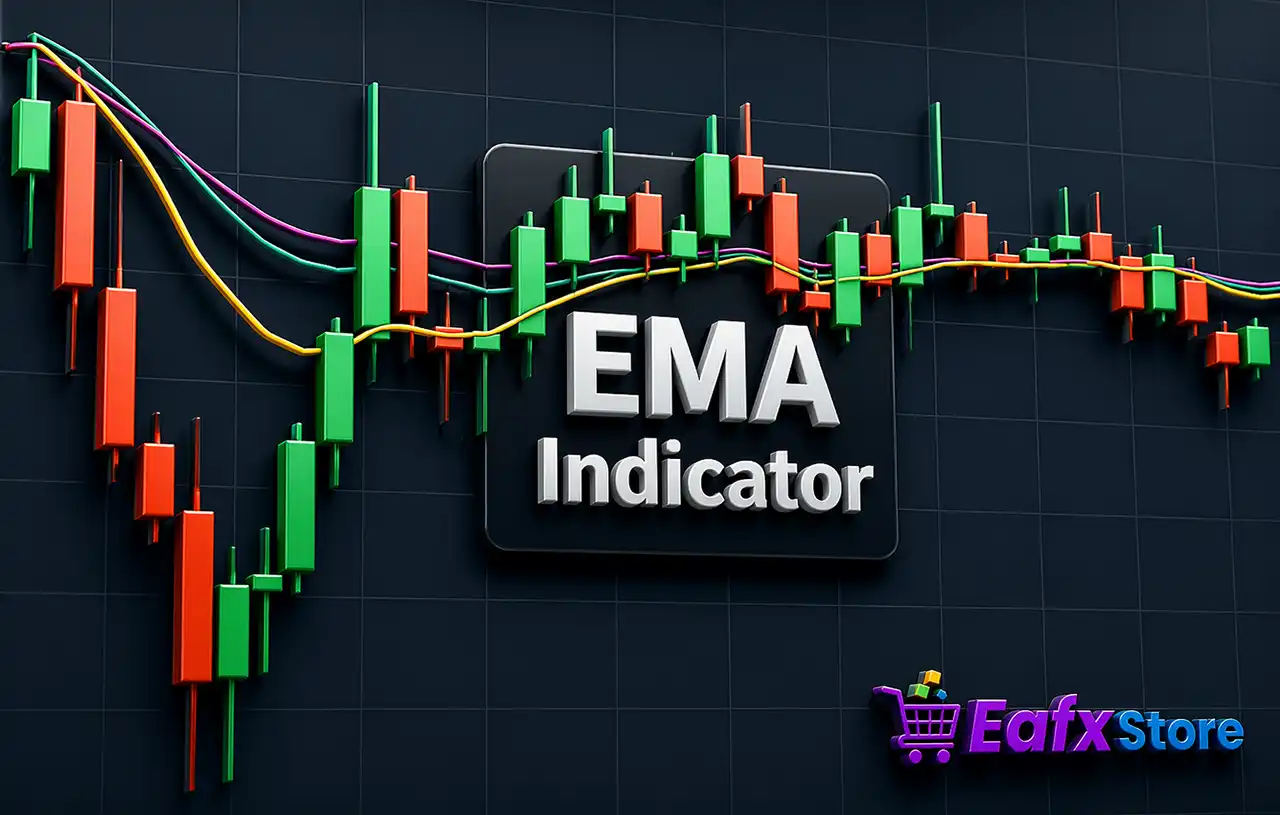
The foreign exchange (Forex) market is one of the most dynamic and liquid financial markets in the world, attracting millions of traders seeking profit opportunities. Among the many tools available to traders, the Exponential Moving Average (EMA) stands out as one of the most powerful and widely used indicators.
If you’re new to Forex trading, understanding how EMA works can significantly improve your ability to identify trends, time entries and manage risk. This guide will walk you through everything you need to know about EMA—from the basics to actionable trading strategies—so you can start using it confidently.
What is EMA in Forex Trading?
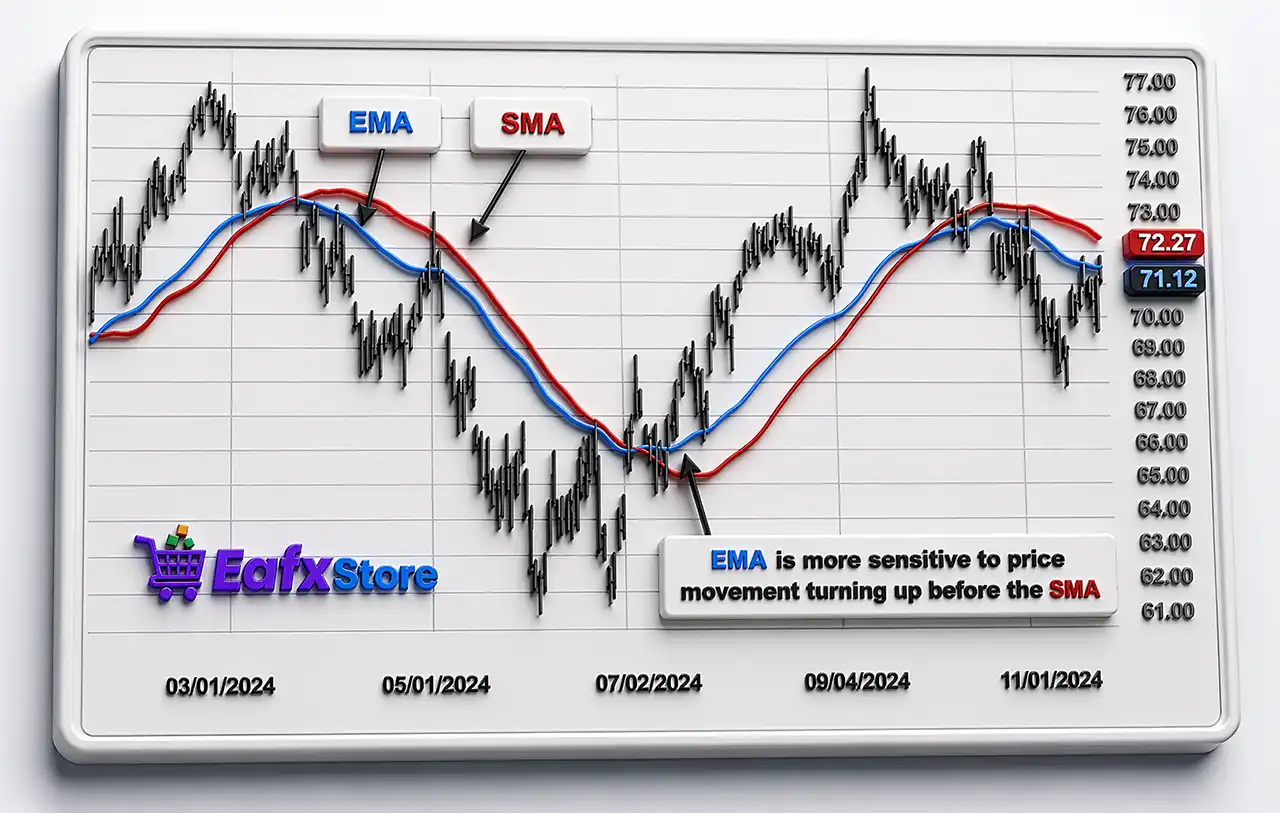
The Exponential Moving Average (EMA) is a type of moving average that gives more weight to recent price data. Unlike the Simple Moving Average (SMA), which treats all data equally, EMA reacts faster to price changes.
This responsiveness makes EMA particularly useful in the fast-paced Forex market, where timing is critical.
Key Characteristics of EMA:
- Prioritizes recent price movements
- Responds quickly to market changes
- Helps identify trends and reversals
- Widely used in short-term and long-term strategies
How EMA Works
EMA is calculated using a smoothing factor that emphasizes recent prices. While the formula might look complex, most trading platforms calculate it automatically.
Common EMA Periods:
- 9 EMA – Short-term trends
- 20 EMA – Medium-term trends
- 50 EMA – Key trend indicator
- 200 EMA – Long-term market direction
Shorter EMAs react faster but may produce more false signals, while longer EMAs are more stable but slower.
Why Use EMA in Forex Trading?
EMA is popular among traders because it provides clear and actionable insights.
1. Trend Identification
EMA helps traders determine whether the market is trending upward or downward.
- Price above EMA → Uptrend
- Price below EMA → Downtrend
2. Dynamic Support and Resistance
EMA often acts as a moving support or resistance level where price tends to bounce.
3. Entry and Exit Signals
Crossovers between price and EMA—or between multiple EMAs—can signal potential trade opportunities.
Types of EMA Strategies
Let’s explore some of the most effective EMA-based strategies for beginners.
1. Single EMA Strategy
This is the simplest way to use EMA.
How it works:
- Use a 50 EMA
- Buy when price crosses above EMA
- Sell when price crosses below EMA
Pros:
- Easy to understand
- Ideal for beginners
Cons:
- Can produce false signals in sideways markets
2. EMA Crossover Strategy
This is one of the most popular strategies.
Setup:
- Use two EMAs (e.g., 9 EMA and 21 EMA)
Signals:
- Buy signal: Short EMA crosses above long EMA
- Sell signal: Short EMA crosses below long EMA
Why it works:
This strategy captures momentum shifts early, allowing traders to enter trends sooner.
3. Triple EMA Strategy
For more accuracy, traders often use three EMAs.
Setup:
- 9 EMA (fast)
- 21 EMA (medium)
- 50 EMA (slow)
Buy Conditions:
- 9 EMA above 21 EMA
- 21 EMA above 50 EMA
Sell Conditions:
- Reverse of the above
This strategy filters out noise and confirms strong trends.
4. EMA + Price Action Strategy
Combining EMA with price action improves reliability.
How to use:
- Wait for price to pull back to EMA
- Look for candlestick confirmation (e.g., pin bar, engulfing candle)
- Enter in the direction of the trend
This approach reduces false entries and increases precision.
Best Timeframes for EMA Trading
EMA can be applied to any timeframe, but effectiveness varies:
- Scalping: 1-minute to 5-minute charts (use 9 EMA, 20 EMA)
- Day trading: 15-minute to 1-hour charts
- Swing trading: 4-hour and daily charts (use 50 EMA, 200 EMA)
Beginners are advised to start with higher timeframes for more reliable signals.
Common Mistakes When Using EMA
Even though EMA is powerful, misuse can lead to losses.
1. Using EMA Alone
EMA should not be your only tool. Combine it with:
- RSI
- MACD
- Support and resistance levels
2. Ignoring Market Conditions
EMA works best in trending markets, not in sideways conditions.
3. Overtrading
Frequent signals from short EMAs can tempt traders to overtrade.
4. No Risk Management
Always use stop-loss and proper position sizing.
Tips for Profitable EMA Trading
To maximize your success with EMA, follow these tips:
✔ Use Multiple EMAs
Combining short and long EMAs provides better confirmation.
✔ Trade with the Trend
Avoid going against the EMA direction.
✔ Combine Indicators
Use EMA with momentum indicators for stronger signals.
✔ Backtest Your Strategy
Test your approach on historical data before trading live.
✔ Be Patient
Wait for clear setups instead of forcing trades.
Example of an EMA Trade
Let’s walk through a simple scenario:
- You apply a 50 EMA on a 1-hour chart
- Price is consistently above EMA → Uptrend
- Price pulls back to EMA
- A bullish engulfing candle forms
- You enter a buy trade
- Stop-loss placed below EMA
- Take-profit set at previous resistance
This is a classic trend-following EMA setup.
Advantages of EMA
- Fast response to price changes
- Works well in trending markets
- Easy to use for beginners
- Flexible across timeframes
Disadvantages of EMA
- Can give false signals in ranging markets
- Requires confirmation from other indicators
- May lag during extreme volatility
EMA vs SMA: Which is Better?
| Feature | EMA | SMA |
|---|---|---|
| Speed | Faster | Slower |
| Accuracy | Better for short-term | Better for long-term |
| Sensitivity | High | Low |
In Forex trading, EMA is generally preferred due to its responsiveness.
Final Thoughts
The Exponential Moving Average (EMA) is an essential tool for any Forex trader, especially beginners. Its ability to quickly reflect market changes makes it invaluable for identifying trends and spotting trading opportunities.
However, like any indicator, EMA is not foolproof. The key to success lies in combining EMA with other tools, practicing disciplined risk management, and continuously improving your strategy.