
The Commodity Channel Index (CCI) is one of the most versatile technical indicators used in Forex trading. Originally developed by Donald Lambert, CCI was designed to identify cyclical trends in commodities—but over time, it has proven highly effective in Forex, stocks and other financial markets.
In this guide, you’ll learn how the CCI works, how to interpret its signals, and most importantly, how to use it effectively to improve your Forex trading strategy.
What is the Commodity Channel Index (CCI)?
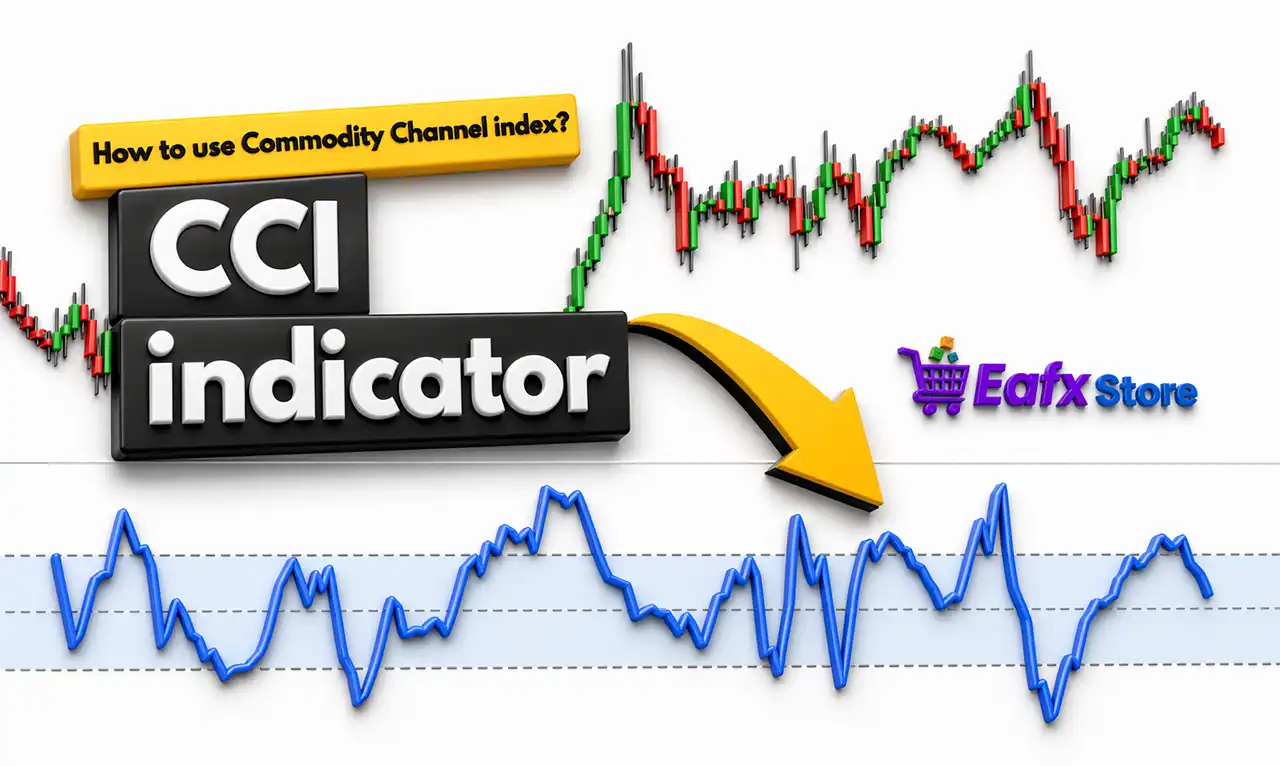
The Commodity Channel Index (CCI) is a momentum-based oscillator that measures the deviation of price from its statistical average. In simple terms, it shows whether a currency pair is overbought or oversold.
The CCI fluctuates above and below zero, typically within a range of:
- +100 (overbought zone)
- -100 (oversold zone)
However, unlike many oscillators, CCI is not strictly bound within these levels, which makes it particularly useful for identifying strong trends.
How Does CCI Work?
CCI calculates the difference between the current price and its moving average, then normalizes it using mean deviation.
Key Interpretation:
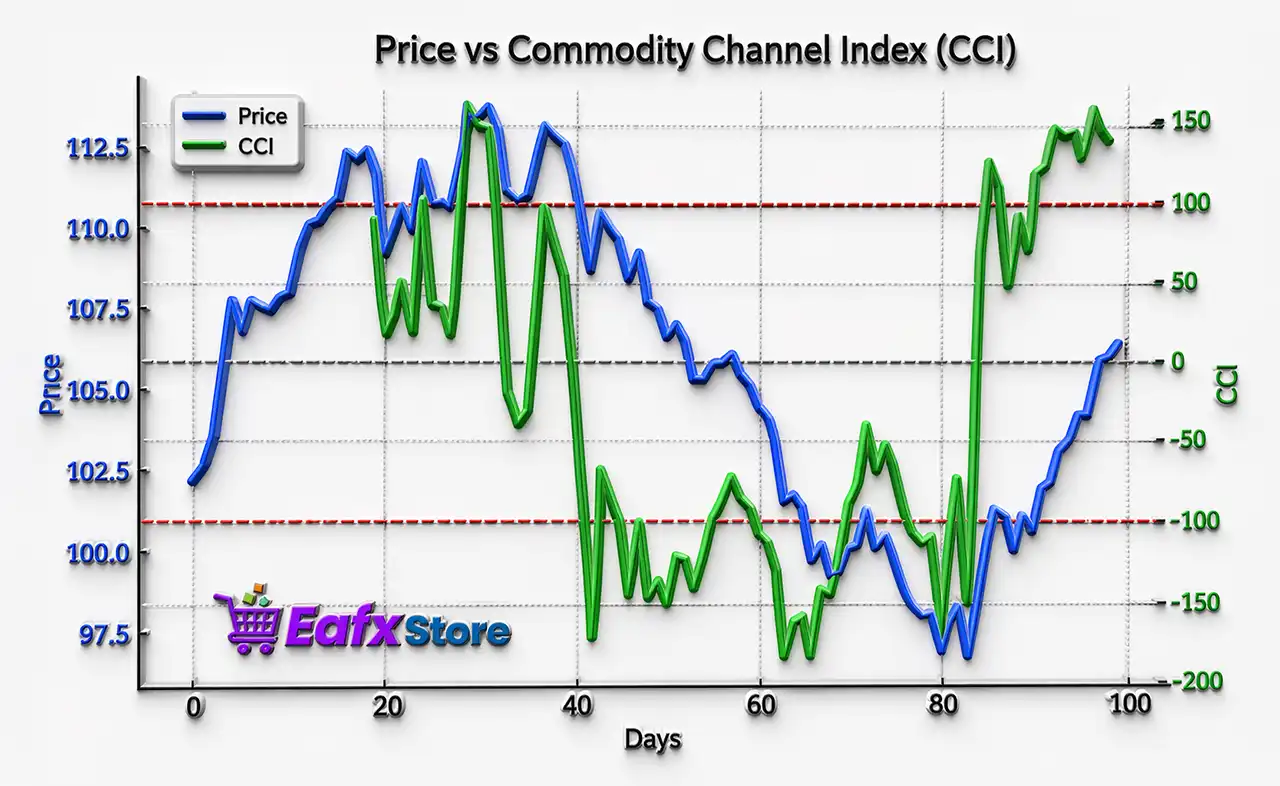
- CCI > +100 → Strong upward momentum (potential overbought)
- CCI < -100 → Strong downward momentum (potential oversold)
- CCI around 0 → Neutral market conditions
The indicator helps traders identify:
- Trend direction
- Entry and exit points
- Potential reversals
Why Use CCI in Forex Trading?
Forex markets are highly dynamic, and momentum plays a crucial role in price movement. CCI helps traders:
- Detect early trend formations
- Confirm trade entries
- Avoid false breakouts
- Improve timing precision
Unlike RSI or Stochastic, CCI is more sensitive to price changes, which can be an advantage for active traders.
Best CCI Settings for Forex
The default setting for CCI is 14 periods, but this can be adjusted depending on your trading style:
- Short-term traders (scalping/day trading): 5–10 periods
- Swing traders: 14–20 periods
- Long-term traders: 20–50 periods
Shorter periods = more signals (but more noise)
Longer periods = fewer signals (but more reliable)
How to Use CCI Effectively
1. Identifying Overbought and Oversold Conditions
This is the most basic use of CCI.
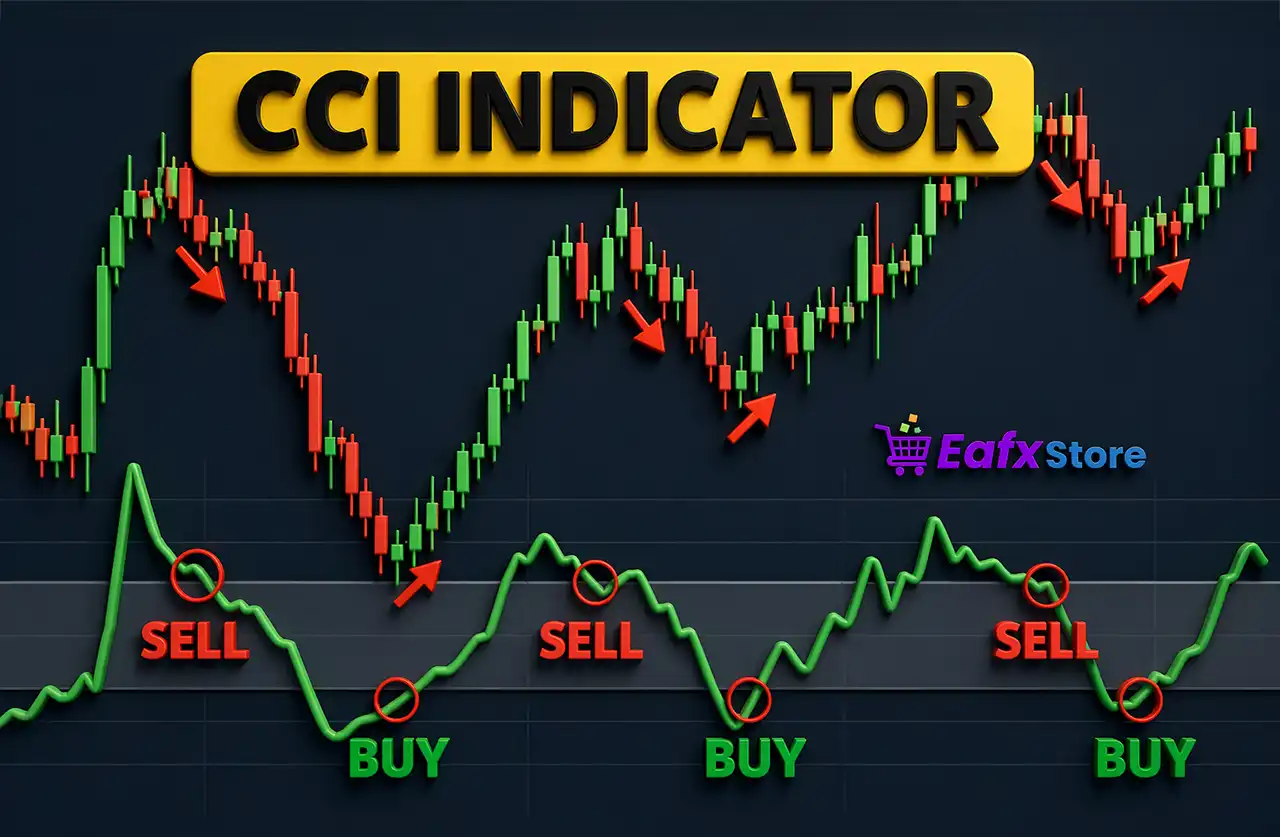
- When CCI crosses above +100 → Market may be overbought → Look for sell opportunities
- When CCI crosses below -100 → Market may be oversold → Look for buy opportunities
Tip: Don’t trade blindly. Combine with support/resistance or price action.
2. Trading with the Trend
Instead of using CCI for reversals, you can use it to trade with the trend:
- In an uptrend: Look for CCI dips below 0 and then rising again → Buy signal
- In a downtrend: Look for CCI spikes above 0 and then falling → Sell signal
This method reduces false signals and aligns trades with market momentum.
3. CCI Zero Line Strategy
The zero line acts as a trend filter:
- CCI above 0 → Bullish bias
- CCI below 0 → Bearish bias
Strategy:
- Buy when CCI crosses above 0
- Sell when CCI crosses below 0
This approach works well in trending markets but may produce false signals in sideways conditions.
4. Spotting Divergences
Divergence is a powerful signal for potential reversals.
- Bullish divergence: Price makes lower lows, but CCI makes higher lows → Possible upward reversal
- Bearish divergence: Price makes higher highs, but CCI makes lower highs → Possible downward reversal
Divergences often appear before major market turning points.
5. Breakout Confirmation
CCI can confirm breakouts:
- If price breaks resistance and CCI rises above +100 → Strong bullish breakout
- If price breaks support and CCI drops below -100 → Strong bearish breakout
This helps filter fake breakouts.
Combining CCI with Other Indicators
Using CCI alone is not recommended. Combining it with other tools increases accuracy.
Effective Combinations:
- CCI + Moving Average: Identify trend + entry timing
- CCI + RSI: Confirm overbought/oversold conditions
- CCI + Support/Resistance: Improve entry precision
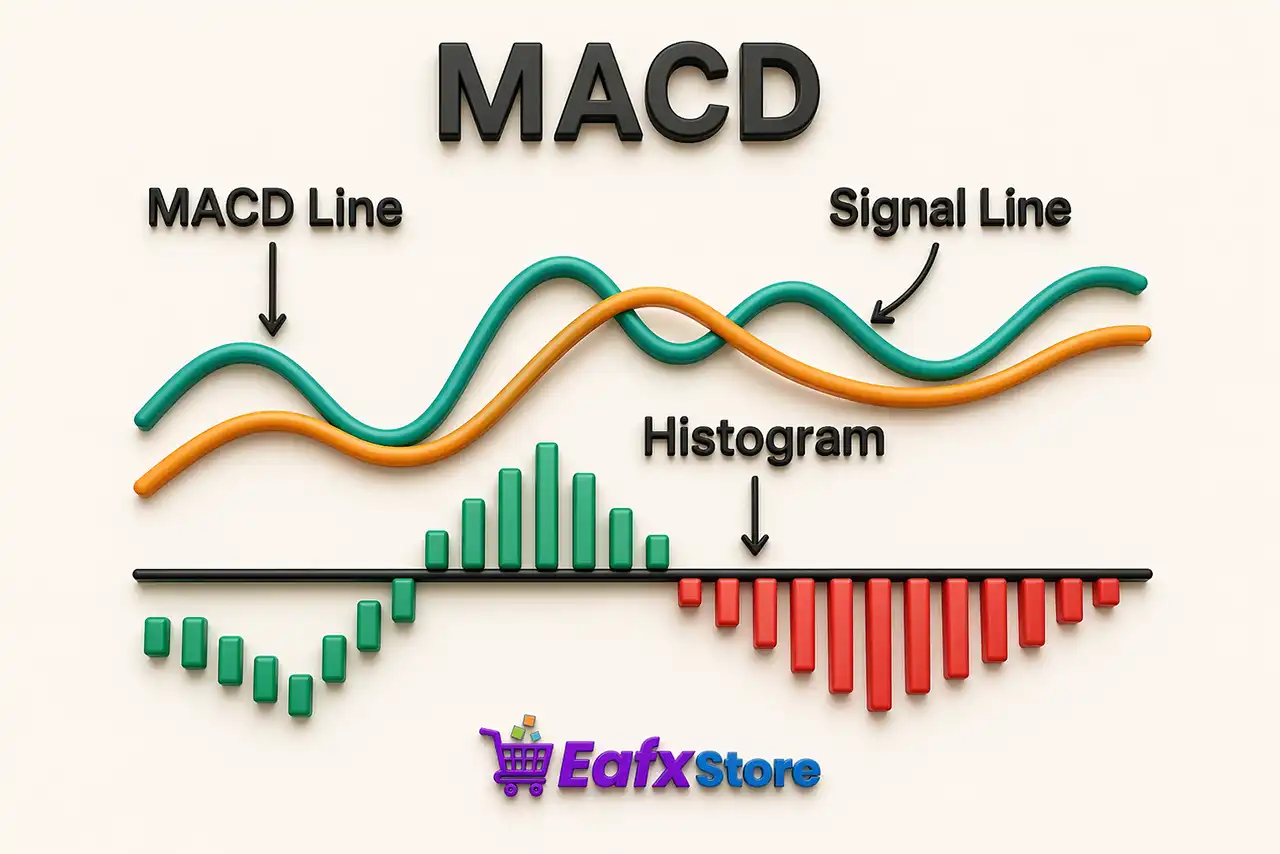
- CCI + MACD: Confirm momentum and trend strength
The goal is to reduce false signals and improve trade confidence.
Common Mistakes When Using CCI
Even though CCI is powerful, many traders misuse it.
1. Treating +100/-100 as Absolute Reversal Levels
Markets can stay overbought or oversold for a long time in strong trends.
2. Ignoring Market Context
CCI works differently in trending vs ranging markets.
3. Overtrading
Because CCI is sensitive, it can generate too many signals.
4. Using It Alone
Always combine with other tools or price action.
Practical Example of CCI Strategy
Let’s say you are trading EUR/USD:
- Identify trend using a 50-period moving average
- Wait for CCI (14) to dip below -100 in an uptrend
- Enter buy when CCI crosses back above -100
- Place stop loss below recent support
- Take profit at resistance level
This strategy focuses on buying pullbacks in an uptrend.
Advantages and Disadvantages of CCI
1. Advantages:
- Works in multiple market conditions
- Helps identify strong trends
- Provides early signals
- Flexible across timeframes
2. Disadvantages:
- Can generate false signals in sideways markets
- Requires confirmation from other tools
- Sensitive settings may lead to overtrading
Tips to Improve Your CCI Trading
- Always analyze higher timeframes for trend direction
- Use risk management (stop loss, position sizing)
- Backtest your strategy before live trading
- Avoid trading during major news events
- Stick to one strategy and master it
Consistency matters more than complexity.
Conclusion
The Commodity Channel Index (CCI) is a powerful and flexible tool that can significantly enhance your Forex trading when used correctly. Whether you’re identifying trends, spotting reversals, or confirming breakouts, CCI provides valuable insights into market momentum.
However, like any indicator, it should not be used in isolation. The key to success lies in combining CCI with other technical tools, understanding market context and applying disciplined risk management.
Mastering CCI takes practice, but once you do, it can become a core part of your profitable trading strategy.