
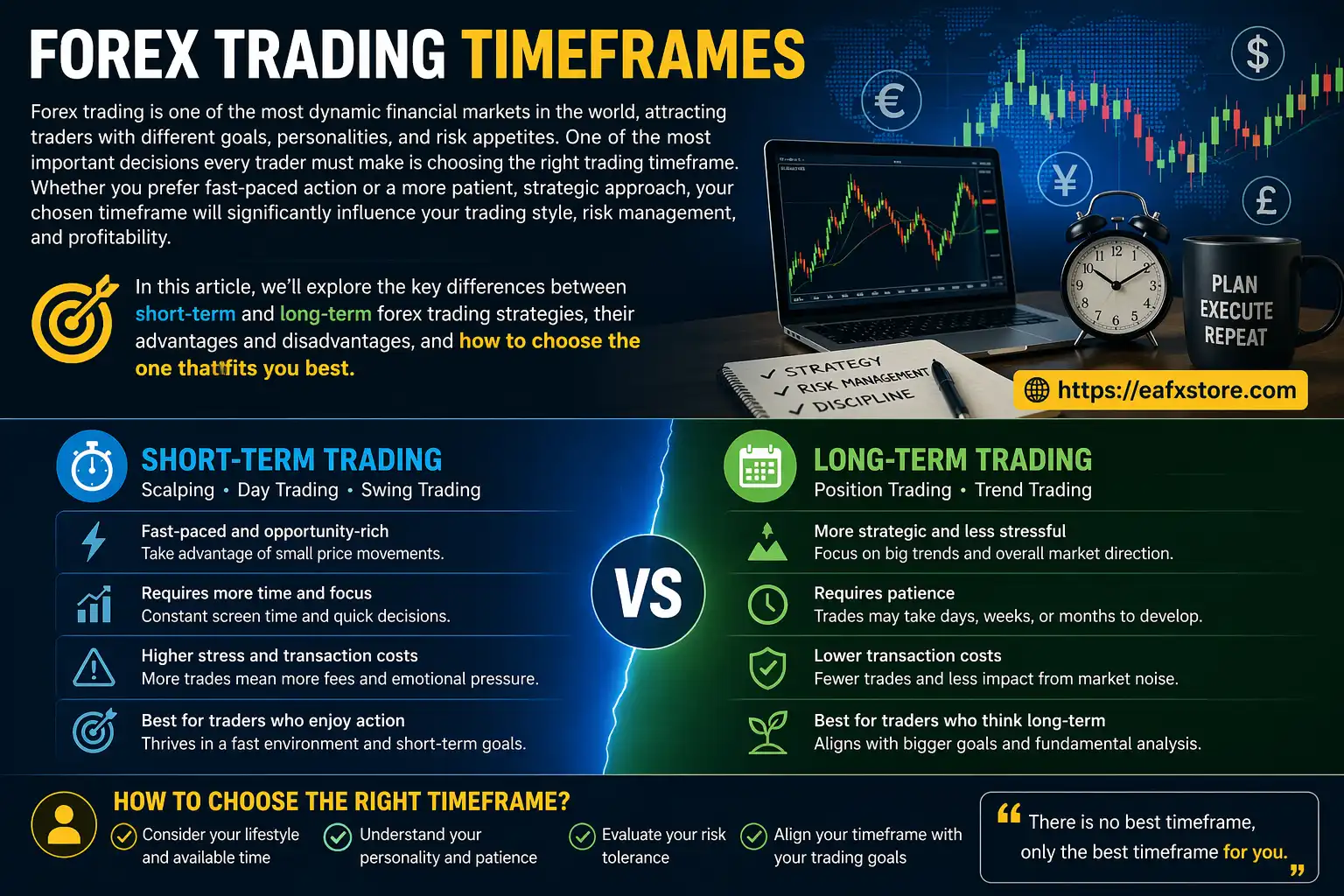
Forex trading is one of the most dynamic financial markets in the world, attracting traders with different goals, personalities and risk appetites. One of the most important decisions every trader must make is choosing the right trading timeframe. Whether you prefer fast-paced action or a more patient, strategic approach, your chosen timeframe will significantly influence your trading style, risk management and profitability.
In this article, we’ll explore the key differences between short-term and long-term forex trading strategies, their advantages and disadvantages and how to choose the one that fits you best.
Understanding Forex Trading Timeframes
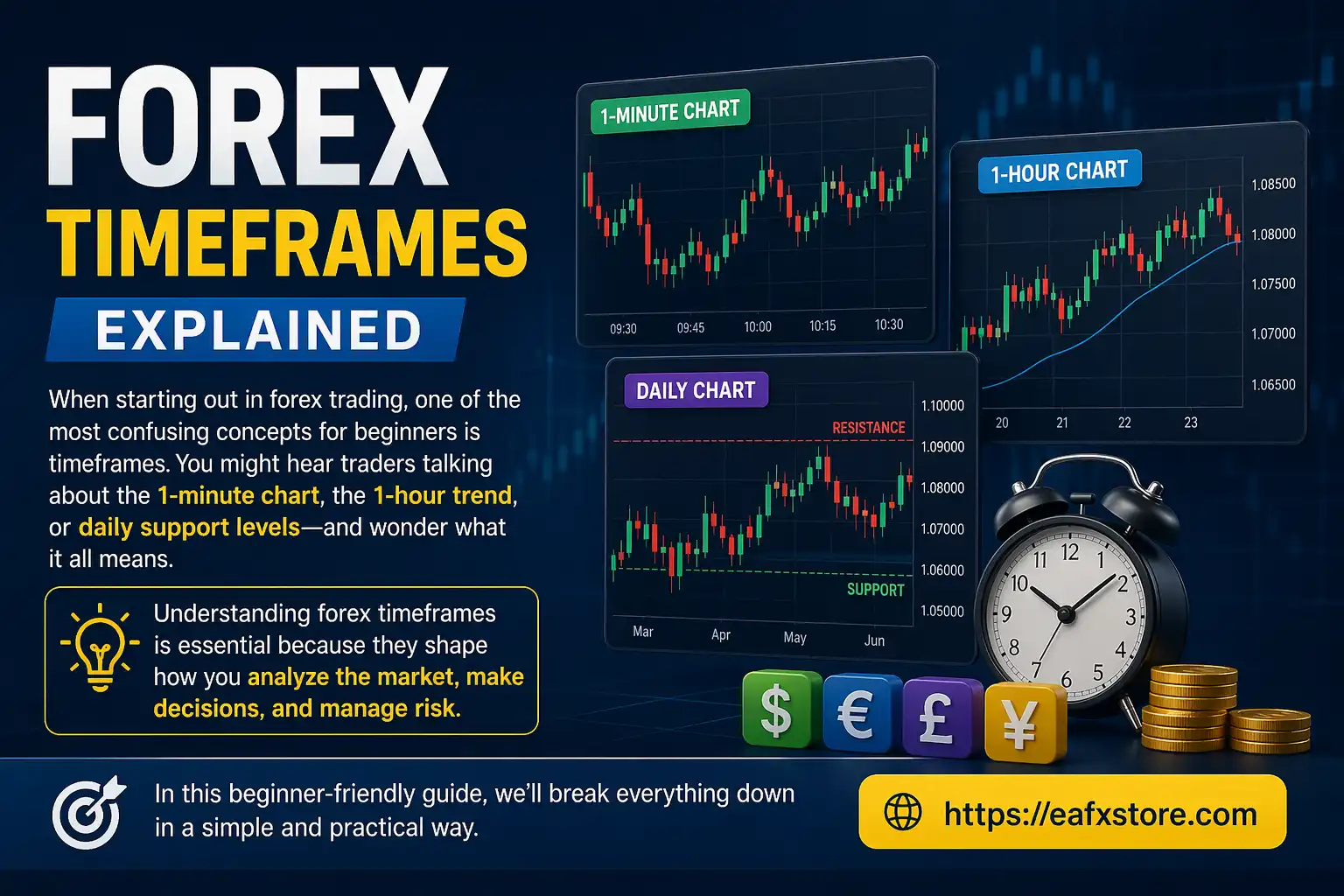
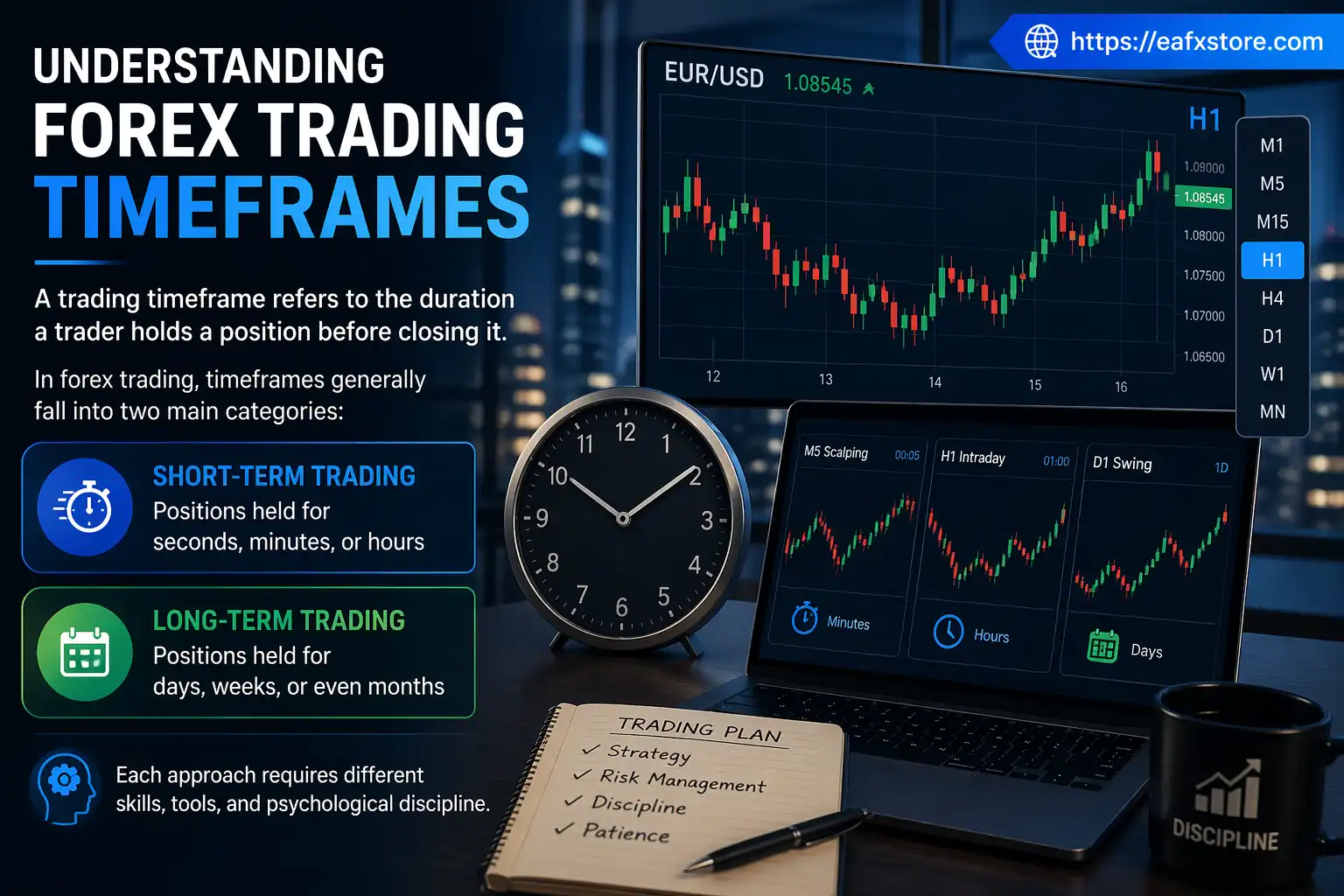
A trading timeframe refers to the duration a trader holds a position before closing it. In forex trading, timeframes generally fall into two main categories:
- Short-term trading: Positions held for seconds, minutes or hours
- Long-term trading: Positions held for days, weeks or even months
Each approach requires different skills, tools and psychological discipline.
Short-Term Forex Trading Strategies
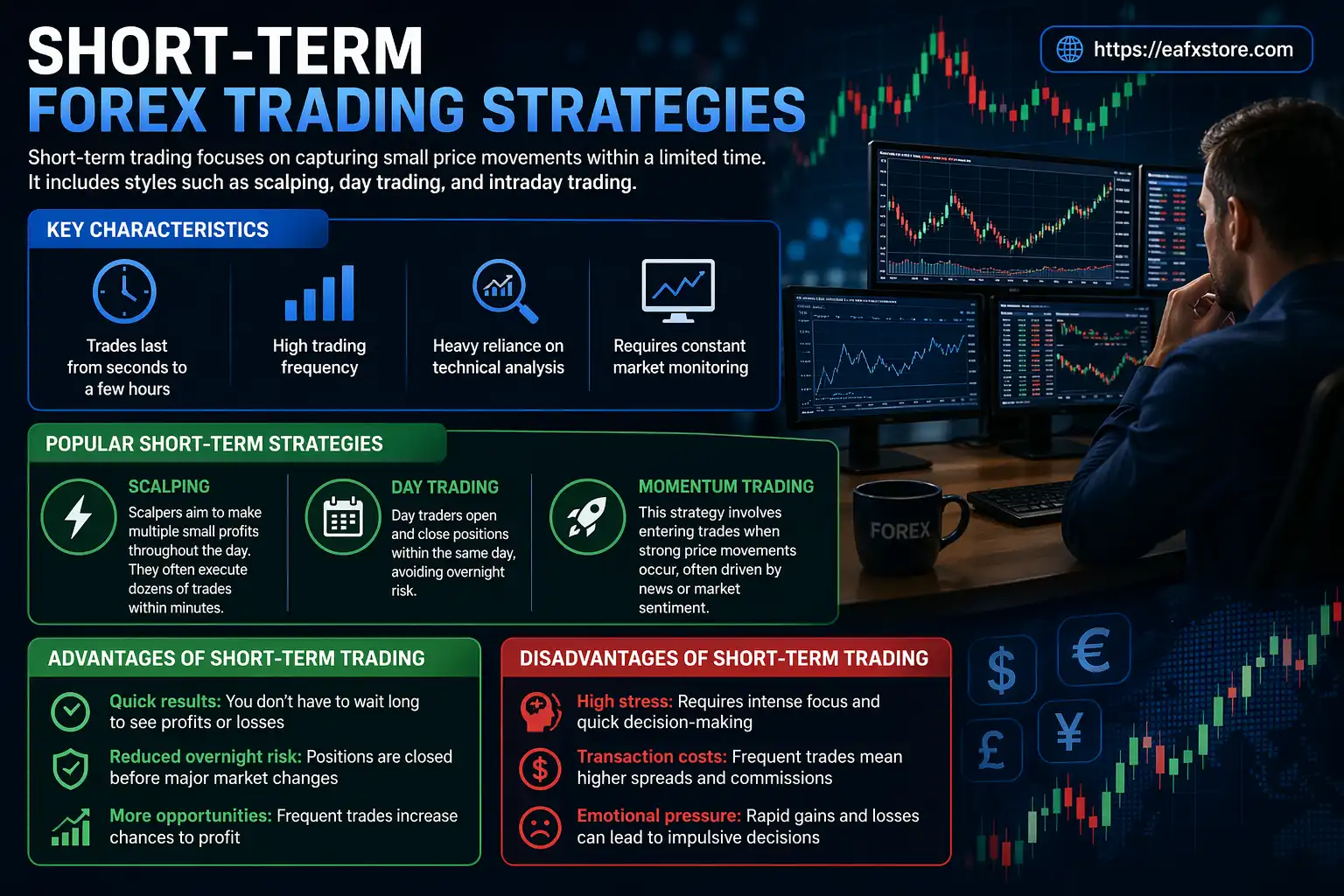
Short-term trading focuses on capturing small price movements within a limited time. It includes styles such as scalping, day trading, and intraday trading.
Key Characteristics
- Trades last from seconds to a few hours
- High trading frequency
- Heavy reliance on technical analysis
- Requires constant market monitoring
Popular Short-Term Strategies
- Scalping Scalpers aim to make multiple small profits throughout the day. They often execute dozens of trades within minutes.
- Day Trading Day traders open and close positions within the same day, avoiding overnight risk.
- Momentum Trading This strategy involves entering trades when strong price movements occur, often driven by news or market sentiment.
Advantages of Short-Term Trading
- Quick results: You don’t have to wait long to see profits or losses
- Reduced overnight risk: Positions are closed before major market changes
- More opportunities: Frequent trades increase chances to profit
Disadvantages of Short-Term Trading
- High stress: Requires intense focus and quick decision-making
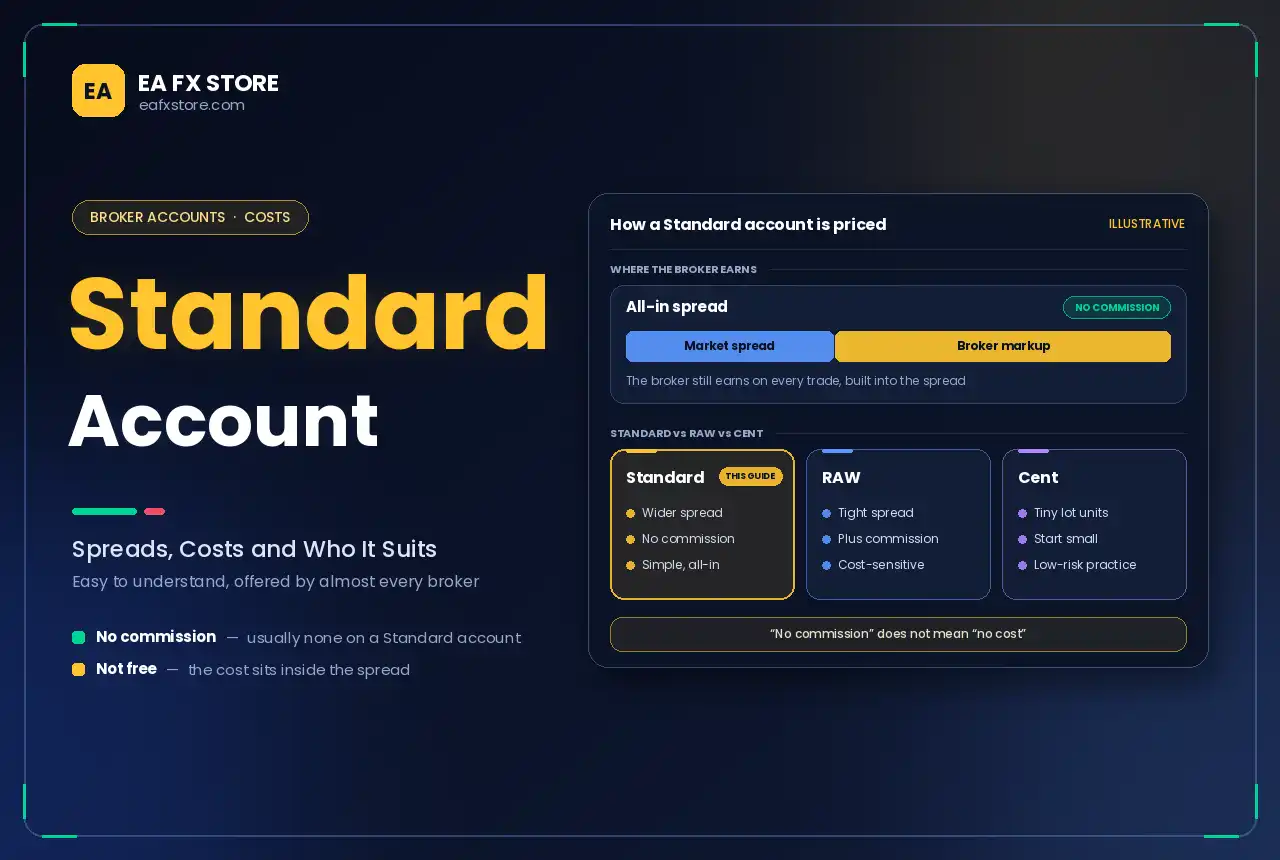
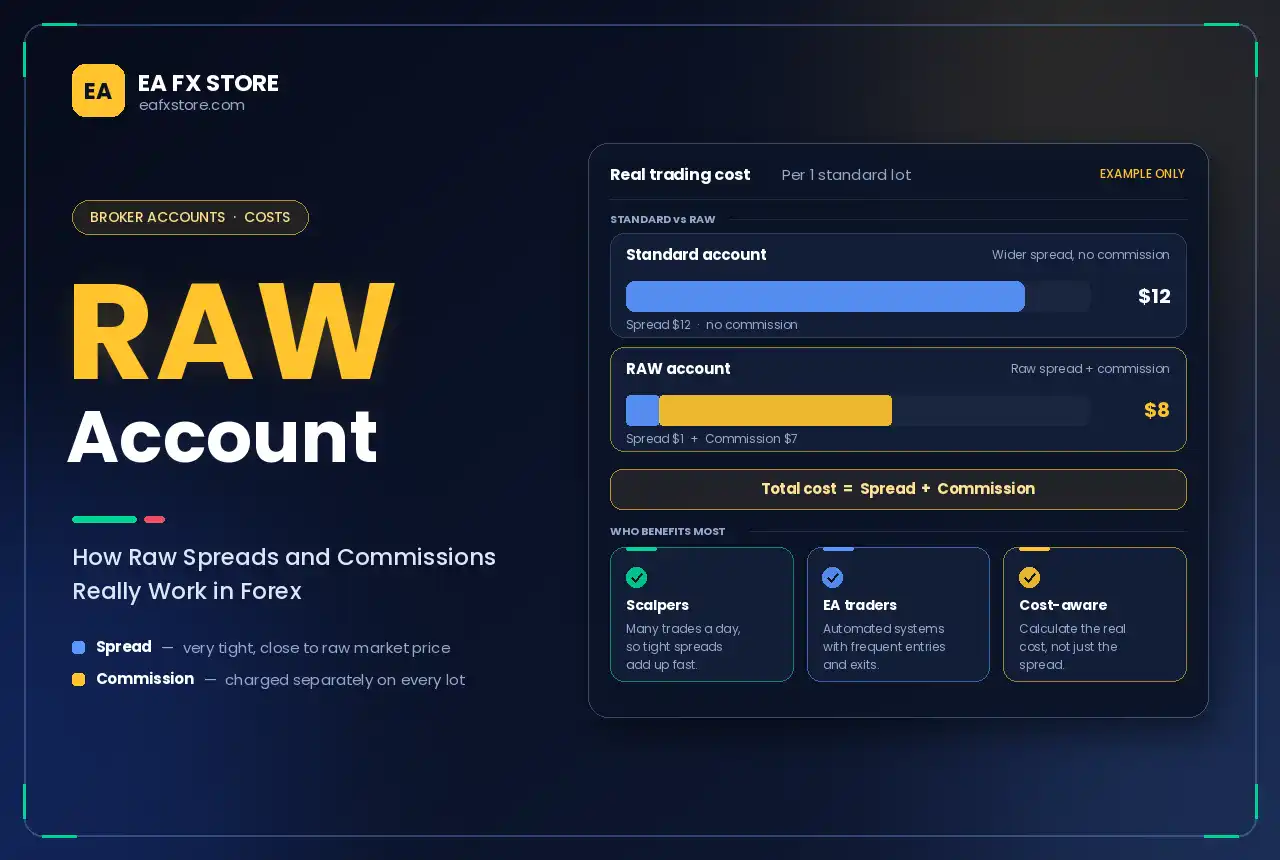
- Transaction costs: Frequent trades mean higher spreads and commissions
- Emotional pressure: Rapid gains and losses can lead to impulsive decisions
Long-Term Forex Trading Strategies
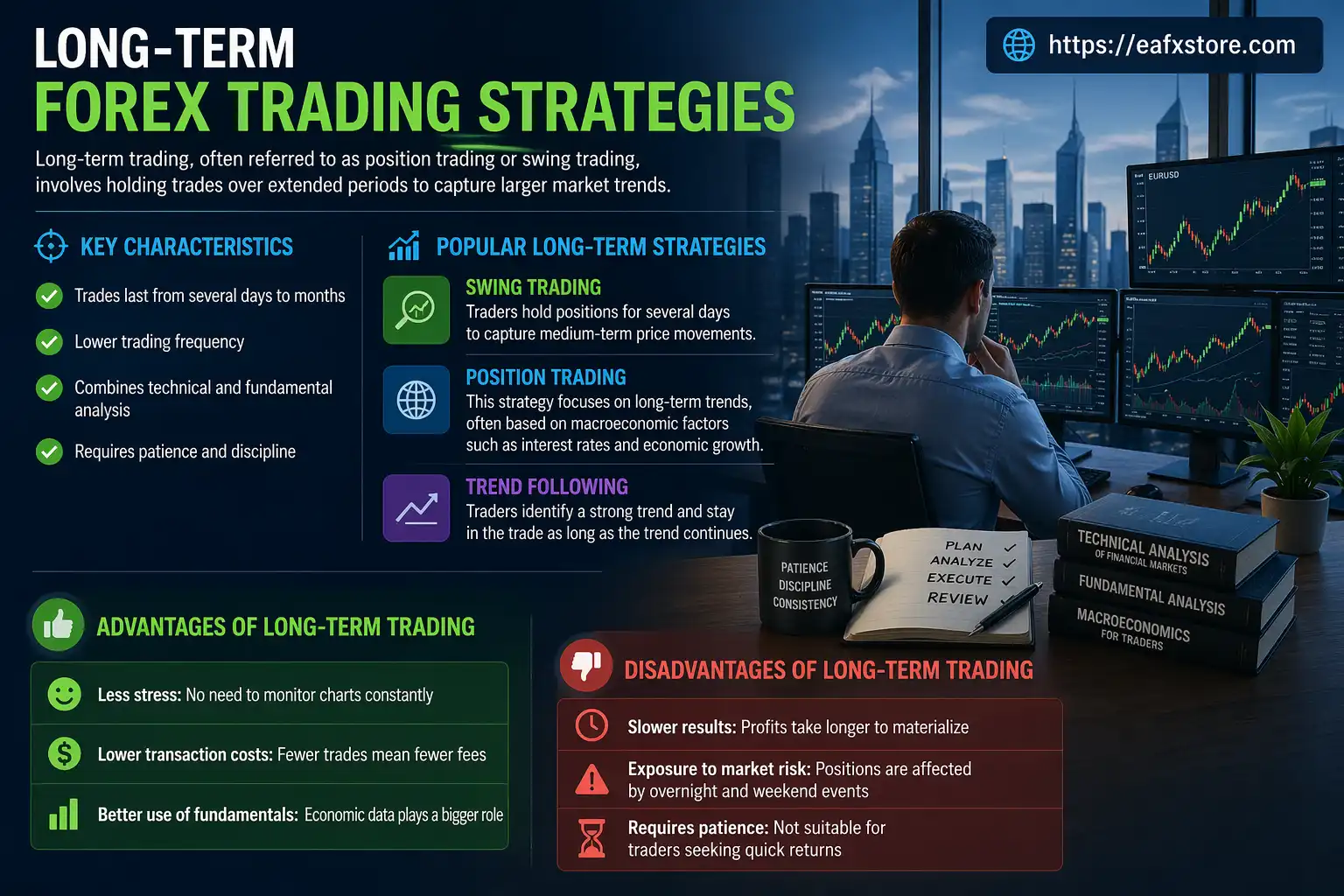
Long-term trading, often referred to as position trading or swing trading, involves holding trades over extended periods to capture larger market trends.
Key Characteristics
- Trades last from several days to months
- Lower trading frequency
- Combines technical and fundamental analysis
- Requires patience and discipline
Popular Long-Term Strategies
- Swing Trading Traders hold positions for several days to capture medium-term price movements.
- Position Trading This strategy focuses on long-term trends, often based on macroeconomic factors such as interest rates and economic growth.
- Trend Following Traders identify a strong trend and stay in the trade as long as the trend continues.
Advantages of Long-Term Trading
- Less stress: No need to monitor charts constantly
- Lower transaction costs: Fewer trades mean fewer fees
- Better use of fundamentals: Economic data plays a bigger role
Disadvantages of Long-Term Trading
- Slower results: Profits take longer to materialize
- Exposure to market risk: Positions are affected by overnight and weekend events
- Requires patience: Not suitable for traders seeking quick returns
Short-Term vs Long-Term: Key Differences
| Factor | Short-Term Trading | Long-Term Trading |
|---|---|---|
| Trade Duration | Seconds to hours | Days to months |
| Analysis Type | Mostly technical | Technical + fundamental |
| Risk Level | High (frequent exposure) | Moderate (long exposure) |
| Time Commitment | Very high | Moderate |
| Profit Potential | Small but frequent | Larger but less frequent |
Which Strategy Is Right for You?
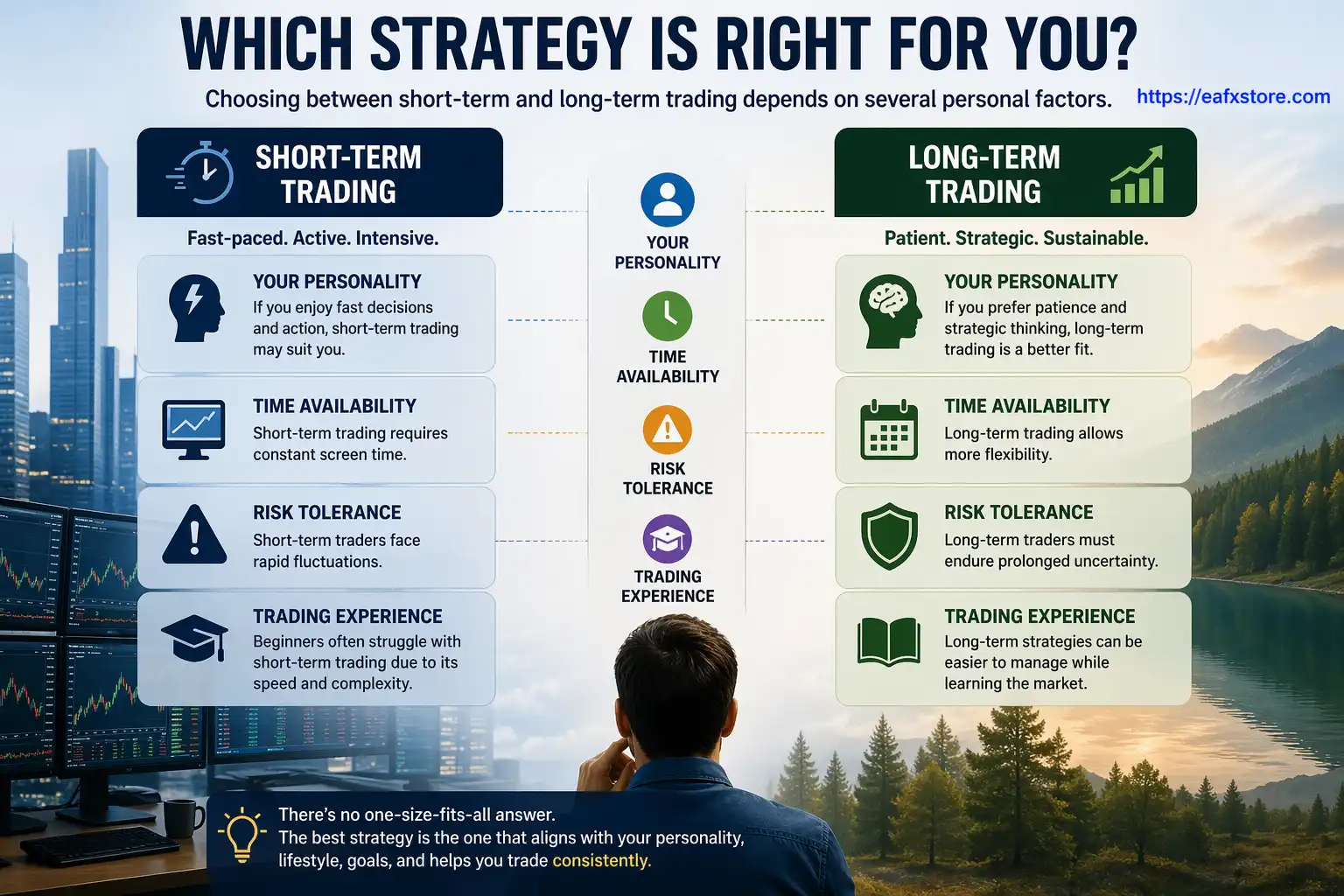
Choosing between short-term and long-term trading depends on several personal factors:
Your Personality
- If you enjoy fast decisions and action, short-term trading may suit you.
- If you prefer patience and strategic thinking, long-term trading is a better fit.
Time Availability
- Short-term trading requires constant screen time.
- Long-term trading allows more flexibility.
Risk Tolerance
- Short-term traders face rapid fluctuations.
- Long-term traders must endure prolonged uncertainty.
Trading Experience
Beginners often struggle with short-term trading due to its speed and complexity. Long-term strategies can be easier to manage while learning the market.
Can You Combine Both Approaches?
Yes—and many successful traders do.
A hybrid strategy allows you to:
- Use long-term analysis to identify the main trend.
- Apply short-term strategies to fine-tune entry and exit points.
For example, you might identify a bullish trend on a daily chart and then use a 15-minute chart to enter at a better price.
Risk Management Across Timeframes
Regardless of your strategy, risk management is essential:
- Always use Stop Loss (SL) orders.
- Avoid risking more than 1–2% of your capital per trade.
- Maintain a clear trading plan.
- Control emotions and avoid overtrading.
Short-term traders should be especially careful with overtrading, while long-term traders must manage exposure to unexpected market events.
Final Thoughts
There is no “best” timeframe in forex trading—only the one that best matches your goals, lifestyle, and mindset. Short-term trading offers excitement and rapid opportunities but comes with higher stress and costs. Long-term trading provides a calmer, more strategic approach but requires patience and discipline.
The key is to understand yourself as a trader. Start with one approach, master it, and then consider expanding your strategy as you gain experience.