
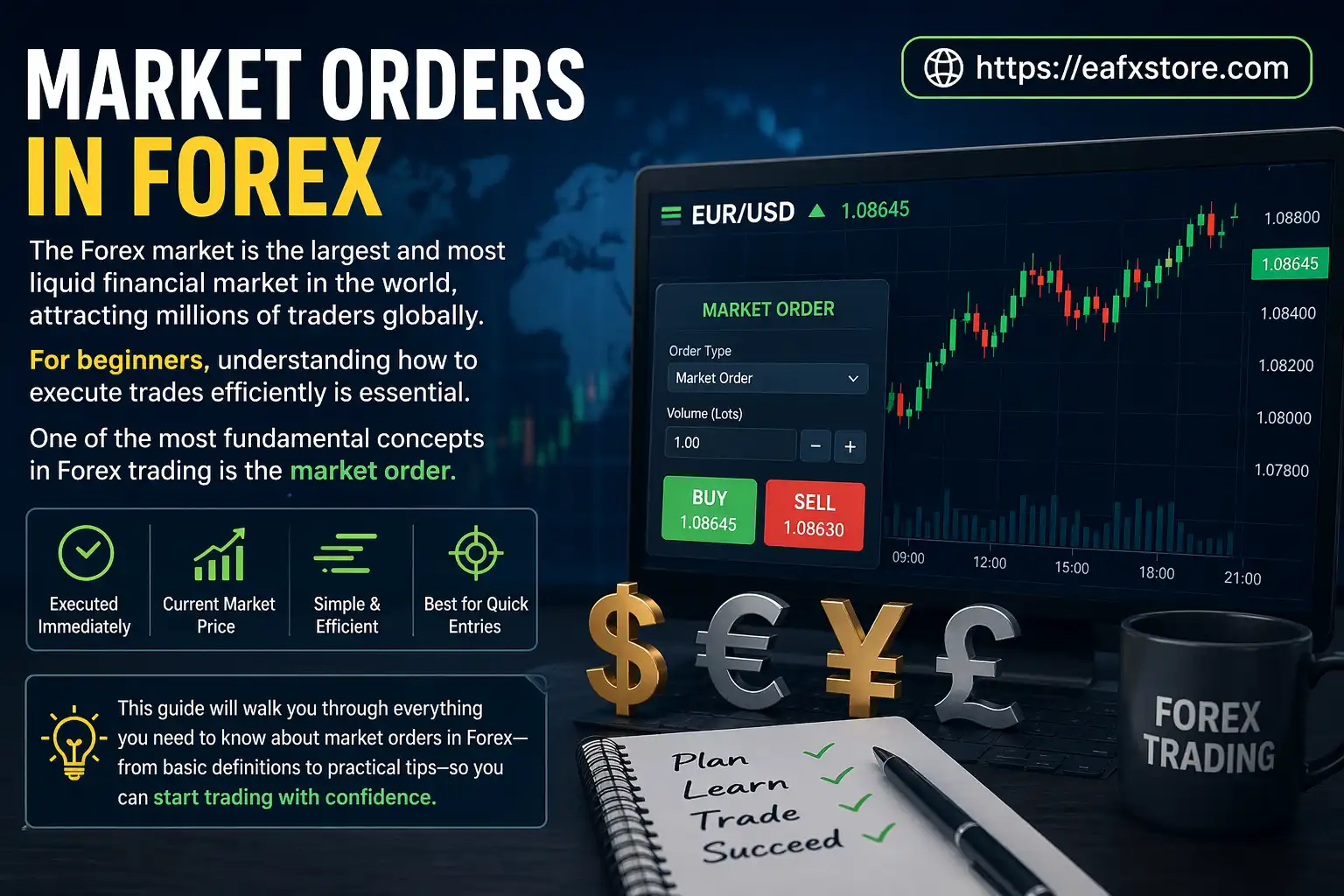
The Forex market is the largest and most liquid financial market in the world, attracting millions of traders globally. For beginners, understanding how to execute trades efficiently is essential. One of the most fundamental concepts in Forex trading is the market order.
This guide will walk you through everything you need to know about market orders in Forex—from basic definitions to practical tips—so you can start trading with confidence.
What Is a Market Order in Forex?
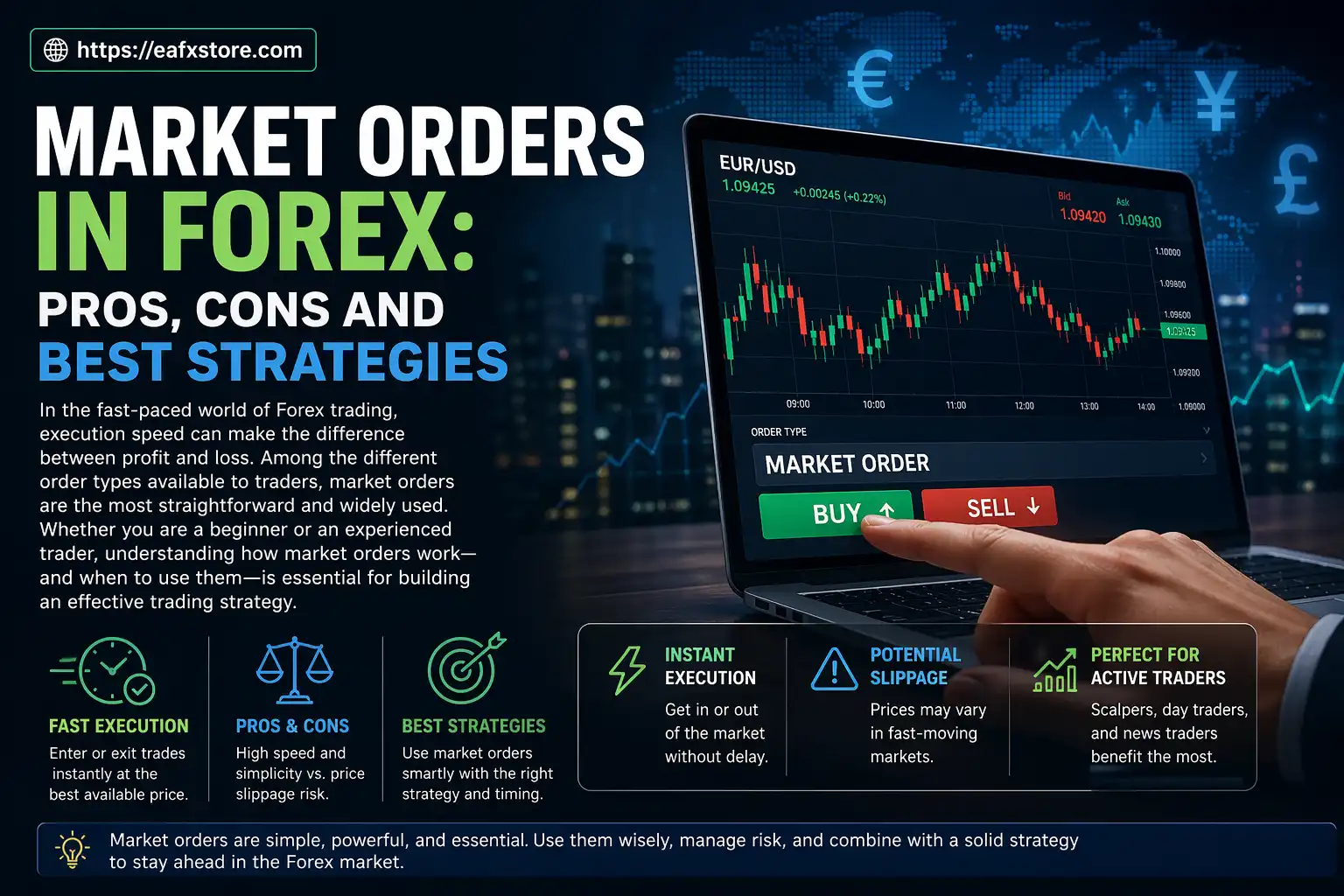
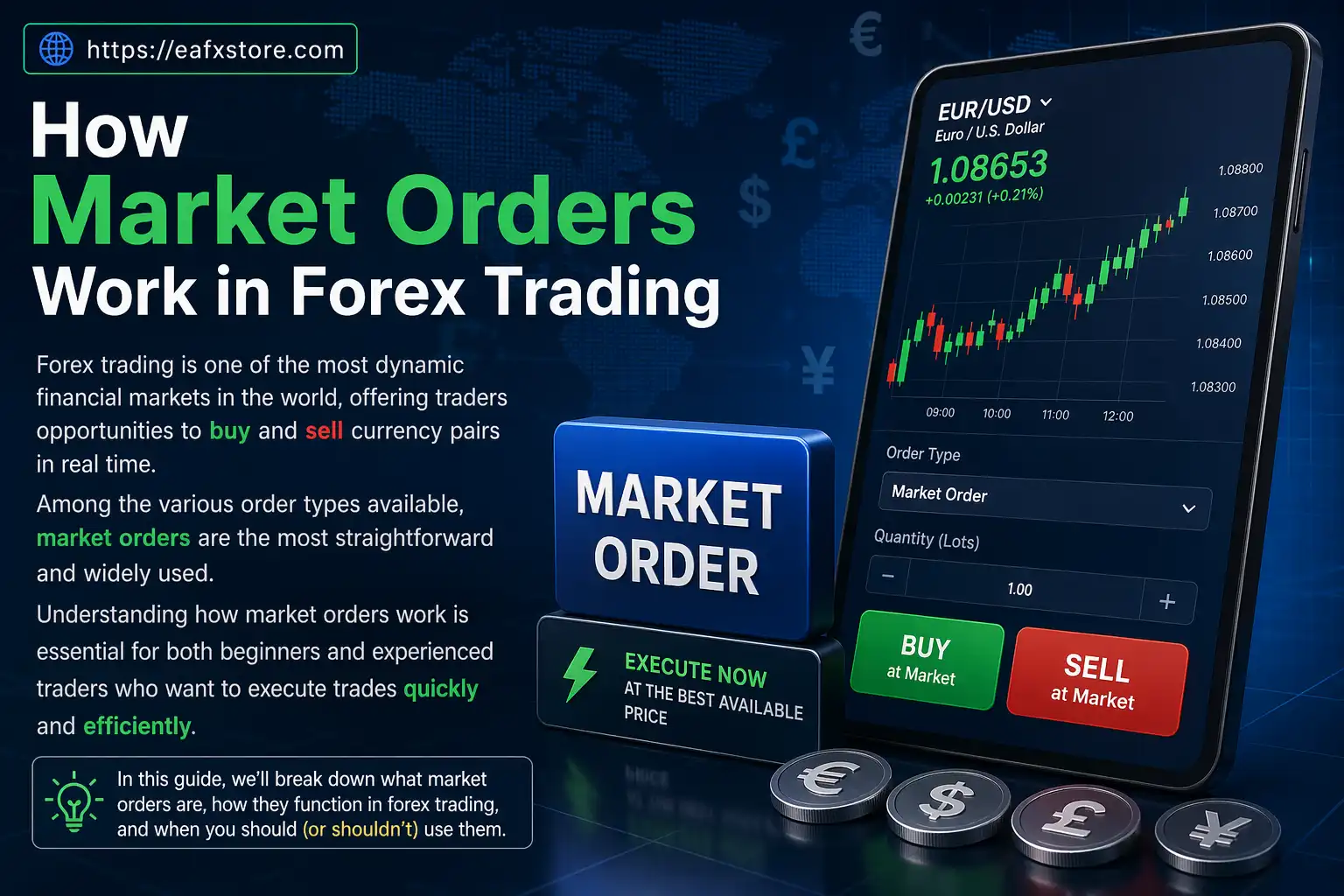
A market order is an instruction to buy or sell a currency pair immediately at the best available current price.
Unlike pending orders, which wait for a specific price level, market orders are executed instantly. This makes them one of the simplest and most commonly used order types, especially for beginners.
Key Characteristics:
- Immediate execution.
- Price based on current market conditions.
- No guarantee of exact price (due to slippage).
How Market Orders Work
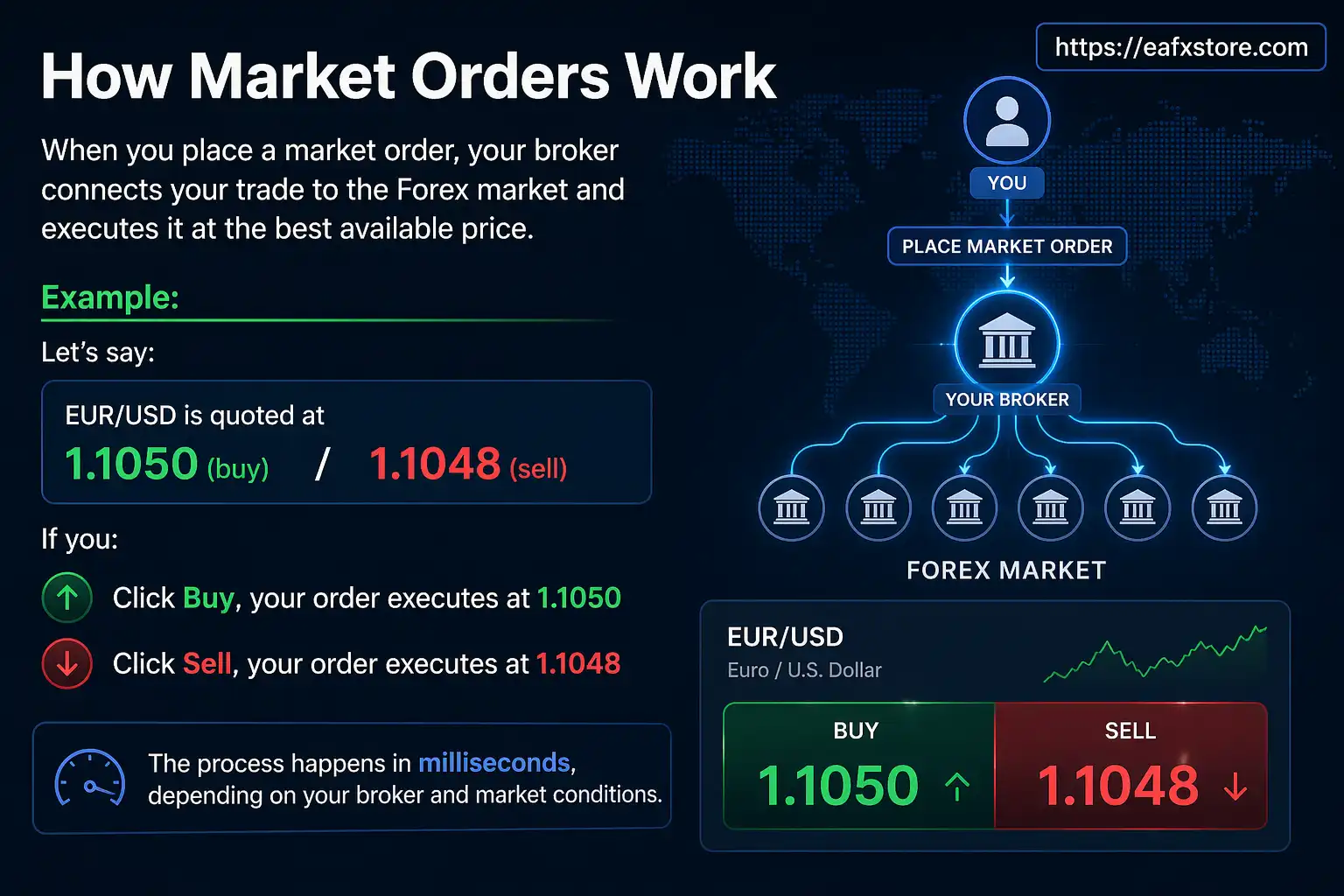
When you place a market order, your broker connects your trade to the Forex market and executes it at the best available price.
Example:
Let’s say:
- EUR/USD is quoted at 1.1050 (buy) / 1.1048 (sell)
If you:
- Click Buy, your order executes at 1.1050
- Click Sell, your order executes at 1.1048
The process happens in milliseconds, depending on your broker and market conditions.
Types of Market Orders
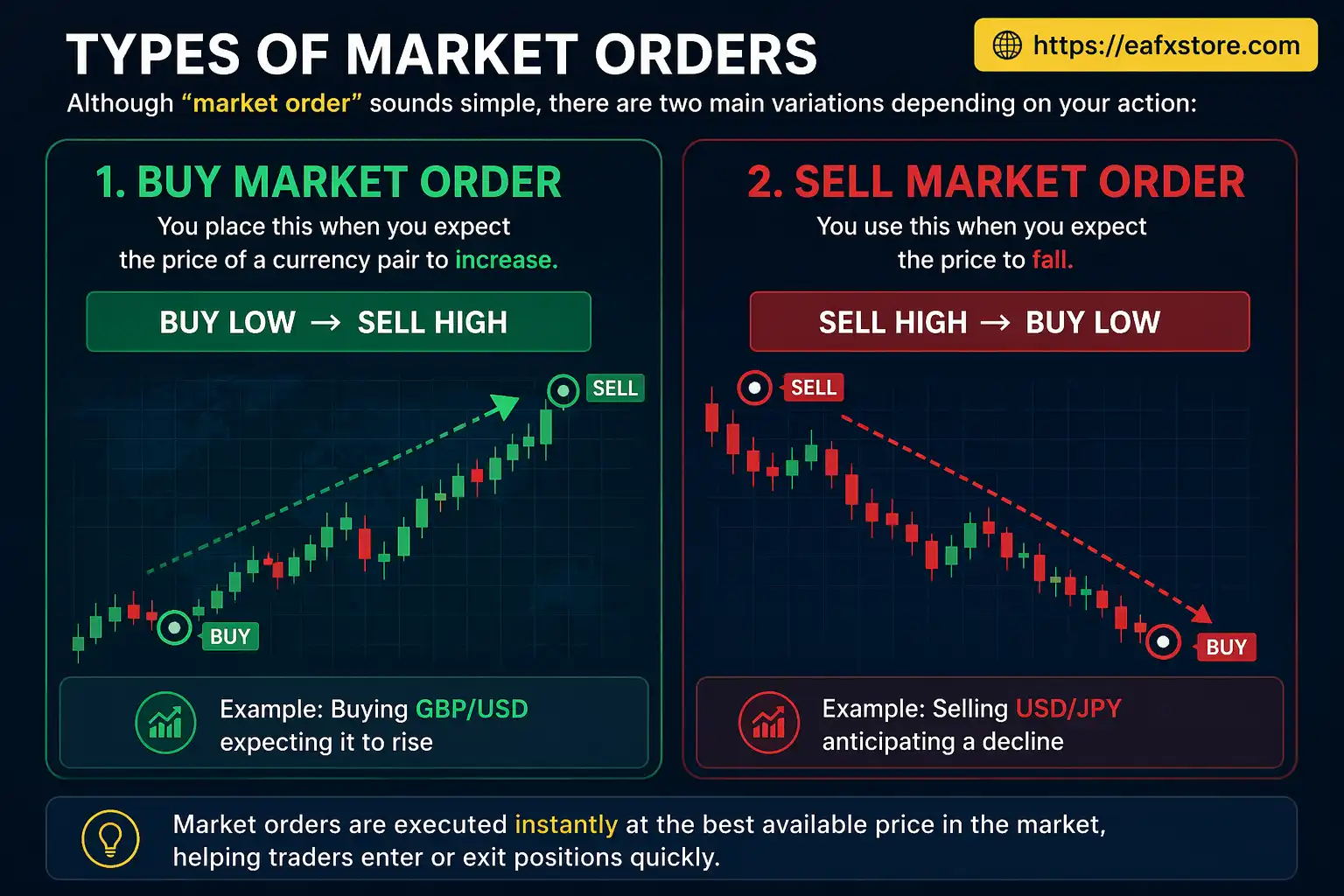
Although “market order” sounds simple, there are two main variations depending on your action:
1. Buy Market Order
You place this when you expect the price of a currency pair to increase.
- Buy low → Sell high
- Example: Buying GBP/USD expecting it to rise
2. Sell Market Order
You use this when you expect the price to fall.
- Sell high → Buy low
- Example: Selling USD/JPY anticipating a decline
Advantages of Market Orders
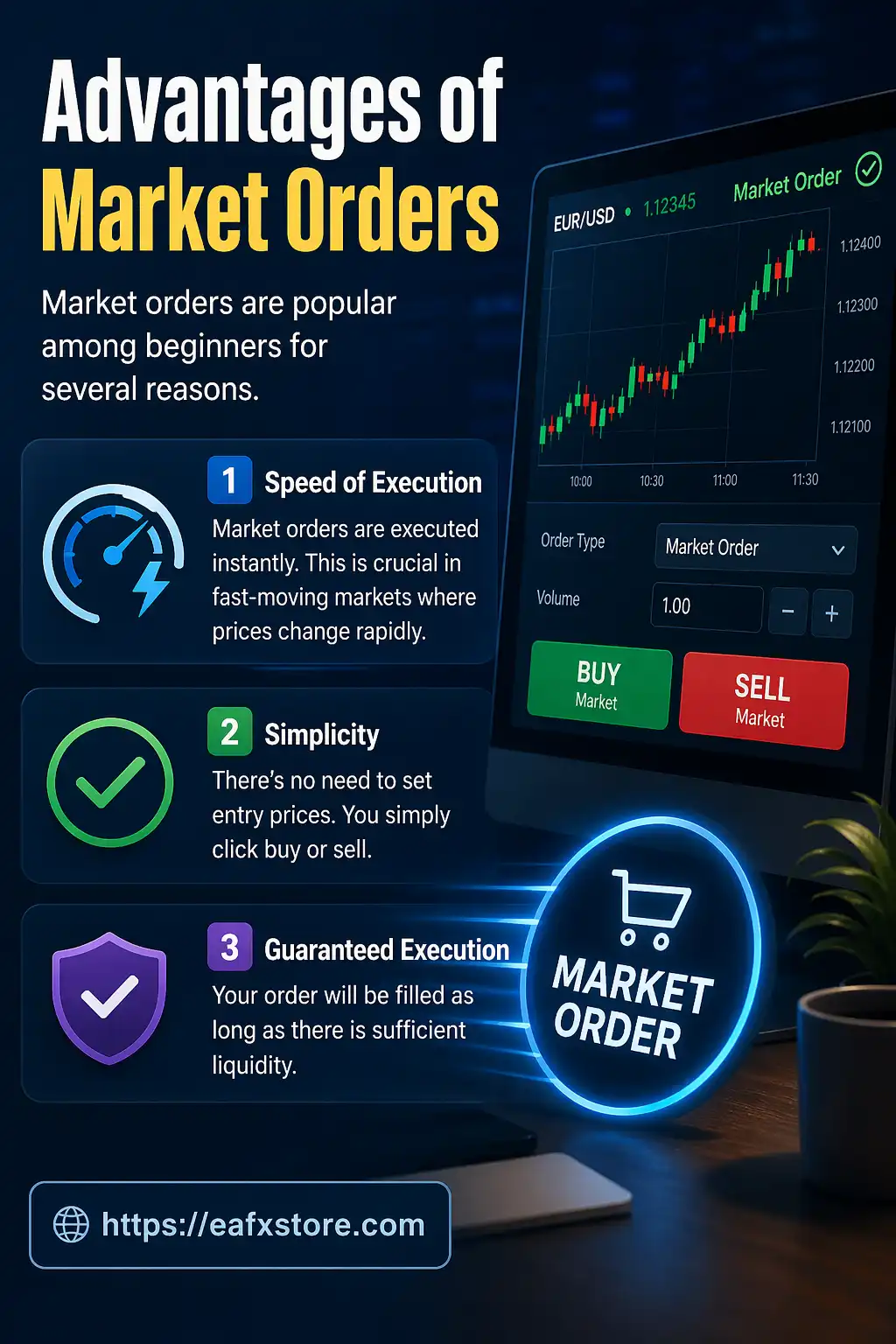
Market orders are popular among beginners for several reasons.
- Speed of Execution: Market orders are executed instantly. This is crucial in fast-moving markets where prices change rapidly.
- Simplicity: There’s no need to set entry prices. You simply click buy or sell.
- Guaranteed Execution: Your order will be filled as long as there is sufficient liquidity.
Disadvantages of Market Orders
Despite their simplicity, market orders come with certain risks.
- Slippage: Slippage occurs when the executed price differs from the expected price due to market volatility.
- Lack of Price Control: You cannot control the exact entry price, which can be problematic in volatile conditions.
- Spread Costs: You always pay the spread, which can be wider during news events or low liquidity periods.
Market Orders vs Pending Orders
Understanding the difference between market orders and pending orders is essential.
| Feature | Market Order | Pending Order |
|---|---|---|
| Execution Time | Immediate | When price reaches set level |
| Price Control | Low | High |
| Best For | Fast entries | Strategic planning |
When to Use Each:
- Use market orders for quick trades.
- Use pending orders for planned entries.
When Should You Use Market Orders?
Market orders are not always the best choice. Here are situations where they work best:
- High Liquidity Conditions: During major trading sessions (London or New York), spreads are tighter and execution is smoother.
- Strong Market Momentum: When the market is moving quickly in one direction, waiting may cause missed opportunities.
- News Trading (With Caution): Market orders can help you enter quickly during news events, but slippage risk is higher.
Tips for Using Market Orders Effectively
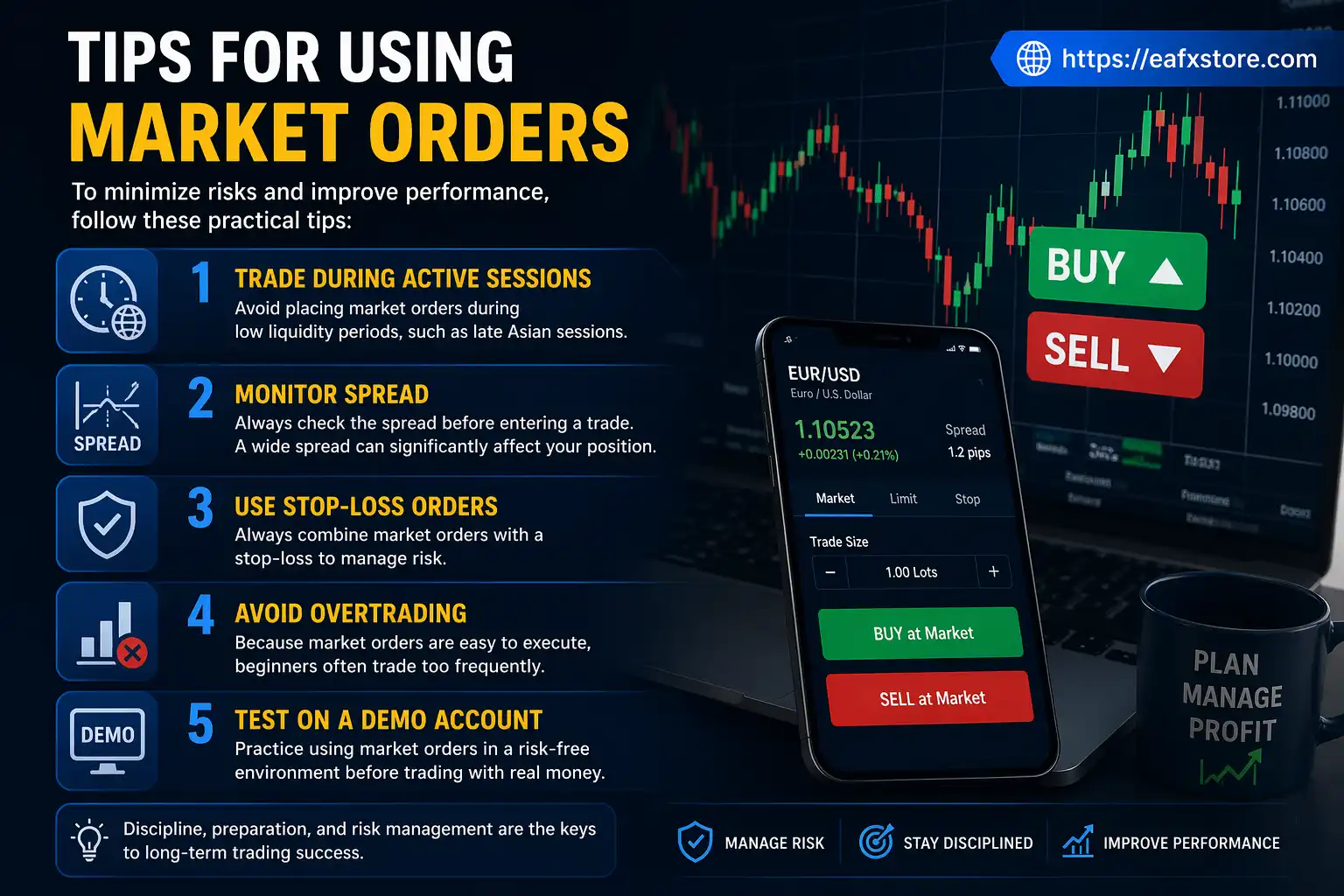
To minimize risks and improve performance, follow these practical tips:
- Trade During Active Sessions: Avoid placing market orders during low liquidity periods, such as late Asian sessions.
- Monitor Spread: Always check the spread before entering a trade. A wide spread can significantly affect your position.
- Use Stop-Loss Orders: Always combine market orders with a stop-loss to manage risk.
- Avoid Overtrading: Because market orders are easy to execute, beginners often trade too frequently.
- Test on a Demo Account: Practice using market orders in a risk-free environment before trading with real money.
Common Mistakes Beginners Make
- Ignoring Slippage: Many beginners assume they will always get the displayed price, which is not always true.
- Trading During Volatile News: Entering with market orders during major announcements can lead to poor execution.
- Not Using Risk Management: Failing to use stop-loss orders can lead to significant losses.
- Emotional Trading: Instant execution can tempt traders to make impulsive decisions.
Example of a Market Order Trade
Let’s walk through a simple scenario:
- Currency pair: EUR/USD
- Current price: 1.1000
- You expect price to rise
Steps:
- Click Buy Market
- Trade executes instantly at 1.1000 (or close to it)
- Set stop-loss at 1.0950
- Set take-profit at 1.1100
Outcome:
- If price rises → profit
- If price falls → controlled loss
Are Market Orders Good for Beginners?
Yes—but with caution.
Market orders are ideal for beginners because they are:
- Easy to understand.
- Fast to execute.
- Widely available on all trading platforms.
However, beginners must also:
- Understand slippage.
- Use proper risk management.
- Avoid trading in unstable conditions.
Conclusion
Market orders are the backbone of Forex trading. They allow traders to enter and exit positions instantly, making them especially useful in fast-moving markets.
For beginners, mastering market orders is an essential first step. While they offer simplicity and speed, they also require discipline and awareness of risks such as slippage and spread costs.
By combining market orders with proper strategy, timing, and risk management, you can build a strong foundation for your Forex trading journey.
FAQs
What is the main purpose of a market order?
To execute a trade immediately at the best available price.
Can I control the price in a market order?
No, the price is determined by current market conditions.
Is slippage always bad?
Not necessarily—it can work in your favor, but it often leads to worse prices.
Should beginners start with market orders?
Yes, but they should also learn risk management and trading discipline.