
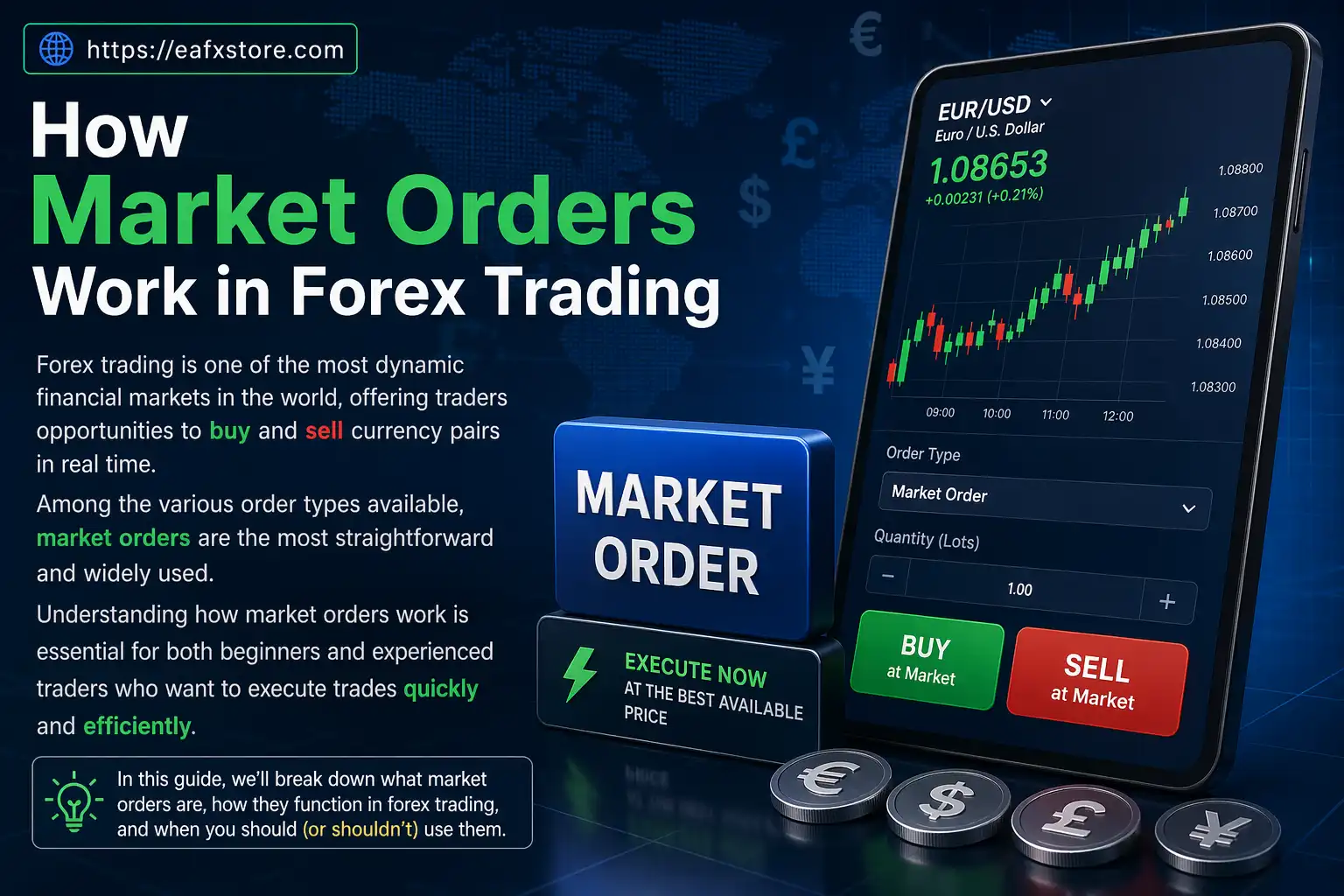
Forex trading is one of the most dynamic financial markets in the world, offering traders opportunities to buy and sell currency pairs in real time. Among the various order types available, market orders are the most straightforward and widely used. Understanding how market orders work is essential for both beginners and experienced traders who want to execute trades quickly and efficiently.
In this guide, we’ll break down what market orders are, how they function in forex trading and when you should (or shouldn’t) use them.
What Is a Market Order?
A market order is an instruction given to a broker to buy or sell a currency pair immediately at the best available current price. Unlike pending orders (such as limit or stop orders), market orders are executed instantly.
For example, if you want to buy EUR/USD at the current market price, placing a market order ensures your trade is executed right away, without waiting for a specific price level.
How Market Orders Work in Forex
The forex market operates 24 hours a day, five days a week, with prices constantly fluctuating due to supply and demand. When you place a market order, your broker matches your trade with the best available price in the market.
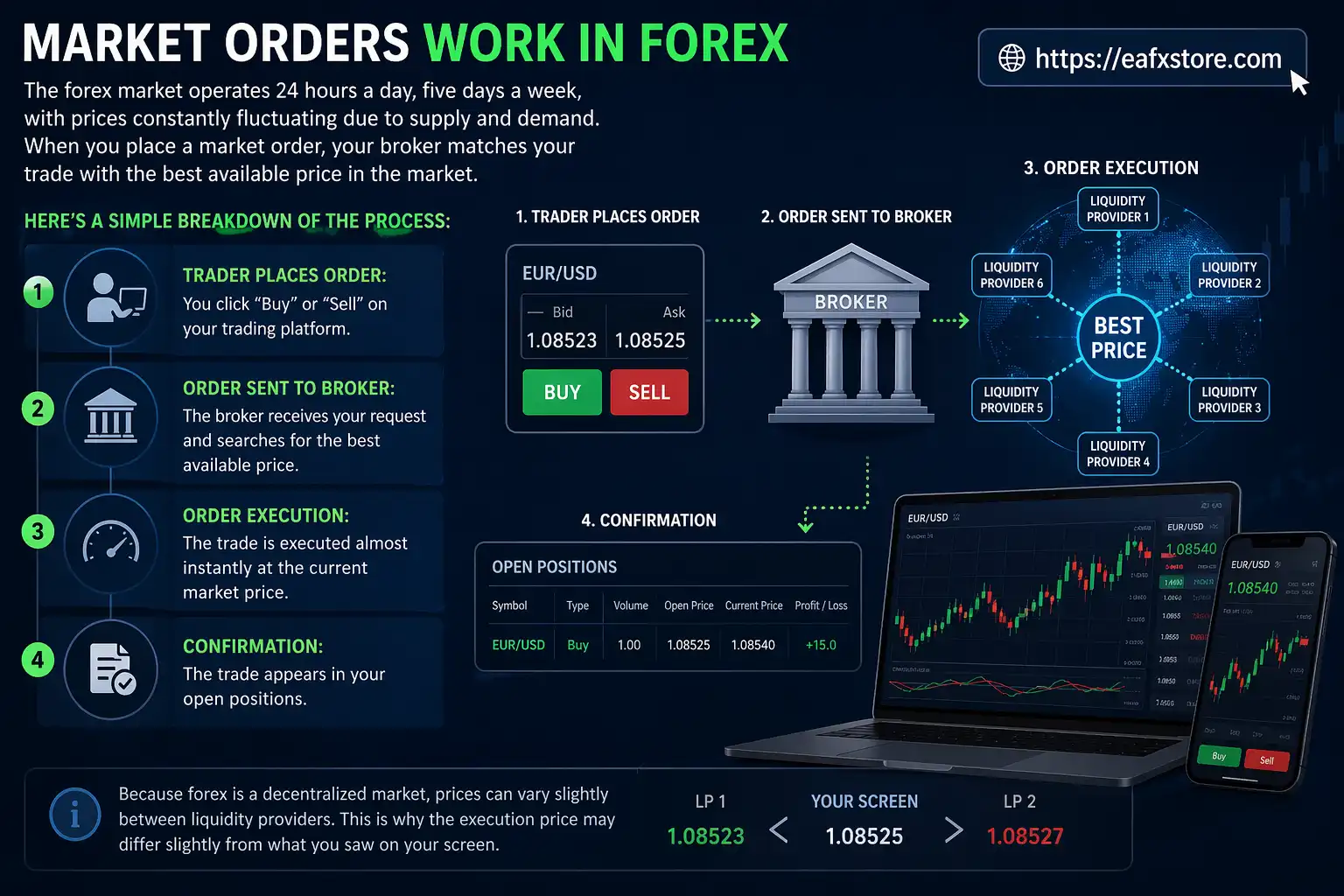
Here’s a simple breakdown of the process:
- Trader Places Order:
You click “Buy” or “Sell” on your trading platform. - Order Sent to Broker:
The broker receives your request and searches for the best available price. - Order Execution:
The trade is executed almost instantly at the current market price. - Confirmation:
The trade appears in your open positions.
Because forex is a decentralized market, prices can vary slightly between liquidity providers. This is why the execution price may differ slightly from what you saw on your screen.
Key Features of Market Orders
Market orders have several defining characteristics that make them unique:
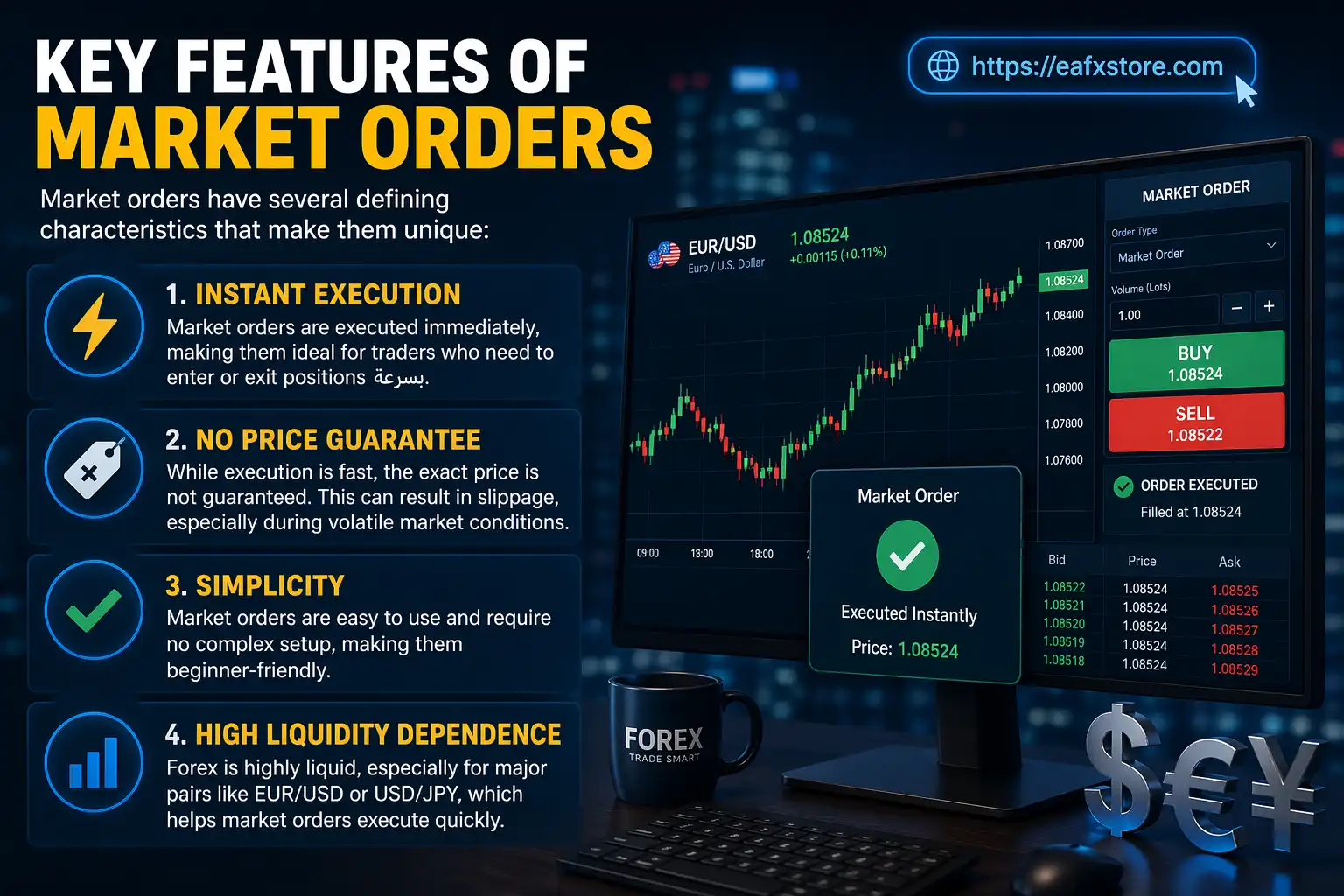
1. Instant Execution
Market orders are executed immediately, making them ideal for traders who need to enter or exit positions بسرعة.
2. No Price Guarantee
While execution is fast, the exact price is not guaranteed. This can result in slippage, especially during volatile market conditions.
3. Simplicity
Market orders are easy to use and require no complex setup, making them beginner-friendly.
4. High Liquidity Dependence
Forex is highly liquid, especially for major pairs like EUR/USD or USD/JPY, which helps market orders execute quickly.
What Is Slippage?
Slippage occurs when the execution price differs from the expected price. This happens because prices can change in milliseconds.
For example:
- You place a buy order at 1.1000
- The market moves quickly
- Your order is filled at 1.1002
While this difference is small, it can impact profitability, especially for large trades or scalping strategies.
Advantages of Market Orders
Market orders offer several benefits that make them popular among traders:
- Speed: They are executed instantly, which is crucial in fast-moving markets.
- Certainty of Execution: Your trade will be executed, even if the price changes slightly.
- Ease of Use: No need to set conditions or wait for price levels.
- Ideal for News Trading: During economic news releases, prices move quickly. Market orders allow traders to react immediately.
Disadvantages of Market Orders
Despite their advantages, market orders also have drawbacks:
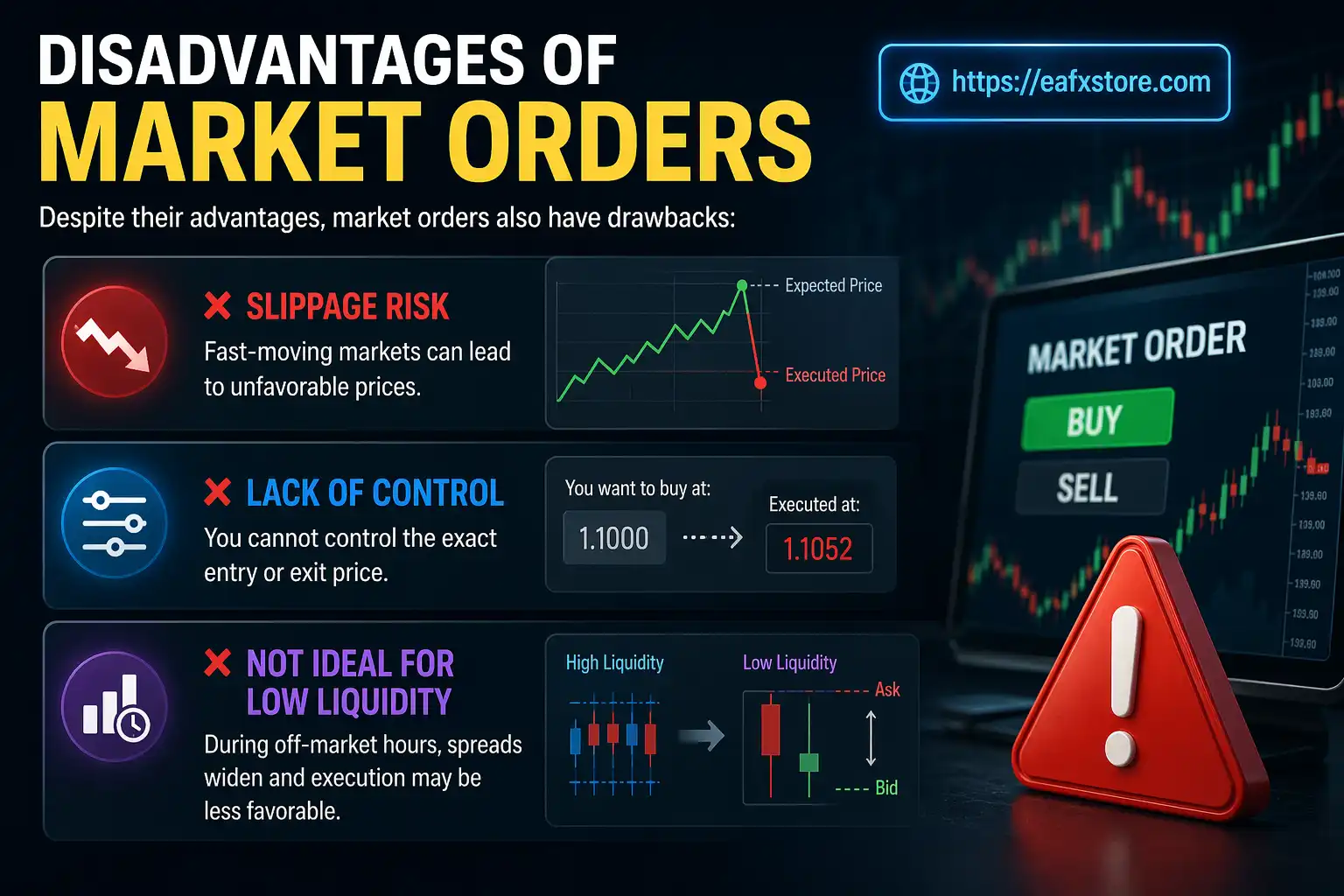
✘ Slippage Risk
Fast-moving markets can lead to unfavorable prices.
✘ Lack of Control
You cannot control the exact entry or exit price.
✘ Not Ideal for Low Liquidity
During off-market hours, spreads widen and execution may be less favorable.
Market Orders vs. Other Order Types
Understanding how market orders compare to other order types can help you choose the right strategy.
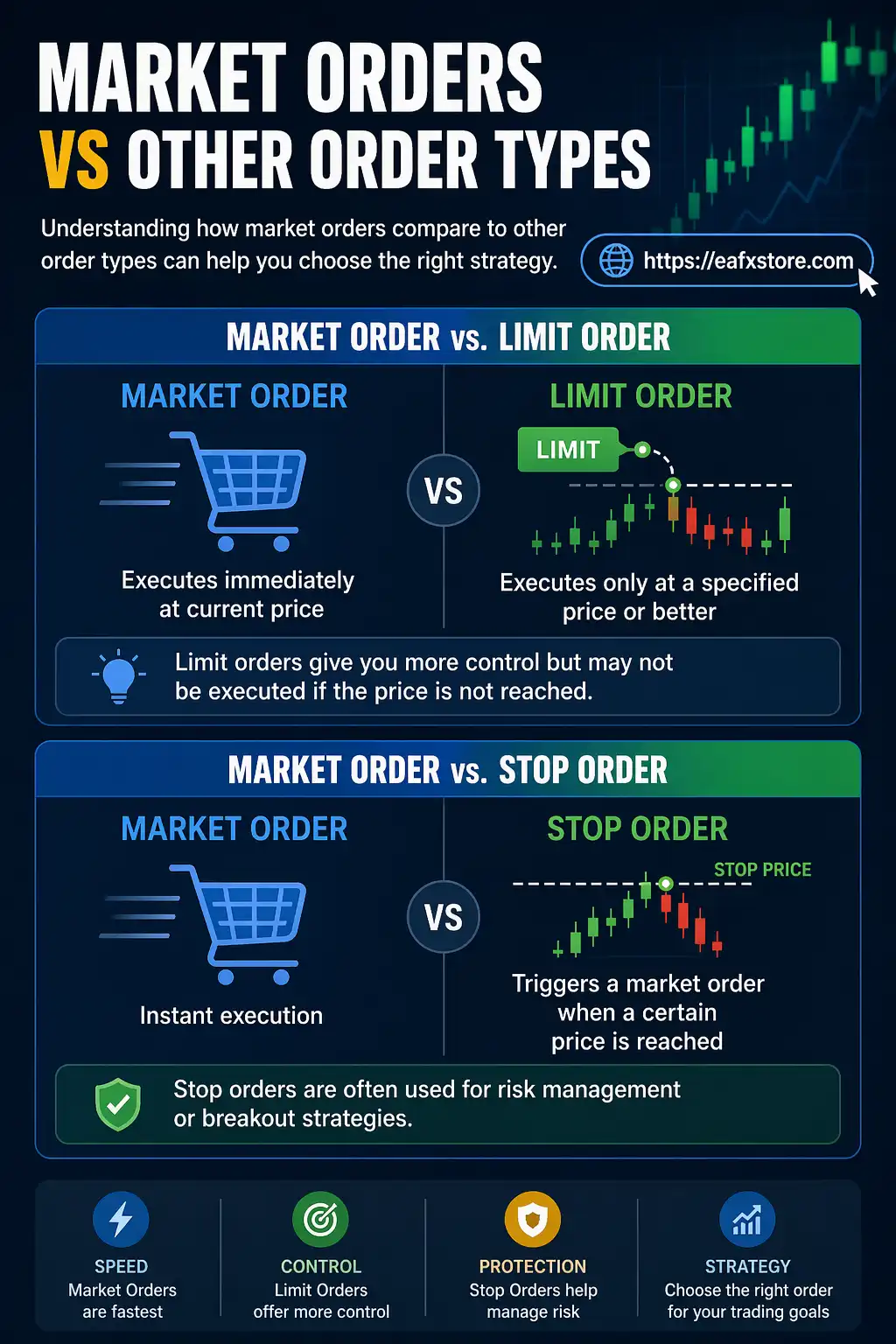
Market Order vs Limit Order
- Market Order: Executes immediately at current price.
- Limit Order: Executes only at a specified price or better.
Limit orders give you more control but may not be executed if the price is not reached.
Market Order vs Stop Order
- Market Order: Instant execution.
- Stop Order: Triggers a market order when a certain price is reached.
Stop orders are often used for risk management or breakout strategies.
When Should You Use Market Orders?
Market orders are best suited for specific situations:
- Entering a Trade Quickly: If you see a strong trend forming, a market order helps you enter without delay.
- Exiting Positions Fast: When you need to close a trade immediately—especially during high volatility—a market order is ideal.
- Trading High-Liquidity Pairs: Major currency pairs offer tighter spreads and faster execution.
- News Trading: During major announcements, speed matters more than precision.
When to Avoid Market Orders
There are times when market orders may not be the best choice:
- During low liquidity periods (e.g., late-night sessions).
- When precision entry is critical.
- In highly volatile markets where slippage is significant.
- When trading large volumes that could impact price.
Tips for Using Market Orders Effectively
To get the most out of market orders, consider these practical tips:
- Monitor Market Conditions: Avoid placing market orders during extreme volatility unless necessary.
- Use Stop-Loss Orders: Protect your trades by setting stop-loss levels immediately after execution.
- Choose a Reliable Broker: Execution speed and pricing depend heavily on your broker.
- Trade Major Currency Pairs: They offer better liquidity and tighter spreads.
- Avoid Overtrading: Fast execution can tempt traders to place too many trades—stay disciplined.
Final Thoughts
Market orders are a fundamental tool in forex trading, offering speed and simplicity. They are especially useful when timing is critical and immediate execution is required. However, traders must be aware of the risks, particularly slippage and lack of price control.
By understanding how market orders work and when to use them, you can improve your trading efficiency and make more informed decisions in the forex market.
Whether you’re a beginner or an experienced trader, mastering market orders is a key step toward building a solid trading strategy.