
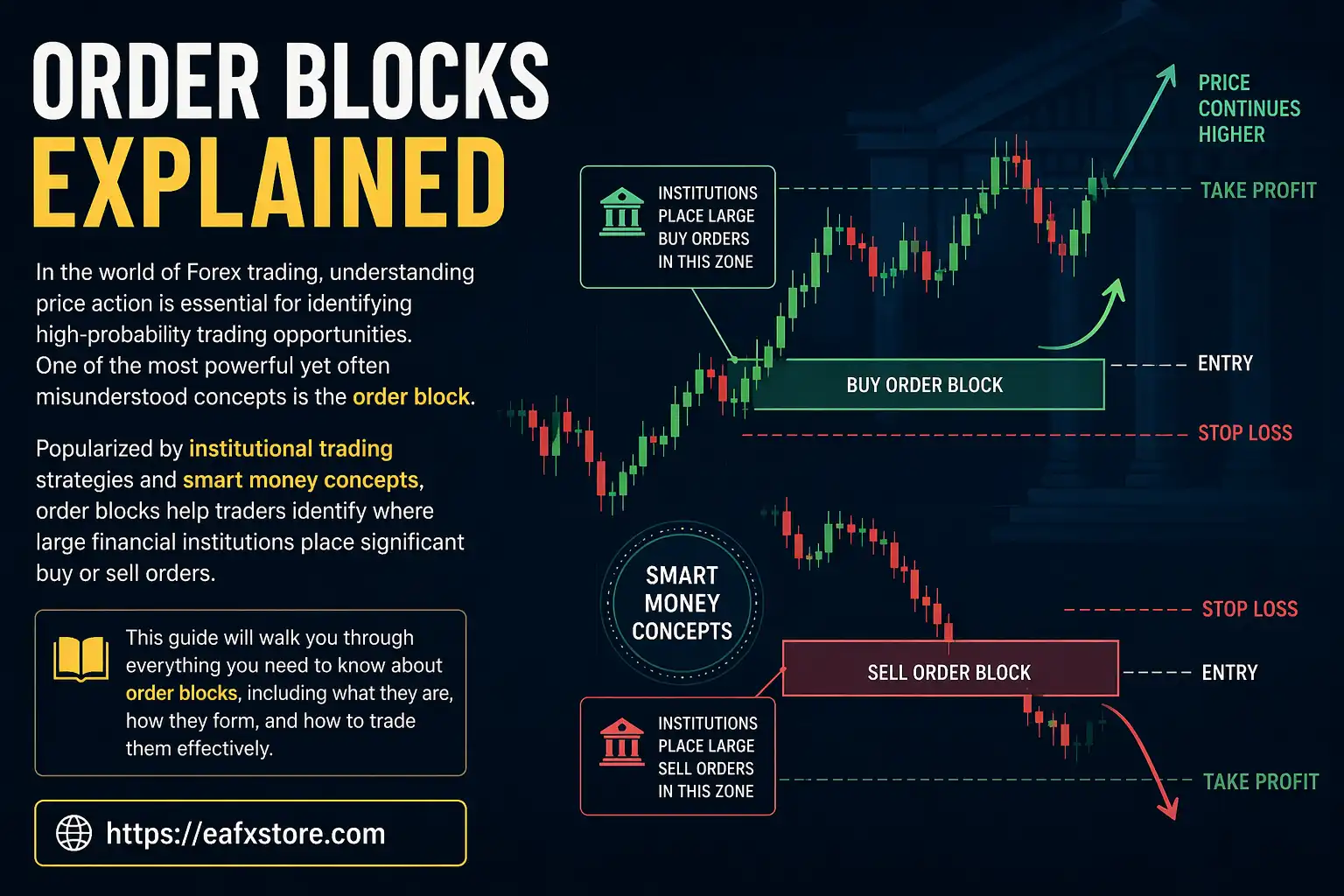
In the world of Forex trading, understanding price action is essential for identifying high-probability trading opportunities. One of the most powerful yet often misunderstood concepts is the order block. Popularized by institutional trading strategies and smart money concepts, order blocks help traders identify where large financial institutions place significant buy or sell orders.
This guide will walk you through everything you need to know about order blocks, including what they are, how they form and how to trade them effectively.
What Are Order Blocks?
An order block is a price zone where institutional traders (banks, hedge funds or large players) have placed large orders that significantly impact the market. These zones often act as strong support or resistance levels.
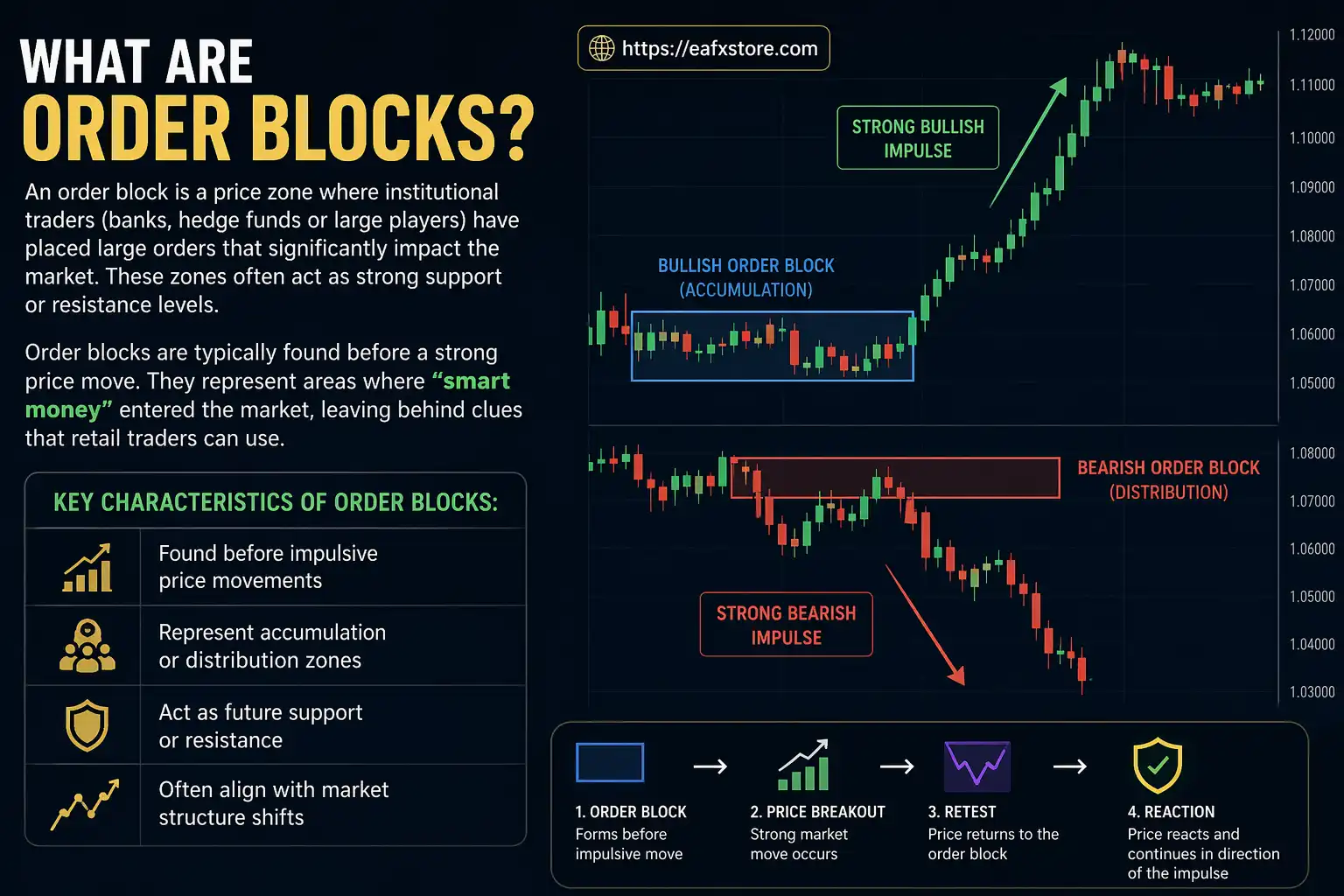
Order blocks are typically found before a strong price move. They represent areas where “smart money” entered the market, leaving behind clues that retail traders can use.
Key Characteristics of Order Blocks:
- Found before impulsive price movements.
- Represent accumulation or distribution zones.
- Act as future support or resistance.
- Often align with market structure shifts.
Types of Order Blocks
There are two primary types of order blocks in Forex trading:
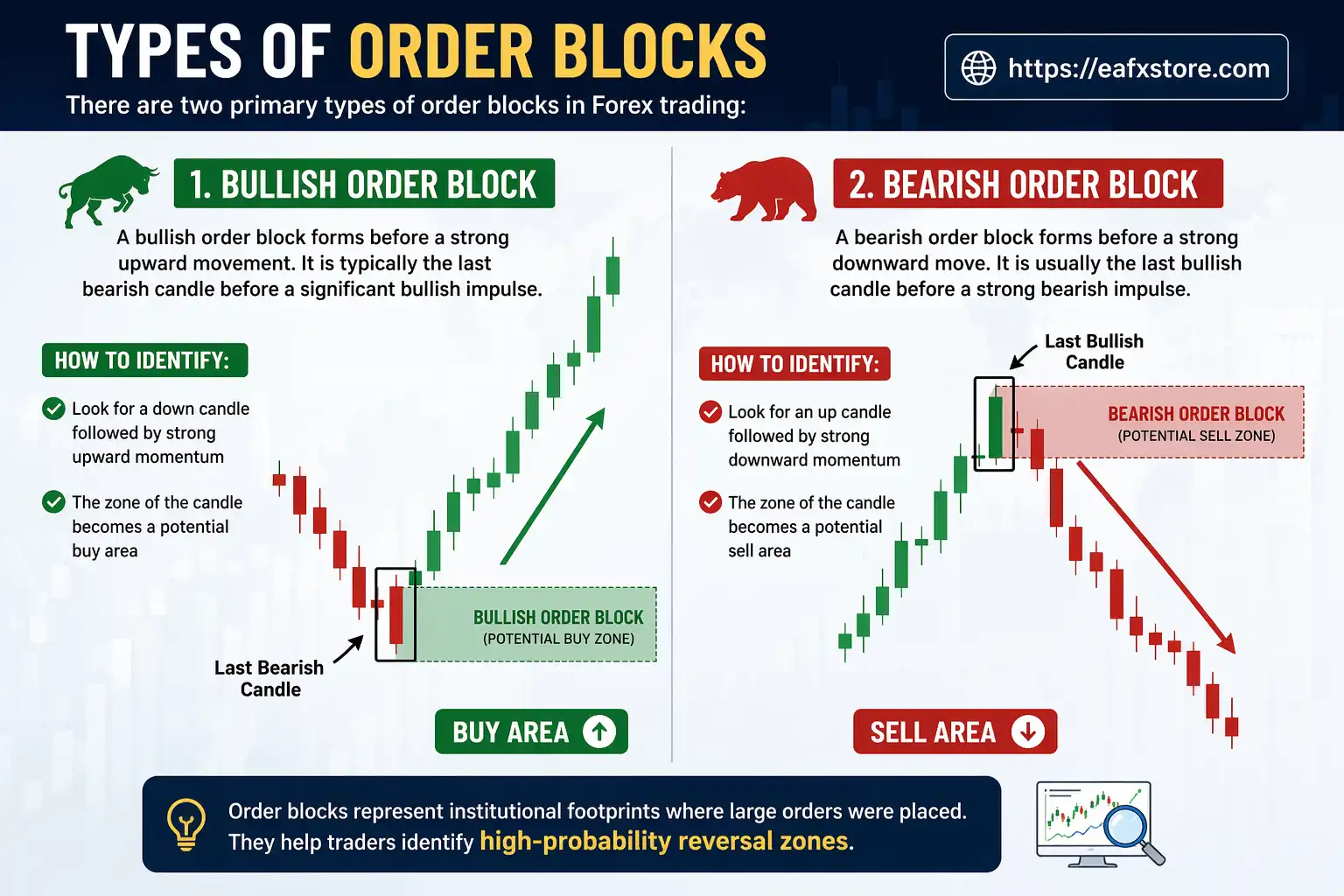
1. Bullish Order Block
A bullish order block forms before a strong upward movement. It is typically the last bearish candle before a significant bullish impulse.
➡️ How to identify:
- Look for a down candle followed by strong upward momentum.
- The zone of the candle becomes a potential buy area.
2. Bearish Order Block
A bearish order block forms before a strong downward move. It is usually the last bullish candle before a strong bearish impulse.
➡️ How to identify:
- Look for an up candle followed by strong downward momentum.
- The zone of the candle becomes a potential sell area.
How Order Blocks Work
Order blocks reflect institutional activity. Large traders cannot enter the market all at once without affecting price, so they accumulate positions in phases.
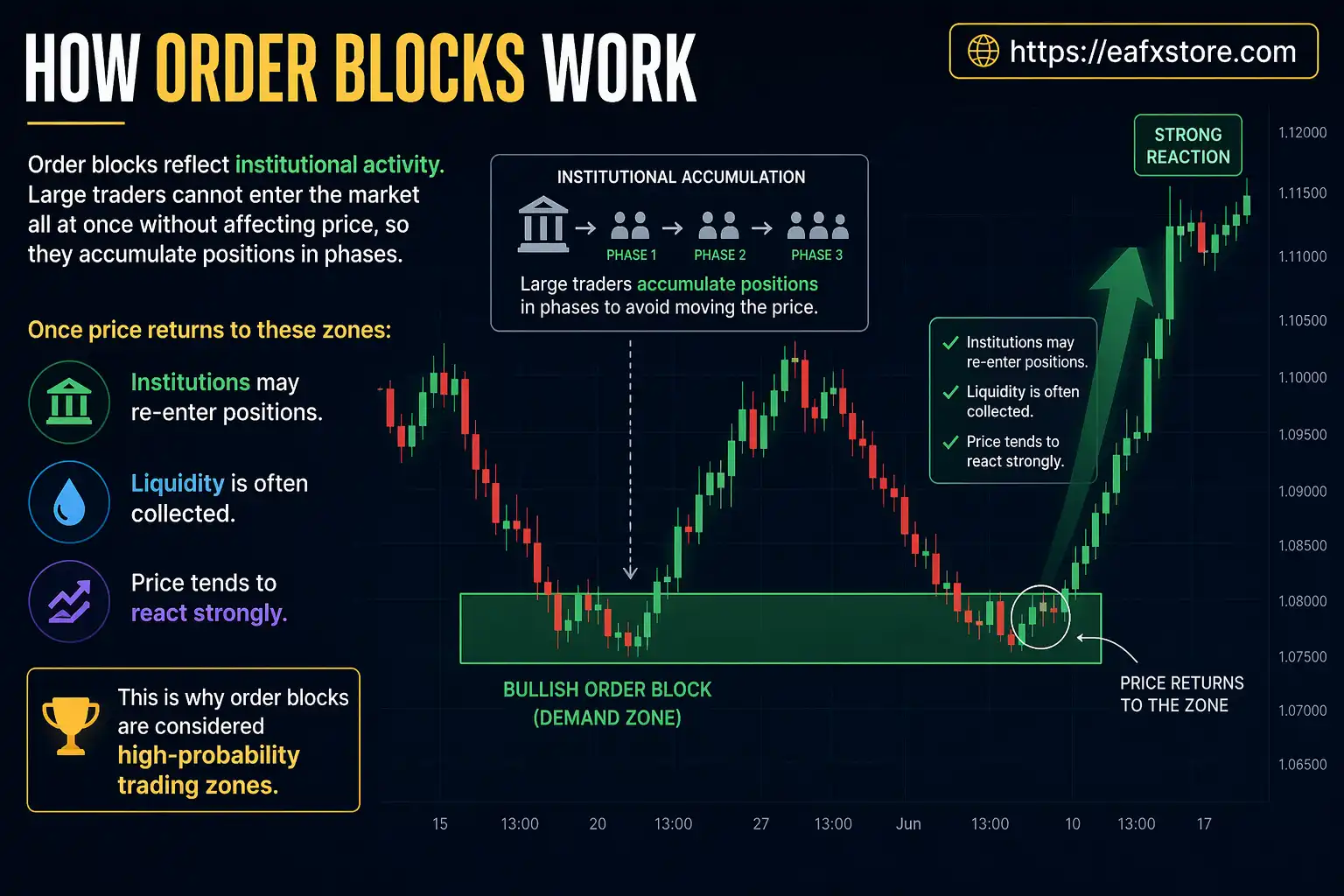
Once price returns to these zones:
- Institutions may re-enter positions.
- Liquidity is often collected.
- Price tends to react strongly.
This is why order blocks are considered high-probability trading zones.
How to Identify Valid Order Blocks
Not every candle qualifies as an order block. To improve accuracy, follow these criteria:
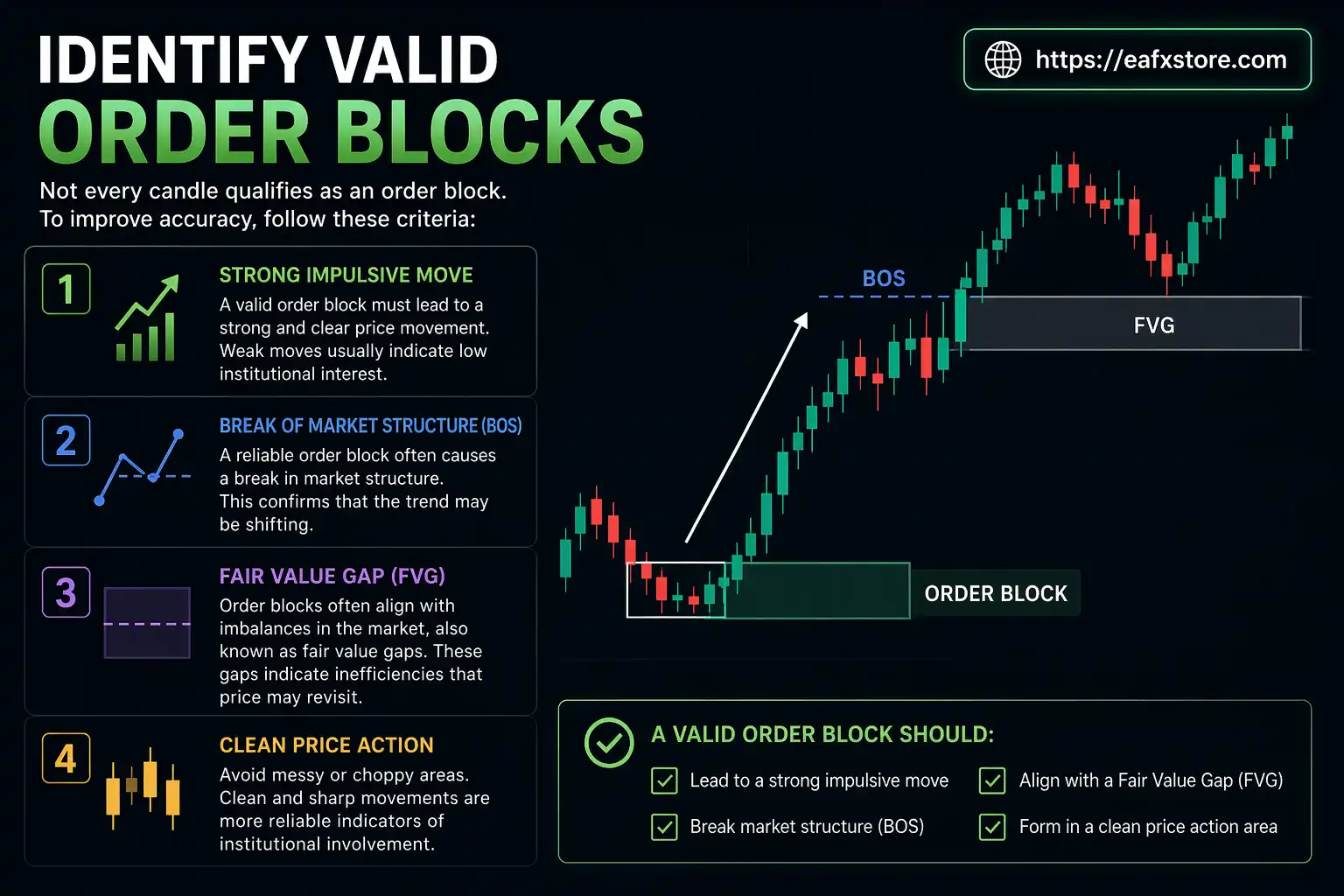
1. Strong Impulsive Move
A valid order block must lead to a strong and clear price movement. Weak moves usually indicate low institutional interest.
2. Break of Market Structure (BOS)
A reliable order block often causes a break in market structure. This confirms that the trend may be shifting.
3. Fair Value Gap (FVG)
Order blocks often align with imbalances in the market, also known as fair value gaps. These gaps indicate inefficiencies that price may revisit.
4. Clean Price Action
Avoid messy or choppy areas. Clean and sharp movements are more reliable indicators of institutional involvement.
Step-by-Step Guide to Trading Order Blocks
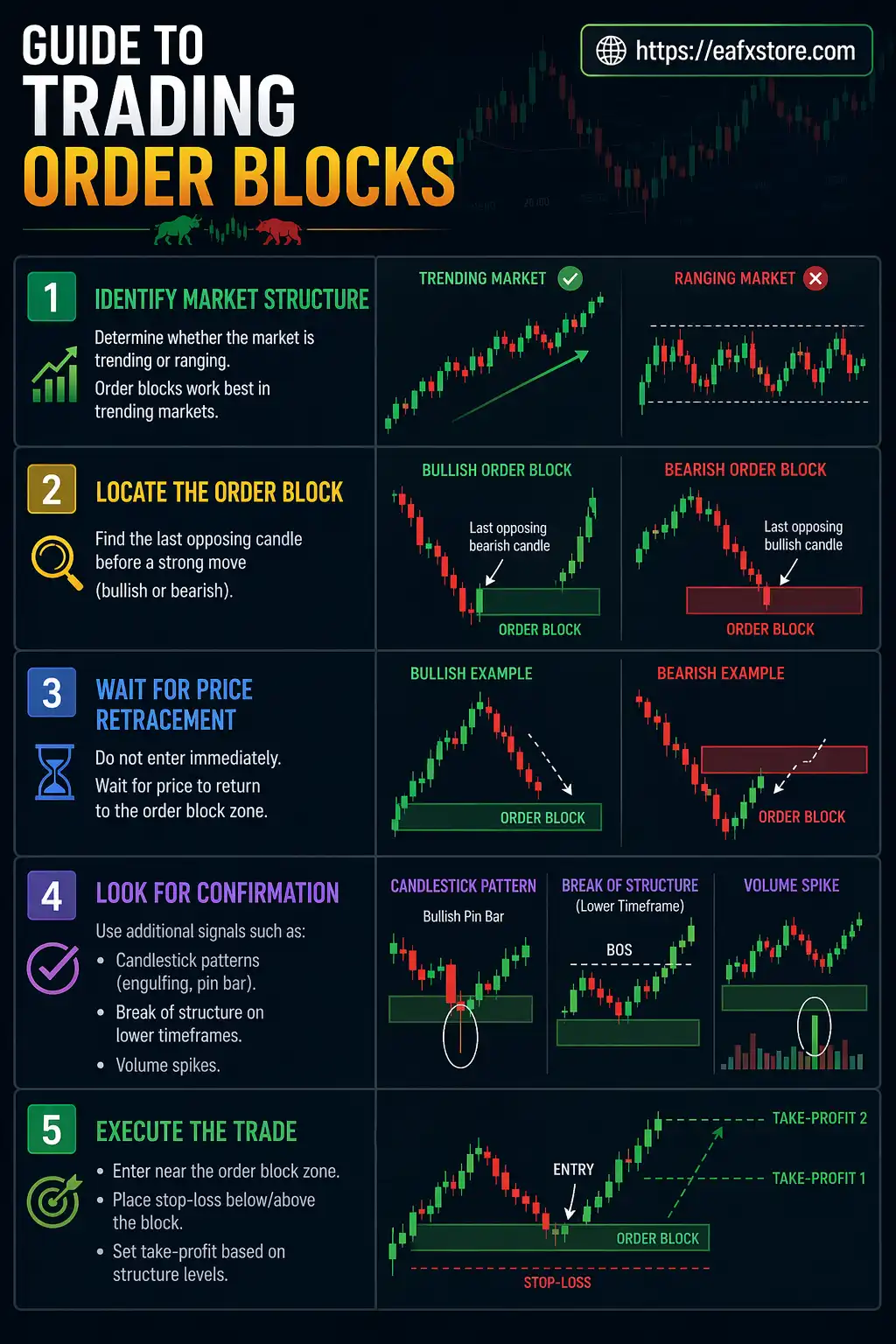
Step 1: Identify Market Structure
Determine whether the market is trending or ranging. Order blocks work best in trending markets.
Step 2: Locate the Order Block
Find the last opposing candle before a strong move (bullish or bearish).
Step 3: Wait for Price Retracement
Do not enter immediately. Wait for price to return to the order block zone.
Step 4: Look for Confirmation
Use additional signals such as:
- Candlestick patterns (engulfing, pin bar).
- Break of structure on lower timeframes.
- Volume spikes.
Step 5: Execute the Trade
- Enter near the order block zone.
- Place stop-loss below/above the block.
- Set take-profit based on structure levels.
Common Mistakes Traders Make
Even though order blocks are powerful, many traders misuse them. Here are common pitfalls to avoid:
- Trading Every Order Block: Not all order blocks are valid. Focus only on high-quality setups.
- Ignoring Market Context: Always consider the overall trend and higher timeframe structure.
- Entering Too Early: Patience is key. Wait for price confirmation before entering.
- Poor Risk Management: Never risk too much on a single trade. Use proper position sizing.
Advanced Tips for Using Order Blocks
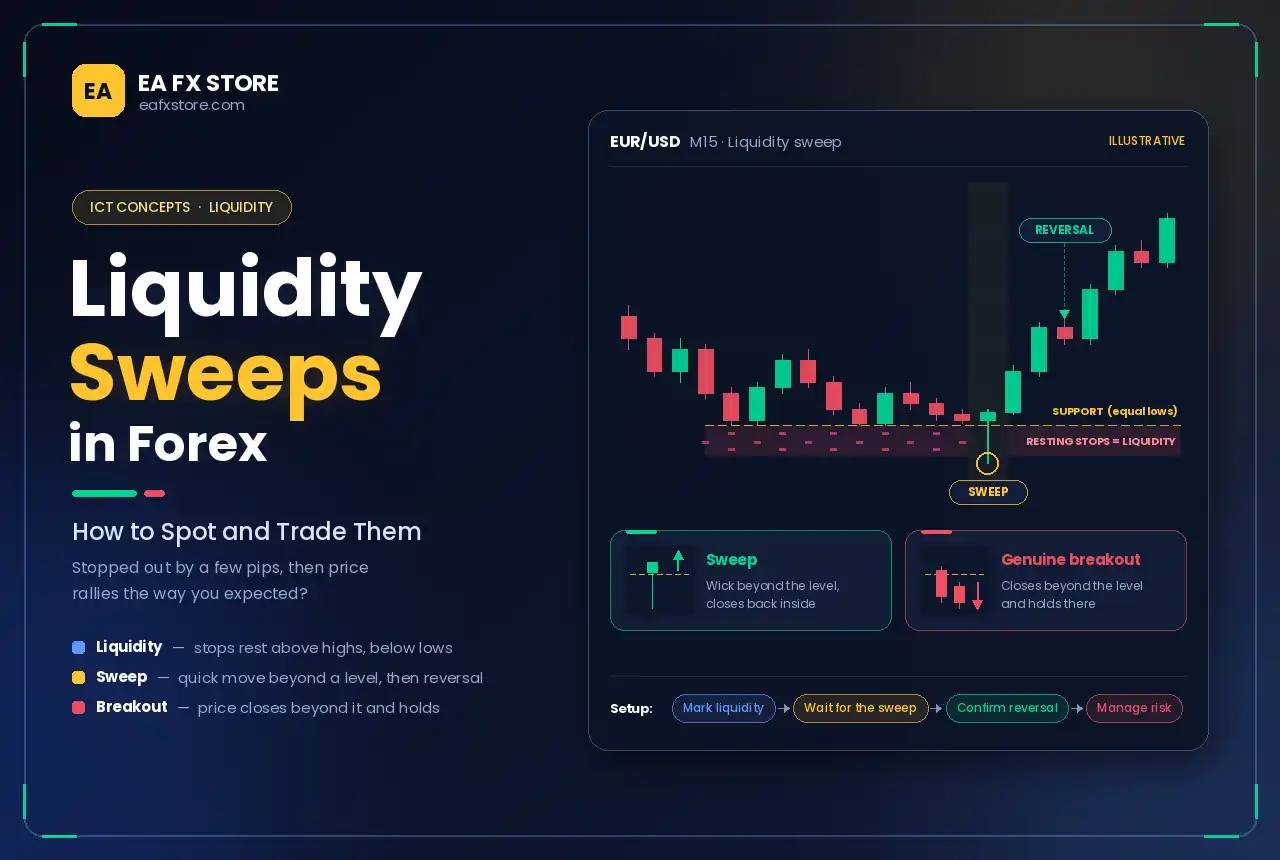
- Combine with Liquidity Concepts: Order blocks work best when combined with liquidity zones, such as equal highs/lows or stop hunts.
- Use Multiple Timeframes: Identify order blocks on higher timeframes (H1, H4, Daily) and refine entries on lower timeframes.
- Align with Supply and Demand: Order blocks are closely related to supply and demand zones. Confluence increases accuracy.
- Backtest Your Strategy: Before trading live, test your order block strategy on historical data.
Advantages of Trading Order Blocks
- Helps identify institutional footprints.
- Provides precise entry zones.
- Works across multiple timeframes.
- Enhances risk-to-reward ratios.
Limitations of Order Blocks
- Requires practice and experience.
- Can produce false signals in choppy markets.
- Needs confirmation for higher accuracy.
Conclusion
Order blocks are a powerful tool for Forex traders who want to understand market movements from an institutional perspective. By identifying where large players enter the market, you can align your trades with smart money and improve your overall performance.
However, success with order blocks requires patience, discipline and consistent practice. Focus on high-quality setups, combine them with other technical tools and always manage your risk effectively.
Mastering order blocks won’t happen overnight, but once you understand how they work, they can become a cornerstone of your trading strategy.
FAQs
❓What timeframe is best for order blocks?
Higher timeframes like H1, H4, and Daily are more reliable, but entries can be refined on lower timeframes.
❓Are order blocks suitable for beginners?
Yes, but beginners should practice on demo accounts before trading live.
❓Do order blocks work in all markets?
While commonly used in Forex, order blocks can also be applied to stocks, crypto, and commodities.