
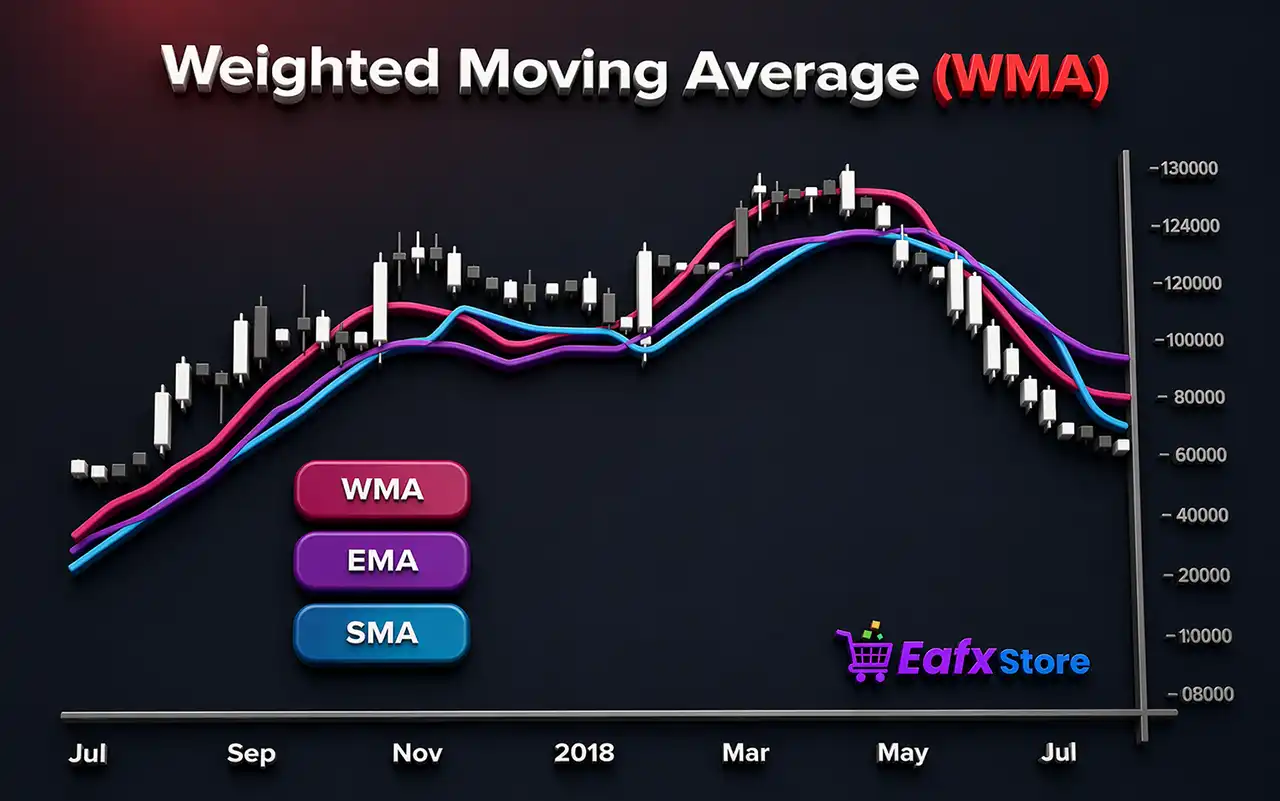
What is Weighted Moving Average (WMA)?
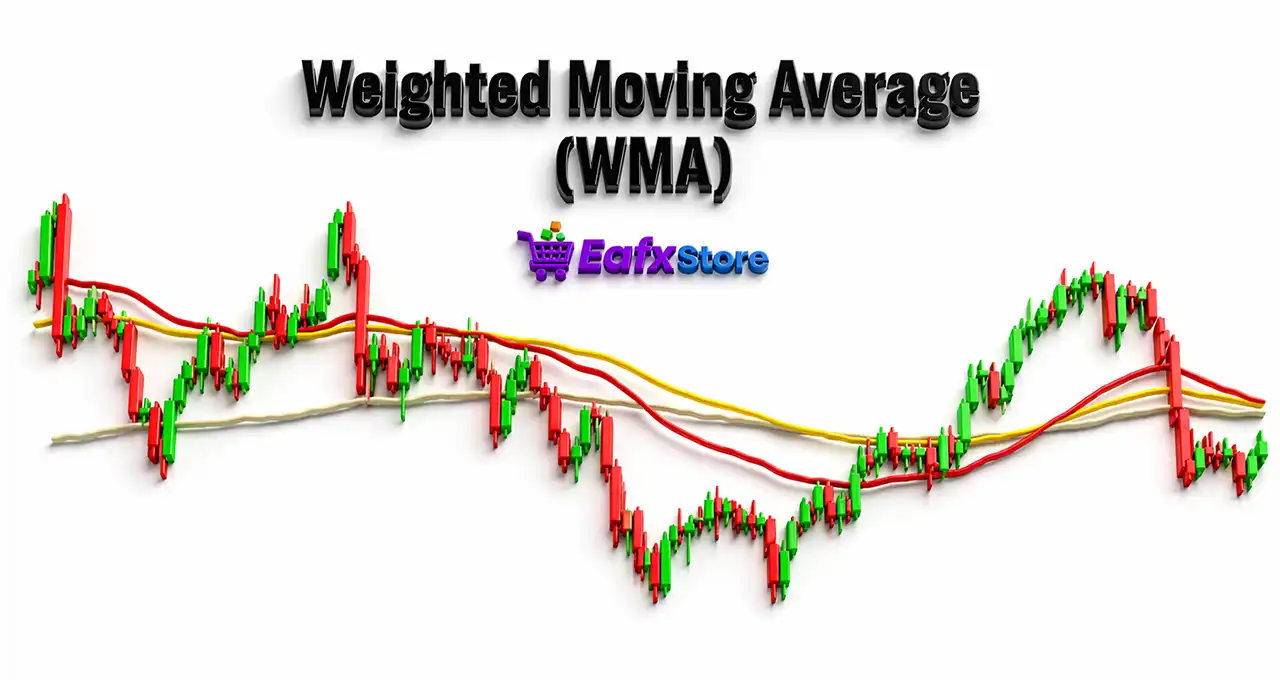
The Weighted Moving Average (WMA) is a type of Moving Average (MA) that assigns different weights to price data points, with the most recent prices receiving the highest weight. This makes WMA more sensitive to current market conditions compared to other moving averages.
Key Characteristics:
- Emphasizes recent price data.
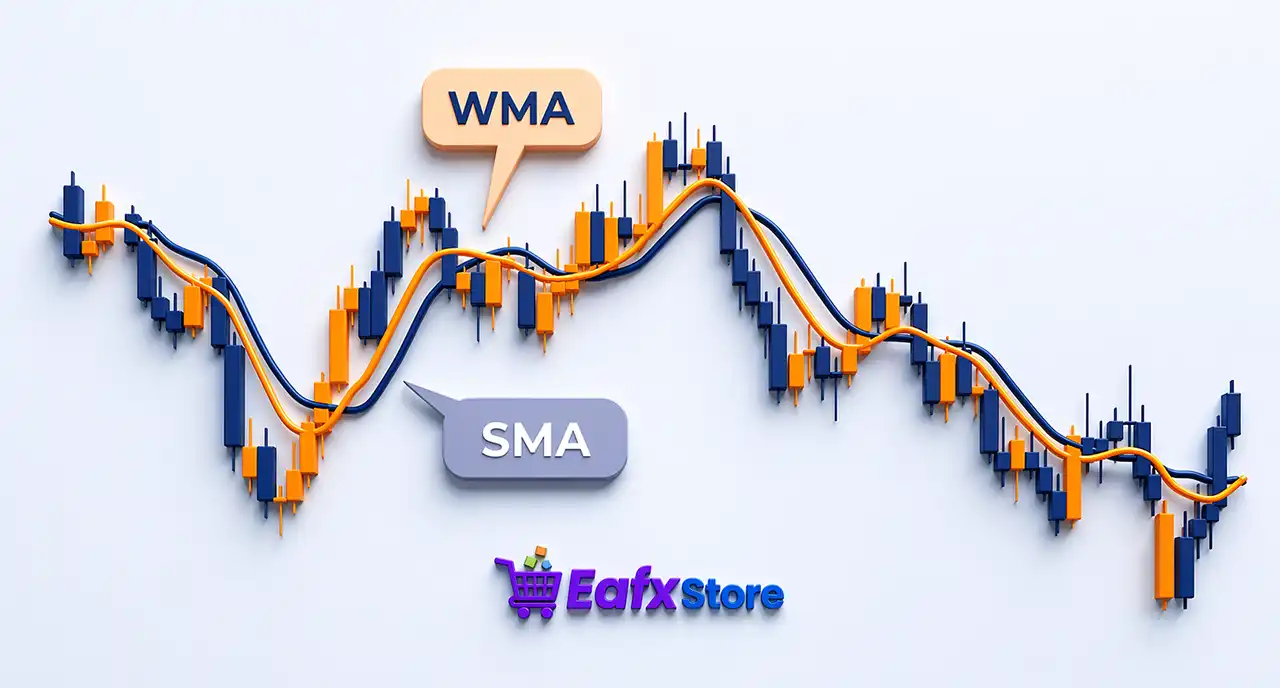
- Reduces lag compared to Simple Moving Average (SMA).
- Helps identify trends more quickly.
- Useful for short-term and medium-term trading strategies.
How WMA Works
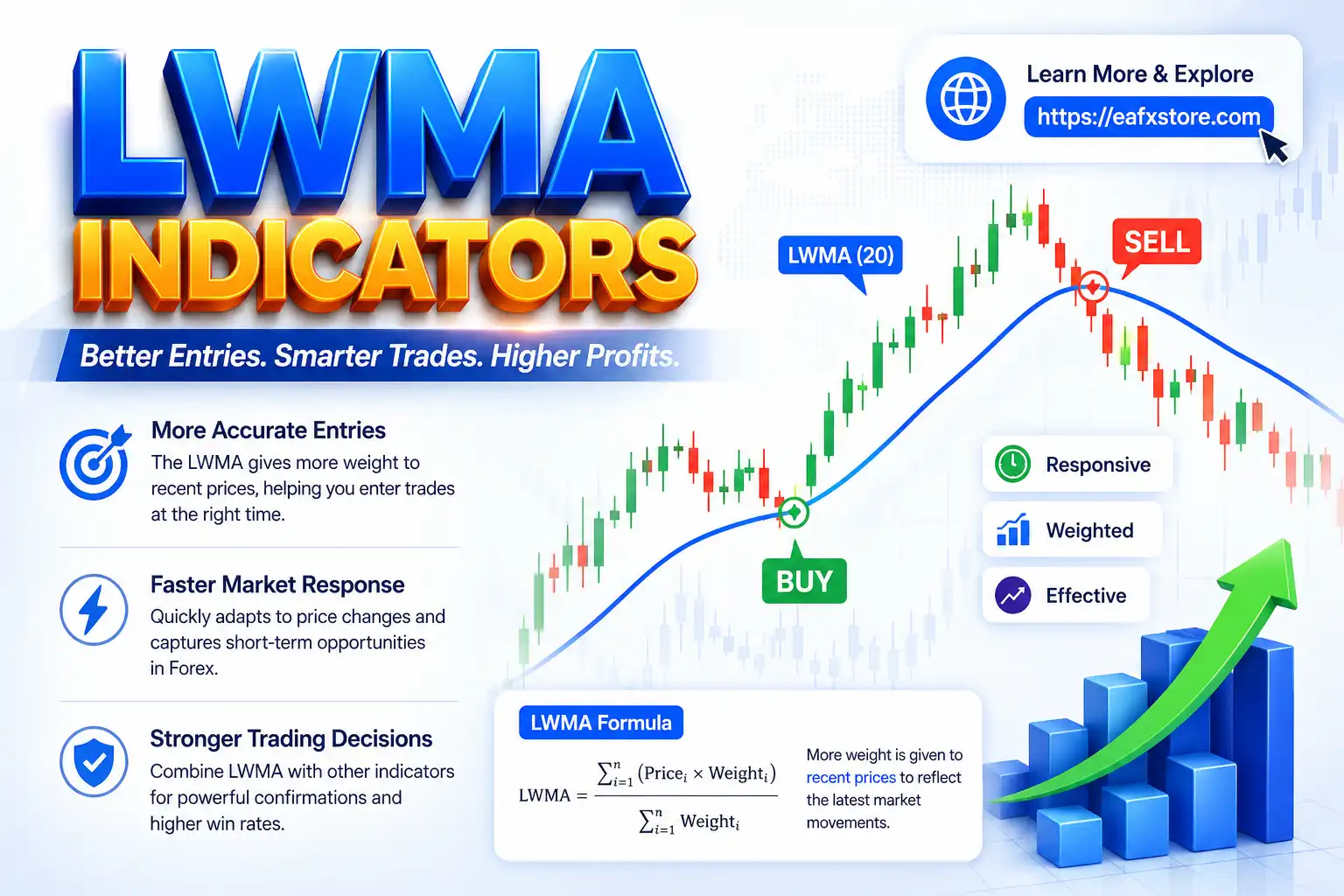
Unlike the Simple Moving Average (SMA), which gives equal importance to all periods, WMA multiplies each price by a weighting factor. The most recent data point carries the highest weight and older data gradually decreases in importance.
Example Calculation:
For a 5-period WMA:
- Latest price × 5
- Previous price × 4
- Next × 3, and so on…
Then divide the total by the sum of weights.
This method ensures that recent price movements influence the indicator more strongly, allowing traders to react faster to market changes.
WMA vs SMA vs EMA
Understanding how WMA compares to other moving averages is crucial.
1. Simple Moving Average (SMA)
- Equal weight to all data
- Slower response to price changes
- Best for long-term trends
2. Exponential Moving Average (EMA)
- Gives more weight to recent prices
- Faster than SMA
- Widely used in Forex
3. Weighted Moving Average (WMA)
- Even more emphasis on recent data than EMA
- Highly responsive
- Ideal for short-term trading signals
👉 Conclusion: WMA reacts faster than both SMA and EMA, making it suitable for traders who want early signals—but it may also produce more false signals if not used carefully.
Why Use WMA in Forex Trading?
Forex markets are highly dynamic, with price movements influenced by economic news, geopolitical events, and market sentiment. WMA helps traders stay ahead by:
- Detecting trend changes earlier
- Providing clearer entry and exit signals
- Filtering out outdated price data
- Improving responsiveness in volatile conditions
Best WMA Strategies for Forex Trading
1. Trend Identification Strategy
One of the simplest ways to use WMA is to identify the direction of the trend.
How it works:
- If price is above WMA → Uptrend
- If price is below WMA → Downtrend
Tips:
- Use a 20-period or 50-period WMA for better accuracy
- Combine with support/resistance levels
2. WMA Crossover Strategy
This is a popular strategy among traders.
Setup:
- Use two WMAs (e.g., 10-period and 30-period)
Signals:
- Buy when short-term WMA crosses above long-term WMA
- Sell when short-term WMA crosses below long-term WMA
Why it works:
The faster WMA reacts quickly to price changes, signaling potential trend reversals earlier.
3. WMA + Price Action Strategy
Combining WMA with price action improves reliability.
How to use:
- Look for candlestick patterns near the WMA
- Confirm signals with support/resistance zones
Example:
- Bullish engulfing pattern above WMA → Buy signal
- Bearish rejection below WMA → Sell signal
4. Dynamic Support and Resistance
WMA can act as a moving support or resistance level.
In an uptrend:
- Price often bounces off the WMA
In a downtrend:
- Price may reject at the WMA
This helps traders identify pullback entries.
5. Scalping with WMA
WMA is particularly useful for scalping due to its responsiveness.
Best settings:
- 5-period or 10-period WMA
- Lower timeframes (M1, M5)
Strategy:
- Trade quick reversals
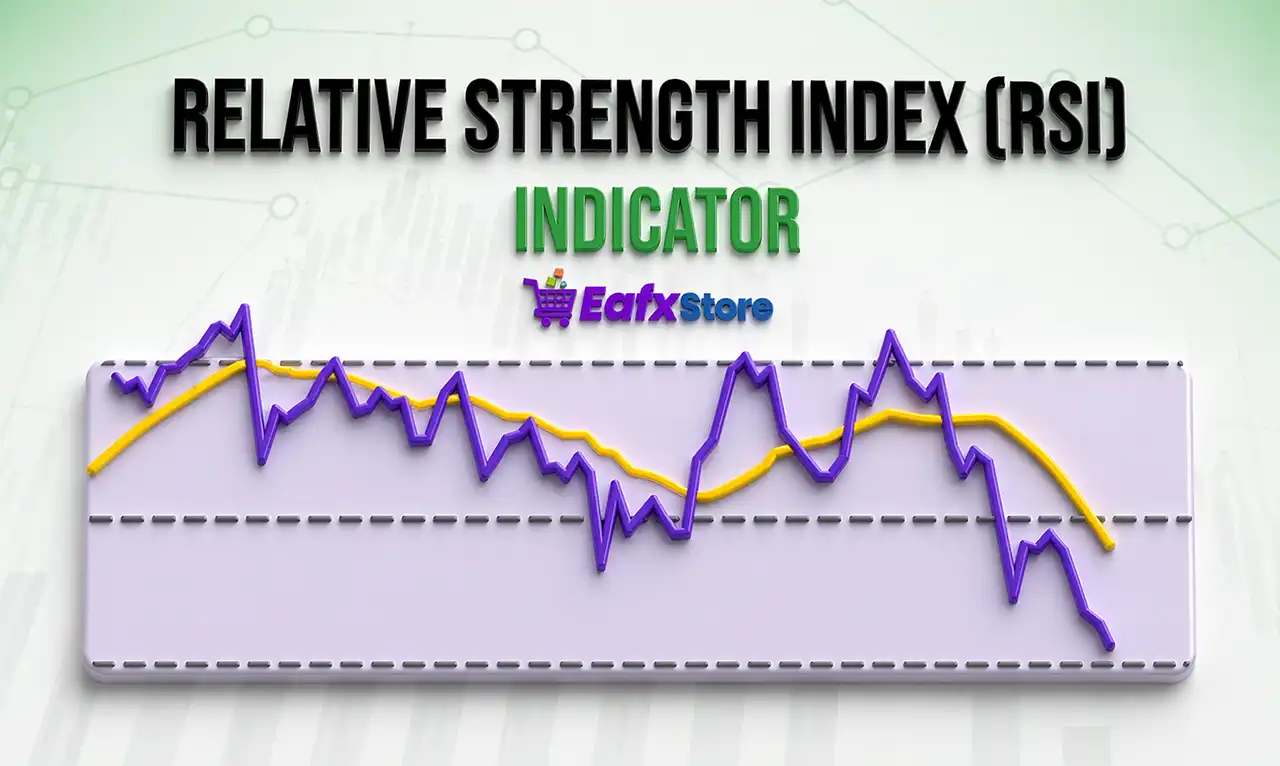
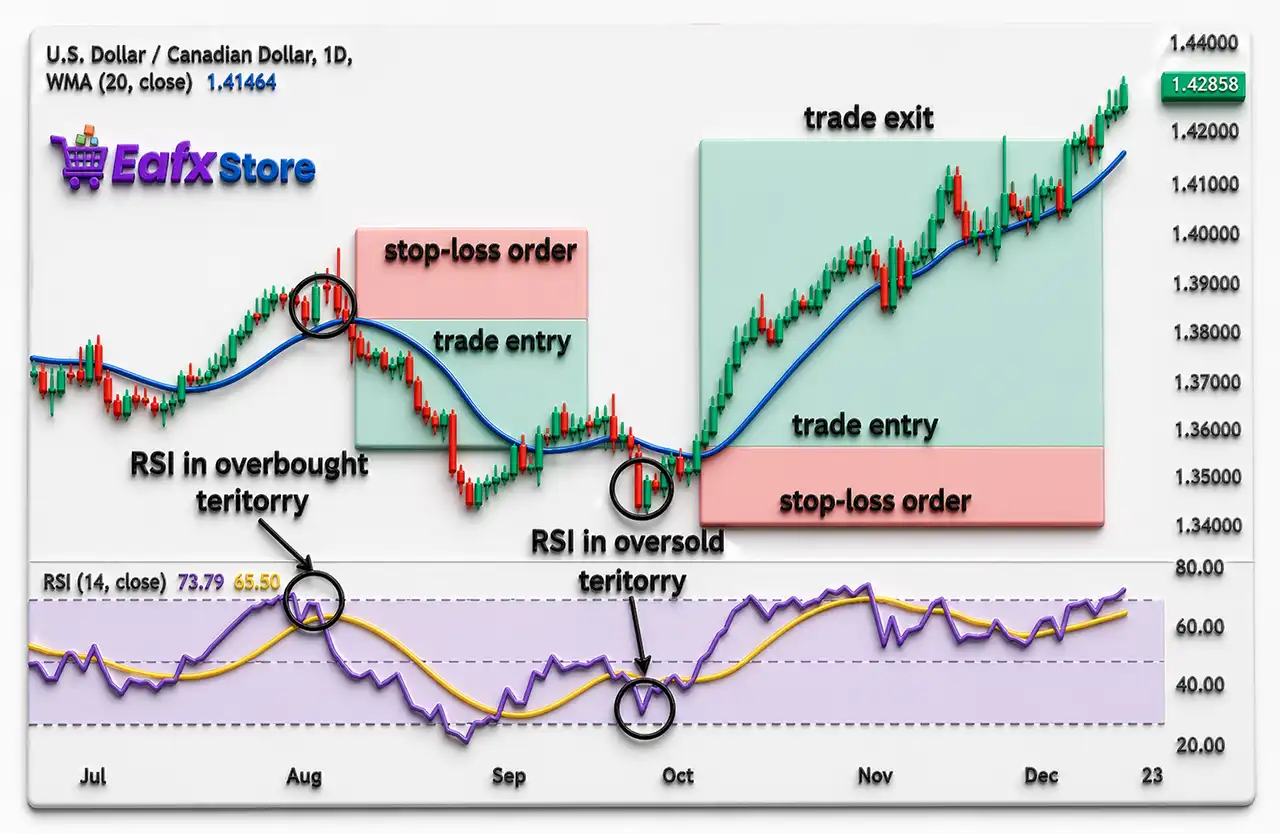
- Combine with momentum indicators like RSI
Advantages of Using WMA
- Faster signals: Reacts quickly to price changes
- Better for volatile markets: Ideal for Forex
- Improved accuracy (short-term): Reduces lag
- Flexible: Works across timeframes
Limitations of WMA
No indicator is perfect, and WMA has its drawbacks.
- More false signals: Especially in sideways markets
- Over-sensitivity: May react to minor fluctuations
- Requires confirmation: Should not be used alone
👉 Solution:
Always combine WMA with other indicators like RSI, MACD, or trendlines.
Best Settings for WMA in Forex
Choosing the right WMA period depends on your trading style.
| Trading Style | Recommended WMA |
|---|---|
| Scalping | 5 – 10 |
| Day Trading | 10 – 20 |
| Swing Trading | 20 – 50 |
| Long-term | 50 – 100 |
Common Mistakes to Avoid
1. Using WMA Alone
Relying solely on WMA can lead to poor decisions. Always use confirmation tools.
2. Ignoring Market Conditions
WMA works best in trending markets, not sideways conditions.
3. Overtrading
Because WMA is sensitive, it may generate frequent signals—avoid acting on all of them.
4. Wrong Timeframe
Using a short WMA on a long timeframe (or vice versa) can reduce effectiveness.
Pro Tips for Using WMA Effectively
- Combine WMA with trend indicators (e.g., MACD)
- Use multiple timeframes for confirmation
- Avoid trading during low volatility periods
- Backtest your strategy before live trading
- Focus on high-probability setups
Example Trading Setup
Let’s say you’re trading EUR/USD:
- Apply 20-period WMA
- Confirm trend direction
- Wait for price pullback to WMA
- Look for bullish/bearish candlestick pattern
- Enter trade with stop-loss below/above recent swing
This structured approach improves consistency and reduces risk.
Is WMA Suitable for Beginners?
Yes—but with caution.
WMA is easy to understand but requires discipline and proper risk management. Beginners should:
- Start with demo accounts
- Combine WMA with simple indicators
- Avoid overcomplicating strategies
Conclusion
The Weighted Moving Average (WMA) is a powerful and versatile tool in Forex trading. Its ability to prioritize recent price data makes it highly effective for identifying trends and capturing early signals.
However, its sensitivity can also be a double-edged sword. To use WMA effectively, traders must combine it with other indicators, understand market conditions, and apply proper risk management.
If used correctly, WMA can significantly enhance your trading performance and help you stay ahead in the ever-changing Forex market.