
Introduction to Trailing Stop Loss
In the world of Forex trading, managing risk is just as important as identifying profitable opportunities. One of the most effective tools traders use to protect gains while allowing profits to grow is the trailing stop loss. Unlike a fixed stop loss, a trailing stop dynamically adjusts as the market moves in your favor. This flexibility makes it an essential strategy for both beginner and experienced traders who want to optimize risk management without constantly monitoring the market.
A trailing stop loss helps traders strike a balance between locking in profits and giving trades enough room to breathe. Understanding how it works can significantly improve your trading performance and emotional discipline.
What is a Trailing Stop Loss?
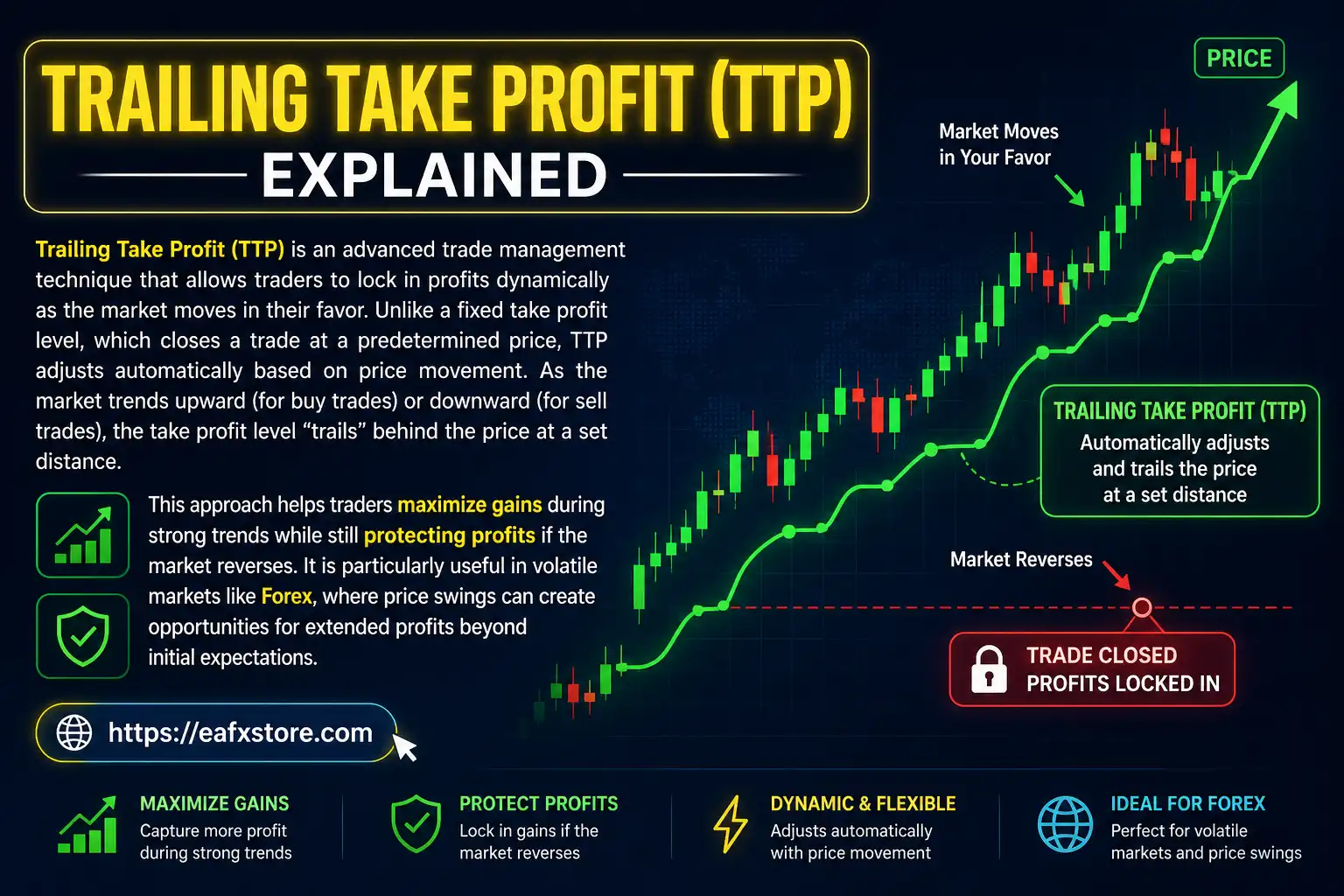
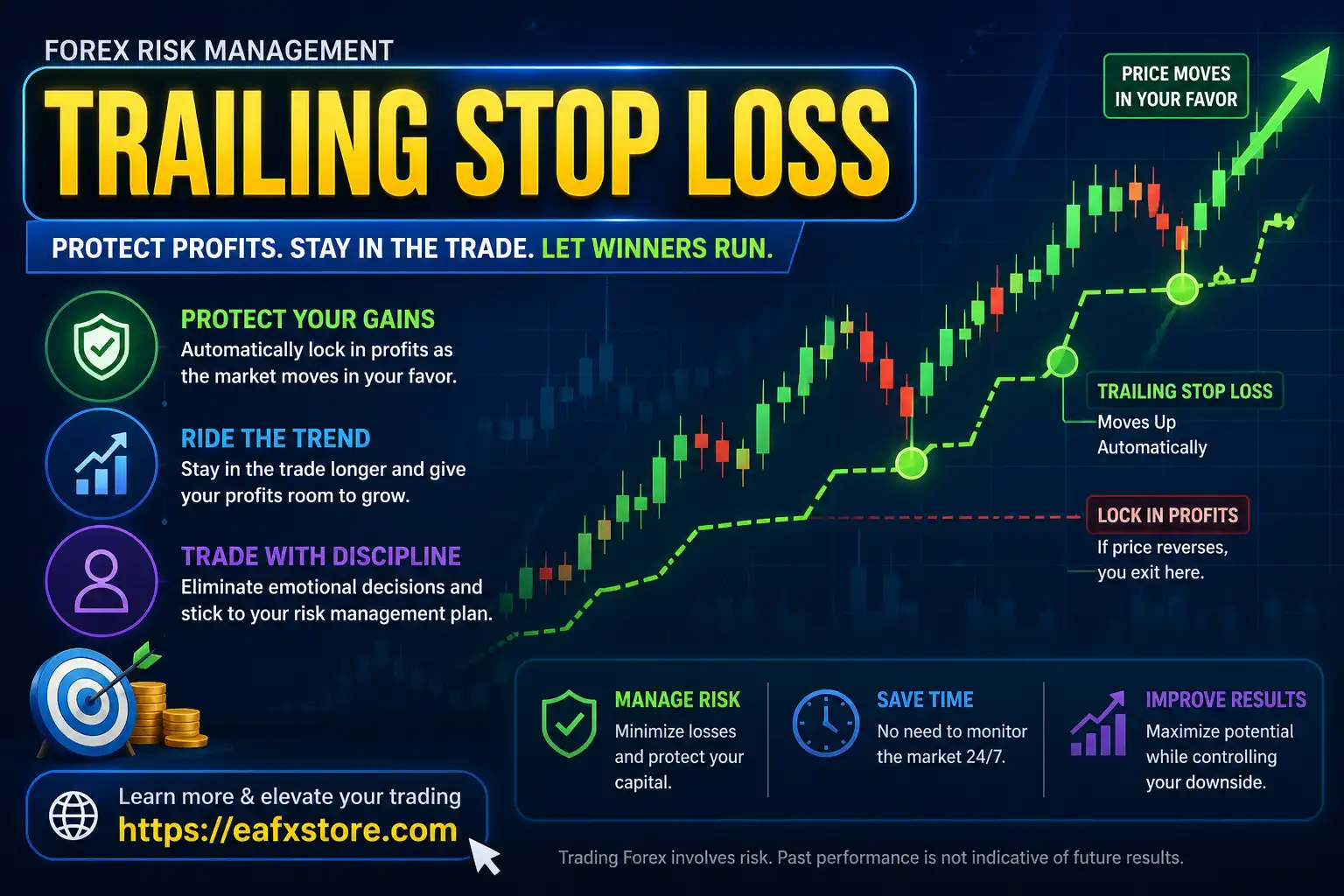
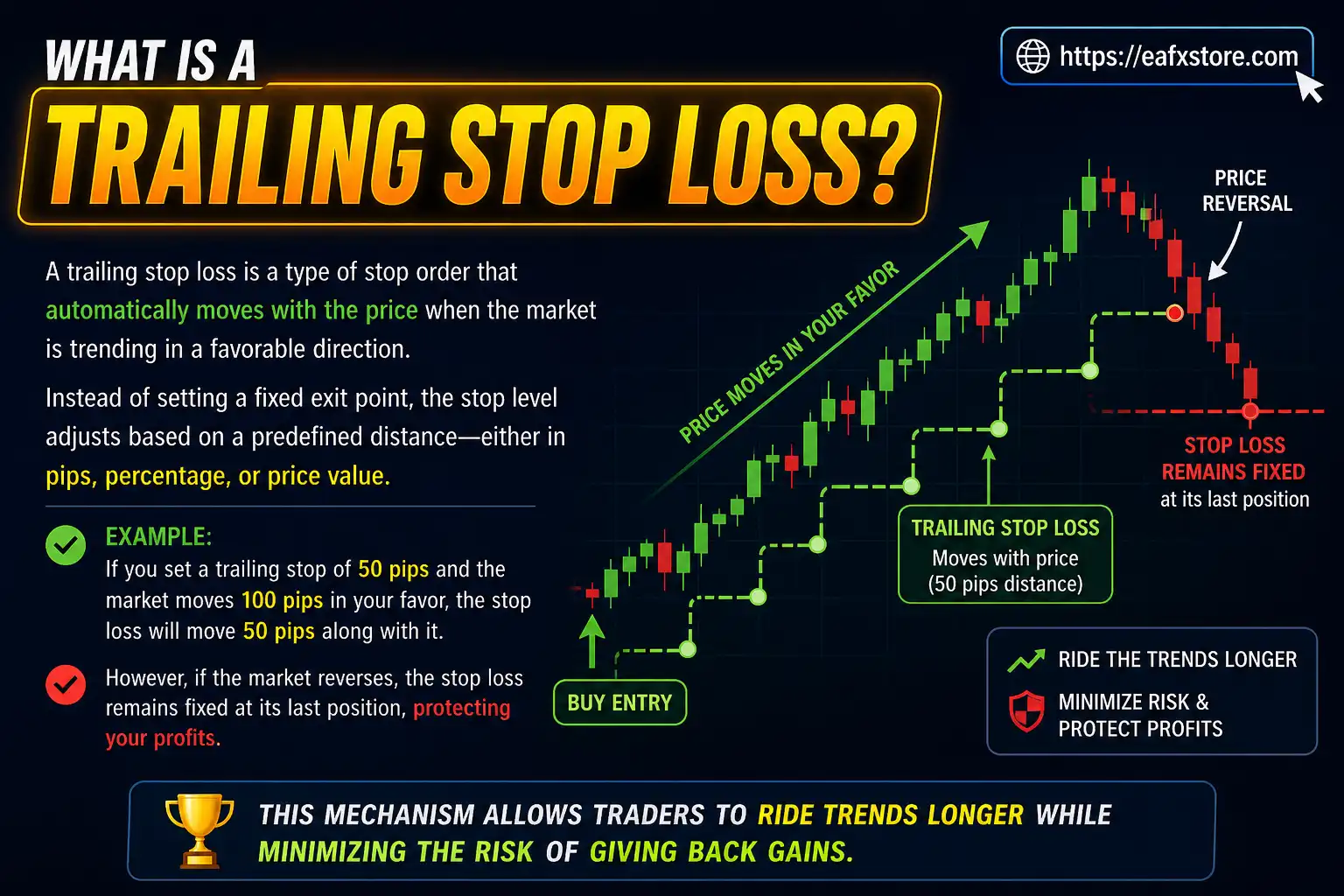
A trailing stop loss is a type of stop order that automatically moves with the price when the market is trending in a favorable direction. Instead of setting a fixed exit point, the stop level adjusts based on a predefined distance—either in pips, percentage, or price value.
For example, if you set a trailing stop of 50 pips and the market moves 100 pips in your favor, the stop loss will move 50 pips along with it. However, if the market reverses, the stop loss remains fixed at its last position, protecting your profits.
This mechanism allows traders to ride trends longer while minimizing the risk of giving back gains.
How Trailing Stop Loss Works
A trailing stop loss follows price movements automatically, but only in one direction—toward profit. When the price moves against your position, the stop does not move backward.
Here’s a simple breakdown of how it works:
| Scenario | Price Movement | Trailing Stop Action |
|---|---|---|
| Market moves in your favor | Price increases (buy trade) | Stop loss moves up |
| Market stays stagnant | No significant change | Stop remains unchanged |
| Market reverses | Price decreases | Stop stays fixed and may be triggered |
This functionality makes trailing stops particularly useful in trending markets where price moves consistently in one direction.
Benefits of Using Trailing Stop Loss
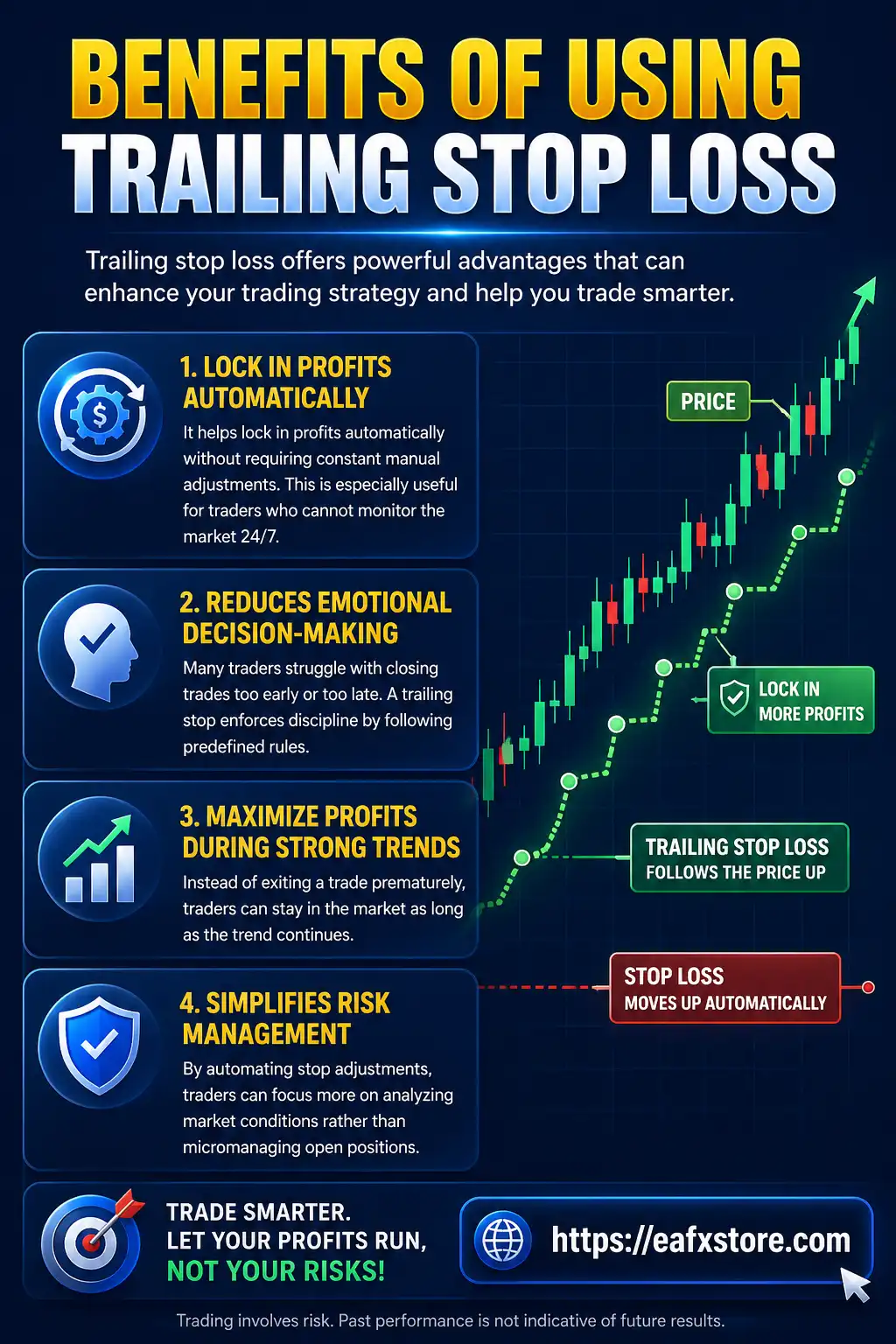
Trailing stop loss offers several advantages that can enhance your trading strategy. First, it helps lock in profits automatically without requiring constant manual adjustments. This is especially useful for traders who cannot monitor the market 24/7.
Second, it reduces emotional decision-making. Many traders struggle with closing trades too early or too late. A trailing stop enforces discipline by following predefined rules.
Another key benefit is the ability to maximize profits during strong trends. Instead of exiting a trade prematurely, traders can stay in the market as long as the trend continues.
Finally, it simplifies risk management. By automating stop adjustments, traders can focus more on analyzing market conditions rather than micromanaging open positions.
Drawbacks and Limitations
Despite its advantages, trailing stop loss is not perfect. One major limitation is its sensitivity to market volatility. In highly volatile conditions, price fluctuations can trigger the stop prematurely, even if the overall trend remains intact.
Another drawback is the need to choose the right trailing distance. If the stop is too tight, it may close trades too early. If it is too wide, it may fail to protect profits effectively.
Additionally, trailing stops may not perform well in ranging or sideways markets, where price frequently reverses direction without a clear trend.
Understanding these limitations is crucial to using trailing stops effectively.
Trailing Stop vs Fixed Stop Loss
To better understand the value of trailing stops, it helps to compare them with traditional fixed stop losses.
| Feature | Trailing Stop Loss | Fixed Stop Loss |
|---|---|---|
| Movement | Adjusts with price | Remains static |
| Profit Protection | Locks in profits dynamically | Does not adjust |
| Flexibility | High | Low |
| Best Use Case | Trending markets | All market conditions |
While fixed stop losses are essential for initial risk control, trailing stops provide an additional layer of flexibility and profit optimization.
How to Set a Trailing Stop Loss
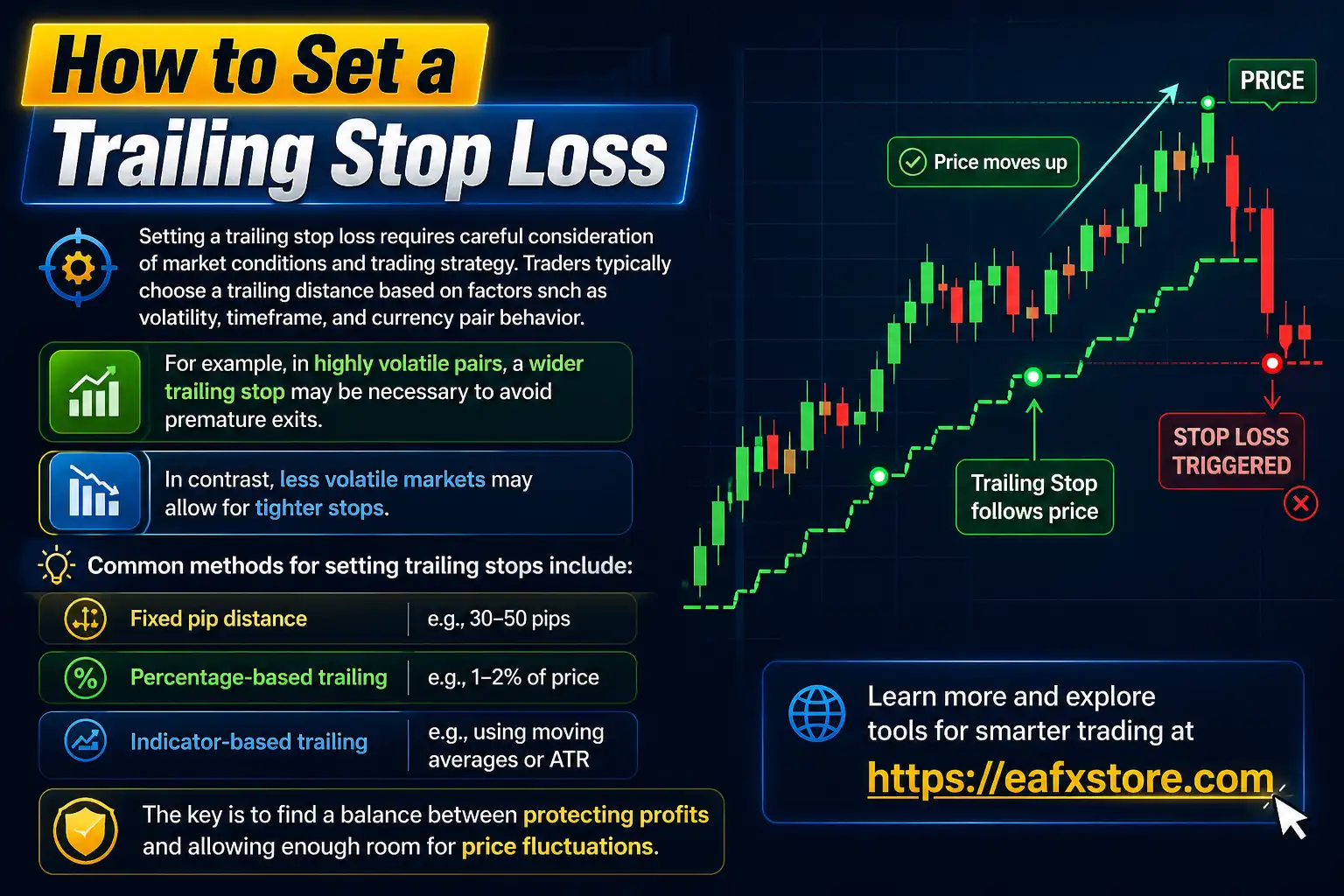
Setting a trailing stop loss requires careful consideration of market conditions and trading strategy. Traders typically choose a trailing distance based on factors such as volatility, timeframe and currency pair behavior.
For example, in highly volatile pairs, a wider trailing stop may be necessary to avoid premature exits. In contrast, less volatile markets may allow for tighter stops.
Common methods for setting trailing stops include:
- Fixed pip distance (e.g., 30–50 pips)
- Percentage-based trailing (e.g., 1–2% of price)
- Indicator-based trailing (e.g., using moving averages or ATR)
The key is to find a balance between protecting profits and allowing enough room for price fluctuations.
Best Strategies for Using Trailing Stop Loss
To use trailing stop loss effectively, traders should align it with their overall trading strategy. In trend-following strategies, trailing stops are particularly powerful because they allow trades to run as long as the trend remains intact.
Swing traders often use trailing stops to capture medium-term price movements while securing partial gains. Day traders, on the other hand, may use tighter trailing stops to manage short-term volatility.
Another effective approach is combining trailing stops with technical indicators. For example, placing a trailing stop below a moving average can help align exit points with trend direction.
Consistency is key. Traders should test and refine their trailing stop settings to suit their specific trading style.
Common Mistakes to Avoid
Many traders misuse trailing stop loss due to a lack of understanding or poor strategy. One common mistake is setting the trailing distance too tight, which leads to frequent stop-outs.
Another mistake is relying solely on trailing stops without a proper entry strategy. A trailing stop is a risk management tool, not a signal generator.
Traders also often ignore market conditions. Using trailing stops in choppy markets can result in repeated losses.
Finally, failing to backtest trailing stop strategies can lead to inconsistent results. Testing helps identify optimal settings and improves overall performance.
Conclusion
Trailing stop loss is a powerful tool for smart risk management in Forex trading. By automatically adjusting to favorable price movements, it helps traders lock in profits while staying in winning trades longer.
However, like any tool, it must be used correctly. Understanding market conditions, choosing appropriate trailing distances, and avoiding common mistakes are essential for success.
When integrated into a well-defined trading strategy, trailing stop loss can significantly enhance both profitability and discipline—two key ingredients for long-term success in Forex trading.