
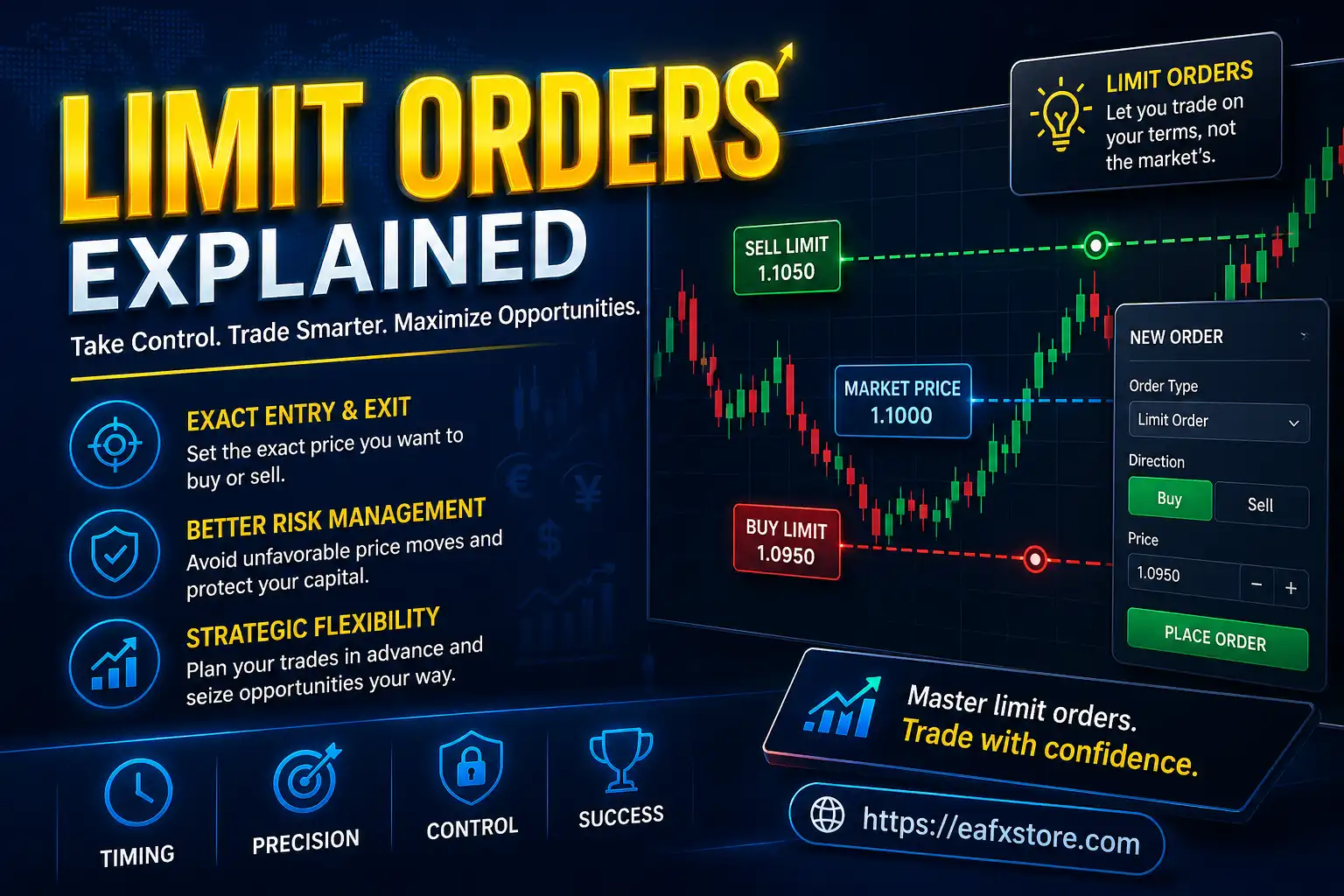
In the fast-paced world of Forex trading, timing and precision can make the difference between profit and loss. While market orders execute trades instantly, they often leave traders exposed to unfavorable price movements. This is where limit orders come in. By allowing you to define the exact price at which you want to enter or exit a trade, limit orders provide greater control, improved risk management and strategic flexibility.
In this guide, we’ll break down how limit orders work, why they matter and how you can use them to enhance your Forex trading strategy.
What Is a Limit Order in Forex Trading?
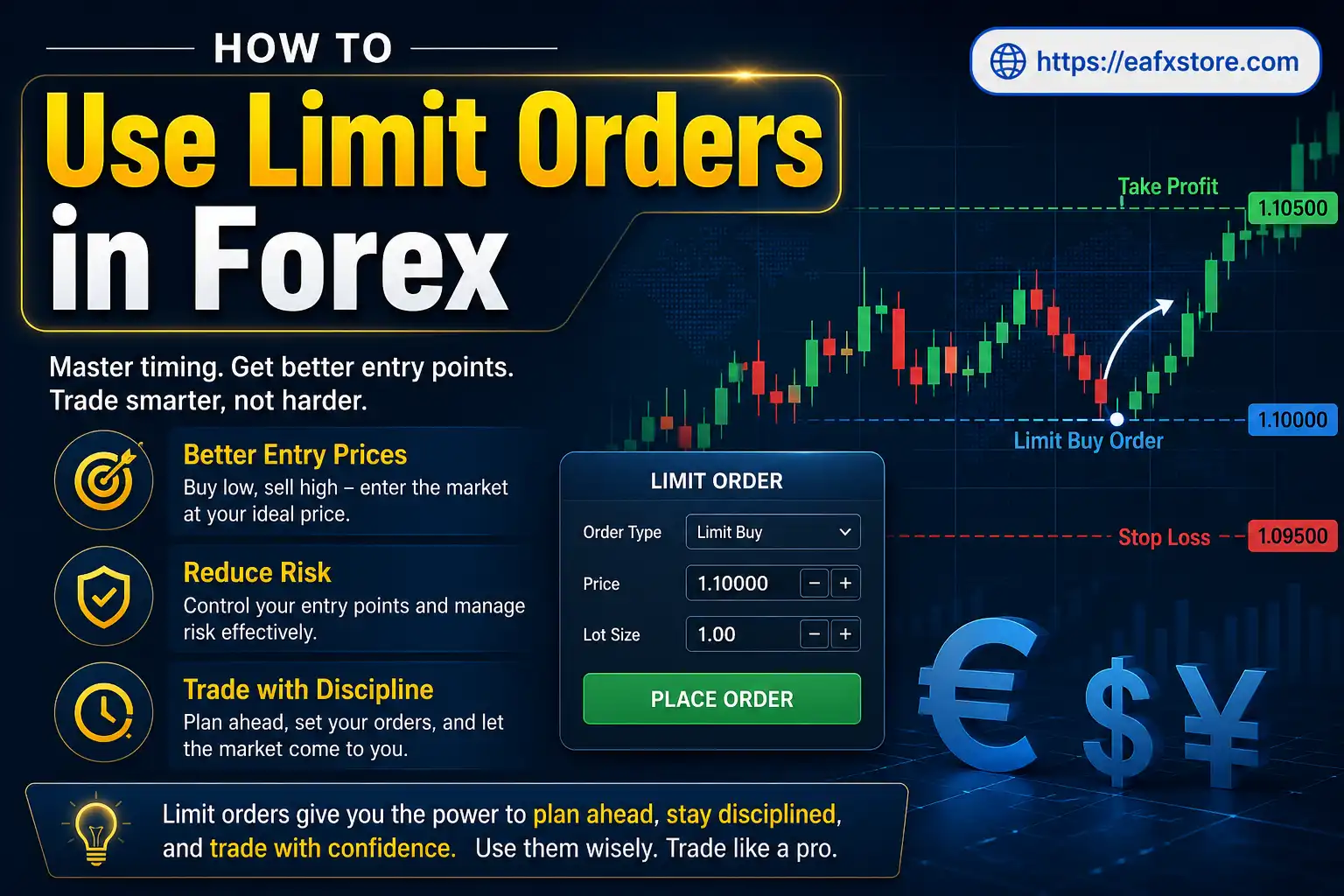
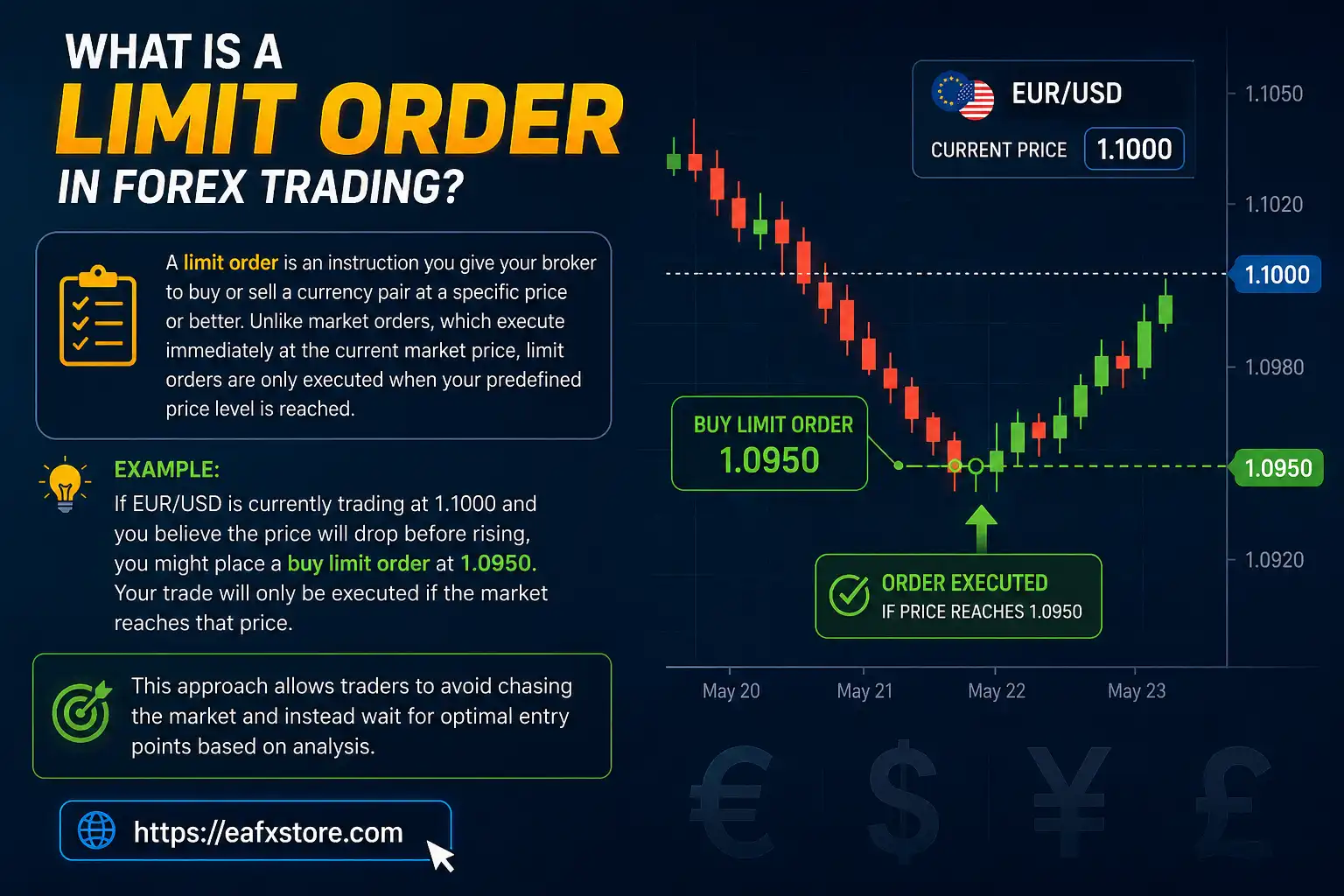
A limit order is an instruction you give your broker to buy or sell a currency pair at a specific price or better. Unlike market orders, which execute immediately at the current market price, limit orders are only executed when your predefined price level is reached.
For example, if EUR/USD is currently trading at 1.1000 and you believe the price will drop before rising, you might place a buy limit order at 1.0950. Your trade will only be executed if the market reaches that price.
This approach allows traders to avoid chasing the market and instead wait for optimal entry points based on analysis.
Types of Limit Orders
There are two main types of limit orders used in Forex trading, each serving a different purpose depending on your strategy.
| Order Type | Description | Use Case |
|---|---|---|
| Buy Limit | Placed below the current market price to buy at a lower level | Enter long positions at a discount |
| Sell Limit | Placed above the current market price to sell at a higher level | Enter short positions at a premium |
Buy limit orders are ideal when you expect a price pullback before an upward trend. Sell limit orders, on the other hand, are useful when you anticipate a temporary rise before a decline.
How Limit Orders Work in Practice
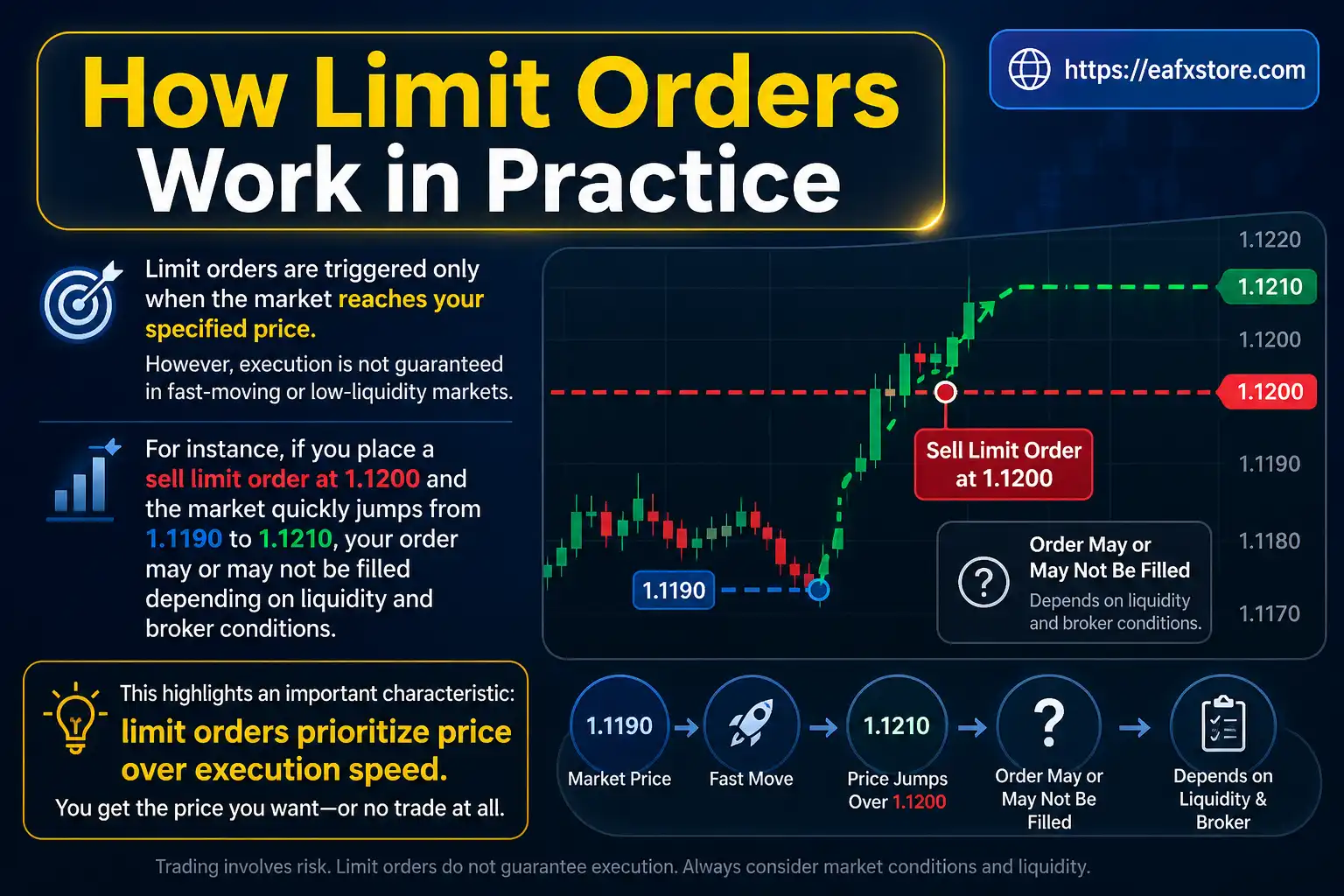
Limit orders are triggered only when the market reaches your specified price. However, execution is not guaranteed in fast-moving or low-liquidity markets.
For instance, if you place a sell limit order at 1.1200 and the market quickly jumps from 1.1190 to 1.1210, your order may or may not be filled depending on liquidity and broker conditions.
This highlights an important characteristic: limit orders prioritize price over execution speed. You get the price you want—or no trade at all.
Advantages of Using Limit Orders
Limit orders offer several benefits that make them an essential tool for disciplined traders.
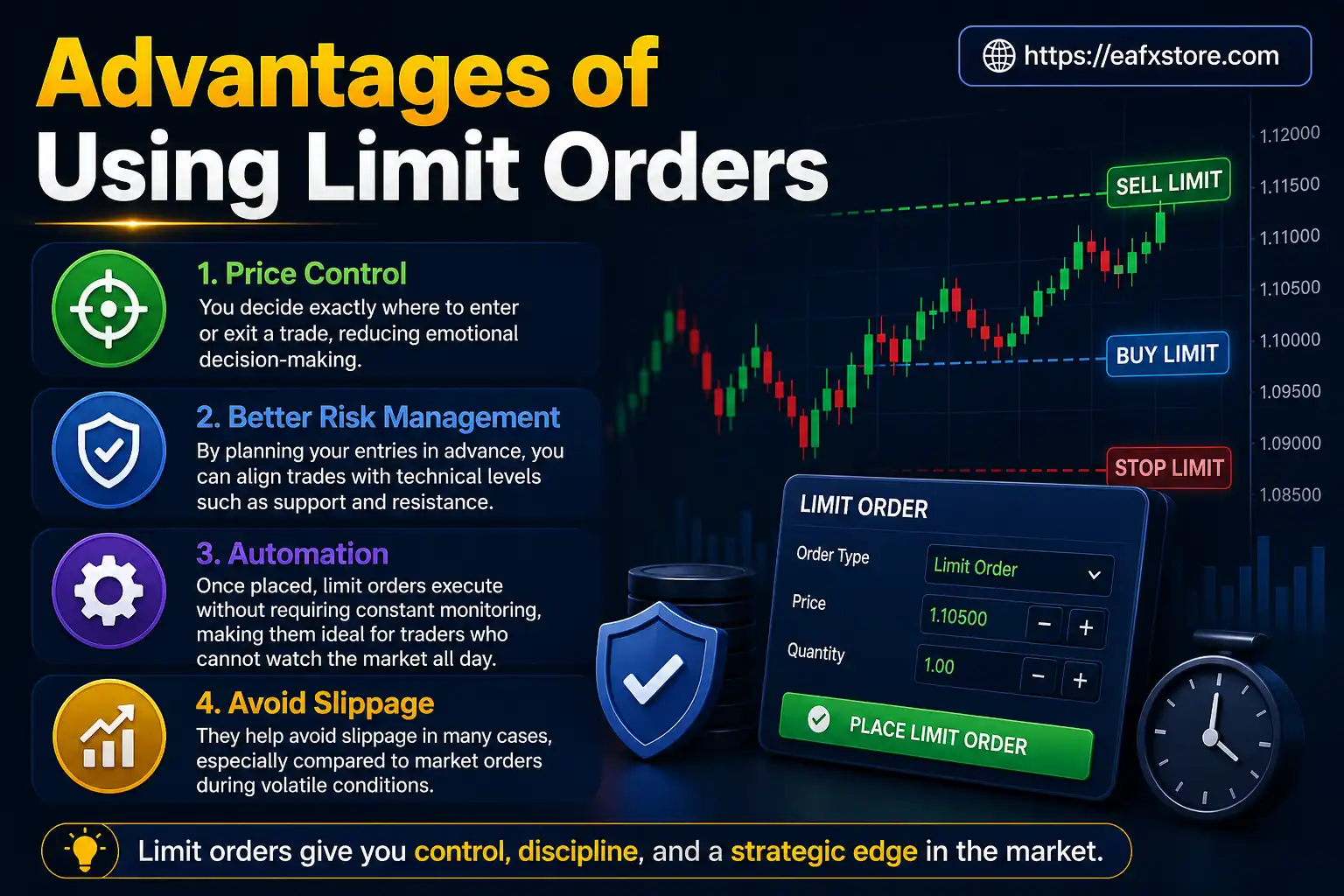
First, they provide price control. You decide exactly where to enter or exit a trade, reducing emotional decision-making.
Second, they support better risk management. By planning your entries in advance, you can align trades with technical levels such as support and resistance.
Third, they allow for automation. Once placed, limit orders execute without requiring constant monitoring, making them ideal for traders who cannot watch the market all day.
Finally, they help avoid slippage in many cases, especially compared to market orders during volatile conditions.
Disadvantages of Limit Orders
Despite their advantages, limit orders are not without drawbacks.
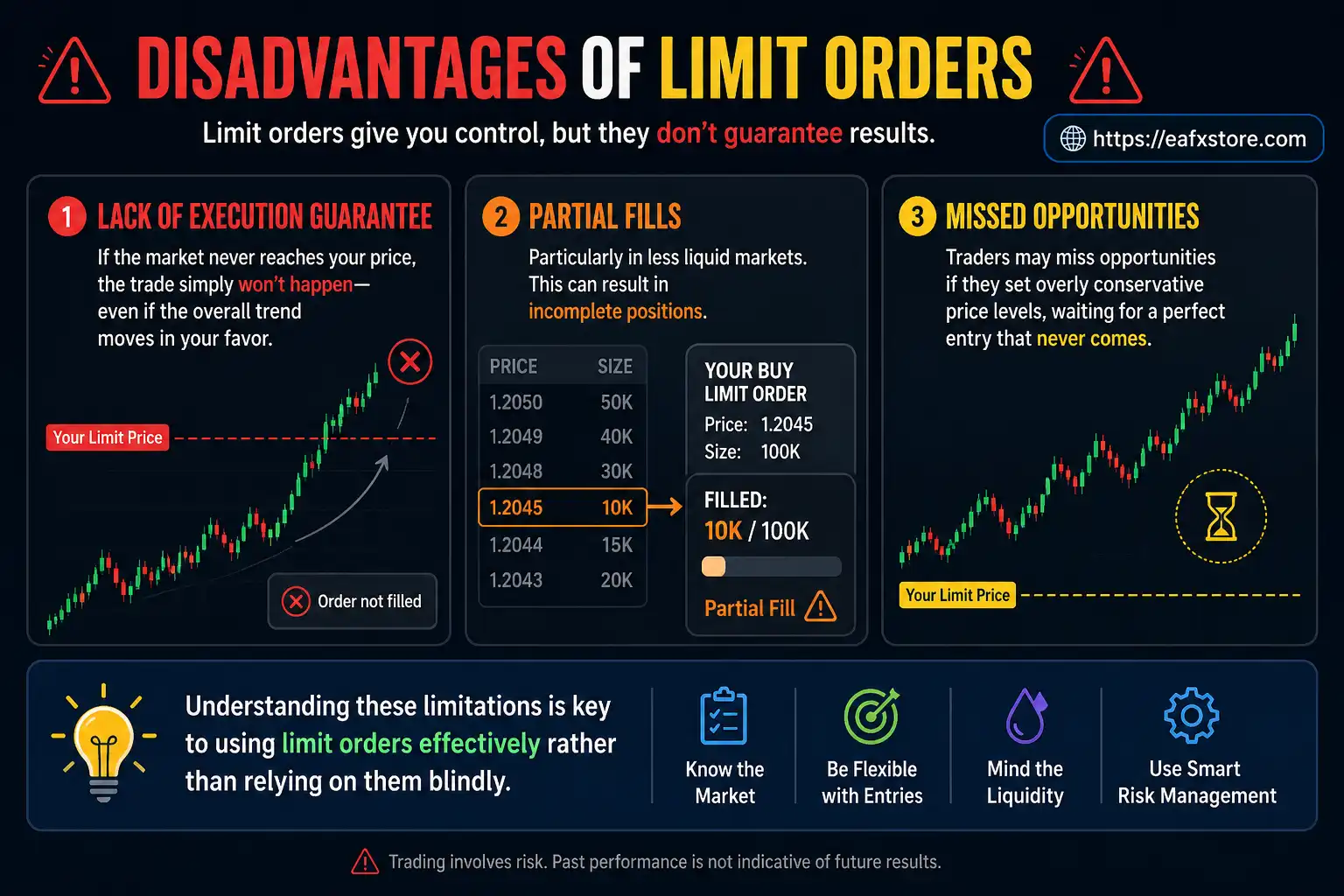
The biggest limitation is the lack of execution guarantee. If the market never reaches your price, the trade simply won’t happen—even if the overall trend moves in your favor.
Another issue is partial fills, particularly in less liquid markets. This can result in incomplete positions.
Additionally, traders may miss opportunities if they set overly conservative price levels, waiting for a perfect entry that never comes.
Understanding these limitations is key to using limit orders effectively rather than relying on them blindly.
Limit Orders vs Market Orders
To fully appreciate limit orders, it’s important to compare them with market orders.
| Feature | Limit Order | Market Order |
|---|---|---|
| Execution Speed | Slower or conditional | Immediate |
| Price Control | High | Low |
| Slippage Risk | Lower | Higher |
| Execution Guarantee | Not guaranteed | Guaranteed |
Market orders are useful when speed is critical, such as during news events. Limit orders, however, are better suited for planned, strategic entries.
A balanced trading strategy often uses both types depending on the situation.
When Should You Use Limit Orders?
Limit orders are particularly effective in specific trading scenarios.
They work well in range-bound markets, where prices oscillate between support and resistance levels. Traders can place buy limits near support and sell limits near resistance.
They are also useful in trending markets during pullbacks. Instead of entering at a high price, traders wait for a retracement to a better level.
Additionally, limit orders are ideal for swing trading and position trading, where precision matters more than speed.
Using limit orders in these contexts helps improve entry quality and overall trade efficiency.
Tips to Improve Your Strategy with Limit Orders
To maximize the effectiveness of limit orders, consider the following practical tips.
First, combine limit orders with technical analysis. Use indicators like support/resistance, Fibonacci retracements, or moving averages to identify optimal entry points.
Second, avoid setting unrealistic price levels. If your limit is too far from the current price, you may miss valid trading opportunities.
Third, monitor market conditions. In highly volatile markets, prices may move too quickly, reducing the chance of execution.
Fourth, use stop-loss orders alongside limit orders. This ensures that even if your entry is precise, your risk remains controlled.
Finally, review your trades regularly. Analyze whether your limit orders are being triggered effectively and adjust your strategy accordingly.
Common Mistakes Traders Make
Many traders misuse limit orders due to misunderstanding or poor planning.
One common mistake is placing orders without analysis, essentially guessing price levels rather than relying on data.
Another is setting and forgetting without reviewing market changes. Conditions evolve, and static orders may become irrelevant.
Traders also often ignore liquidity, which can affect whether orders are filled.
Avoiding these mistakes requires discipline, continuous learning, and a structured trading plan.
Conclusion
Limit orders are a powerful tool that can significantly improve your Forex trading strategy when used correctly. They provide control, precision, and the ability to execute trades based on well-defined criteria rather than emotion.
However, they are not a one-size-fits-all solution. Understanding when and how to use them—alongside other order types—is essential for long-term success.
By integrating limit orders into a thoughtful, analysis-driven approach, you can enhance your entry points, manage risk more effectively, and ultimately become a more disciplined and profitable trader.