
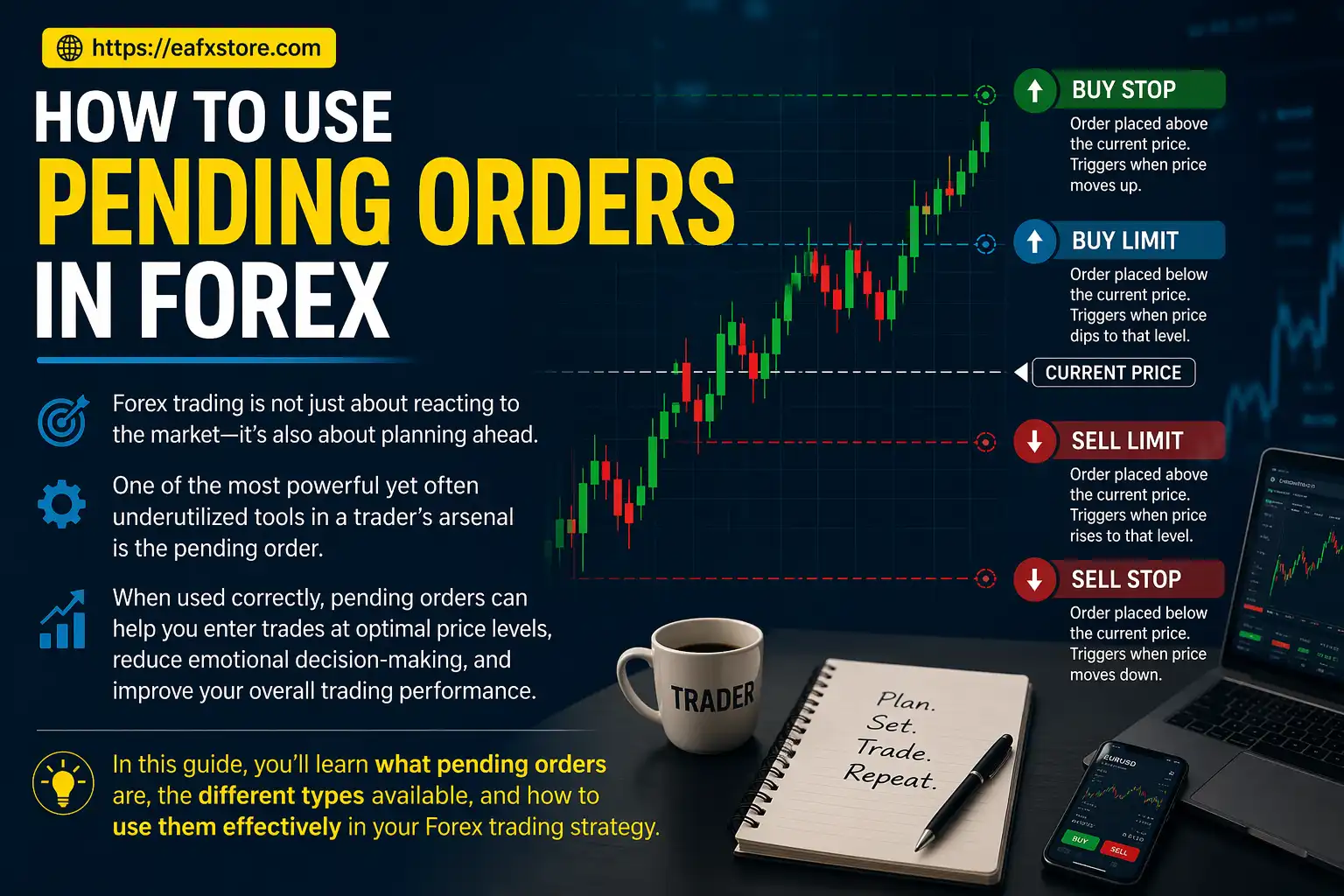
Forex trading is not just about reacting to the market—it’s also about planning ahead. One of the most powerful yet often underutilized tools in a trader’s arsenal is the pending order. When used correctly, pending orders can help you enter trades at optimal price levels, reduce emotional decision-making, and improve your overall trading performance.
In this guide, you’ll learn what pending orders are, the different types available and how to use them effectively in your forex trading strategy.
What Are Pending Orders in Forex?
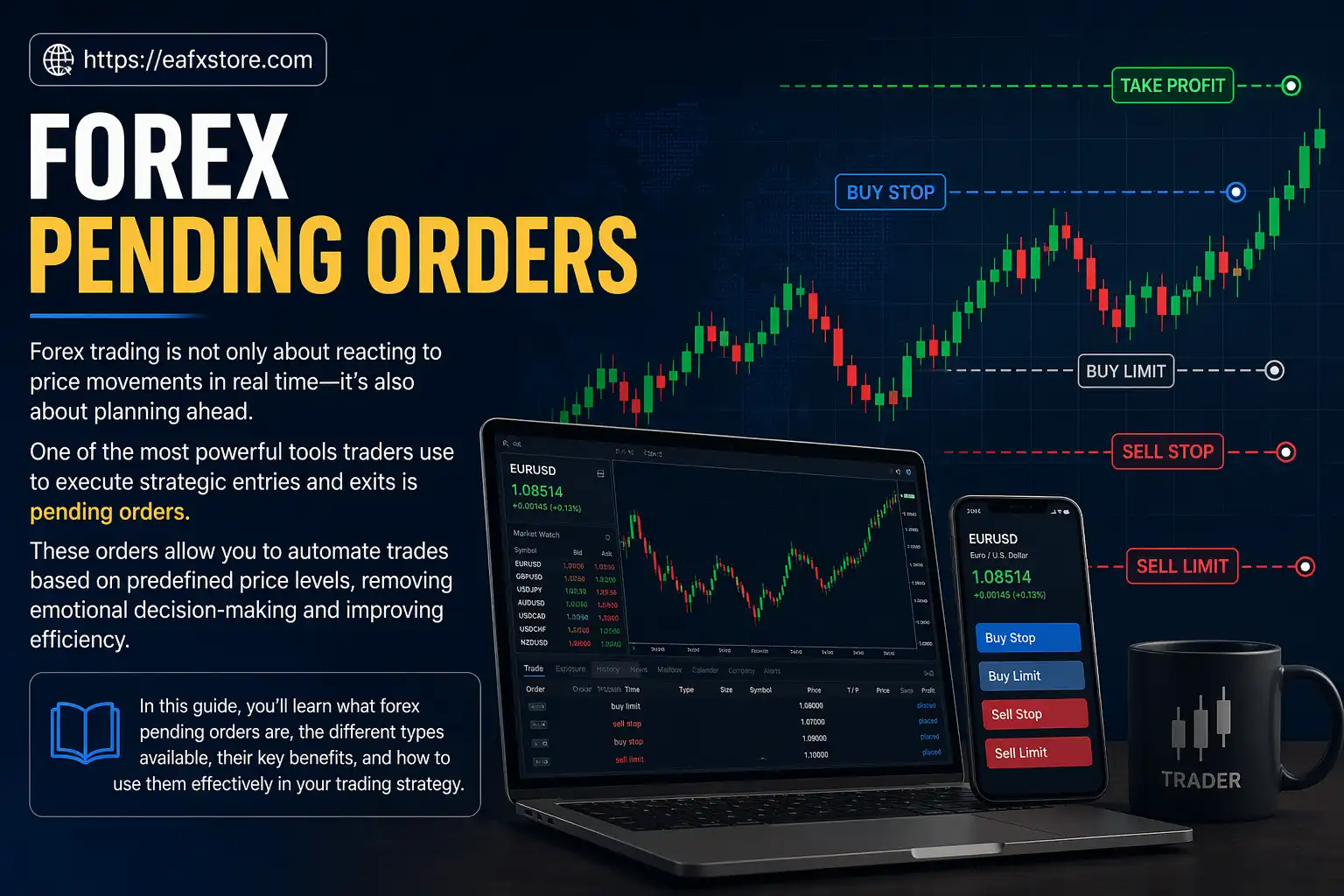
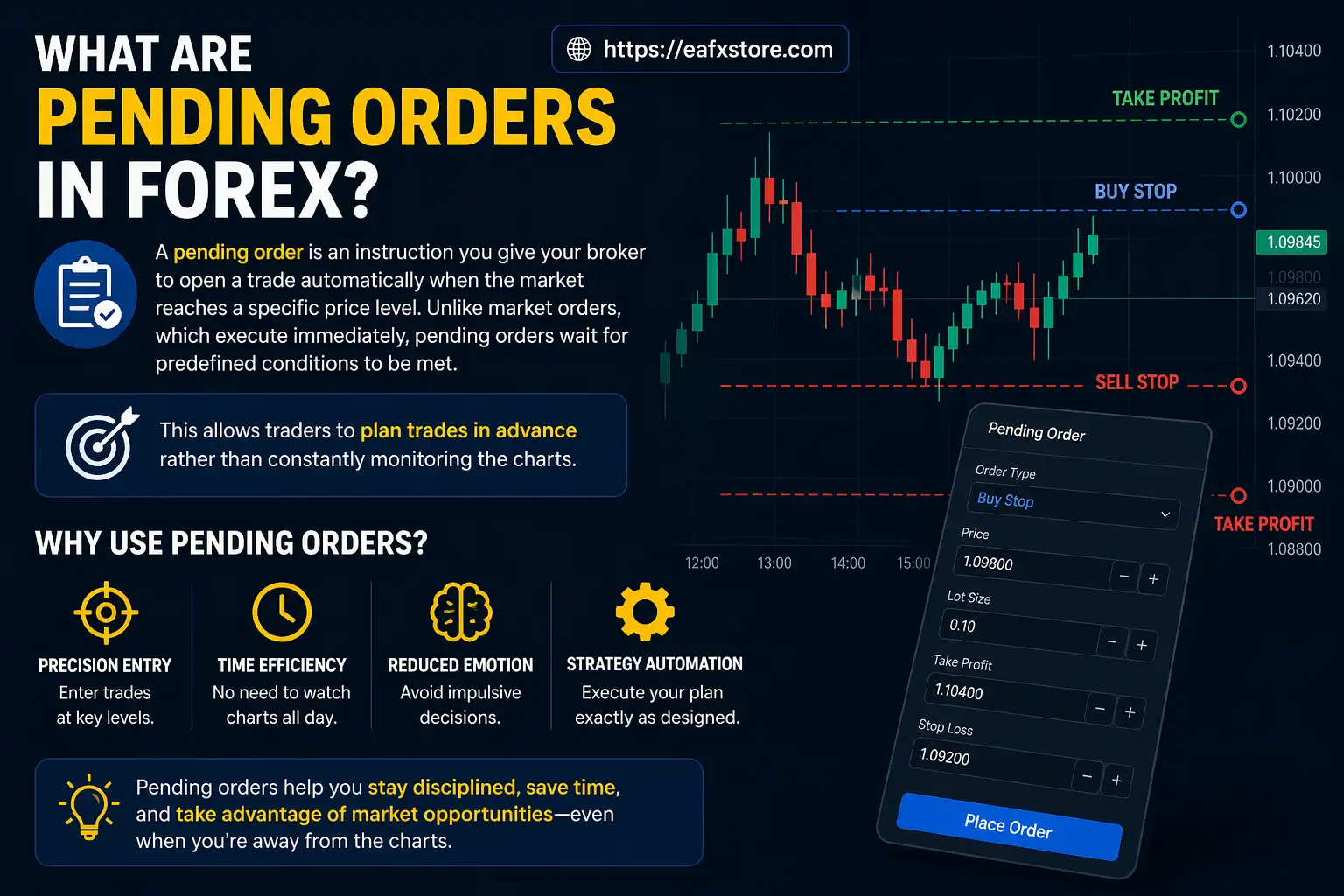
A pending order is an instruction you give your broker to open a trade automatically when the market reaches a specific price level. Unlike market orders, which execute immediately, pending orders wait for predefined conditions to be met.
This allows traders to plan trades in advance rather than constantly monitoring the charts.
Why Use Pending Orders?
- Precision entry: Enter trades at key levels.
- Time efficiency: No need to watch charts all day.
- Reduced emotion: Avoid impulsive decisions.
- Strategy automation: Execute your plan exactly as designed.
Types of Pending Orders
There are four main types of pending orders in Forex trading. Understanding each one is essential to using them effectively.
1. Buy Limit
A Buy Limit order is placed below the current market price. You expect the price to drop to a certain level and then rise again.
Example:
If EUR/USD is trading at 1.1000, you might place a Buy Limit at 1.0950, expecting a rebound.
2. Sell Limit
A Sell Limit order is placed above the current market price. You anticipate that the price will rise to a level and then reverse downward.
Example:
If GBP/USD is at 1.2500, you might set a Sell Limit at 1.2550.
3. Buy Stop
A Buy Stop order is placed above the current price. You expect the price to continue rising once it breaks a resistance level.
Example:
If USD/JPY is at 110.00, placing a Buy Stop at 110.50 allows you to catch a breakout.
4. Sell Stop
A Sell Stop order is placed below the current price. It is used when you expect the price to continue falling after breaking support.
Example:
If AUD/USD is at 0.7000, you might set a Sell Stop at 0.6950.
When Should You Use Pending Orders?
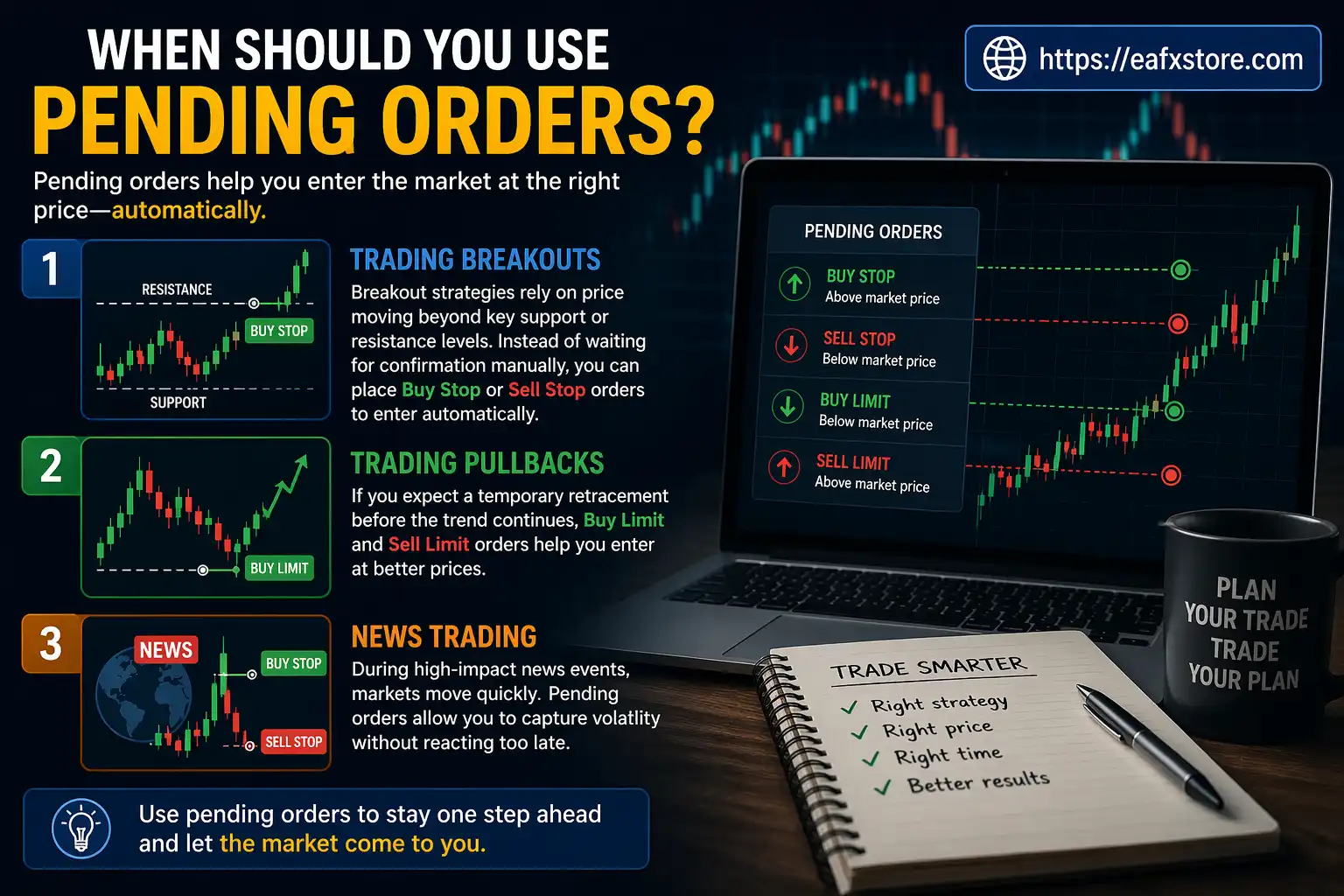
Pending orders are particularly useful in the following scenarios:
1. Trading Breakouts
Breakout strategies rely on price moving beyond key support or resistance levels. Instead of waiting for confirmation manually, you can place Buy Stop or Sell Stop orders to enter automatically.
2. Trading Pullbacks
If you expect a temporary retracement before the trend continues, Buy Limit and Sell Limit orders help you enter at better prices.
3. News Trading
During high-impact news events, markets move quickly. Pending orders allow you to capture volatility without reacting too late.
How to Set Pending Orders Effectively
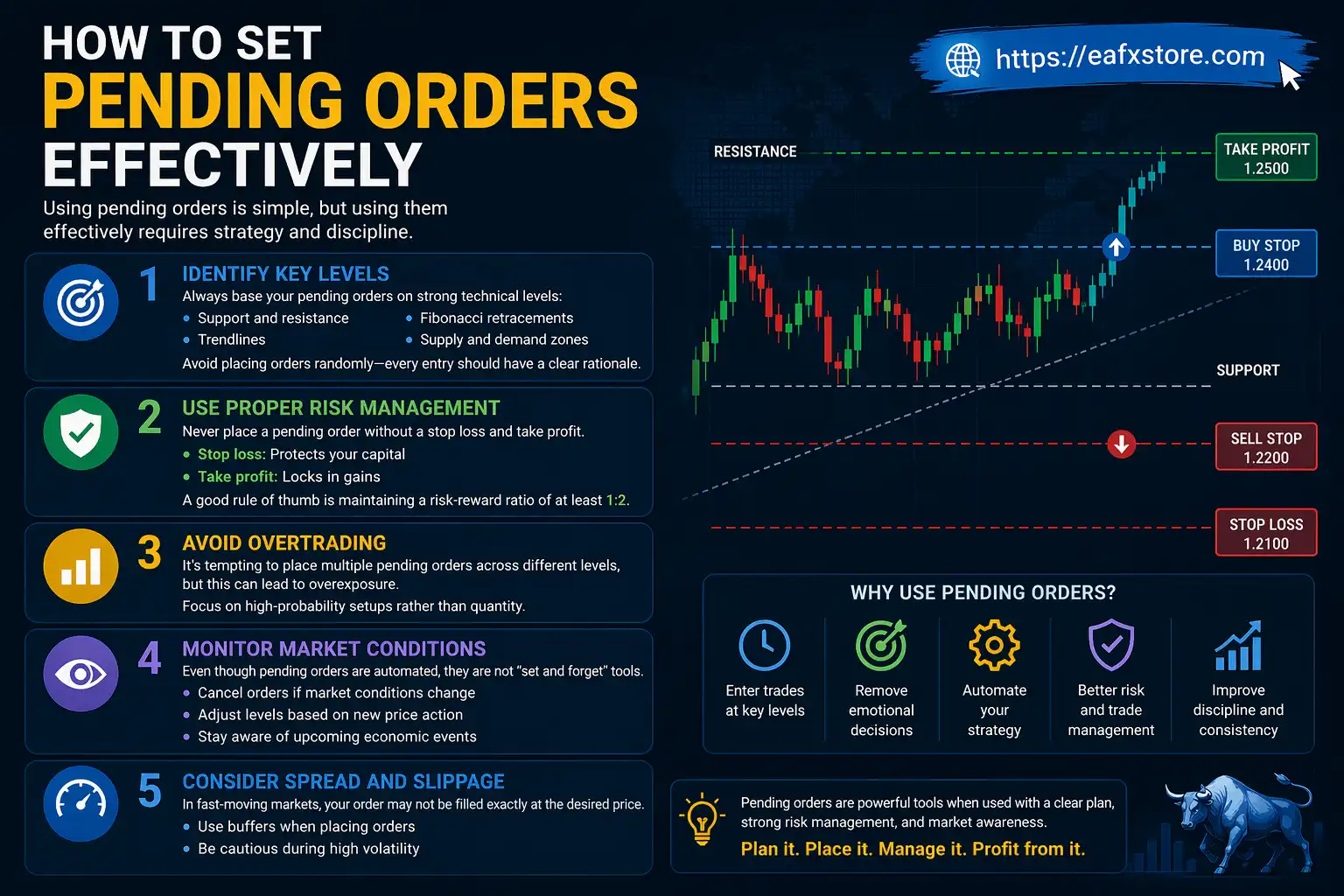
Using pending orders is simple, but using them effectively requires strategy and discipline.
1. Identify Key Levels
Always base your pending orders on strong technical levels:
- Support and resistance
- Trendlines
- Fibonacci retracements
- Supply and demand zones
Avoid placing orders randomly—every entry should have a clear rationale.
2. Use Proper Risk Management
Never place a pending order without a stop loss and take profit.
- Stop loss: Protects your capital.
- Take profit: Locks in gains.
A good rule of thumb is maintaining a risk-reward ratio of at least 1:2.
3. Avoid Overtrading
It’s tempting to place multiple pending orders across different levels, but this can lead to overexposure.
Focus on high-probability setups rather than quantity.
4. Monitor Market Conditions
Even though pending orders are automated, they are not “set and forget” tools.
- Cancel orders if market conditions change
- Adjust levels based on new price action
- Stay aware of upcoming economic events
5. Consider Spread and Slippage
In fast-moving markets, your order may not be filled exactly at the desired price.
- Use buffers when placing orders
- Be cautious during high volatility
Common Mistakes to Avoid
Even experienced traders make mistakes with pending orders. Here are some pitfalls to watch out for:
Placing Orders Too Close to Current Price
Orders that are too close can be triggered by market noise rather than meaningful movement.
Ignoring Market Context
A technical level alone isn’t enough. Always consider:
- Overall trend.
- Market sentiment.
- Economic factors.
Forgetting to Cancel Orders
Leaving old pending orders active can result in unexpected trades being triggered later.
Overconfidence in Automation
Pending orders are tools—not guarantees. You still need analysis and discipline.
Example Strategy Using Pending Orders
Let’s look at a simple breakout strategy:
- Identify a strong resistance level.
- Place a Buy Stop slightly above it.
- Set stop loss below the breakout level.
- Set take profit based on risk-reward ratio.
This allows you to capture momentum without chasing the market.
Similarly, for pullbacks:
- Identify an uptrend.
- Wait for price to retrace to support.
- Place a Buy Limit at that level.
- Set stop loss below support.
This helps you enter trades at better prices with lower risk.
Advantages of Pending Orders
- Improved discipline.
- Better trade timing.
- Reduced screen time.
- Consistent execution.
Disadvantages of Pending Orders
- Risk of false breakouts.
- Slippage in volatile markets.
- Requires strong analysis.
- Needs regular monitoring.
Final Thoughts
Pending orders are an essential tool for any Forex trader looking to trade more strategically and efficiently. Instead of reacting emotionally to market movements, you can plan your trades in advance and let the market come to you.
However, success with pending orders depends on proper analysis, risk management and continuous monitoring. They are not a shortcut to profits, but when used correctly, they can significantly enhance your trading performance.