
Introduction to Breakout and Retest Strategy
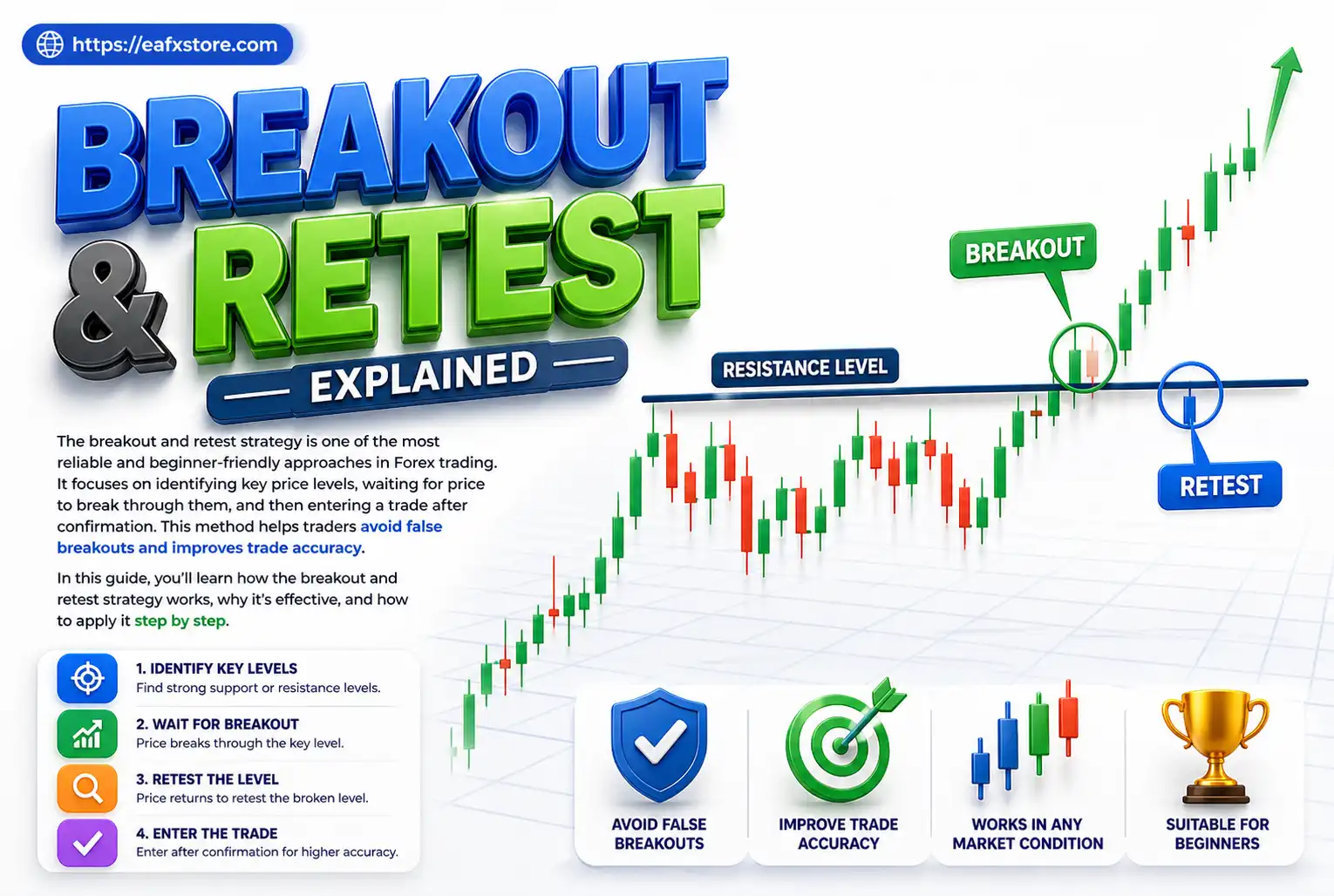
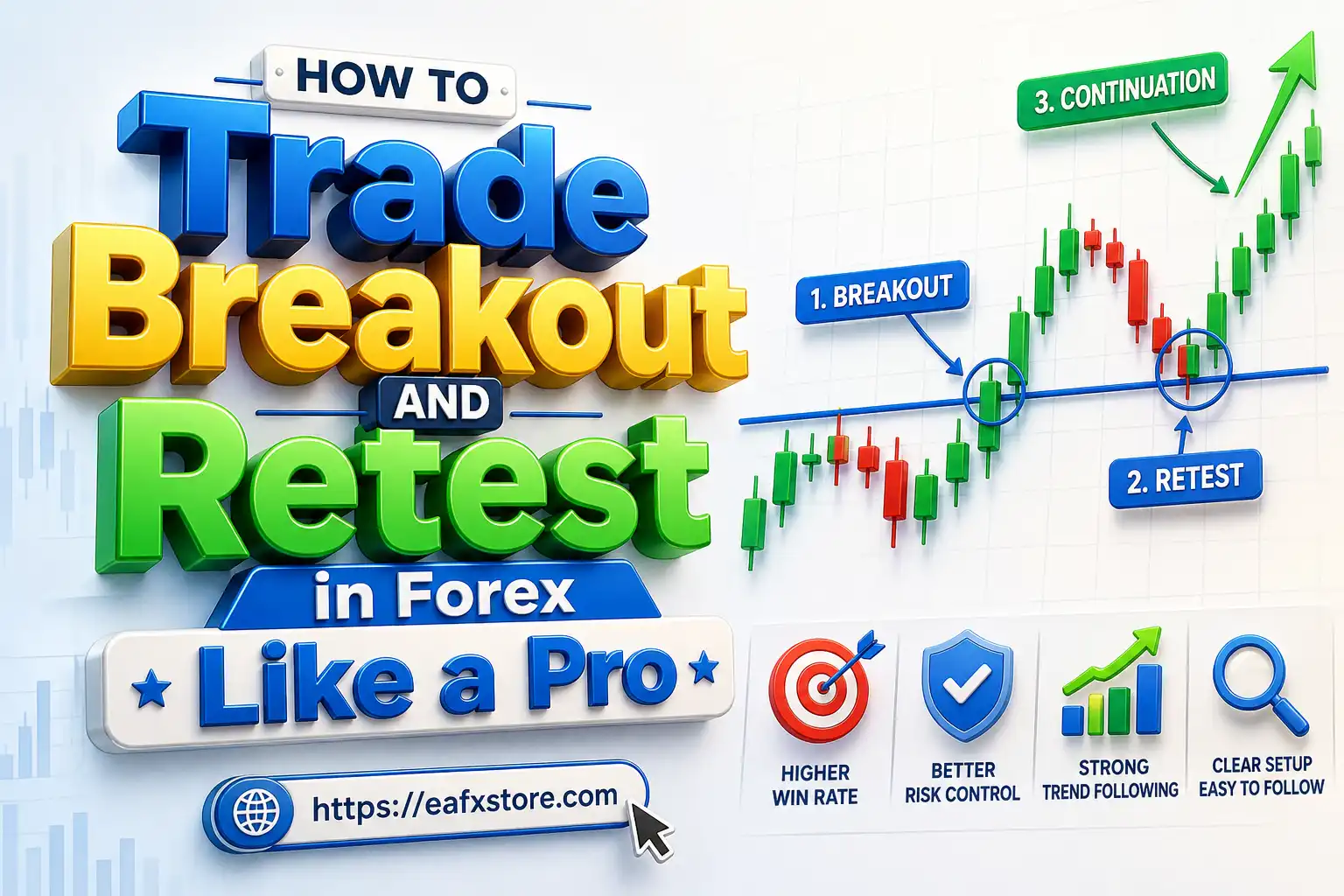
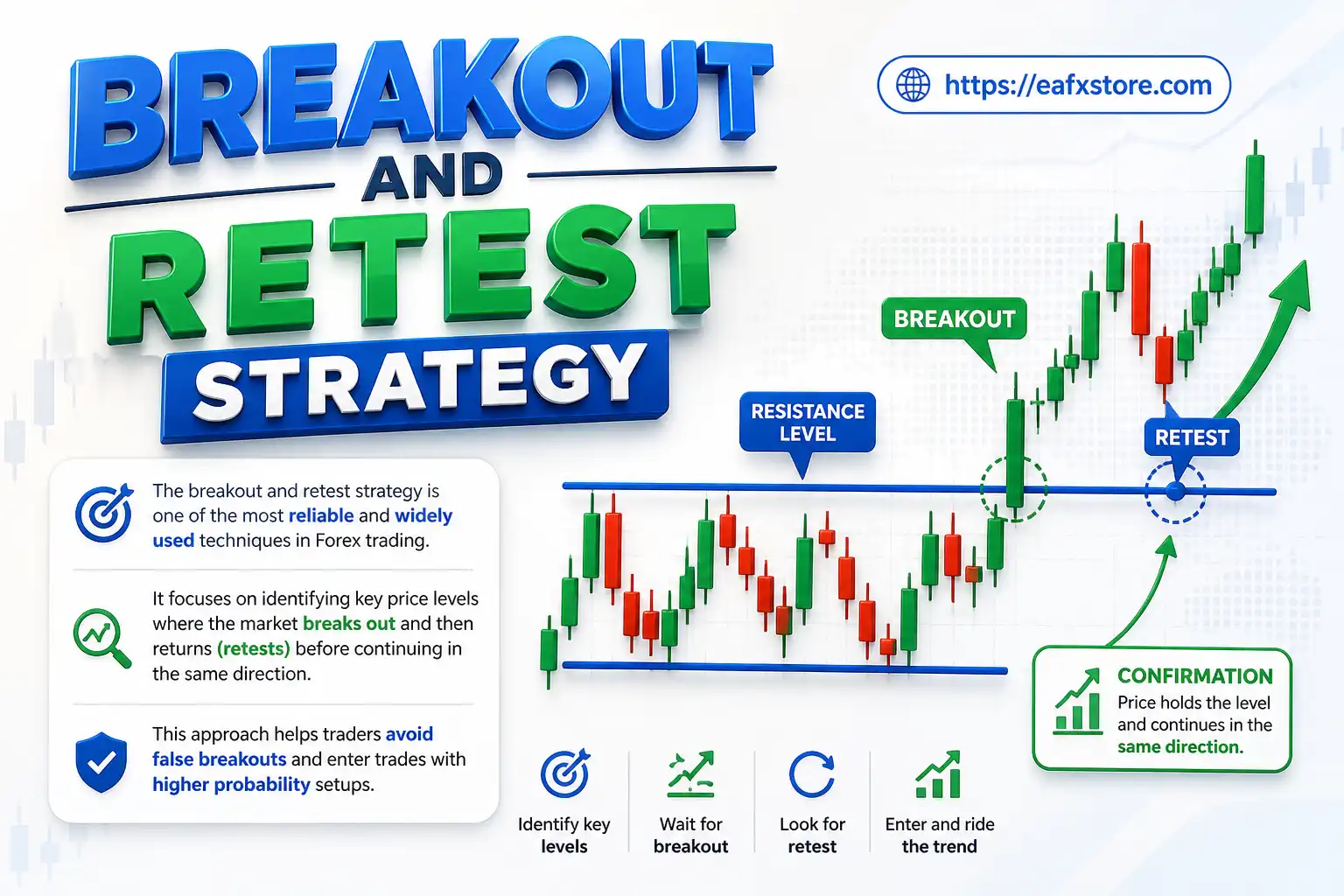
The breakout and retest strategy is one of the most reliable and widely used techniques in Forex trading. It focuses on identifying key price levels where the market breaks out and then returns (retests) before continuing in the same direction. This approach helps traders avoid false breakouts and enter trades with higher probability setups.
What is a Breakout in Forex Trading?
A breakout occurs when price moves beyond a defined support or resistance level with increased momentum. This typically signals a potential trend continuation or reversal.
Breakouts often happen during periods of high volatility, such as news releases or market sessions overlap. However, not every breakout is valid—some can be false signals, which is why traders combine it with the retest concept.
Understanding the Retest Concept
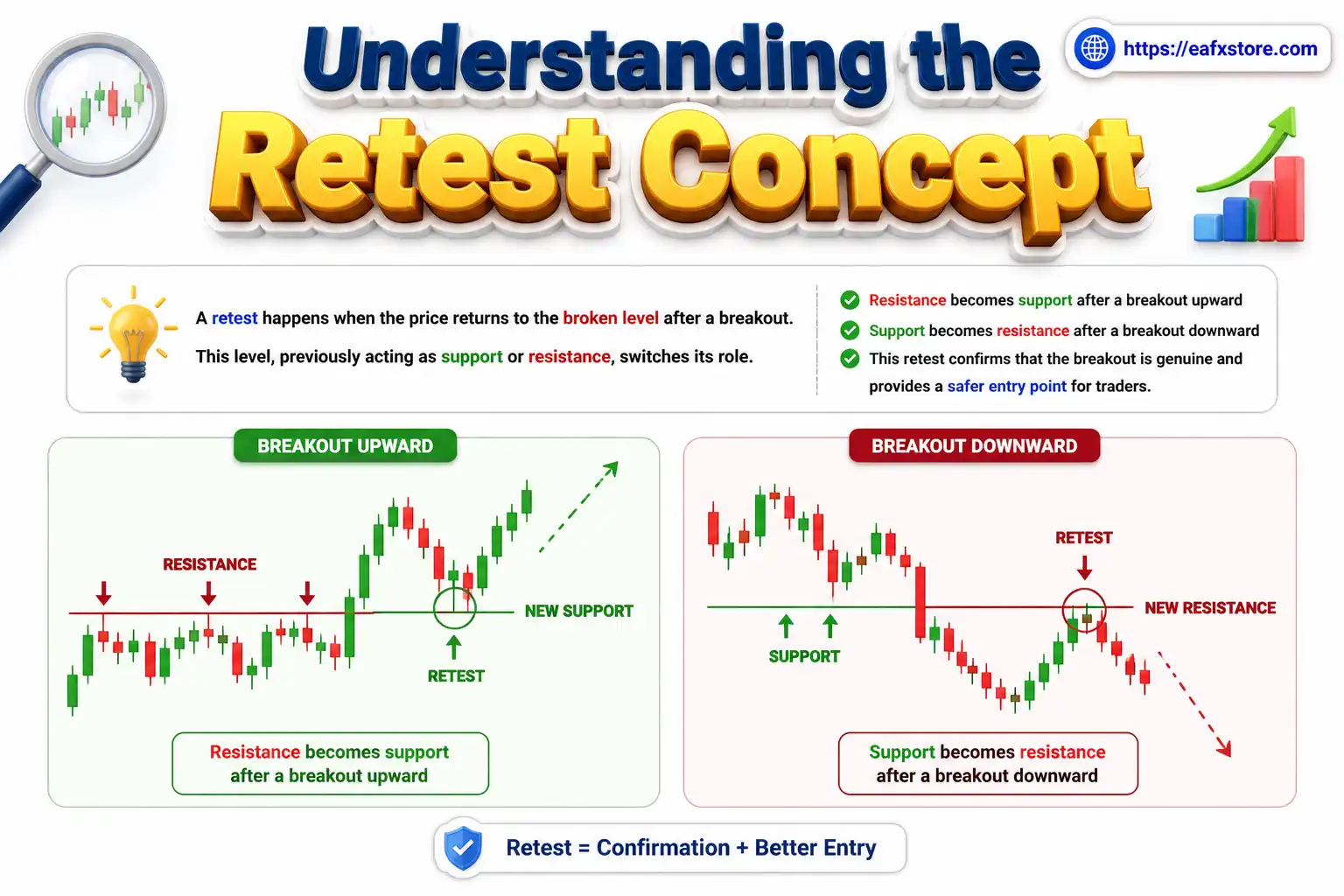
A retest happens when the price returns to the broken level after a breakout. This level, previously acting as support or resistance, switches its role.
For example:
- Resistance becomes support after a breakout upward.
- Support becomes resistance after a breakout downward.
This retest confirms that the breakout is genuine and provides a safer entry point for traders.
Why Breakout and Retest Strategy Works
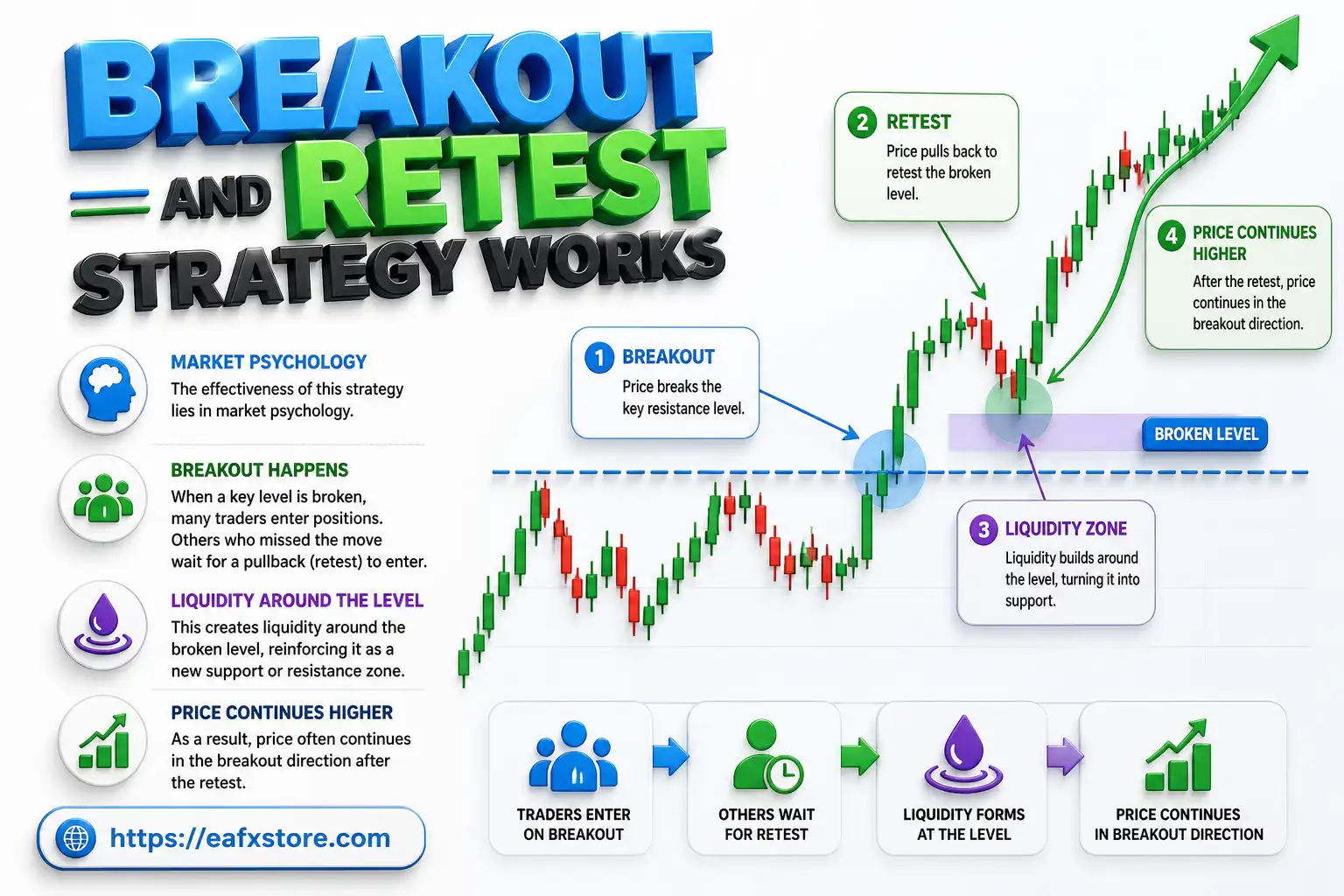
The effectiveness of this strategy lies in market psychology. When a key level is broken, many traders enter positions. Others who missed the move wait for a pullback (retest) to enter.
This creates liquidity around the broken level, reinforcing it as a new support or resistance zone. As a result, price often continues in the breakout direction after the retest.
How to Identify Key Levels
Identifying strong support and resistance levels is crucial for this strategy. These levels are areas where price has reacted multiple times in the past.
Common ways to identify key levels include:
- Horizontal support and resistance
- Trendlines
- Psychological levels (e.g., 1.1000, 1.2000)
- Previous highs and lows
The more times a level has been tested, the stronger it becomes.
Step-by-Step Guide to Trade Breakout and Retest
| Step | Description |
|---|---|
| 1 | Identify a strong support or resistance level |
| 2 | Wait for a clear breakout with strong momentum |
| 3 | Do not enter immediately—wait for the retest |
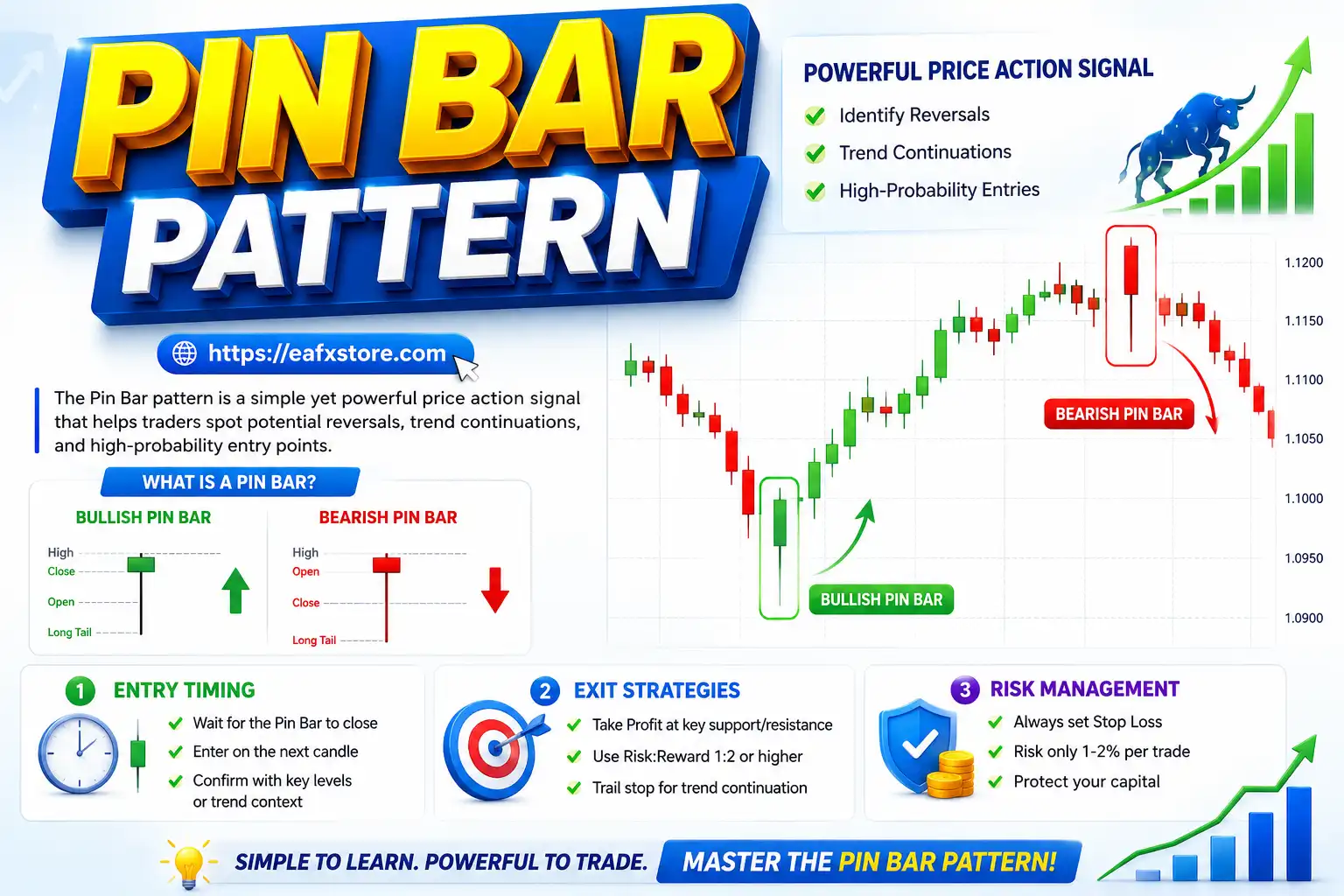
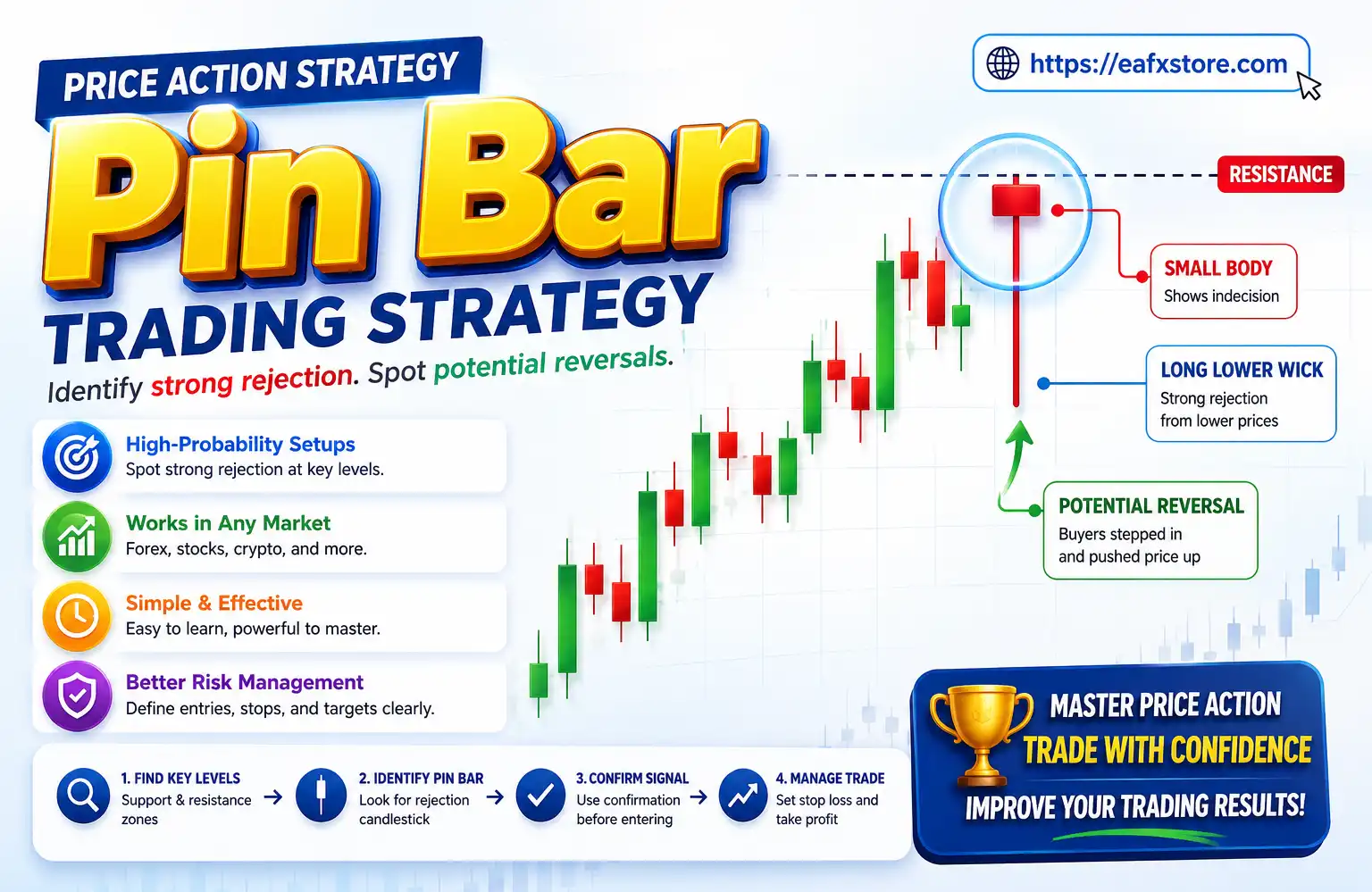
| 4 | Confirm the retest with candlestick patterns (pin bar, engulfing) |
| 5 | Enter the trade in the direction of the breakout |
| 6 | Set stop loss below/above the retest level |
| 7 | Target the next key level or use risk-reward ratio |
This structured approach helps reduce emotional trading and improves consistency.
Risk Management Tips
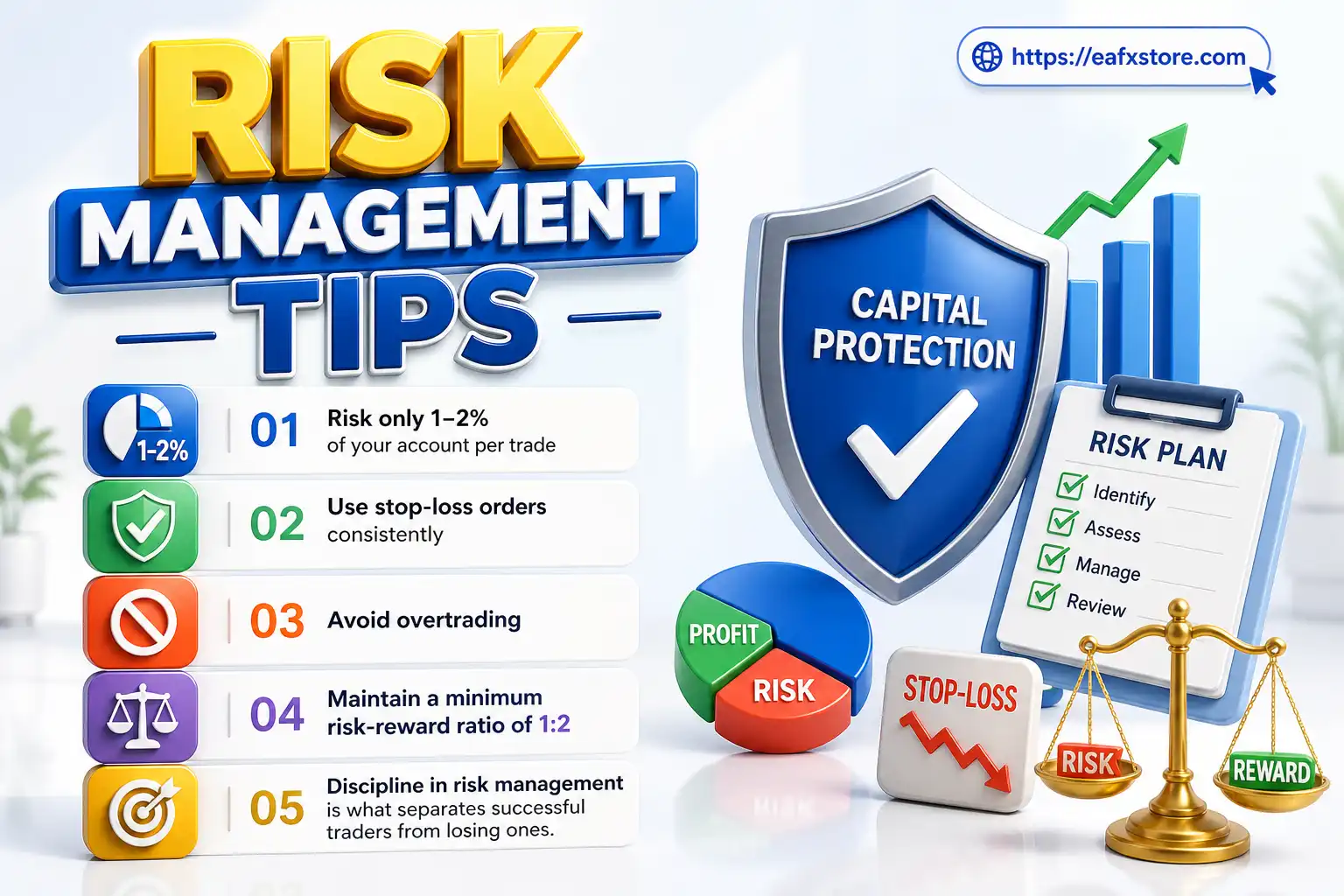
Even the best strategy can fail without proper risk management. Traders should always protect their capital.
Key principles include:
- Risk only 1–2% of your account per trade.
- Use Stop Loss (SL) orders consistently.
- Avoid overtrading.
- Maintain a minimum risk-reward ratio of 1:2
Discipline in risk management is what separates successful traders from losing ones.
Common Mistakes to Avoid
Many traders misuse the breakout and retest strategy due to impatience or lack of understanding.
Here are common mistakes:
- Entering immediately after breakout without waiting for retest
- Trading weak or unclear levels
- Ignoring market conditions (low volatility)
- Setting tight stop losses that get easily hit
- Falling for fake breakouts
Avoiding these mistakes can significantly improve your trading performance.
Breakout vs Fakeout: Key Differences
| Feature | Breakout | Fakeout |
|---|---|---|
| Momentum | Strong | Weak |
| Volume | High | Low |
| Retest | Holds level | Fails level |
| Continuation | Likely | Unlikely |
Understanding the difference helps traders avoid unnecessary losses.
Conclusion
The breakout and retest strategy is a powerful and beginner-friendly approach in Forex trading. By waiting for confirmation through retests, traders can significantly improve their entry accuracy and reduce risks.
Consistency, patience, and discipline are essential when applying this strategy. Combined with proper risk management, it can become a solid foundation for long-term trading success.
FAQs
❓ What timeframe is best for breakout and retest strategy?
Higher timeframes like H1, H4, and Daily are more reliable because they reduce market noise and false signals.
❓ Can beginners use this strategy effectively?
Yes, it is one of the simplest strategies to understand and apply, making it ideal for beginners.
❓ How do I confirm a valid retest?
Look for price rejection signals such as pin bars, engulfing candles, or strong momentum away from the level.
❓ Does this strategy work in all market conditions?
It works best in trending or volatile markets but may perform poorly in sideways conditions.
❓ What pairs are best for this strategy?
Major pairs like EUR/USD, GBP/USD, and USD/JPY are ideal due to high liquidity and clearer price action.