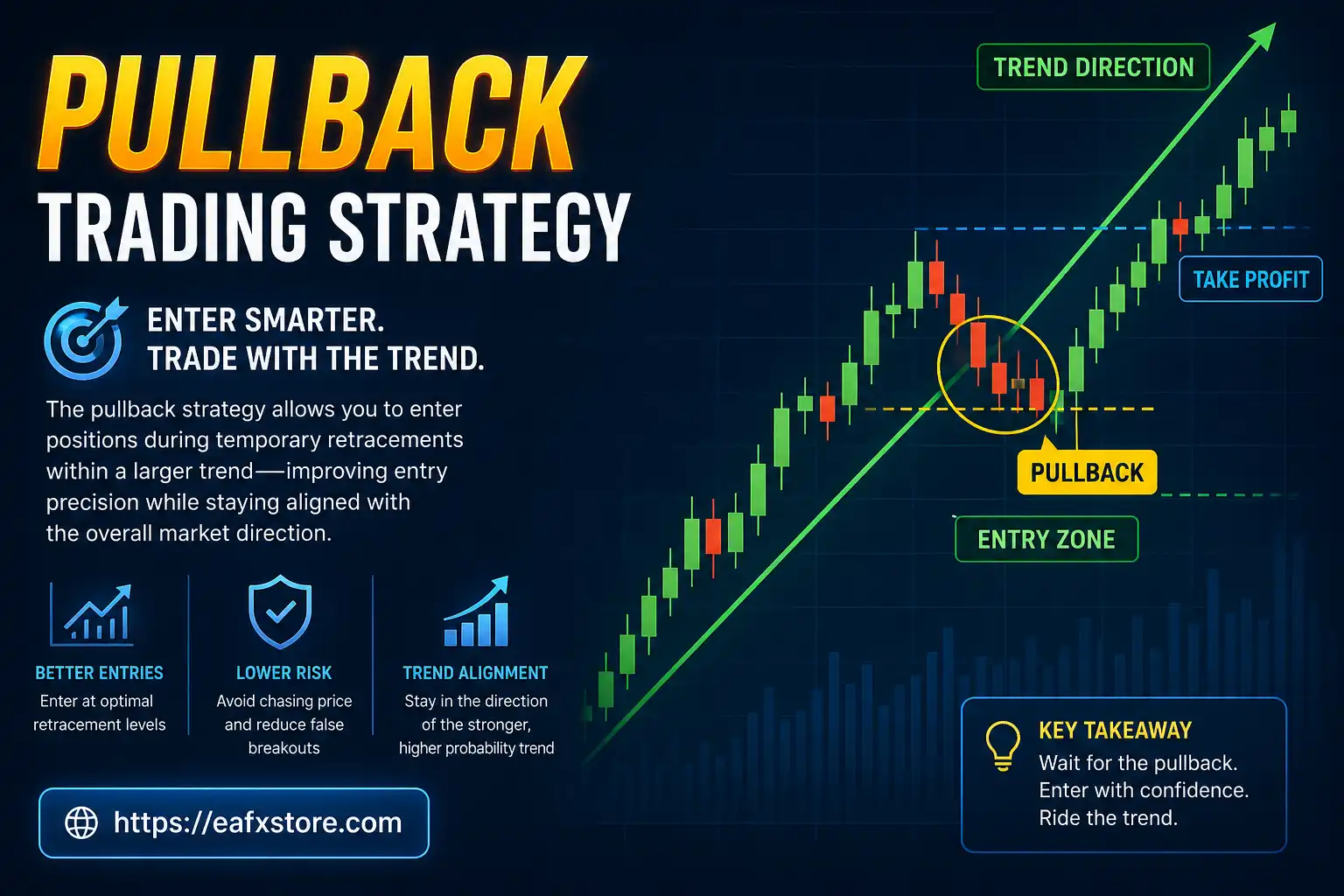

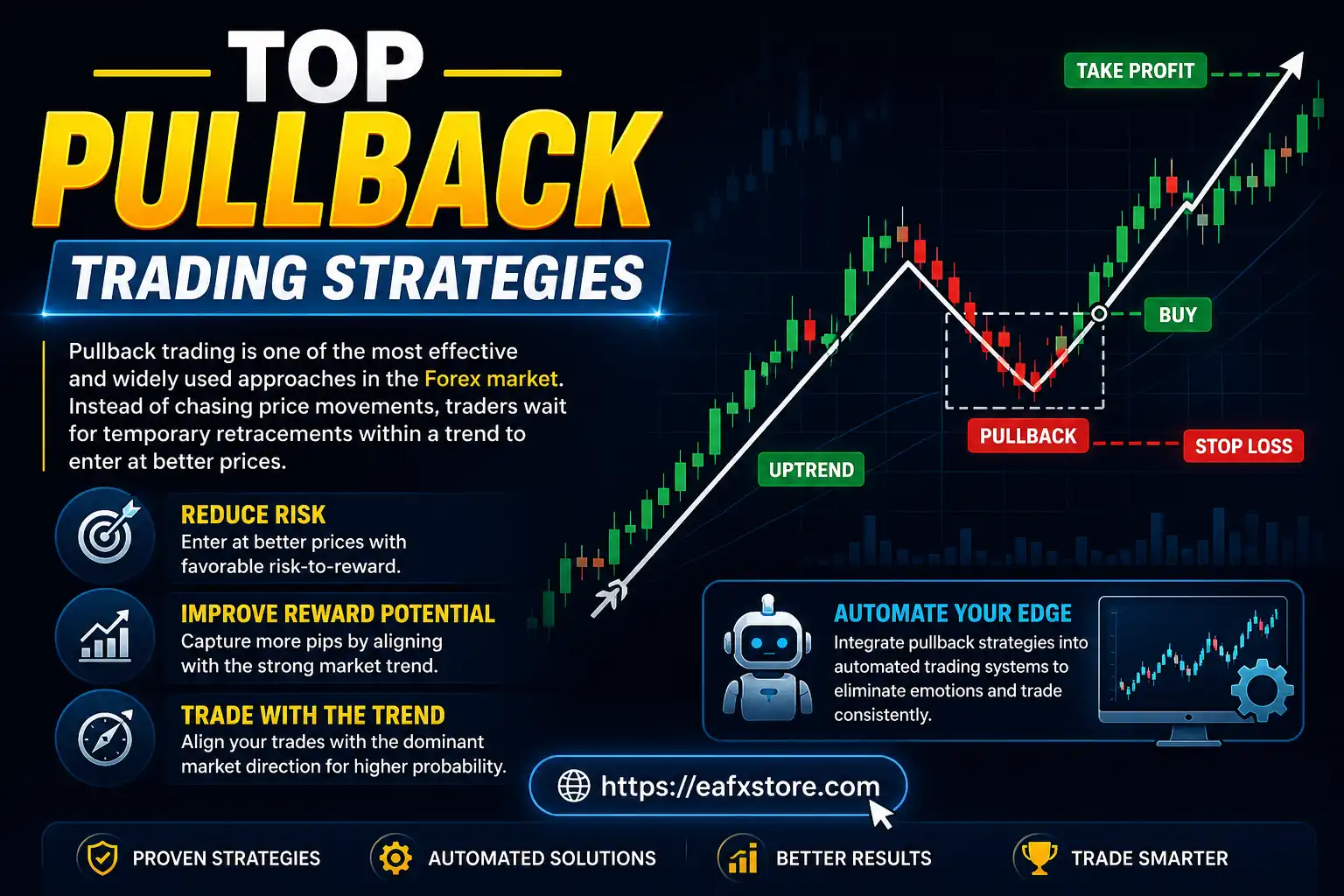
Pullback trading is one of the most effective and widely used approaches in the Forex market. Instead of chasing price movements, traders wait for temporary retracements within a trend to enter at better prices. This strategy reduces risk, improves reward potential, and aligns trades with the dominant market direction.
In this guide, we’ll break down the most reliable pullback trading strategies, explain how they work, and show how you can integrate them into automated trading systems.
What is Pullback Trading?
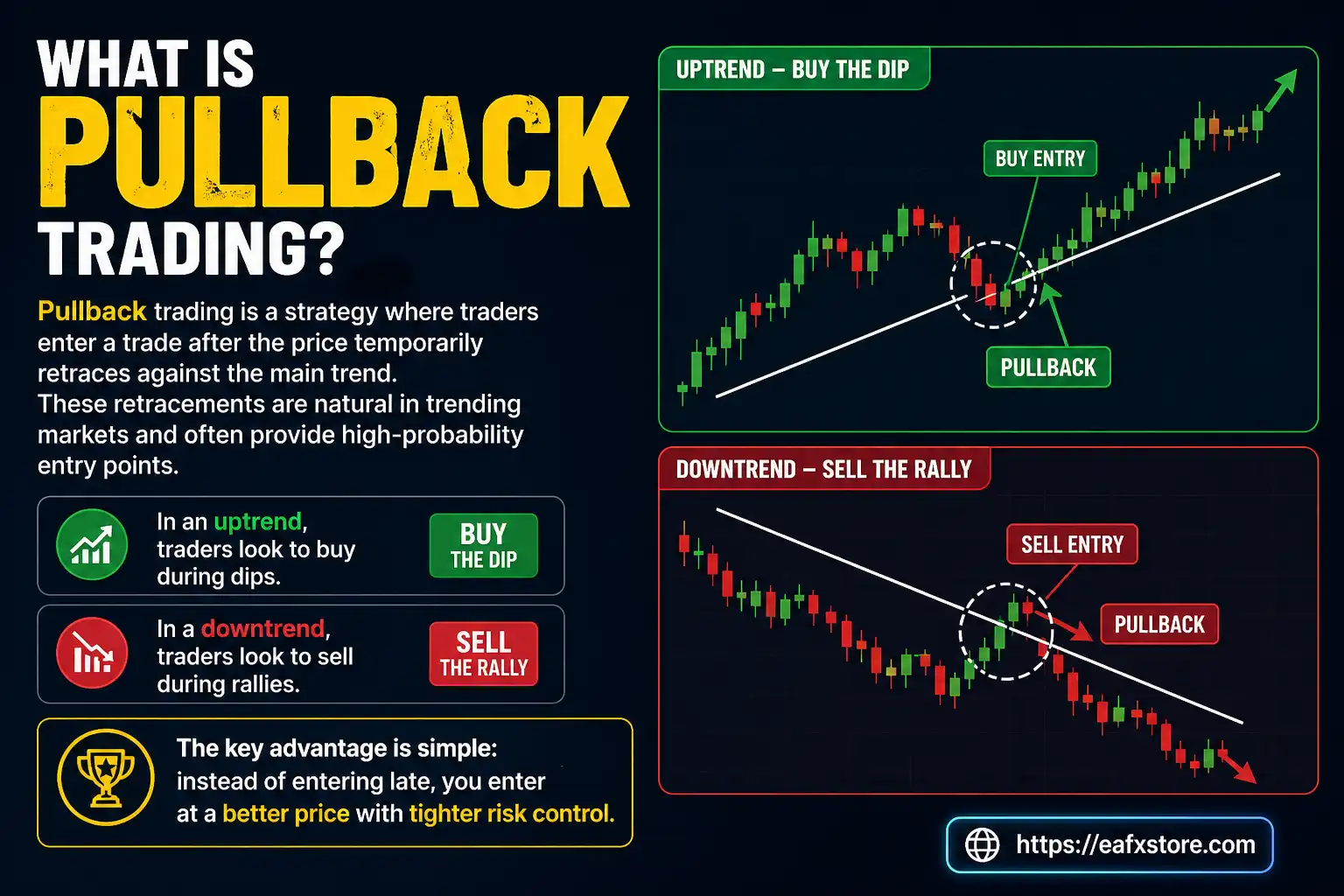
Pullback trading is a strategy where traders enter a trade after the price temporarily retraces against the main trend. These retracements are natural in trending markets and often provide high-probability entry points.
In an uptrend, traders look to buy during dips. In a downtrend, they look to sell during rallies.
The key advantage is simple: instead of entering late, you enter at a better price with tighter risk control.
Why Pullback Strategies Work in Forex
Pullback strategies are effective because Forex markets are highly liquid and trend-driven. Institutional traders often push prices in waves, creating consistent retracement patterns.
Here’s why pullbacks work:
- Markets rarely move in straight lines.
- Liquidity zones form during retracements.
- Trends tend to continue after corrections.
- Risk-to-reward ratios improve significantly.
By entering during pullbacks, traders avoid emotional decisions and trade with market structure rather than against it.
Strategy 1: Moving Average Pullback
This is one of the simplest and most reliable pullback strategies.
🎯 How It Works
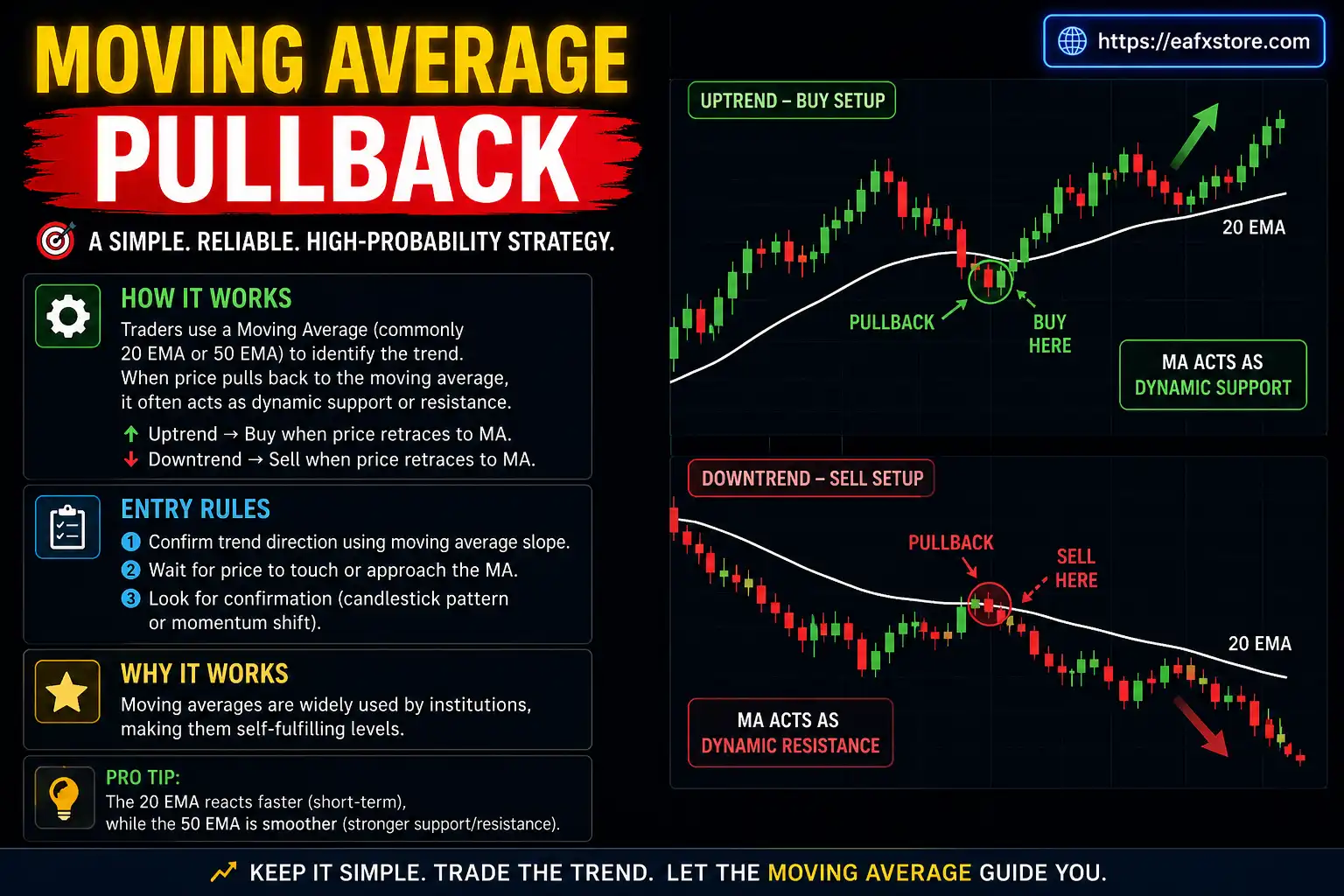
Traders use a Moving Average (commonly 20 EMA or 50 EMA) to identify the trend. When price pulls back to the moving average, it often acts as dynamic support or resistance.
- Uptrend → Buy when price retraces to MA.
- Downtrend → Sell when price retraces to MA.
🎯 Entry Rules
- Confirm trend direction using moving average slope.
- Wait for price to touch or approach the MA.
- Look for confirmation (candlestick pattern or momentum shift).
🎯 Why It Works
Moving averages are widely used by institutions, making them self-fulfilling levels.
Strategy 2: Fibonacci Pullback Trading
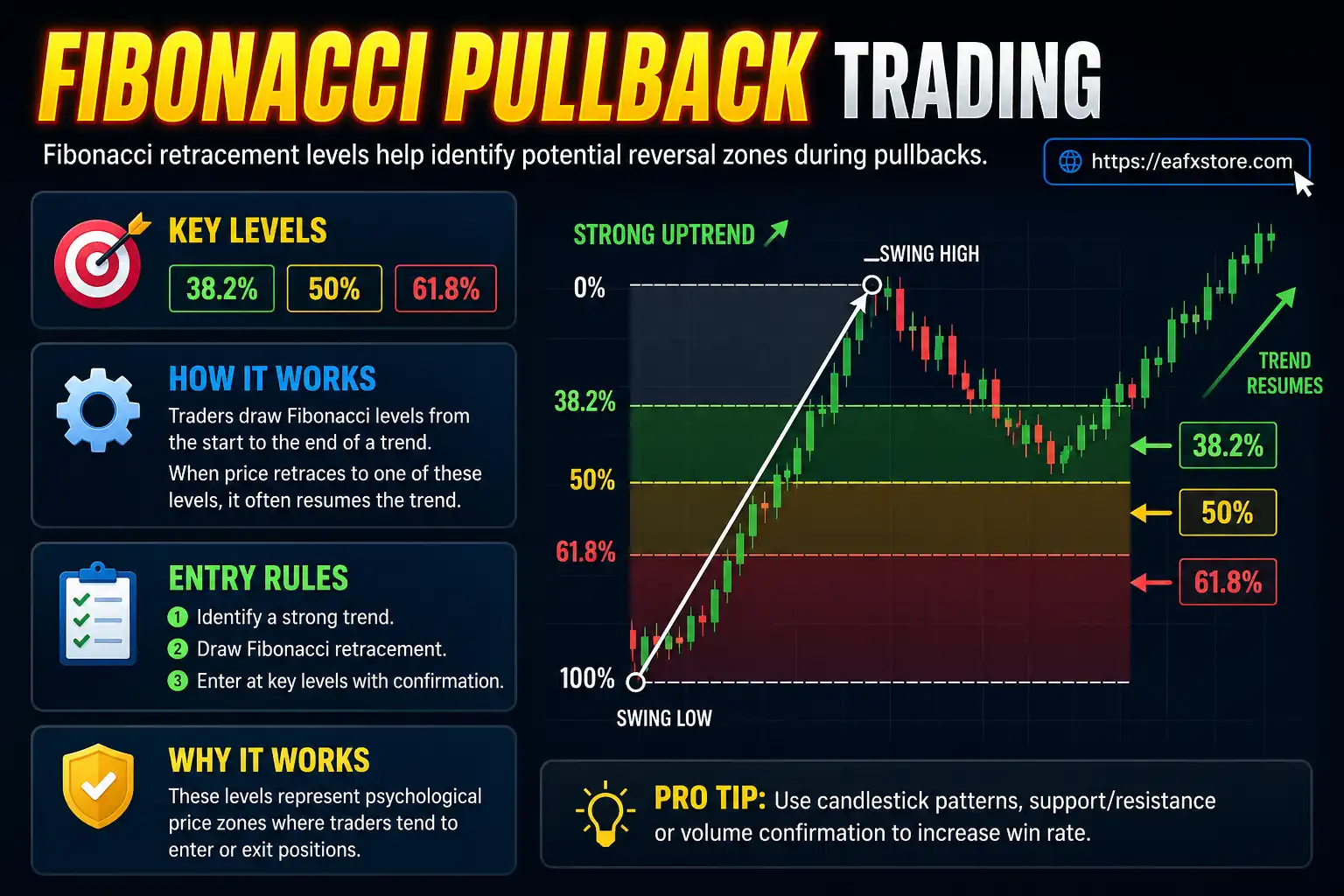
Fibonacci retracement levels help identify potential reversal zones during pullbacks.
🎯 Key Levels
- 38.2%
- 50%
- 61.8%
🎯 How It Works
Traders draw Fibonacci levels from the start to the end of a trend. When price retraces to one of these levels, it often resumes the trend.
🎯 Entry Rules
- Identify a strong trend.
- Draw Fibonacci retracement.
- Enter at key levels with confirmation.
🎯 Why It Works
These levels represent psychological price zones where traders tend to enter or exit positions.
Strategy 3: Support and Resistance Pullback
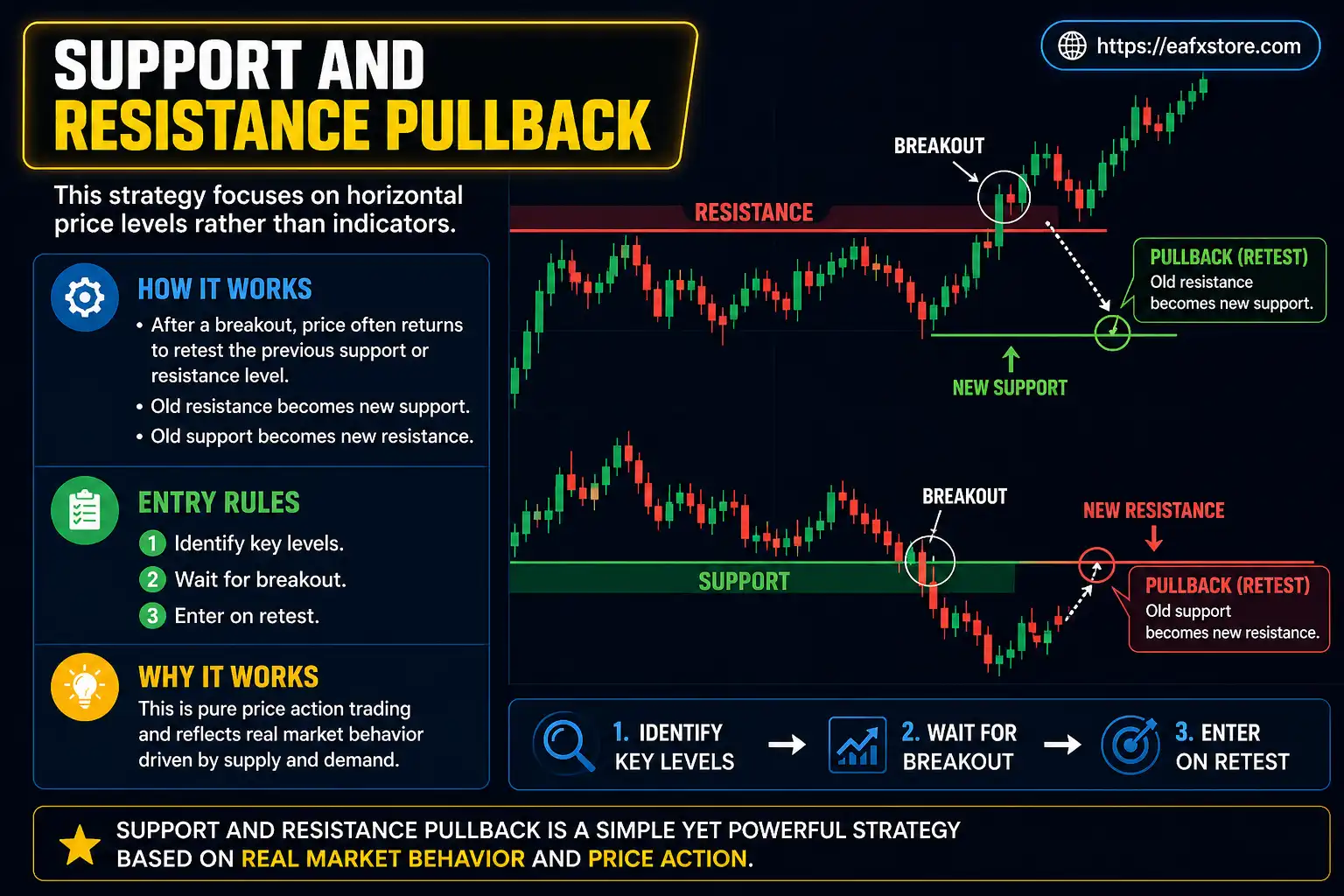
This strategy focuses on horizontal price levels rather than indicators.
🎯 How It Works
After a breakout, price often returns to retest the previous support or resistance level.
- Old resistance becomes new support.
- Old support becomes new resistance.
🎯 Entry Rules
- Identify key levels.
- Wait for breakout.
- Enter on retest.
🎯 Why It Works
This is pure price action trading and reflects real market behavior driven by supply and demand.
Strategy 4: Trendline Pullback Strategy
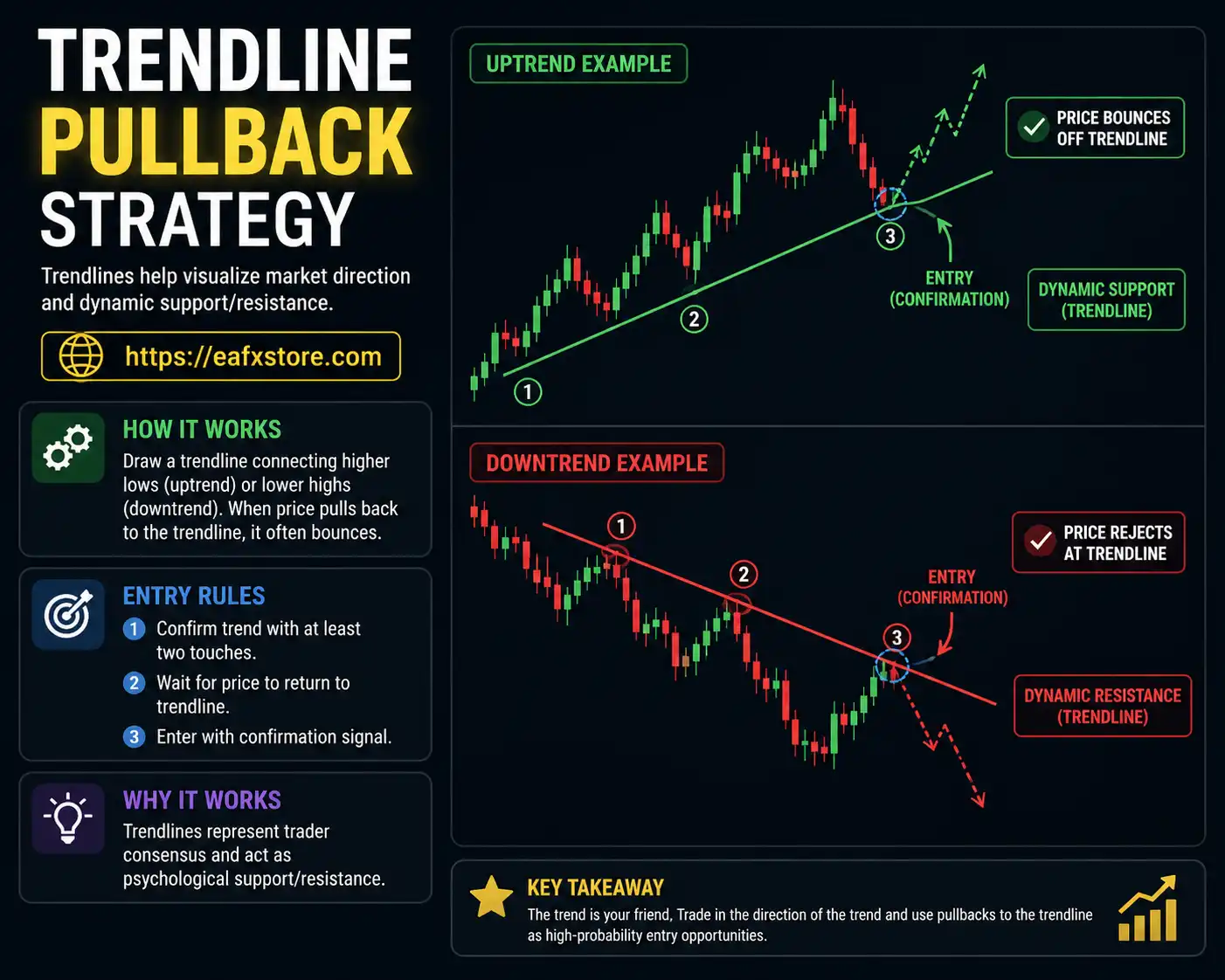
Trendlines help visualize market direction and dynamic support/resistance.
🎯 How It Works
Draw a trendline connecting higher lows (uptrend) or lower highs (downtrend). When price pulls back to the trendline, it often bounces.
🎯 Entry Rules
- Confirm trend with at least two touches.
- Wait for price to return to trendline.
- Enter with confirmation signal.
🎯 Why It Works
Trendlines represent trader consensus and act as psychological support/resistance.
Strategy 5: Break and Retest Strategy
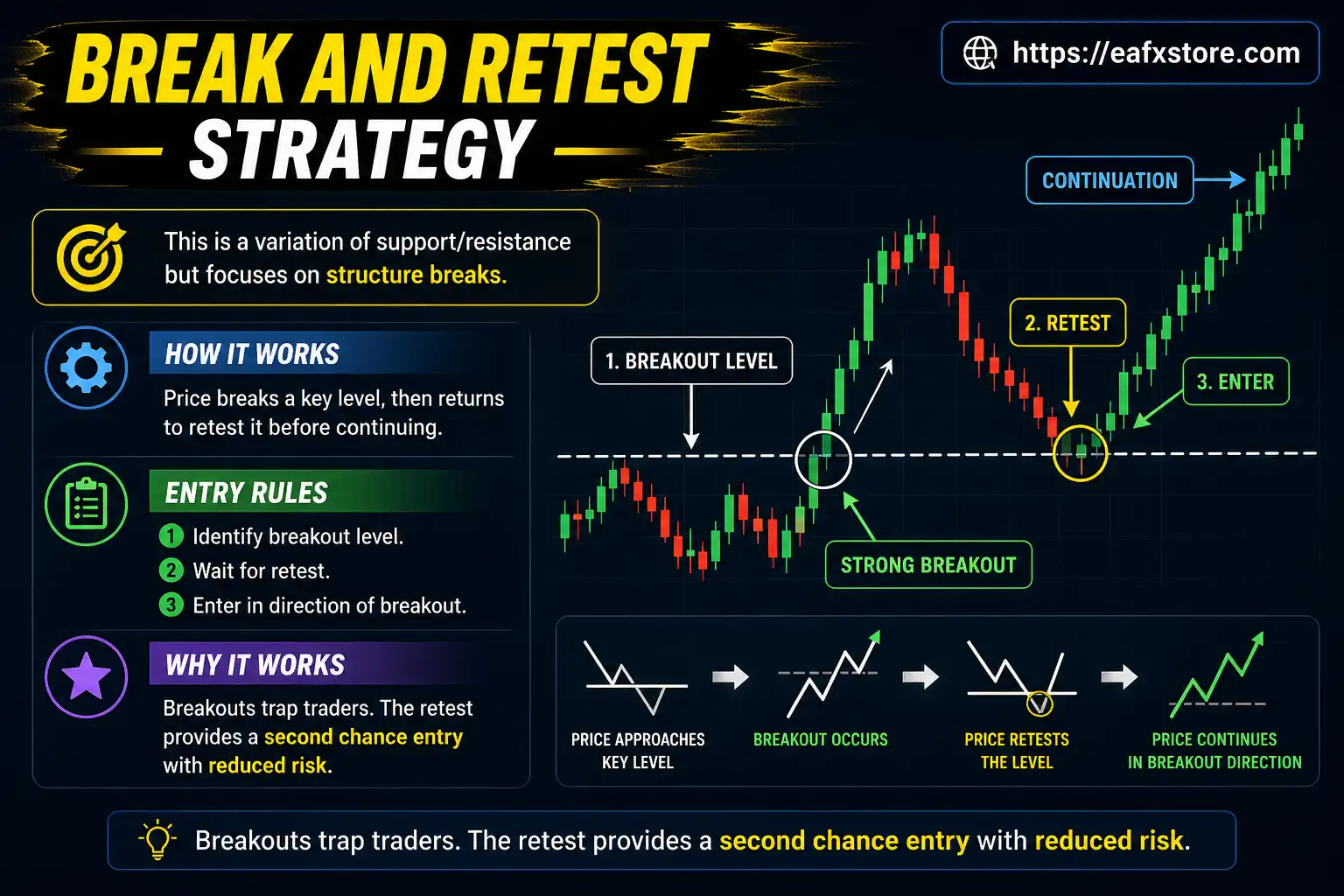
This is a variation of support/resistance but focuses on structure breaks.
🎯 How It Works
Price breaks a key level, then returns to retest it before continuing.
🎯 Entry Rules
- Identify breakout level.
- Wait for retest.
- Enter in direction of breakout.
🎯 Why It Works
Breakouts trap traders. The retest provides a second chance entry with reduced risk.
Comparison Table of Pullback Strategies
| Strategy | Best Market Condition | Tools Required | Difficulty | Accuracy |
|---|---|---|---|---|
| Moving Average | Trending | EMA/MA | Easy | High |
| Fibonacci | Trending | Fibonacci tool | Medium | High |
| Support & Resistance | All conditions | Price action | Medium | Very High |
| Trendline | Trending | Trendlines | Easy | Medium |
| Break & Retest | Breakout markets | Price structure | Medium | Very High |
Risk Management in Pullback Trading
Even the best strategy fails without proper risk control.
Key principles:
- Risk only 1–2% per trade.
- Use stop-loss below/above pullback structure.
- Target at least 1:2 risk-to-reward ratio.
- Avoid overtrading.
Pullbacks reduce risk, but discipline ensures profitability.
How to Apply Pullback Strategies in Automated Trading
Pullback trading is highly suitable for algorithmic trading because it follows clear, rule-based logic.
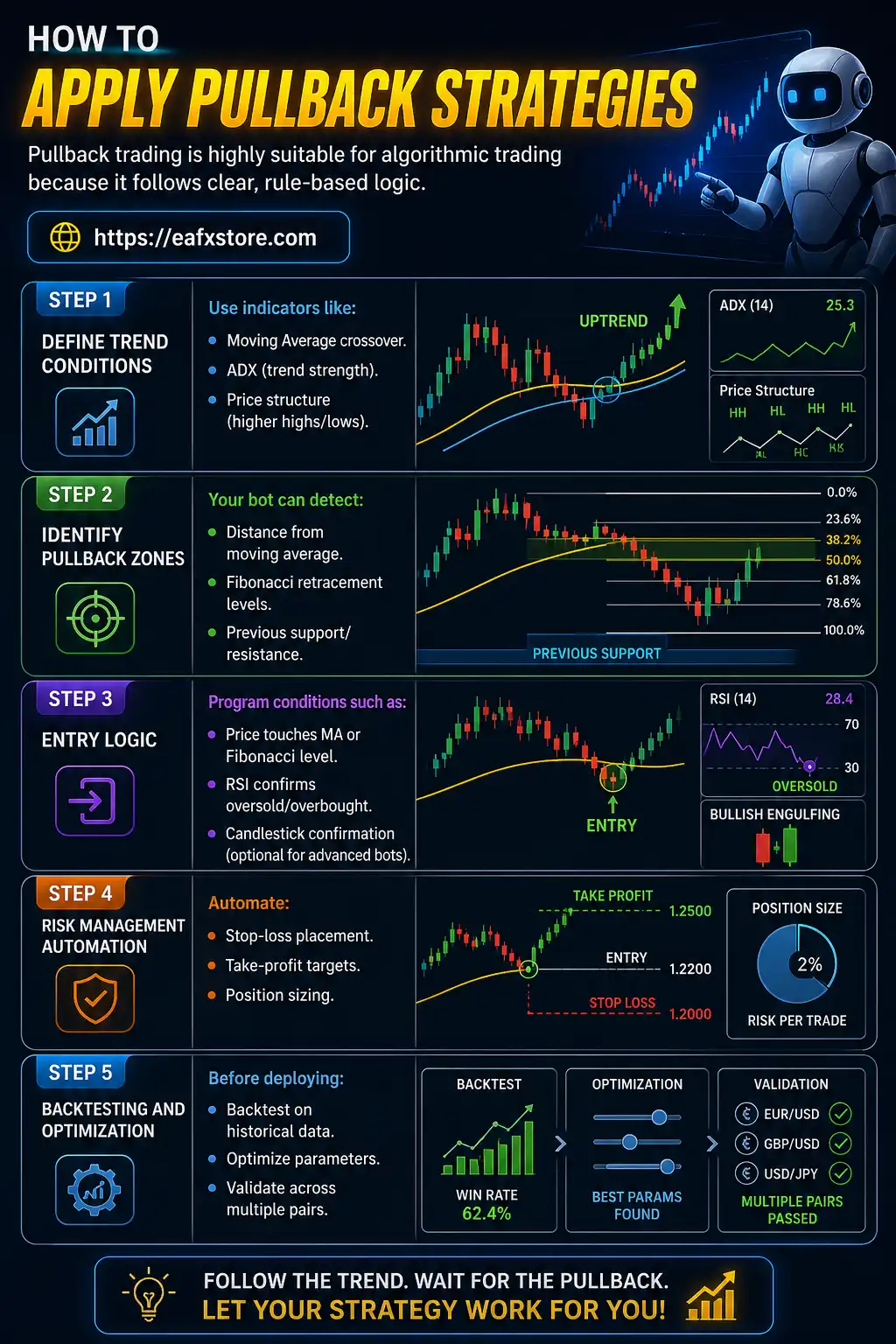
🎯 Step 1: Define Trend Conditions
Use indicators like:
- Moving Average crossover.
- ADX (trend strength).
- Price structure (higher highs/lows).
🎯 Step 2: Identify Pullback Zones
Your bot can detect:
- Distance from moving average.
- Fibonacci retracement levels.
- Previous support/resistance.
🎯 Step 3: Entry Logic
Program conditions such as:
- Price touches MA or Fibonacci level.
- RSI confirms oversold/overbought.
- Candlestick confirmation (optional for advanced bots).
🎯 Step 4: Risk Management Automation
Automate:
- Stop-loss placement.
- Take-profit targets.
- Position sizing.
🎯 Step 5: Backtesting and Optimization
Before deploying:
- Backtest on historical data.
- Optimize parameters.
- Validate across multiple pairs.
Example of Automated Pullback Logic
A simple algorithm might look like this:
- If price > 50 EMA → Uptrend.
- Wait until price retraces to 20 EMA.
- Confirm RSI < 40.
- Enter buy.
- Stop-loss below recent swing low.
- Take profit at 2x risk.
This structured approach removes emotional decision-making and ensures consistency.
Common Mistakes to Avoid
Many traders fail with pullback strategies due to avoidable errors:
- Entering too early before confirmation.
- Trading against the trend.
- Ignoring market context.
- Using too many indicators.
- Poor risk management.
The key is patience. Not every pullback is a valid trade.
Final Thoughts
Pullback trading remains one of the most effective Forex strategies because it aligns with how markets naturally move. Whether you use moving averages, Fibonacci levels, or pure price action, the core idea is the same: enter with the trend at better prices.
More importantly, pullback strategies are ideal for automation. Their rule-based nature makes them easy to code, test and scale across multiple markets.
If you combine a solid pullback strategy with disciplined risk management and automation, you create a powerful trading system capable of long-term consistency.