
Introduction
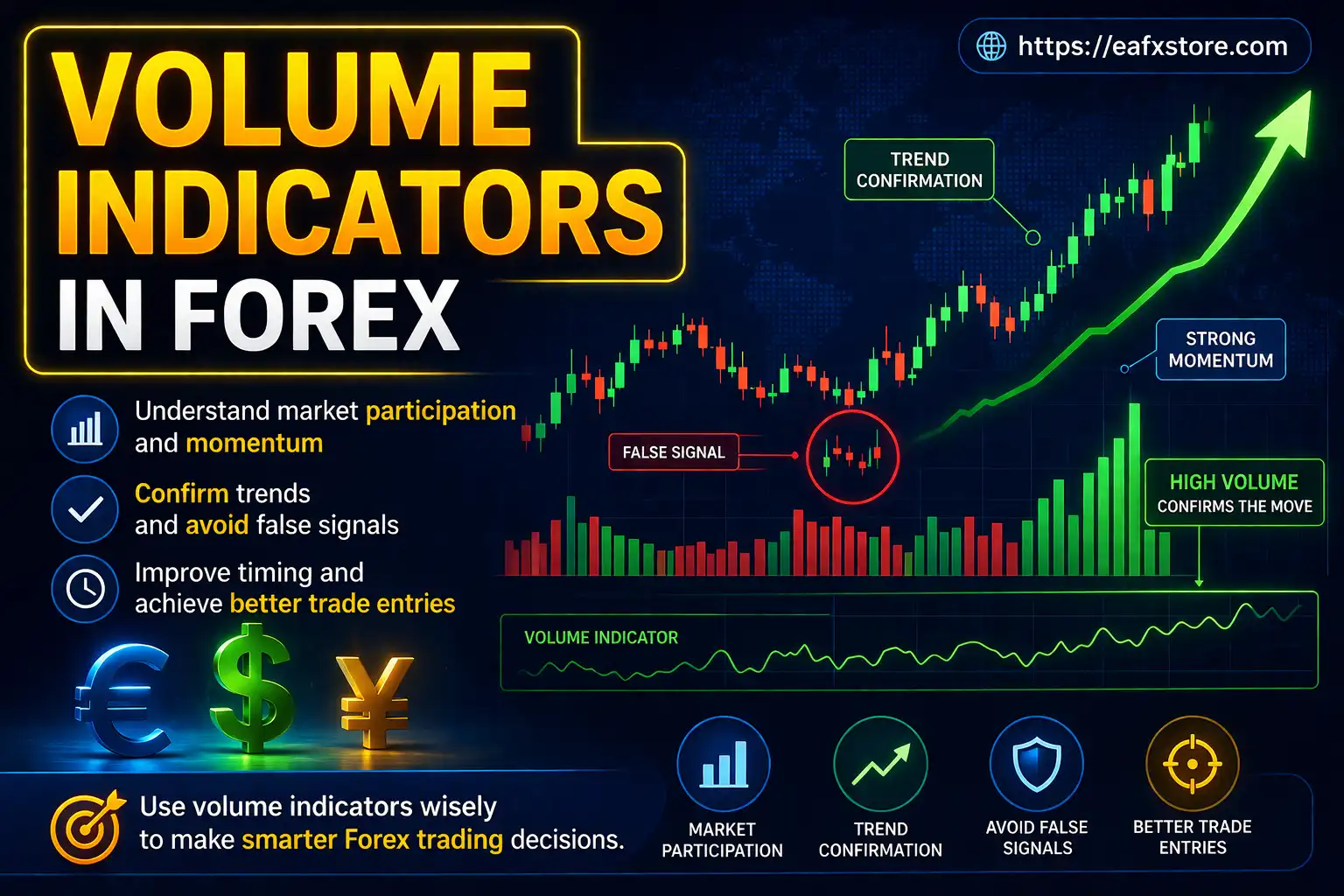
Volume indicators are often overlooked in Forex trading because the market is decentralized. However, they still provide valuable insights into market participation and momentum. By understanding how volume behaves, traders can improve their timing, confirm trends and avoid false signals. This article explains how to effectively use volume indicators in Forex to achieve better trade entries.
What Are Volume Indicators in Forex?
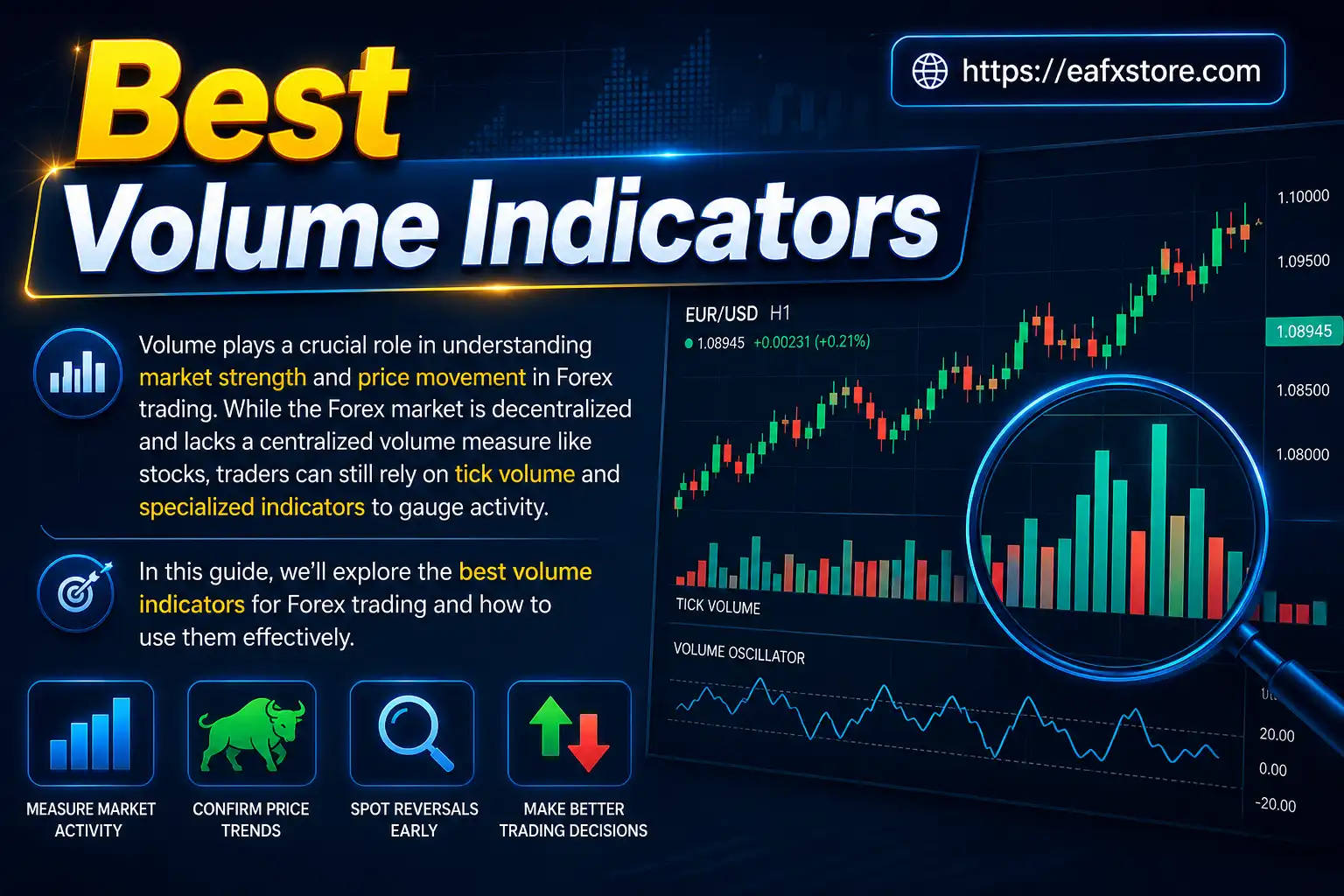
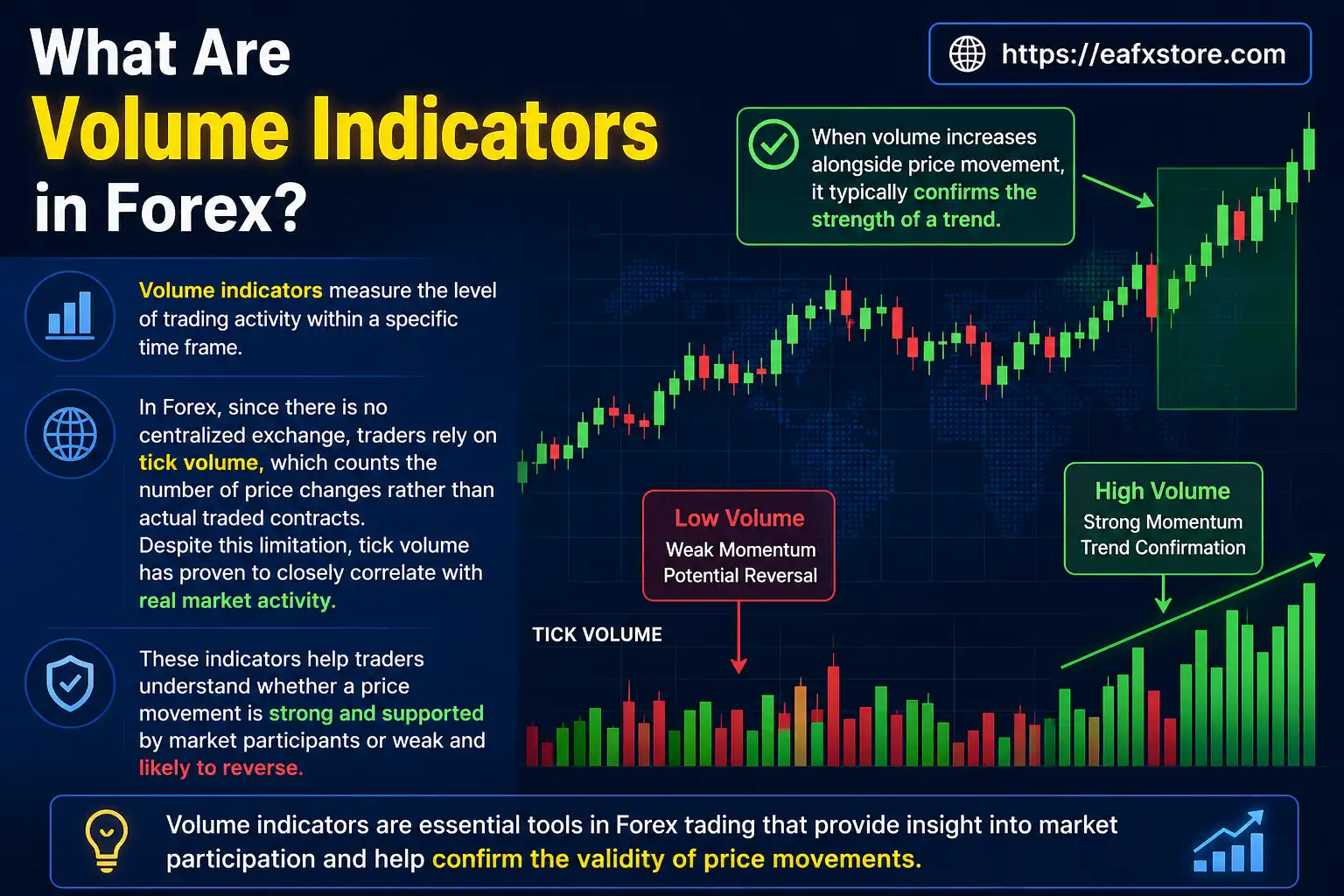
Volume indicators measure the level of trading activity within a specific time frame. In Forex, since there is no centralized exchange, traders rely on tick volume, which counts the number of price changes rather than actual traded contracts. Despite this limitation, tick volume has proven to closely correlate with real market activity.
These indicators help traders understand whether a price movement is strong and supported by market participants or weak and likely to reverse. When volume increases alongside price movement, it typically confirms the strength of a trend.
Why Volume Matters in Forex Trading
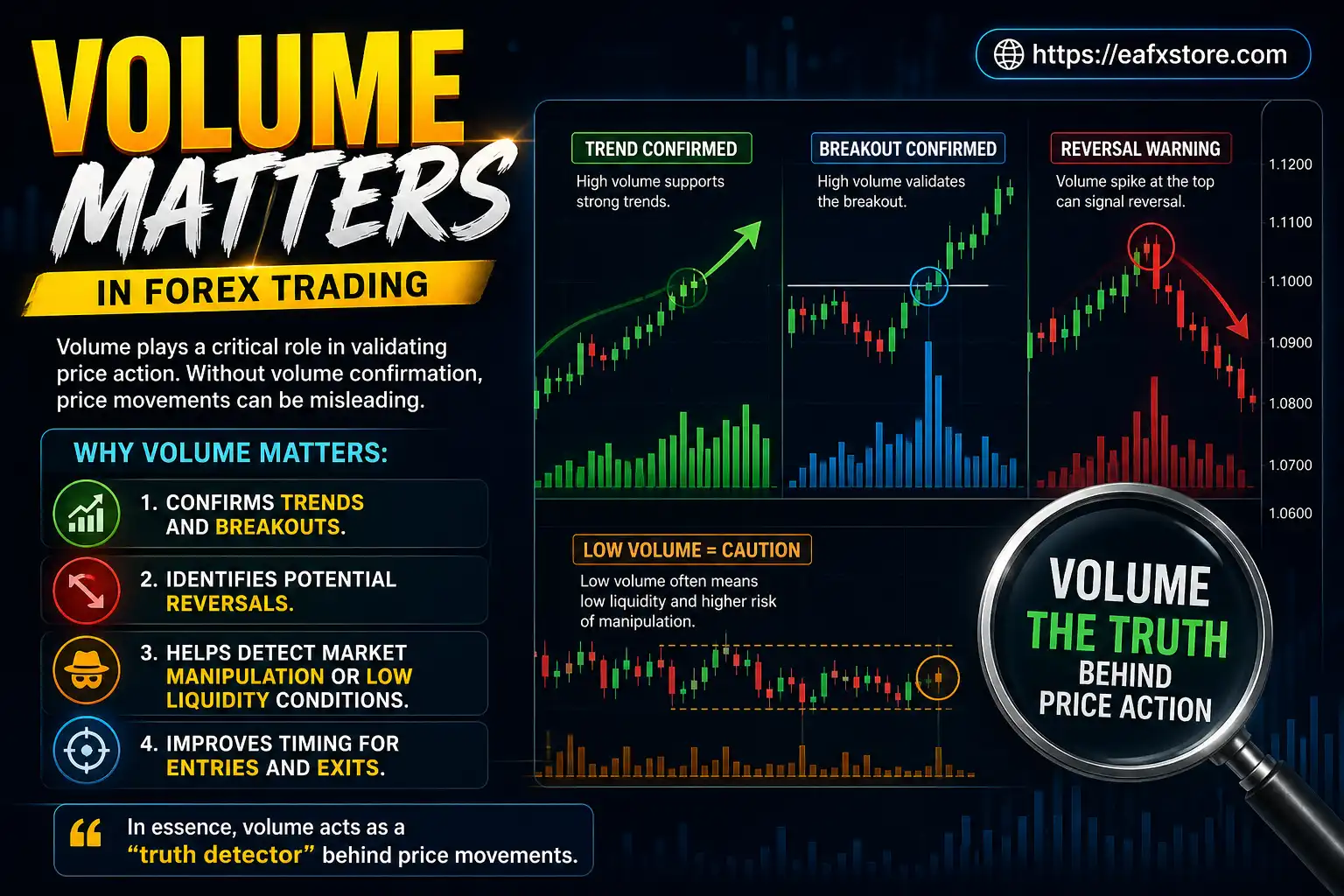
Volume plays a critical role in validating price action. Without volume confirmation, price movements can be misleading. A breakout, for example, may appear strong but fail quickly if not supported by sufficient trading activity.
Here are the key reasons volume matters:
- Confirms trends and breakouts.
- Identifies potential reversals.
- Helps detect market manipulation or low liquidity conditions.
- Improves timing for entries and exits.
In essence, volume acts as a “truth detector” behind price movements.
Popular Volume Indicators in Forex
There are several volume-based indicators that traders commonly use. Each provides a different perspective on market activity.
| Indicator | Description | Best Use Case |
|---|---|---|
| Volume (Basic) | Shows tick activity as bars | Confirming trend strength |
| On-Balance Volume (OBV) | Measures cumulative buying/selling pressure | Spotting divergence |
| Volume Weighted Average Price (VWAP) | Average price weighted by volume | Intraday trading |
| Accumulation/Distribution (A/D) | Tracks money flow into/out of asset | Identifying trend strength |
These indicators can be used individually or combined for more reliable signals.
How to Use Volume Indicators for Trade Entries
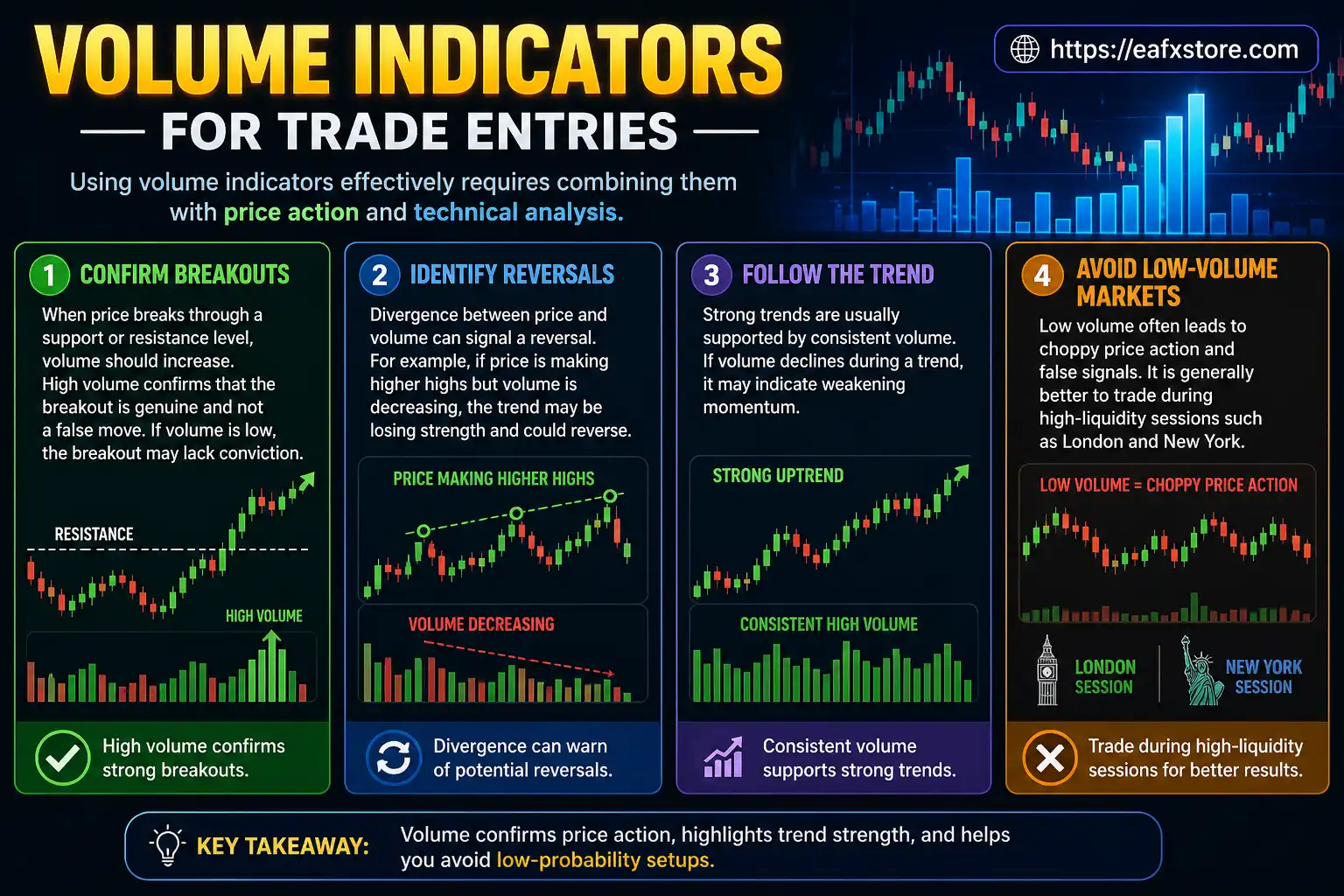
Using volume indicators effectively requires combining them with price action and technical analysis.
Confirm Breakouts
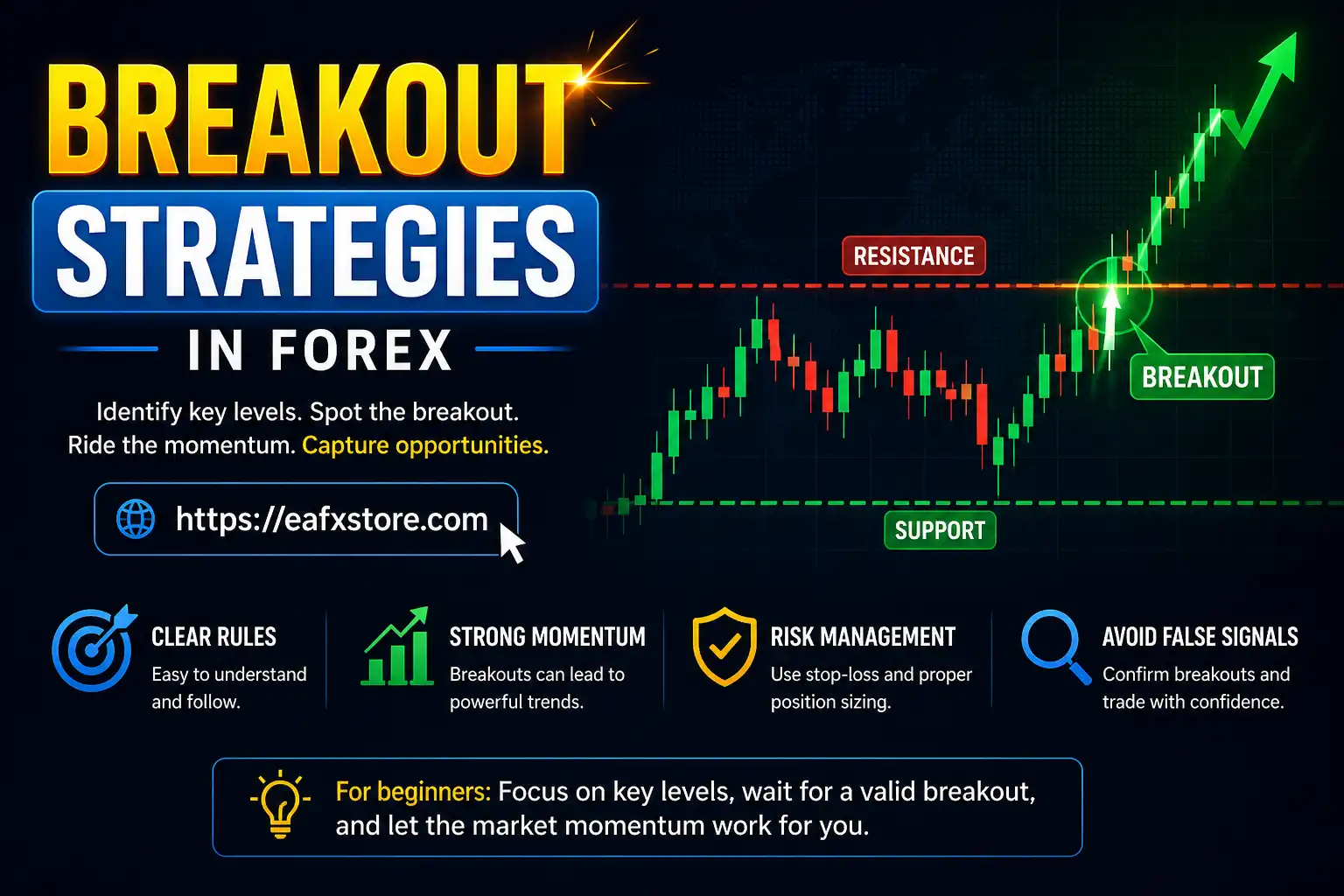
When price breaks through a support or resistance level, volume should increase. High volume confirms that the breakout is genuine and not a false move. If volume is low, the breakout may lack conviction.
Identify Reversals
Divergence between price and volume can signal a reversal. For example, if price is making higher highs but volume is decreasing, the trend may be losing strength and could reverse.
Follow the Trend
Strong trends are usually supported by consistent volume. If volume declines during a trend, it may indicate weakening momentum.
Avoid Low-Volume Markets
Low volume often leads to choppy price action and false signals. It is generally better to trade during high-liquidity sessions such as London and New York.
Combining Volume with Other Indicators
Volume indicators work best when used alongside other tools. Relying solely on volume can lead to incomplete analysis.
Common combinations include:
- Volume + Support/Resistance: Confirms breakout strength.
- Volume + Moving Averages: Validates trend direction.
- Volume + RSI or MACD: Detects divergence and momentum shifts.
For example, if RSI shows overbought conditions while volume decreases, it strengthens the case for a potential reversal.
Common Mistakes When Using Volume Indicators
Many traders misuse volume indicators, which reduces their effectiveness.
- Ignoring context: Volume must be analyzed with price action.
- Overcomplicating strategies: Using too many indicators can cause confusion.
- Misinterpreting low volume: Not all low-volume moves are weak; context matters.
- Trading during off-hours: Low liquidity can distort volume signals.
Avoiding these mistakes can significantly improve your trading performance.
Practical Example of Volume-Based Entry
Imagine a currency pair approaching a key resistance level. Price breaks above it with a sharp increase in volume. This suggests strong buying interest, making it a potential entry point for a long trade.
On the other hand, if the breakout occurs with low volume, it may indicate a false breakout. In this case, waiting for confirmation or avoiding the trade would be a smarter decision.
Tips for Better Results
To maximize the effectiveness of volume indicators, keep the following tips in mind:
- Focus on major trading sessions.
- Combine volume with price action.
- Backtest your strategy before applying it live.
- Keep your chart clean and avoid overloading indicators.
- Be patient and wait for confirmation signals.
Consistency and discipline are key to successfully using volume in Forex trading.
Conclusion
Volume indicators are powerful tools that can enhance your Forex trading strategy when used correctly. They provide insight into market strength, help confirm trends and improve entry timing. While Forex volume data is not perfect, it still offers valuable clues about market behavior.
By combining volume indicators with other technical tools and maintaining a disciplined approach, traders can significantly improve their chances of making profitable trades.