
In the fast-paced world of Forex trading, timing is everything. Entering the market at the right price can significantly impact your profitability, risk exposure and overall trading performance. One of the most effective tools for achieving better entry points is the limit order. Yet, many traders either misunderstand or underutilize it.
This guide will walk you through how limit orders work in Forex, why they matter and how to use them strategically to improve your trading results.
What is a Limit Order in Forex?
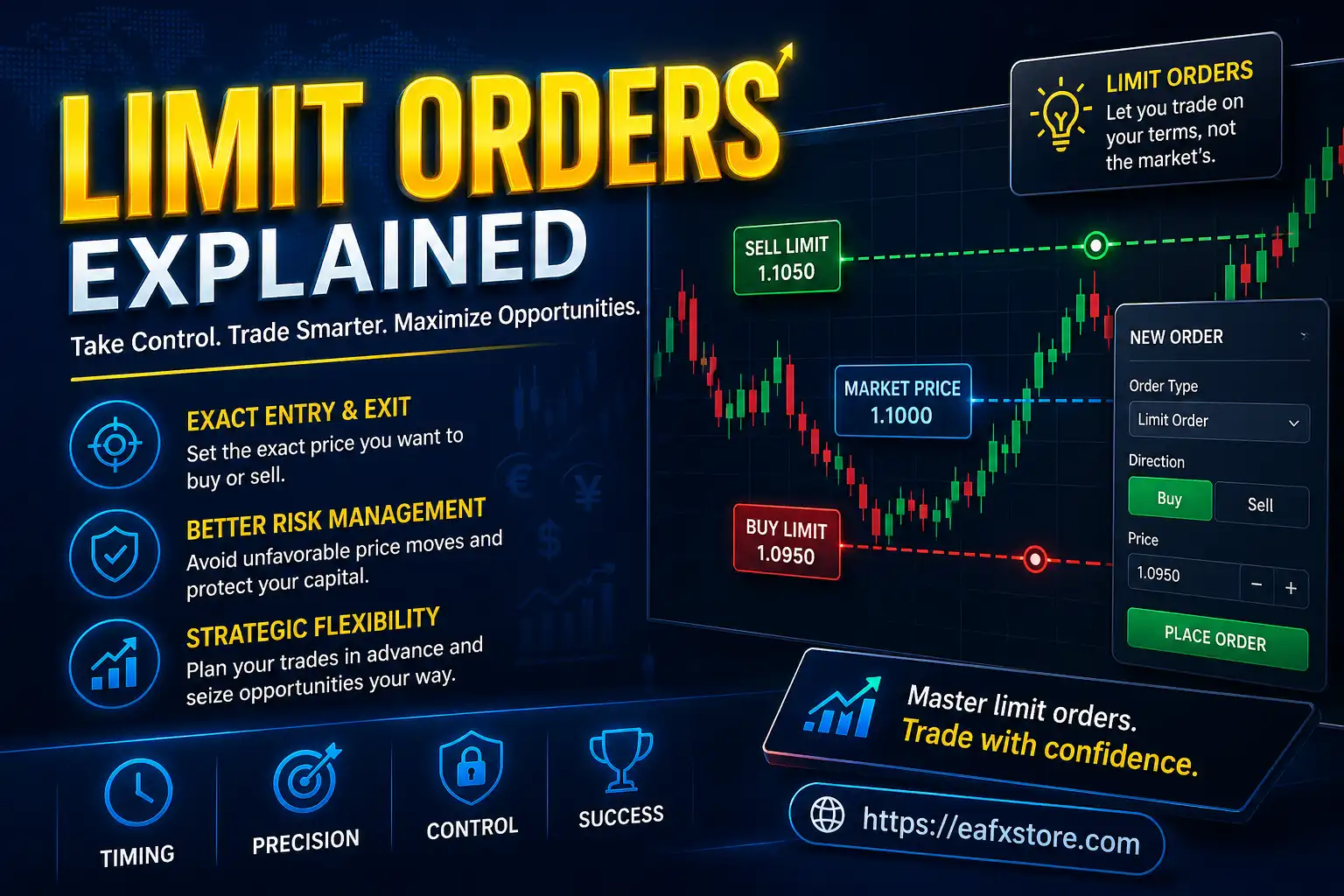
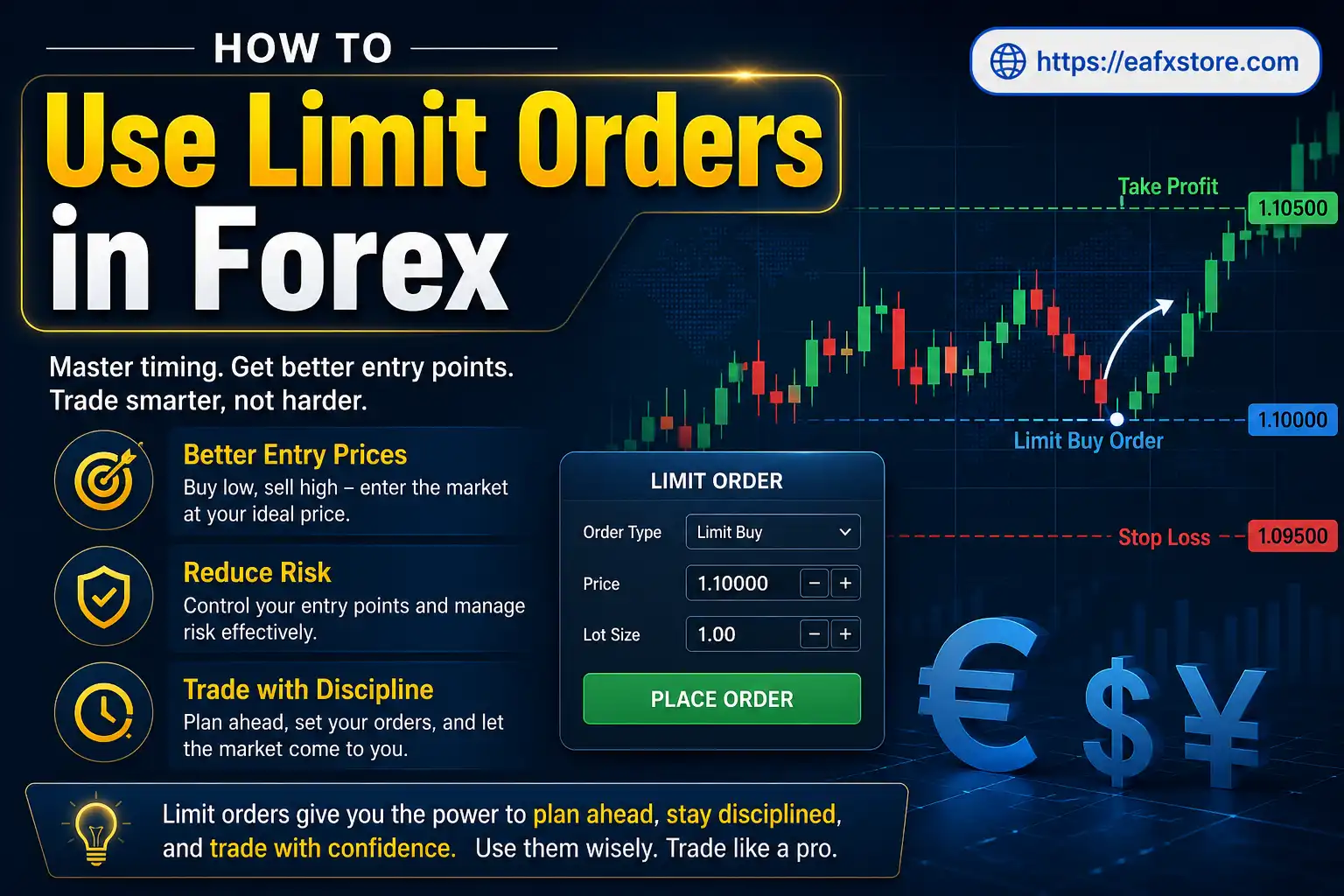
A limit order is a type of pending order that allows traders to buy or sell a currency pair at a specific price or better. Unlike market orders, which execute immediately at the current price, limit orders wait until the market reaches your predefined level.
For example, if EUR/USD is trading at 1.1000 and you believe it will drop before rising, you can place a buy limit order at 1.0950. Your trade will only execute if the price reaches that level.
This approach gives traders more control over entry prices, helping to avoid impulsive decisions and unfavorable market conditions.
Why Limit Orders Are Important for Better Entry Prices
Limit orders are essential because they align your trade execution with your strategy rather than market emotion. Instead of chasing price movements, you let the market come to you.
Using limit orders helps traders:
- Enter trades at more favorable price levels.
- Reduce slippage during volatile conditions.
- Improve risk-to-reward ratios.
- Maintain discipline in trading strategies.
In essence, limit orders transform trading from reactive to proactive, which is a key trait of successful Forex traders.
Types of Limit Orders in Forex
There are two main types of limit orders in Forex trading, each serving a different purpose depending on market direction.
| Order Type | Description | Example Scenario |
|---|---|---|
| Buy Limit | Placed below the current market price, expecting price to rise afterward | Buy EUR/USD at 1.0950 when current price is 1.1000 |
| Sell Limit | Placed above the current market price, expecting price to fall afterward | Sell EUR/USD at 1.1050 when current price is 1.1000 |
Understanding when to use each type is crucial. Buy limits are typically used in pullbacks within an uptrend, while sell limits are common in retracements within a downtrend.
How to Use Limit Orders Effectively
Using limit orders effectively requires more than just placing them at random price levels. You need a structured approach based on analysis and strategy.
🎯 Identify Key Support and Resistance Levels
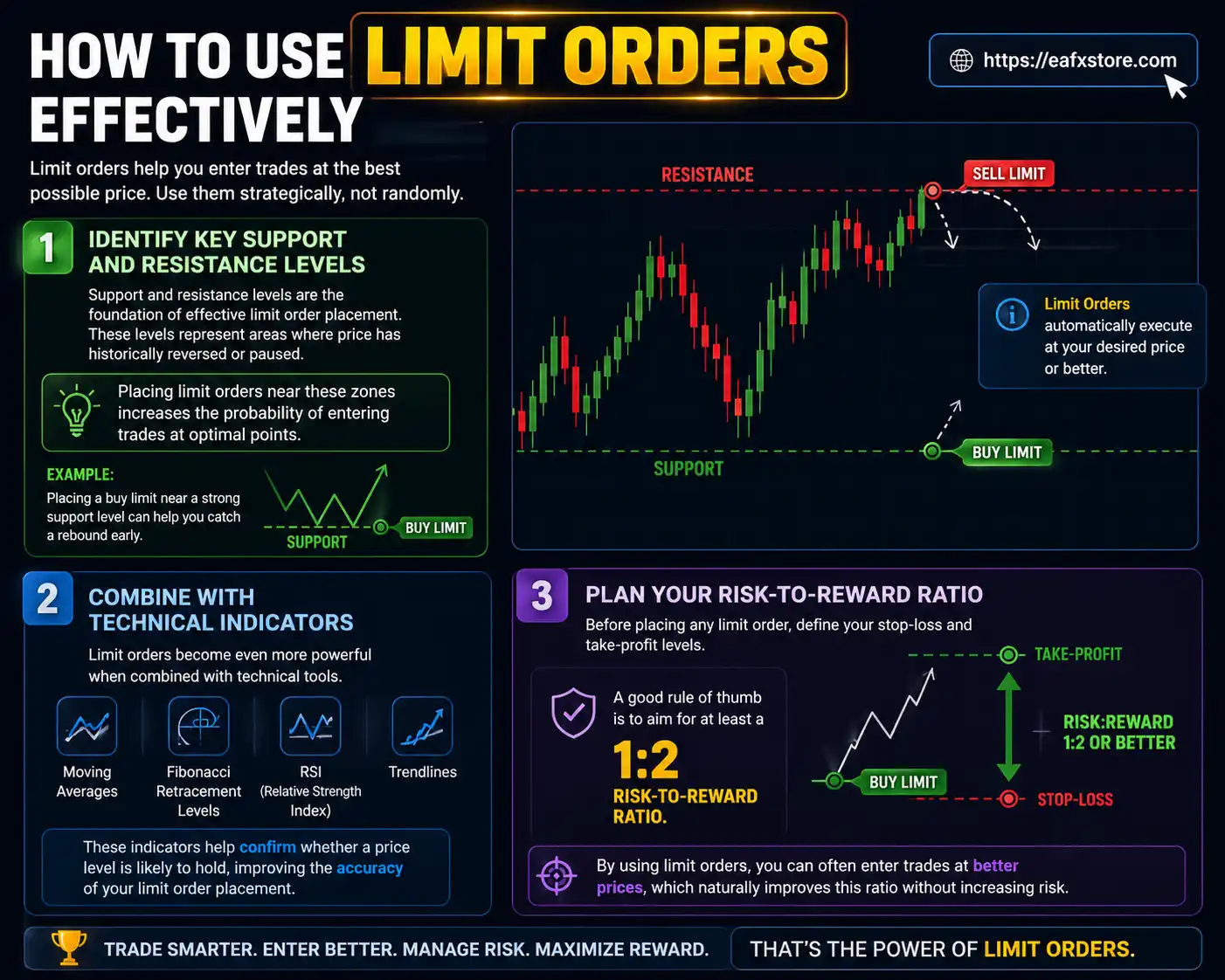
Support and resistance levels are the foundation of effective limit order placement. These levels represent areas where price has historically reversed or paused.
Placing limit orders near these zones increases the probability of entering trades at optimal points. For example, placing a buy limit near a strong support level can help you catch a rebound early.
🎯 Combine with Technical Indicators
Limit orders become even more powerful when combined with technical tools such as:
These indicators help confirm whether a price level is likely to hold, improving the accuracy of your limit order placement.
🎯 Plan Your Risk-to-Reward Ratio
Before placing any limit order, define your stop-loss and take-profit levels. A good rule of thumb is to aim for at least a 1:2 risk-to-reward ratio.
By using limit orders, you can often enter trades at better prices, which naturally improves this ratio without increasing risk.
Common Mistakes When Using Limit Orders
While limit orders are powerful, they can be misused. Avoid these common mistakes to maximize their effectiveness.
🎯 Placing Orders Too Far from Market Price
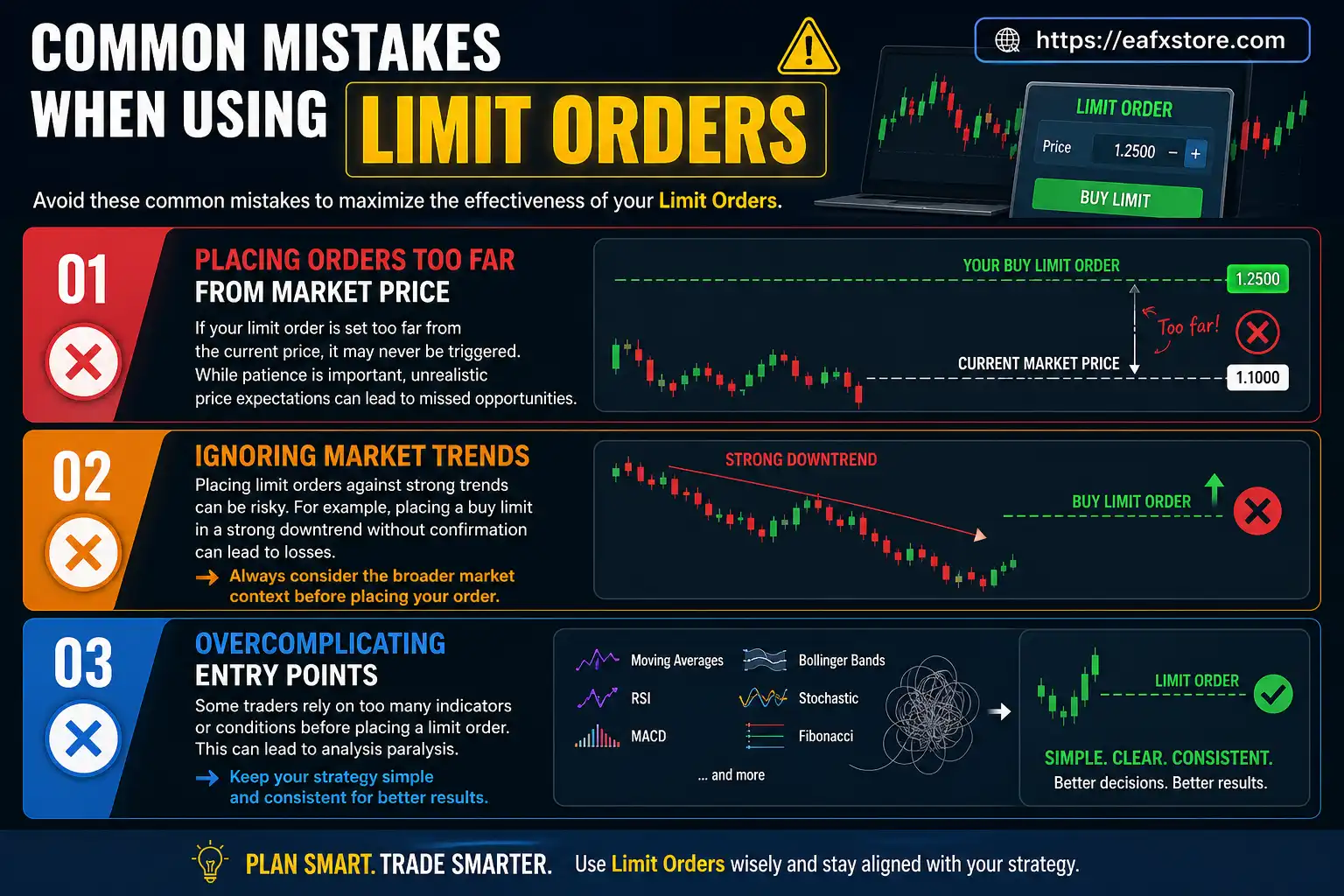
If your limit order is set too far from the current price, it may never be triggered. While patience is important, unrealistic price expectations can lead to missed opportunities.
🎯 Ignoring Market Trends
Placing limit orders against strong trends can be risky. For example, placing a buy limit in a strong downtrend without confirmation can lead to losses.
Always consider the broader market context before placing your order.
🎯 Overcomplicating Entry Points
Some traders rely on too many indicators or conditions before placing a limit order. This can lead to analysis paralysis.
Keep your strategy simple and consistent for better results.
Limit Orders vs Market Orders
Understanding the difference between limit and market orders helps you decide when to use each.
| Feature | Limit Order | Market Order |
|---|---|---|
| Execution | Only at specified price or better | Immediate at current market price |
| Control | High | Low |
| Slippage Risk | Low | Higher in volatile markets |
| Best Use Case | Planned entries | Urgent trades or breakouts |
Limit orders are ideal for precision and planning, while market orders are better suited for quick execution when timing is critical.
Best Strategies for Using Limit Orders
To get the most out of limit orders, integrate them into proven trading strategies.
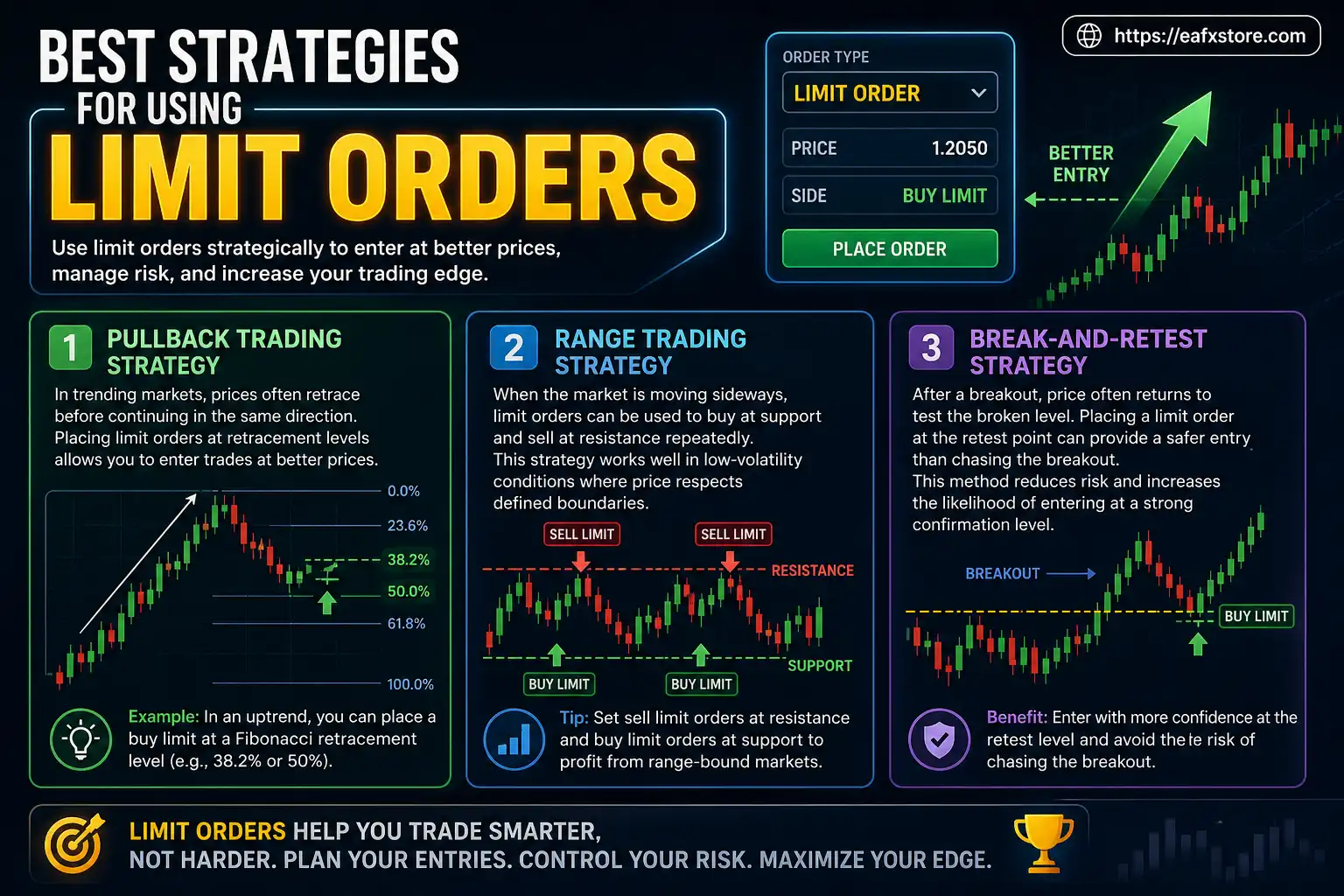
🎯 Pullback Trading Strategy
In trending markets, prices often retrace before continuing in the same direction. Placing limit orders at retracement levels allows you to enter trades at better prices.
For example, in an uptrend, you can place a buy limit at a Fibonacci retracement level (e.g., 38.2% or 50%).
🎯 Range Trading Strategy
When the market is moving sideways, limit orders can be used to buy at support and sell at resistance repeatedly.
This strategy works well in low-volatility conditions where price respects defined boundaries.
🎯 Break-and-Retest Strategy
After a breakout, price often returns to test the broken level. Placing a limit order at the retest point can provide a safer entry than chasing the breakout.
This method reduces risk and increases the likelihood of entering at a strong confirmation level.
When Not to Use Limit Orders
Despite their advantages, limit orders are not always the best choice.
Avoid using limit orders in:
- Highly volatile news events.
- Strong breakout momentum situations.
- Illiquid market conditions.
In these scenarios, price may move too quickly, and your limit order might not be executed at all.
Final Thoughts
Limit orders are a powerful tool for Forex traders seeking better entry prices and improved trade precision. By allowing you to predefine your entry points, they promote discipline, reduce emotional trading and enhance risk management.
However, their effectiveness depends on proper usage. Combining limit orders with technical analysis, market structure and sound risk management is key to unlocking their full potential.