
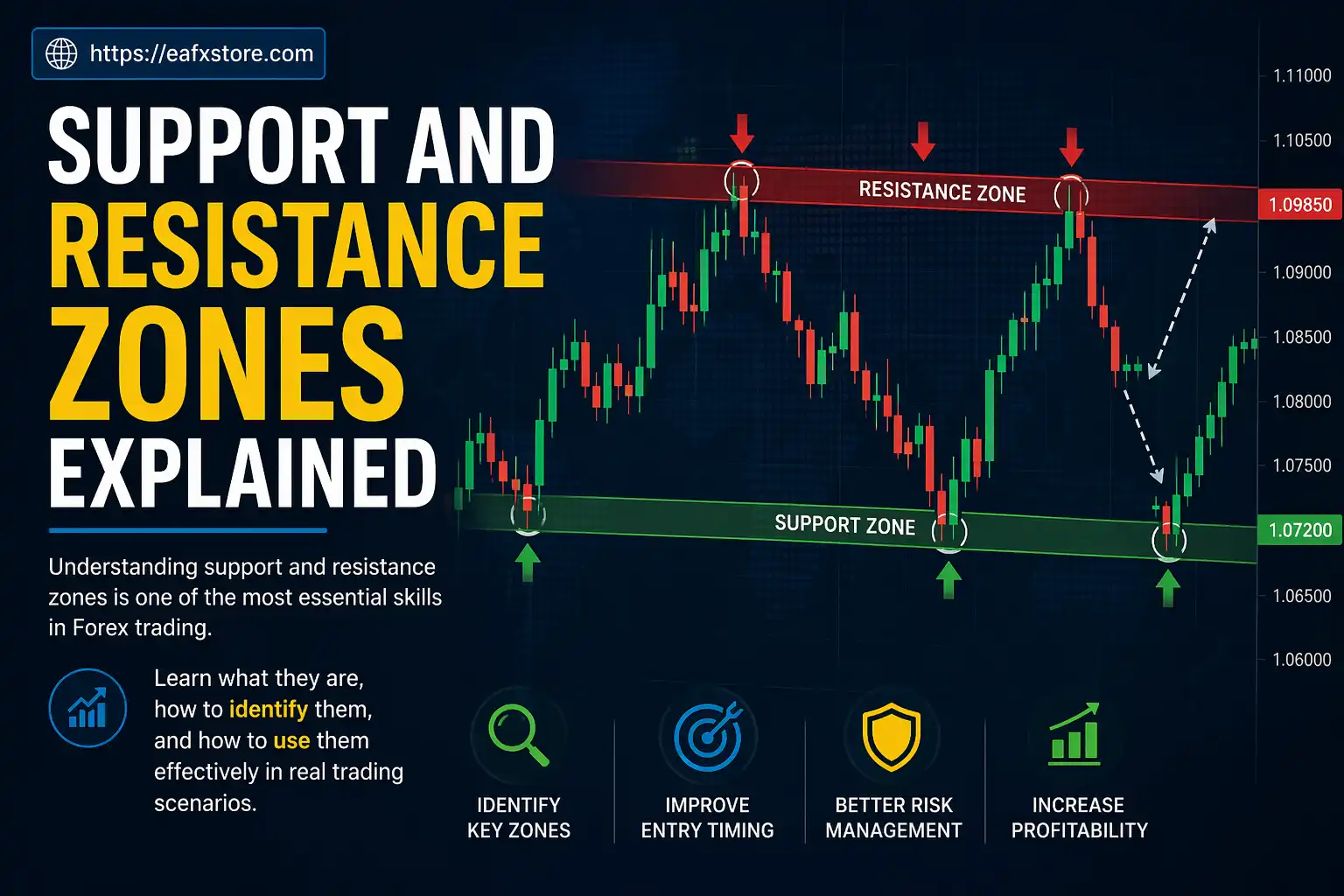
Understanding support and resistance zones is one of the most essential skills in Forex trading. Whether you are a beginner or an experienced trader, mastering these concepts can significantly improve your decision-making and overall profitability. In this comprehensive guide, you’ll learn what support and resistance zones are, how to identify them, and how to use them effectively in real trading scenarios.
What ere Support and Resistance Zones?
Support and resistance zones are price areas on a chart where the market tends to reverse or pause.
- Support is a price level where buying interest is strong enough to prevent the price from falling further.
- Resistance is a price level where selling pressure prevents the price from rising higher.
Unlike single price lines, zones represent broader areas where price reactions repeatedly occur. This makes them more reliable and realistic in actual trading.
Why Support and Resistance Matter in Forex Trading
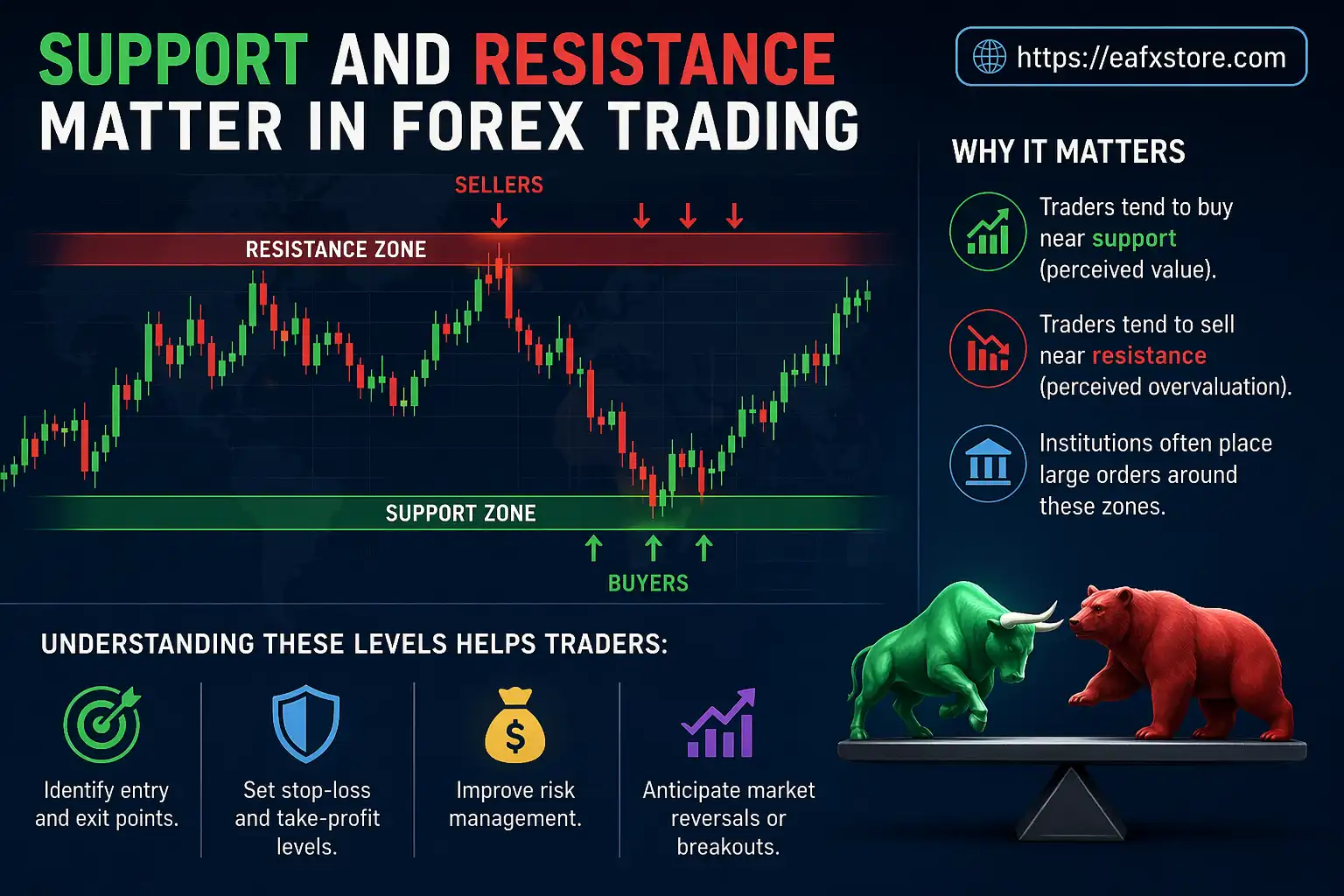
Support and resistance zones are fundamental because they reflect real market psychology:
- Traders tend to buy near support (perceived value).
- Traders tend to sell near resistance (perceived overvaluation).
- Institutions often place large orders around these zones.
Understanding these levels helps traders:
- Identify entry and exit points.
- Set stop-loss and take-profit levels.
- Improve risk management.
- Anticipate market reversals or breakouts.
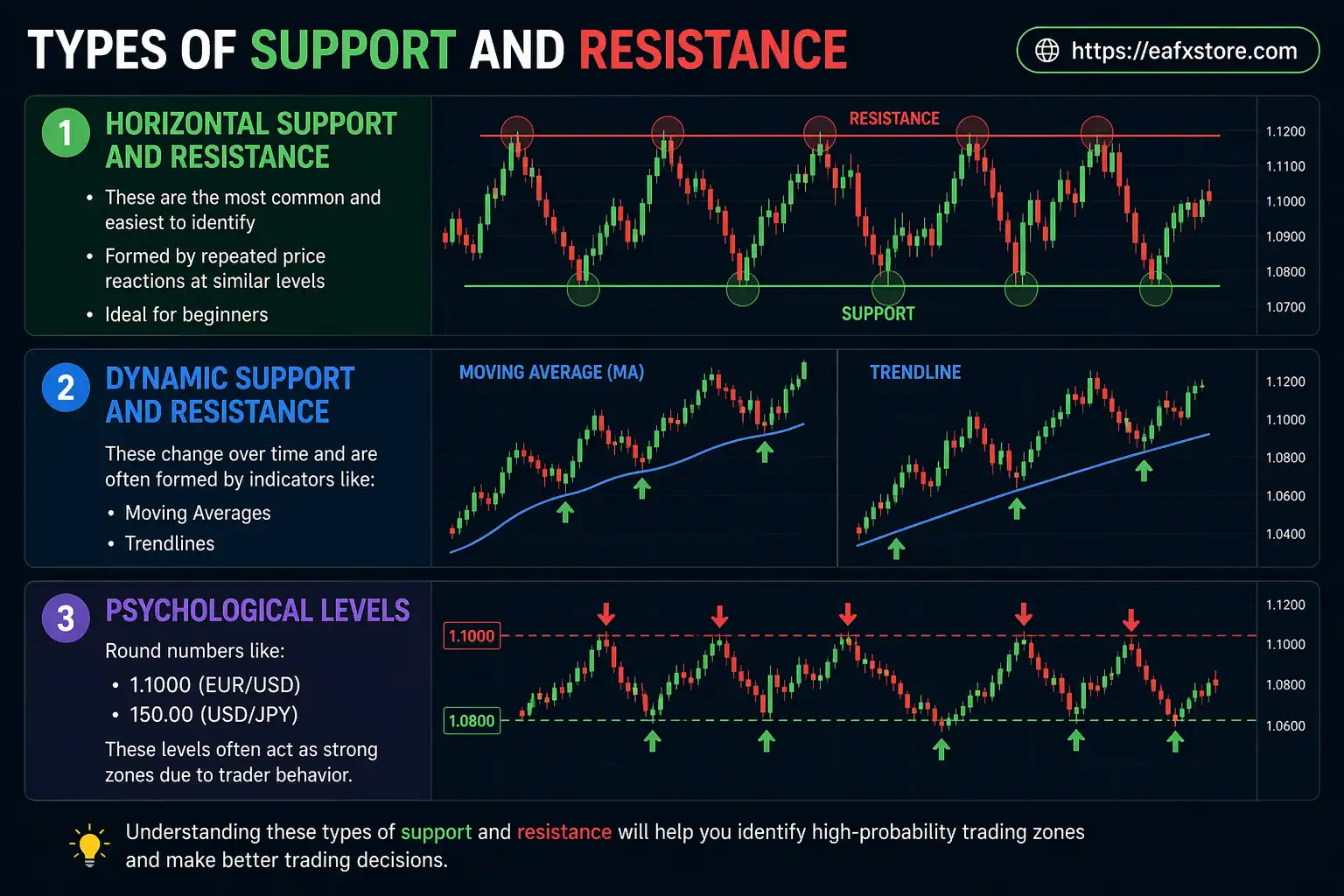
Types of Support and Resistance
1. Horizontal Support and Resistance
These are the most common and easiest to identify.
- Formed by repeated price reactions at similar levels
- Ideal for beginners
2. Dynamic Support and Resistance
These change over time and are often formed by indicators like:
- Moving Averages
- Trendlines
3. Psychological Levels
Round numbers like:
- 1.1000 (EUR/USD)
- 150.00 (USD/JPY)
These levels often act as strong zones due to trader behavior.
How to Identify Support and Resistance Zones
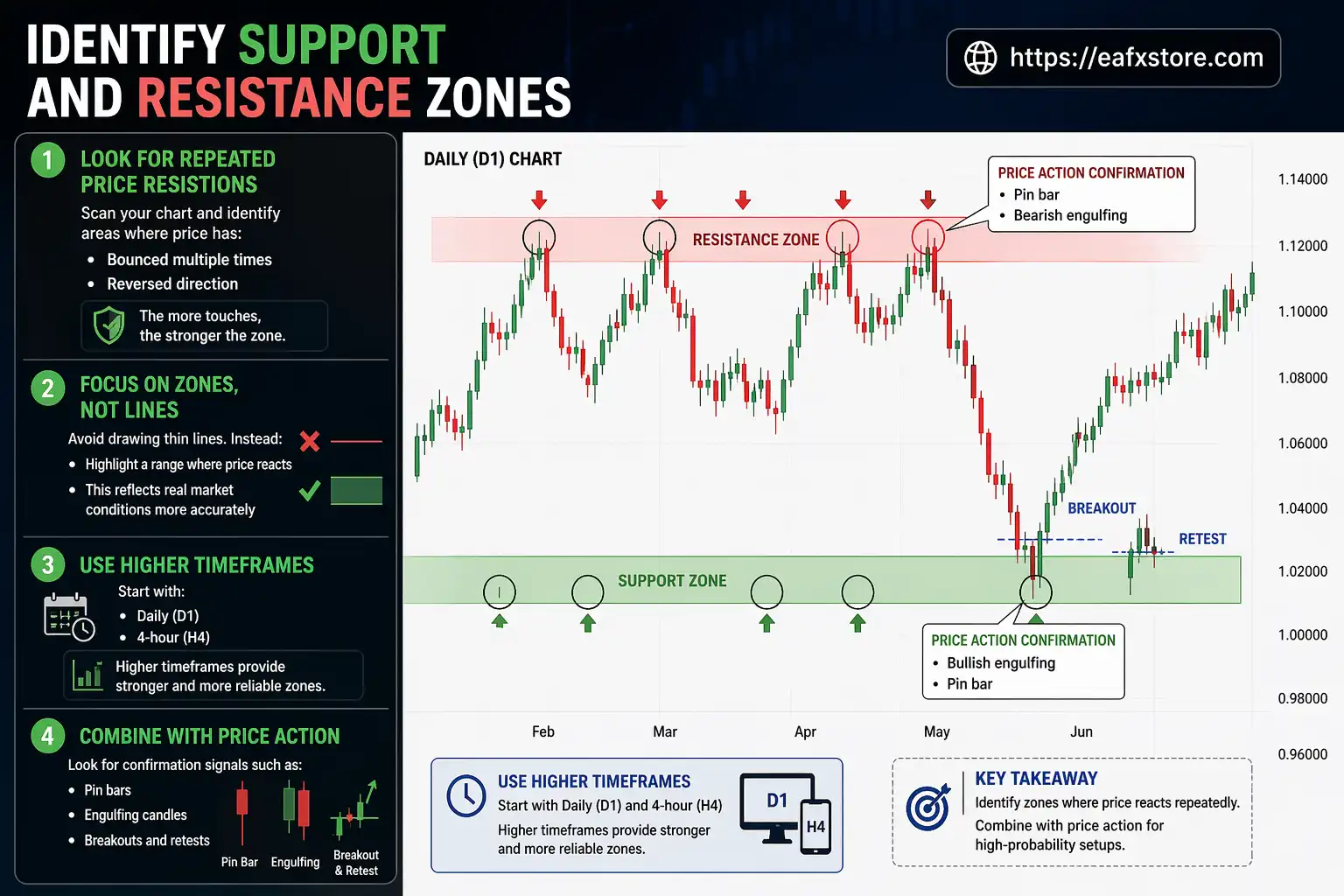
1. Look for Repeated Price Reactions
Scan your chart and identify areas where price has:
- Bounced multiple times
- Reversed direction
The more touches, the stronger the zone.
2. Focus on Zones, Not Lines
Avoid drawing thin lines. Instead:
- Highlight a range where price reacts
- This reflects real market conditions more accurately
3. Use Higher Timeframes
Start with:
- Daily (D1)
- 4-hour (H4)
Higher timeframes provide stronger and more reliable zones.
4. Combine with Price Action
Look for confirmation signals such as:
- Pin bars
- Engulfing candles
- Breakouts and retests
How to Trade Support and Resistance Zones
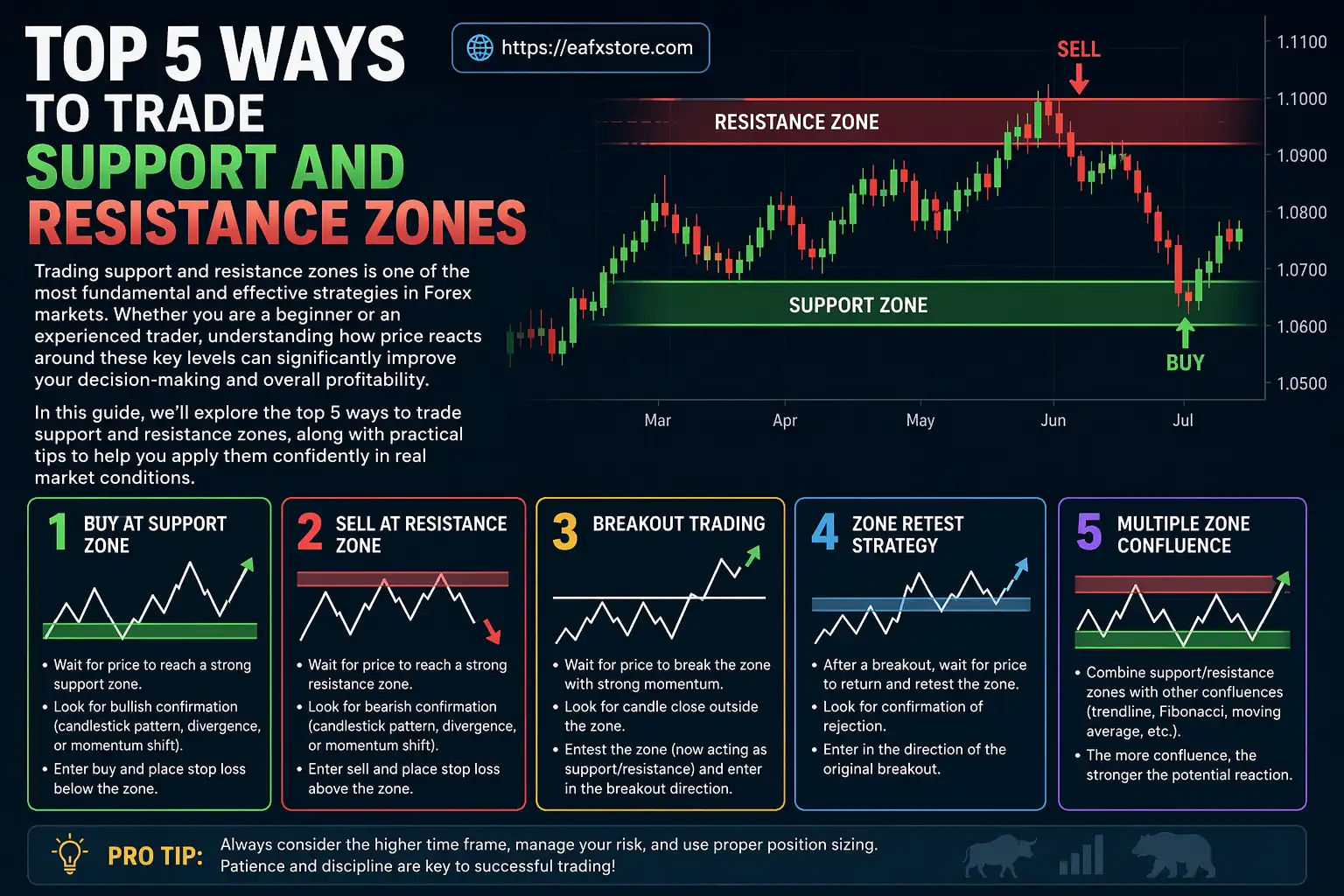
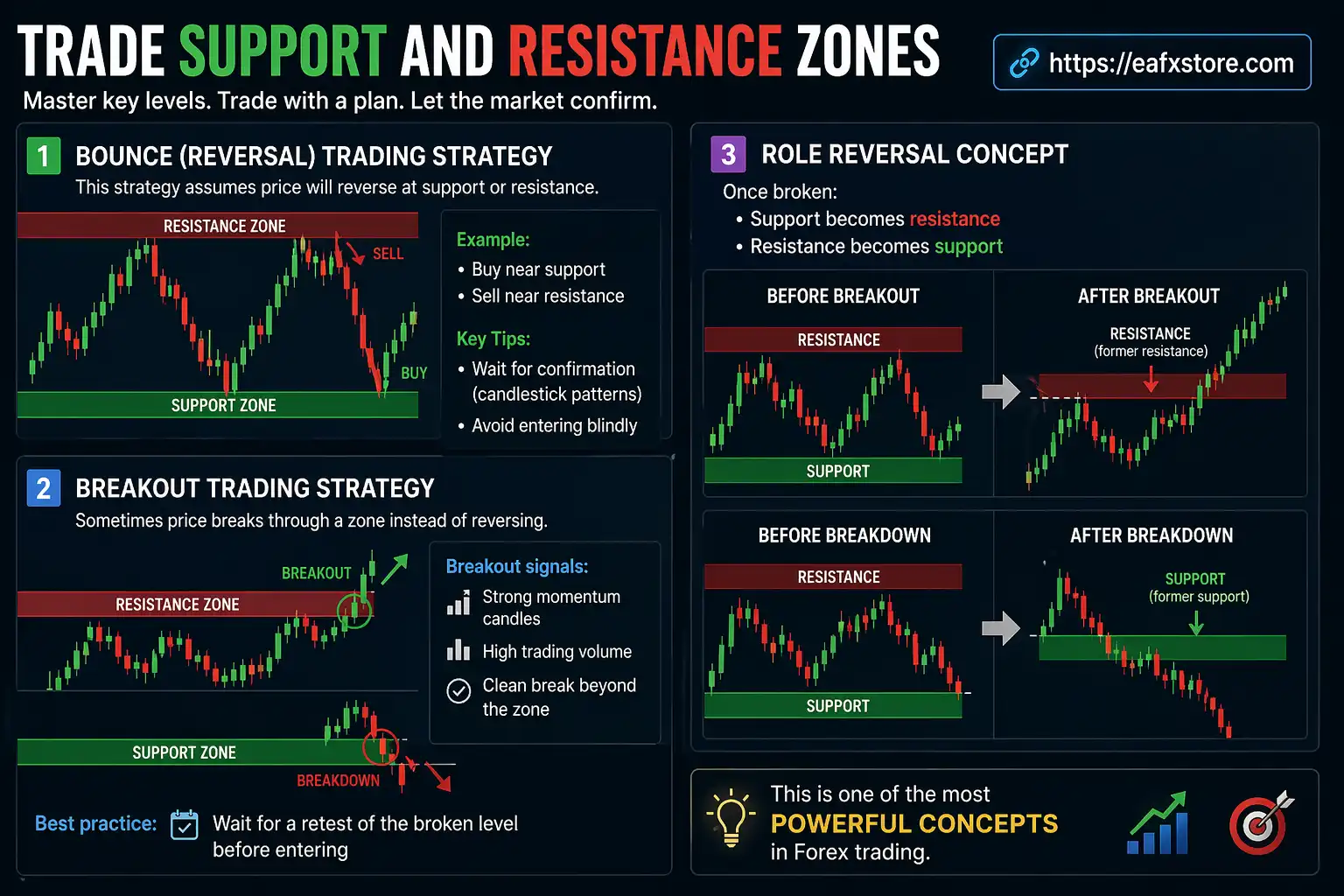
1. Bounce (Reversal) Trading Strategy
This strategy assumes price will reverse at support or resistance.
Example:
- Buy near support
- Sell near resistance
Key Tips:
- Wait for confirmation (candlestick patterns)
- Avoid entering blindly
2. Breakout Trading Strategy
Sometimes price breaks through a zone instead of reversing.
Breakout signals:
- Strong momentum candles
- High trading volume
- Clean break beyond the zone
Best practice:
- Wait for a retest of the broken level before entering
3. Role Reversal Concept
Once broken:
- Support becomes resistance
- Resistance becomes support
This is one of the most powerful concepts in Forex trading.
Common Mistakes Traders Make
1. Drawing Too Many Levels
Overloading your chart creates confusion. Focus only on key zones.
2. Ignoring Market Context
Support and resistance are not standalone tools. Always consider:
- Trend direction
- Market structure
3. Trading Without Confirmation
Entering trades without confirmation increases risk significantly.
4. Using Exact Lines Instead of Zones
Markets are not precise. Always think in areas, not exact prices.
Pro Tips to Improve Your Trading
- Combine support/resistance with trend analysis.
- Use indicators like RSI or MACD for confirmation.
- Backtest your strategy on historical data.
- Practice on a demo account before trading live.
Example of a Simple Trading Setup
- Identify a strong support zone on the daily chart.
- Wait for price to return to that zone.
- Look for a bullish candlestick pattern.
- Enter a buy trade.
- Place Stop Loss (SL) below the zone.
- Set Take Profit (TP) near the next resistance.
This structured approach improves consistency and reduces emotional trading.
Final Thoughts
Support and resistance zones are the backbone of technical analysis in Forex trading. They provide valuable insight into market behavior and help traders make informed decisions.
However, no strategy is perfect. The key is to:
- Stay disciplined
- Use proper risk management
- Continuously refine your approach
If you master support and resistance zones, you’ll gain a significant edge in the Forex market.