
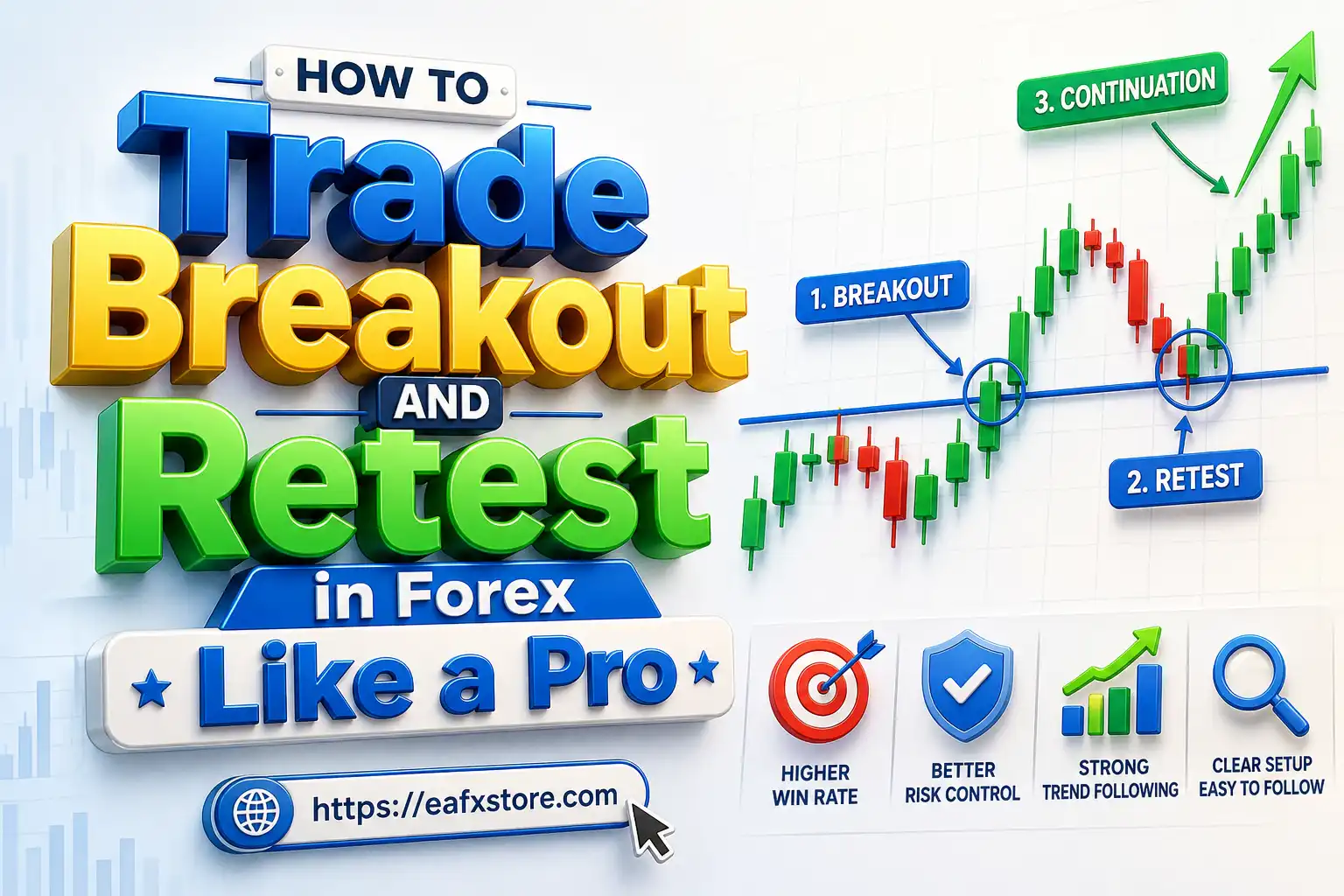
Trading breakouts is one of the most powerful strategies in Forex—but combining it with a retest can significantly increase your win rate. In this guide, you’ll learn how to trade breakout and retest setups like a professional, with clear structure, practical tips, and real-world logic.
Introduction to Breakout and Retest Strategy
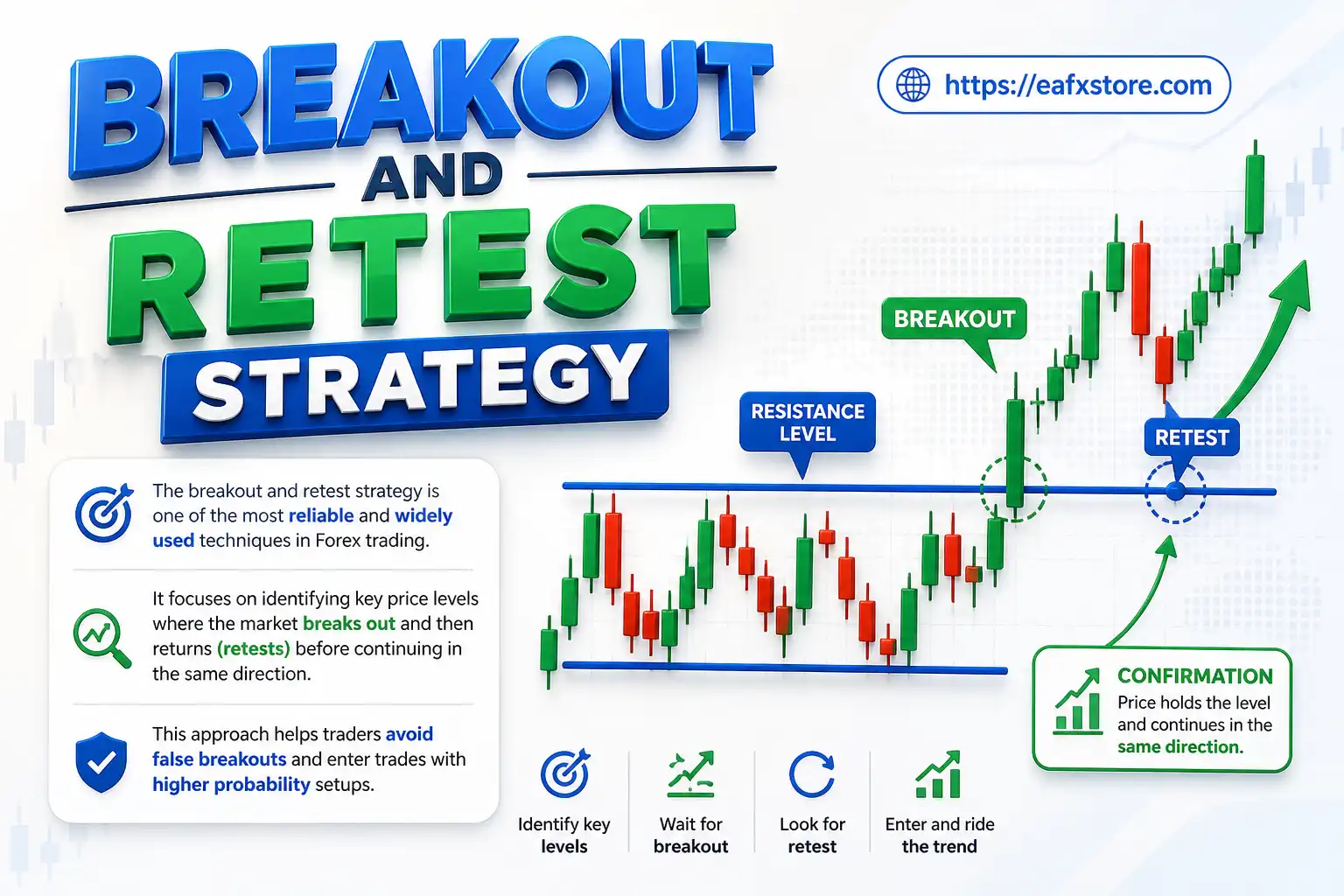
The breakout and retest strategy is a price action technique used by professional traders to enter the market with confirmation rather than prediction. Instead of jumping into a breakout immediately, traders wait for price to return (retest) the broken level, which often acts as new support or resistance. This approach reduces false signals and improves trade accuracy.
What is a Breakout in Forex?
A breakout occurs when price moves beyond a key level of support or resistance with strong momentum. These levels are often areas where price has previously reversed or consolidated.
Breakouts indicate a potential shift in market sentiment—buyers overpowering sellers (bullish breakout) or sellers dominating buyers (bearish breakout).
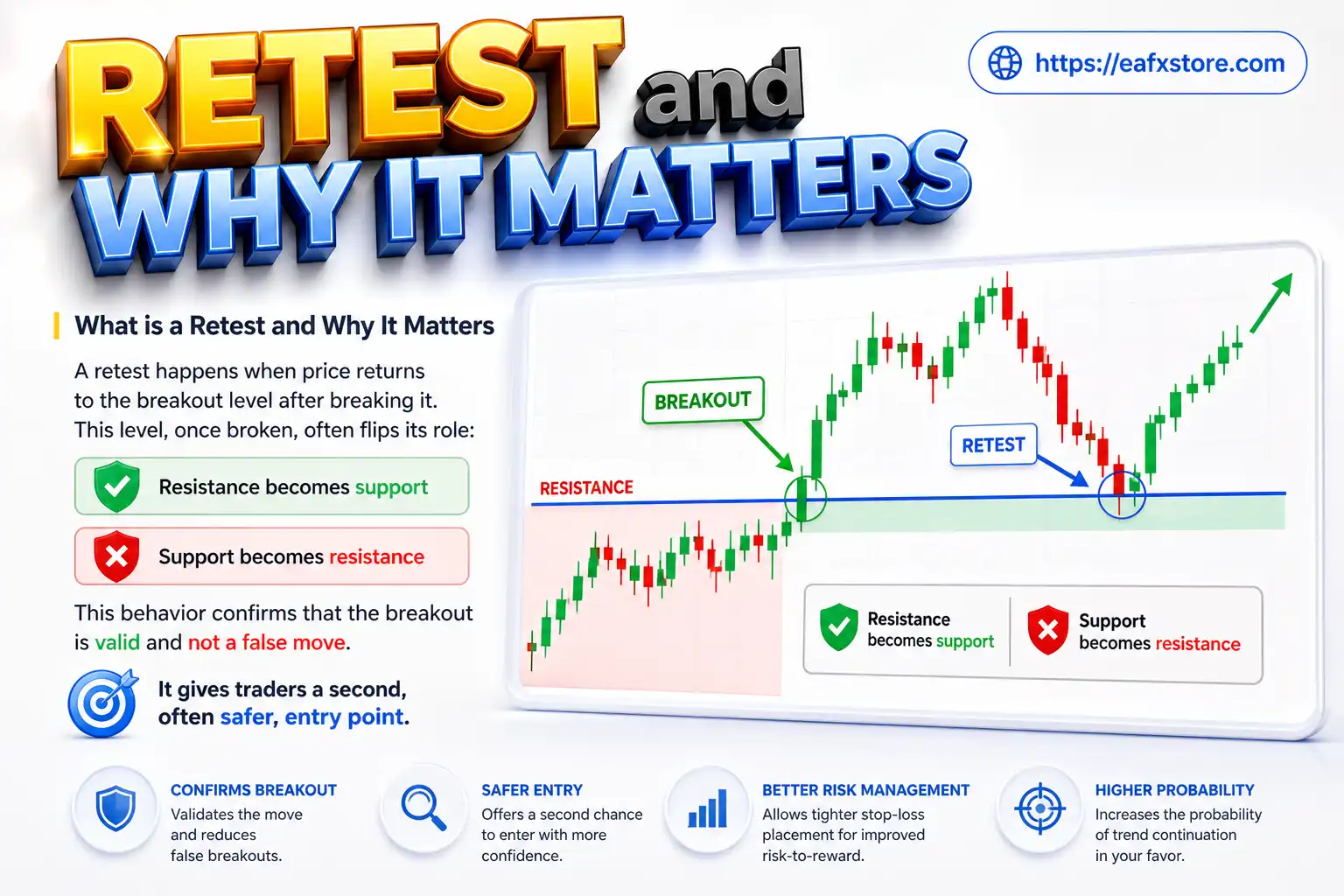
What is a Retest and Why It Matters
A retest happens when price returns to the breakout level after breaking it. This level, once broken, often flips its role:
- Resistance becomes support.
- Support becomes resistance.
This behavior confirms that the breakout is valid and not a false move. It gives traders a second, often safer, entry point.
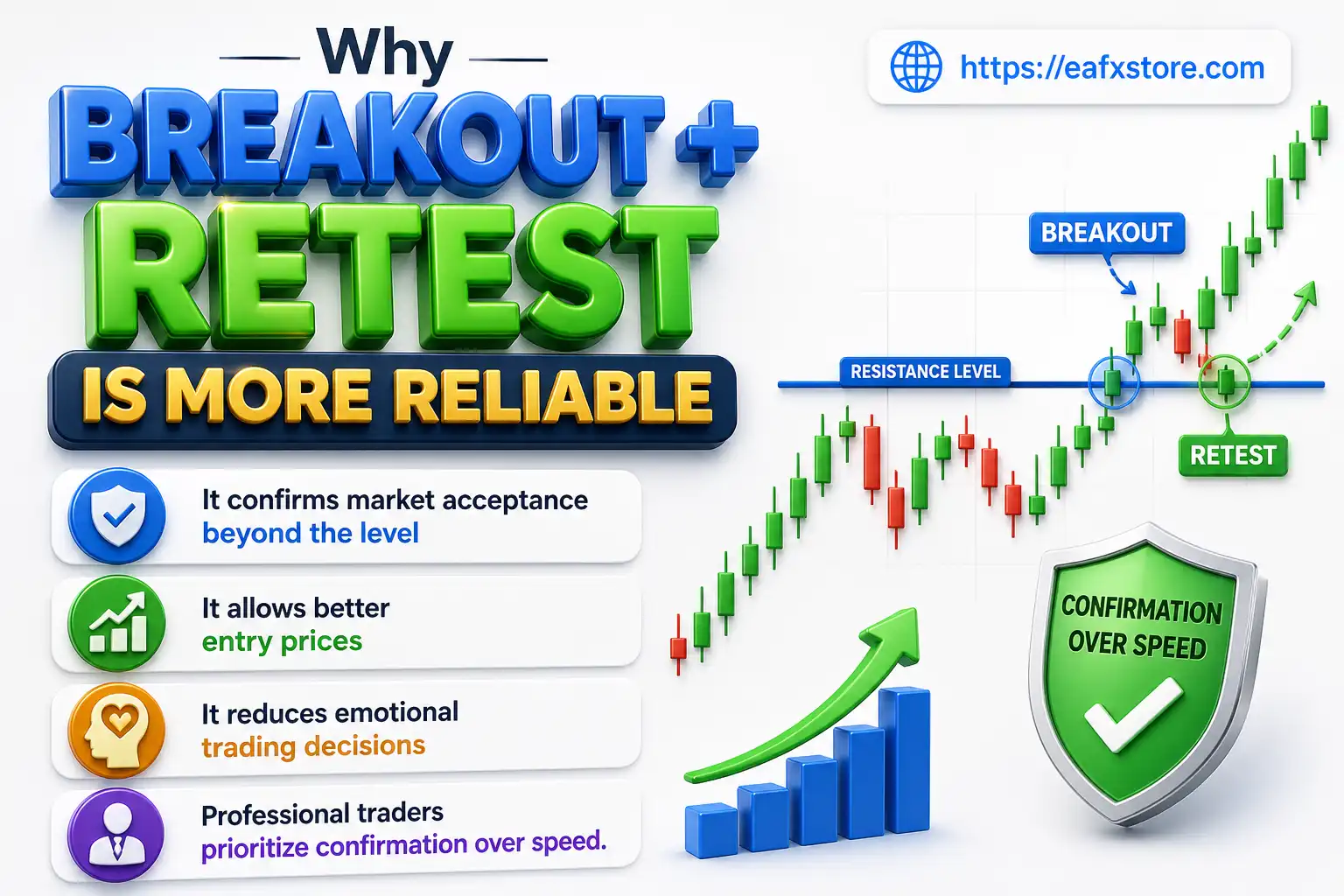
Why Breakout + Retest is More Reliable
Trading breakouts alone can be risky due to fakeouts (false breakouts). Adding a retest improves reliability because:
- It confirms market acceptance beyond the level.
- It allows better entry prices.
- It reduces emotional trading decisions.
Professional traders prioritize confirmation over speed.
Key Levels to Watch Before a Breakout
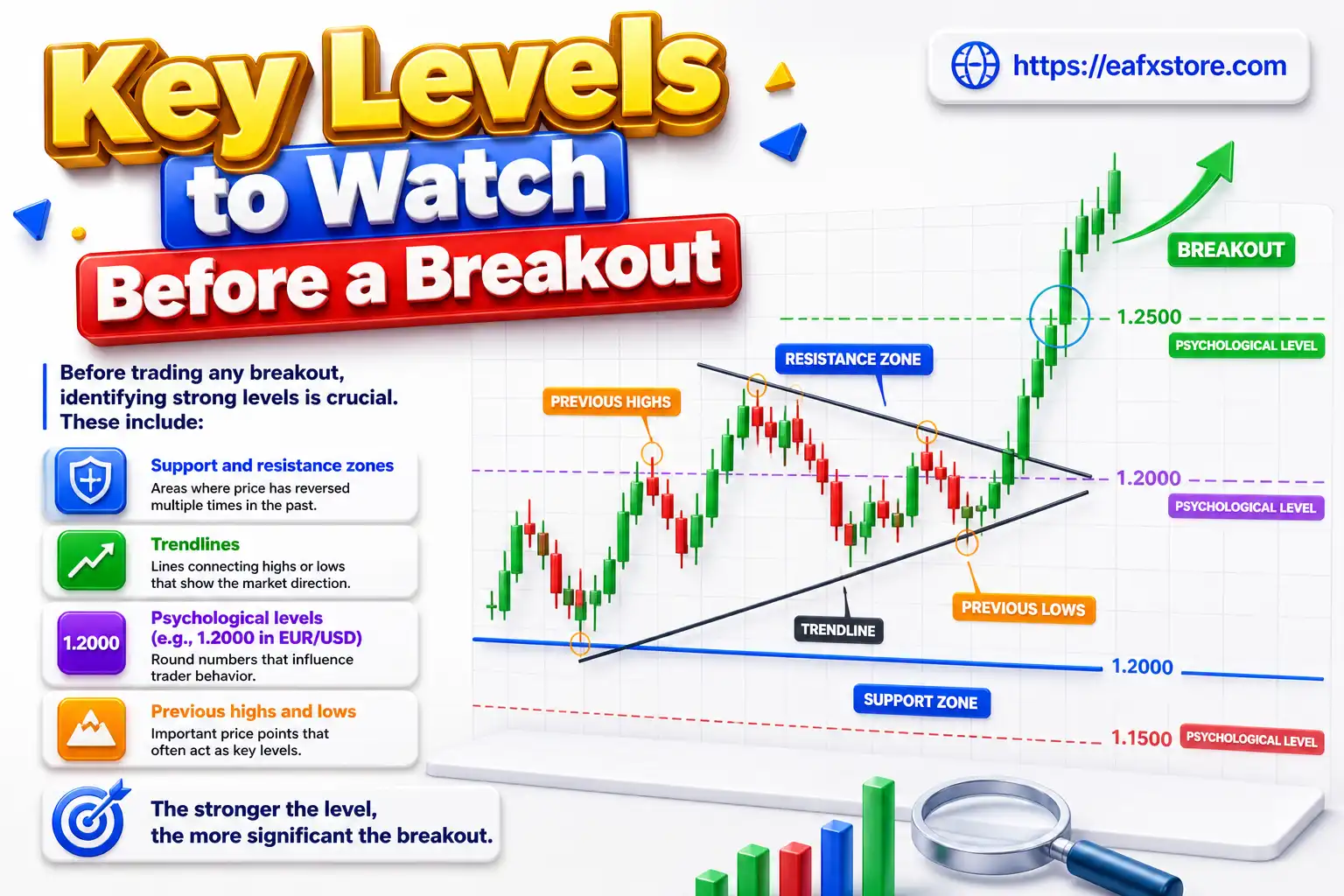
Before trading any breakout, identifying strong levels is crucial. These include:
- Support and resistance zones
- Trendlines
- Psychological levels (e.g., 1.2000 in EUR/USD)
- Previous highs and lows
The stronger the level, the more significant the breakout.
Step-by-Step Guide to Trading Breakout and Retest
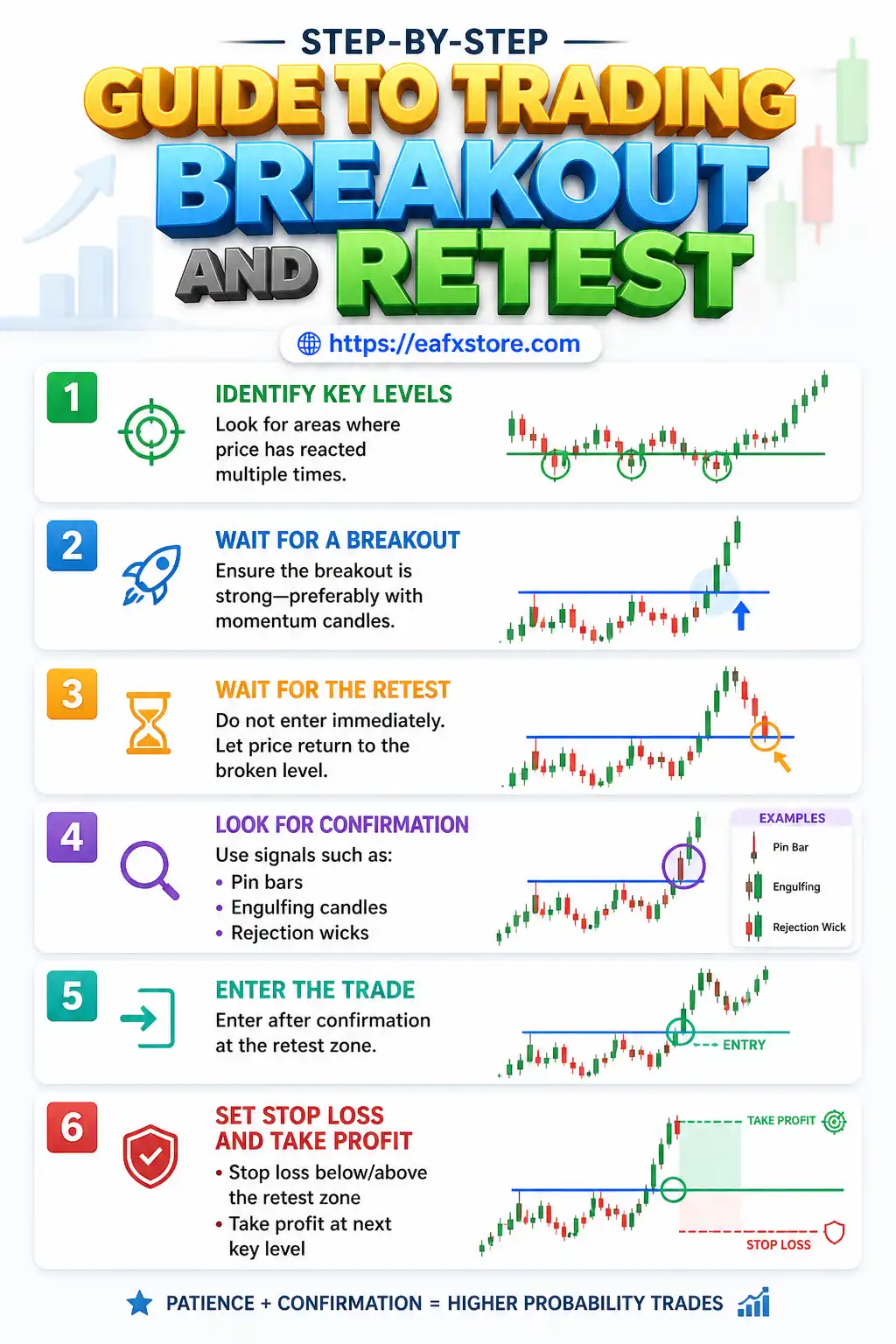
Step 1: Identify Key Levels
Look for areas where price has reacted multiple times.
Step 2: Wait for a Breakout
Ensure the breakout is strong—preferably with momentum candles.
Step 3: Wait for the Retest
Do not enter immediately. Let price return to the broken level.
Step 4: Look for Confirmation
Use signals such as:
- Pin bars
- Engulfing candles
- Rejection wicks
Step 5: Enter the Trade
Enter after confirmation at the retest zone.
Step 6: Set Stop Loss and Take Profit
- Stop loss below/above the retest zone
- Take profit at next key level
Common Mistakes Traders Make
| Mistake | Explanation |
|---|---|
| Entering too early | Jumping in before retest confirmation |
| Ignoring market context | Trading against trend |
| Overtrading | Taking every breakout without filtering |
| Tight stop loss | Getting stopped out due to volatility |
Avoiding these mistakes can drastically improve your results.
Risk Management for Breakout Trades
Risk management is essential in any strategy. Here are some rules:
- Risk only 1–2% per trade.
- Use proper Stop Loss (SL) placement.
- Maintain a risk-to-reward ratio of at least 1:2
- Avoid trading during high-impact news without experience.
Consistency in risk management is what separates amateurs from professionals.
Best Timeframes and Currency Pairs
Breakout and retest works across all timeframes, but higher timeframes tend to be more reliable.
Recommended:
- Timeframes: H1, H4, Daily
- Pairs: EUR/USD, GBP/USD, USD/JPY
Lower timeframes can work but often produce more false signals.
Pro Tips to Improve Your Strategy
- Combine with trend analysis (trade with trend direction)
- Use volume (if available) to confirm breakouts
- Be patient—missed trades are better than bad trades
- Keep a trading journal to track performance
Professional trading is about discipline, not just strategy.
Conclusion
The breakout and retest strategy is a powerful, confirmation-based approach that helps traders avoid false breakouts and improve entry precision. By focusing on key levels, waiting for retests, and managing risk effectively, you can trade Forex like a pro. Remember: patience and discipline are your biggest advantages.
FAQs
❓ What is the difference between a breakout and a fakeout?
A breakout is a genuine move beyond a key level, while a fakeout quickly reverses back, trapping traders.
❓ Do I always need to wait for a retest?
Not always, but waiting for a retest significantly improves trade accuracy and reduces risk.
❓ Can beginners use this strategy?
Yes, it is actually one of the most beginner-friendly price action strategies.
❓ What indicators can support breakout trading?
Indicators like RSI, Moving Averages, and Volume can provide additional confirmation.
❓ How do I know if a level is strong?
A level is strong if price has reacted to it multiple times with clear reversals or consolidations.