
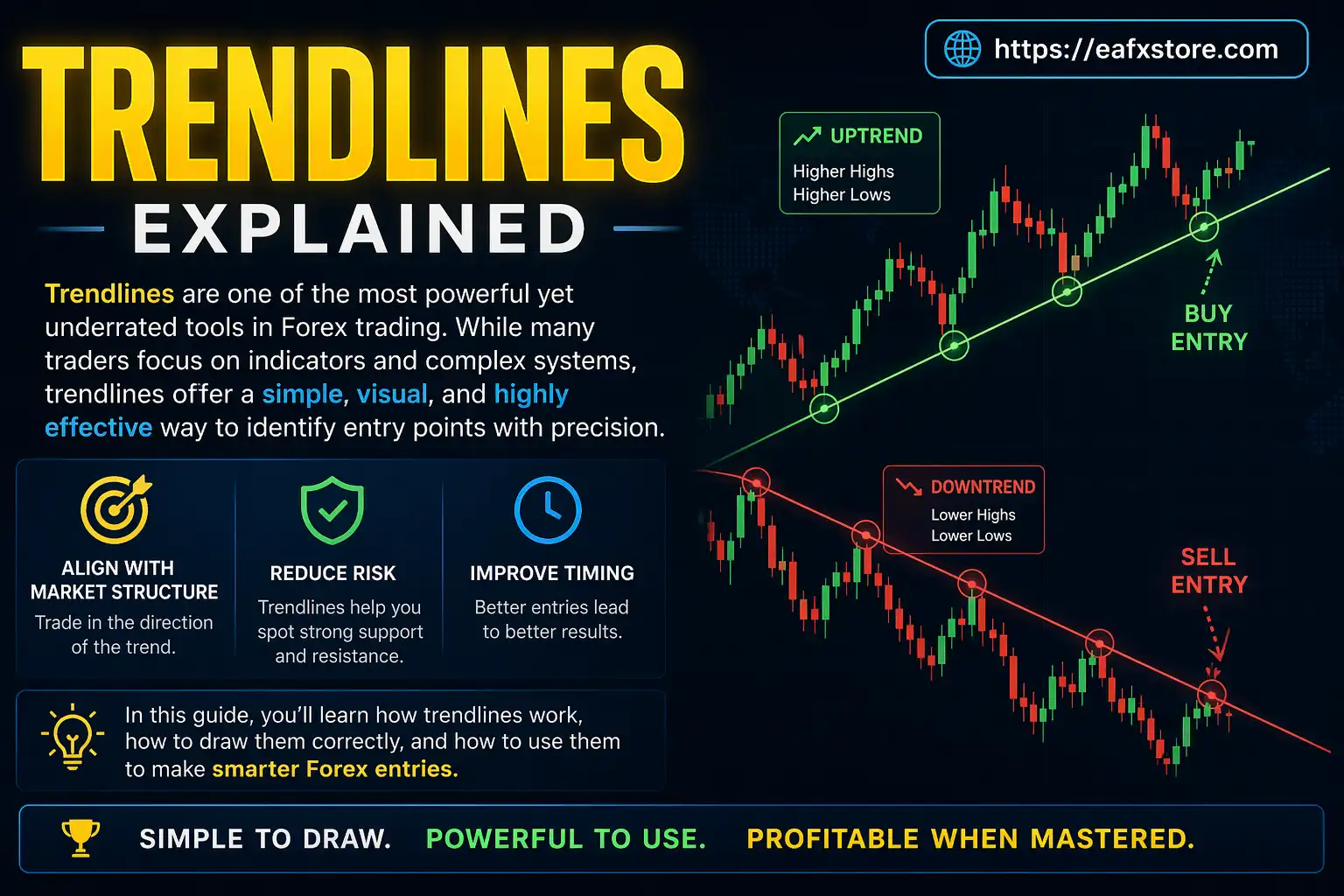
Trendlines are one of the most powerful yet underrated tools in Forex trading. While many traders focus on indicators and complex systems, trendlines offer a simple, visual and highly effective way to identify entry points with precision. If used correctly, they can help you align with market structure, reduce risk and improve your timing significantly.
In this guide, you’ll learn how trendlines work, how to draw them correctly, and how to use them to make smarter Forex entries.
What Are Trendlines in Forex Trading?
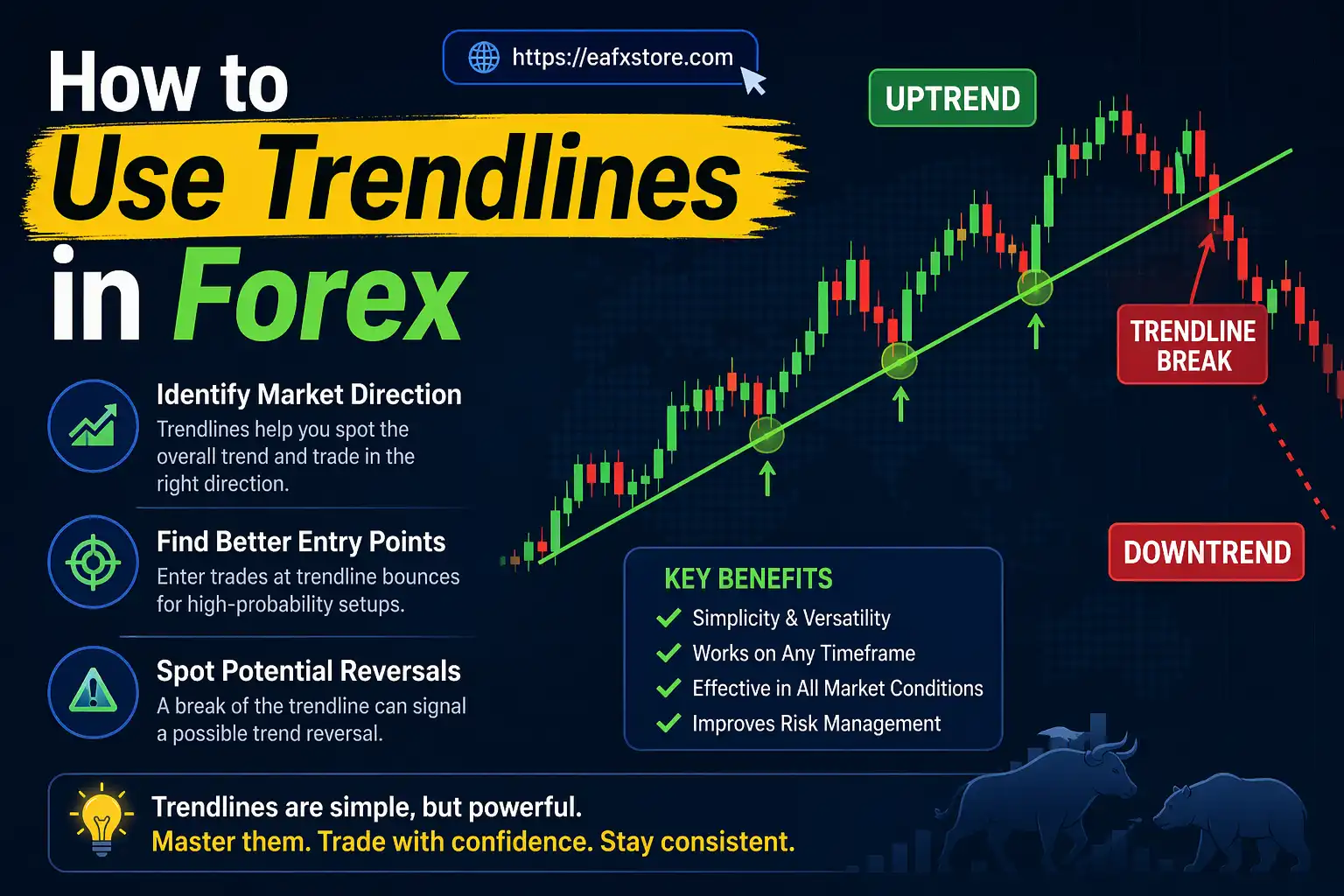
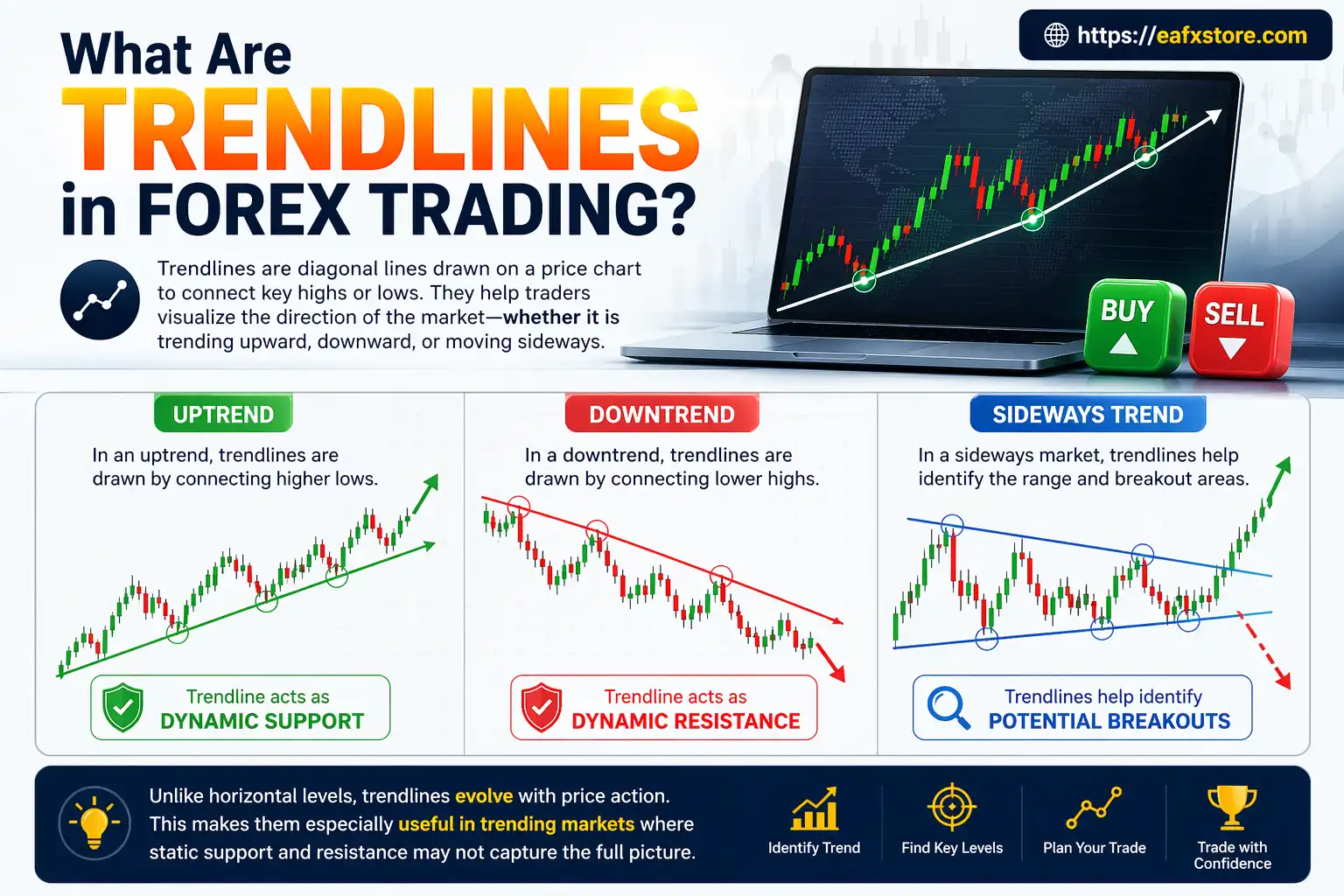
Trendlines are diagonal lines drawn on a price chart to connect key highs or lows. They help traders visualize the direction of the market—whether it is trending upward, downward, or moving sideways.
In an uptrend, trendlines are drawn by connecting higher lows. In a downtrend, they connect lower highs. These lines act as dynamic support and resistance levels, guiding traders on where price is likely to react.
Unlike horizontal levels, trendlines evolve with price action. This makes them especially useful in trending markets where static support and resistance may not capture the full picture.
Why Trendlines Matter for Better Entries
Trendlines provide context. Instead of entering trades randomly or based on lagging indicators, you can use them to anticipate where price is likely to bounce or reverse.
When price approaches a well-respected trendline, it often reacts due to collective trader behavior. This creates opportunities for low-risk, high-reward entries.
Here’s why they are so valuable:
| Benefit | Explanation |
|---|---|
| Clear market direction | Helps identify trend bias (bullish or bearish) |
| Better timing | Pinpoints entry zones instead of chasing price |
| Risk management | Allows tighter stop-loss placement |
| Confluence tool | Works well with other strategies (e.g., support/resistance, candlestick patterns) |
In short, trendlines help you trade with the market instead of against it.
How to Draw Trendlines Correctly
Drawing accurate trendlines is essential. Poorly drawn lines lead to false signals and bad trades.
Here are the key rules:
- Use At Least Two Touchpoints: A valid trendline requires at least two points. However, three or more touches increase reliability.
- Focus on Significant Highs and Lows: Ignore minor fluctuations. Use clear swing highs and swing lows that stand out on the chart.
- Don’t Force the Line: If the trendline doesn’t fit naturally, don’t adjust it just to match your bias. The market defines the line—not you.
- Adjust for Wicks vs Bodies: Some traders draw trendlines using candle wicks, while others prefer candle bodies. The key is consistency.
- Extend the Line Forward: Always project your trendline into the future. This helps you anticipate potential reaction zones.
A clean trendline should feel obvious—if it looks messy or forced, it’s probably not valid.
Types of Trendlines You Should Know
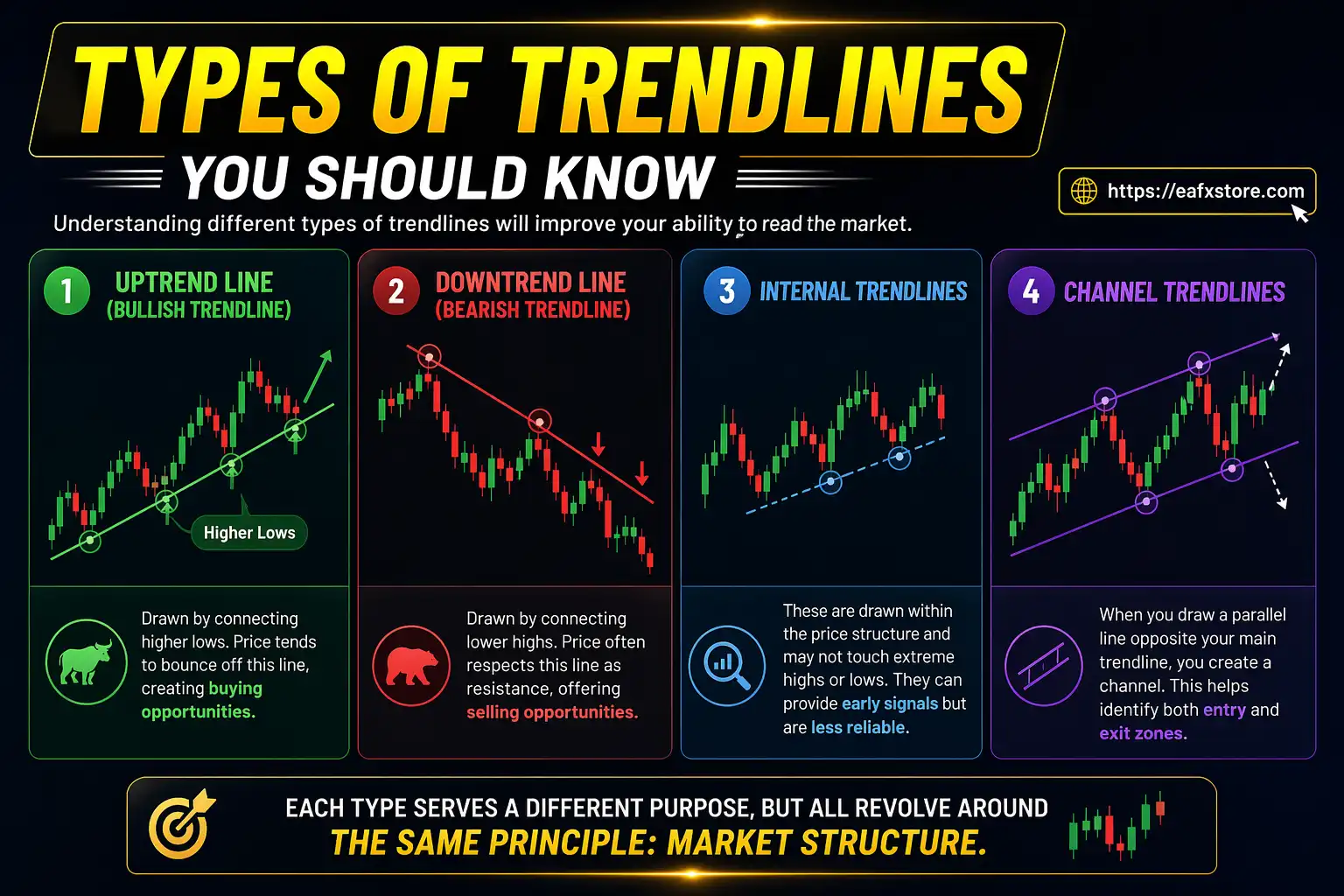
Understanding different types of trendlines will improve your ability to read the market.
Uptrend Line (Bullish Trendline)
Drawn by connecting higher lows. Price tends to bounce off this line, creating buying opportunities.
Downtrend Line (Bearish Trendline)
Drawn by connecting lower highs. Price often respects this line as resistance, offering selling opportunities.
Internal Trendlines
These are drawn within the price structure and may not touch extreme highs or lows. They can provide early signals but are less reliable.
Channel Trendlines
When you draw a parallel line opposite your main trendline, you create a channel. This helps identify both entry and exit zones.
Each type serves a different purpose, but all revolve around the same principle: market structure.
Best Strategies for Trading with Trendlines
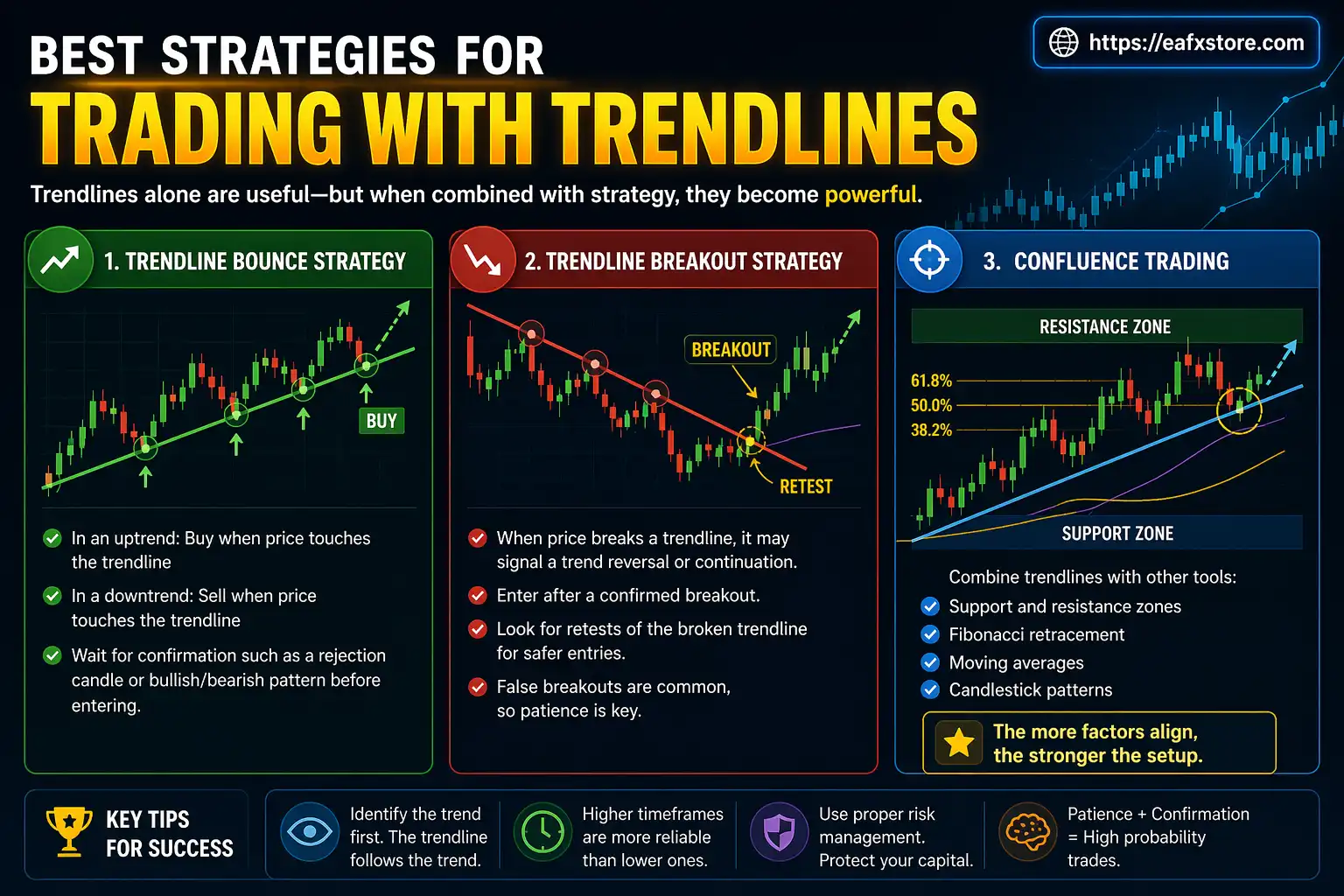
Trendlines alone are useful—but when combined with strategy, they become powerful.
Trendline Bounce Strategy
This is the most common approach.
- In an uptrend: Buy when price touches the trendline.
- In a downtrend: Sell when price touches the trendline.
Wait for confirmation such as a rejection candle or bullish/bearish pattern before entering.
Trendline Breakout Strategy
When price breaks a trendline, it may signal a trend reversal or continuation.
- Enter after a confirmed breakout.
- Look for retests of the broken trendline for safer entries.
False breakouts are common, so patience is key.
Confluence Trading
Combine trendlines with other tools:
- Support and resistance zones.
- Fibonacci retracement.
- Moving averages.
- Candlestick patterns.
The more factors align, the stronger the setup.
Common Mistakes Traders Make
Even though trendlines are simple, many traders misuse them.
- Overdrawing Trendlines: Too many lines create confusion. Focus only on the most relevant ones.
- Ignoring Market Context: A trendline in isolation is not enough. Always consider the broader trend and key levels.
- Entering Without Confirmation: Just because price touches a trendline doesn’t mean it will reverse. Wait for confirmation signals.
- Forcing Trades: Not every trendline touch is tradable. Sometimes the best move is to stay out.
Avoiding these mistakes can dramatically improve your results.
Practical Example of Trendline Entry
Let’s break down a typical trade scenario:
- The market is in an uptrend with clear higher lows.
- You draw a trendline connecting at least two swing lows.
- Price retraces back to the trendline.
- A bullish engulfing candle forms at the trendline.
- You enter a buy trade with a stop-loss below the trendline.
This setup offers:
- High probability (trend continuation).
- Low risk (tight stop-loss).
- Good reward potential (next resistance level).
This is the essence of smart trading—simple, structured, and logical.
Tips to Master Trendline Trading
Mastery comes from practice and discipline. Here are some tips to accelerate your progress:
- Use higher timeframes (H1, H4, Daily) for more reliable trendlines.
- Combine trendlines with price action—not indicators alone.
- Backtest your strategy to build confidence.
- Keep your charts clean and uncluttered.
- Be patient—wait for the market to come to your level.
Consistency is more important than complexity.
Conclusion
Trendlines are one of the simplest tools in Forex trading, yet they offer immense value when used correctly. They help you understand market structure, improve entry timing and manage risk effectively.
By learning how to draw and trade trendlines properly, you can eliminate much of the guesswork from your trading. Whether you’re a beginner or an experienced trader, mastering trendlines can significantly enhance your performance.