
What is MACD?
The Moving Average Convergence Divergence (MACD) is a trend-following momentum indicator that shows the relationship between two moving averages of a currency pair’s price.
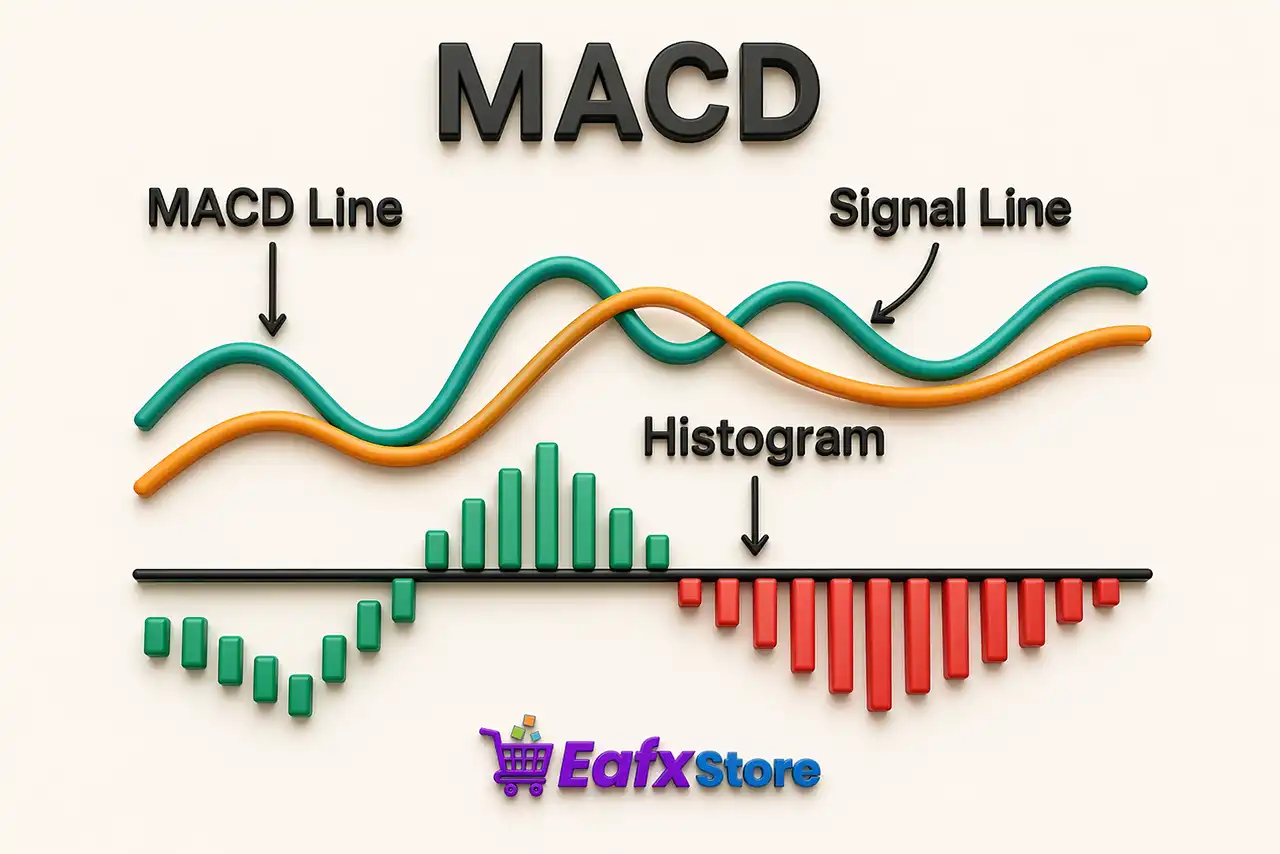
It consists of three main components:
- MACD Line: The difference between the 12-period EMA and the 26-period EMA
- Signal Line: A 9-period EMA of the MACD line
- Histogram: The difference between the MACD line and the Signal line
The MACD helps traders understand whether the market is bullish or bearish and how strong that momentum is.
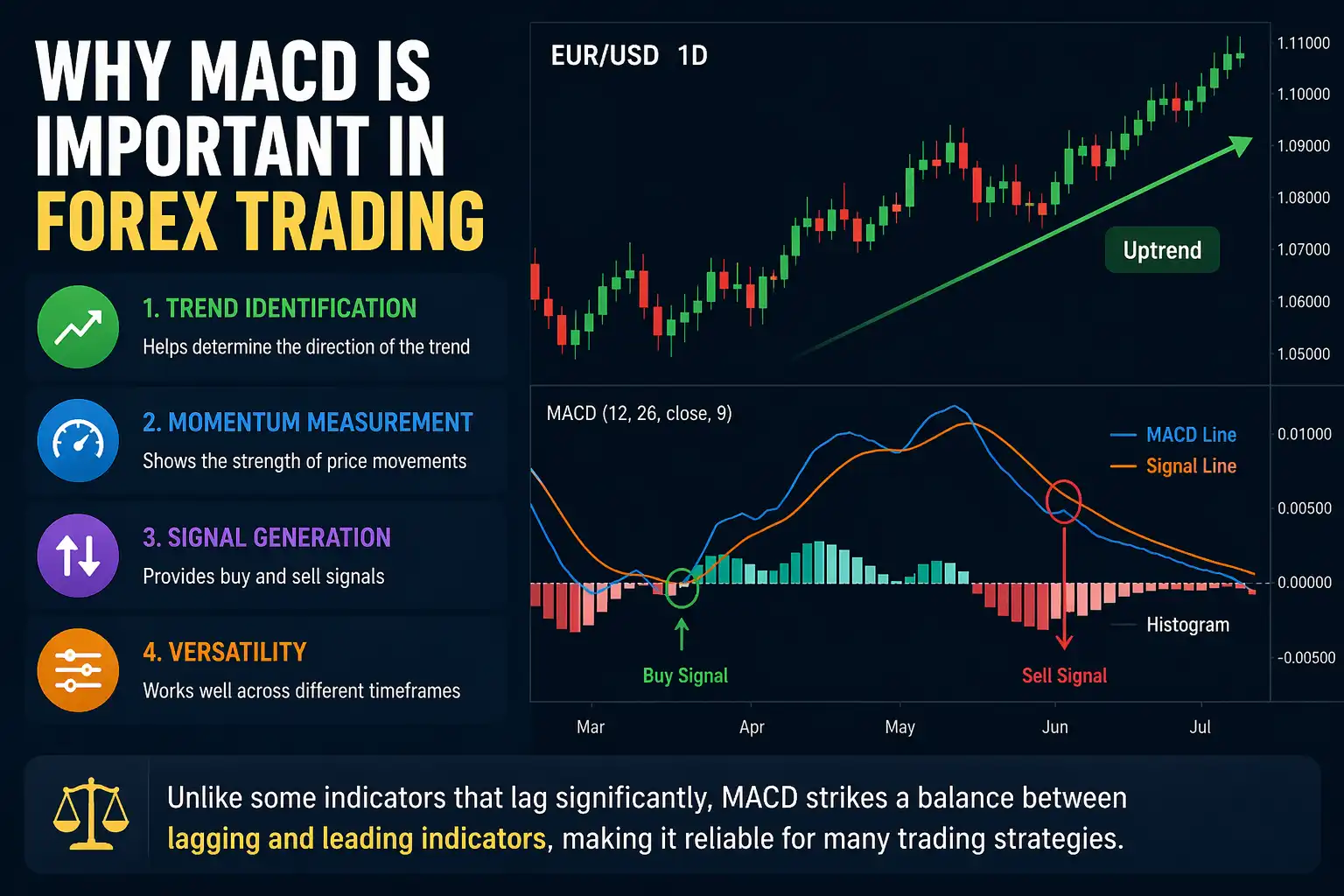
Why MACD is Important in Forex Trading
MACD is highly valued in Forex trading for several reasons:
- Trend Identification: Helps determine the direction of the trend
- Momentum Measurement: Shows the strength of price movements
- Signal Generation: Provides buy and sell signals
- Versatility: Works well across different timeframes
Unlike some indicators that lag significantly, MACD strikes a balance between lagging and leading indicators, making it reliable for many trading strategies.
How MACD Works
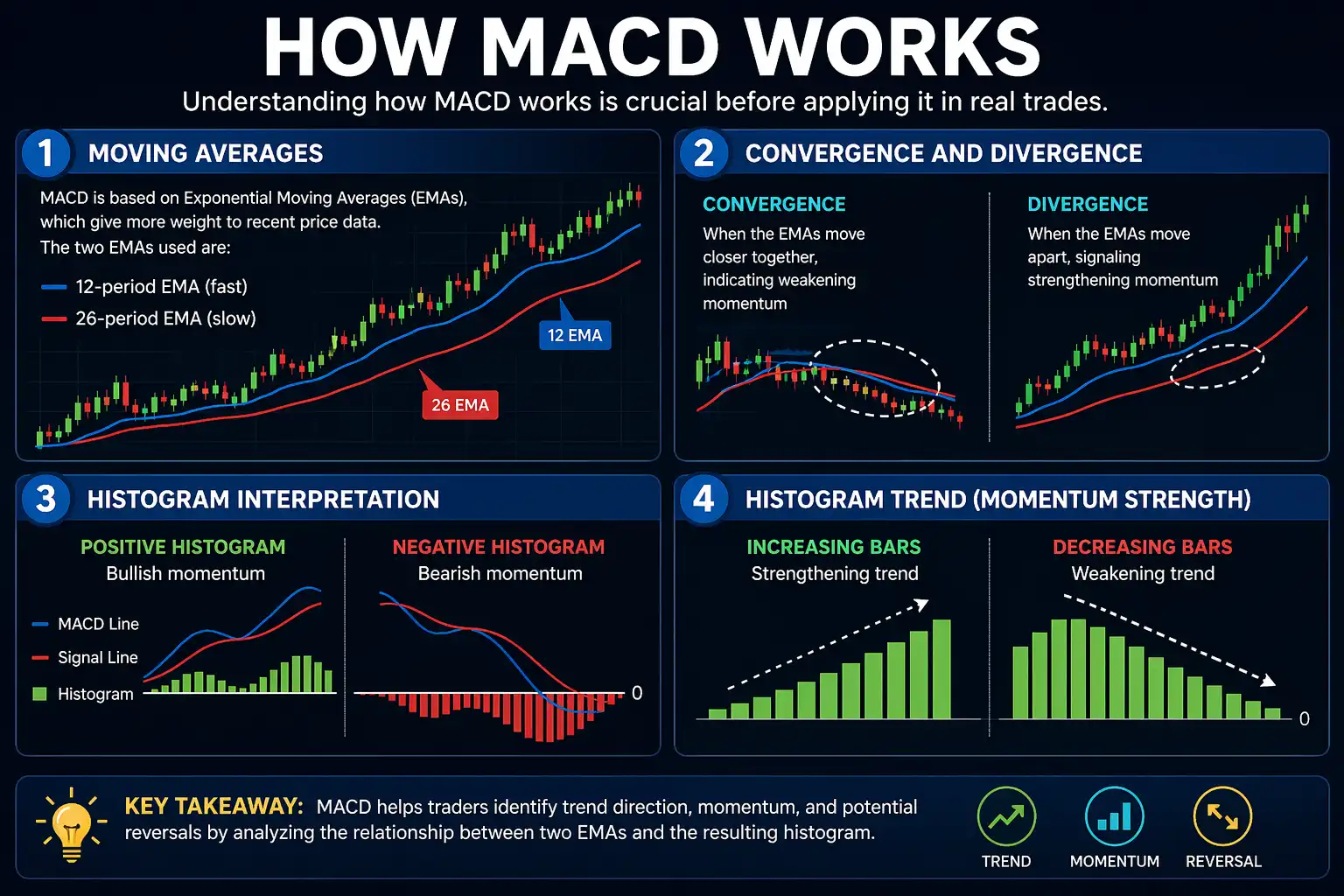
Understanding how MACD works is crucial before applying it in real trades.
1. Moving Averages
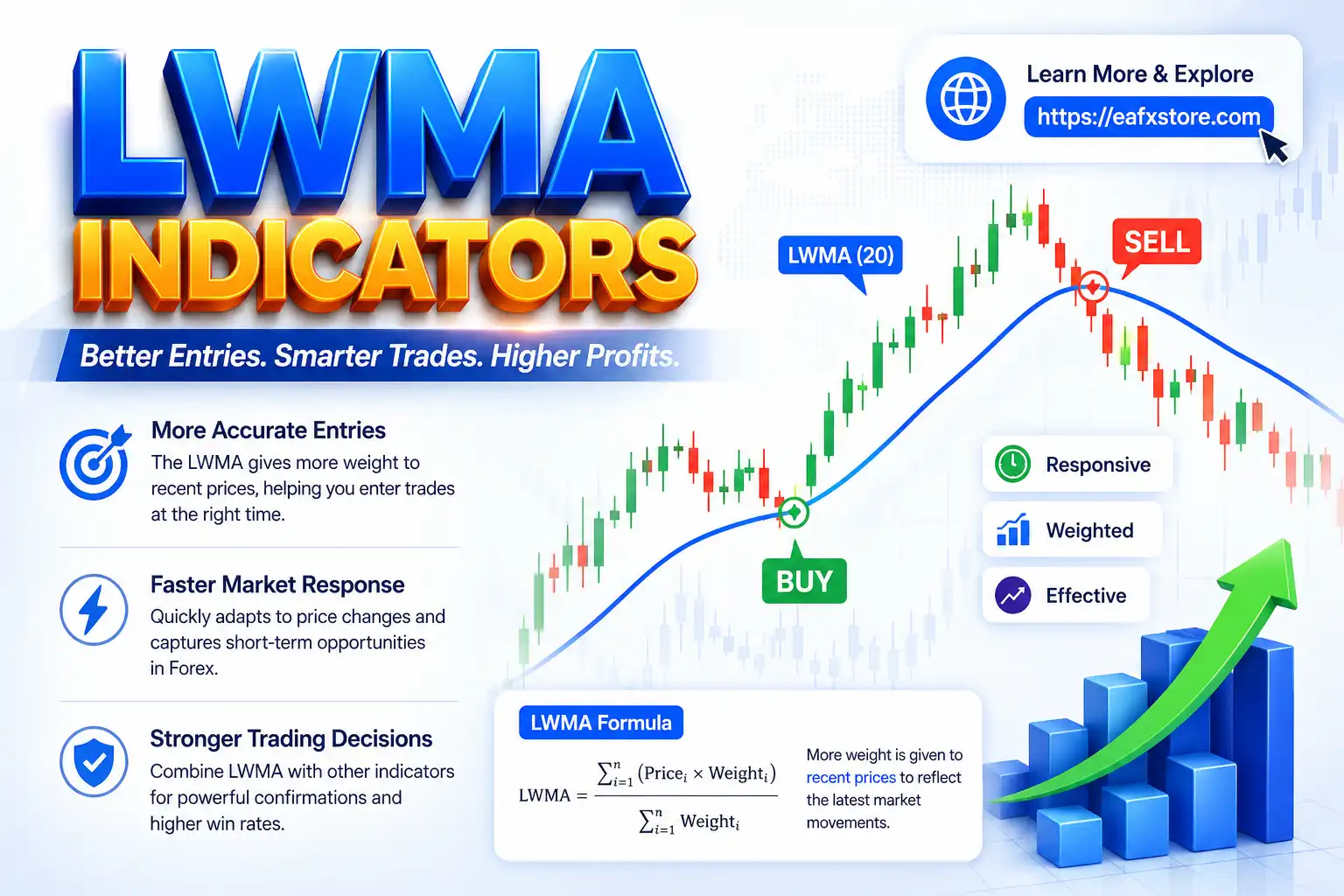
MACD is based on Exponential Moving Averages (EMAs), which give more weight to recent price data. The two EMAs used are:
- 12-period EMA (fast)
- 26-period EMA (slow)
2. Convergence and Divergence
- Convergence: When the EMAs move closer together, indicating weakening momentum
- Divergence: When the EMAs move apart, signaling strengthening momentum
3. Histogram Interpretation
- Positive histogram: Bullish momentum.
- Negative histogram: Bearish momentum.
- Increasing bars: Strengthening trend.
- Decreasing bars: Weakening trend.
Key MACD Trading Strategies
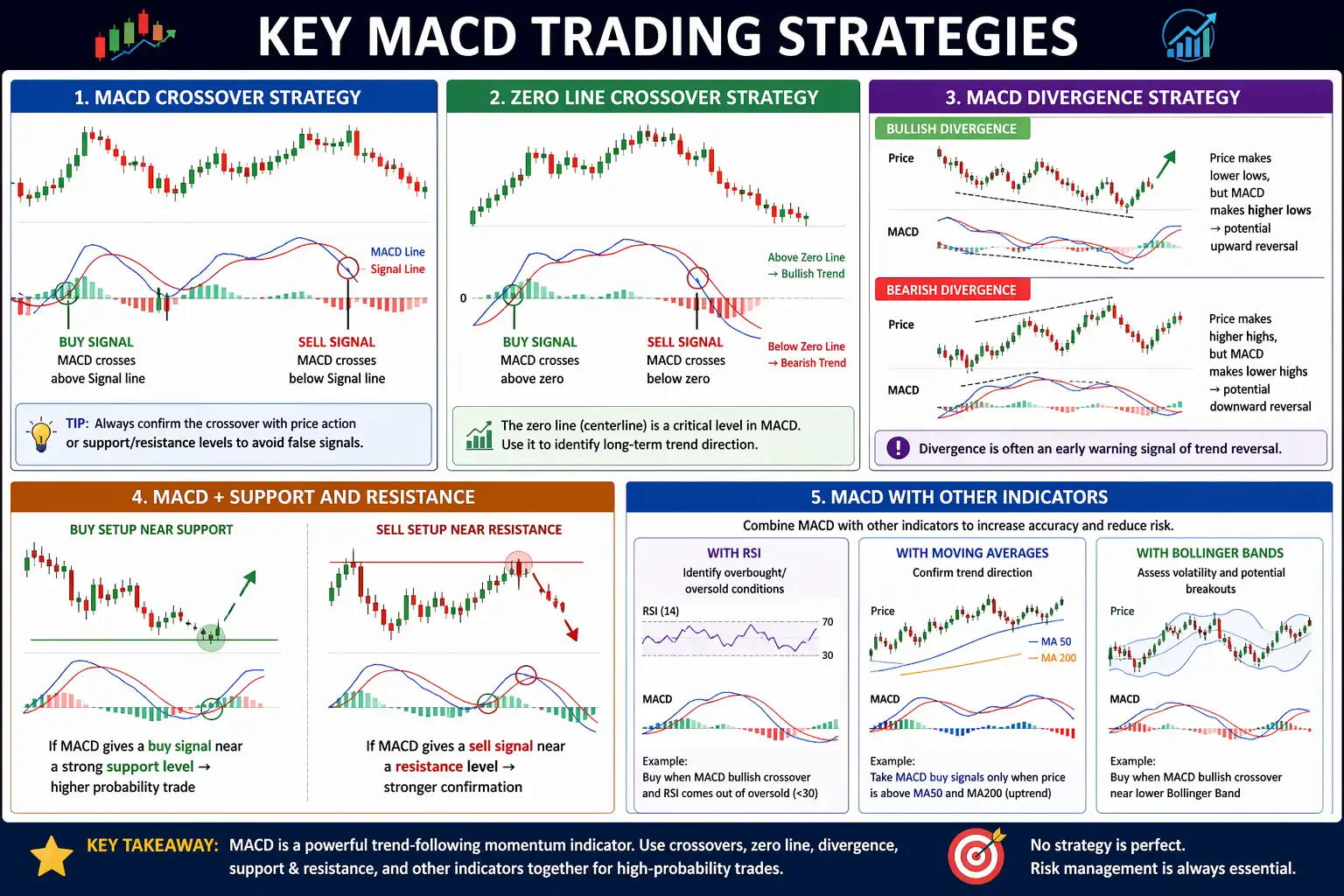
1. MACD Crossover Strategy
This is the most common MACD strategy.
Buy Signal:
- When the MACD line crosses above the Signal line
Sell Signal:
- When the MACD line crosses below the Signal line
Tip:
Always confirm the crossover with price action or support/resistance levels to avoid false signals.
2. Zero Line Crossover Strategy
The zero line (centerline) is a critical level in MACD.
- Above Zero Line → Bullish trend
- Below Zero Line → Bearish trend
Trading Approach:
- Buy when MACD crosses above zero
- Sell when MACD crosses below zero
This strategy is useful for identifying long-term trend direction.
3. MACD Divergence Strategy
Divergence occurs when price and MACD move in opposite directions.
Types of Divergence:
- Bullish Divergence
Price makes lower lows, but MACD makes higher lows → potential upward reversal - Bearish Divergence
Price makes higher highs, but MACD makes lower highs → potential downward reversal
Why it matters:
Divergence is often an early warning signal of trend reversal.
4. MACD + Support and Resistance
Using MACD alone can sometimes produce false signals. Combining it with support and resistance improves accuracy.
Example:
- If MACD gives a buy signal near a strong support level → higher probability trade
- If MACD gives a sell signal near resistance → stronger confirmation
5. MACD with Other Indicators
To enhance effectiveness, combine MACD with other tools such as:
- RSI (Relative Strength Index) for overbought/oversold conditions
- Moving Averages for trend confirmation
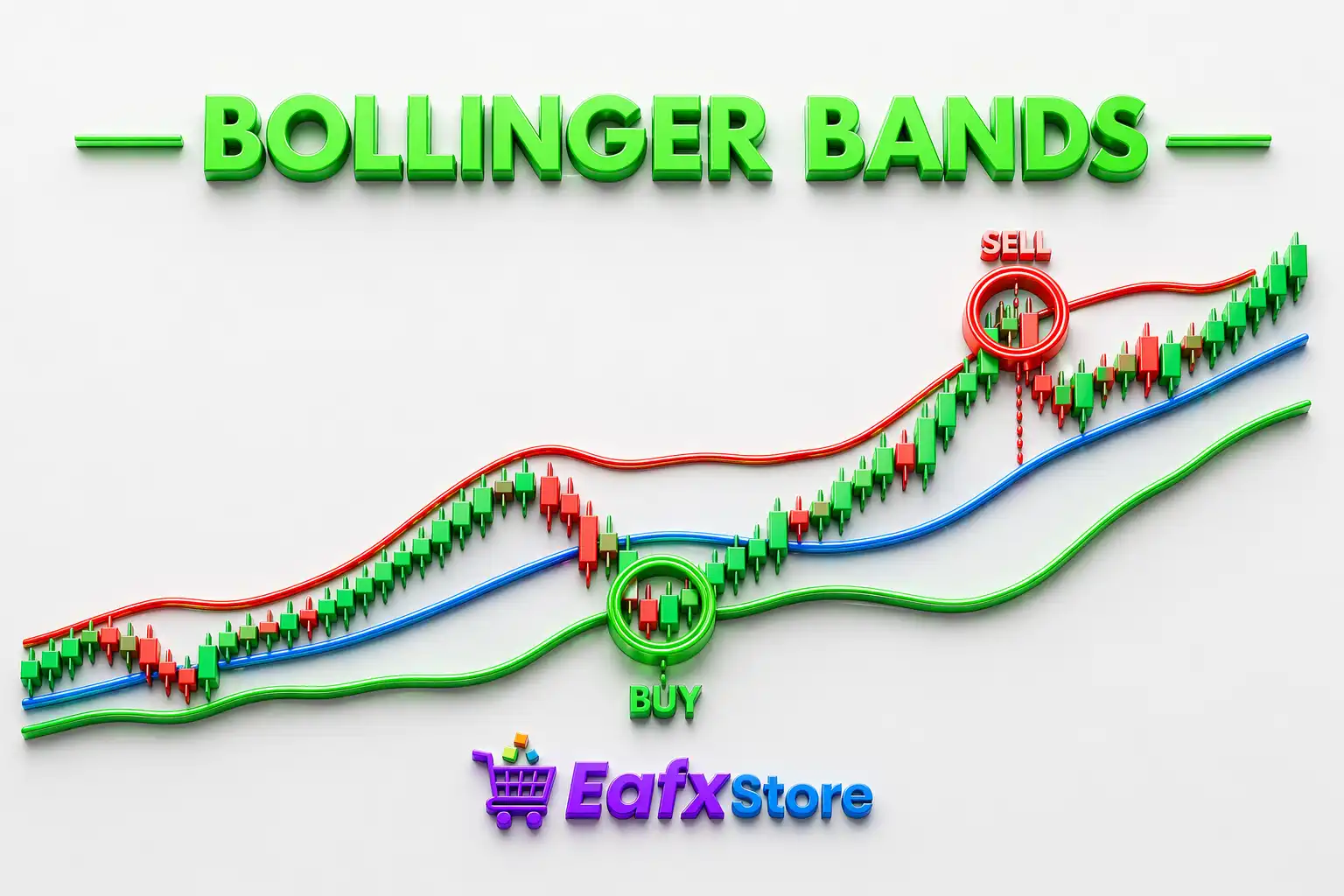
- Bollinger Bands for volatility analysis
A multi-indicator approach reduces risk and increases confidence.
Best Timeframes for MACD in Forex
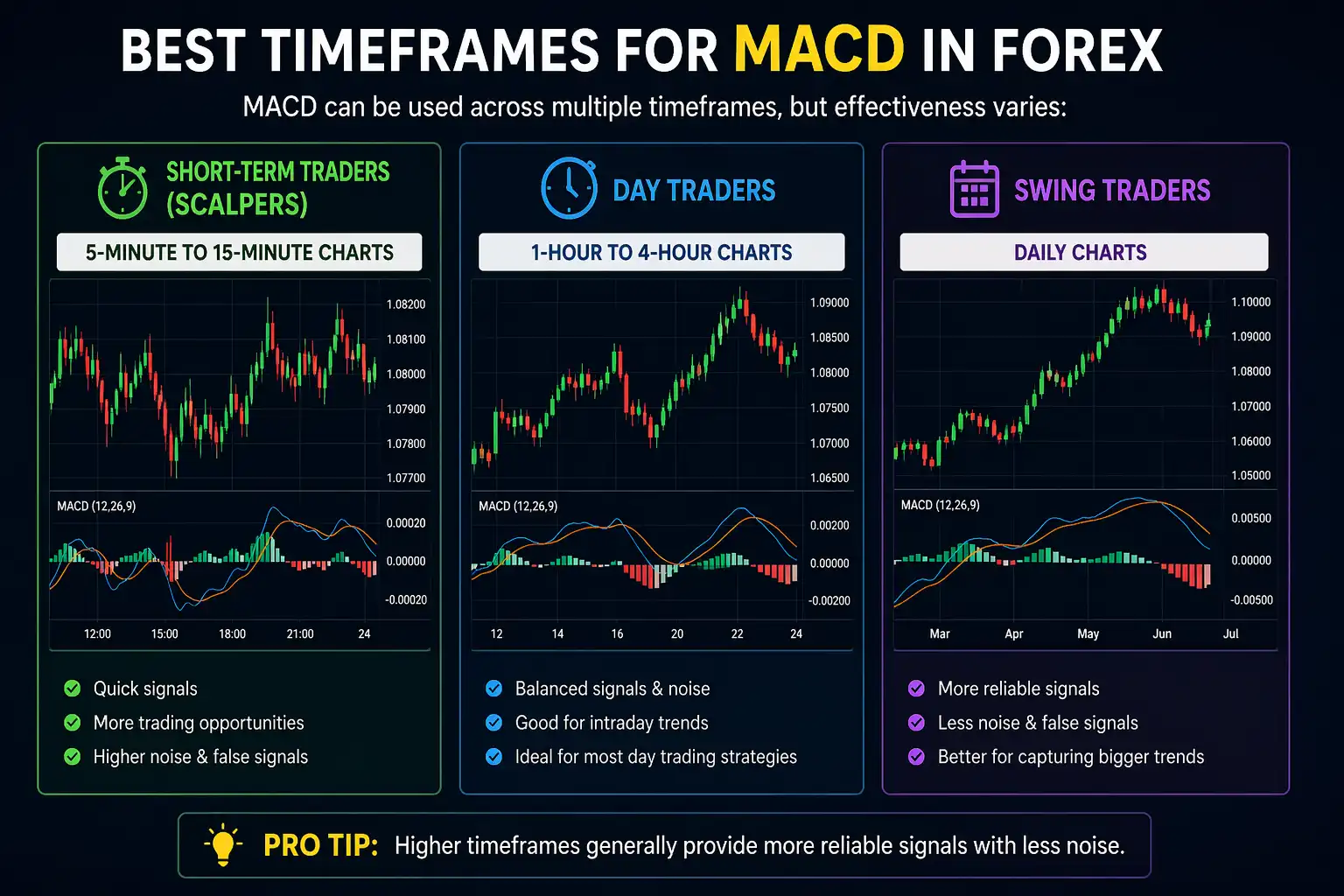
MACD can be used across multiple timeframes, but effectiveness varies:
- Short-term traders (scalpers): 5-minute to 15-minute charts
- Day traders: 1-hour to 4-hour charts
- Swing traders: Daily charts
Pro Tip: Higher timeframes generally provide more reliable signals with less noise.
Common Mistakes to Avoid
Even though MACD is powerful, many traders misuse it. Here are common pitfalls:
1. Relying Solely on MACD
MACD should not be used in isolation. Always combine it with other analysis tools.
2. Ignoring Market Conditions
MACD works best in trending markets. In sideways markets, it may generate false signals.
3. Entering Late
Since MACD is a lagging indicator, signals may come after a move has started. Use additional confirmation to improve timing.
4. Overtrading
Too many signals can lead to overtrading. Focus on high-quality setups only.
Practical Example of MACD in Forex
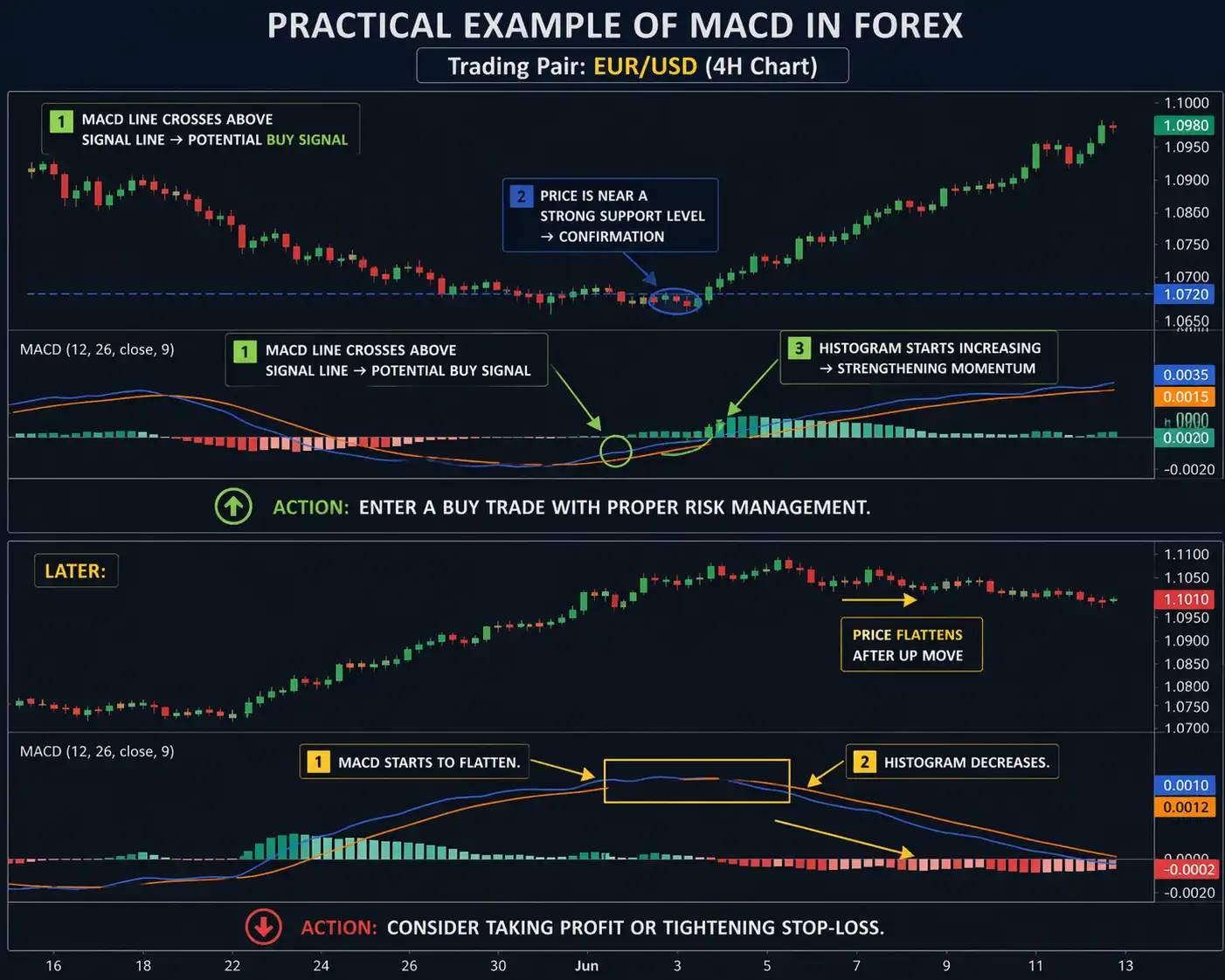
Imagine you are trading the EUR/USD pair:
- MACD line crosses above the Signal line → potential buy signal
- Price is near a strong support level → confirmation
- Histogram starts increasing → strengthening momentum
Action: Enter a buy trade with proper risk management.
Later:
- MACD starts to flatten.
- Histogram decreases.
Action: Consider taking profit or tightening stop-loss.
Risk Management with MACD
No strategy is complete without risk management.
- Use Stop Loss (SL) orders to limit losses
- Maintain a risk-reward ratio (e.g., 1:2 or higher)
- Avoid risking more than 1–2% of your account per trade
MACD helps with entries and exits, but risk management protects your capital.
Advantages and Disadvantages of MACD
1. Advantages
- Easy to understand and use
- Works well in trending markets
- Provides clear signals
- Suitable for beginners and professionals
2. Disadvantages
- Lagging nature
- Less effective in sideways markets
- Can produce false signals without confirmation
Final Thoughts
The MACD indicator is a powerful tool that can significantly enhance your Forex trading strategy when used correctly. By understanding its components, interpreting its signals, and combining it with other technical tools, you can improve your ability to identify profitable trading opportunities.
However, no indicator guarantees success. The key to effective trading lies in combining technical analysis, proper risk management, and disciplined execution.
If you’re serious about Forex trading, mastering MACD is a step in the right direction.
FAQs
1. Is MACD good for beginners?
Yes, MACD is beginner-friendly and widely used due to its simplicity and effectiveness.
2. What is the best MACD setting?
The default setting (12, 26, 9) works well for most traders, but you can adjust it based on your strategy.
3. Can MACD be used alone?
It’s not recommended. Always combine MACD with other indicators or price action.
4. Does MACD work in all markets?
MACD works best in trending markets and may be less reliable in ranging conditions.