
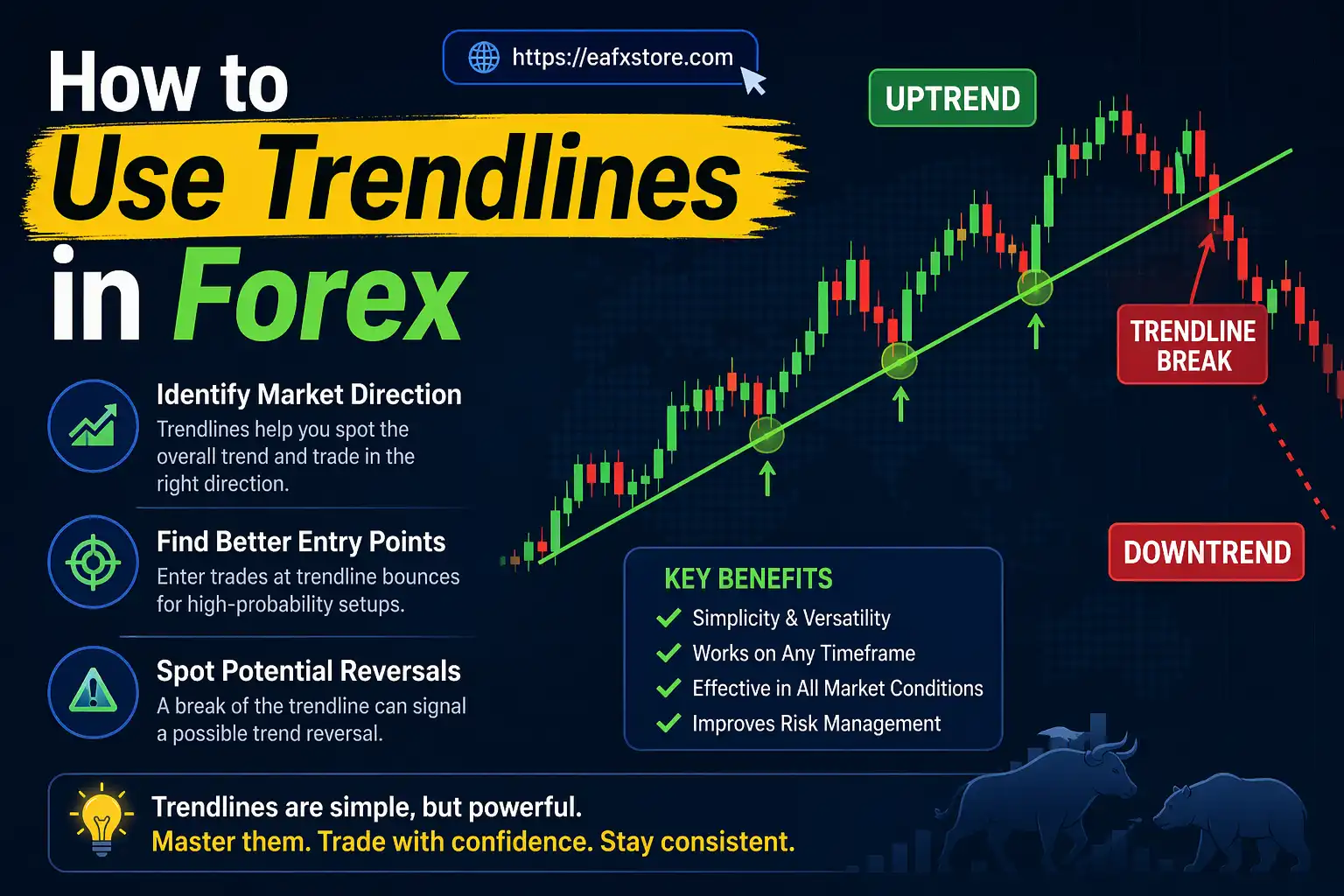
Trendlines are one of the most fundamental tools in Forex trading. Despite their simplicity, they can provide powerful insights into market direction, entry points and potential reversals. When used correctly, trendlines help traders make more informed decisions and improve overall trading performance.
In this guide, you’ll learn how to use trendlines effectively, avoid common mistakes and integrate them into your trading strategy.
What Are Trendlines in Forex Trading?
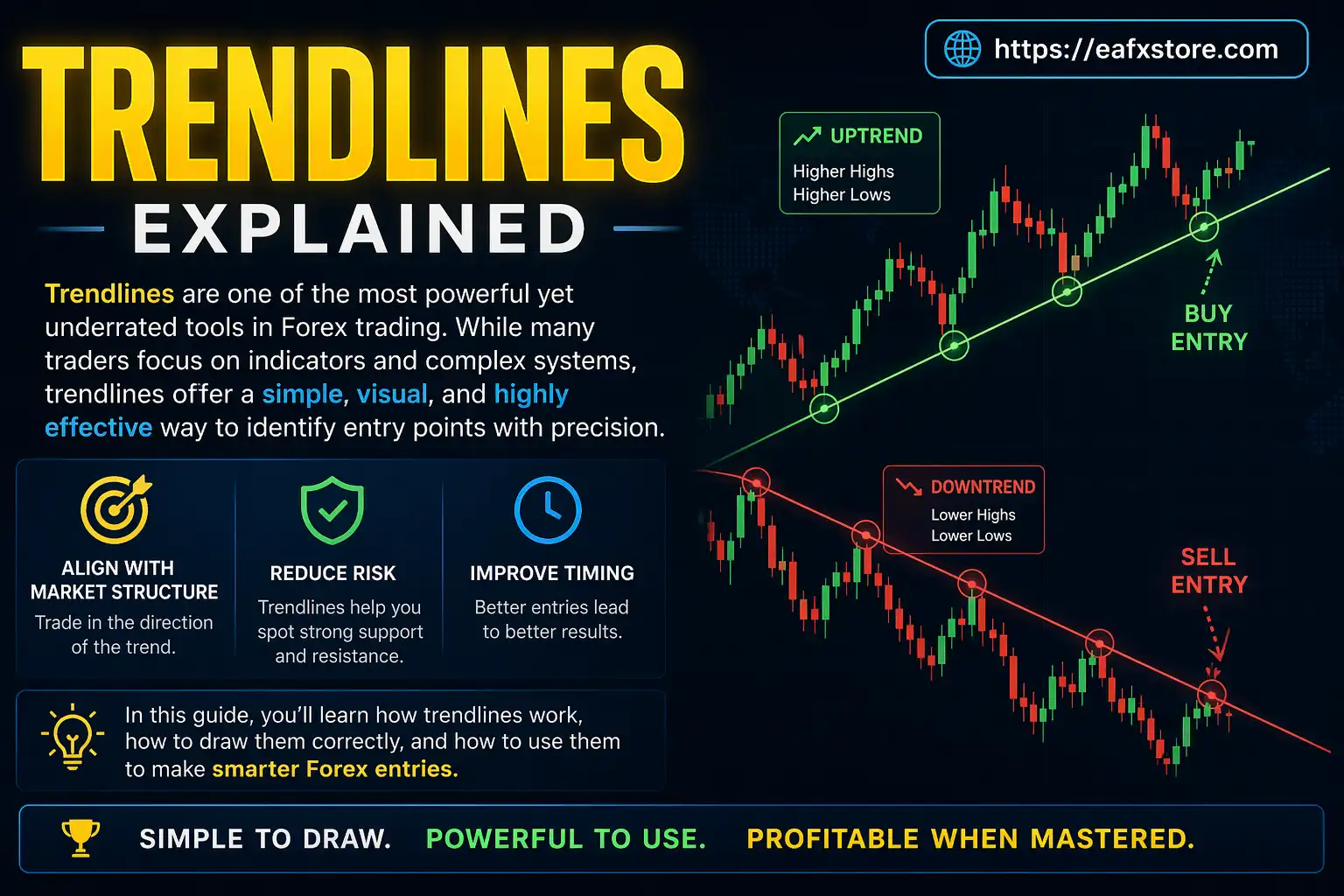
Trendlines are straight lines drawn on a price chart to connect key price points, typically highs or lows. They help traders visualize the direction of the market—whether it’s trending upward, downward or moving sideways.
An uptrend line is drawn by connecting higher lows, while a downtrend line connects lower highs. These lines act as dynamic support and resistance levels, guiding traders on where price might react.
In Forex trading, trendlines are widely used because they simplify complex price movements into clear, actionable signals.
Why Trendlines Matter in Forex
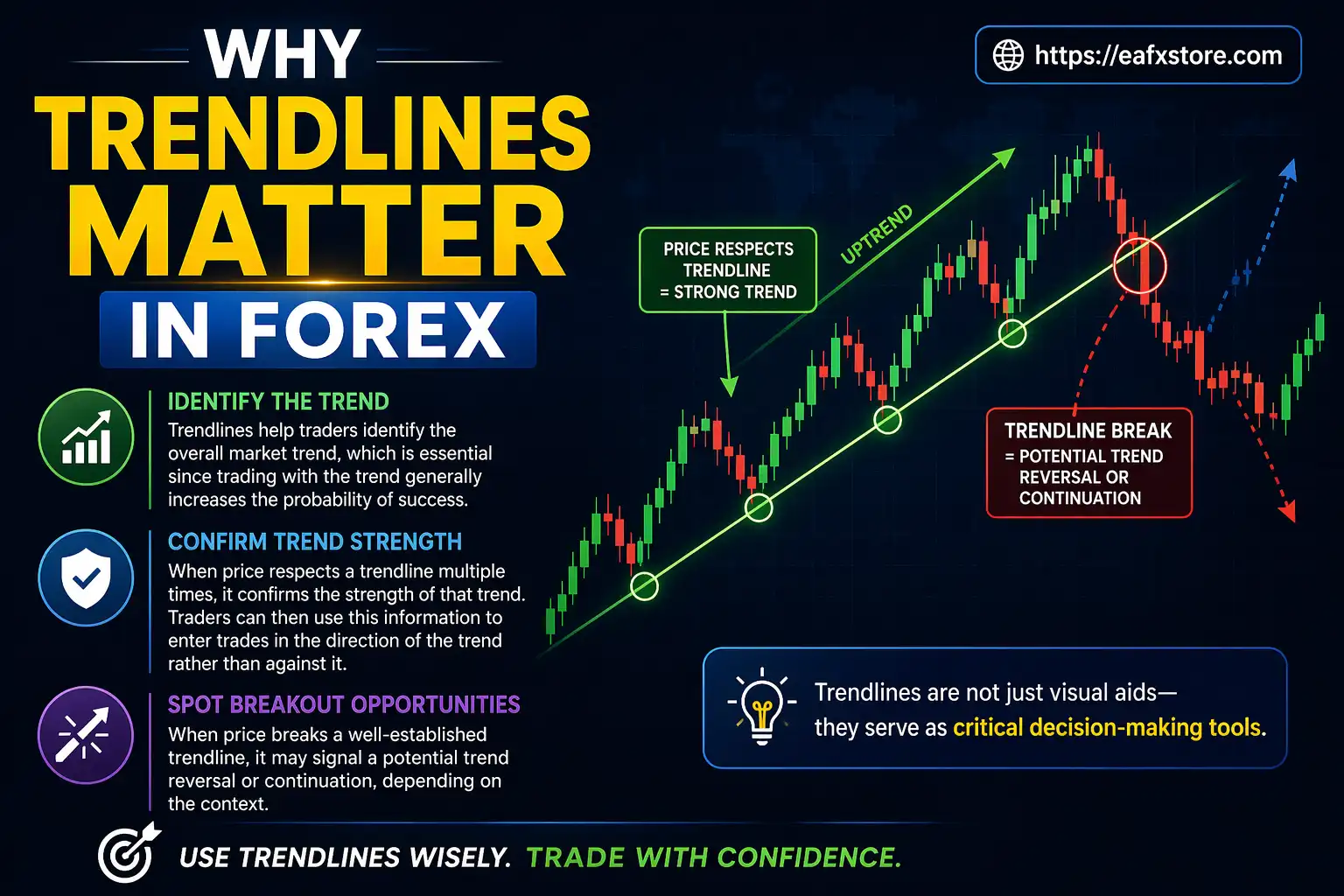
Trendlines are not just visual aids—they serve as critical decision-making tools. They help traders identify the overall market trend, which is essential since trading with the trend generally increases the probability of success.
When price respects a trendline multiple times, it confirms the strength of that trend. Traders can then use this information to enter trades in the direction of the trend rather than against it.
Additionally, trendlines help identify breakout opportunities. When price breaks a well-established trendline, it may signal a potential trend reversal or continuation, depending on the context.
How to Draw Trendlines Correctly
Drawing accurate trendlines is crucial. A poorly drawn trendline can lead to incorrect signals and bad trading decisions.
To draw a valid trendline:
- Use at least two points, but ideally three for confirmation.
- In an uptrend, connect higher lows.
- In a downtrend, connect lower highs.
- Avoid forcing the line to fit the price—let the market structure guide you.
The more times price touches a trendline without breaking it, the stronger and more reliable that trendline becomes.
It’s also important to use appropriate timeframes. Higher timeframes (like H4 or Daily) typically produce more reliable trendlines than lower ones.
Types of Trendlines Traders Should Know
Understanding different types of trendlines can improve your analysis and help you adapt to various market conditions.
| Trendline Type | Description | Usage Purpose |
|---|---|---|
| Uptrend Line | Connects higher lows | Identify buying opportunities |
| Downtrend Line | Connects lower highs | Identify selling opportunities |
| Internal Trendline | Drawn within price structure | Refines entry points |
| External Trendline | Covers extreme highs/lows | Identifies major trend boundaries |
| Channel Lines | Parallel lines forming price channels | Helps predict price range movement |
Each type offers a different perspective, allowing traders to analyze the market more effectively.
Using Trendlines for Entry and Exit Points
Trendlines are especially useful for determining when to enter or exit trades.
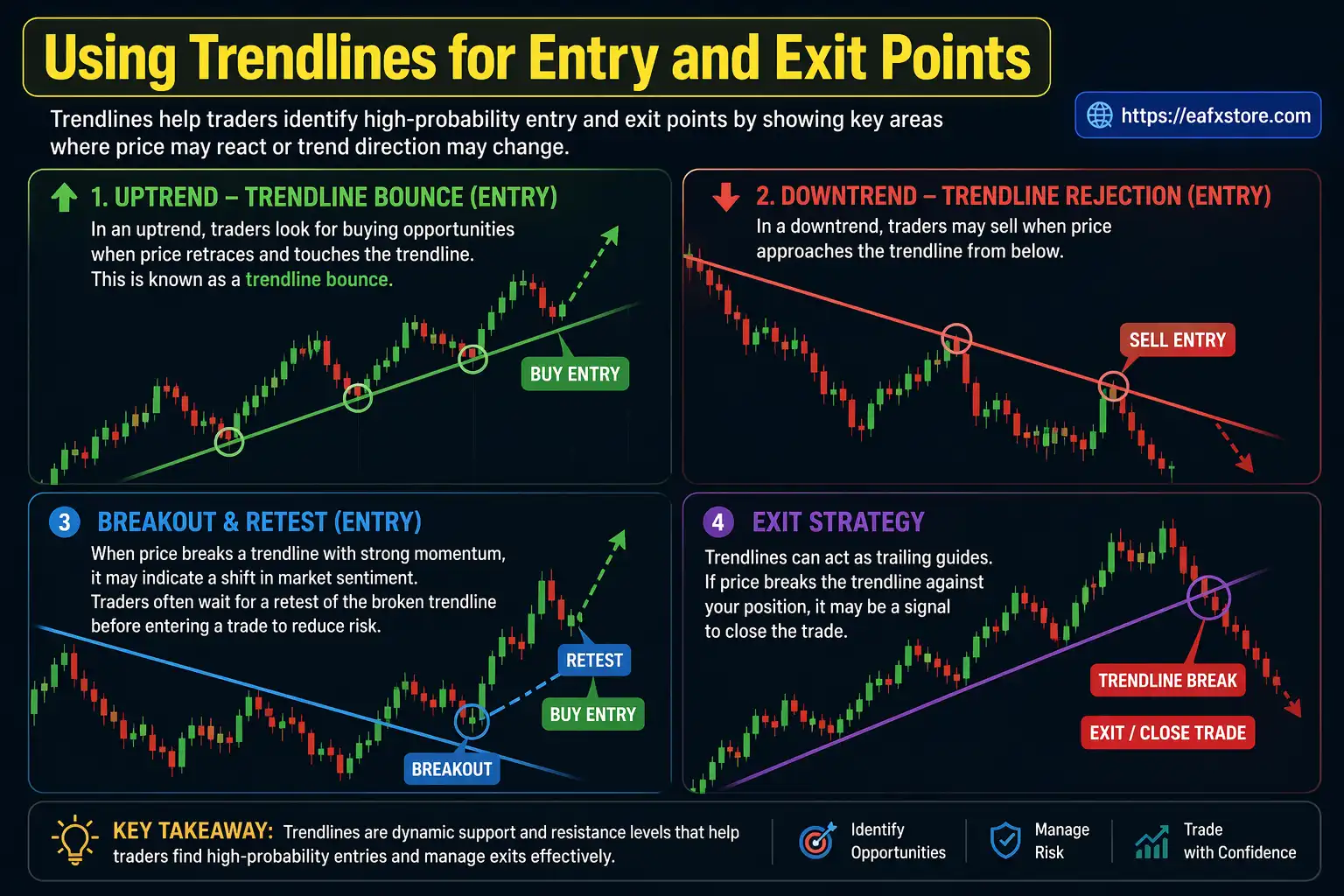
In an uptrend, traders often look for buying opportunities when price retraces and touches the trendline. This is known as a trendline bounce. Conversely, in a downtrend, traders may sell when price approaches the trendline from below.
Breakouts are another key use case. When price breaks a trendline with strong momentum, it may indicate a shift in market sentiment. Traders often wait for a retest of the broken trendline before entering a trade to reduce risk.
For exits, trendlines can act as trailing guides. If price breaks the trendline against your position, it may be a signal to close the trade.
Common Mistakes When Using Trendlines
Even though trendlines are simple, many traders misuse them. Here are some common mistakes to avoid:
- Forcing the trendline: Drawing lines that don’t align naturally with price action.
- Ignoring multiple timeframes: A trendline on a lower timeframe may conflict with a higher timeframe trend.
- Over-reliance: Using trendlines alone without confirmation from other indicators.
- Trading every touch: Not all trendline touches result in valid trading opportunities.
Avoiding these mistakes can significantly improve your accuracy and confidence in trading.
Combining Trendlines with Other Indicators
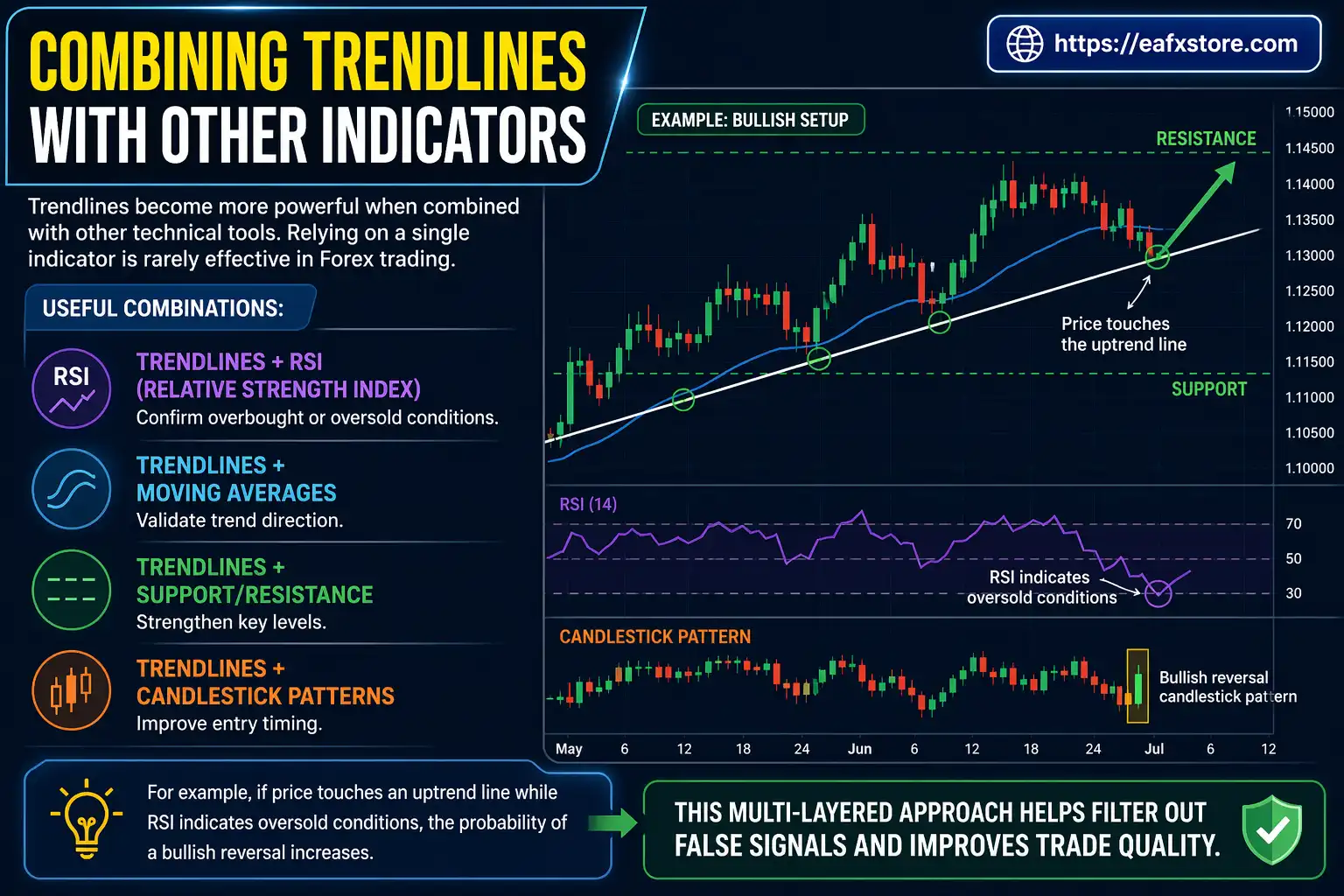
Trendlines become more powerful when combined with other technical tools. Relying on a single indicator is rarely effective in Forex trading.
Here are some useful combinations:
- Trendlines + RSI (Relative Strength Index): Confirm overbought or oversold conditions.
- Trendlines + Moving Averages: Validate trend direction.
- Trendlines + Support/Resistance: Strengthen key levels.
- Trendlines + Candlestick Patterns: Improve entry timing.
For example, if price touches an uptrend line while RSI indicates oversold conditions, the probability of a bullish reversal increases.
This multi-layered approach helps filter out false signals and improves trade quality.
Practical Tips for Using Trendlines Effectively
To maximize the effectiveness of trendlines, consider the following tips:
- Focus on clean charts—avoid clutter.
- Prioritize higher timeframe trendlines.
- Wait for confirmation signals before entering trades.
- Adjust trendlines as new price data forms.
- Combine with risk management strategies.
Consistency is key. The more you practice drawing and analyzing trendlines, the better your intuition will become.
When Trendlines Fail
No trading tool is perfect, and trendlines are no exception. Markets can become unpredictable, especially during major economic news events or periods of high volatility.
False breakouts are common, where price briefly breaks a trendline but quickly reverses. This can trap inexperienced traders.
To mitigate this risk, always wait for confirmation—such as a candle close beyond the trendline or additional indicator support—before acting.
Understanding that losses are part of trading will help you stay disciplined and avoid emotional decisions.
Conclusion
Trendlines are a powerful yet simple tool that every Forex trader should master. They provide clarity in identifying trends, spotting entry and exit points and understanding market structure.
However, their effectiveness depends on proper usage. By drawing them correctly, combining them with other indicators, and avoiding common mistakes, you can significantly enhance your trading strategy.
Ultimately, success in Forex trading comes from consistency, discipline, and continuous learning—and trendlines are a great place to start.