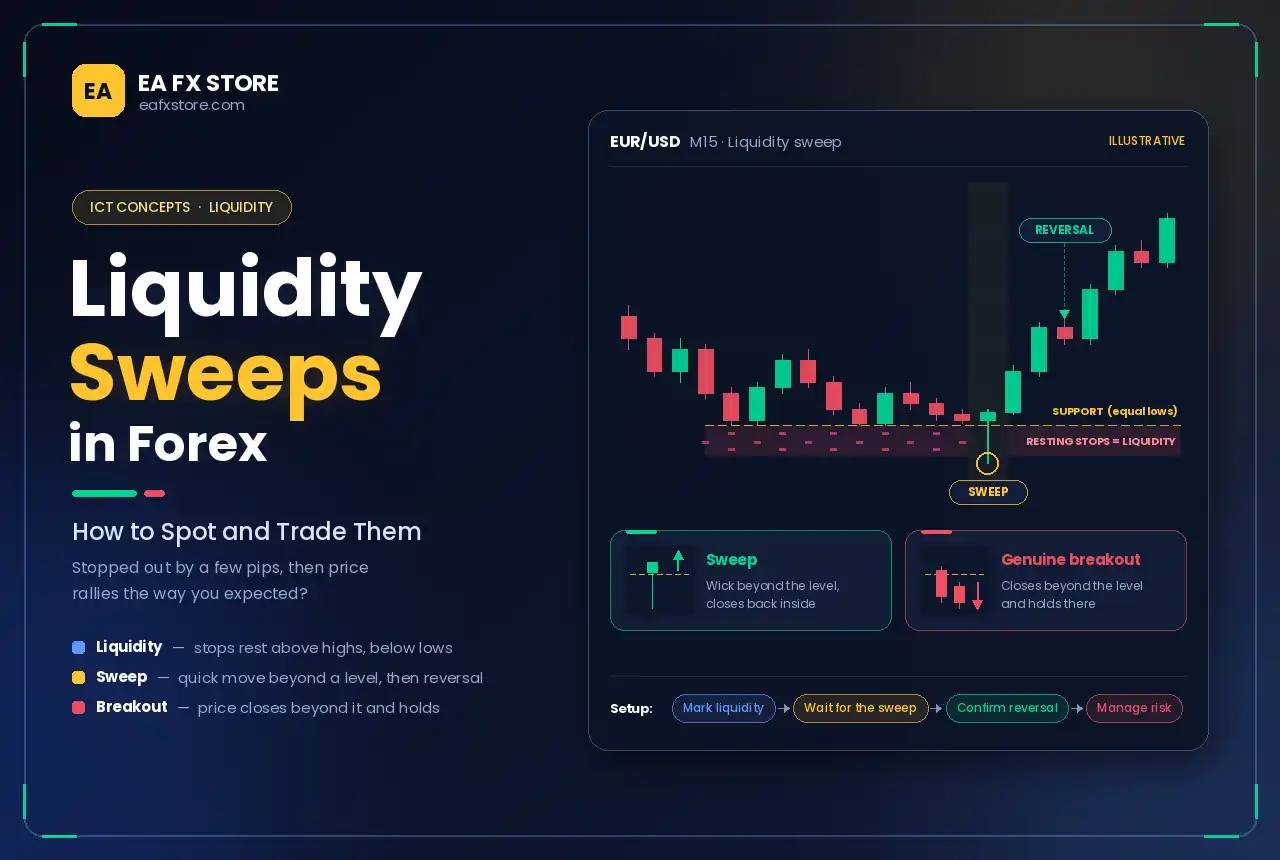


Scalping is one of the most fast-paced and potentially rewarding trading styles in the Forex market. It focuses on capturing small price movements within short timeframes, often executing multiple trades in a single session. While scalping can be highly profitable, it requires precision, discipline, and a solid strategy.
In this guide, we’ll explore 10 proven scalping strategies that can help you maximize Forex profits while managing risk effectively.
What is Forex Scalping?
Forex scalping is a short-term trading strategy where traders aim to profit from minor price fluctuations. Positions are typically held for seconds to minutes, and success depends on speed, accuracy, and consistency.
Scalpers often rely on technical indicators, tight spreads, and high liquidity to execute trades efficiently. This style is best suited for traders who can stay focused and react quickly to market changes.
1. Moving Average Crossover Strategy
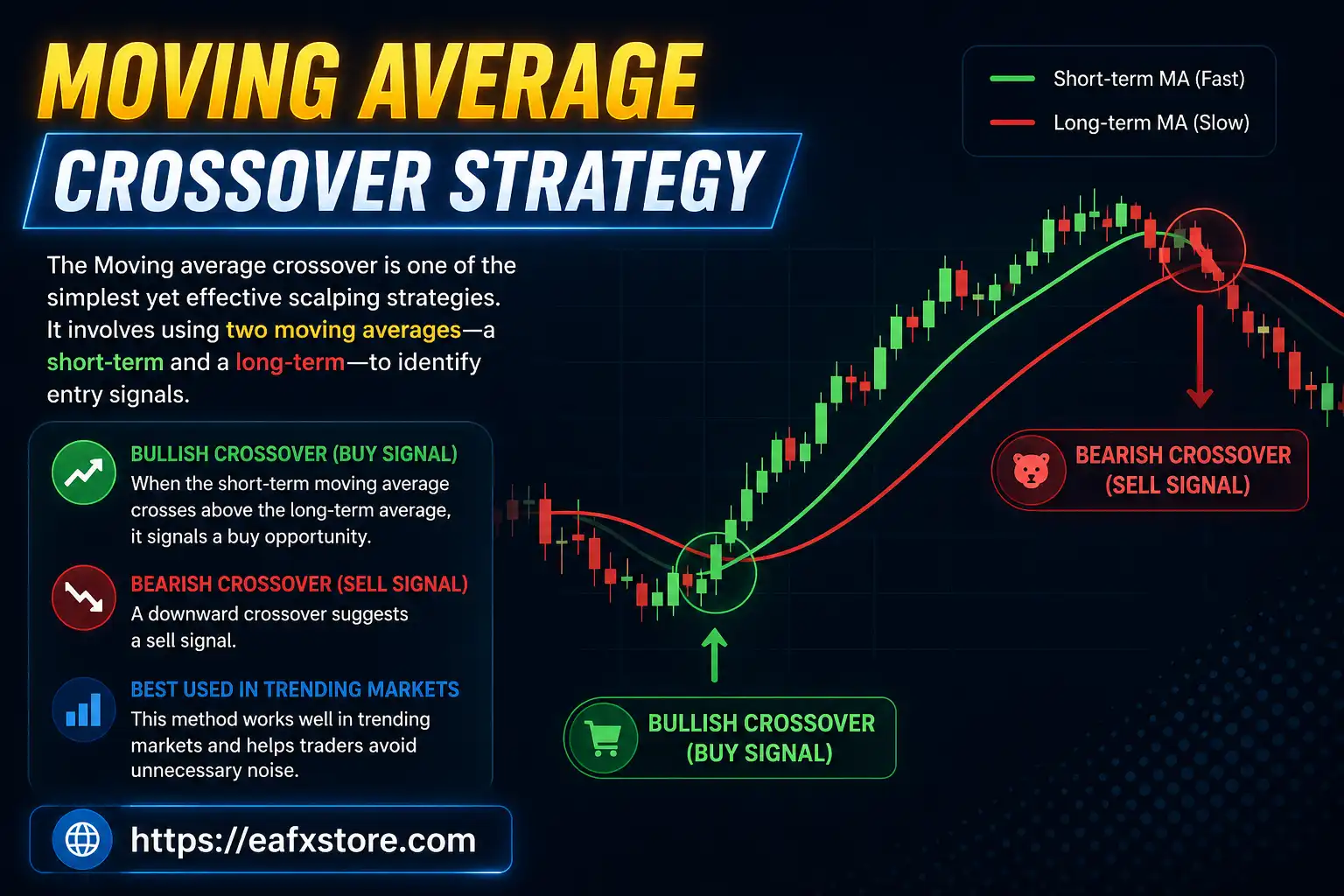
The Moving Average (MA) crossover is one of the simplest yet effective scalping strategies. It involves using two moving averages—a short-term and a long-term—to identify entry signals.
When the short-term moving average crosses above the long-term average, it signals a buy opportunity. Conversely, a downward crossover suggests a sell signal. This method works well in trending markets and helps traders avoid unnecessary noise.
2. RSI Scalping Strategy
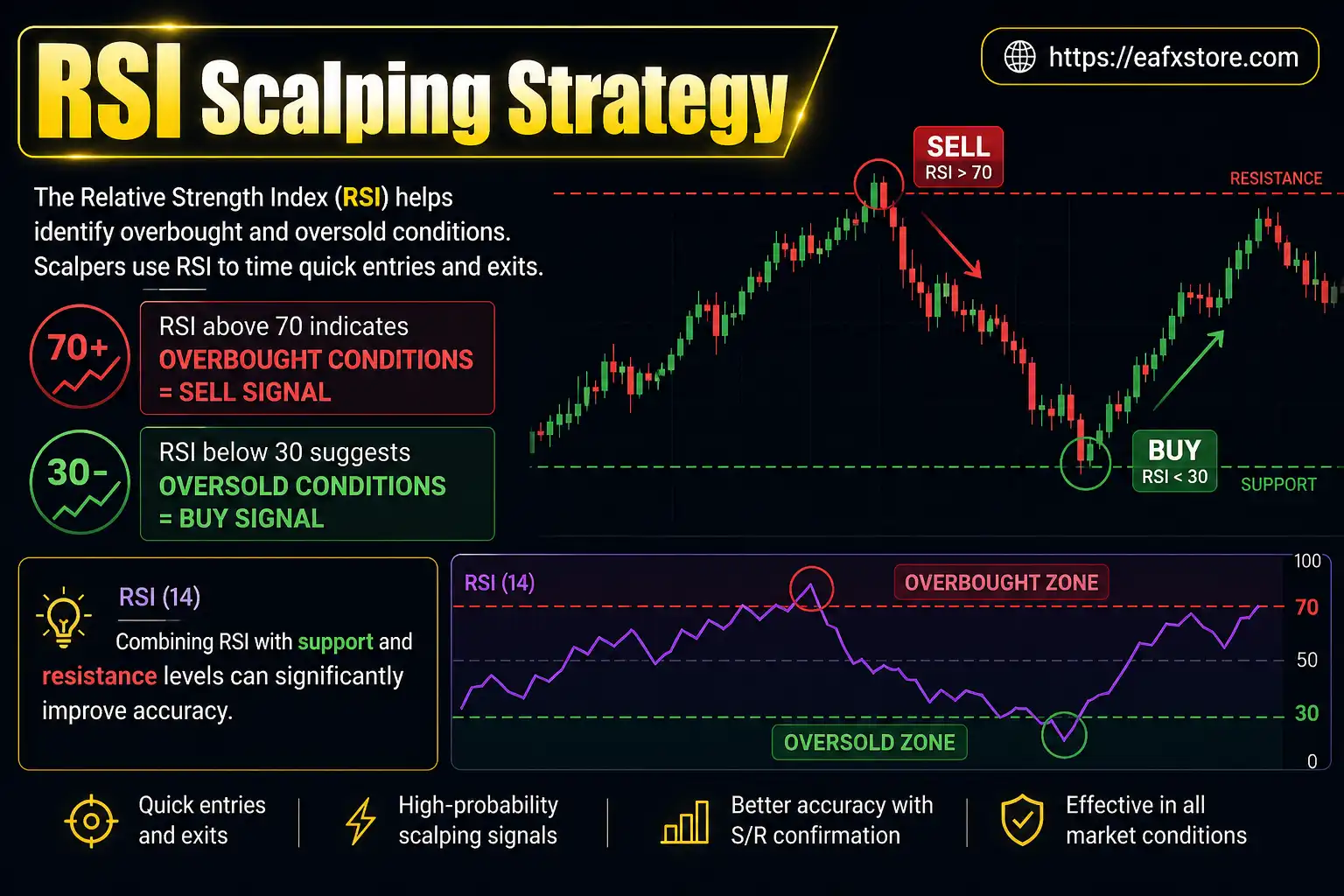
The Relative Strength Index (RSI) helps identify overbought and oversold conditions. Scalpers use RSI to time quick entries and exits.
Typically, an RSI above 70 indicates overbought conditions (sell signal), while below 30 suggests oversold conditions (buy signal). Combining RSI with support and resistance levels can significantly improve accuracy.
3. Bollinger Bands Breakout Scalping Strategy
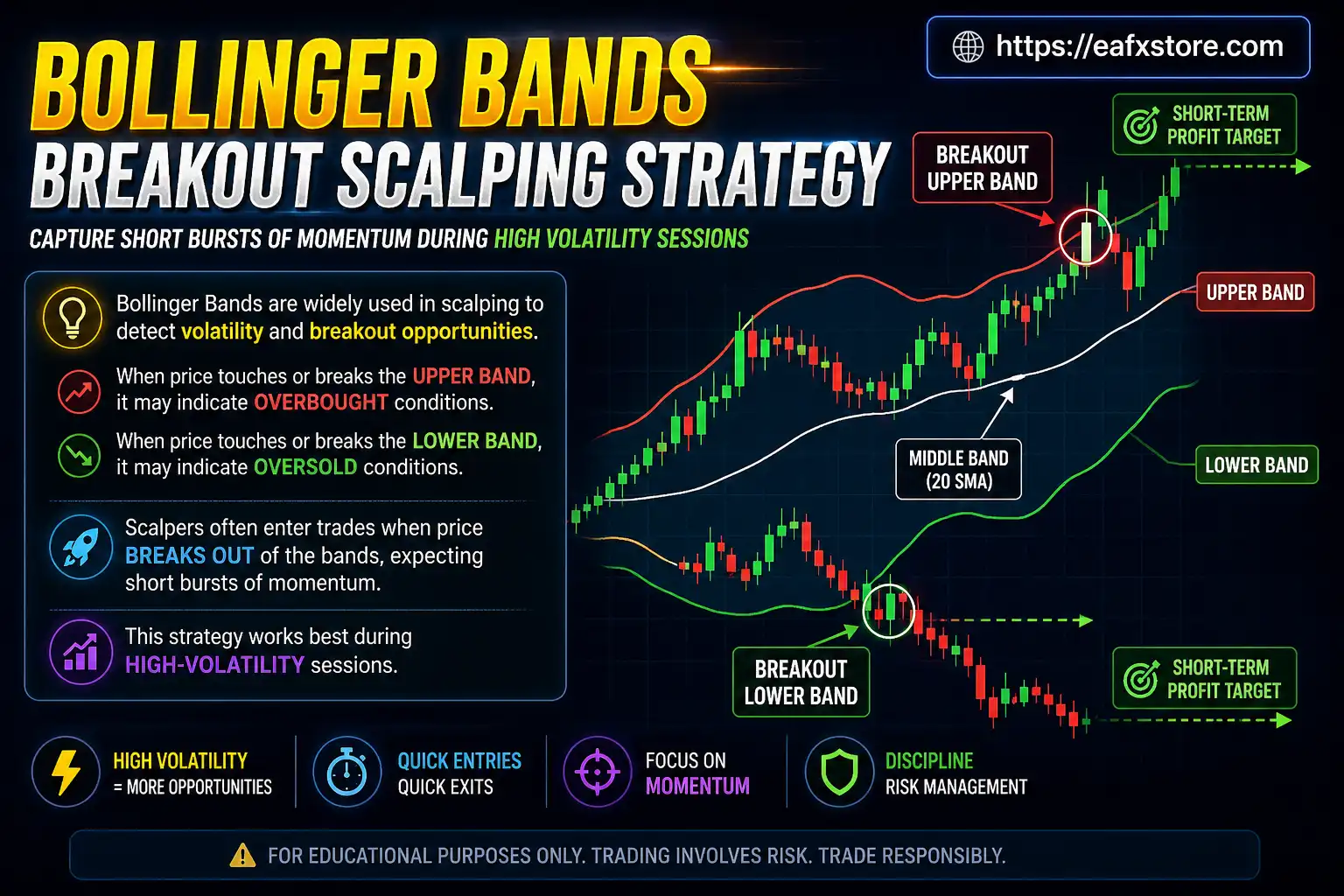
Bollinger Bands are widely used in scalping to detect volatility and breakout opportunities. When price touches or breaks the upper band, it may indicate overbought conditions, while touching the lower band suggests oversold conditions.
Scalpers often enter trades when price breaks out of the bands, expecting short bursts of momentum. This strategy works best during high-volatility sessions.
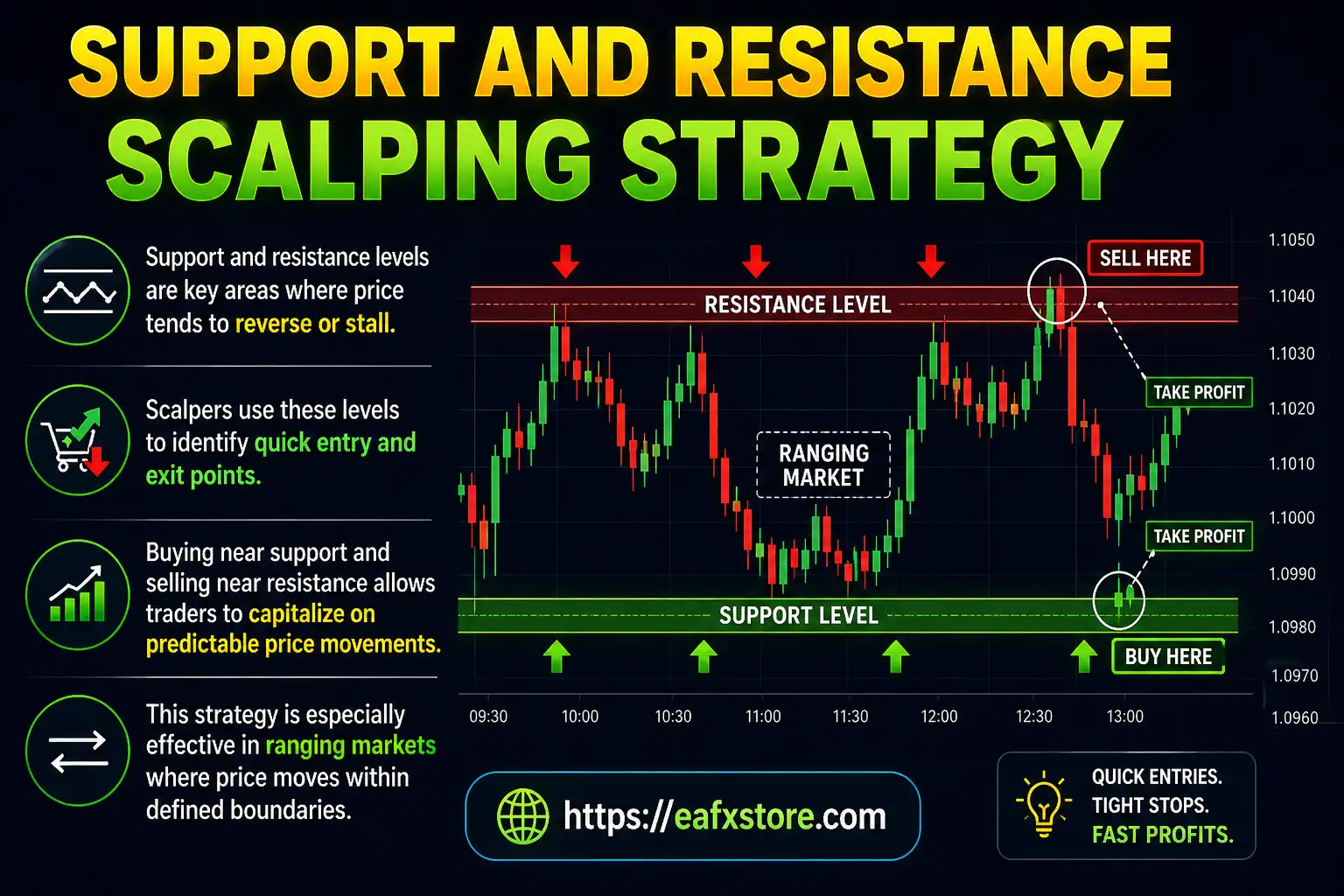
4. Support and Resistance Scalping Strategy
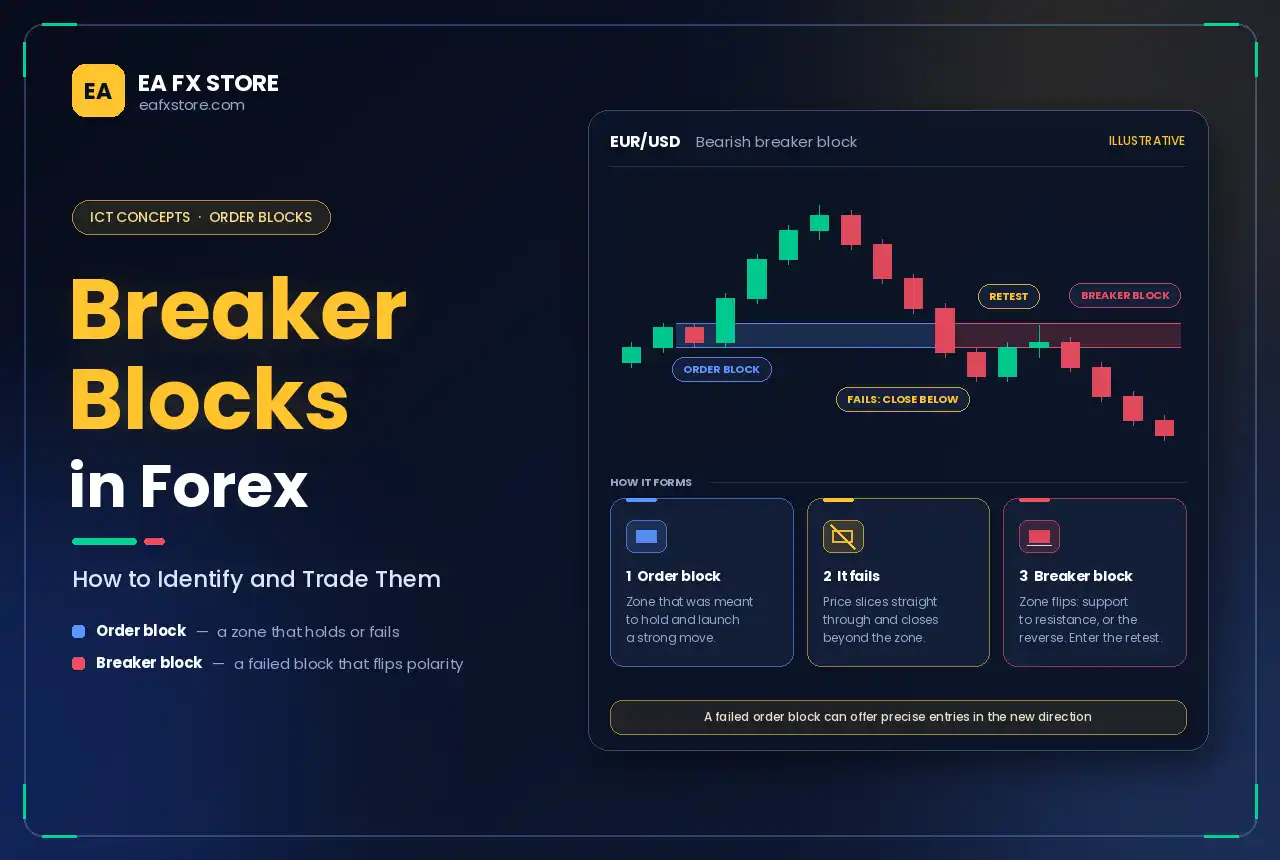
Support and resistance levels are key areas where price tends to reverse or stall. Scalpers use these levels to identify quick entry and exit points.
Buying near support and selling near resistance allows traders to capitalize on predictable price movements. This strategy is especially effective in ranging markets where price moves within defined boundaries.
5. Stochastic Oscillator Scalping Strategy
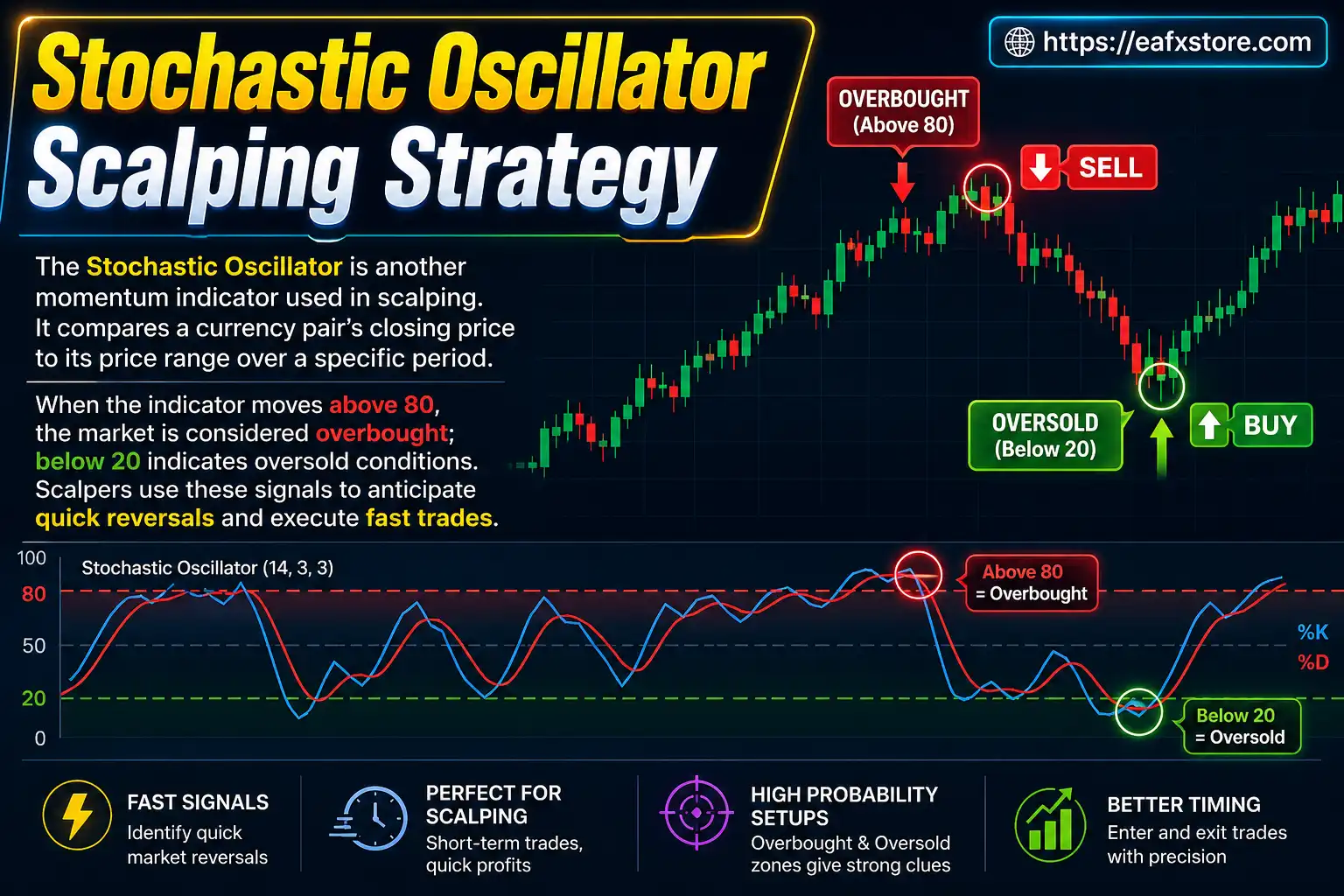
The Stochastic Oscillator is another momentum indicator used in scalping. It compares a currency pair’s closing price to its price range over a specific period.
When the indicator moves above 80, the market is considered overbought; below 20 indicates oversold conditions. Scalpers use these signals to anticipate quick reversals and execute fast trades.
6. Price Action Scalping Strategy
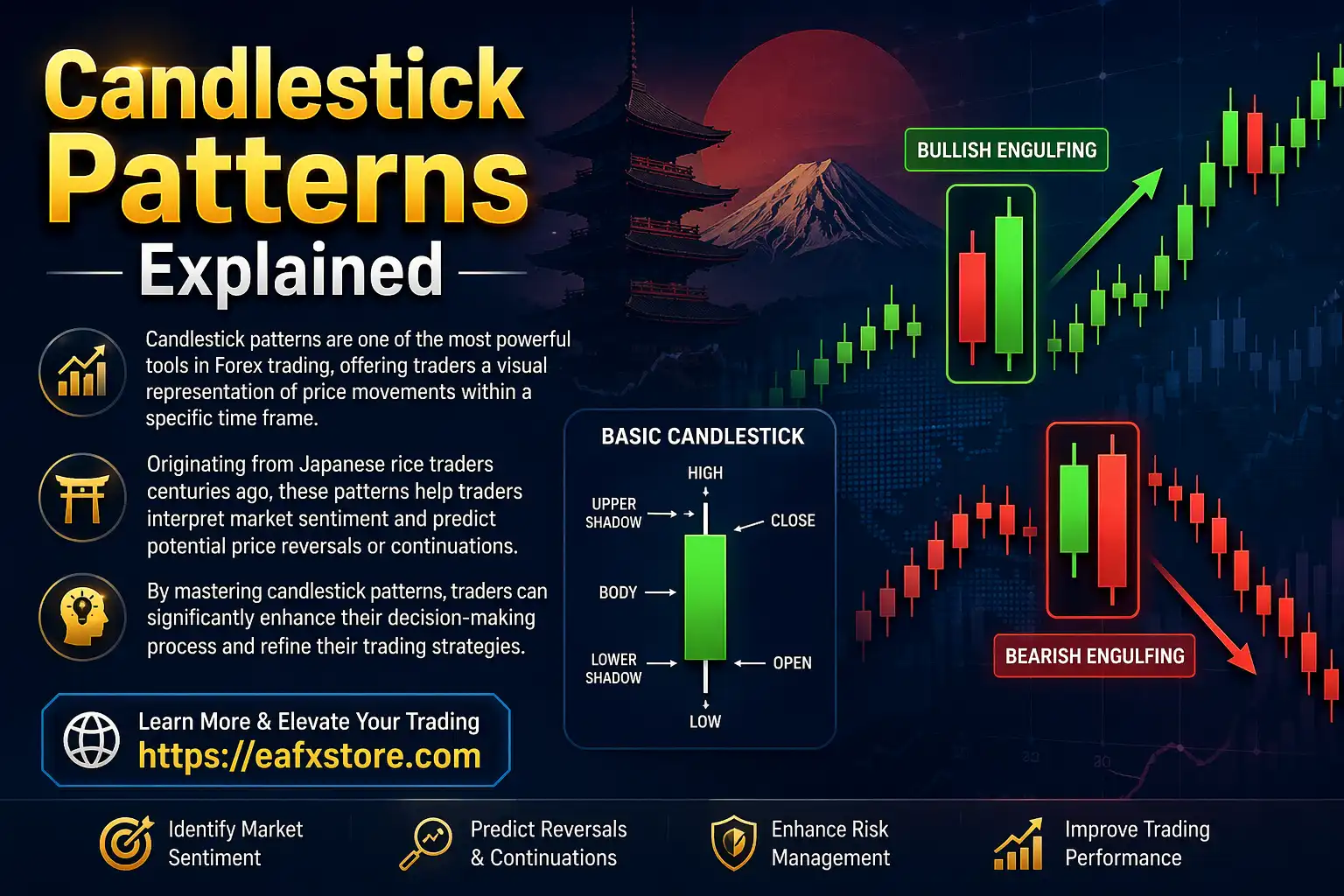
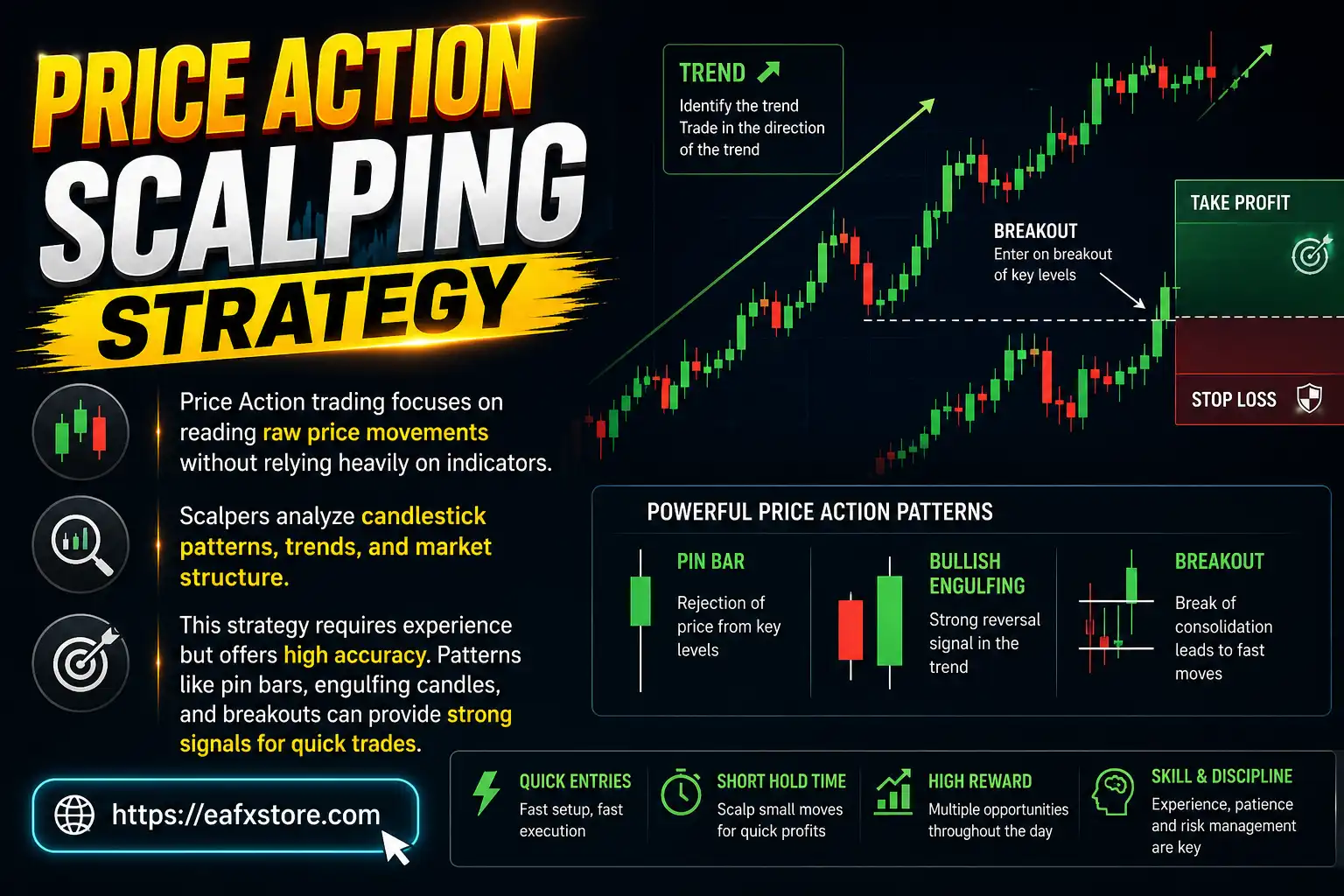
Price Action trading focuses on reading raw price movements without relying heavily on indicators. Scalpers analyze candlestick patterns, trends, and market structure.
This strategy requires experience but offers high accuracy. Patterns like pin bars, engulfing candles, and breakouts can provide strong signals for quick trades.
7. One-Minute Scalping Strategy
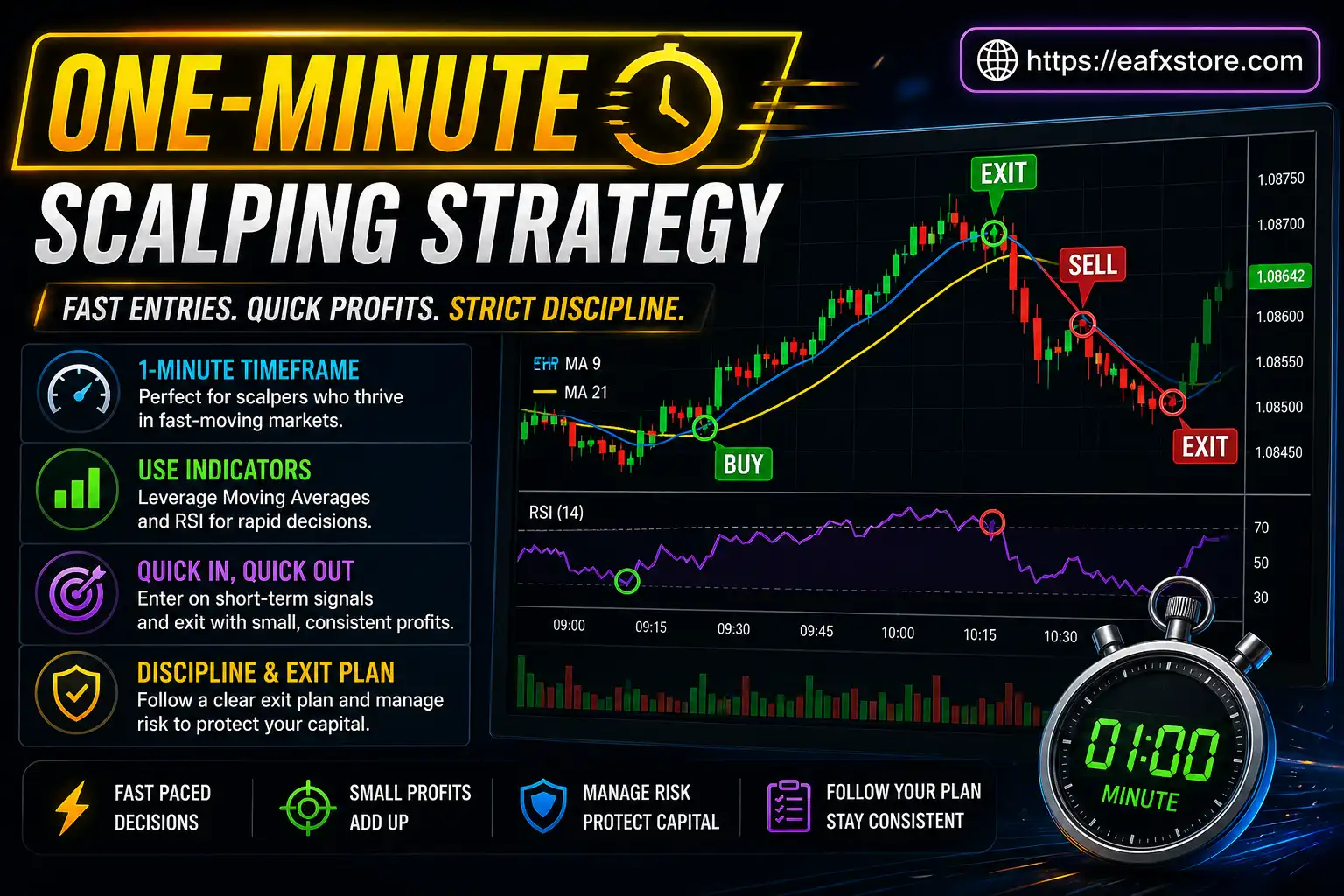
The one-minute timeframe is popular among scalpers due to its fast pace. Traders use indicators like moving averages and RSI to make rapid decisions.
This strategy involves entering trades based on short-term signals and exiting quickly with small profits. It requires strict discipline and a clear exit plan to avoid losses.
8. News-Based Scalping Strategy
Economic news releases can cause sudden price spikes in the Forex market. Scalpers take advantage of this volatility by entering trades immediately after major announcements.
While this strategy can be highly profitable, it also carries higher risk due to unpredictable price movements. Proper risk management and fast execution are essential.

9. Tick Chart Scalping Strategy
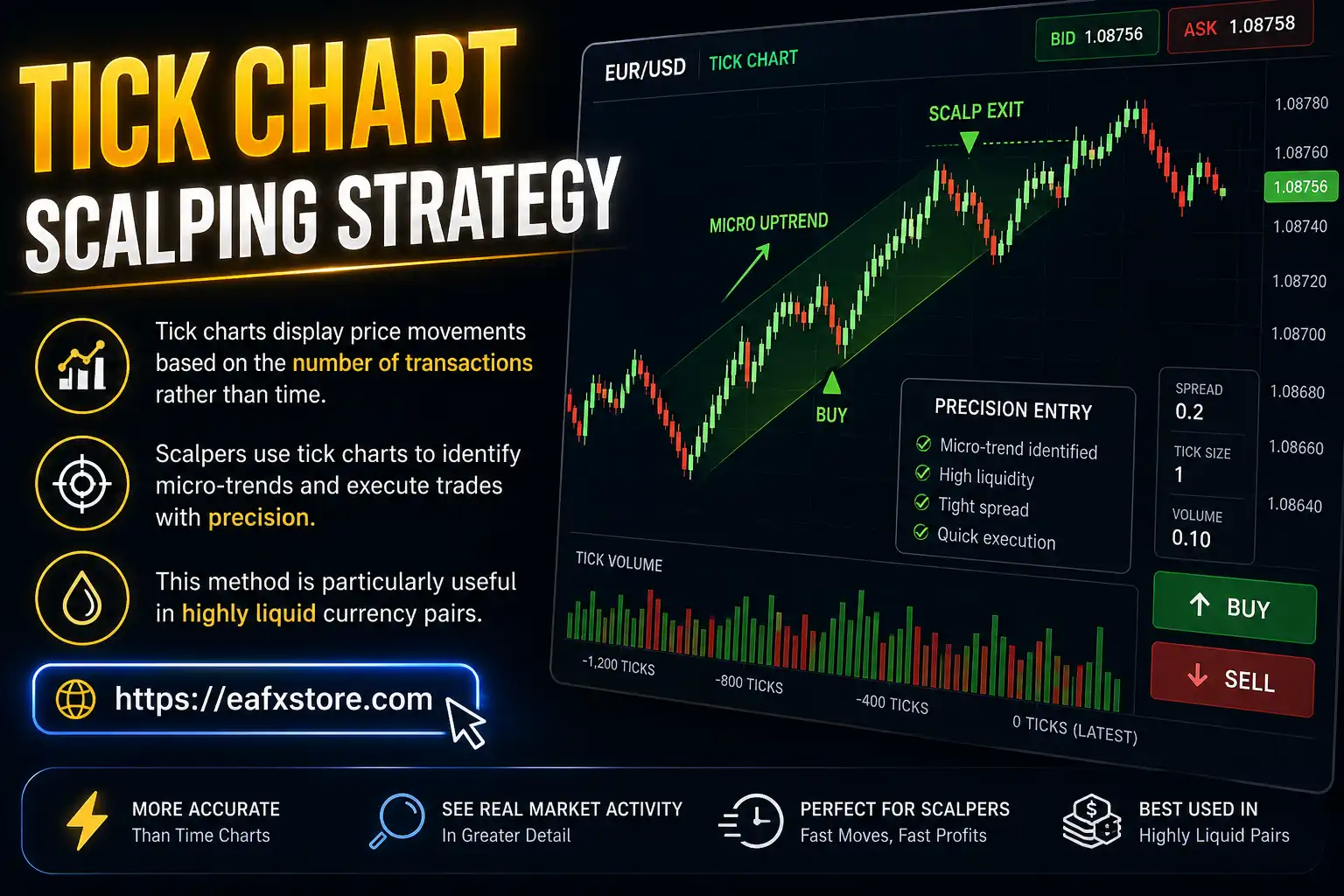
Tick charts display price movements based on the number of transactions rather than time. This provides a more detailed view of market activity.
Scalpers use tick charts to identify micro-trends and execute trades with precision. This method is particularly useful in highly liquid currency pairs.
10. Spread Scalping Strategy
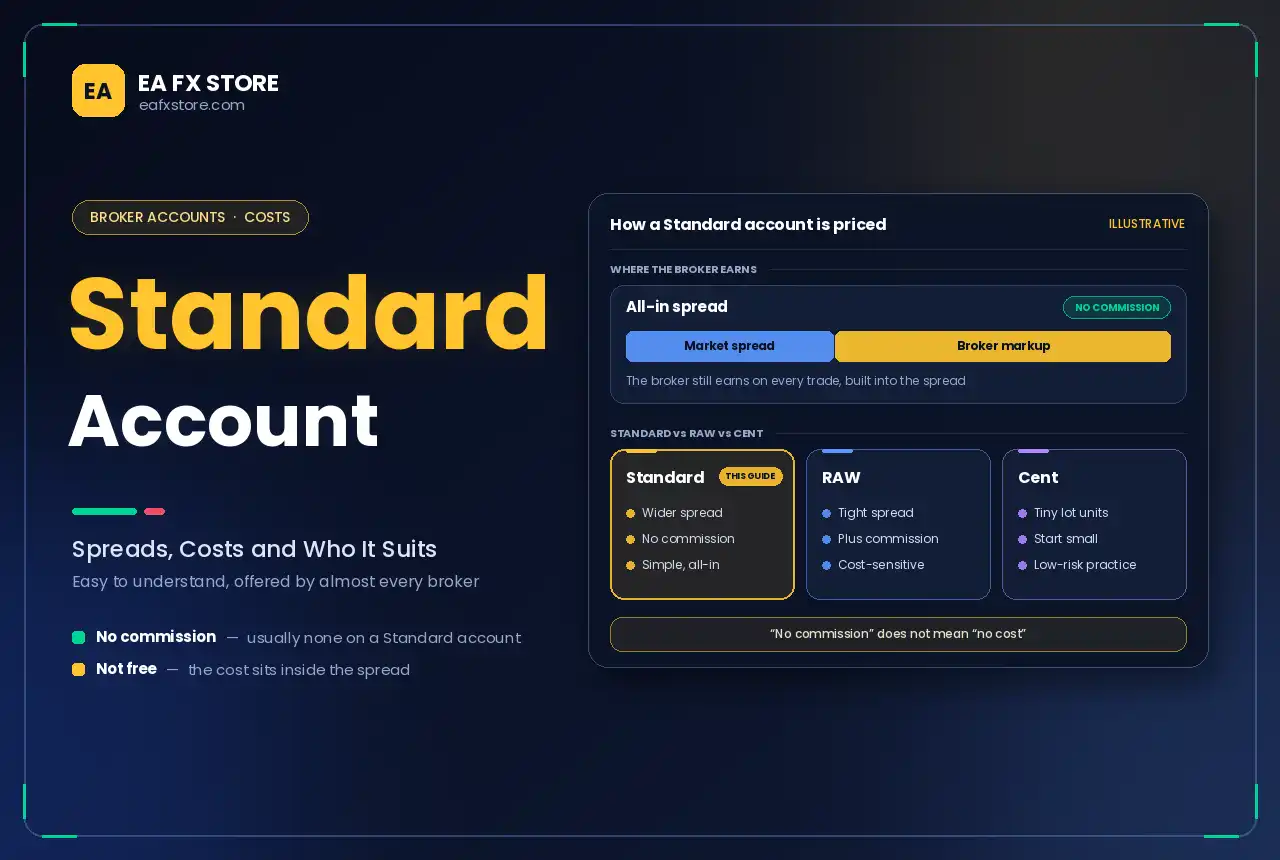
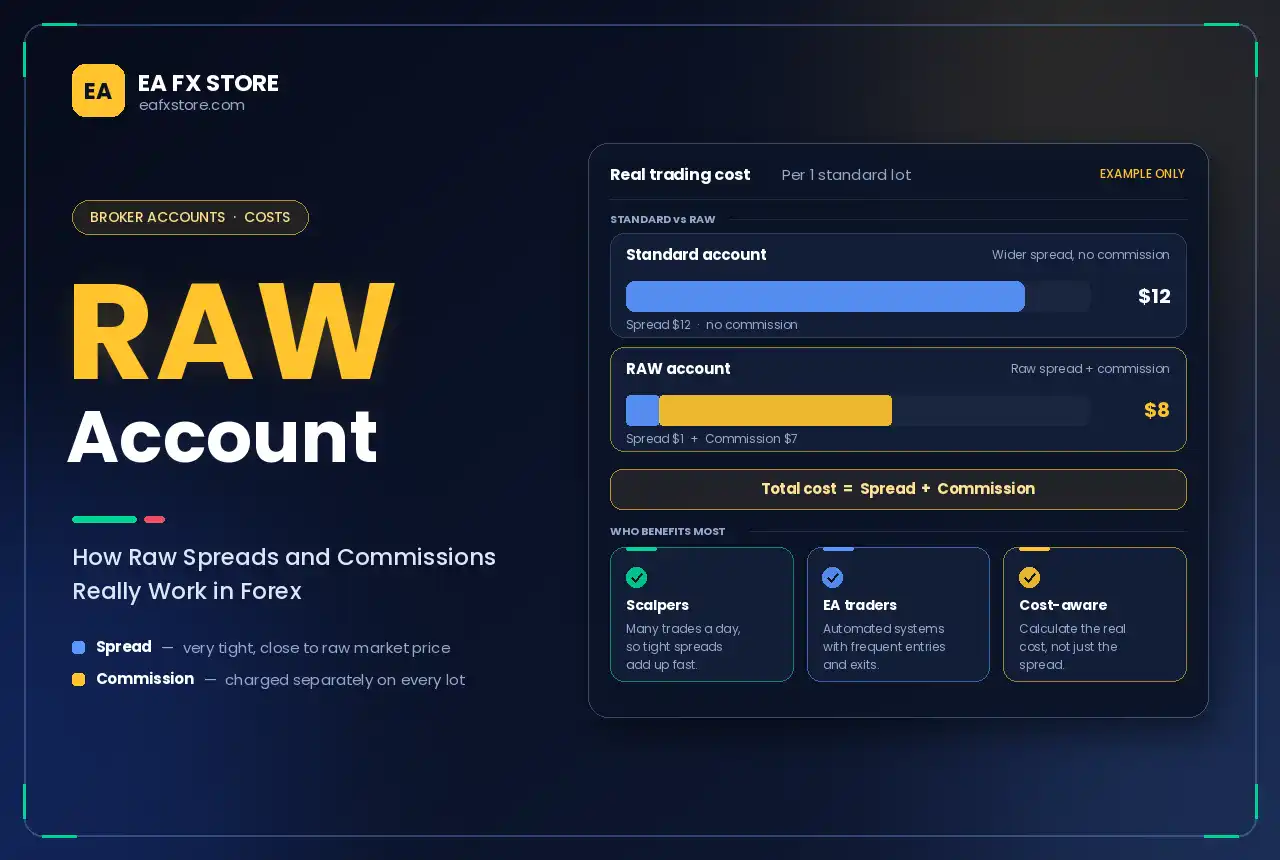
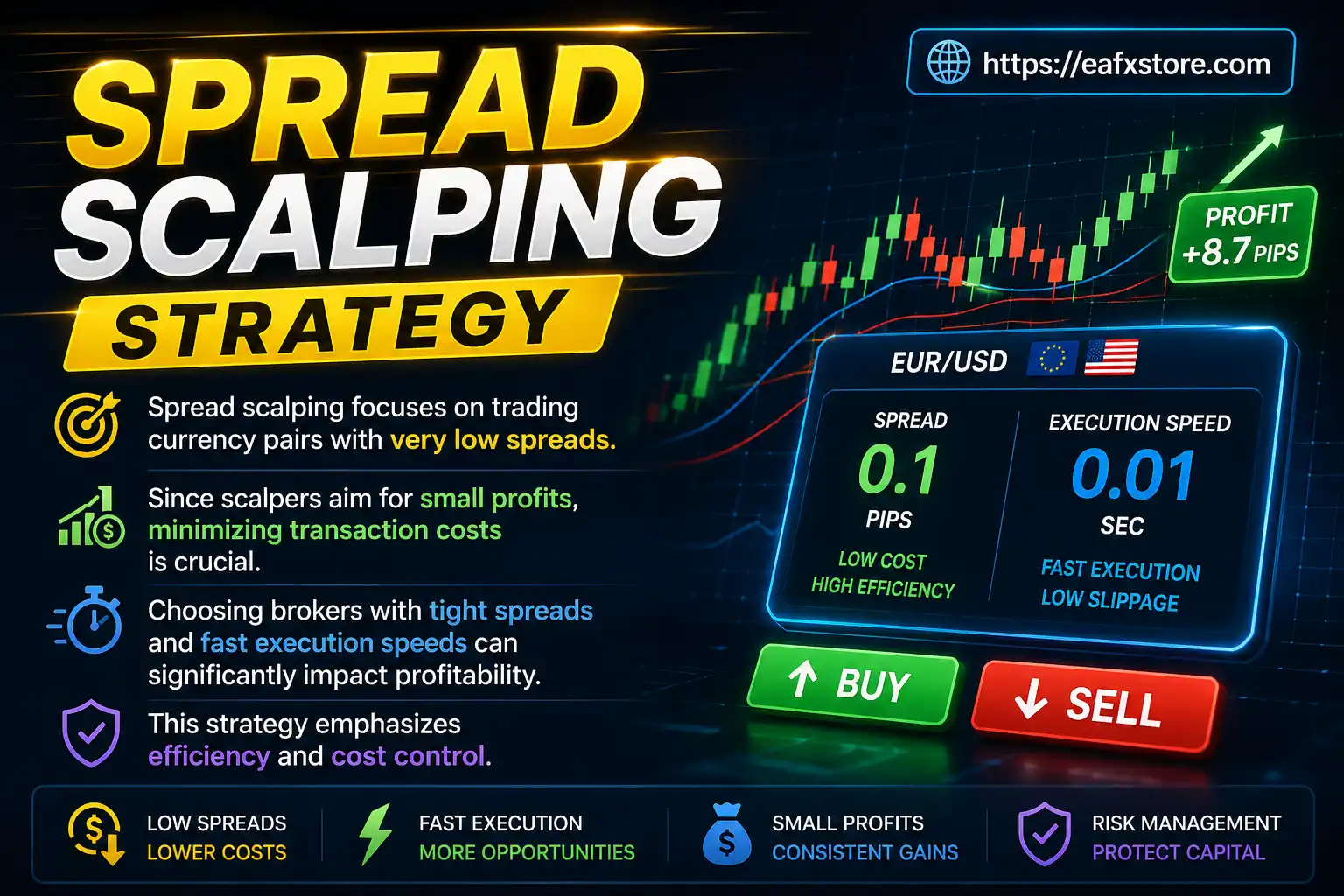
Spread scalping focuses on trading currency pairs with very low spreads. Since scalpers aim for small profits, minimizing transaction costs is crucial.
Choosing brokers with tight spreads and fast execution speeds can significantly impact profitability. This strategy emphasizes efficiency and cost control.
Comparison of Scalping Strategies
| Strategy | Best Market Condition | Difficulty Level | Key Indicator Used |
|---|---|---|---|
| Moving Average Crossover | Trending | Easy | Moving Averages |
| RSI Scalping | Ranging | Easy | RSI |
| Bollinger Bands Breakout | Volatile | Medium | Bollinger Bands |
| Support & Resistance | Ranging | Medium | Price Levels |
| Stochastic Oscillator | Ranging | Easy | Stochastic |
| Price Action | All | Hard | Candlestick Patterns |
| One-Minute Strategy | Fast Markets | Medium | Multiple Indicators |
| News-Based Scalping | High Volatility | Hard | Economic News |
| Tick Chart Scalping | High Liquidity | Hard | Tick Charts |
| Spread Scalping | Stable | Easy | Broker Spreads |
Risk Management in Scalping
No scalping strategy is complete without proper risk management. Because scalping involves frequent trades, even small losses can accumulate quickly.
Traders should use tight Stop Loss (SL) orders, maintain a favorable risk-reward ratio and avoid overtrading. It’s also important to stick to a trading plan and avoid emotional decisions.
Tips to Improve Scalping Performance
Consistency and discipline are key to successful scalping. Traders should focus on mastering one or two strategies rather than switching frequently.
Using a reliable trading platform, maintaining a stable internet connection and practicing on a demo account can also improve performance. Additionally, trading during high-liquidity sessions like London and New York can increase opportunities.
Conclusion
Scalping in Forex can be a powerful way to generate consistent profits when executed correctly. The strategies outlined above provide a solid foundation for traders looking to succeed in this fast-paced environment.
However, success in scalping requires practice, patience and strict risk management. By choosing the right strategy and refining your skills over time, you can maximize your Forex trading potential and achieve sustainable results.