
Forex trading can feel overwhelming for beginners, especially when charts look like a maze of lines and colors. One of the most powerful tools to simplify price action is candlestick patterns. These visual formations help traders understand market sentiment and predict potential price movements.
In this guide, you’ll learn what candlestick patterns are, how they work, and how to use them effectively in Forex trading.
What Are Candlestick Patterns?
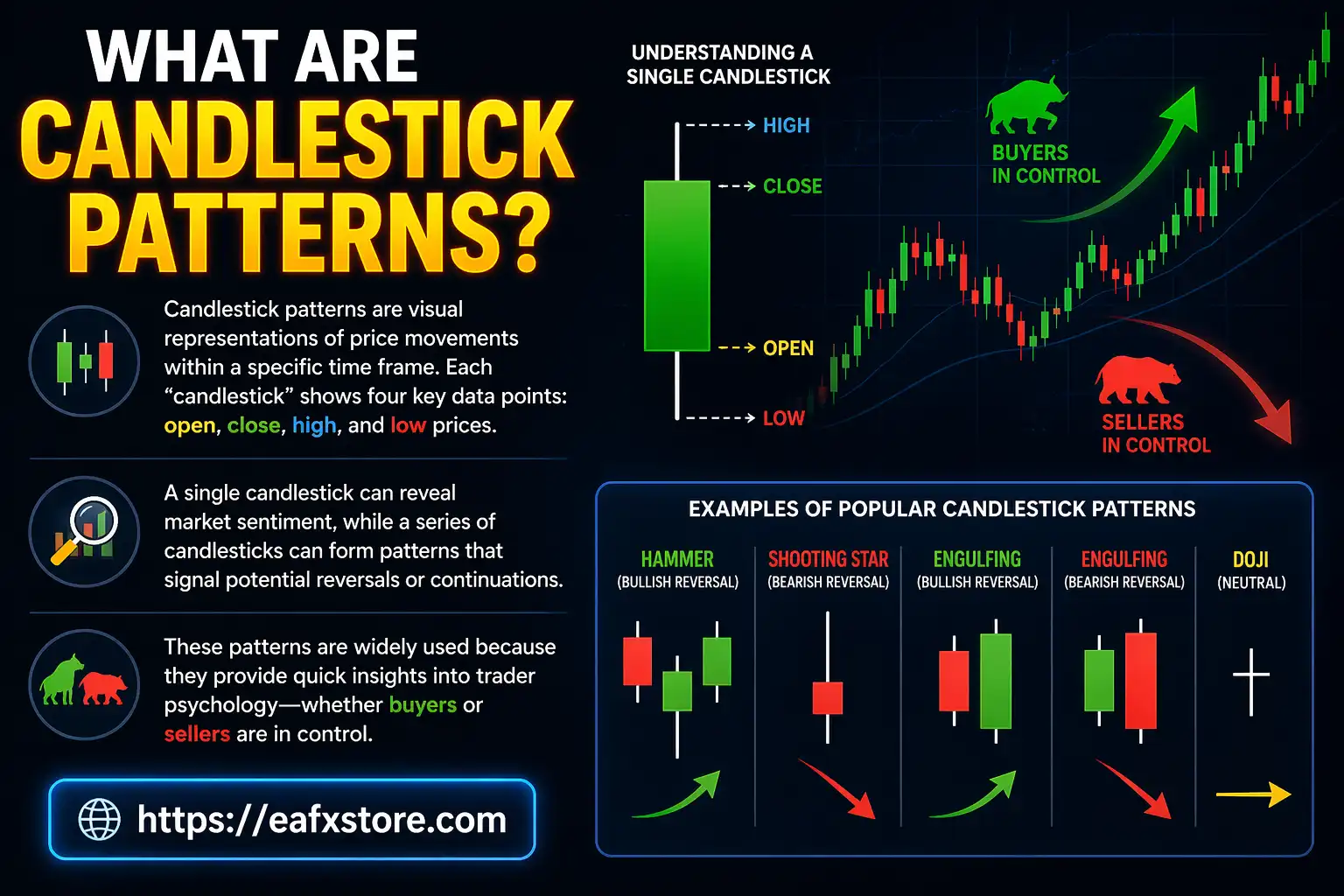
Candlestick patterns are visual representations of price movements within a specific time frame. Each “candlestick” shows four key data points: open, close, high and low prices.
A single candlestick can reveal market sentiment, while a series of candlesticks can form patterns that signal potential reversals or continuations. These patterns are widely used because they provide quick insights into trader psychology—whether buyers or sellers are in control.
Anatomy of a Candlestick
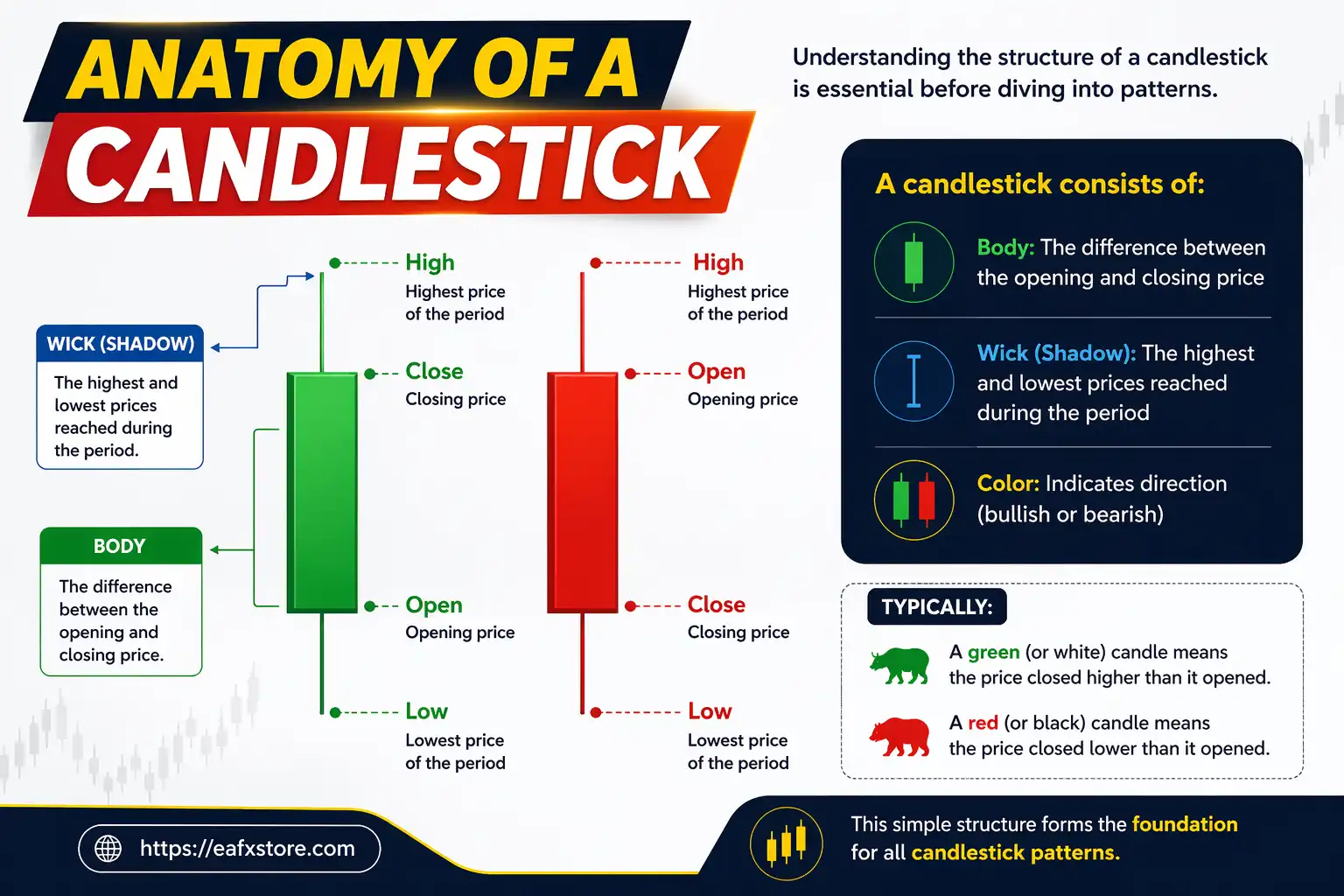
Understanding the structure of a candlestick is essential before diving into patterns.
A candlestick consists of:
- Body: The difference between the opening and closing price
- Wick (Shadow): The highest and lowest prices reached during the period
- Color: Indicates direction (bullish or bearish)
Typically:
- A green (or white) candle means the price closed higher than it opened
- A red (or black) candle means the price closed lower than it opened
This simple structure forms the foundation for all candlestick patterns.
Why Candlestick Patterns Matter in Forex
Candlestick patterns are more than just shapes—they reflect real market behavior. Traders use them to:
- Identify trend reversals.
- Confirm trade entries and exits.
- Understand market sentiment.
- Improve timing in volatile conditions.
Unlike lagging indicators, candlestick patterns provide real-time insights, making them especially useful in the fast-moving Forex market.
Types of Candlestick Patterns
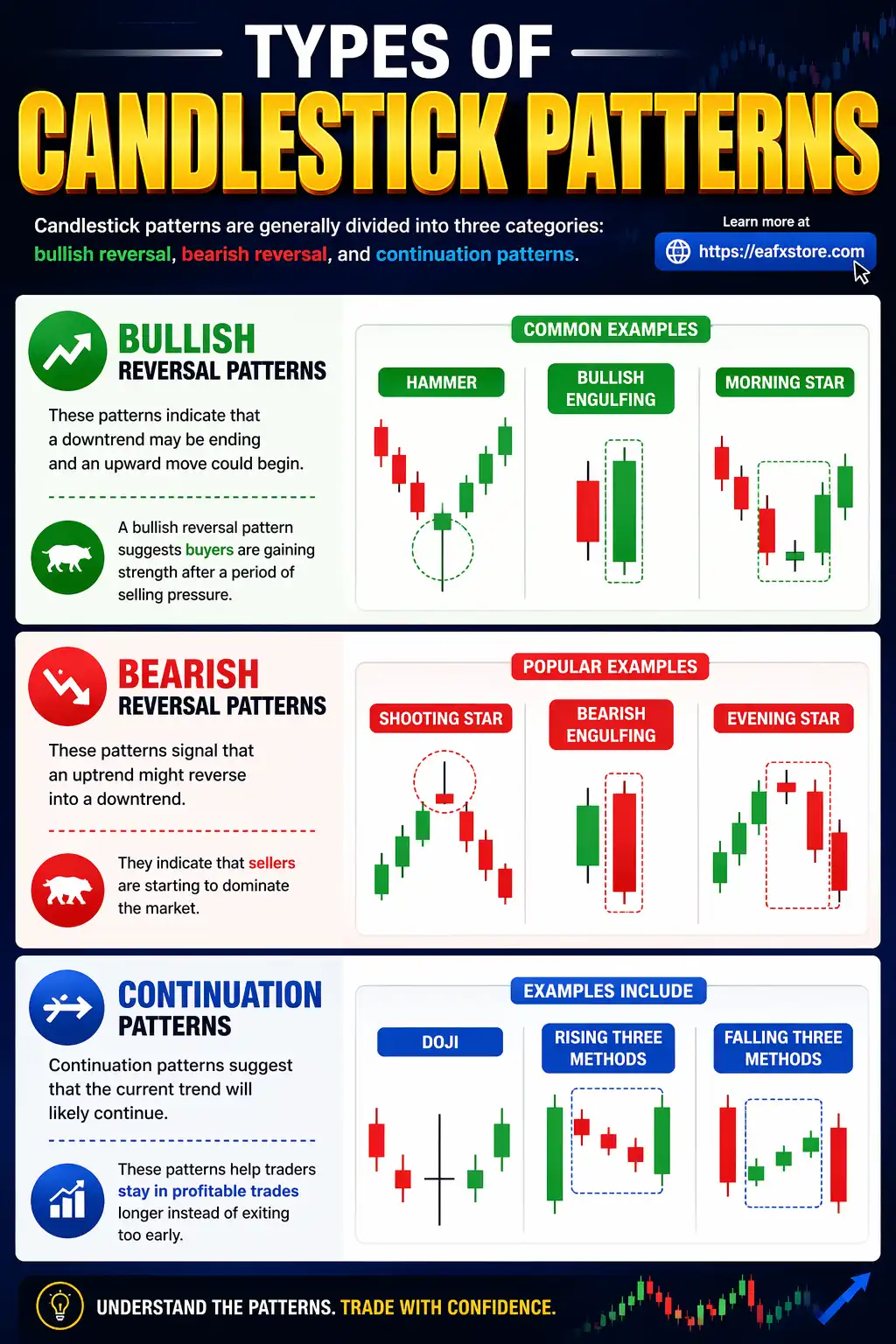
Candlestick patterns are generally divided into three categories: bullish reversal, bearish reversal and continuation patterns.
Bullish Reversal Patterns
These patterns indicate that a downtrend may be ending and an upward move could begin.
Common examples include:
- Hammer
- Bullish Engulfing
- Morning Star
A bullish reversal pattern suggests buyers are gaining strength after a period of selling pressure.
Bearish Reversal Patterns
These patterns signal that an uptrend might reverse into a downtrend.
Popular examples include:
- Shooting Star
- Bearish Engulfing
- Evening Star
They indicate that sellers are starting to dominate the market.
Continuation Patterns
Continuation patterns suggest that the current trend will likely continue.
Examples include:
- Doji
- Rising Three Methods
- Falling Three Methods
These patterns help traders stay in profitable trades longer instead of exiting too early.
Most Important Candlestick Patterns for Beginners
Below is a table summarizing key patterns every beginner should know:
| Pattern Name | Type | Signal | Reliability |
|---|---|---|---|
| Hammer | Bullish Reversal | Price may rise | Medium |
| Shooting Star | Bearish Reversal | Price may fall | Medium |
| Bullish Engulfing | Bullish Reversal | Strong upward signal | High |
| Bearish Engulfing | Bearish Reversal | Strong downward signal | High |
| Doji | Neutral | Market indecision | Low |
| Morning Star | Bullish Reversal | Trend reversal upward | High |
| Evening Star | Bearish Reversal | Trend reversal downward | High |
Each pattern becomes more reliable when combined with other technical tools like support/resistance or trendlines.
How to Read Candlestick Patterns Effectively
Reading candlestick patterns is not just about memorizing shapes—it’s about understanding context.
Here are key factors to consider:
- Trend direction: Patterns are more meaningful within a clear trend
- Support and resistance levels: Patterns near key levels are stronger
- Volume: Higher volume confirms stronger signals
- Timeframe: Patterns on higher timeframes (H1, H4, Daily) are more reliable
For example, a bullish engulfing pattern at a strong support level is more trustworthy than one appearing randomly in the middle of a trend.
Common Mistakes Beginners Make
Many new traders misuse candlestick patterns, leading to poor results. Here are common mistakes to avoid:
- Relying on a Single Pattern: No candlestick pattern guarantees success. Always combine patterns with other analysis methods.
- Ignoring Market Context: A pattern without context is meaningless. Always consider trend direction and key price levels.
- Overtrading: Seeing patterns everywhere can lead to excessive trading. Focus only on high-quality setups.
- Using Low Timeframes Only: Lower timeframes (like M1 or M5) produce more noise. Beginners should start with higher timeframes for better accuracy.
Tips for Using Candlestick Patterns in Forex
To get the most out of candlestick patterns, follow these practical tips:
- Combine with indicators: Use RSI, MACD or MA for confirmation.
- Practice on demo accounts: Build confidence before trading real money.
- Focus on a few patterns: Master 3–5 patterns instead of learning dozens.
- Keep a trading journal: Track which patterns work best for you.
- Be patient: Wait for clear setups instead of forcing trades.
Consistency matters more than complexity in Forex trading.
Conclusion
Candlestick patterns are one of the most essential tools for Forex traders, especially beginners. They offer a clear and visual way to understand market behavior and make informed trading decisions.
By learning the basics, focusing on key patterns, and combining them with proper analysis, you can significantly improve your trading accuracy. Remember, success in Forex doesn’t come from knowing everything—it comes from applying a few strategies well and consistently.