
Introduction to LSTM in Forex Trading
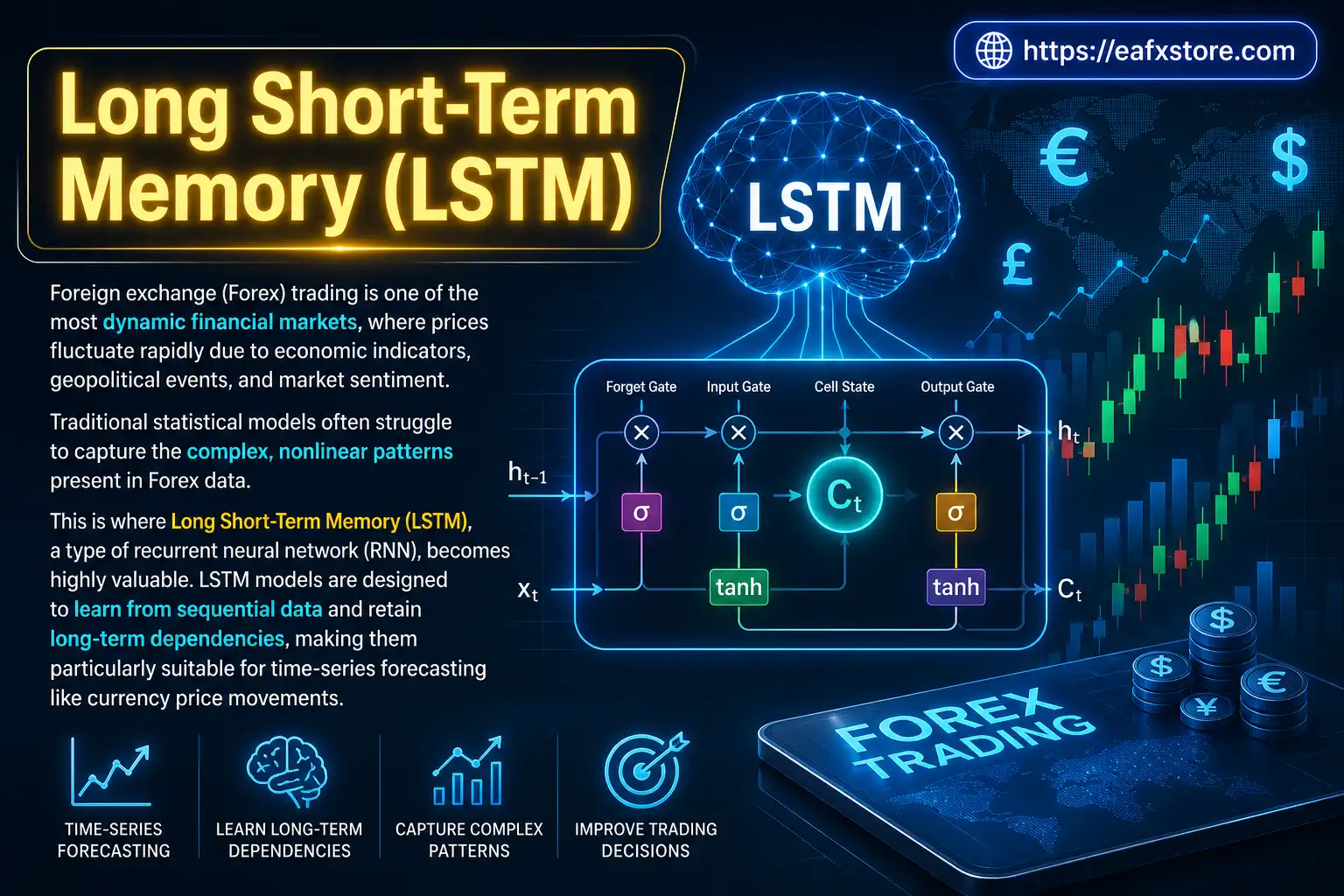
Foreign exchange (Forex) trading is one of the most dynamic financial markets, where prices fluctuate rapidly due to economic indicators, geopolitical events and market sentiment. Traditional statistical models often struggle to capture the complex, nonlinear patterns present in Forex data.
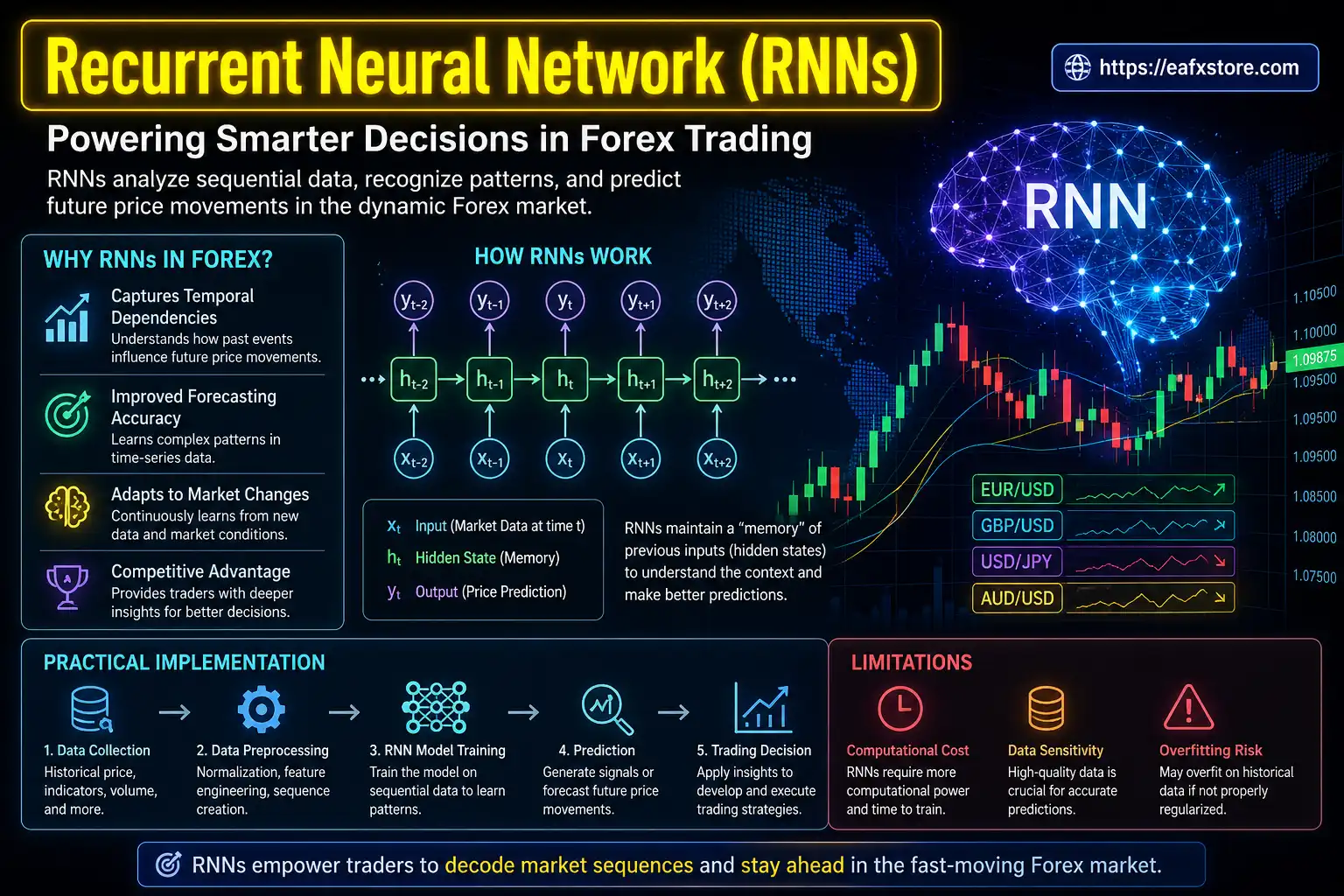
This is where Long Short-Term Memory (LSTM), a type of Recurrent Neural Network (RNN), becomes highly valuable. LSTM models are designed to learn from sequential data and retain long-term dependencies, making them particularly suitable for time-series forecasting like currency price movements.
What is Long Short-Term Memory (LSTM)?
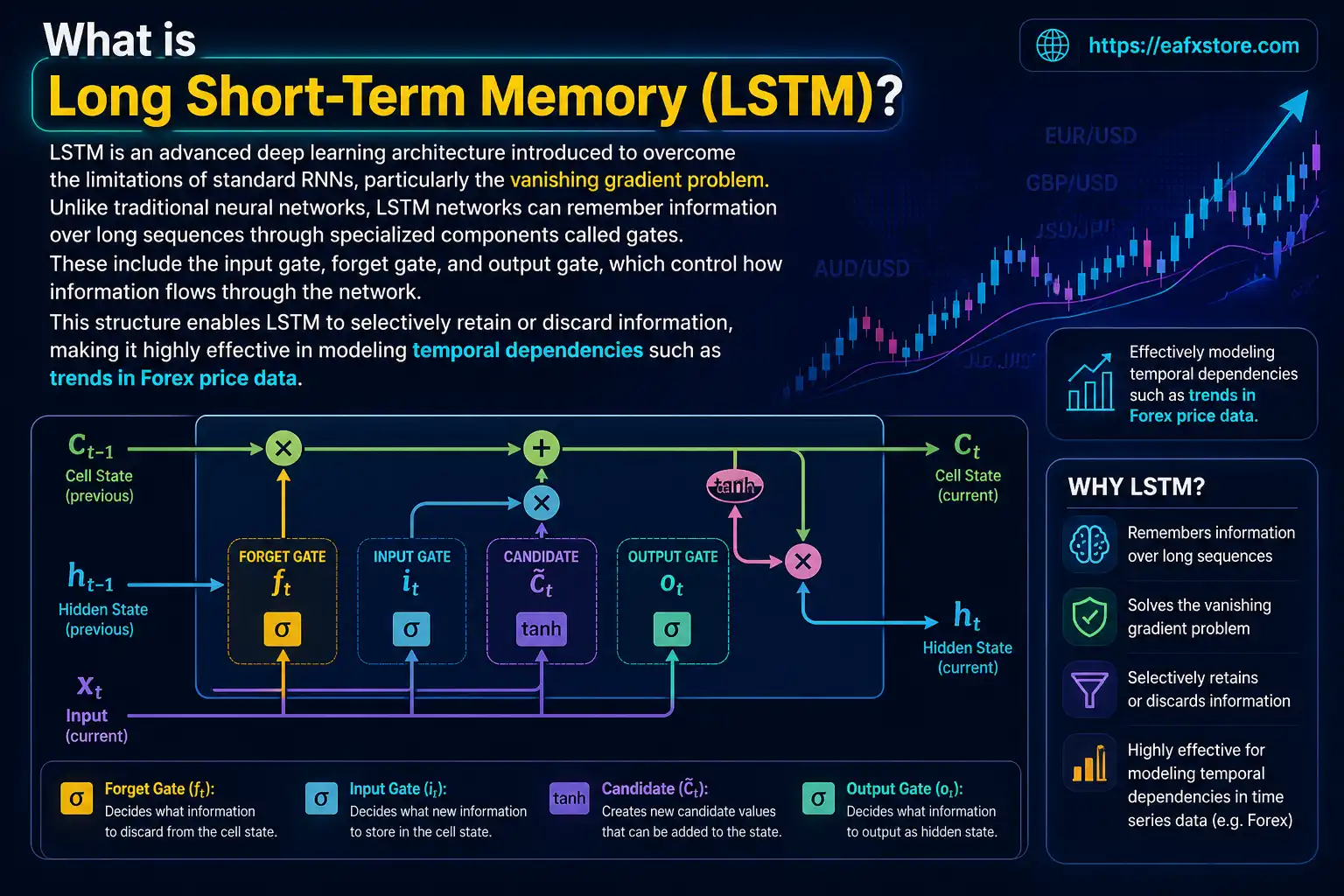
LSTM is an advanced deep learning architecture introduced to overcome the limitations of standard RNNs, particularly the vanishing gradient problem. Unlike traditional neural networks, LSTM networks can remember information over long sequences through specialized components called gates. These include the input gate, forget gate, and output gate, which control how information flows through the network. This structure enables LSTM to selectively retain or discard information, making it highly effective in modeling temporal dependencies such as trends in Forex price data.
Why Use LSTM in Forex Trading?
Forex markets are inherently sequential and influenced by past price behavior. LSTM excels in this environment because it can process historical price data and identify patterns that may not be visible through conventional methods. Traders and analysts use LSTM models to predict exchange rates, detect trends and generate trading signals.
Additionally, LSTM can incorporate multiple features such as technical indicators, volume, and macroeconomic variables, providing a more comprehensive view of the market.
Key Components of an LSTM Model
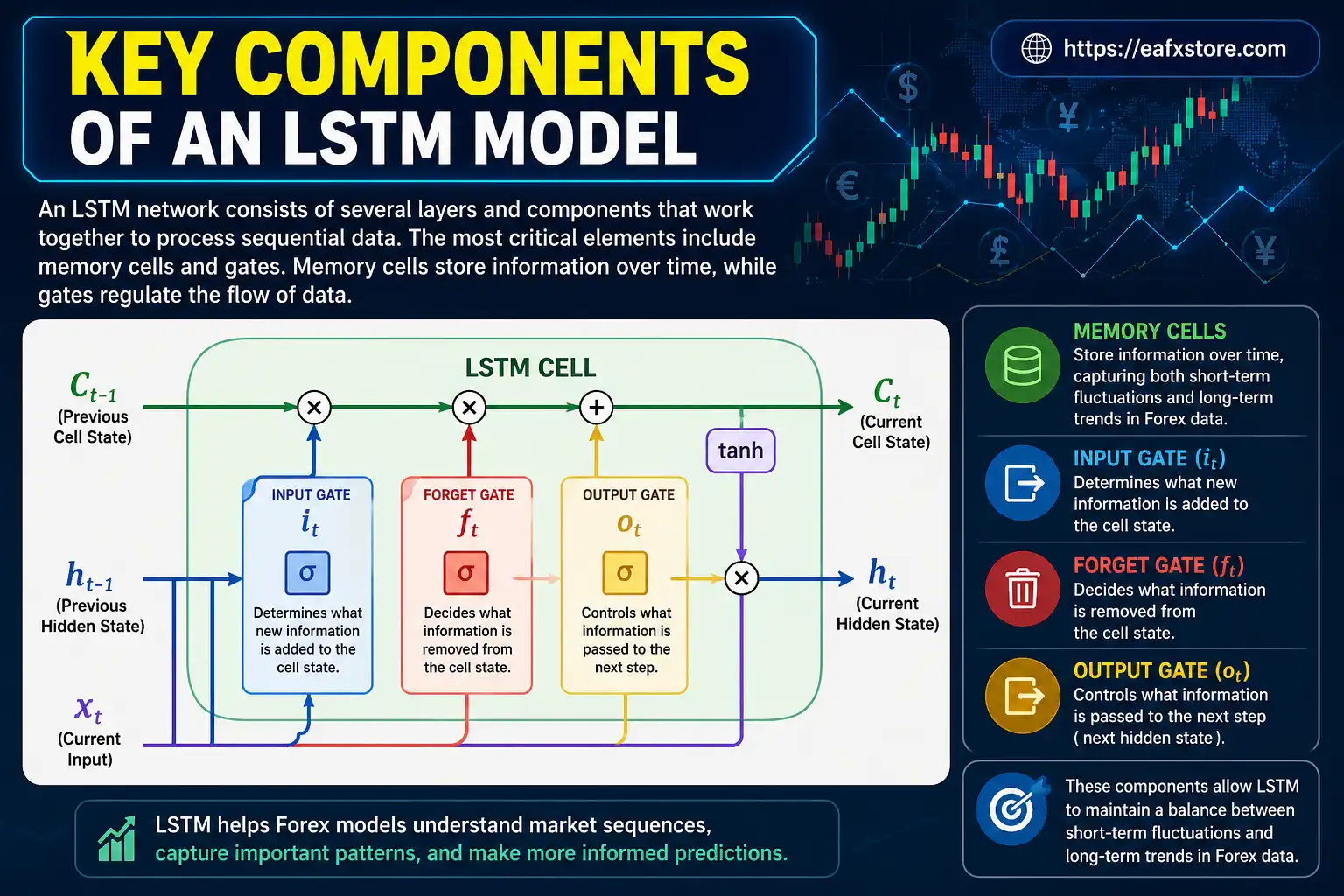
An LSTM network consists of several layers and components that work together to process sequential data. The most critical elements include memory cells and gates. Memory cells store information over time, while gates regulate the flow of data.
The input gate determines what new information is added, the forget gate decides what information is removed, and the output gate controls what is passed to the next step. These components allow LSTM to maintain a balance between short-term fluctuations and long-term trends in Forex data.
Data Preparation for LSTM in Forex
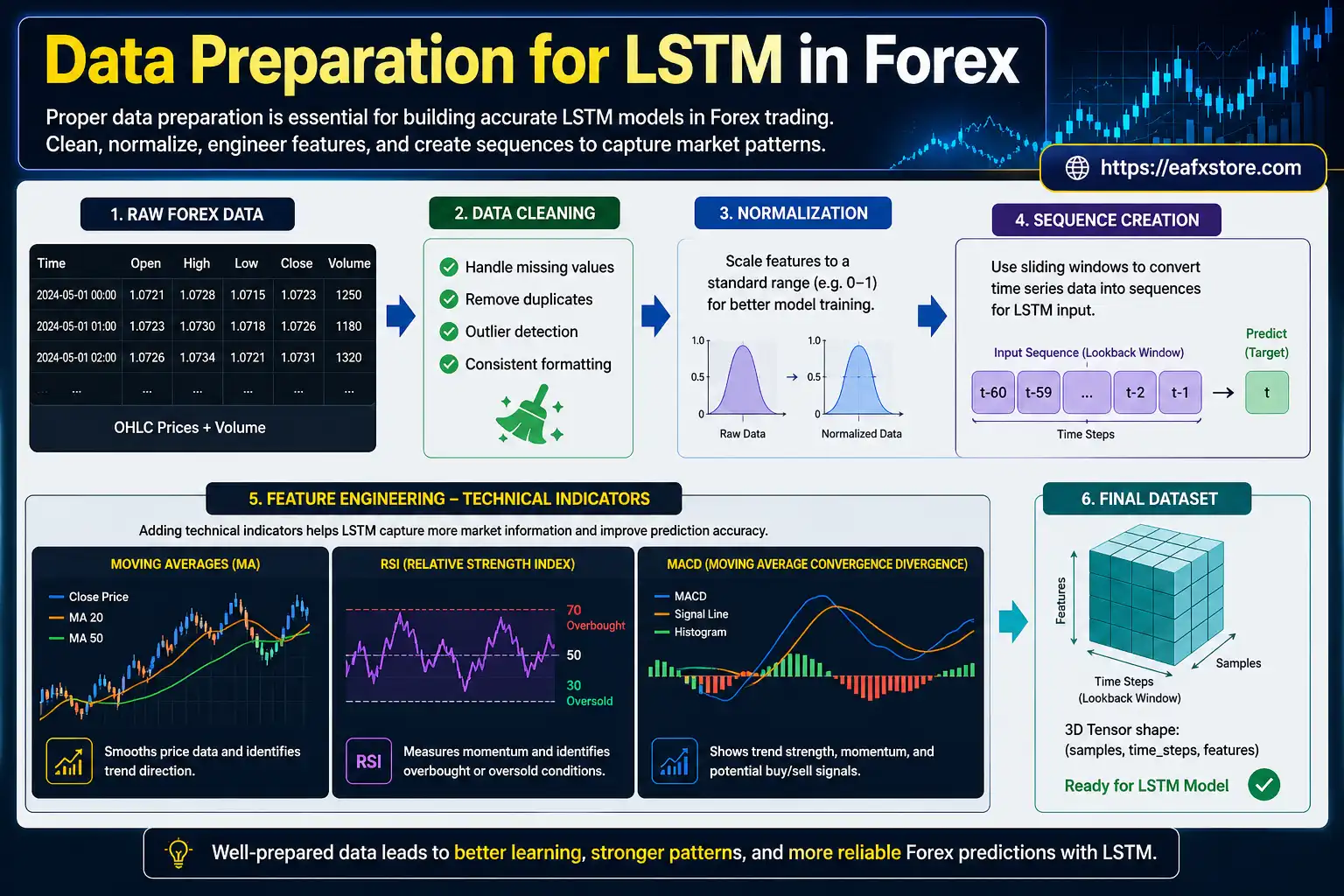
Before building an LSTM model, proper data preparation is essential. Forex data typically includes open, high, low, close (OHLC) prices, along with trading volume. This data must be cleaned, normalized and transformed into sequences suitable for training.
A common approach is to use sliding windows, where a fixed number of past time steps are used to predict future values. Feature engineering can also enhance model performance by including technical indicators such as Moving Averages, RSI and MACD.
LSTM Model Architecture for Forex Prediction
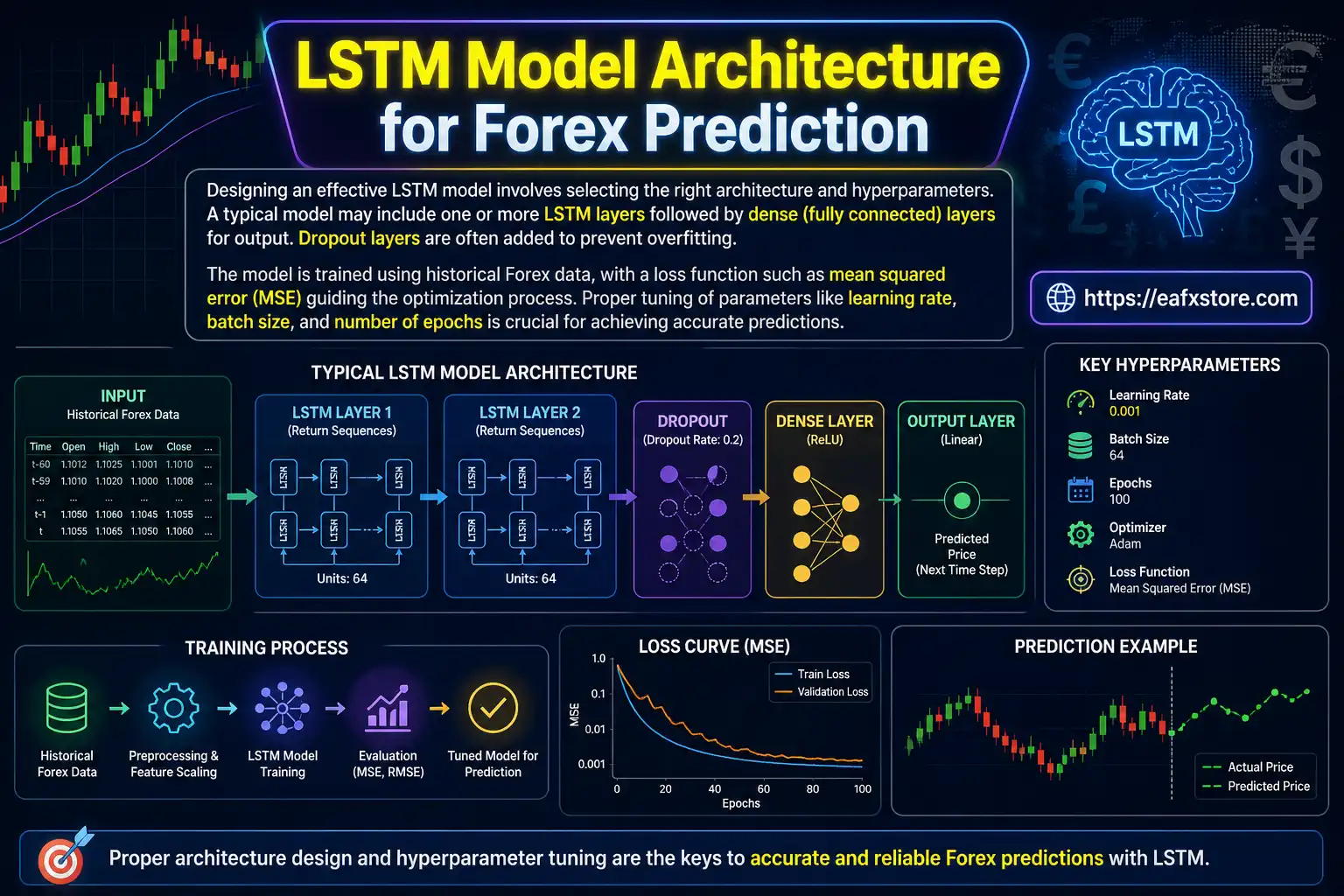
Designing an effective LSTM model involves selecting the right architecture and hyperparameters. A typical model may include one or more LSTM layers followed by dense (fully connected) layers for output. Dropout layers are often added to prevent overfitting.
The model is trained using historical Forex data, with a loss function such as Mean Squared Error (MSE) guiding the optimization process. Proper tuning of parameters like learning rate, batch size, and number of epochs is crucial for achieving accurate predictions.
Advantages and Limitations of LSTM in Forex Trading
| Aspect | Advantages | Limitations |
|---|---|---|
| Pattern Recognition | Captures complex nonlinear relationships | Requires large datasets |
| Memory Capability | Retains long-term dependencies | Computationally intensive |
| Flexibility | Can integrate multiple features | Sensitive to hyperparameters |
| Accuracy | Often outperforms traditional models | Risk of overfitting |
LSTM models offer significant advantages in modeling time-series data, but they are not without challenges. High computational requirements and the need for extensive data can be barriers for beginners. Additionally, improper tuning can lead to overfitting, where the model performs well on training data but poorly on unseen data.
Practical Applications of LSTM in Forex
In real-world trading, LSTM models are used for various purposes, including price prediction, trend classification and risk management. Traders may use LSTM-generated signals to automate trading strategies or support decision-making. Hedge funds and financial institutions often integrate LSTM models into algorithmic trading systems to gain a competitive edge. Moreover, LSTM can be combined with other machine learning techniques to improve performance and robustness.
Tips for Implementing LSTM in Forex Trading
Successfully applying LSTM in Forex trading requires careful planning and experimentation. First, ensure that your dataset is large and diverse enough to capture different market conditions. Second, focus on feature selection to include relevant indicators. Third, use proper validation techniques such as train-test splits and cross-validation to evaluate model performance. Finally, continuously monitor and update the model, as Forex markets are constantly evolving.
Conclusion
Long Short-Term Memory (LSTM) has emerged as a powerful tool for Forex trading, offering the ability to analyze complex time-series data and uncover hidden patterns. While it requires significant effort in data preparation and model tuning, the potential benefits in terms of prediction accuracy and trading performance are substantial. As technology continues to advance, LSTM and other deep learning models are likely to play an increasingly important role in the future of Forex trading.