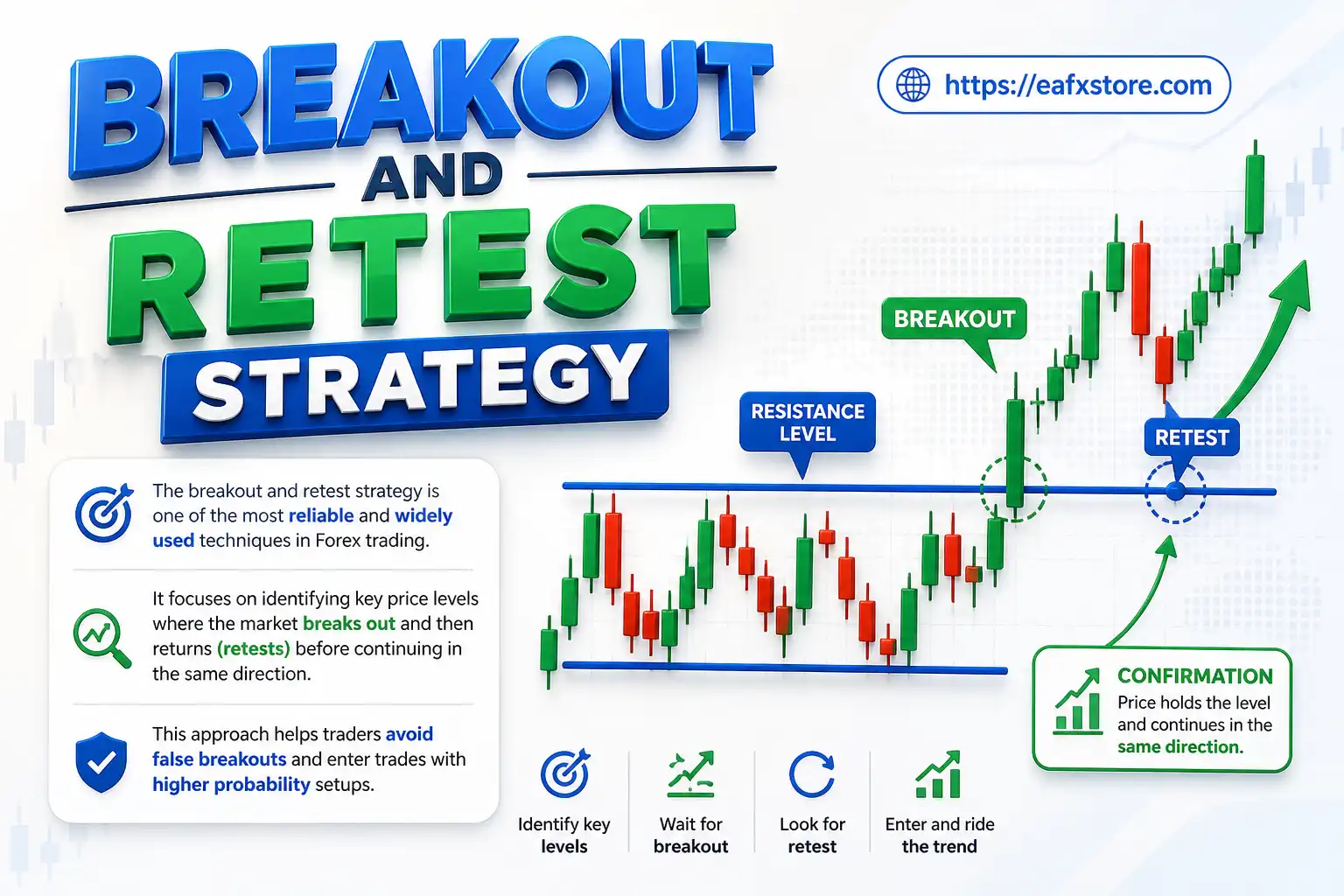

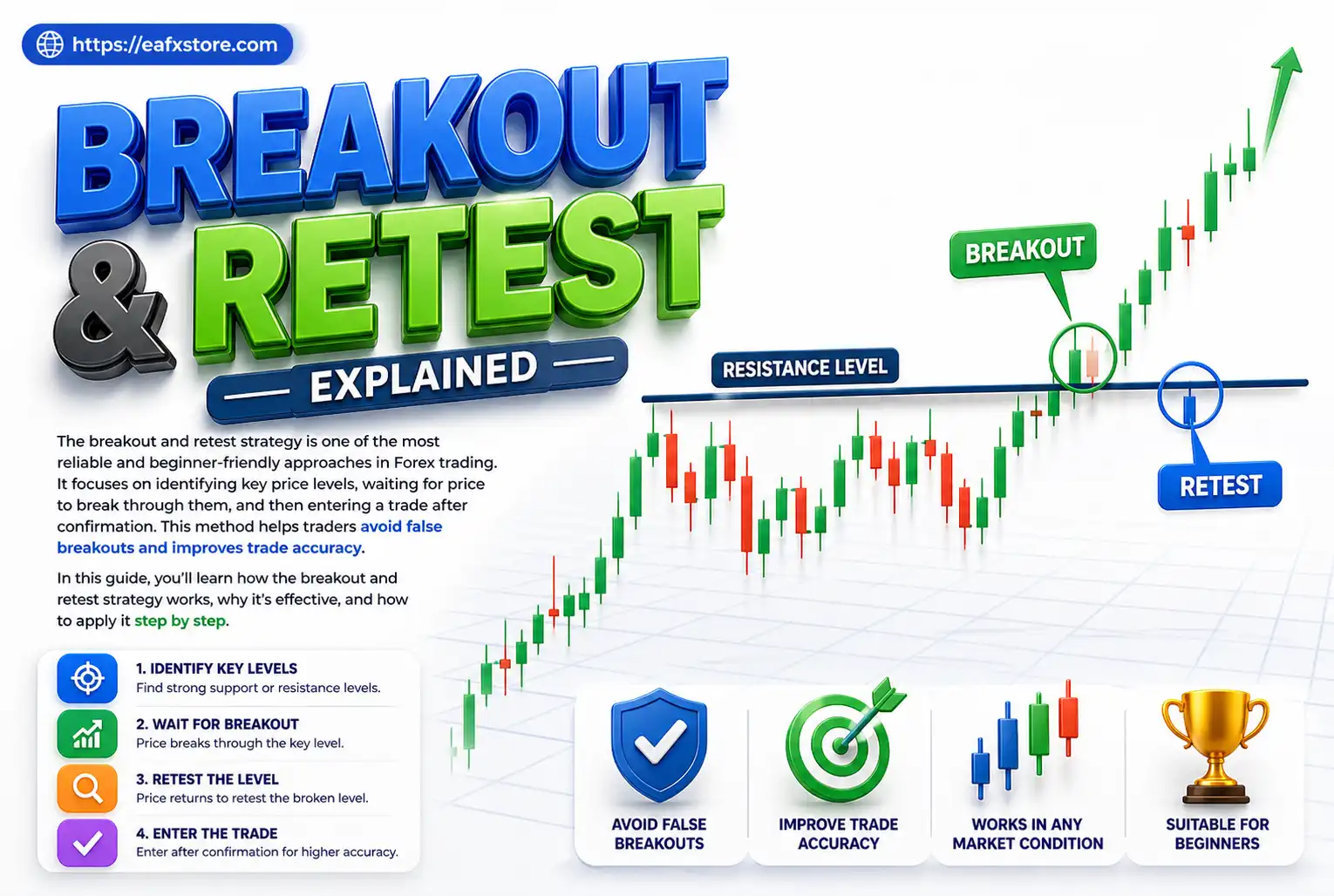
The breakout and retest strategy is one of the most reliable and beginner-friendly approaches in Forex trading. It focuses on identifying key price levels, waiting for a breakout, and then entering the market after a confirmation retest. This method helps traders avoid false breakouts and improves entry accuracy. In this guide, you’ll learn how the strategy works, why it’s effective, and how to apply it step by step.
What is a Breakout in Forex Trading?
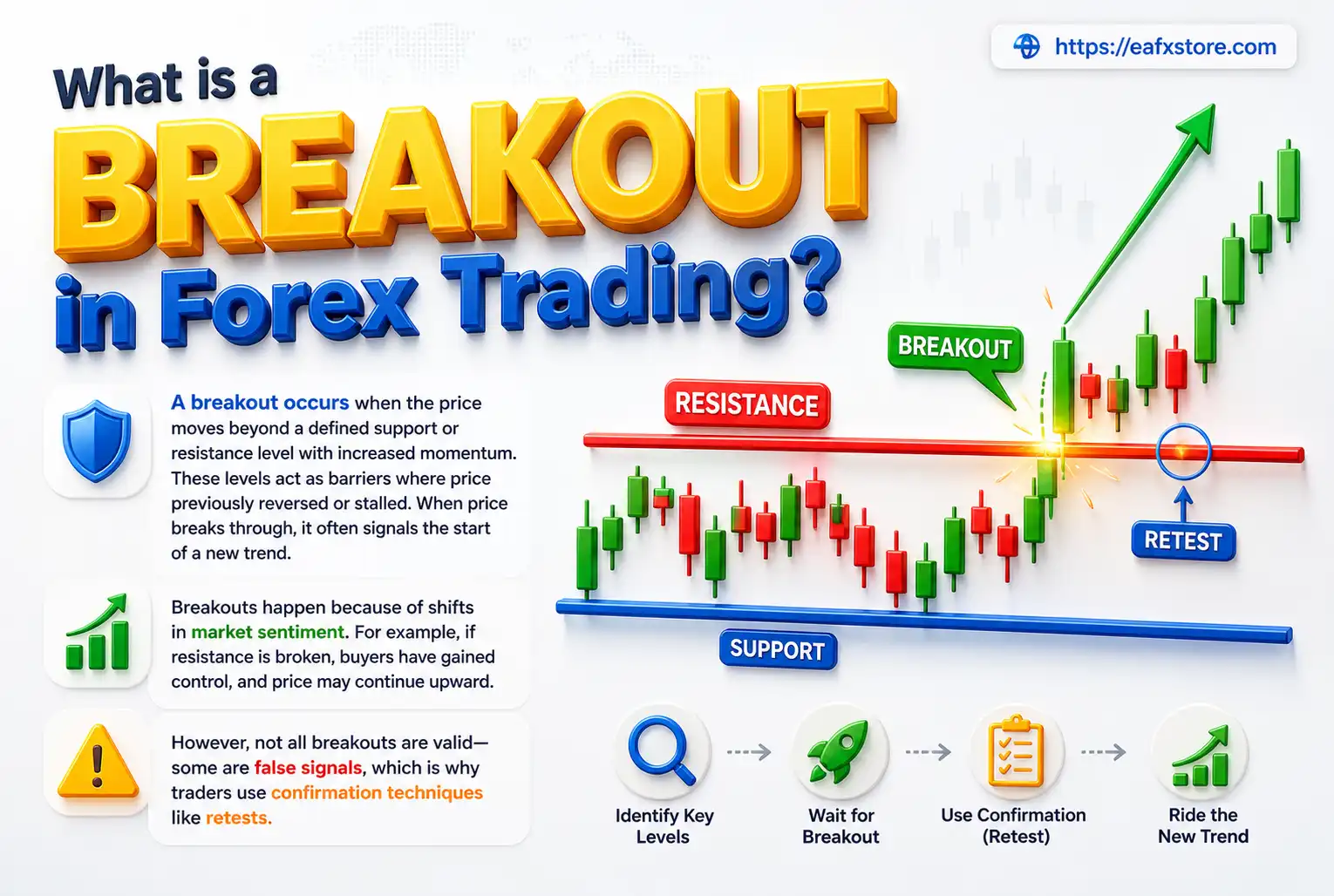
A breakout occurs when the price moves beyond a defined support or resistance level with increased momentum. These levels act as barriers where price previously reversed or stalled. When price breaks through, it often signals the start of a new trend.
Breakouts happen because of shifts in market sentiment. For example, if resistance is broken, buyers have gained control and price may continue upward. However, not all breakouts are valid—some are false signals, which is why traders use confirmation techniques like retests.
What is a Retest and Why It Matters
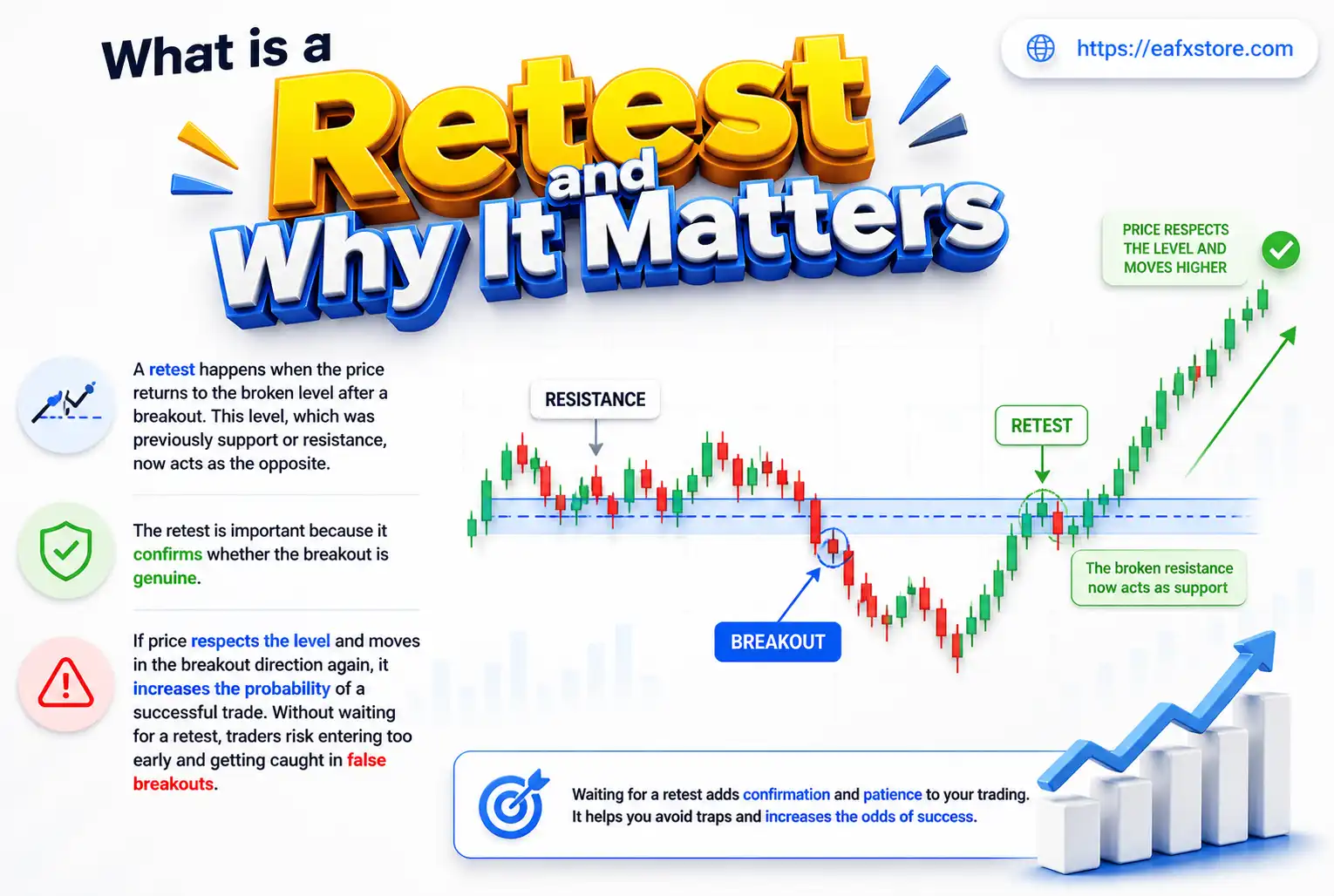
A retest happens when the price returns to the broken level after a breakout. This level, which was previously support or resistance, now acts as the opposite.
The retest is important because it confirms whether the breakout is genuine. If price respects the level and moves in the breakout direction again, it increases the probability of a successful trade. Without waiting for a retest, traders risk entering too early and getting caught in false breakouts.
How the Breakout and Retest Strategy Works
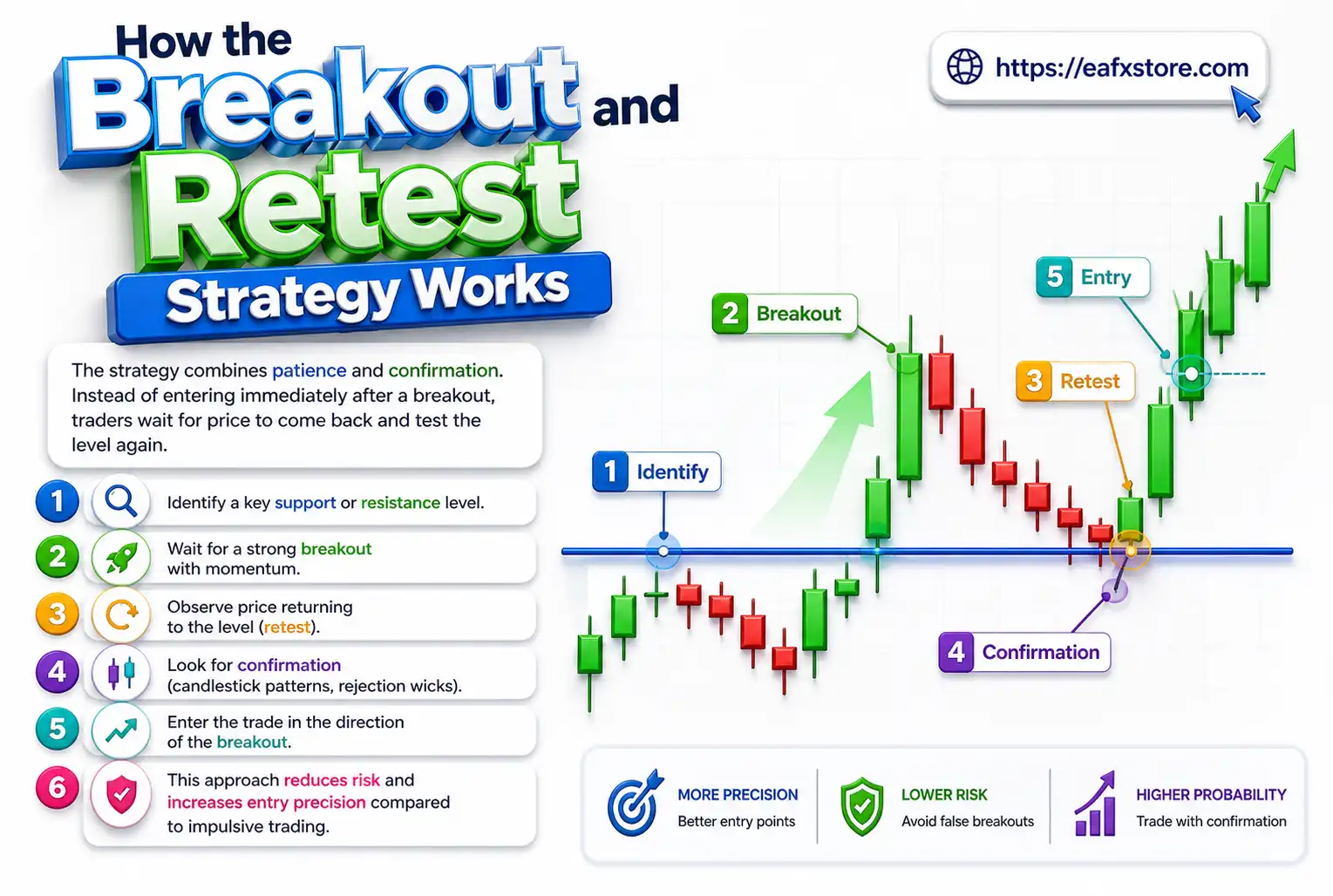
The strategy combines patience and confirmation. Instead of entering immediately after a breakout, traders wait for price to come back and test the level again.
Here’s the basic workflow:
- Identify a key support or resistance level.
- Wait for a strong breakout with momentum.
- Observe price returning to the level (retest).
- Look for confirmation (candlestick patterns, rejection wicks).
- Enter the trade in the direction of the breakout.
This approach reduces risk and increases entry precision compared to impulsive trading.
Key Components of a Successful Setup
Understanding the elements of a good breakout and retest setup is essential for consistency.
| Component | Description |
|---|---|
| Support/Resistance | Strong levels tested multiple times |
| Breakout Strength | Large candles, high momentum |
| Retest Behavior | Price respects level (no deep break back) |
| Confirmation Signal | Pin bar, engulfing candle, rejection wick |
| Market Context | Trend direction and overall structure |
Each of these components adds confidence to your trade. Ignoring one may increase the risk of failure.
Step-by-Step Guide to Trading Breakout and Retest
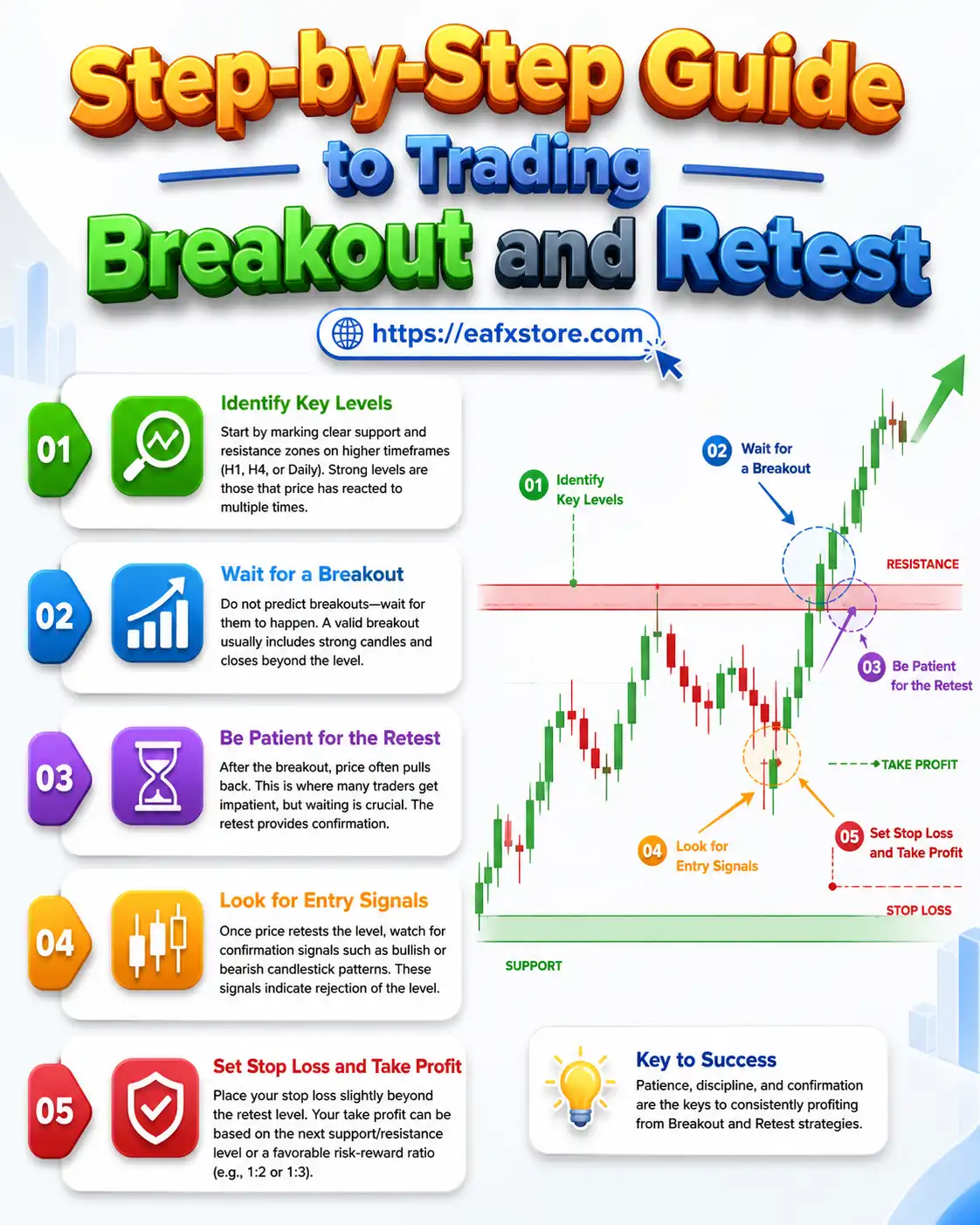
Step 1: Identify Key Levels
Start by marking clear support and resistance zones on higher timeframes (H1, H4, or Daily). Strong levels are those that price has reacted to multiple times.
Step 2: Wait for a Breakout
Do not predict breakouts—wait for them to happen. A valid breakout usually includes strong candles and closes beyond the level.
Step 3: Be Patient for the Retest
After the breakout, price often pulls back. This is where many traders get impatient, but waiting is crucial. The retest provides confirmation.
Step 4: Look for Entry Signals
Once price retests the level, watch for confirmation signals such as bullish or bearish candlestick patterns. These signals indicate rejection of the level.
Step 5: Set Stop Loss and Take Profit
Place your Stop Loss (SL) slightly beyond the retest level. Your take profit can be based on the next support/resistance level or a favorable risk-reward ratio (e.g., 1:2 or 1:3).
Common Mistakes to Avoid
Many traders misuse this strategy due to impatience or misunderstanding.
One common mistake is entering immediately after a breakout without waiting for a retest. This increases the risk of false breakouts. Another mistake is trading weak levels that lack historical significance. Additionally, ignoring market trends can lead to poor decisions, as breakouts against the trend are less reliable.
Lastly, overtrading is a major issue. Not every breakout leads to a valid retest setup, so discipline is key.
Advantages of the Breakout and Retest Strategy
This strategy offers several benefits, especially for beginners.
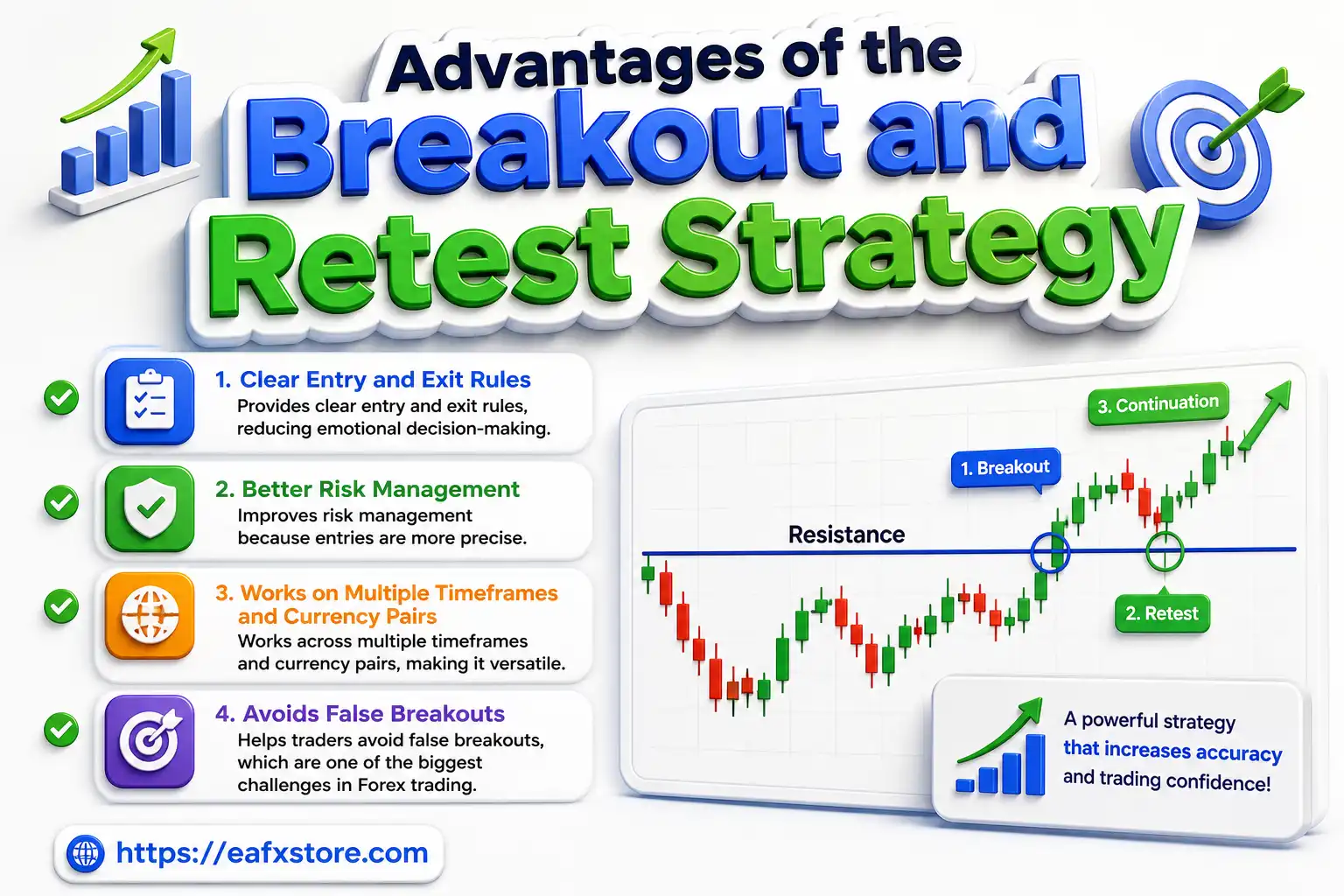
First, it provides clear entry and exit rules, reducing emotional decision-making. Second, it improves risk management because entries are more precise. Third, it works across multiple timeframes and currency pairs, making it versatile.
Most importantly, it helps traders avoid false breakouts, which are one of the biggest challenges in Forex trading.
When Does This Strategy Work Best?
The breakout and retest strategy performs best in trending markets where price respects key levels. It is also effective during high-volatility sessions such as London and New York.
However, in ranging or choppy markets, breakouts are more likely to fail. Therefore, traders should always analyze market conditions before applying this strategy.
Tips to Improve Your Results
To maximize your success, combine this strategy with additional tools. Trendlines, Moving Averages and Volume indicators can provide extra confirmation.
Keeping a trading journal is also helpful. By tracking your trades, you can identify patterns, improve discipline and refine your strategy over time.
Finally, always maintain proper risk management. Even the best setups can fail, so never risk more than a small percentage of your capital per trade.
Conclusion
The breakout and retest strategy is a simple yet powerful method for Forex trading. By waiting for confirmation instead of rushing into trades, you can significantly improve your accuracy and reduce risk. With practice, patience, and discipline, this strategy can become a core part of your trading system.
FAQs
❓ Is breakout and retest suitable for beginners?
Yes, it is one of the easiest strategies to understand and apply, making it ideal for new traders.
❓ Which timeframe works best for this strategy?
Higher timeframes like H1, H4, and Daily tend to produce more reliable signals.
❓ How do I confirm a valid retest?
Look for price rejection signals such as pin bars or engulfing candles at the level.
❓ Can this strategy be used in all market conditions?
It works best in trending markets and may be less effective in sideways conditions.
❓ What is the ideal risk-reward ratio?
A minimum of 1:2 is recommended to ensure long-term profitability.