
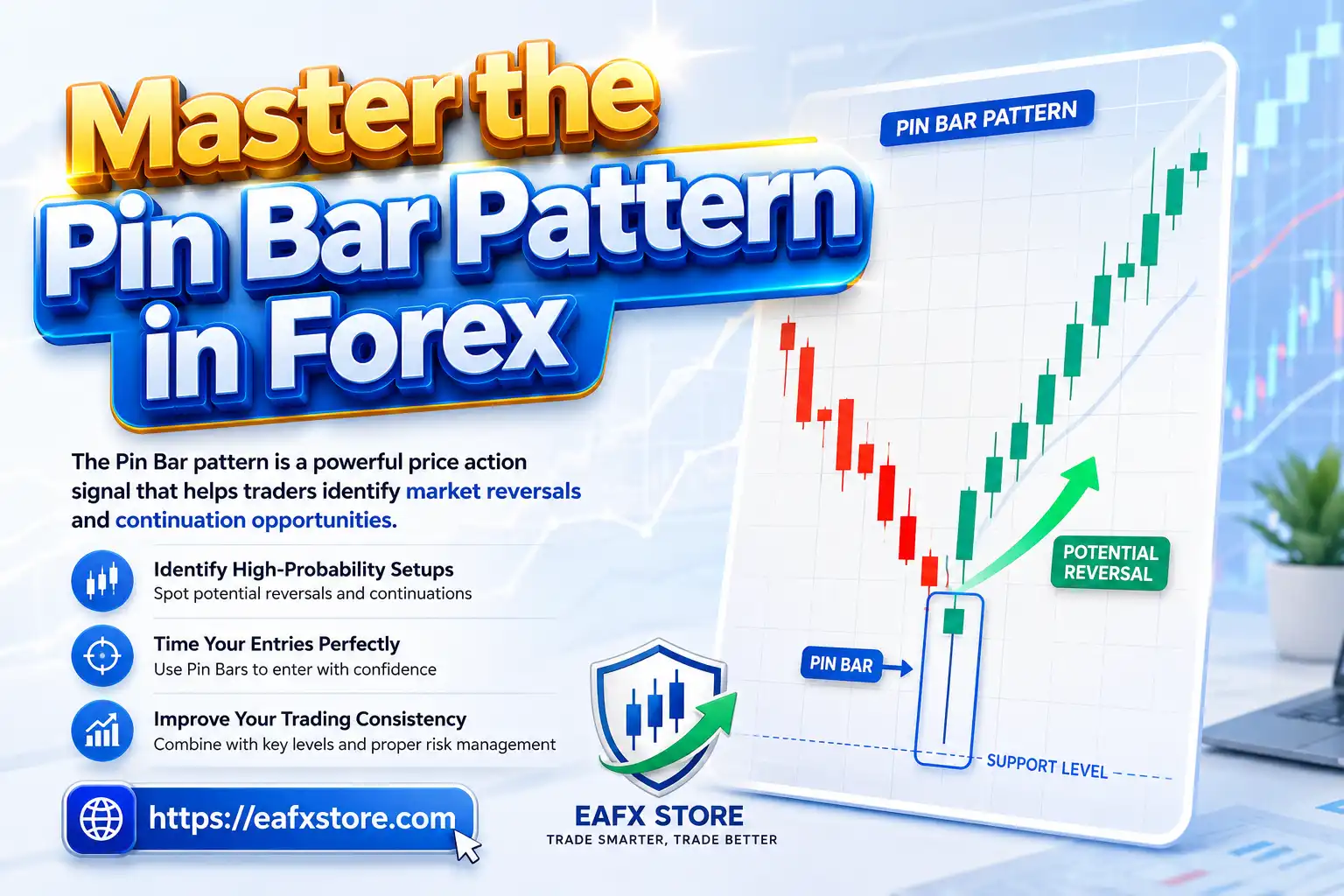
In Forex trading, timing your entry can make the difference between a profitable trade and a losing one. Among the most respected price action signals, the Pin Bar pattern stands out as a powerful tool for identifying market reversals and continuation opportunities. Whether you are a beginner or an experienced trader, understanding how to trade the Pin Bar correctly can significantly improve your consistency.
This guide explains what the Pin Bar pattern is, how it works, and how traders can use it to enter trades with higher confidence.
What is a Pin Bar Pattern?
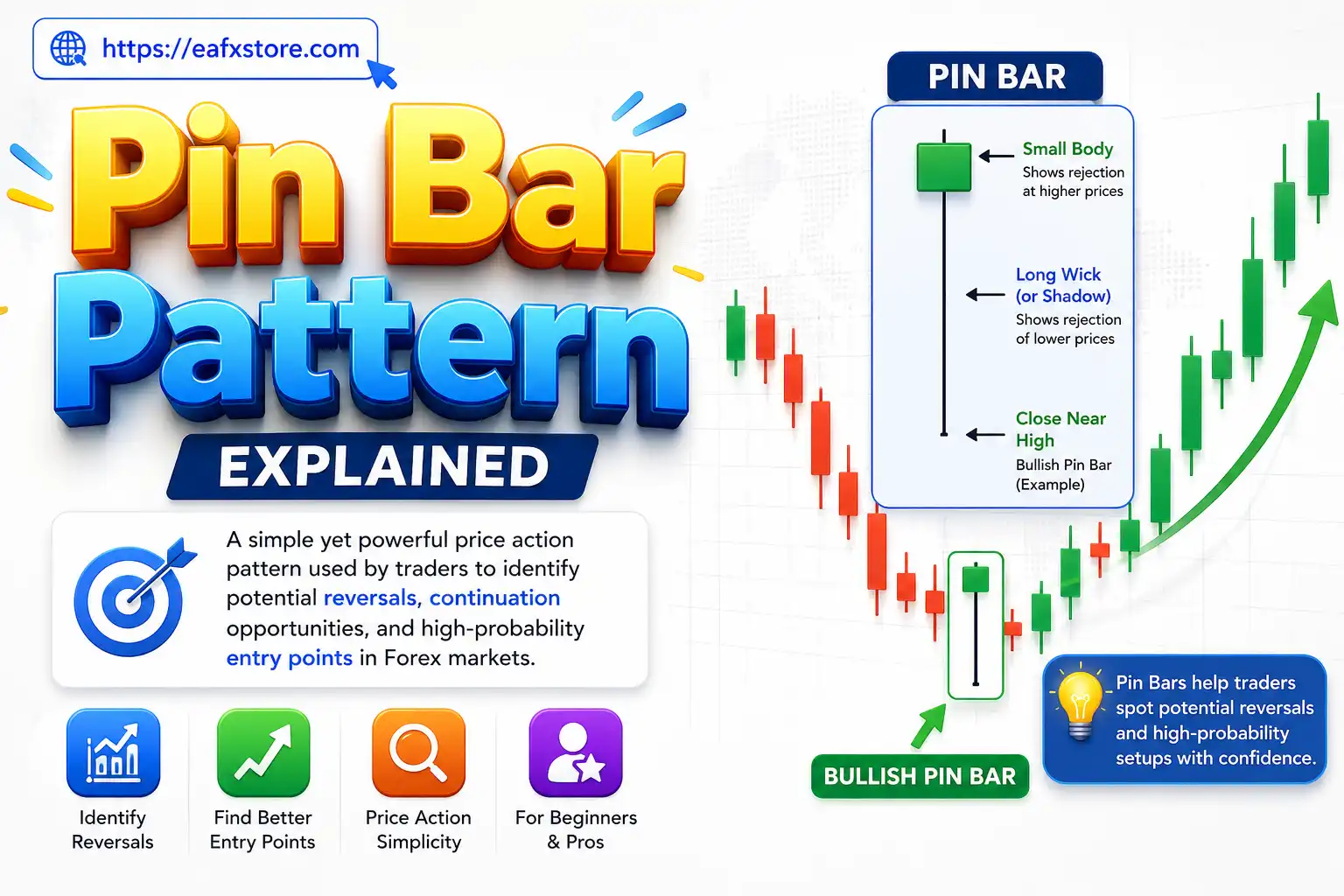
A Pin Bar is a single candlestick pattern that signals rejection of a specific price level. It usually appears at key support and resistance zones and indicates that the market attempted to move in one direction but failed.
The pattern consists of:
- A long wick (shadow)
- A small body
- A short or almost non-existent opposite wick
There are two main types of Pin Bars:
| Pin Bar Type | Signal | Market Expectation |
|---|---|---|
| Bullish Pin Bar | Rejection of lower prices | Potential upward movement |
| Bearish Pin Bar | Rejection of higher prices | Potential downward movement |
A bullish Pin Bar has a long lower wick, while a bearish Pin Bar has a long upper wick.
Why the Pin Bar Pattern Works
The Pin Bar pattern reflects market psychology. It shows that buyers or sellers attempted to push the market aggressively, but the opposing side gained control before the candle closed.
For example:
- In a bearish Pin Bar, buyers pushed the price higher.
- Sellers then entered strongly and forced the price back down.
- This rejection suggests weakening bullish momentum.
Because Forex markets are driven by supply and demand, these rejection signals often provide reliable trading opportunities when combined with market structure.
How to Identify a High-Quality Pin Bar
Not all Pin Bars are worth trading. The best setups usually appear in strong market locations and follow clear technical conditions. Characteristics of a Strong Pin Bar:
| Feature | Description |
|---|---|
| Long Wick | The wick should be at least two-thirds of the entire candle |
| Small Body | Indicates weak closing strength in the rejected direction |
| Clear Rejection | The wick should clearly reject support or resistance |
| Market Context | Best formed during trends or at key zones |
| Clean Structure | Avoid messy or highly volatile market conditions |
A Pin Bar formed randomly in the middle of a ranging market is generally less reliable than one formed at a major support or resistance level.
Best Market Conditions for Trading Pin Bars
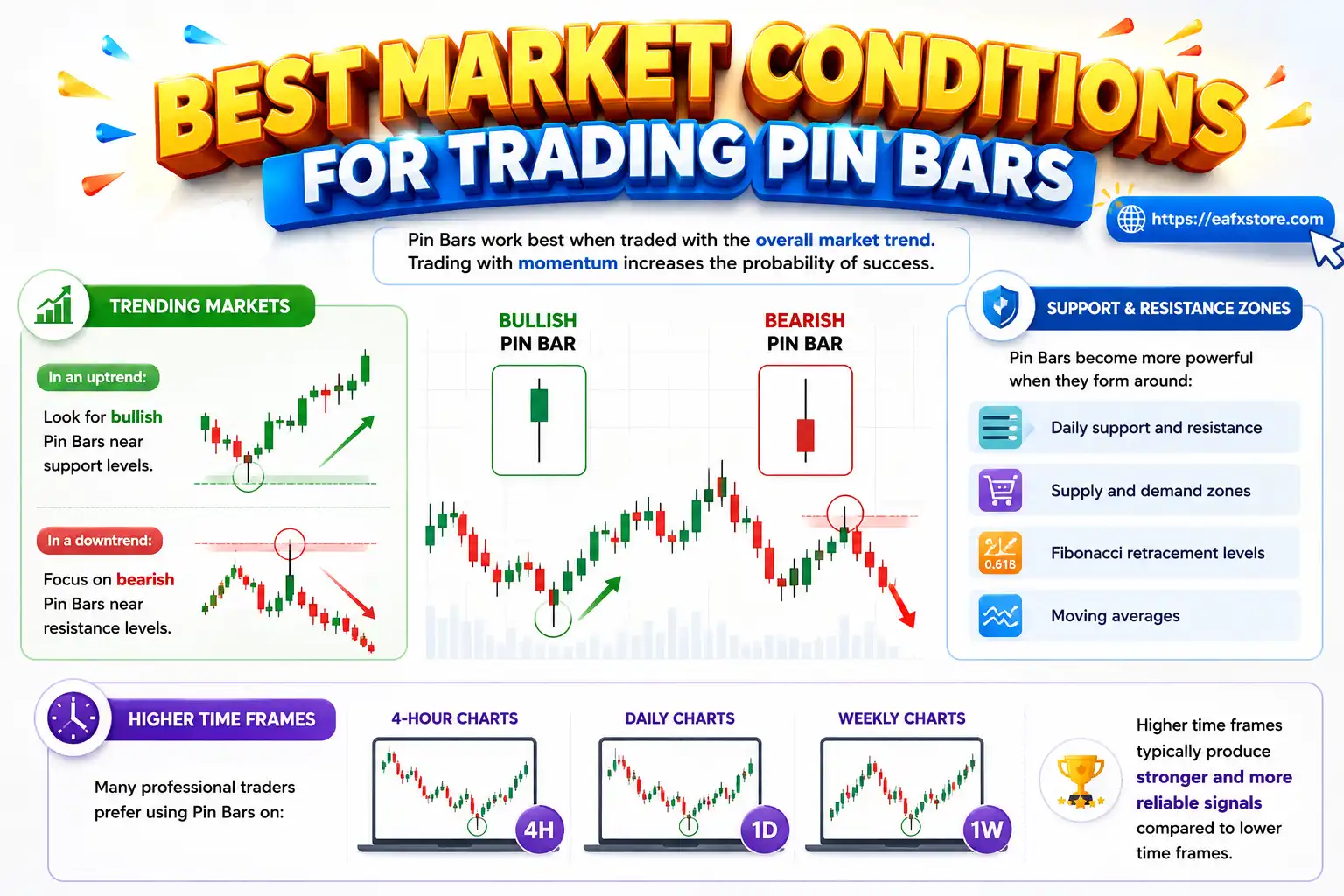
Pin Bars work best when traded with the overall market trend. Trading with momentum increases the probability of success.
🎯 Trending Markets
In an uptrend:
- Look for bullish Pin Bars near support levels.
In a downtrend:
- Focus on bearish Pin Bars near resistance levels.
🎯 Support and Resistance Zones
Pin Bars become more powerful when they form around:
🎯 Higher Time Frames
Many professional traders prefer using Pin Bars on:
- 4-hour charts
- Daily charts
- Weekly charts
Higher time frames typically produce stronger and more reliable signals compared to lower time frames.
How to Trade the Pin Bar Pattern
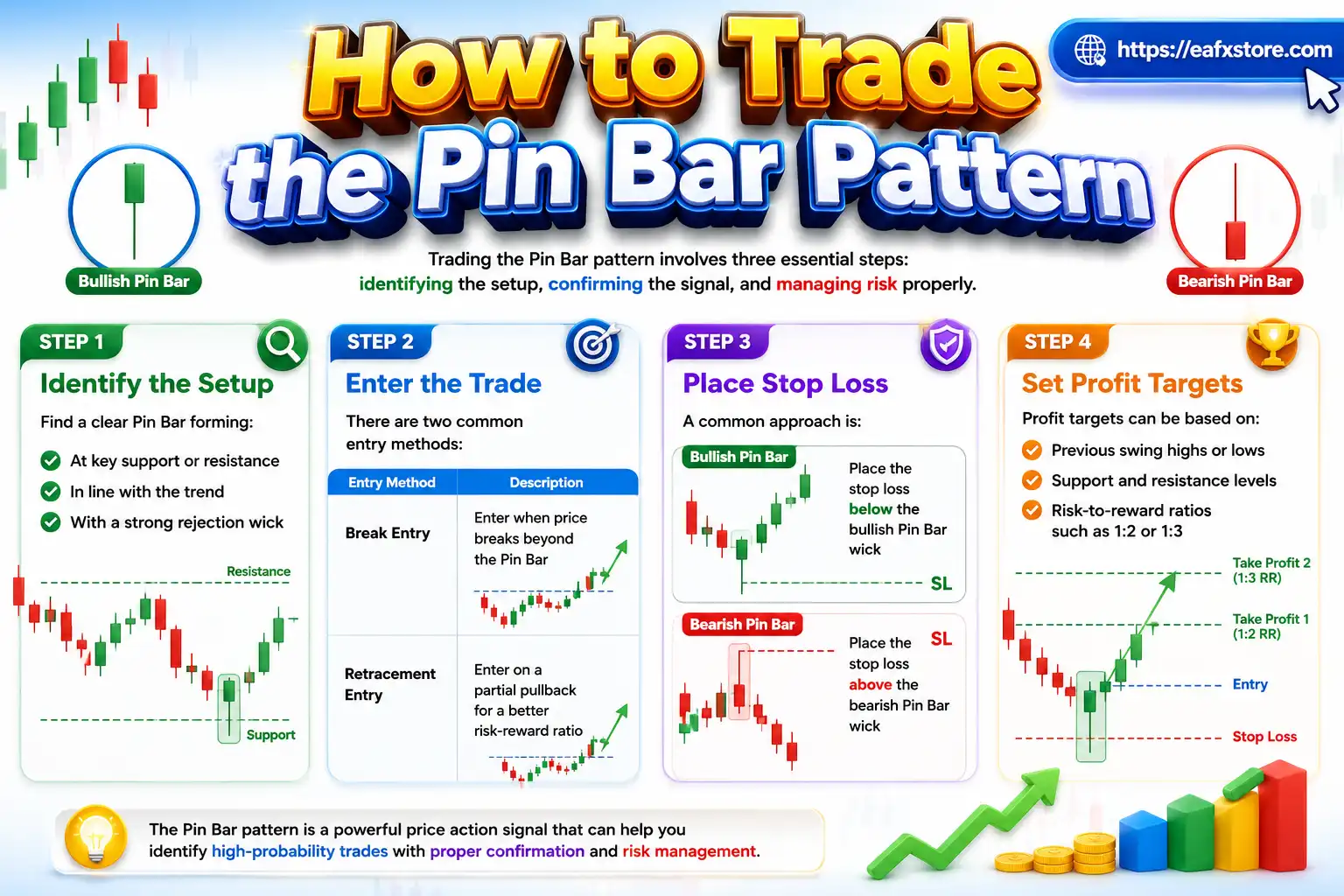
Trading the Pin Bar pattern involves three essential steps: identifying the setup, confirming the signal and managing risk properly.
🎯 Step 1: Identify the Setup
Find a clear Pin Bar forming:
- At key support or resistance.
- In line with the trend.
- With a strong rejection wick.
🎯 Step 2: Enter the Trade
There are two common entry methods:
| Entry Method | Description |
|---|---|
| Break Entry | Enter when price breaks beyond the Pin Bar |
| Retracement Entry | Enter on a partial pullback for a better risk-reward ratio |
🎯 Step 3: Place Stop Loss
A common approach is:
- Place the stop loss below the bullish Pin Bar wick.
- Place the stop loss above the bearish Pin Bar wick.
🎯 Step 4: Set Profit Targets
Profit targets can be based on:
- Previous swing highs or lows.
- Support and resistance levels.
- Risk-to-reward ratios such as 1:2 or 1:3
Common Mistakes Traders Make
Even though the Pin Bar pattern is effective, many traders misuse it.
- Trading Every Pin Bar: Not every Pin Bar is a valid signal. Market context matters more than the candle itself.
- Ignoring the Trend: Countertrend Pin Bars are riskier and often less reliable.
- Poor Risk Management: Using large position sizes without proper stop losses can quickly lead to losses.
- Trading on Low Time Frames: Very small time frames often contain market noise and false signals.
Avoiding these mistakes can dramatically improve your trading consistency.
Combining Pin Bars With Other Indicators
While Pin Bars are powerful alone, combining them with technical tools can increase accuracy. Recommended Confirmations:
| Indicator | Purpose |
|---|---|
| Moving Averages | Identify trend direction |
| RSI | Spot overbought or oversold conditions |
| Fibonacci Levels | Find potential reversal zones |
| Volume Analysis | Confirm market participation |
Using confirmation tools helps filter weak setups and improves decision-making.
Advantages and Disadvantages of Pin Bar Trading
🎯 Advantages
- Easy to identify.
- Works in multiple markets.
- Strong price action signal.
- Excellent for risk-to-reward setups.
- Suitable for beginners and advanced traders.
🎯 Disadvantages
- False signals can occur.
- Requires patience and discipline.
- Less reliable in choppy markets.
- Needs proper market context.
Understanding both strengths and weaknesses allows traders to use the strategy more effectively.
Final Thoughts
The Pin Bar pattern remains one of the most effective price action tools in Forex trading. Its ability to reveal rejection and market sentiment makes it valuable for identifying high-probability trade entries.
However, success with Pin Bars does not come from trading every signal. The key lies in combining the pattern with strong market structure, trend analysis and disciplined risk management.
By practicing patience and focusing only on high-quality setups, traders can use the Pin Bar pattern to achieve more consistent entries and better long-term trading performance.
FAQs
❓ What is the best time frame for trading Pin Bars?
The 4-hour and daily charts are generally considered the most reliable because they reduce market noise and provide stronger signals.
❓ Can beginners use the Pin Bar strategy?
Yes. The Pin Bar pattern is simple to recognize and is often recommended for beginner price action traders.
❓ Do Pin Bars work in all Forex pairs?
Pin Bars can work on most major and minor Forex pairs, especially those with high liquidity and clear trends.
❓ Should I use indicators with Pin Bars?
Using indicators like RSI, moving averages, or Fibonacci retracement can improve trade confirmation and reduce false signals.
❓ What is the biggest mistake when trading Pin Bars?
The most common mistake is trading every Pin Bar without considering market structure, trend direction, and support or resistance levels.